
The best vegetables to grow indoors in winter are fast, low-light, cool-tolerant crops: microgreens, pea shoots, loose-leaf lettuce, arugula, spinach, Asian greens, baby kale, Swiss chard, scallions, radishes and hardy herbs like parsley and chives. A sunny south window helps, but in most US homes you’ll get far better results with a simple LED grow light on a 14- to 16-hour timer.
| Crop | Typical time to first harvest* | Light need | Room temp it tolerates |
|---|---|---|---|
| Microgreens (radish, broccoli, kale) | About 1–2 weeks | Low–medium | 60–75°F |
| Pea shoots | About 2–3 weeks | Low–medium | 55–70°F |
| Loose-leaf lettuce | About 4–6 weeks (baby leaves sooner) | Medium | 55–70°F |
| Arugula | About 3–5 weeks | Low–medium | 50–70°F |
| Spinach (baby) | About 4–6 weeks | Medium | 50–65°F |
| Asian greens (bok choy, tatsoi, mizuna) | About 3–6 weeks | Medium | 55–70°F |
| Baby kale and Swiss chard | About 4–6 weeks | Medium | 55–70°F |
| Scallions (from roots or seed) | 1–2 weeks regrowth; longer from seed | Low–medium | 55–75°F |
| Radishes | About 4–5 weeks | Medium–high | 55–70°F |
| Parsley, chives, cilantro | About 4–8 weeks | Medium | 55–70°F |
| Basil | About 4–6 weeks | High | 65–80°F (dislikes cold) |
| Dwarf cherry tomatoes | Several months | High | 65–80°F |
*Approximate ranges from typical seed-packet timing under good light. Varieties and conditions vary. Use the table to match vegetables to grow indoors in winter with your light and room temperature.

Why Winter Is Hard on Indoor Vegetables

The problem isn’t the cold inside your house. It’s light. Winter days are short, the sun sits low, and window glass cuts light further. University of Tennessee Extension horticulturist Natalie Bumgarner puts it simply: “Most indoor crops will need supplemental lighting, especially in the winter.” UT Extension also notes that herbs and leafy crops need at least 4 to 6 hours of direct sun, which few windows deliver from December through February.
That’s why the vegetables to grow indoors in winter are mostly leafy, quick crops. They’re harvested before they need much stored energy, and University of Maryland Extension says lettuce, arugula, mustards and Asian greens grow acceptably well in less-than-ideal light.
12 Easy Vegetables to Grow Indoors in Winter
- Microgreens. The fastest win. UMD Extension notes they grow year-round indoors and are often grown under lights in a kitchen or basement.
- Pea shoots. Sweet, crunchy and happy in a cool room.
- Loose-leaf lettuce. Pick outer leaves and let the center keep growing. Skip big heading types.
- Arugula. Tolerates cool rooms and lower light, with a peppery bite.
- Spinach. Likes it cool; grow it as baby leaves.
- Asian greens. Bok choy, tatsoi and mizuna are quick and compact.
- Baby kale. Harvest young for salads and smoothies.
- Swiss chard. Colorful stems, repeat harvests from one planting.
- Scallions. Regrow the white root ends in water or soil for quick green tops.
- Radishes. Need a deep enough container and strong light to bulb up.
- Hardy herbs. Parsley, chives and cilantro handle cooler rooms better than basil.
- Dwarf cherry tomatoes. Possible, but only with a strong light and patience. Consider it a stretch goal.
If you’re short on time, start with the first five. They’re the most forgiving vegetables to grow indoors in winter.
Do You Need Grow Lights for Vegetables to Grow Indoors in Winter?
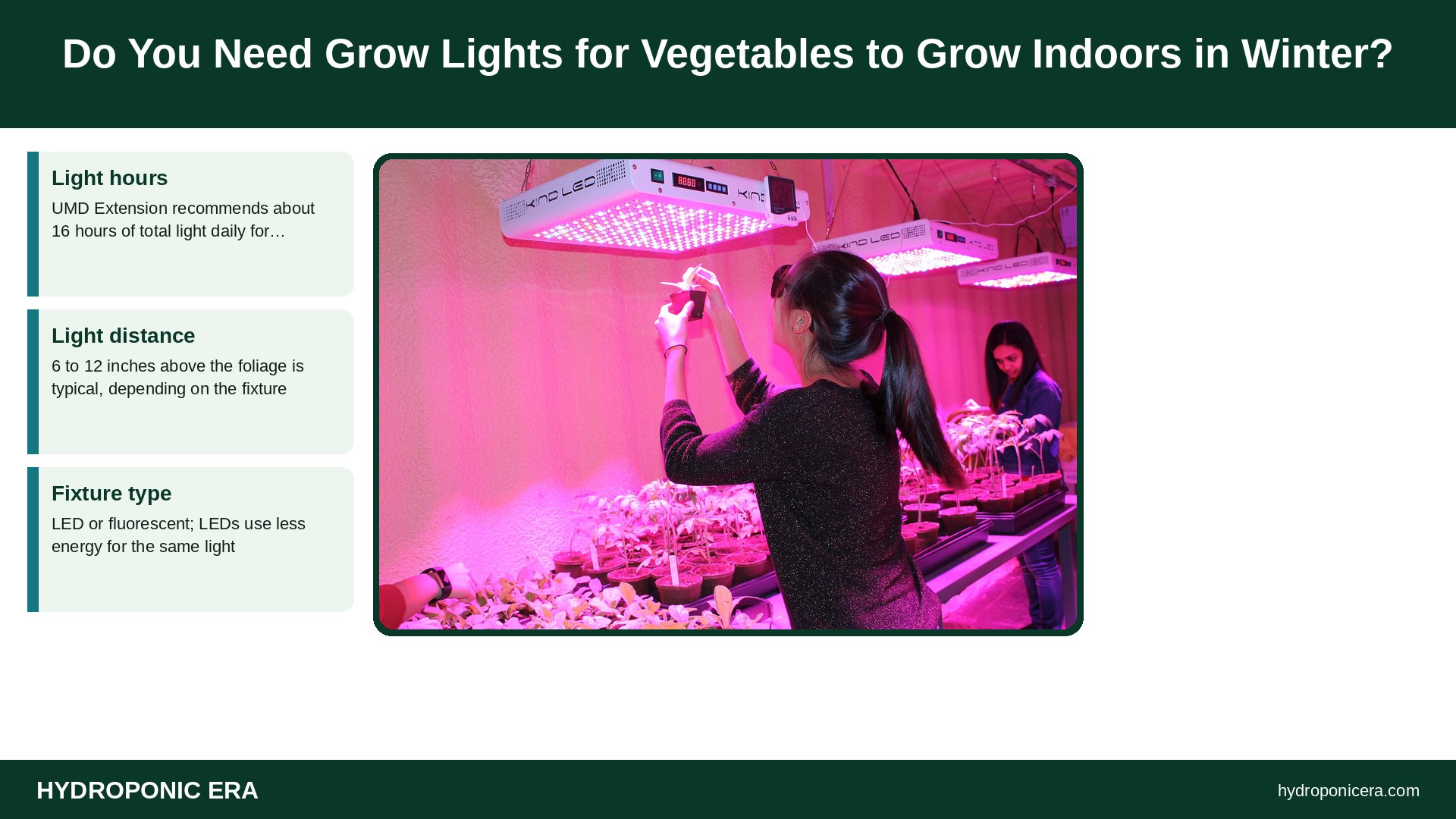
For most homes, yes, especially for leafy vegetables to grow indoors in winter. A bright south-facing window can carry microgreens and some herbs, but leafy greens usually stretch and turn pale in winter window light. UT Extension even suggests that growing with only supplemental light may be easier and more consistent than trying to work around changing natural light.
- Light hours: UMD Extension recommends about 16 hours of total light daily for microgreens, using an outlet timer.
- Light distance: 6 to 12 inches above the foliage is typical, depending on the fixture.
- Fixture type: LED or fluorescent; LEDs use less energy for the same light.
- Measure it: our PPFD and DLI guide explains how much light each crop needs per day.
Soil, Hydroponics or Water? Pick a Setup
Any of these setups works for vegetables to grow indoors in winter. Choose based on space and how hands-on you want to be.
| Setup | Best for | Notes |
|---|---|---|
| Shallow trays with potting mix | Microgreens, pea shoots | Bottom-water to reduce mold |
| Containers with drainage | Lettuce, chard, herbs, radishes | Use potting mix, not garden soil |
| Kratky or small DWC | Lettuce, Asian greens, herbs | No pump needed for Kratky |
| Countertop smart garden | Herbs, lettuce | Built-in light and timer |
New to soilless growing? Our indoor hydroponic garden guide walks through a first system.
How to Start Winter Vegetables Indoors: 7 Steps
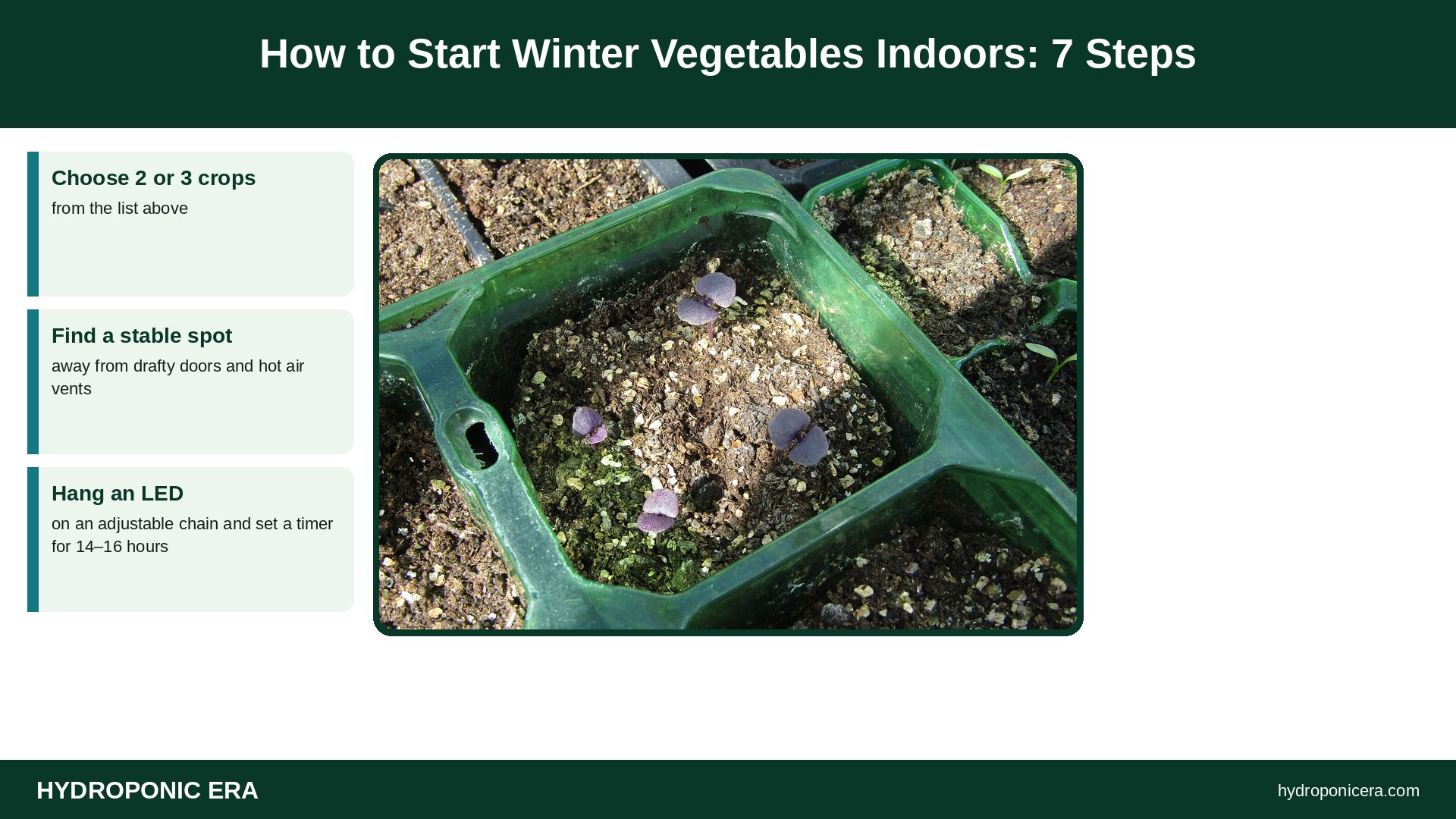
Once you’ve picked your vegetables to grow indoors in winter, set up like this. The same steps work for most vegetables to grow indoors in winter, from lettuce to herbs:
- Choose 2 or 3 crops from the list above.
- Find a stable spot away from drafty doors and hot air vents.
- Hang an LED on an adjustable chain and set a timer for 14–16 hours.
- Sow small batches every 1–2 weeks so you harvest steadily.
- Water carefully. Keep mix moist, not soggy, and empty saucers.
- Feed lightly once plants have true leaves, following the product label.
- Harvest young. UMD Extension says baby greens can be cut at 4 to 6 inches tall and will regrow for 1 to 2 more harvests.
Winter Room Problems and Fixes
Even the toughest vegetables to grow indoors in winter run into dry heat and cold glass. Our seasonal indoor adjustments guide covers temperature and humidity in more depth.
- Leggy, pale seedlings: not enough light. Lower the light or add hours.
- Cold windowsill: nights near the glass can drop into the 40s °F. Move plants back at night.
- Dry heated air: leaf tips crisp. Group plants and avoid vents.
- Fungus gnats: soil stays wet. Let the surface dry between waterings.
- Bolting or bitterness: rooms too warm under strong light. Harvest earlier.
Common Mistakes
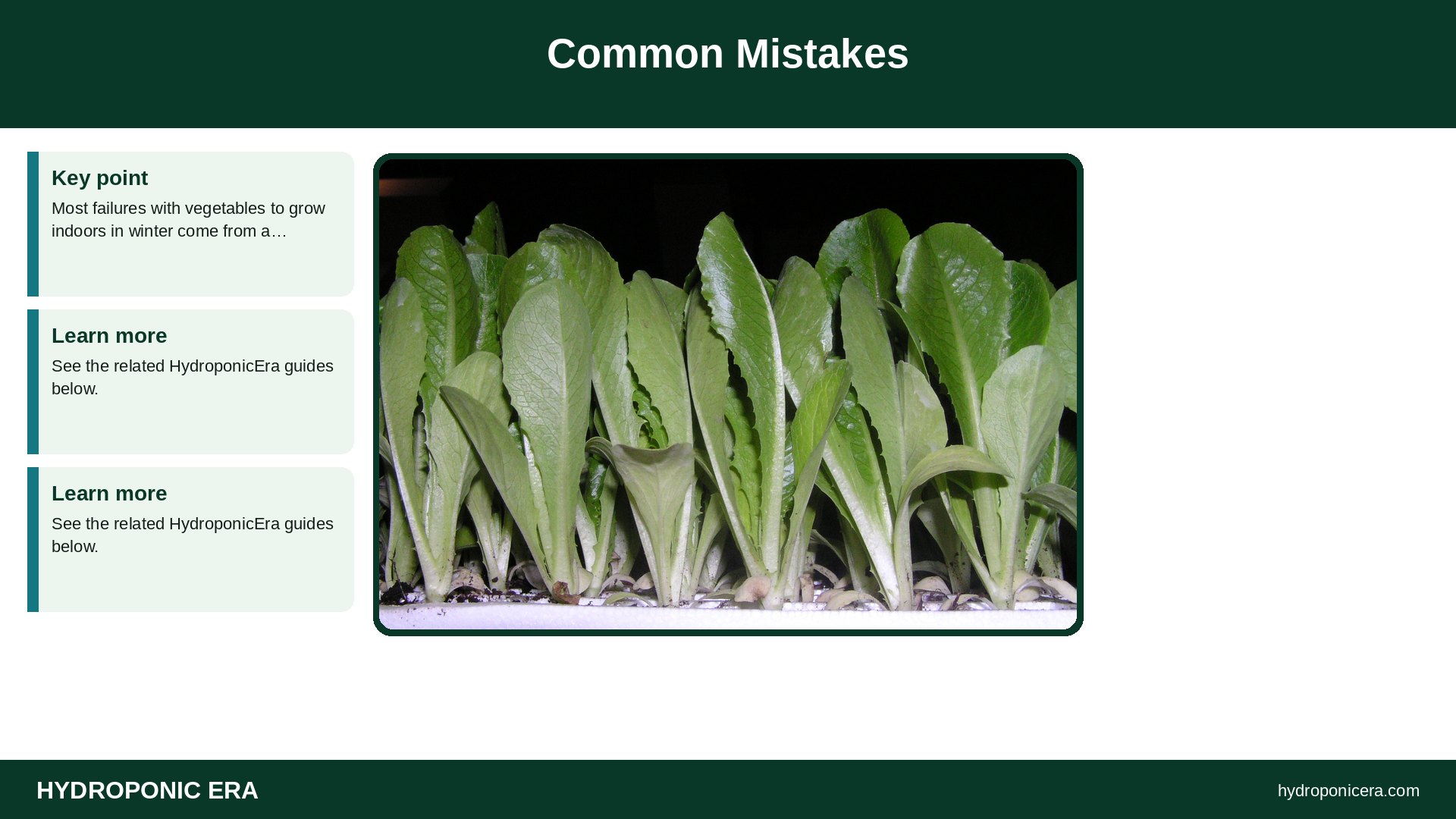
Most failures with vegetables to grow indoors in winter come from a few habits. Avoid these and your vegetables to grow indoors in winter will stay healthy until spring:
- Choosing slow fruiting crops first instead of quick greens.
- Relying on a north or east window in midwinter.
- Planting everything at once, then having nothing for weeks.
- Putting basil in a chilly room; it’s one of the least cold-tolerant herbs.
- Using garden soil indoors, which can carry pests and drain poorly.
FAQs: Vegetables to Grow Indoors in Winter
What are the easiest vegetables to grow indoors in winter?
Microgreens, pea shoots, loose-leaf lettuce, arugula and scallions are the easiest and fastest.
Can I grow vegetables indoors in winter without grow lights?
Microgreens and some herbs can manage in a bright south window. Most greens grow better with an LED.
What vegetables grow well in a cold room?
Spinach, arugula, kale, chard, pea shoots and parsley tolerate rooms in the 50s °F better than basil or tomatoes.
What are good vegetables to grow indoors in winter with kids?
Microgreens, pea shoots and radishes show results fast enough to keep kids interested.
How many hours of light do winter vegetables need indoors?
About 14 to 16 hours a day under grow lights works for most leafy crops and microgreens.
Related HydroponicEra Guides
- Best plants for hydroponics
- How to grow microgreens hydroponically
- Seasonal indoor summer and winter adjustments
- How to grow wheatgrass
Sources
- University of Maryland Extension — Growing Microgreens and Baby Greens Indoors
- University of Tennessee Institute of Agriculture — Grow Your Garden Indoors with Containers and Extra Light
- University of Maryland Extension — Starting Vegetable Seeds Indoors
- Photo credits (Wikimedia Commons, edited with titles): Lufa Farms Microgreens in Trays by Lufa Farms (CC BY-SA 2.0); Temple Sowerby, Acorn Bank, Mizuna and lettuce seedlings – geograph.org.uk – 7625183 by Michael Garlick (CC BY-SA 2.0); Terramera scientists working in a climate-controlled growth chamber located in Vancouver, BC. The space uses LED lighting, which supports plant growth. (50188965171) by Simon Fraser University – Communications & Marketing (CC BY 2.0); -2020-07-10 Purple basil (Ocimum basilicum) seedlings, Trimingham by Kolforn (Kolforn)
I’d appreciate if you could mail me (Kolforn@gmail.com) if you want to use this picture out of the Wikimedia project scope.This file is licensed under the Creative Commons Attribution-Share Alike 4.0 International license.
You are free:
to share – to copy, distribute and transmit the work
to remix – to adapt the work
Under the following conditions:
attribution – You must give appropriate credit, provide a link to the license, and indicate if changes were made. You may do so in any reasonable manner, but not in any way that suggests the licensor endorses you or your use.
share alike – If you remix, transform, or build upon the material, you must distribute your contributions under the same or compatible license as the original.https://creativecommons.org/licenses/by-sa/4.0CC BY-SA 4.0 Creative Commons Attribution-Share Alike 4.0 truetrue (CC BY-SA 4.0); Lettuce Plugs by Apapac at English Wikipedia (Public domain)