
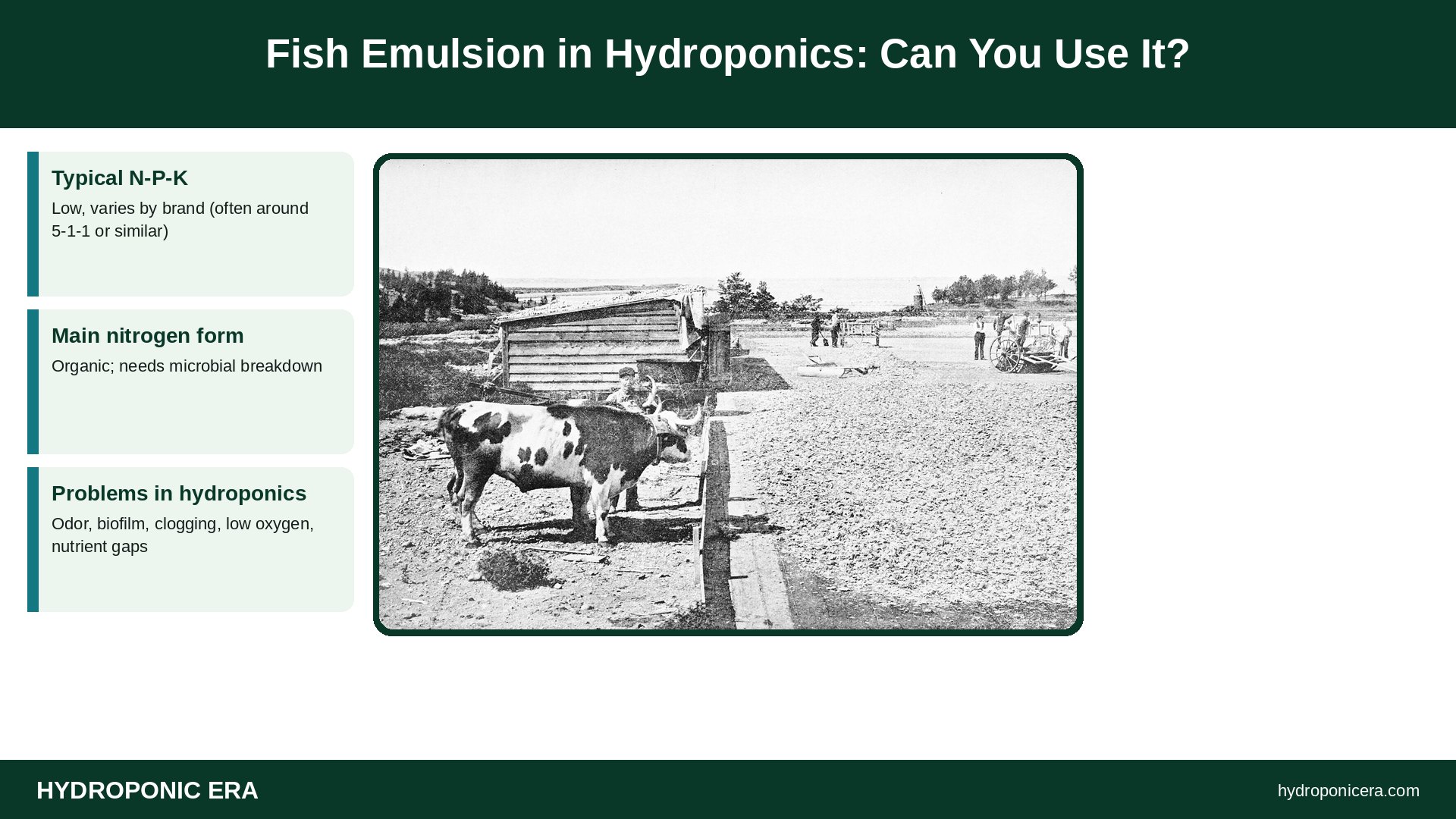
You can use fish emulsion in hydroponics, but it’s tricky. Fish emulsion is an organic fertilizer made from fish byproducts, and much of its nitrogen is in organic forms that microbes must break down before plants can absorb it. In a standard sterile hydroponic system, that leads to cloudy, smelly solution, biofilm, clogged pumps, and inconsistent feeding. It works best in organic or “bioponic” systems with established beneficial microbes, in media beds, or as a small supplement, not as the only nutrient in a deep water culture bucket.
Key takeaway: Mineral hydroponic nutrients are far easier for beginners. If you want organic hydroponics, plan for microbes, aeration, and frequent cleaning rather than simply swapping in fish emulsion.
| Question | Short answer |
|---|---|
| Typical N-P-K | Low, varies by brand (often around 5-1-1 or similar) |
| Main nitrogen form | Organic; needs microbial breakdown |
| Problems in hydroponics | Odor, biofilm, clogging, low oxygen, nutrient gaps |
| Best fit | Bioponic systems, media beds, drain-to-waste, small supplements |
| Worst fit | NFT, aeroponics, warm DWC |
What Fish Emulsion Is
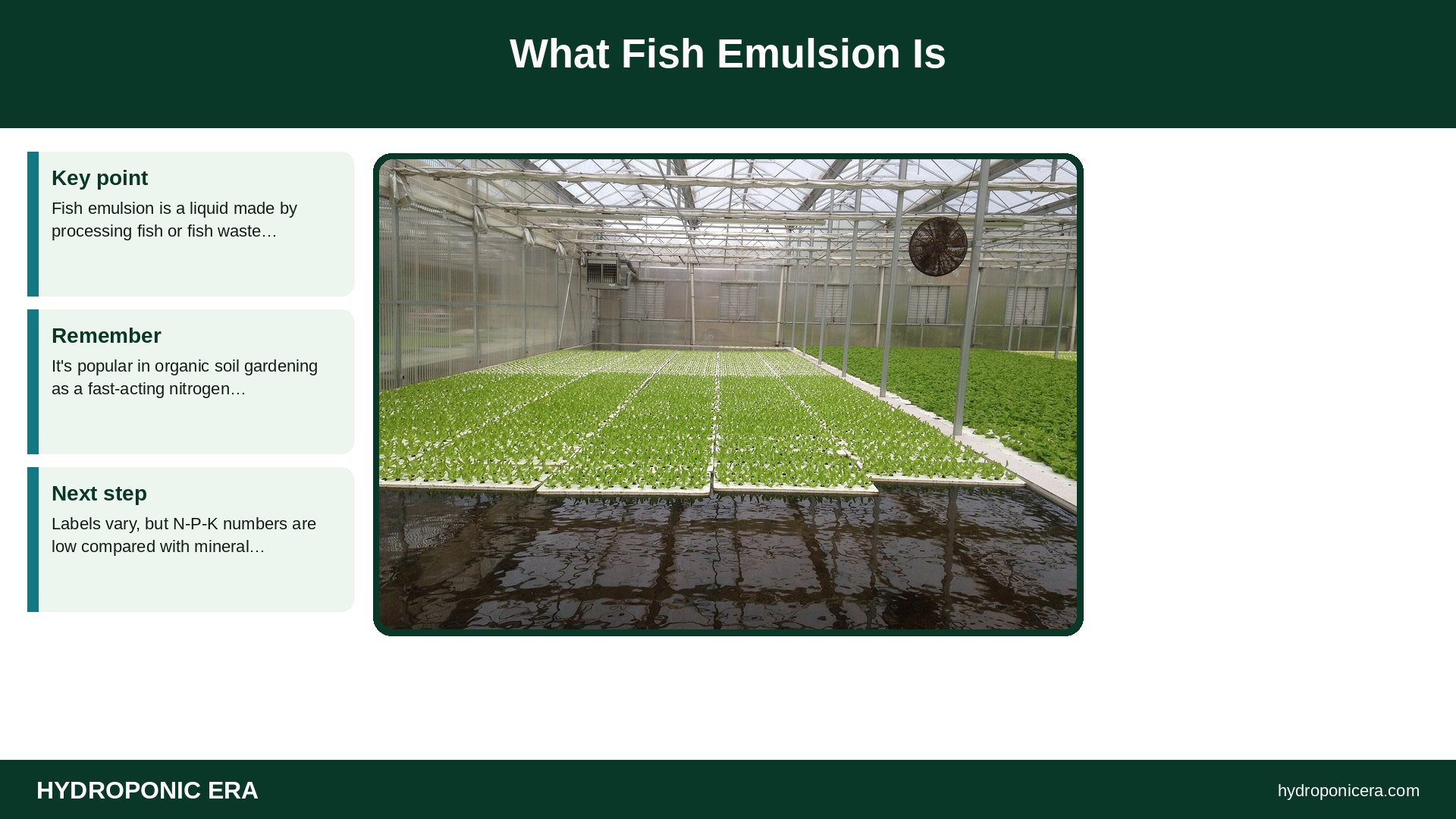
Fish emulsion is a liquid made by processing fish or fish waste, often a byproduct of fishmeal and fish oil production. It’s popular in organic soil gardening as a fast-acting nitrogen source. Labels vary, but N-P-K numbers are low compared with mineral fertilizers. Some fish products are hydrolyzed (enzymatically digested) rather than heat-processed, which retains more proteins and oils.
In soil, microbes convert organic nitrogen into ammonium and then nitrate, which roots absorb. That conversion is the key issue in hydroponics.
Why Fish Emulsion Struggles in Standard Hydroponics
- Nitrogen isn’t immediately available. Without an active microbial community, organic nitrogen stays locked up, so plants may show nitrogen deficiency even though you added fertilizer.
- Microbial blooms. Organic matter feeds bacteria and fungi, causing biofilm and cloudy solution.
- Oxygen depletion. Microbes use dissolved oxygen, stressing roots and raising the risk of root rot.
- Odor. Fish emulsion smells strongly, especially in warm reservoirs. See foam and smells.
- Clogging. Oils and solids gum up pumps, emitters, and NFT channels.
- Incomplete nutrition. It may lack enough calcium, magnesium, and micronutrients on its own.
How Organic (Bioponic) Hydroponics Uses Fish
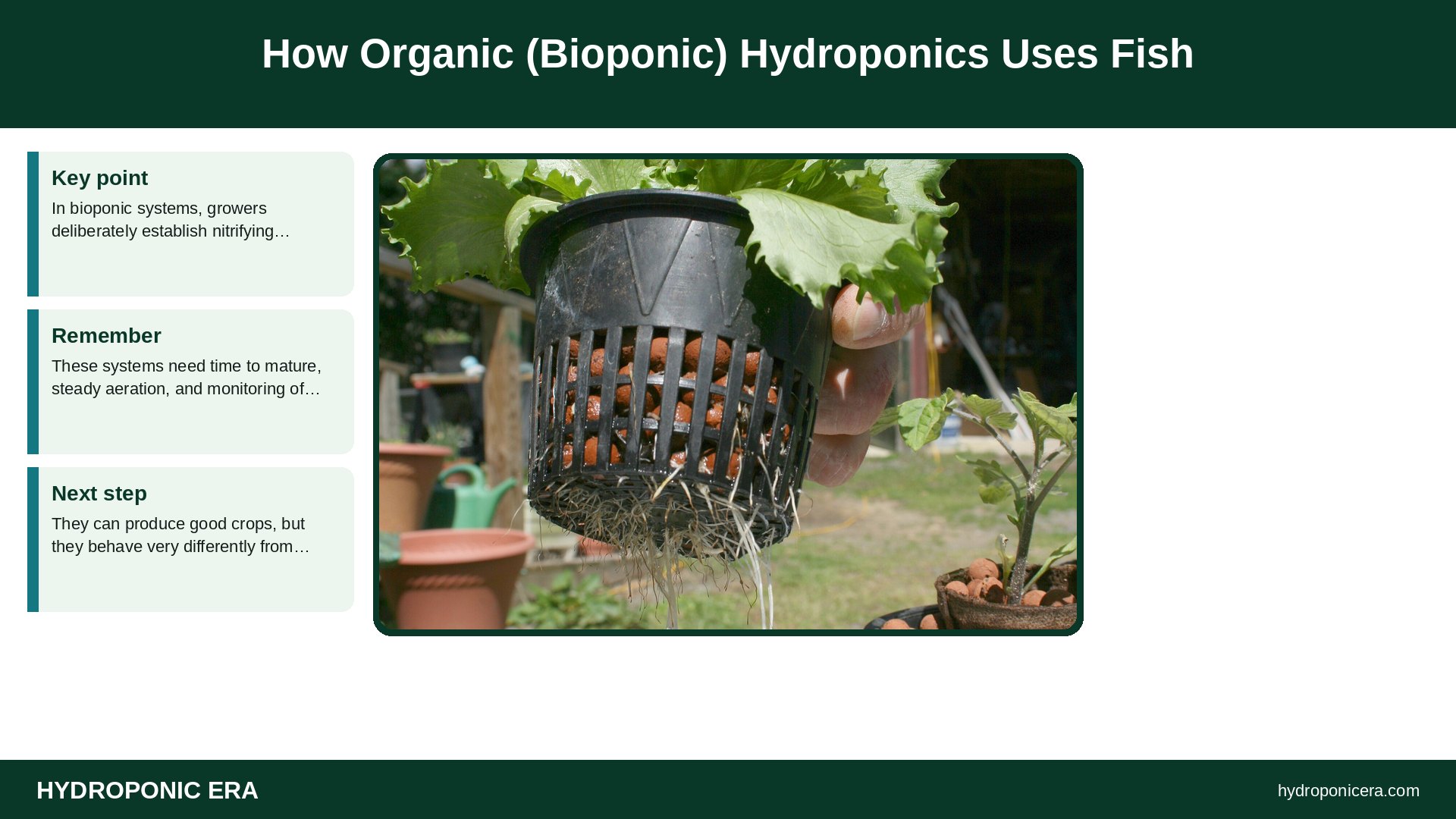
In bioponic systems, growers deliberately establish nitrifying bacteria, often in a biofilter or media bed, to convert organic nitrogen into nitrate, similar to how aquaponics works with fish waste. These systems need time to mature, steady aeration, and monitoring of ammonium and nitrate. They can produce good crops, but they behave very differently from mineral hydroponics. See organic and bioponic nutrients and sterile vs living root zones.
If You Want to Try Fish Emulsion
- Choose a media-based or drain-to-waste system. Coco or clay pebble beds tolerate organics better than bare-root systems.
- Start with a small amount alongside a mineral base, rather than replacing it completely.
- Aerate strongly and keep the solution cool.
- Change solution frequently, at least weekly, and clean the reservoir.
- Filter before pumps and emitters if possible.
- Monitor plants closely for deficiencies and roots for slime.
Fish Emulsion vs Fish Hydrolysate
Hydrolysate is processed with enzymes at lower temperatures and is often marketed as more complete. In hydroponics, both carry the same core issues: organic nitrogen, oils, and microbial food. Some products labeled for hydroponics are filtered more finely, which reduces clogging but doesn’t eliminate biofilm risk. Always check the label for intended uses.
Better Organic Options
- Products formulated for organic hydroponics, which are filtered and designed for recirculating systems.
- Aquaponics, where live fish supply nutrients and bacteria convert them continuously.
- Soil or container growing for those committed to organic fertilizers.
If your goal is simply healthy food, mineral nutrients are safe and produce excellent crops. See best hydroponic nutrients.
Using Fish Emulsion as a Foliar Spray
Some growers apply diluted fish emulsion to leaves. It may supply small amounts of nutrients, but it smells, can attract pests, and leaves residue. Avoid spraying leafy greens near harvest. See foliar feeding for cautions.
Food Safety Notes
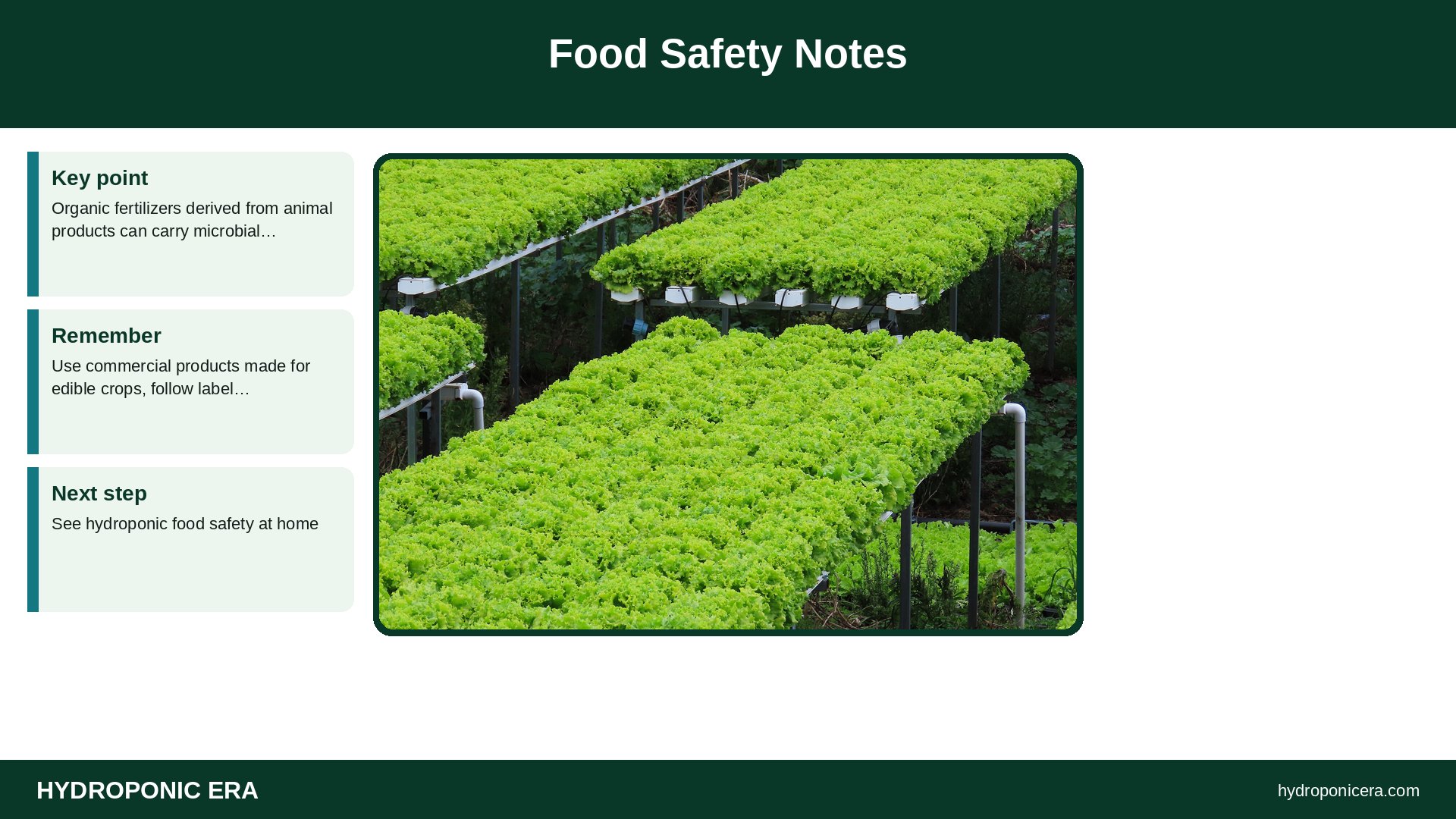
Organic fertilizers derived from animal products can carry microbial risks if handled poorly. Use commercial products made for edible crops, follow label directions, keep the reservoir clean, and wash produce before eating. See hydroponic food safety at home.
Fish Emulsion in Different Systems
| System | Suitability |
|---|---|
| Coco or soilless media, drain-to-waste | Workable with care |
| Ebb and flow with clay pebbles | Possible; clean often |
| Kratky | Poor; stagnant water and odor |
| DWC | Risky; oxygen demand and biofilm |
| NFT and aeroponics | Not recommended; clogs |
A Low-Risk Way to Test Fish Emulsion
If you’re curious, run a small trial instead of adding fish emulsion to your main system. Use a separate 1- or 2-gallon container with a couple of lettuce or basil plants and a mineral nutrient as the base. Add fish emulsion at a fraction of the label rate, keep the water aerated, and change the solution weekly. Watch for cloudiness, odor, slime on roots, and pH drift, and compare growth with a control container that has no fish emulsion. Write down what you see each day.
If roots stay white and the water stays clear, you’ve learned your setup tolerates a small dose. If the water turns cloudy or smells within days, that’s the biofilm problem most growers report, and a hydrolysate or a mineral-based organic-compatible nutrient is a better route. Keep this trial away from your main reservoir, and clean the test container well afterward.
Fish Emulsion in Soil vs Hydroponics
In soil, microbes break fish emulsion down into plant-available nitrogen over days to weeks, and soil buffers odor and pH. A hydroponic reservoir has no soil food web, so organic matter sits in the water, feeds bacteria, and uses up oxygen. That’s the core reason the same bottle that works well in a garden bed often causes trouble in deep water culture.
FAQs: Fish Emulsion in Hydroponics
Can I use fish emulsion as my only hydroponic nutrient?
It’s not recommended in standard systems. It lacks immediately available nitrogen and complete nutrition without active microbes.
Why does my reservoir smell after adding fish emulsion?
Microbes breaking down organic matter produce odors, especially in warm water. Change the solution and clean the system.
Does fish emulsion clog hydroponic systems?
Often. Oils and solids can block pumps, emitters, and channels.
Is fish emulsion organic?
Many products are approved for organic gardening. Check for an OMRI listing or similar if certification matters.
What’s an easier organic option?
Aquaponics or nutrients specifically formulated for organic hydroponics.
Sources
- USDA National Agricultural Library — Hydroponics resources
- Penn State Extension — Hydroponics Systems and Principles of Plant Nutrition
- USDA Agricultural Marketing Service — National Organic Program
- Photo credits (Wikimedia Commons, edited with titles): PSM V45 D081 Drying fish for fertilizer by Unknown authorUnknown author (Public domain); Deep water culture by ArcadiYay (CC BY-SA 4.0); 2009-03-30 Lettuce roots by Ildar Sagdejev (Specious) (CC BY-SA 4.0); Drip irrigation (2552390830) by Dwight Sipler from Stow, MA, USA (CC BY 2.0); Hydroponic lettuce @ Plaine des Cafres 03 by Rémih (CC BY-SA 4.0)