
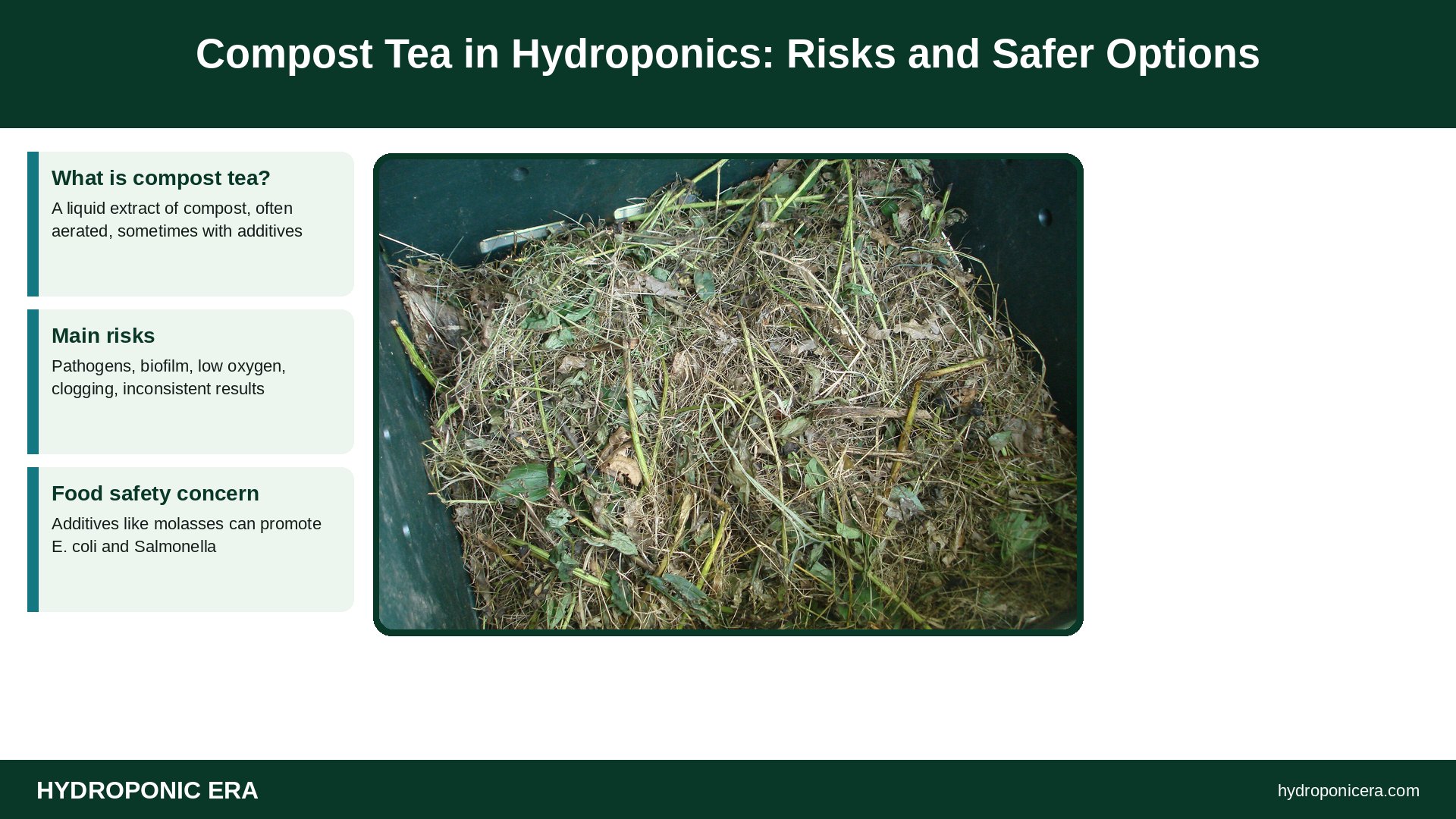
Using compost tea in hydroponics is risky and usually not worth it. Compost tea is made by steeping compost in water, sometimes with aeration and added sugars such as molasses. In a recirculating hydroponic system, it can introduce plant and human pathogens, feed biofilm, cloud the solution, deplete oxygen, and clog equipment. Research has shown that compost teas brewed with added nutrients like molasses can support growth of E. coli and Salmonella. For food crops, safer options include complete hydroponic nutrients, commercial beneficial microbe products labeled for hydroponics, and strict sanitation.
Key takeaway: Keep compost tea out of hydroponic reservoirs that grow food, especially leafy greens eaten raw. Use products made and tested for hydroponics instead.
| Question | Short answer |
|---|---|
| What is compost tea? | A liquid extract of compost, often aerated, sometimes with additives |
| Main risks | Pathogens, biofilm, low oxygen, clogging, inconsistent results |
| Food safety concern | Additives like molasses can promote E. coli and Salmonella |
| Nutrient value | Low and variable |
| Safer options | Labeled beneficial microbes, complete nutrients, clean systems |
What Compost Tea Is
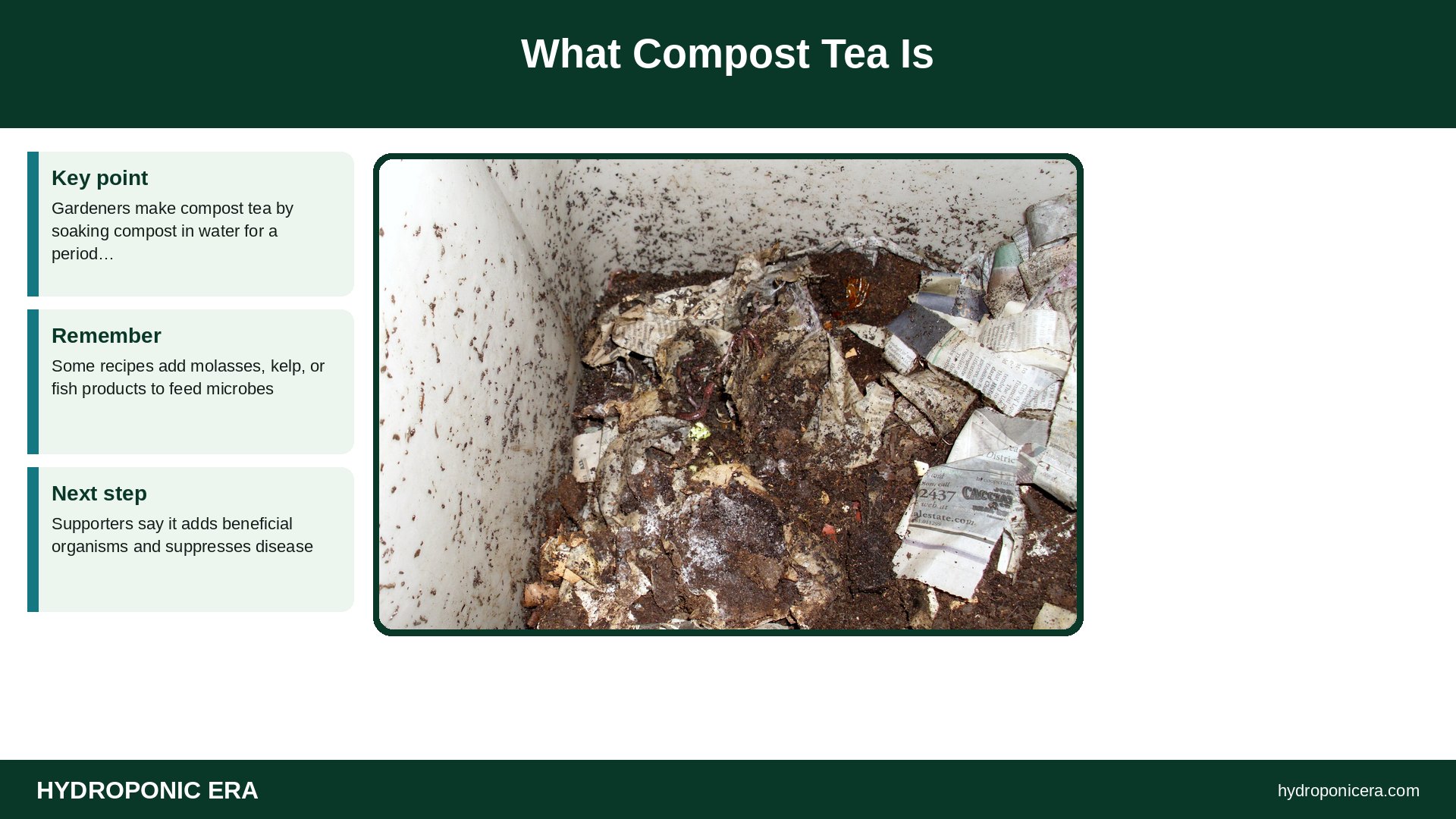
Gardeners make compost tea by soaking compost in water for a period, often with an air pump to keep it aerobic. Some recipes add molasses, kelp, or fish products to feed microbes. Supporters say it adds beneficial organisms and suppresses disease. Scientific results are mixed: some studies show disease suppression in specific situations, while others show little effect. Quality depends heavily on the compost, water, brewing time, temperature, and additives.
Why Compost Tea Is a Problem in Hydroponics
- Pathogen risk. Compost can contain human pathogens if not properly made. Brewing in warm, nutrient-rich water can multiply them.
- Plant pathogens. Organisms such as Pythium thrive in warm, organic-rich water. See Pythium root rot.
- Biofilm and slime. Organic matter feeds microbes that coat roots and equipment. See biofilm.
- Oxygen depletion. Microbial growth lowers dissolved oxygen. See dissolved oxygen.
- Clogging and odor. Particles block emitters; decomposition smells.
- Inconsistent nutrients. You can’t predict what each batch contains.
What Research Says About Food Safety
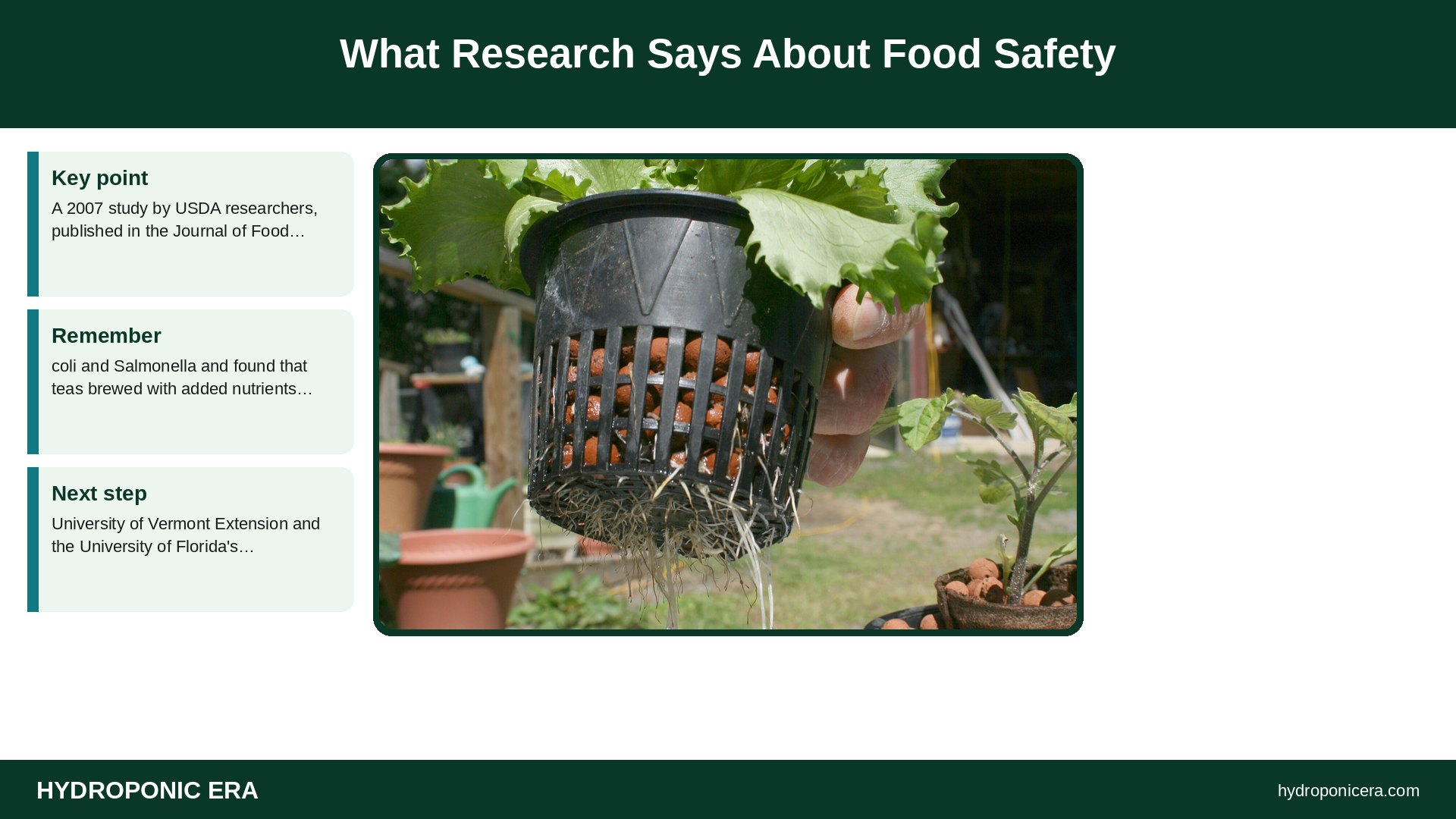
A 2007 study by USDA researchers, published in the Journal of Food Protection, examined how compost tea production affects E. coli and Salmonella and found that teas brewed with added nutrients could support pathogen growth. University of Vermont Extension and the University of Florida’s produce safety program recommend caution with agricultural teas on food crops, including avoiding additives like molasses and not applying teas to harvestable portions of produce. In hydroponics, roots and solution often contact edible parts of leafy greens, which raises the concern.
Compost Tea vs Beneficial Microbe Products
| Factor | Homemade compost tea | Labeled microbial products |
|---|---|---|
| Contents | Unknown, variable | Specific strains listed on label |
| Pathogen testing | None | Manufactured under quality controls |
| Hydroponic use | Not designed for it | Some formulated for recirculating systems |
| Consistency | Low | Higher |
If you want to explore microbes in hydroponics, start with our guide to beneficial bacteria and enzymes and understand sterile vs living root zones.
Safer Ways to Support Root Health
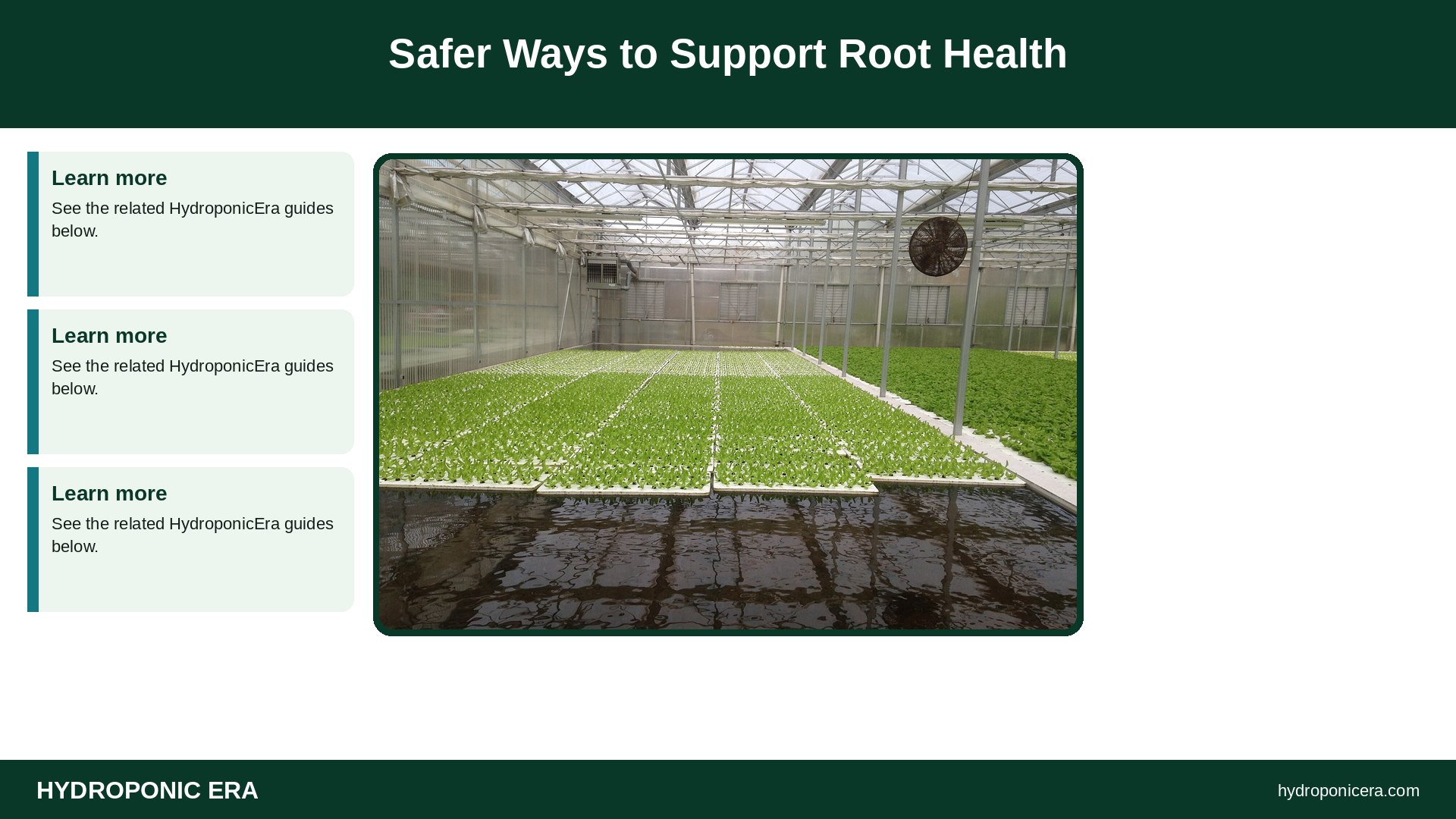
- Keep nutrient solution cool, roughly 65–70°F. See reservoir temperature.
- Aerate well and light-proof reservoirs.
- Change solution regularly and clean between crops. See cleaning and sterilizing.
- Use a complete nutrient at the right EC and pH.
- Quarantine new plants. See quarantine protocol.
Where Compost Tea Might Fit
If you’re committed to compost tea, keep it for soil gardens and ornamental plants, follow food safety guidance from extension services, and avoid applying it to edible parts close to harvest. For organic-style hydroponics, consider aquaponics or nutrients formulated for organic hydroponic systems, where microbes are managed in a biofilter.
Composting Hydroponic Waste Instead
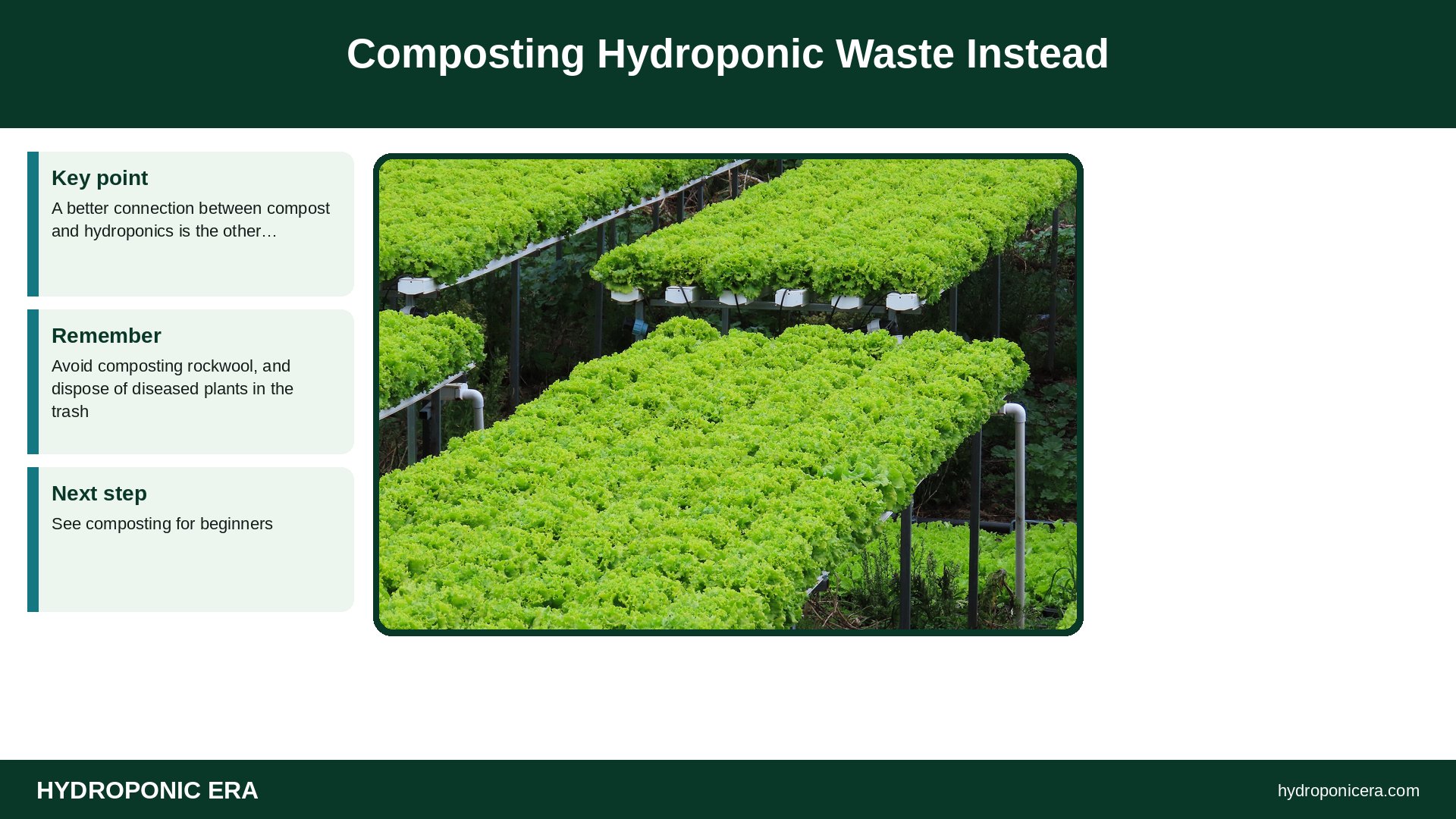
A better connection between compost and hydroponics is the other direction: compost spent plant material and roots in a backyard bin. Avoid composting rockwool, and dispose of diseased plants in the trash. See composting for beginners.
Warning Signs if Compost Tea Was Added
- Brown, slimy roots and a sour or rotten smell
- Foam or film on the surface
- Sudden wilting even with water available
- Clogged emitters or slowed pumps
If you see these, discard the solution, clean and disinfect the system, and restart with fresh nutrient solution. For leafy greens that were exposed, consider whether they’re safe to eat; when in doubt, compost them rather than eat them. See home hydroponic food safety.
If You Already Added Compost Tea
Don’t panic. Check the reservoir for cloudiness, smell, and foam, and inspect roots for browning or slime. If anything looks off, drain the system, clean and disinfect it, and refill with fresh nutrient solution. If plants look fine, do a full solution change anyway and monitor closely for a week, because problems from organic matter and microbes can take several days to show. For edible crops, wait for new clean growth before harvesting and avoid eating leaves that touched contaminated water. See cleaning and sterilizing a hydroponic system.
Why Microbial Diversity Isn’t Always Good in Water
Supporters of compost tea point to diverse soil microbes as the benefit. In soil, many microbes compete with and suppress pathogens. In warm, still, nutrient-rich water, though, fast-growing bacteria and water molds can take over and use up dissolved oxygen. The result can be root browning rather than protection. If you want living roots, use defined products made for hydroponics and keep oxygen high. See sterile vs living root zone for the trade-offs.
FAQs: Compost Tea in Hydroponics
Can I add compost tea to my hydroponic reservoir?
It’s not recommended for food crops. It can introduce pathogens, feed biofilm, and lower oxygen.
Does compost tea prevent root rot?
Evidence is mixed, and in hydroponics it can make conditions worse. Cool, oxygenated, clean water is more reliable.
Is aerated compost tea safer?
Aeration doesn’t eliminate pathogen risk, especially when sugars or other additives are used.
What can I use instead?
Beneficial microbial products labeled for hydroponics, complete nutrients, and good sanitation.
Can I use compost tea on hydroponic houseplants?
It’s lower risk on non-edible plants, but it can still cause odor, slime, and root problems.
Sources
- Ingram and Millner (2007), Journal of Food Protection — Factors affecting compost tea as a potential source of Escherichia coli and Salmonella on fresh produce
- University of Vermont Extension — Compost tea fact sheet
- UF/IFAS CONTACT Produce Safety — Brewing and Using Agricultural Teas Safely (PDF)
- Photo credits (Wikimedia Commons, edited with titles): Compost pile by Ksd5 (CC0); Worm composting 2 by Quadell (CC BY 3.0); 2009-03-30 Lettuce roots by Ildar Sagdejev (Specious) (CC BY-SA 4.0); Deep water culture by ArcadiYay (CC BY-SA 4.0); Hydroponic lettuce @ Plaine des Cafres 03 by Rémih (CC BY-SA 4.0)