
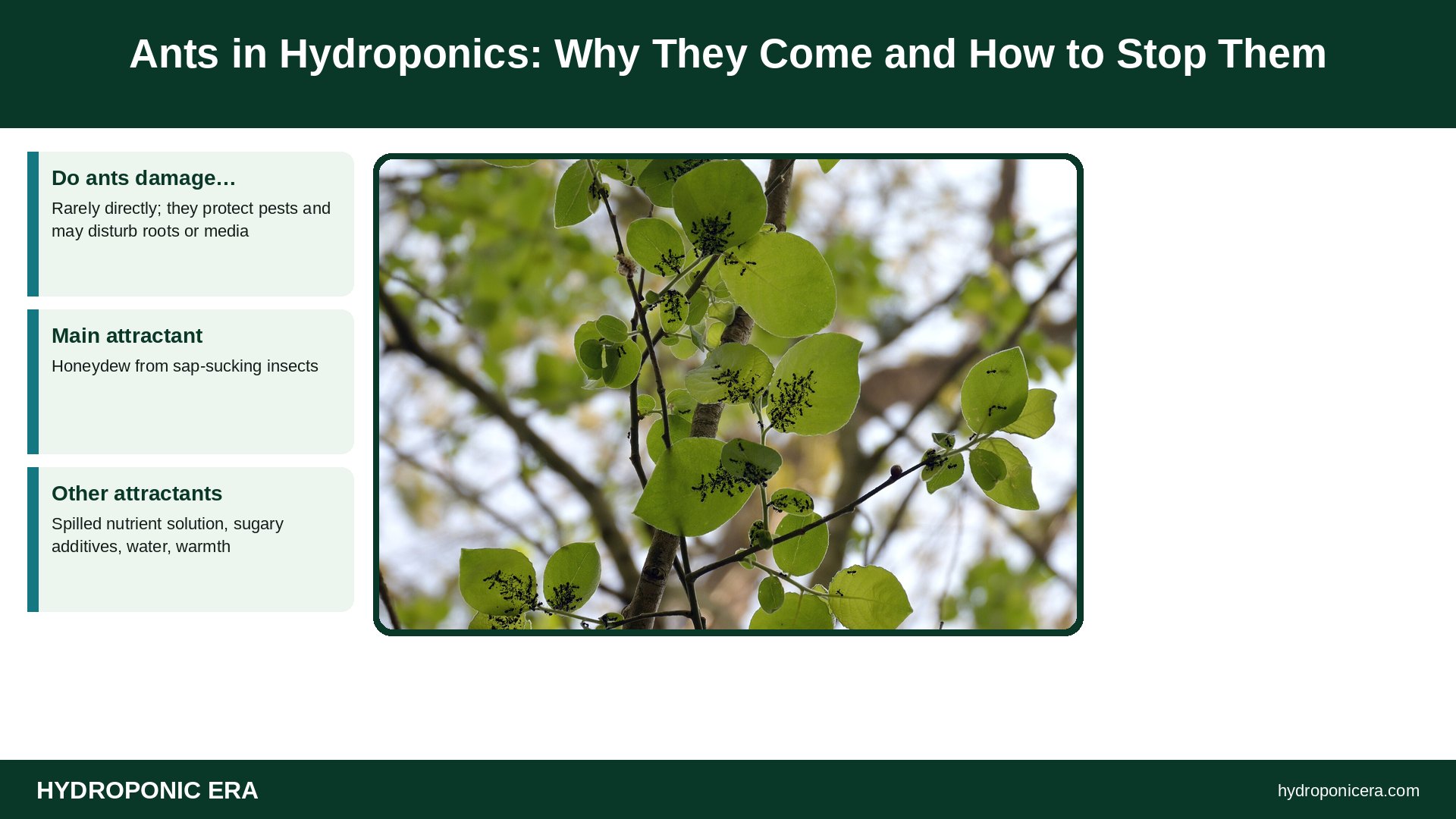
Ants show up in hydroponic gardens for three main reasons: sweet honeydew from aphids, mealybugs, scale, or whiteflies; easy access to water; and warm, sheltered nesting spots under trays, reservoirs, or in grow media. Ants rarely harm hydroponic plants directly, but they protect sap-sucking pests from predators and can nest in clay pebbles or rockwool. To stop them, control the honeydew-producing pests, remove food and water sources, block access with barriers, and use enclosed bait stations away from the reservoir.
Key takeaway: Ants are often a sign of another pest. Check leaf undersides and stems for aphids, scale, or mealybugs before targeting the trail itself.
| Question | Short answer |
|---|---|
| Do the foragers damage hydroponic plants? | Rarely directly; they protect pests and may disturb roots or media |
| Main attractant | Honeydew from sap-sucking insects |
| Other attractants | Spilled nutrient solution, sugary additives, water, warmth |
| Best control | Fix the pest problem, clean spills, barriers, enclosed baits |
| Avoid | Spraying insecticides near reservoirs or edible crops |
Why Ants Come to Hydroponic Systems
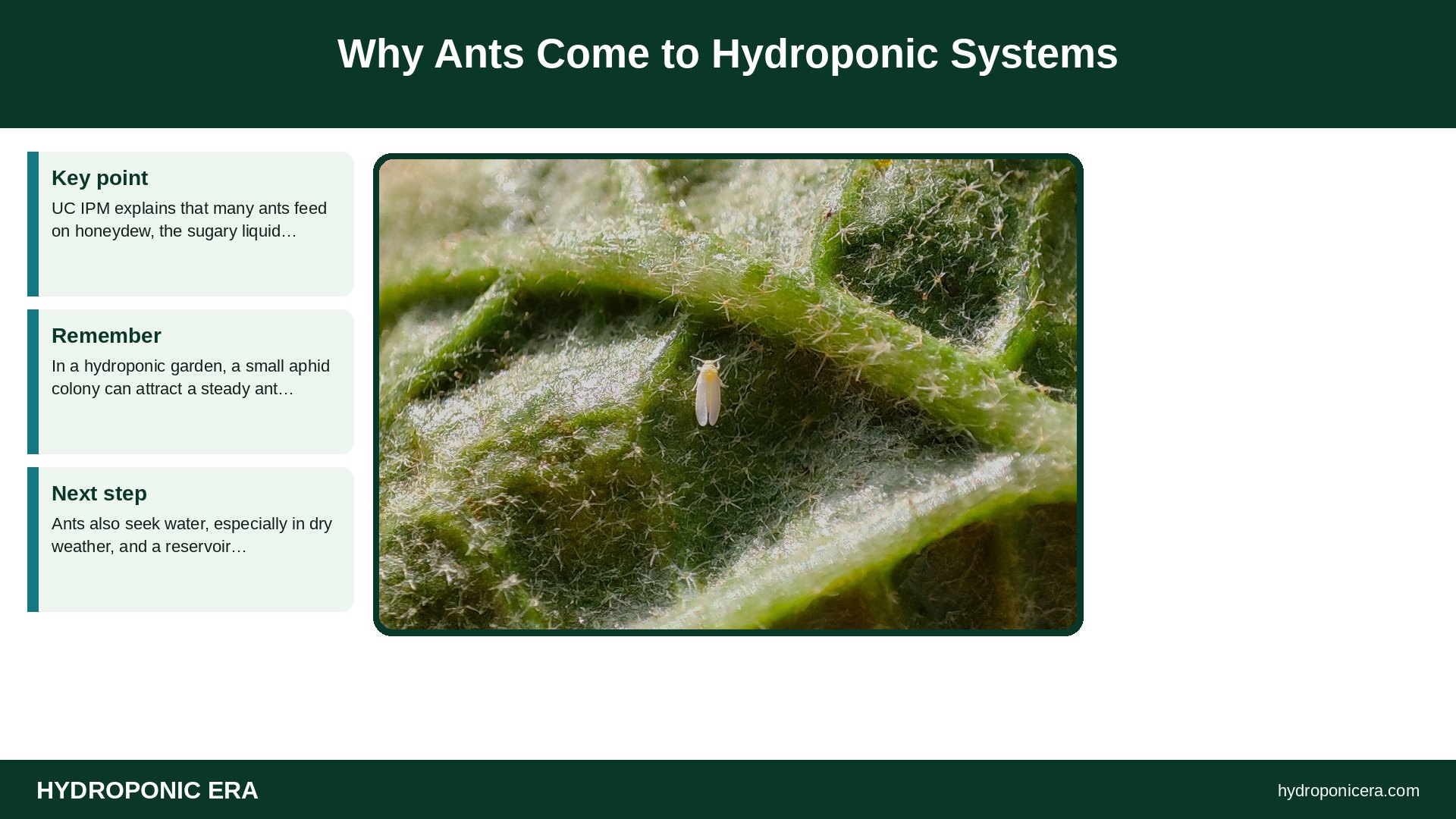
UC IPM explains that many species feed on honeydew, the sugary liquid excreted by aphids, soft scales, mealybugs, and whiteflies, and will defend those insects from natural enemies. In a hydroponic garden, a small aphid colony can attract a steady trail. They also seek water, especially in dry weather, and a reservoir, drip tray, or leaky fitting is an easy source. Sugary supplements such as molasses-based additives can attract them too.
Step 1: Look for Honeydew-Producing Pests
Check new growth, stems, and leaf undersides. Shiny, sticky leaves or black sooty mold are signs of honeydew.
- Aphids: small soft-bodied insects clustered on new shoots. See aphids and mites.
- Mealybugs and scale: white cottony masses or small bumps on stems. See mealybugs and scale.
- Whiteflies: tiny white insects that fly up when disturbed. See whiteflies.
- Root aphids: can hide in media; the insects sometimes tend them. See root aphids.
Controlling these pests removes the main food source, and visits usually drop quickly afterward.
Step 2: Remove Food and Water
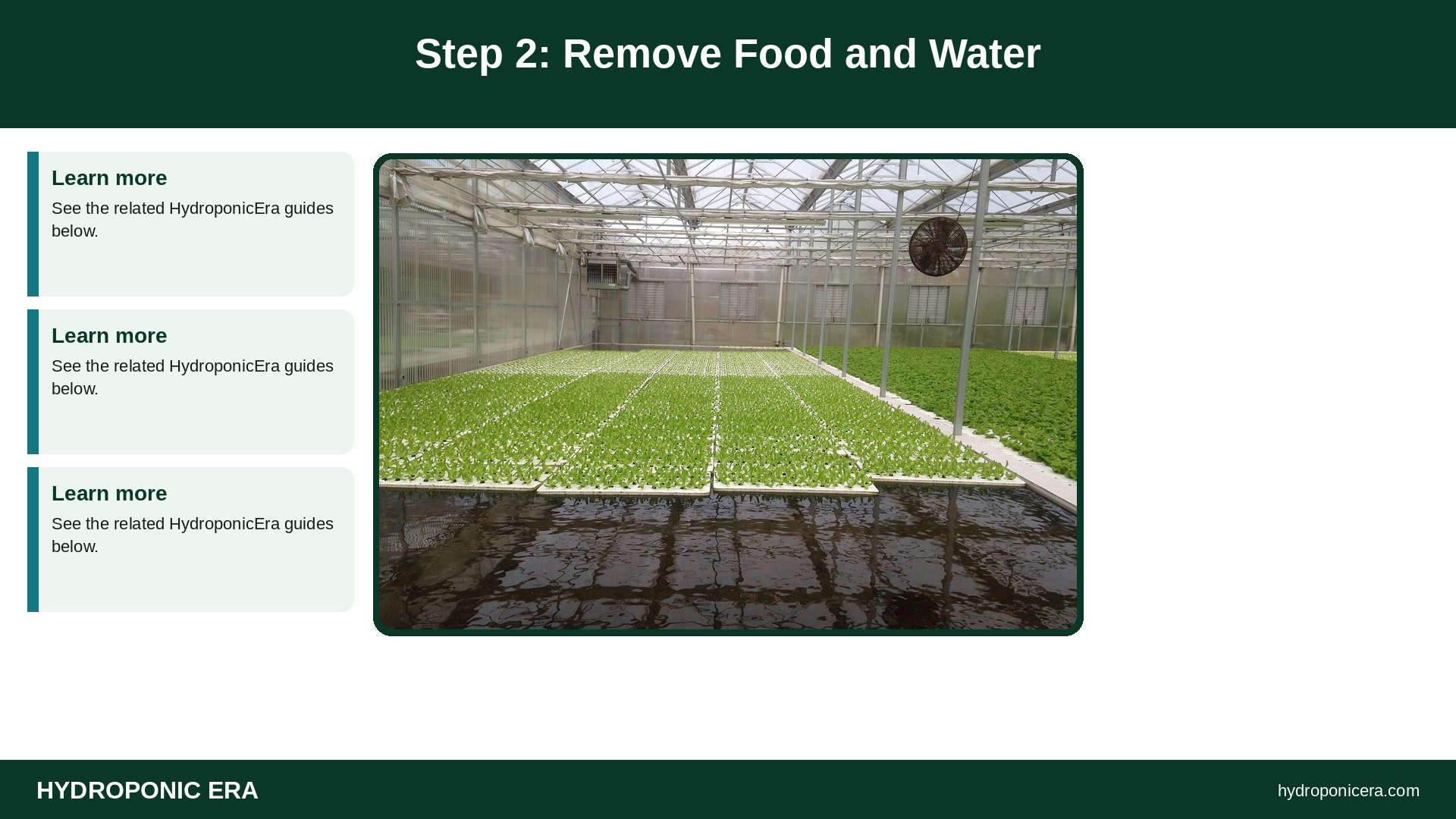
- Wipe up spilled nutrient solution and sugary additives promptly.
- Fix leaks; see hydroponic system leaks.
- Keep reservoir lids tight and empty standing water from trays.
- Store nutrients and supplements sealed.
- Clean up dead leaves and plant debris.
Step 3: Block Access
Every colony needs a path. Breaking it is one of the most effective controls in a hydroponic setup.
- Moats: set table or rack legs in shallow dishes of water (change it often to avoid mosquitoes; see mosquito larvae).
- Sticky barriers: apply insect barrier tape or a sticky band around stands or legs, not on plant stems.
- Trim bridges: keep leaves, cords, and tubing from touching walls or other surfaces they can climb.
- Seal entry points: caulk cracks near indoor setups; UC IPM recommends excluding these insects from buildings this way.
Step 4: Use Enclosed Baits Away From Plants
UC IPM recommends slow-acting baits that workers carry back to the colony, rather than sprays that only kill foragers. Place enclosed bait stations along trails on the floor or wall, away from the reservoir and edible plants. Follow label directions, keep baits away from children and pets, and avoid using sprays near baits, which can repel the foragers from them. Try sugar-based or protein-based baits depending on what the colony accepts.
Ants in Grow Media
Colonies occasionally nest in clay pebbles, perlite, or rockwool, especially in outdoor or greenhouse systems. Signs include soil-like particles on the surface and the insects carrying eggs. Flooding the media briefly or moving plants to fresh media can drive them out. Clean and sterilize media between crops; see clay pebbles and cleaning and sterilizing.
Outdoor and Greenhouse Systems

Outdoor hydroponics, such as balcony or backyard systems, face more pressure. Raise systems on stands with moats or sticky barriers, keep the area around them weeded and clean, and inspect plants often. Greenhouses benefit from sealing gaps and keeping benches free of debris. See balcony hydroponics and hydroponic greenhouses.
What Not to Do
- Don’t spray insecticides into or near the reservoir.
- Don’t use products not labeled for edible crops on food plants.
- Don’t put sticky barrier products directly on tender stems.
- Don’t ignore the honeydew pests; the trail will return.
For pesticide safety, read and follow every product label; the US EPA explains that the label is the law for pesticide use.
Prevention Checklist
- Inspect new plants before adding them; see quarantine protocol.
- Check for aphids and scale weekly.
- Keep the area clean and dry outside the reservoir.
- Use barriers on stands.
- Monitor with sticky traps for flying pests; see sticky traps.
Why Control Matters Beyond the Nuisance
A few scouts on a countertop garden aren’t a crisis, but a steady trail is a signal. Colonies that tend aphids, mealybugs, or soft scale protect those pests from natural enemies and help them spread to new plants. Indoors, that can turn a minor aphid problem into a full infestation in a few weeks. They can also carry debris into reservoirs and nest in dry grow media around the base of larger plants. Treat the trail as an early warning to check every plant closely for sap-feeding insects, especially on new growth and under leaves. See common hydroponic pests.
Monitoring After Treatment
After you clean up honeydew, seal gaps, and place baits, check the area at the same time each day for a week. Fewer insects each day means the colony is taking bait or has lost interest. If the trail returns, look again for a hidden aphid colony or a sugar source nearby. Keep a sticky trap on the shelf to catch flying pests that often travel with them.
FAQs: Ants in Hydroponics
Are ants bad for hydroponic plants?
Not usually directly, but they protect sap-sucking pests and can nest in media, so they’re a warning sign.
Why are ants in my hydroponic reservoir?
They’re likely seeking water or sugary residues. Tighten lids, fix leaks, and clean spills.
How do I keep ants off my hydroponic system?
Control honeydew pests, remove food and water, use moats or sticky barriers on stands, and place enclosed baits away from plants.
Can I use ant spray near hydroponic plants?
Avoid spraying near reservoirs or edible crops. Baits placed away from plants are safer and more effective.
Do ants farm aphids?
Many these insects tend aphids for honeydew and defend them from predators.
Sources
- UC IPM — Ants: Home and Landscape
- UC IPM — Ant Management in Gardens and Landscapes
- US EPA — Introduction to Pesticide Labels
- Photo credits (Wikimedia Commons, edited with titles): Ants cultivating aphids on the underside of tree leaves, Kluizenbos, Aalst, 2026 by DimiTalen (CC0); Bemisia tabaci under leaf of eggplant by Wee Hong (CC BY-SA 4.0); Deep water culture by ArcadiYay (CC BY-SA 4.0); Click & Grow Smart Garden 27 by Janar Raidla (CC BY-SA 4.0); PepperFlower4K by Bst9jkj (CC0)