
Cilantro bolting happens when the plant switches from making leaves to sending up a flower stalk, and it is triggered mainly by warm temperatures and long days. Once cilantro bolts, leaves become smaller, feathery, and more bitter. In hydroponics you can delay bolting by keeping air temperatures cool (roughly 50–75°F works best for leaf production), limiting the light period, choosing slow-bolt varieties, harvesting often, and sowing new batches every two to three weeks. You can’t stop bolting forever, because cilantro is a short-lived annual.
Key takeaway: Cool temperatures, shorter days, slow-bolt seed, and succession sowing are the four levers that matter most.
| Factor | Effect on bolting | What to do |
|---|---|---|
| Warm air temperature | Speeds bolting | Keep the room cool |
| Long photoperiod | Signals flowering | Use a moderate day length |
| Plant age | Older plants bolt | Succession sow every 2–3 weeks |
| Variety | Some bolt faster | Choose slow-bolt types |
| Stress | Can hasten bolting | Steady water, nutrients, root temps |
| Harvest habits | Light harvests leave mature plants | Cut regularly |
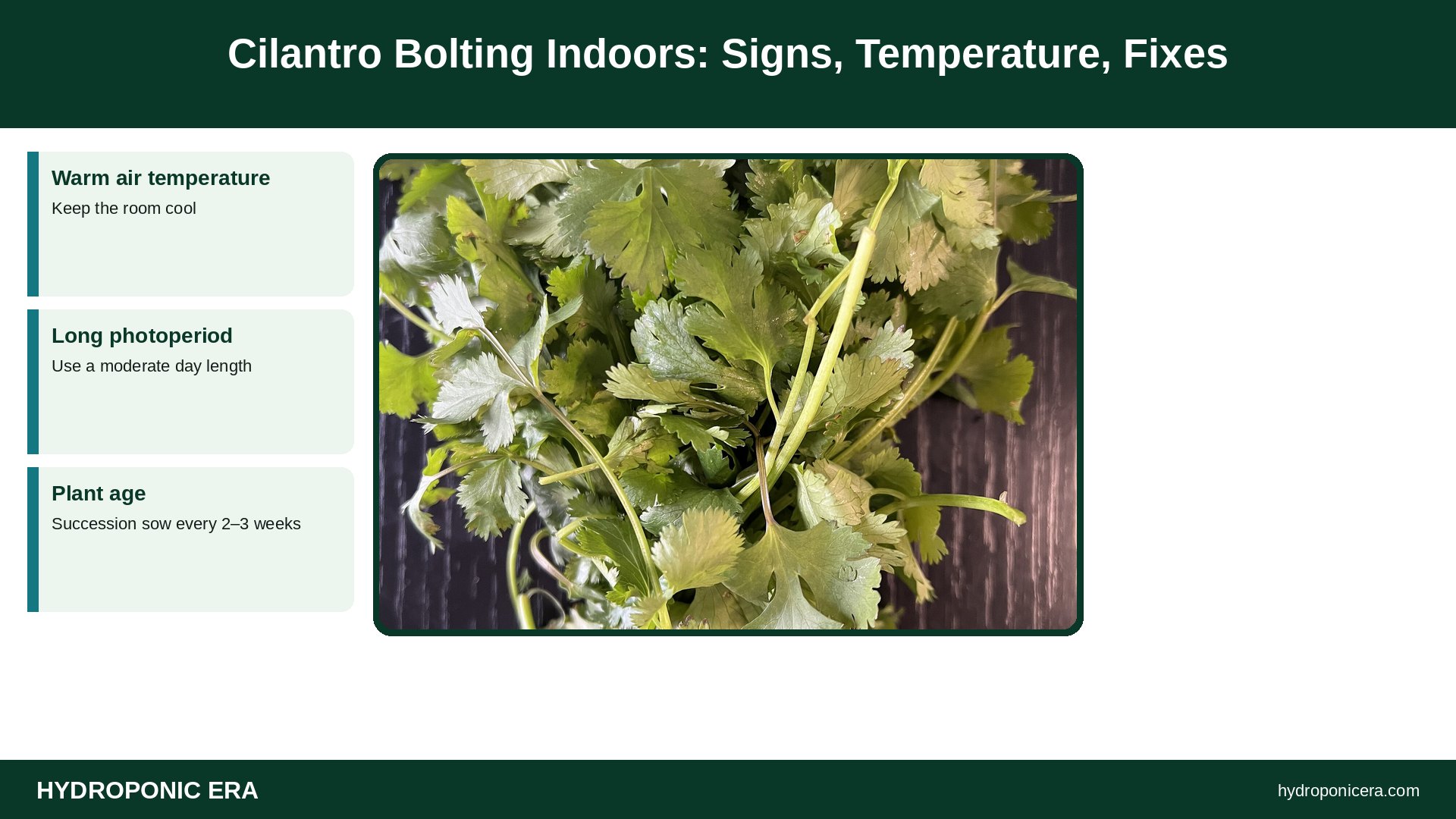
What Is Cilantro Bolting?
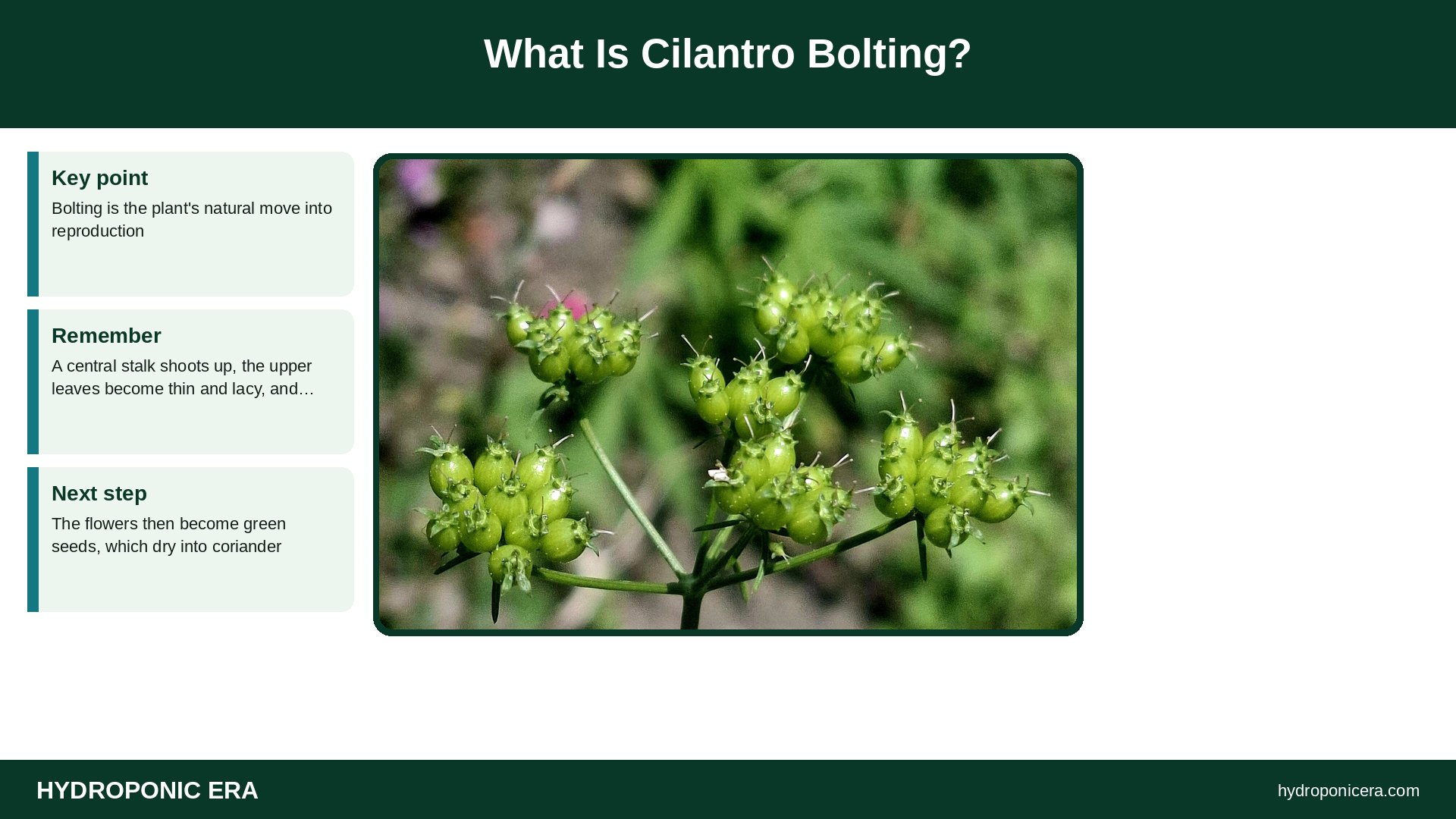
Bolting is the plant’s natural move into reproduction. A central stalk shoots up, the upper leaves become thin and lacy, and small white or pale pink flowers form. The flowers then become green seeds, which dry into coriander. Oregon State University Extension notes that cilantro prefers cool weather and goes to seed quickly in heat, which is why spring and fall crops do best outdoors. Indoors, you control the season.
Why Cilantro Bolts So Fast
Cilantro is a fast annual. Warm conditions and long days tell the plant to flower and set seed before conditions get worse. Stress can push it along. That’s why many growers find their first cutting is great and the second is already going to seed.
Temperature Control

Temperature is the biggest lever against cilantro bolting. Keep air temperatures cool and avoid placing cilantro right next to hot lights or in warm corners. Reservoir temperature matters too: warm roots add stress. See reservoir temperature and heat stress.
Light Period
Long days encourage flowering. Many indoor herb growers run cilantro on a moderate photoperiod rather than very long ones. Enough light keeps leaves dense; excessive day length speeds bolting. Test what works in your setup and track the date the stalk appears. See PPFD and DLI.
Choose Varieties That Resist Cilantro Bolting
Seed companies sell cilantro varieties described as slow-bolting, such as ‘Calypso’, ‘Santo’, and ‘Leisure’. They still bolt eventually, but usually later than generic seed. Check the description on the packet.
Succession Sowing
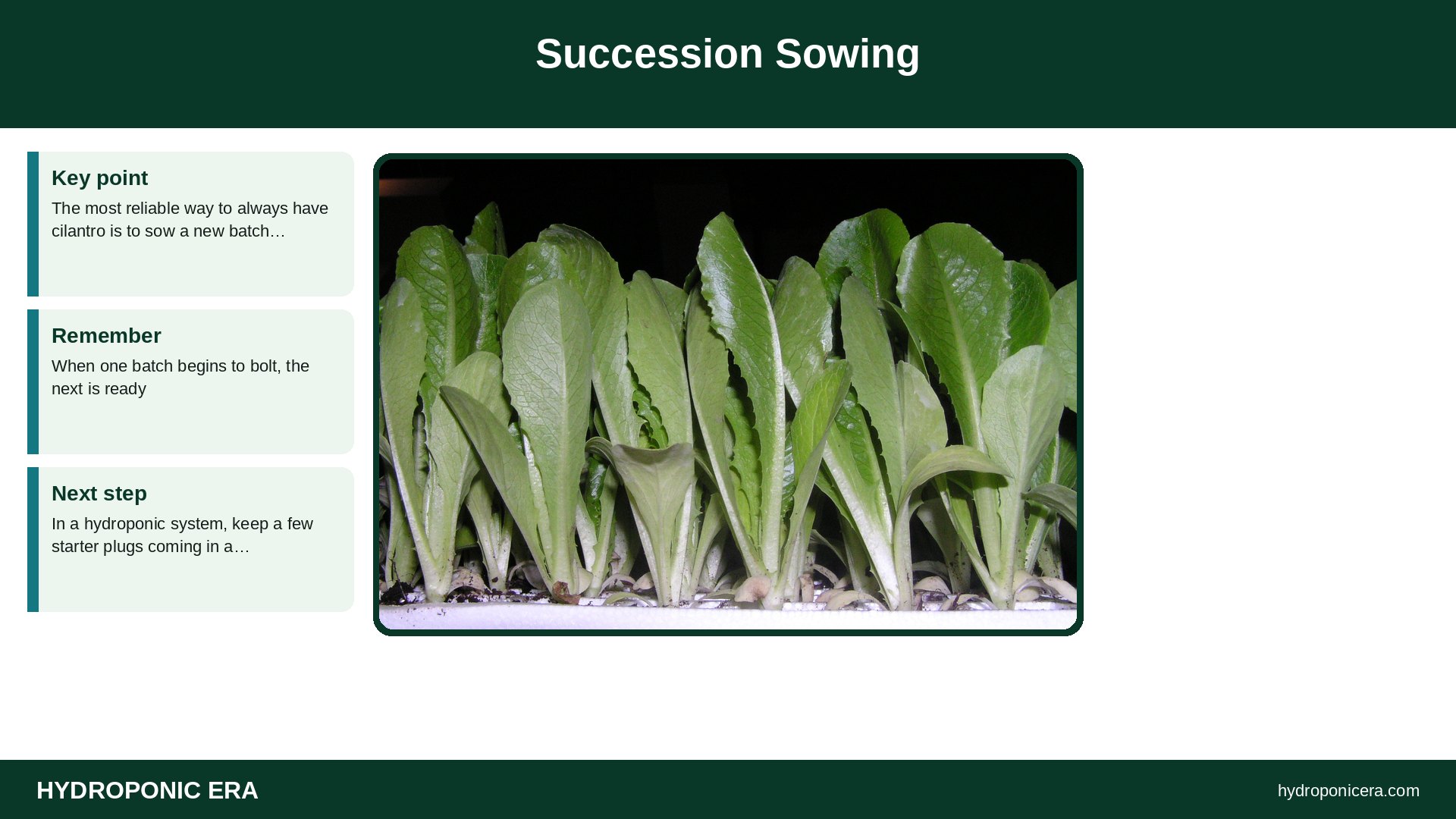
The most reliable way to always have cilantro is to sow a new batch every two to three weeks. When one batch begins to bolt, the next is ready. In a hydroponic system, keep a few starter plugs coming in a propagation tray. See how to grow cilantro hydroponically and germination methods.
Harvest Often
Cut outer stems regularly once plants are a few inches tall, leaving the center to keep growing. Don’t remove more than about a third at once. Regular harvests give you more usable leaves before bolting.
Keep Nutrition and Roots Steady
Stress from pH swings, very high EC, or root problems can hasten bolting. Keep the solution in a typical herb range and avoid big swings. See best herbs for hydroponics.
What to Do When Cilantro Bolts
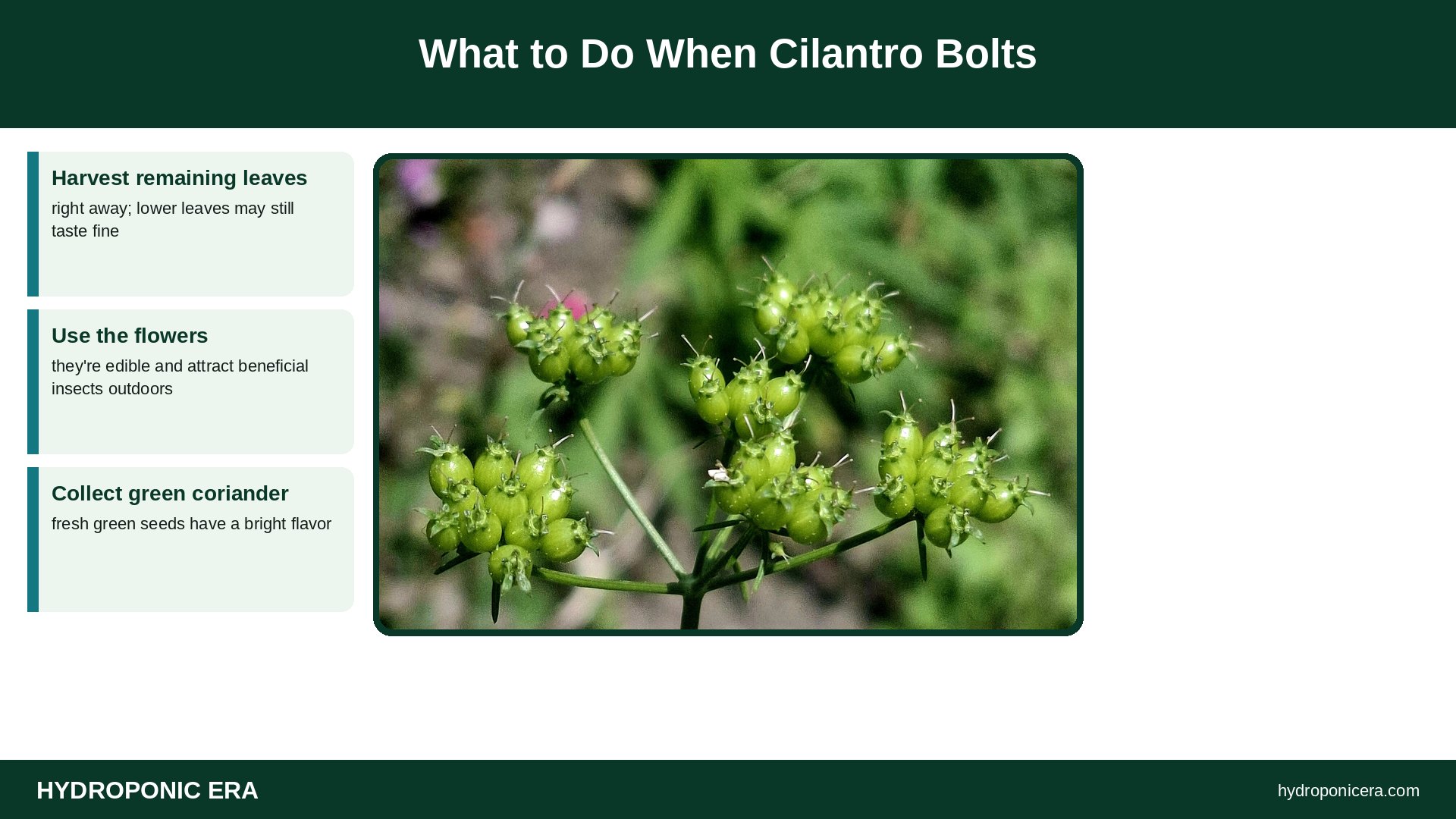
- Harvest remaining leaves right away; lower leaves may still taste fine.
- Use the flowers: they’re edible and attract beneficial insects outdoors.
- Collect green coriander: fresh green seeds have a bright flavor.
- Let seeds dry on the plant for coriander spice or to save seed.
- Replace the plant with your next succession batch.
Pinching the flower stalk may buy a little time, but it usually doesn’t reverse bolting.
Signs Cilantro Bolting Has Started
Catching cilantro bolting early lets you harvest more good leaves. Watch for these signs:
- The center of the plant stretches upward faster than the outer leaves.
- New leaves become thin and feathery, like dill, instead of broad and flat.
- A thicker, hollow-looking stem rises from the middle.
- Small clusters of flower buds form at the top.
- The leaf flavor becomes sharper or slightly bitter.
When you see the stem stretching, harvest heavily within a few days. The broad lower leaves are still the best quality.
Cilantro Bolting Timeline Indoors
From seed, cilantro usually gives usable leaves in about three to four weeks. Under cool, moderate light, many indoor growers get several weeks of cutting before cilantro bolting starts. In a warm room with long days, it can happen much sooner. Tracking your own sowing date and the date you first see the stalk is the best way to learn how long your setup gives you, and then you can set your succession sowing interval to match. The same logic applies to lettuce; see lettuce bitterness and bolting timeline.
Cilantro Bolting in Countertop Gardens
Countertop gardens often run long light cycles and sit in warm kitchens, which makes cilantro bolting common. If your unit lets you set the light schedule, shorten it for cilantro. Keep the garden away from ovens, sunny windows, and heat vents. Harvest at least weekly and start replacement pods early so a new plant is ready when the old one flowers.
Growing for Coriander Seed on Purpose
If you’d like coriander spice, cilantro bolting is welcome. Let the plant flower and set seed, keep it watered, and wait until most seeds turn tan and dry. Cut the stems, hang them upside down in a paper bag, and let the seeds fall as they finish drying. Store dried seeds in an airtight jar.
FAQs: Cilantro Bolting
Why does my hydroponic cilantro bolt so fast?
Warm temperatures, long days, plant age, and stress all trigger bolting.
Can you stop cilantro from bolting?
You can delay it, but not prevent it permanently. Use cool temps, moderate day length, slow-bolt seed, and succession sowing.
Is bolted cilantro safe to eat?
Yes. It’s safe, but leaves become smaller and may taste stronger or bitter.
Should I cut off cilantro flowers?
Cutting them may slow things briefly, but plan to replace the plant soon.
How often should I sow cilantro?
Every two to three weeks for a steady supply.
Sources
- Oregon State University Extension — How to grow cilantro for leaves or coriander seeds
- USDA National Agricultural Library — Hydroponics
- Photo credits (Wikimedia Commons, edited with titles): Liat Portal for Foodie Disorder – Cilantro from San Francisco Farmers Market by HaJunkiyada (CC BY-SA 4.0); Coriander Green Seeds (Coriandrum sativum) in Shimla by Sapna Sony (CC BY-SA 4.0); Click & Grow Smart Garden 27 by Janar Raidla (CC BY-SA 4.0); Lettuce Plugs by Apapac at English Wikipedia (Public domain)