
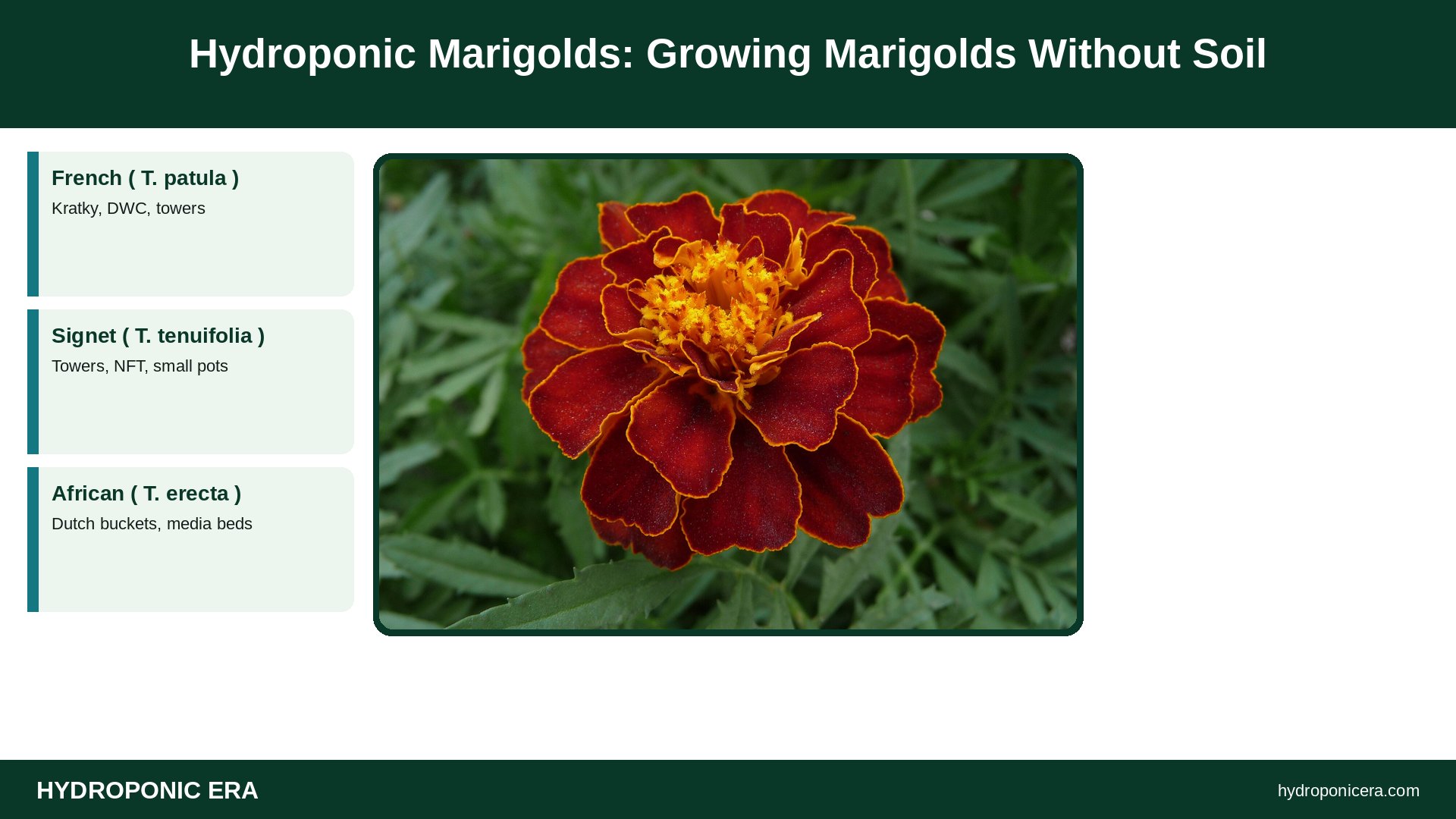
Hydroponic marigolds grow easily in most systems, from Kratky buckets to Dutch buckets and media beds, as long as they get full sun or strong grow lights. Marigolds (Tagetes) are fast annuals that germinate in about a week in warm conditions and bloom for months with deadheading. North Carolina State Extension lists African marigold (Tagetes erecta) as a full-sun annual, and UF/IFAS notes signet marigold seed germinates in about one week at 70–75°F. Compact French and signet marigolds are best for small indoor systems; tall African marigolds need deeper media and support.
Key takeaway: Start marigolds in plugs, give them bright light and a balanced bloom nutrient, keep roots aerated, and deadhead to keep flowers coming.
| Type | Size | Best hydroponic system |
|---|---|---|
| French (T. patula) | Compact | Kratky, DWC, towers |
| Signet (T. tenuifolia) | Small, edible flowers | Towers, NFT, small pots |
| African (T. erecta) | Tall, large blooms | Dutch buckets, media beds |
Why Grow Hydroponic Marigolds?
- Bright, long-lasting color.
- Fast from seed to bloom.
- Signet marigold flowers are edible. See edible flowers.
- Often grown as companion plants in vegetable gardens.
Starting Hydroponic Marigolds From Seed
- Sow one or two seeds per starter plug, barely covered.
- Keep plugs moist and warm, around 70–75°F; UF/IFAS says seed germinates in about a week at that range.
- Give bright light right after germination to prevent stretching.
- Transplant to net cups when seedlings have a few true leaves and roots show.
See starter sponges.
Best Systems for Hydroponic Marigolds
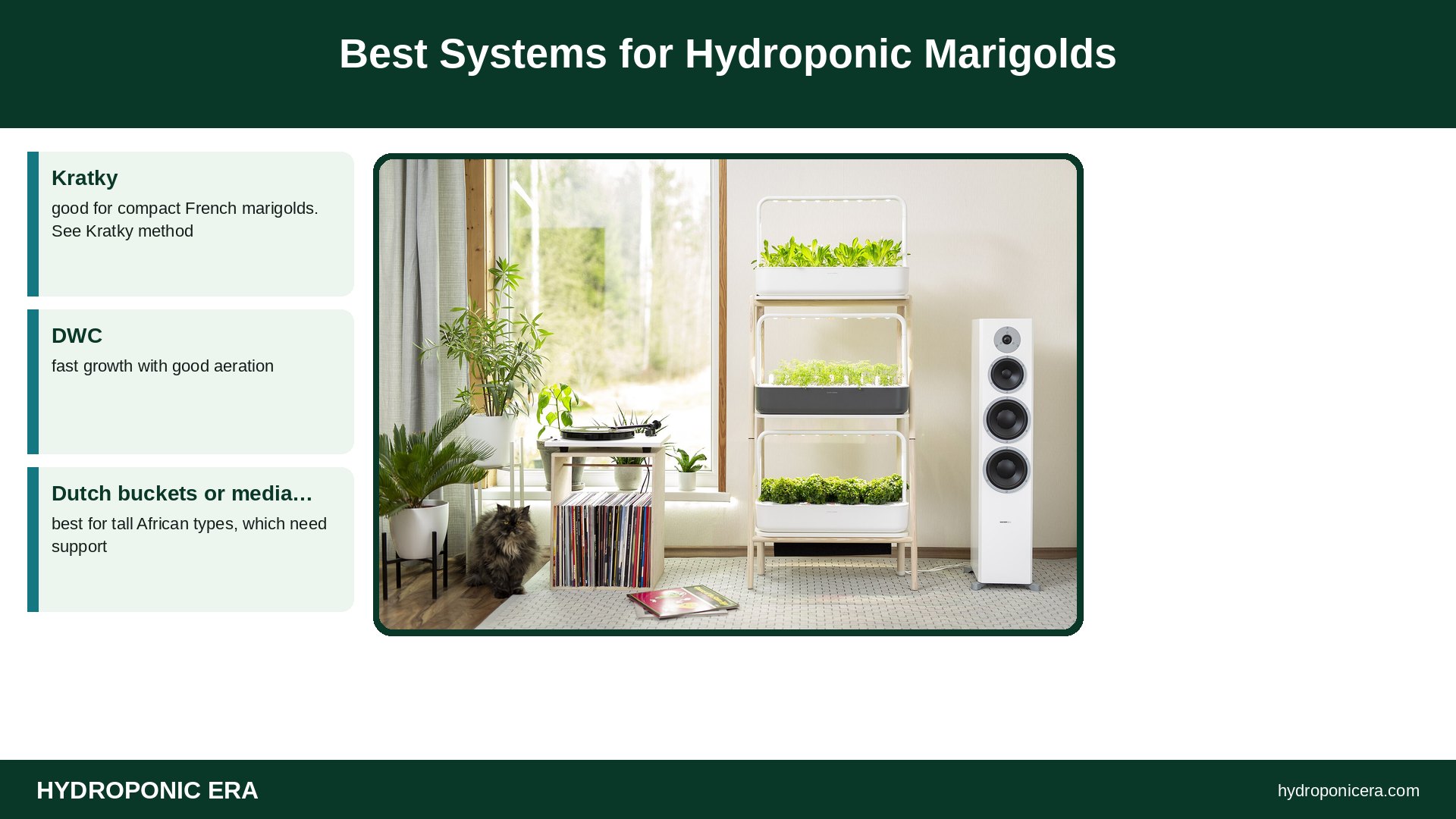
- Kratky: good for compact French marigolds. See Kratky method.
- DWC: fast growth with good aeration.
- Dutch buckets or media beds: best for tall African types, which need support.
Light for Hydroponic Marigolds
NC State lists marigolds as full-sun plants. Indoors, give strong LED light for 12–16 hours. Too little light causes leggy stems and few flowers. See LED watts per square foot.
Nutrients for Hydroponic Marigolds
Use a balanced hydroponic nutrient during leafy growth, then a bloom formula with a bit more phosphorus and potassium once buds form. Too much nitrogen produces lush leaves and fewer flowers. Keep pH in the usual hydroponic range of about 5.5–6.5 and check EC weekly. See EC and TDS.
Deadheading Hydroponic Marigolds
University guides recommend removing spent flowers to encourage more blooms and prevent seed set. Pinch or snip faded flowers every few days. Pinching the growing tip of young plants once also makes them bushier.
Common Problems With Hydroponic Marigolds
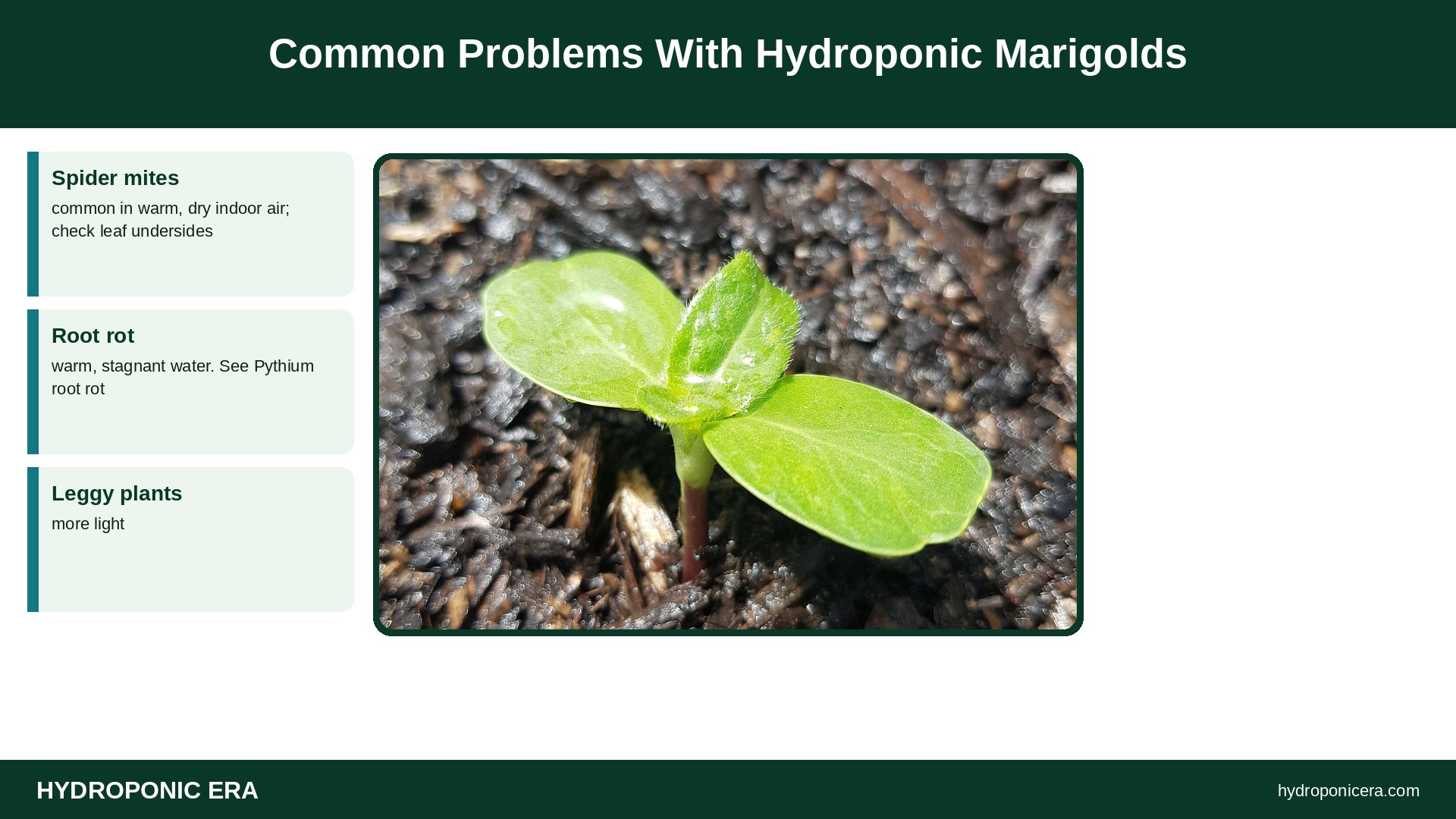
- Spider mites: common in warm, dry indoor air; check leaf undersides.
- Root rot: warm, stagnant water. See Pythium root rot.
- Leggy plants: more light.
- Few flowers: too much nitrogen or too little light.
- Flopping: stake tall types.
Saving Seeds From Hydroponic Marigolds
Leave a few flowers on the plant to dry. Pull out the dried seed heads, separate the long, thin seeds, and store them dry. Hybrid varieties may not come true from seed.
Planning Tips: Hydroponic Marigolds
Hydroponic marigolds suit almost any beginner system, from Kratky jars to towers. French and signet types stay compact, while tall African types may need staking. Pinching the growing tip early encourages a bushier plant with more flowers.
Marigolds also make good companion plants in mixed systems, adding color and attracting beneficial insects in outdoor setups.
Weekly Routine for Hydroponic Marigolds
- Check pH and EC, and record them.
- Top off the reservoir with plain, pH-adjusted water.
- Look at roots for color and smell.
- Check leaves, especially undersides, for pests.
- Clean filters, emitters, and pump intakes.
- Change the nutrient fully every two to three weeks, or sooner if EC drifts.
Beginner Mistakes With Hydroponic Marigolds
The most common mistakes are skipping pH testing, using nutrient that’s too strong, letting light reach the water, and ignoring water temperature. Each one is easy to fix once you know to check for it. Start with fewer plants than you think you need, learn the routine, and expand once the system runs smoothly.
Hydroponic Marigolds Varieties
French marigolds stay small and bushy, African marigolds grow tall with large blooms, and signet marigolds have small edible flowers and fine foliage. For small indoor systems, French and signet types fit best. Tall African types suit larger buckets or outdoor towers.
Temperature for Hydroponic Marigolds
Marigolds like warmth and dislike frost. Indoors, normal room temperatures suit them, and good airflow reduces fungal problems on dense foliage.
Using Hydroponic Marigolds
Use them as cut flowers, edible garnishes from signet types, or bright additions to mixed herb systems. Only eat flowers grown without pesticides not labeled for food crops.
Hydroponic Marigolds Setup Step by Step
- Sow seeds in starter plugs at 70–75°F.
- Move seedlings to net pots once roots show.
- Place in a DWC tote, Kratky jar, or tower.
- Give bright light for most of the day.
- Feed a mild, complete nutrient and check pH weekly.
- Pinch tips once and deadhead faded blooms.
Hydroponic Marigolds Pests
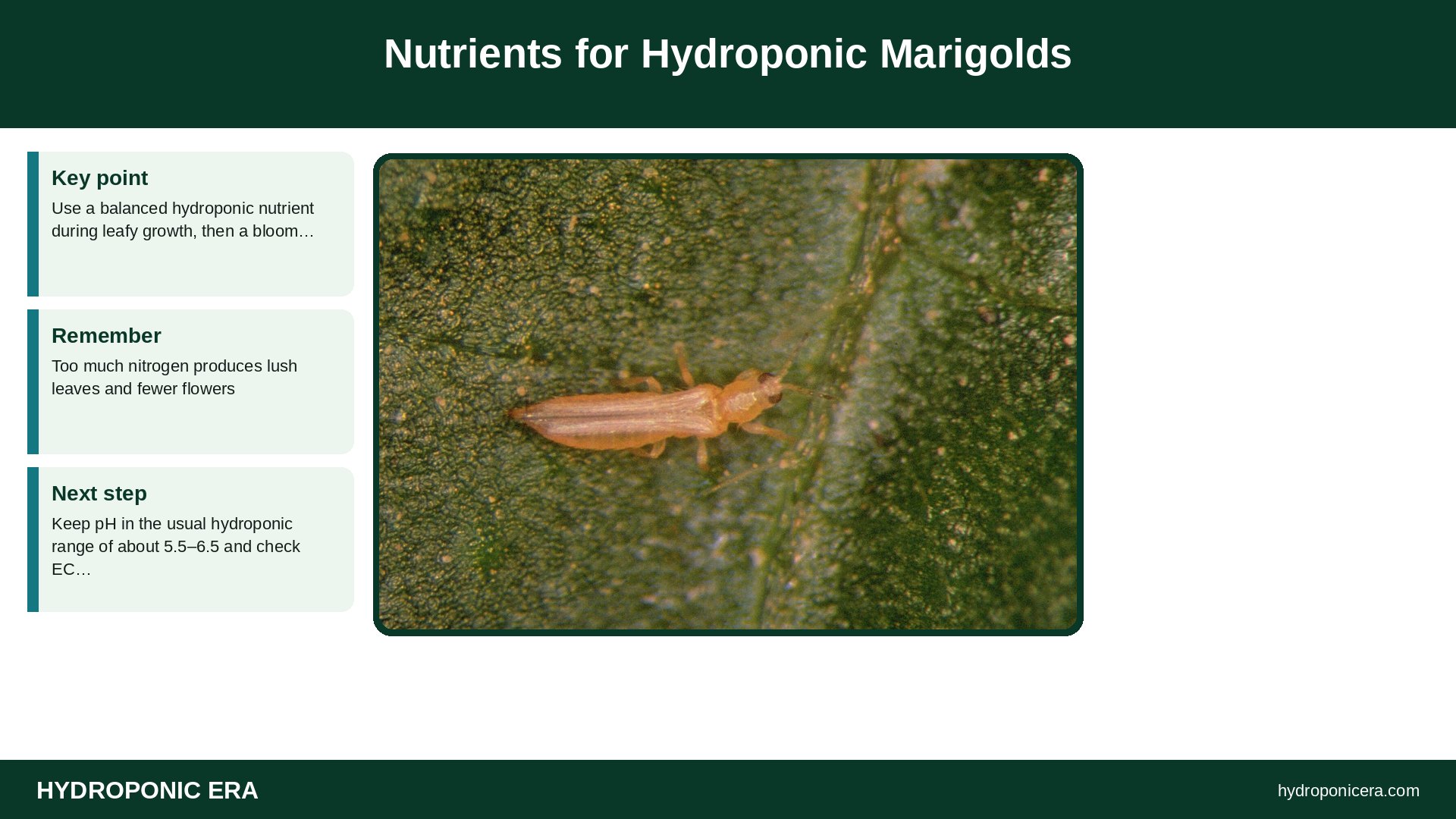
Aphids, spider mites, and thrips can attack marigolds indoors. Check leaves weekly, rinse pests off with water, and use sticky traps. Good airflow and avoiding wet foliage also reduce gray mold on blooms.
Harvesting Hydroponic Marigolds
Cut flowers in the morning when fully open, and place them in water right away. For edible signet types, rinse gently and use the petals fresh.
Hydroponic Marigolds Spacing
Compact French and signet marigolds can sit in neighboring tower ports or net cups a few inches apart, while tall African types need their own bucket and room to spread. Crowded plants hold humid air around the foliage, which encourages gray mold and mildew, so leave space for air to move and thin weak seedlings early. Rotate trays or towers now and then so every plant gets even light.
FAQs: Hydroponic Marigolds
Can marigolds grow hydroponically?
Yes, in most systems, with plenty of light.
How long until marigolds bloom?
Usually several weeks from seed, depending on type and light.
Which marigold is best for hydroponics?
Compact French or signet types.
Are marigold flowers edible?
Signet marigold flowers are commonly eaten; check the species first.
Do marigolds need deadheading?
Yes, to keep blooms coming.
Can marigolds share a system with herbs?
Yes; their nutrient needs are similar to many herbs.
Sources
- NC State Extension — Tagetes erecta plant profile
- UMN Extension — Marigolds
- UF/IFAS — Tagetes tenuifolia, Signet Marigold
- Photo credits (Wikimedia Commons, edited with titles): French marigold garden 2009 G1 by George Chernilevsky (Public domain); Lettuce Plugs by Apapac at English Wikipedia (Public domain); Click & Grow Smart Garden 27 by Janar Raidla (CC BY-SA 4.0); Frankliniella occidentalis 5364132-LGPT by Frank Peairs, Colorado State University, Bugwood.org (CC BY 3.0); Dwarf sunflower seedling by Hildabast (CC0)