
Hydroponic dwarf fruit trees can work indoors, but the realistic choices are a handful of compact, container-friendly trees, mainly dwarf citrus like Meyer lemon, calamondin, and kumquat, plus figs, grown in a large drip-fed or Dutch-bucket style container filled with coarse media such as perlite, coco, or clay pebbles. Pure water systems like DWC are risky for trees because woody roots rot easily in warm, wet conditions. University of Maryland Extension says dwarf citrus can be kept as 3- to 6-foot houseplants but need at least 6 hours of direct sun, preferably 8–12, plus consistent moisture without waterlogging and hand pollination indoors.
Key takeaway: Choose dwarf citrus or figs, grow them in coarse media with drip or flood-and-drain feeding, give them very bright light, and hand-pollinate indoors.
| Tree | Indoor suitability | Notes |
|---|---|---|
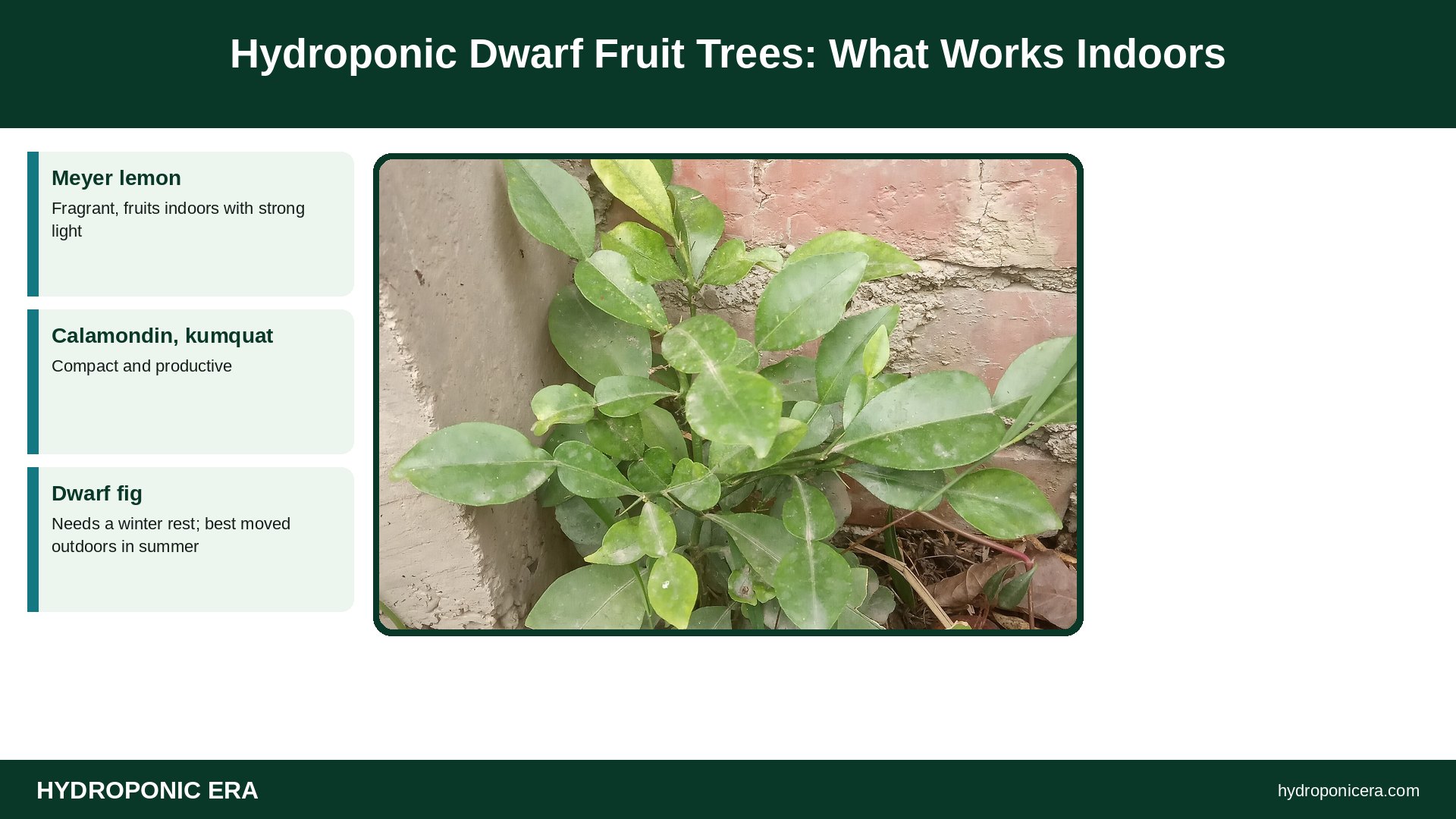
| Meyer lemon | Good | Fragrant, fruits indoors with strong light |
| Calamondin, kumquat | Good | Compact and productive |
| Dwarf fig | Fair | Needs a winter rest; best moved outdoors in summer |
| Dwarf apple, peach, cherry | Poor indoors | Need winter chilling outdoors |
| Dwarf banana, papaya | Fair to poor | Large, need heat and space |
What Works for Hydroponic Dwarf Fruit Trees
Trees are long-lived and have woody roots that need air. The most reliable setup is a large container of coarse, inert media, fed by drip or flood-and-drain from a reservoir and allowed to drain freely. This mirrors UMD’s advice for potted citrus: consistent moisture, a drainage hole, and never letting plants sit in standing water. See DWC vs NFT vs Dutch bucket and hydroponic lemon tree.
Best Hydroponic Dwarf Fruit Trees for Indoors
UMD notes many dwarf citrus varieties, from lemons and limes to mandarins and kumquats, are grafted onto rootstocks that keep them small. These handle indoor conditions best. Temperate fruits like apples, peaches, and cherries need weeks of winter cold to flower and fruit, so they’re poor choices for year-round indoor growing.
Light for Hydroponic Dwarf Fruit Trees
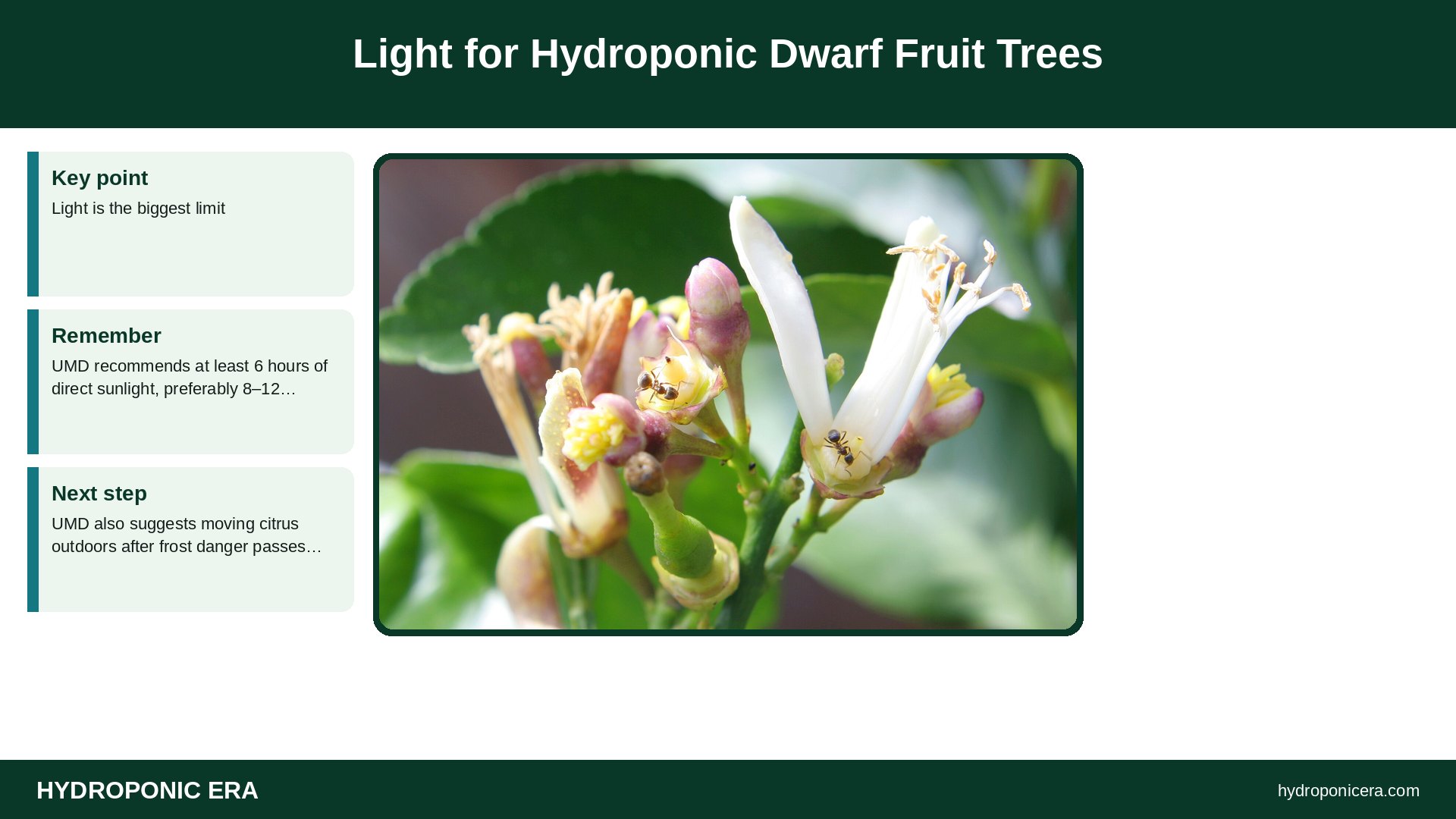
Light is the biggest limit. UMD recommends at least 6 hours of direct sunlight, preferably 8–12, and supplemental LED lighting when window light isn’t enough. UMD also suggests moving citrus outdoors after frost danger passes for summer sun, acclimating gradually over about two weeks, and bringing it back before the first fall frost. See LED watts per square foot.
Setting Up Hydroponic Dwarf Fruit Trees
- Start with a young grafted dwarf tree, and rinse the soil off roots gently, or begin with a tree already grown in coco.
- Use a container of 5–15 gallons with a drain, filled with perlite, coco, or clay pebbles.
- Feed by drip on a timer or flood-and-drain, letting media drain between cycles.
- Return runoff to the reservoir, or run to waste if salts build up.
- Stake the tree until roots anchor in the media.
Nutrients for Hydroponic Dwarf Fruit Trees
Citrus prefers slightly acidic conditions, which UMD notes for its soil. In hydroponics, keep pH in the usual 5.5–6.5 range, use a complete nutrient with micronutrients, and watch for yellow new leaves, which often signal iron shortage at high pH. Feed lightly in winter when growth slows. See iron deficiency.
Pollination Indoors
UMD says hand pollination is essential for fruit indoors. Use a small paintbrush to move pollen between open flowers every few days while the tree blooms. Figs commonly grown at home are often self-fruitful types that don’t need pollinating.
Pruning and Root Care
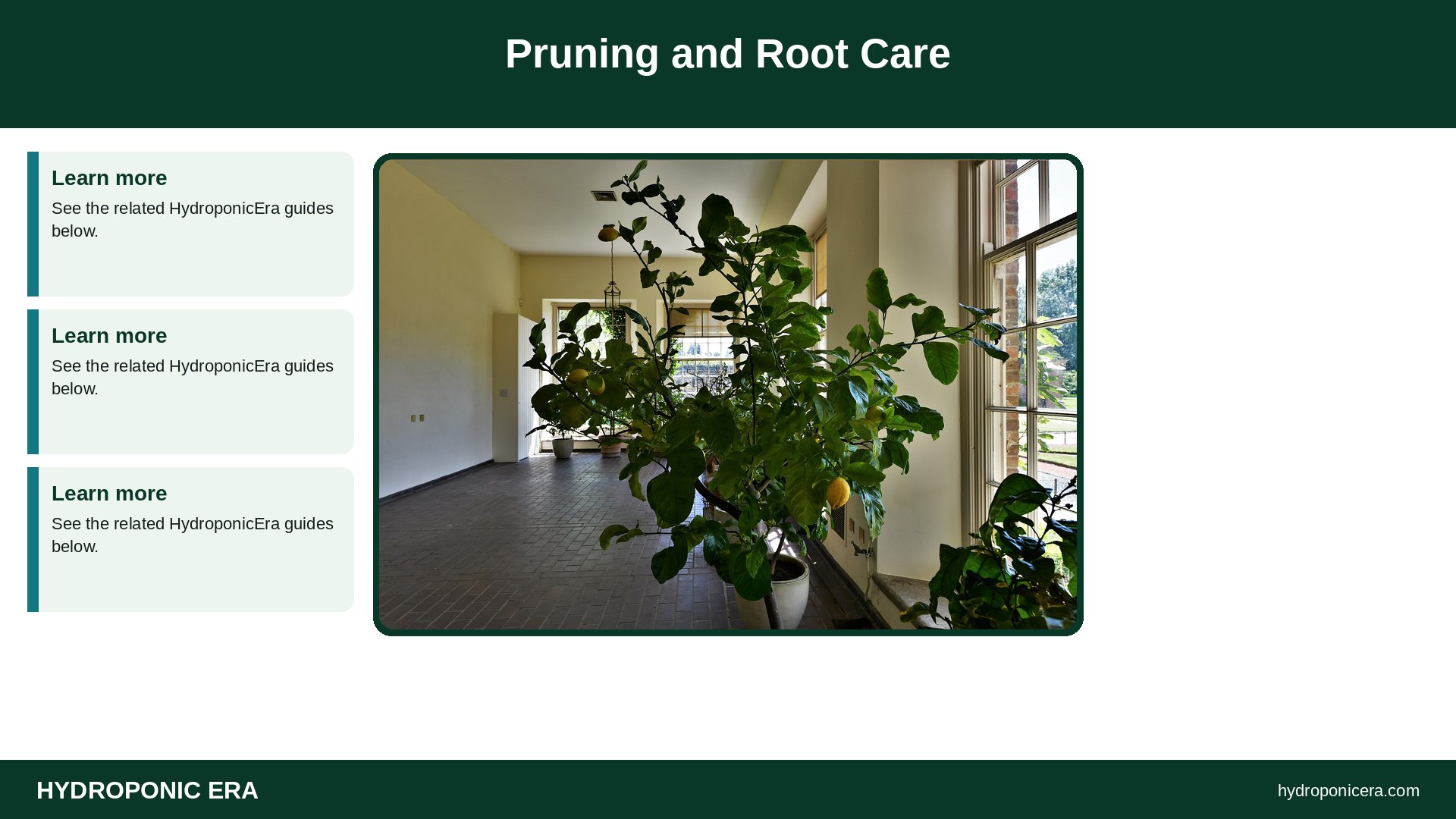
- Prune to keep the tree compact and open to light.
- Remove suckers below the graft.
- Check roots each year; trim circling roots and refresh media.
- Flush media with plain water every few weeks to reduce salt buildup.
Common Problems
- Leaf drop: sudden light or temperature changes, often when moving indoors.
- Root rot: media too wet, or water too warm. See root rot.
- Scale and spider mites: common on indoor citrus.
- No fruit: too little light, or no hand pollination.
Planning Tips: Hydroponic Dwarf Fruit Trees
Hydroponic dwarf fruit trees need patience. Trees grow slowly, often take a few years to fruit, and need consistent care through the year. Keep a log of feeding, pH, and pruning, and make changes gradually, because trees react slowly and sudden swings stress them.
Plan the space for the tree’s full size, including room to move it outdoors in summer if you can.
Weekly Routine for Hydroponic Dwarf Fruit Trees
- Check pH and EC, and record them.
- Top off the reservoir with plain, pH-adjusted water.
- Look at roots for color and smell.
- Check leaves, especially undersides, for pests.
- Clean filters, emitters, and pump intakes.
- Change the nutrient fully every two to three weeks, or sooner if EC drifts.
Beginner Mistakes With Hydroponic Dwarf Fruit Trees
The most common mistakes are skipping pH testing, using nutrient that’s too strong, letting light reach the water, and ignoring water temperature. Each one is easy to fix once you know to check for it. Start with fewer plants than you think you need, learn the routine, and expand once the system runs smoothly.
Hydroponic Dwarf Fruit Trees Systems Compared
| System | Fit for trees |
|---|---|
| Drip into coarse media | Best |
| Flood and drain | Good |
| Dutch bucket | Good for small trees |
| Deep water culture | Risky |
| NFT | Not suitable |
Systems that let media drain and air reach roots match UMD’s advice to avoid waterlogged roots.
Temperature and Humidity
UMD notes citrus thrives in warmth and high humidity. Indoor winter air is dry, so a humidifier or pebble tray helps, and keep trees away from heat vents and cold drafts.
Moving Hydroponic Dwarf Fruit Trees Outdoors
UMD recommends moving citrus outdoors after frost danger and acclimating it gradually over about two weeks, starting in partial shade. A tree on a wheeled base is far easier to move, and a drip system can be paused and replaced with hand feeding during the move. Bring the tree back before the first fall frost, and acclimate it again to lower indoor light.
FAQs: Hydroponic Dwarf Fruit Trees
Can fruit trees grow hydroponically?
Some dwarf trees can, in coarse media with drip or flood-and-drain feeding.
Which fruit tree is best indoors?
Dwarf citrus like Meyer lemon, calamondin, or kumquat.
How much light do they need?
UMD recommends at least 6 hours of direct sun, preferably 8–12.
Do I need to hand-pollinate?
Indoors, yes, for citrus.
Can I grow apples indoors?
Not well; they need winter chilling.
How long until a dwarf tree fruits?
Grafted trees may fruit within a year or two of purchase; seedlings take much longer.
Sources
- University of Maryland Extension — Growing Dwarf Citrus
- Photo credits (Wikimedia Commons, edited with titles): A citrus plant by Haoreima (CC BY-SA 4.0); Meyers Zitrone (Citrus × meyeri) 1 by Burkhard Mücke (CC BY-SA 4.0); Lemon tree flowers with ant by Unknown (CC BY-SA 3.0); Ripe fig fruit on tree (Ficus Carica) in Southern France by Stefan Thiesen (CC BY-SA 3.0); Tredegar House, The Orangery, Potted lemon tree – geograph.org.uk – 6890072 by Michael Garlick (CC BY-SA 2.0)