
A hydroponic coffee plant is a realistic houseplant project: Coffea arabica grows well in containers of free-draining media like perlite, coco, or clay pebbles with drip or semi-hydro watering. NC State Extension says coffee prefers daytime temperatures of 70–80°F, nights of 60–65°F, bright light with some shade, high humidity, and consistently moist but not soggy roots, and that leaves may drop below 55°F. The Missouri Botanical Garden notes plants first flower at about 3–4 years old, so beans take patience.
Key takeaway: Grow coffee in coarse media with steady moisture, warm rooms, bright filtered light, and humidity; expect flowers after a few years.
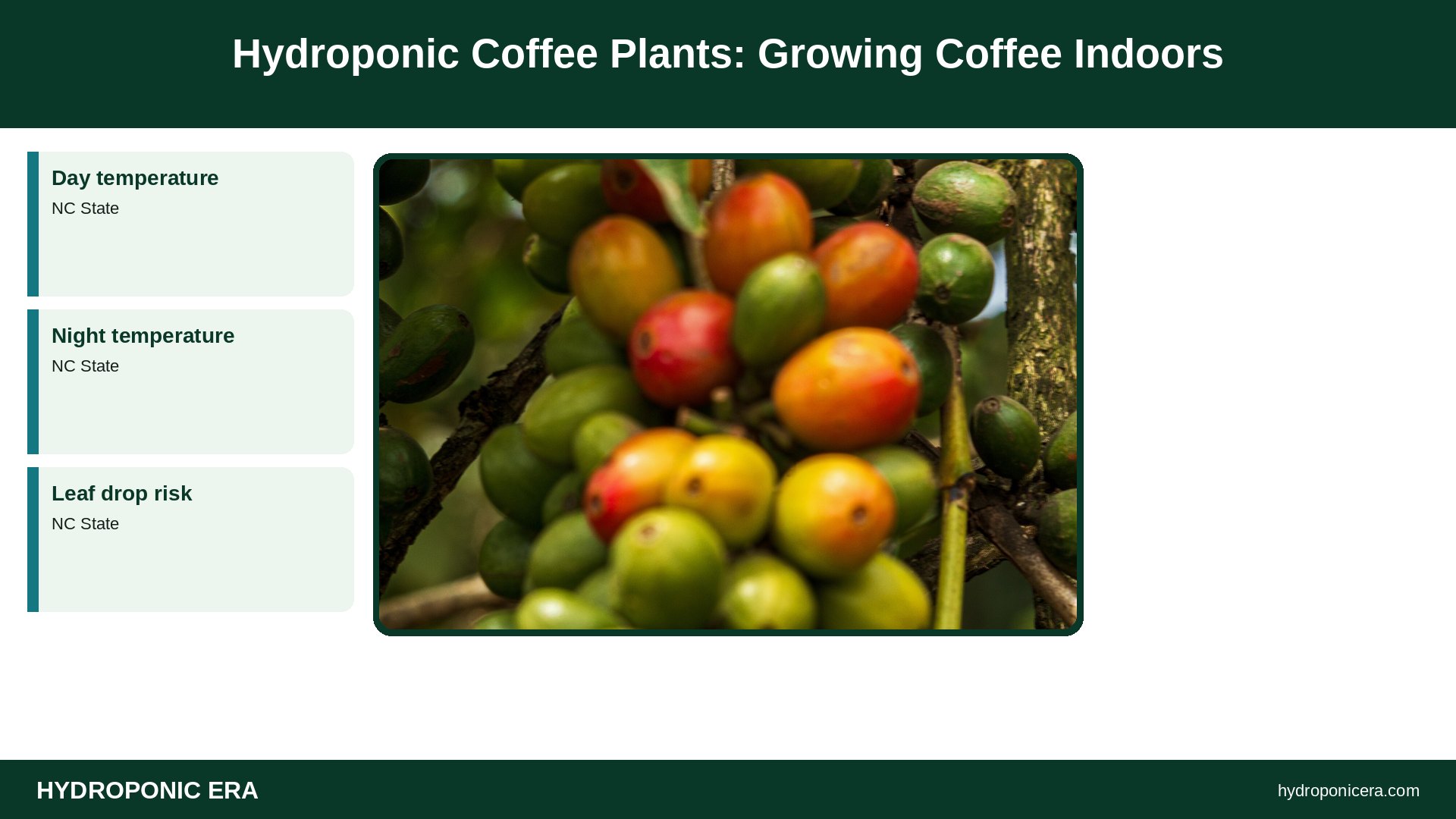
| Need | Target | Source |
|---|---|---|
| Day temperature | 70–80°F | NC State |
| Night temperature | 60–65°F | NC State |
| Leaf drop risk | Below 55°F | NC State |
| Light | Bright, partly shaded | NC State |
| Indoor height | Usually 4–6 ft | NC State |
| First flowers | About 3–4 years | Missouri Botanical Garden |
Can You Grow a Hydroponic Coffee Plant?
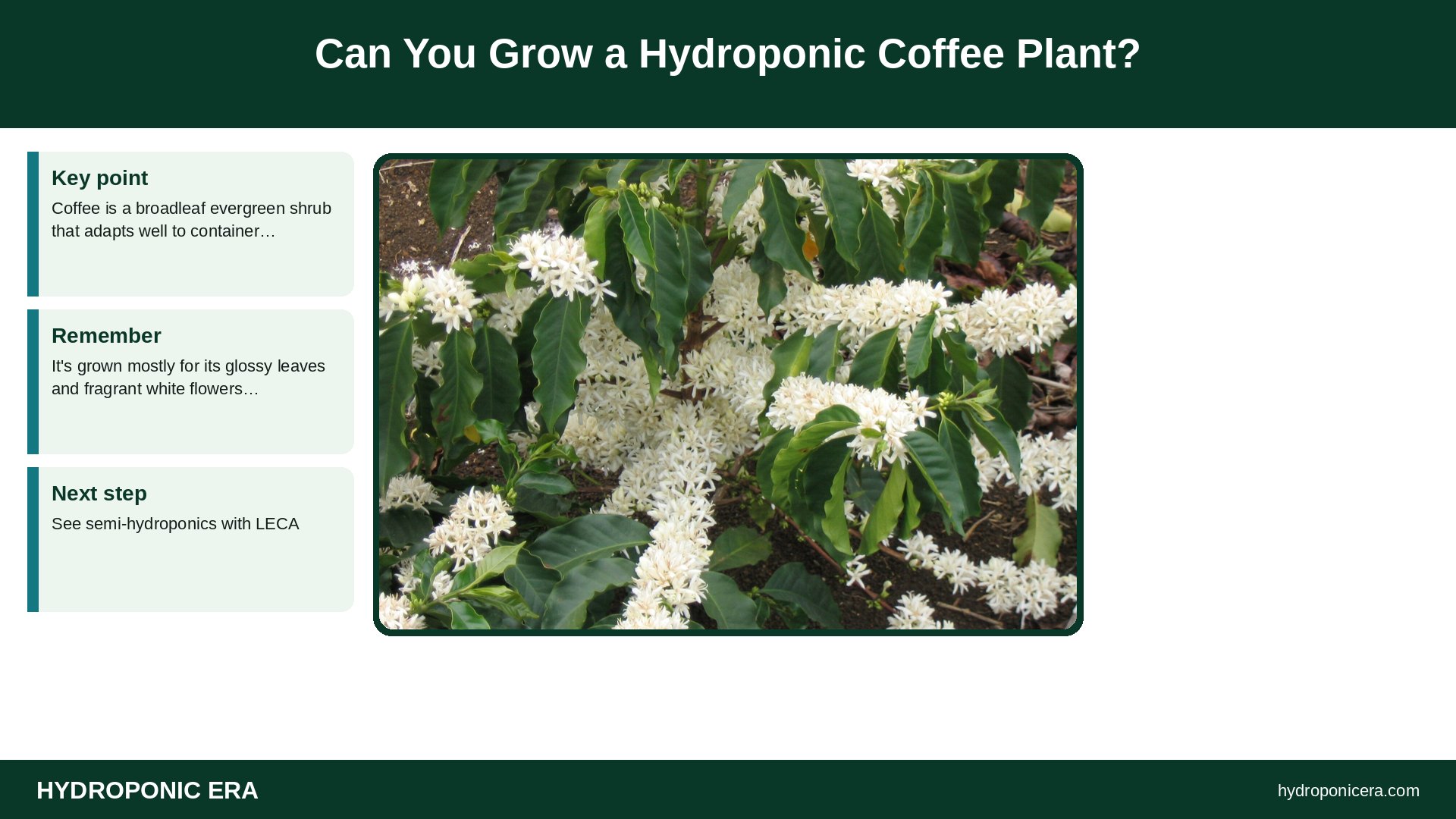
Yes. Coffee is a broadleaf evergreen shrub that adapts well to container life, and its need for steady moisture without waterlogging matches well-run media systems. It’s grown mostly for its glossy leaves and fragrant white flowers, with a small bean harvest as a bonus. See semi-hydroponics with LECA.
Best Systems for a Hydroponic Coffee Plant
- Semi-hydro in LECA: a pot of clay pebbles with a small reservoir at the bottom; simple and low maintenance.
- Drip into perlite or coco: good for larger plants.
- Dutch bucket: works for a mature shrub.
- DWC: possible for young plants, but woody roots prefer air.
Light for a Hydroponic Coffee Plant
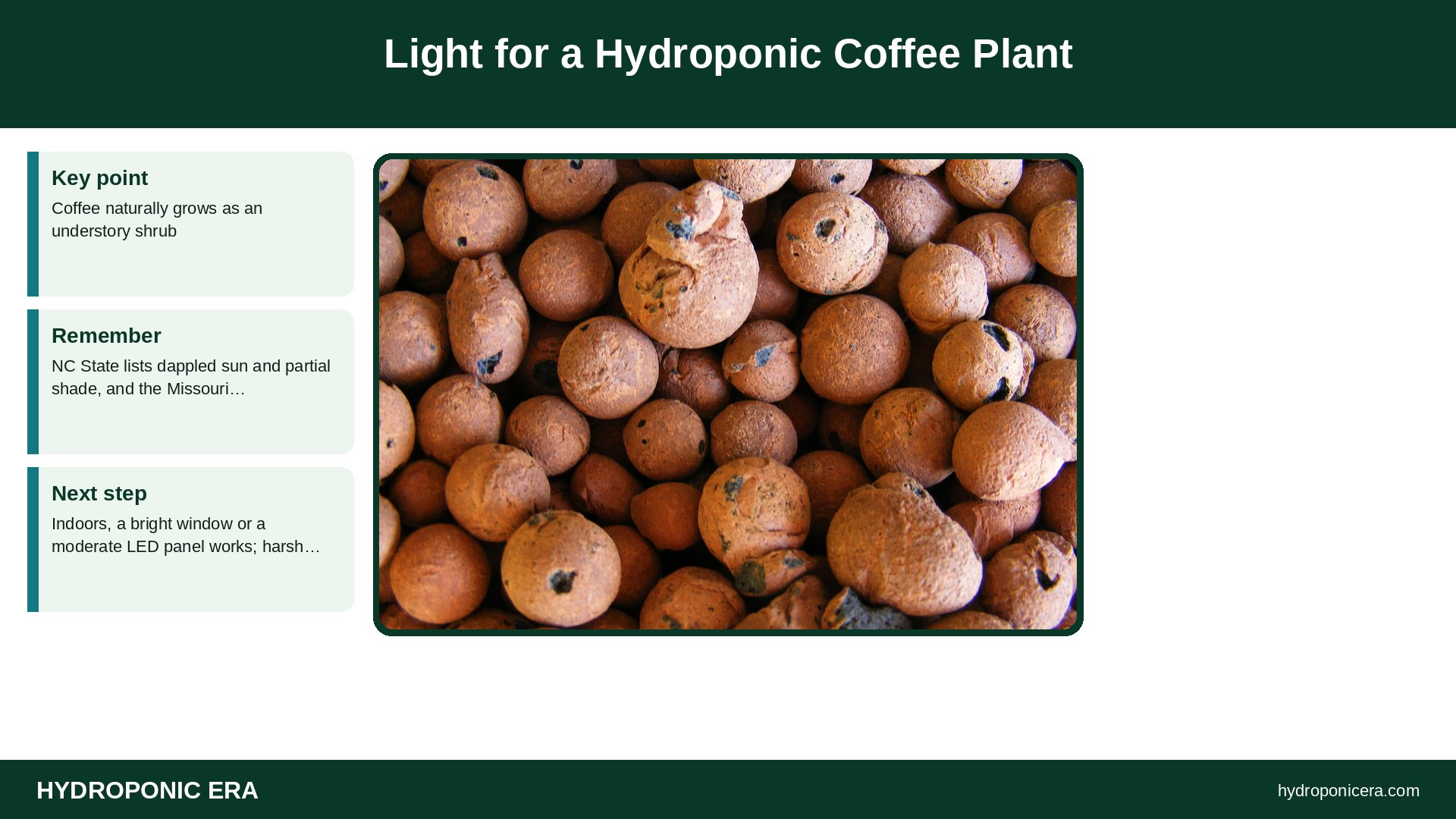
Coffee naturally grows as an understory shrub. NC State lists dappled sun and partial shade, and the Missouri Botanical Garden says indoor plants like bright sunny windows but appreciate light shade outdoors. Indoors, a bright window or a moderate LED panel works; harsh, unfiltered sun can scorch leaves. See grow lights for hydroponics.
Temperature and Humidity
Keep the plant in the 70–80°F daytime range NC State recommends, with cooler nights, and away from cold drafts and heating vents. UF/IFAS notes large daily temperature swings and prolonged cold cause leaf drop and decline. Dry winter air can brown leaf edges, so a humidifier or pebble tray helps.
Nutrients and pH for a Hydroponic Coffee Plant
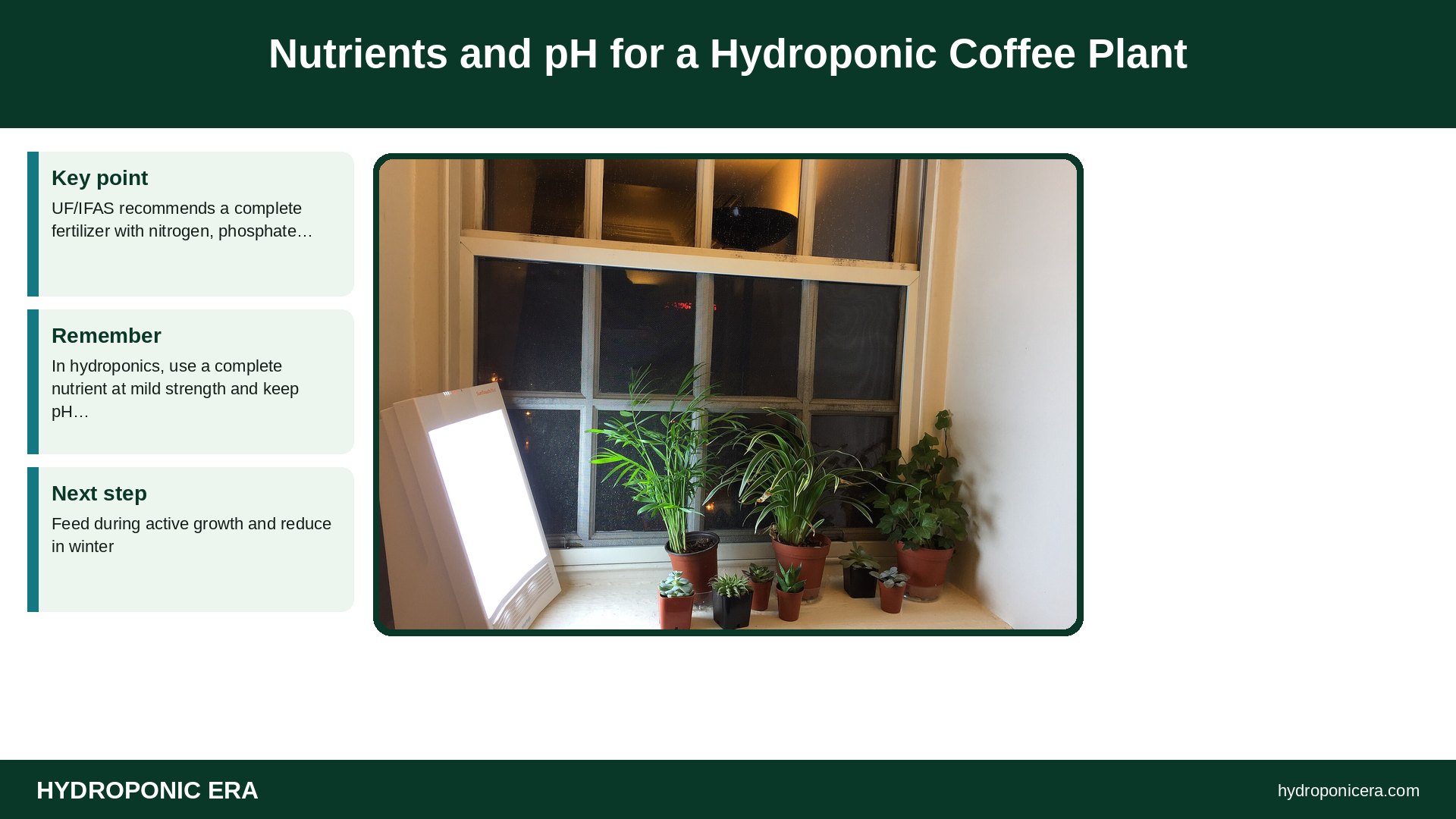
UF/IFAS recommends a complete fertilizer with nitrogen, phosphate, potash, and magnesium for coffee, plus micronutrients such as manganese and zinc. In hydroponics, use a complete nutrient at mild strength and keep pH around 5.5–6.5; coffee prefers slightly acidic conditions. Feed during active growth and reduce in winter. See best hydroponic nutrients.
Getting Coffee to Flower
UF/IFAS notes that soil moisture controls flowering in coffee: growers reduce watering in late winter and resume in spring to trigger blooms. Indoors, a slightly drier period in late winter followed by normal watering may help a mature plant flower. Indoors, flowers may also benefit from gentle hand pollination with a soft brush.
Pruning a Hydroponic Coffee Plant
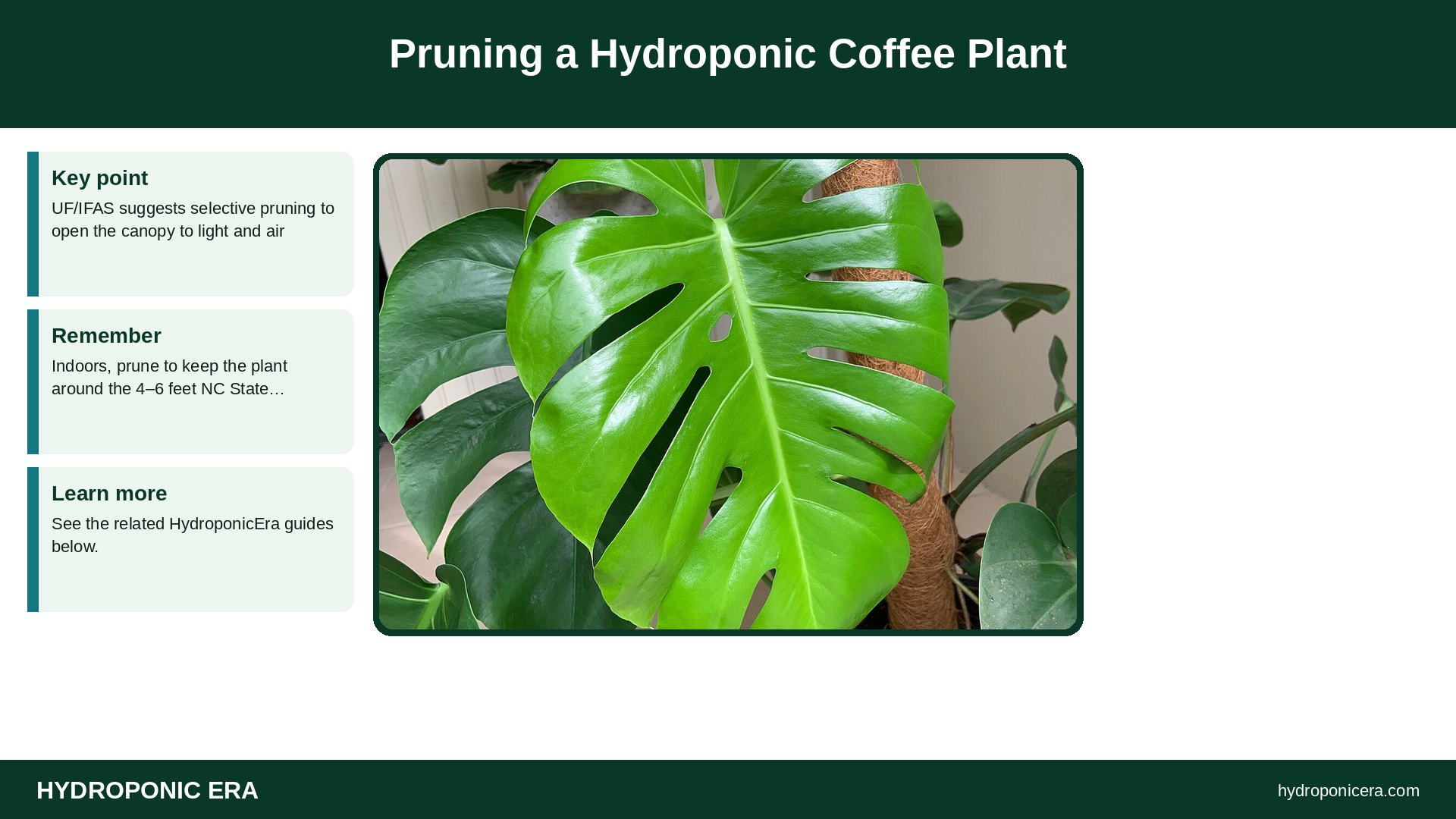
UF/IFAS suggests selective pruning to open the canopy to light and air. Indoors, prune to keep the plant around the 4–6 feet NC State describes, and pinch tips to encourage branching.
Harvesting Coffee Cherries
Coffee fruit ripens from green to red. Pick ripe cherries, remove the pulp, and dry the beans before roasting. An indoor plant yields only a small amount, so think of it as a fun project rather than a supply.
Common Problems
- Brown leaf edges: dry air or salt buildup.
- Leaf drop: cold below 55°F or sudden temperature swings.
- Yellow leaves: pH too high or overwet roots.
- Scale and mealybugs: common on indoor shrubs.
Weekly Routine for a Hydroponic Coffee Plant
- Check reservoir level and top off with pH-adjusted water.
- Check pH and EC.
- Look under leaves for pests.
- Flush media with plain water monthly.
- Turn the pot for even growth.
Starting a Hydroponic Coffee Plant
Most growers start with a young nursery plant rather than seed, since fresh seed is needed and germination is slow. To move a soil-grown plant into hydroponics, gently wash all soil from the roots, trim damaged roots, and pot it into clean LECA or perlite. Keep humidity high for a couple of weeks while new water roots form, and feed at low strength until fresh growth appears.
Equipment Checklist for Hydroponic Coffee Plant
- A pot of LECA or perlite with a small reservoir.
- A complete mild nutrient.
- A pH meter.
- A humidifier or pebble tray.
- A bright window or LED panel.
Most of this gear is reusable from crop to crop, so the first setup costs the most. Buy reliable meters first; they prevent the majority of problems.
Beginner Mistakes With Hydroponic Coffee Plant
Common mistakes are overwatering, placing the plant in harsh direct sun, letting it sit near a cold window in winter, and expecting beans in the first year. Coffee rewards patience and steady conditions.
Getting Started With Hydroponic Coffee Plant
Start small, change one thing at a time, and keep a simple log of pH, EC, temperature, and what you changed. Most hydroponic problems show up as patterns in those numbers before they show on the plant. Compare your notes with the sources below, and adjust slowly rather than chasing every small swing. A steady routine matters more than any single product or setting.
Hydroponic Coffee Plant Temperature Limits
UF/IFAS gives optimum conditions for coffee as 59–75°F with high humidity and protection from wind, and notes that temperatures above 77°F slow growth and leaves are damaged above 86°F. UF also says large daily temperature swings, or constant temperatures at or below 41°F, can cause leaf drop and decline. Indoors, that means keeping the plant away from hot windows in summer and cold glass in winter, and avoiding spots near heaters or air conditioners.
FAQs: Hydroponic Coffee Plant
Can coffee grow hydroponically?
Yes, especially in semi-hydro LECA or drip-fed media.
How long until a coffee plant flowers?
About 3–4 years, according to the Missouri Botanical Garden.
What temperature does coffee need?
NC State recommends 70–80°F days and 60–65°F nights.
Does a coffee plant need direct sun?
Bright light with some shade is best.
Can I make coffee from my plant?
Yes, but an indoor plant yields only a small amount.
Does coffee need high humidity?
It prefers it; dry air can brown leaf edges.
Sources
- NC State Extension — Coffea arabica, Plant Toolbox
- Missouri Botanical Garden — Coffea arabica, Plant Finder
- UF/IFAS — Coffee Growing in the Florida Home Landscape
- Photo credits (Wikimedia Commons, edited with titles): Coffee cherries on bush at Fairview Estate, Kiambu, KE by Daniel Case (CC BY-SA 4.0); Coffee Flowers by Marcelo Corrêa (CC BY-SA 3.0); Hydroton by Lucis (CC BY-SA 3.0); Potted plants succulents under grow light Nov 2016 by Asdfjrjjj (CC BY-SA 4.0); New Monstera Deliciosa Leaf by Kittykittymaomao (CC BY-SA 4.0)