
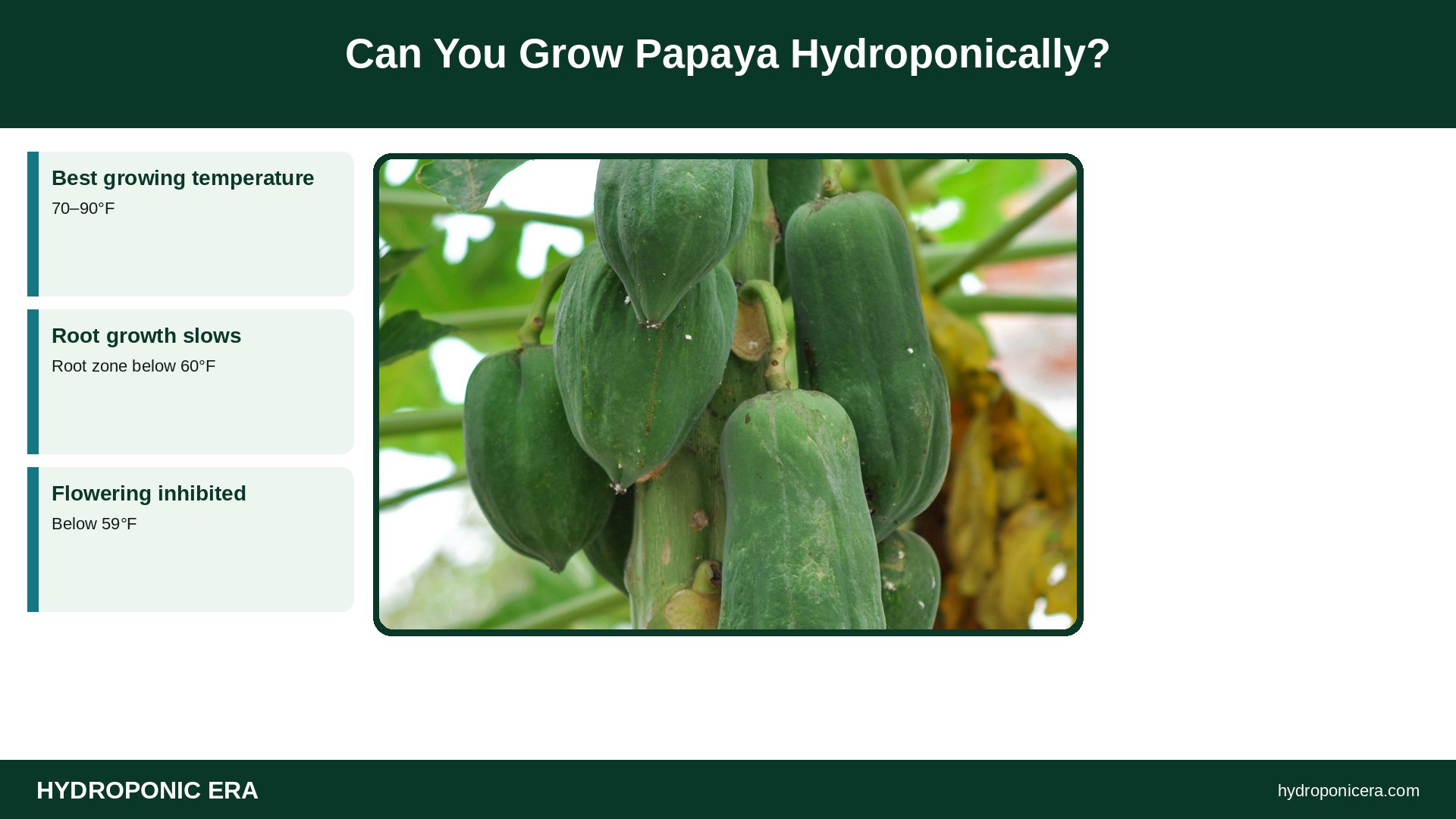
Papaya hydroponics is possible but uncommon at home, because papaya is a fast-growing tropical plant that can top 30 feet outdoors and needs constant warmth. UF/IFAS says papaya grows and fruits best at 70–90°F, root growth slows when the root zone drops below 60°F, flowering suffers below 59°F, and plants are damaged or killed below 31°F. If you want to try it, use a dwarf variety in a large, drip-fed container of coarse media, keep the root zone warm, give full-sun-level light, and expect a short-lived plant.
Key takeaway: Papaya can grow hydroponically in a big, warm, well-drained container, but it needs heat, strong light, and room, so treat it as an experiment.
| Need | UF/IFAS figure |
|---|---|
| Best growing temperature | 70–90°F |
| Root growth slows | Root zone below 60°F |
| Flowering inhibited | Below 59°F |
| Flowers may drop | Above 90°F |
| Damage or death | Below 31°F |
| Light | Full sun |
Is Papaya Hydroponics Practical?
For most growers, papaya hydroponics is a challenge rather than a reliable crop. UF/IFAS notes papaya plants can reach over 30 feet and are short-lived, and that cool weather, drought, constant wind, or shade all reduce growth and fruiting. Indoors, height and light are the biggest limits. A heated greenhouse or sunroom in a warm state gives the best odds. UF also notes that container growing is an option in cooler parts of Florida because pots can be moved indoors before freezes.
Best Systems for Papaya Hydroponics
Papaya roots dislike sitting in water, and UF/IFAS advises choosing a planting site that doesn’t flood or stay wet. That points to a large container of coarse, free-draining media such as perlite, coco, or clay pebbles, fed by drip on a timer, rather than deep water culture. Use at least a 15–25 gallon container for a fruiting plant, and make sure it drains freely. See Dutch bucket hydroponics and growing media.
Starting Papaya Hydroponics From Seed
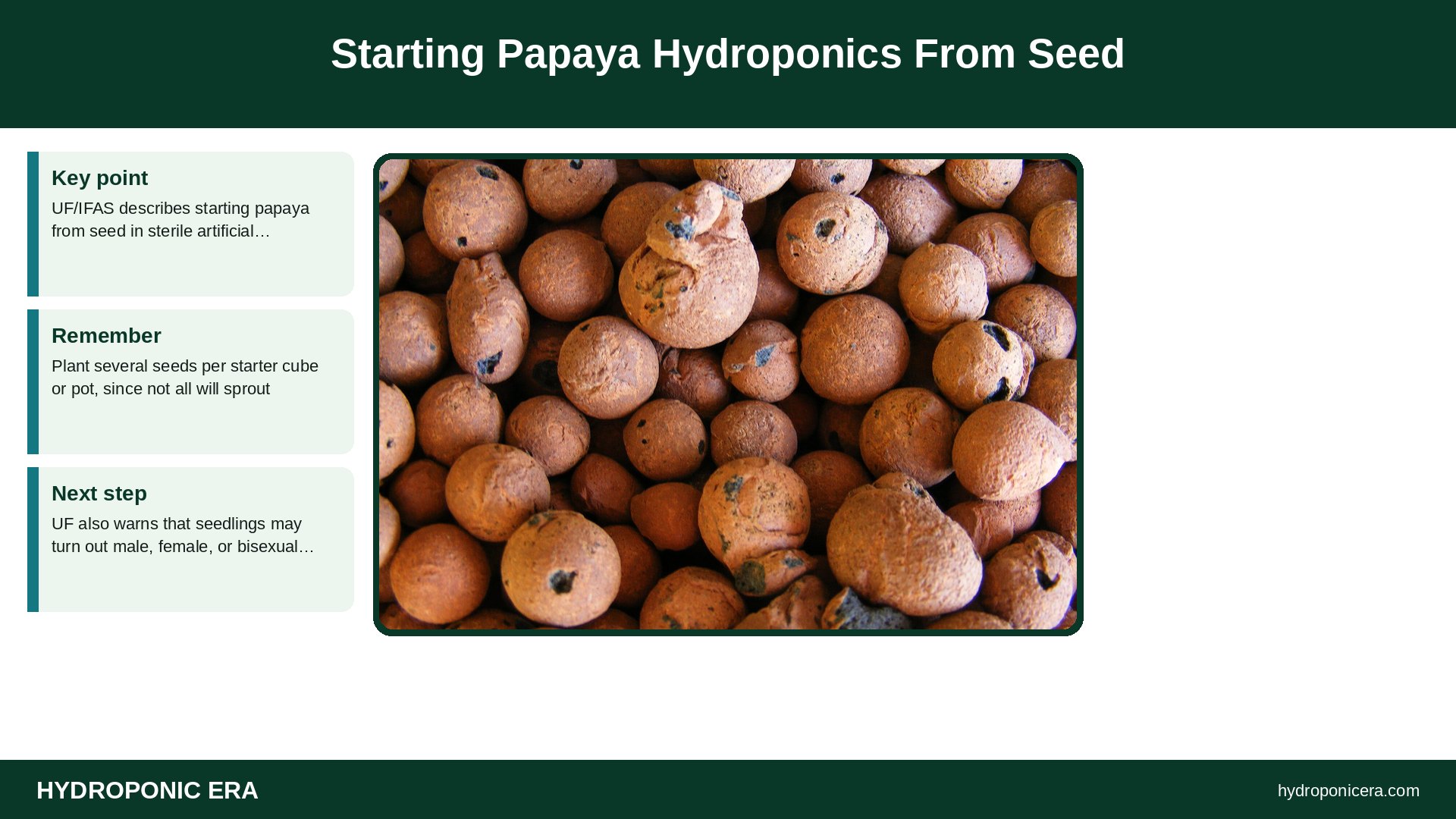
UF/IFAS describes starting papaya from seed in sterile artificial media, which suits hydroponic growers well. Plant several seeds per starter cube or pot, since not all will sprout. Keep them warm. UF also warns that seedlings may turn out male, female, or bisexual, and recommends planting at least two plants near each other if you start from seed, to help with pollination. When buying nursery plants, UF advises avoiding large plants in small pots, because root-bound papaya may not grow properly after transplanting.
Temperature for Papaya Hydroponics
Keep air and nutrient warm. UF/IFAS gives 70–90°F as the best range, with root growth declining below 60°F. In winter, a submersible aquarium heater in the reservoir can keep the root zone from chilling, but avoid letting the nutrient get hot, since warm water holds less oxygen. Above 90°F, UF notes flowers may drop.
Light for Papaya Hydroponics
UF/IFAS recommends full sun for best growth and fruit. Indoors, that means a powerful LED fixture over a tall plant, which is expensive to run. A south-facing greenhouse or summer outdoors is far more practical. See LED watts per square foot.
Nutrients and pH for Papaya Hydroponics
Use a complete fruiting-crop nutrient with calcium, magnesium, and micronutrients, and keep pH in the usual 5.5–6.5 range. Feed lightly while young and increase strength as the plant grows. Check EC weekly and flush media with plain water every few weeks so salts don’t build up. See how to lower EC.
Pests and Diseases in Papaya Hydroponics
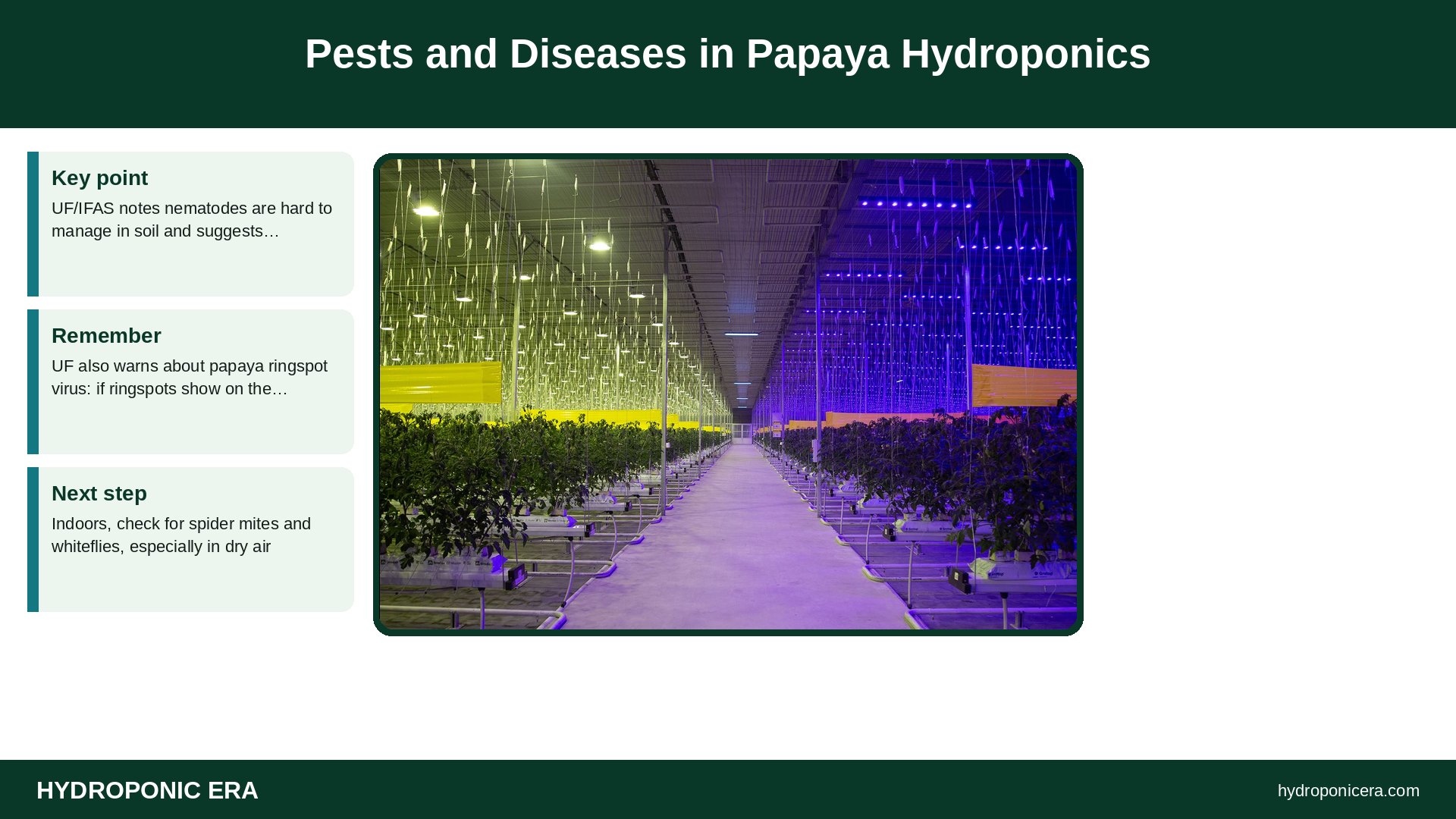
UF/IFAS notes nematodes are hard to manage in soil and suggests containers where nematodes are a problem, which is one advantage of soilless growing. UF also warns about papaya ringspot virus: if ringspots show on the fruit, replace the plant. Indoors, check for spider mites and whiteflies, especially in dry air.
Wind and Support
UF/IFAS says papaya is susceptible to wind damage, and plants carrying heavy fruit can topple. Use a heavy container, stake the trunk, and keep it out of strong drafts or wind.
Harvesting Papaya
Pick fruit when the skin begins to turn from green to yellow. Fruit can finish ripening at room temperature. Expect a long wait from seed, and a modest harvest indoors.
Dwarf Papaya for Papaya Hydroponics
UF/IFAS Gardening Solutions notes some dwarf papaya are bred to stay small, which makes them the best fit for containers. Even dwarf types grow large, so plan for ceiling height and light coverage before you start. Starting with the largest healthy plant you can, as UF suggests, also improves the odds of fruit before cold weather.
Weekly Routine for Papaya Hydroponics
- Check pH and EC and record them.
- Check reservoir and room temperature.
- Make sure drip emitters flow and media drains freely.
- Inspect leaves for mites and whiteflies.
- Check that the plant is stable and staked.
Equipment Checklist for Papaya Hydroponics
- A large container (15–25 gallons) with drain holes.
- Coarse media: perlite, coco, or clay pebbles.
- A drip pump, timer, and emitters.
- A pH and EC meter.
- A complete fruiting-crop nutrient.
- A stake or trellis for support.
Most of this gear is reusable from crop to crop, so the first setup costs the most. Buy reliable meters first; they prevent the majority of problems.
Beginner Mistakes With Papaya Hydroponics
Common mistakes with papaya hydroponics are using a container that’s too small, letting roots stay wet, letting the root zone cool below 60°F, and underestimating height. Papaya grows quickly, so plan the space before you plant.
Getting Started With Papaya Hydroponics
Start small, change one thing at a time, and keep a simple log of pH, EC, temperature, and what you changed. Most hydroponic problems show up as patterns in those numbers before they show on the plant. Compare your notes with the sources below, and adjust slowly rather than chasing every small swing. A steady routine matters more than any single product or setting.
FAQs: Papaya Hydroponics
Can papaya grow hydroponically?
Yes, in a large drip-fed container of coarse media, with heat and strong light.
What temperature does papaya need?
UF/IFAS gives 70–90°F as ideal, with damage below 31°F.
Do I need two papaya plants?
If grown from seed, UF suggests at least two, since seedlings may be male or female.
Can papaya grow indoors?
Dwarf types can for a time, but height and light make it hard.
Is DWC good for papaya?
Not ideal; papaya prefers well-drained roots.
How big does papaya get?
Outdoors it can exceed 30 feet, according to UF/IFAS; dwarf types stay smaller.
Sources
- UF/IFAS — Papaya Growing in the Florida Home Landscape (HS11)
- UF/IFAS Gardening Solutions — Papaya
- UF/IFAS Gardening Solutions — Dwarf Fruit Trees
- Photo credits (Wikimedia Commons, edited with titles): Carica papaya 14 7 2012 by Joydeep (CC BY-SA 3.0); Papaya – longitudinal section close-up view by Ivar Leidus (CC BY-SA 4.0); Hydroton by Lucis (CC BY-SA 3.0); Drip irrigation (2552390830) by Dwight Sipler from Stow, MA, USA (CC BY 2.0); Greenhouse in Kazakhstan by Gakon Netafim (CC BY-SA 4.0)