
Kale microgreens are one of the easiest microgreens to grow: sow about 10–28 grams of seed per 10 x 20 inch (25 x 51 cm) tray, keep it covered for 1–2 days, then grow under strong light for about 8–14 days total until the first true leaves appear. No soaking is needed. They taste mild, slightly nutty and less bitter than mature kale, and come in green, red and purple types such as Red Russian, Toscano and Purple Reign.
Key takeaway: Kale behaves like broccoli and cabbage in the tray. Sow it thick and evenly, keep it warm for fast germination, give 16–18 hours of light and harvest just as true leaves start.
| Kale microgreens at a glance | Value | Source |
|---|---|---|
| Seed per 10 x 20 in (25 x 51 cm) tray | 10 g (Red Russian) to 28 g | Johnny’s; Utah State |
| Presoak | No | Utah State |
| Covered (blackout) time | 1–2 days | Utah State |
| Days to harvest | 8–14 days | Virginia Tech; Johnny’s 13.5 days |
| Yield per tray (Johnny’s trial) | About 11 oz (312 g) | Johnny’s |
| Flavor | Mild; strong brassica, nutty | Johnny’s; Utah State |
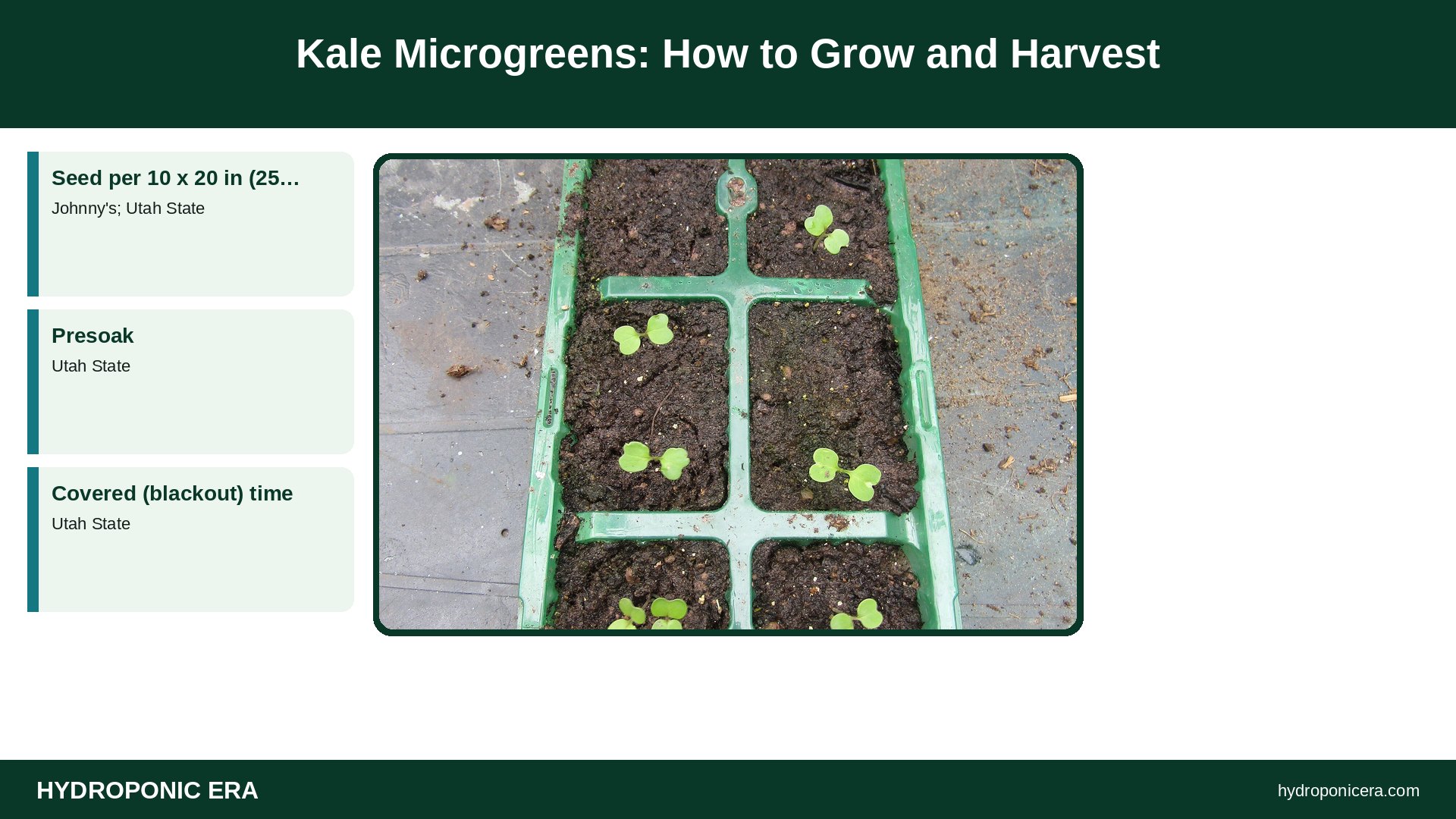
Best Varieties for Kale Microgreens
Johnny’s Selected Seeds lists several kale microgreens with distinct looks, all with a mild flavor:
- Red Russian: medium-green leaves with bright purple stems and leaf margins. In Johnny’s trial it used about 10 g per tray and was ready in about 13.5 days.
- Toscano (Lacinato): dark blue-green leaves with light green stems.
- Purple Reign: dark purple, serrated leaves with purple stems.
- KX-1: glossy, serrated red leaves.
- Bright Green Curly: vibrant green leaves and stems.
Red and purple kale microgreens look striking on a plate, while green types blend into mixes. Kale belongs to the cabbage family, along with broccoli, cabbage, radish, mustard and arugula, which University of Maryland Extension says is especially well suited to microgreens.
What You Need
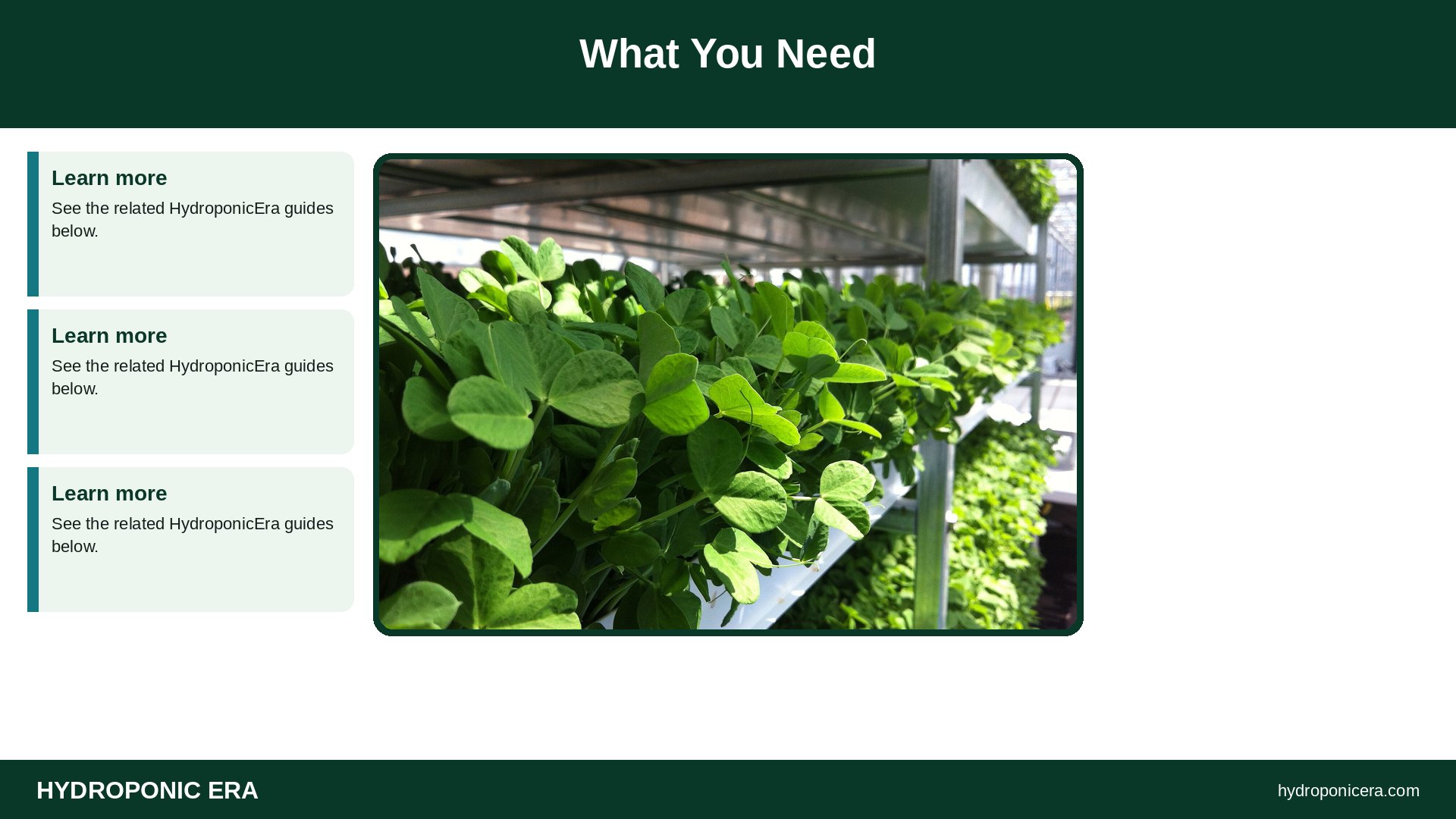
- Kale seed sold for microgreens (untreated)
- A 10 x 20 inch (25 x 51 cm) tray with holes, plus a solid tray underneath
- Growing media: coir, a seed-starting mix, or a hemp mat
- A grow light or bright south window
- A spray bottle and a kitchen scale
How to Grow Kale Microgreens Step by Step
- Prepare media. Fill the tray with 1–1.5 inches (2.5–4 cm) of moist media, as Maryland suggests, or lay a soaked hemp mat. Utah State moistens coir until it feels like a wrung-out sponge.
- Weigh seed. Start with 10–15 g for a lighter crop or up to 28 g for a dense crop.
- Sow evenly. Scatter seed across the surface and press it gently into contact with the media.
- Cover and weight. Utah State places another tray directly on the seed with 2–5 lb (1–2.3 kg) of weight for the first half of the covered time, then flips the cover tray so it no longer touches the seedlings.
- Keep warm. Maryland notes cabbage-family seeds germinate in about 36 hours at 72°F (22°C).
- Uncover after 1–2 days. Move the tray under light once most seeds have sprouted.
- Water from below. Bottom water to keep leaves dry and reduce mold.
- Harvest. Cut just above the media at about 8–14 days.
Light and Temperature for Kale Microgreens
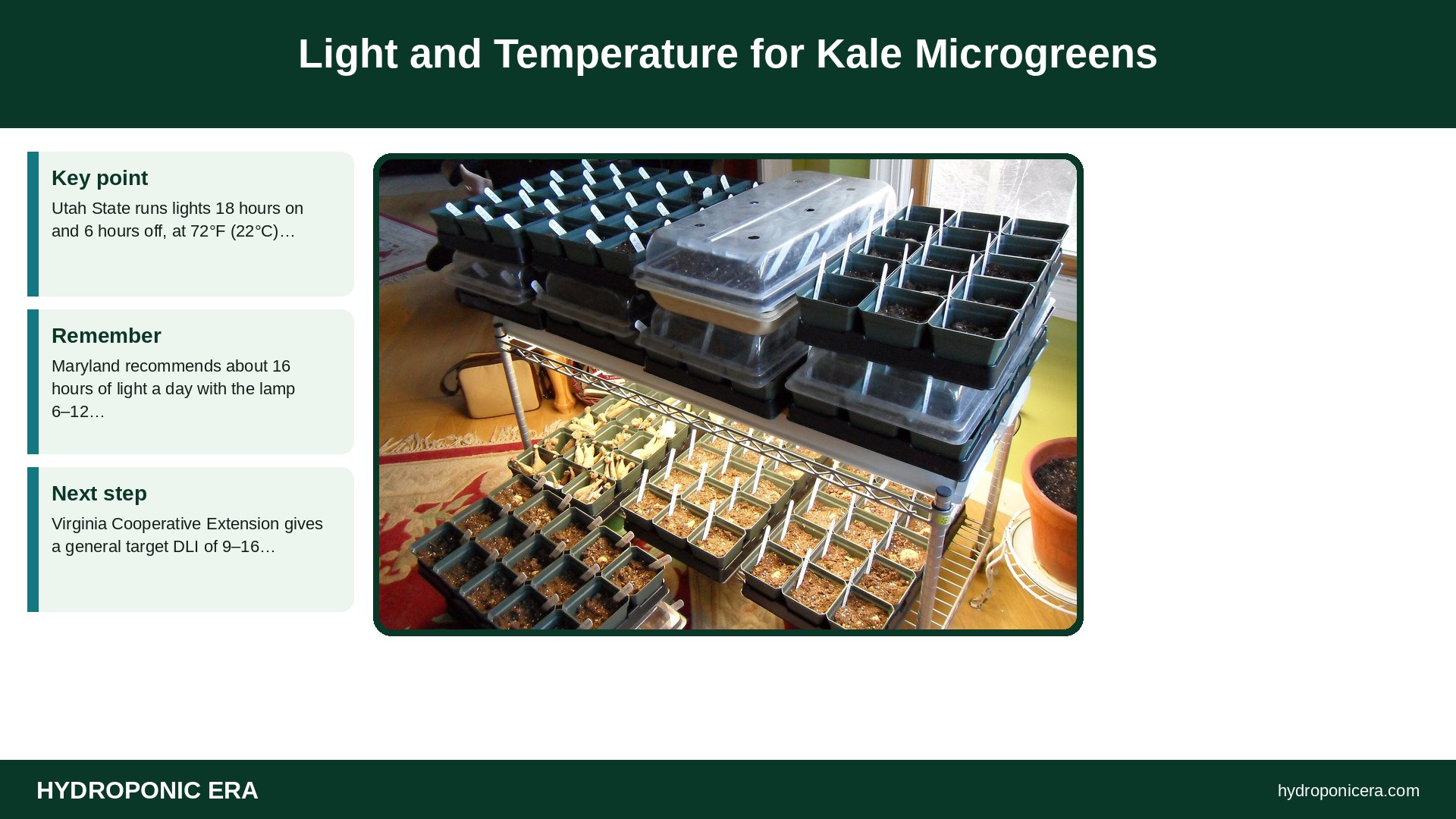
Utah State runs lights 18 hours on and 6 hours off, at 72°F (22°C) with lights on and 68°F (20°C) with lights off. Maryland recommends about 16 hours of light a day with the lamp 6–12 inches (15–30 cm) above the foliage. Virginia Cooperative Extension gives a general target DLI of 9–16 mol/m²/day for microgreens. Red and purple kales develop deeper color under brighter light; in dim light they stay greener and stretch. See microgreens light requirements.
When to Harvest Kale Microgreens
Johnny’s harvested its trial trays at the first true-leaf stage. For kale, that means the two smooth cotyledons are fully open and a small, slightly frilly true leaf is just showing. Cut earlier for a milder taste or a little later for more kale flavor and leafier texture. Use clean, sharp scissors and cut just above the media. See how to harvest microgreens.
Kale Microgreens Yield and Cost
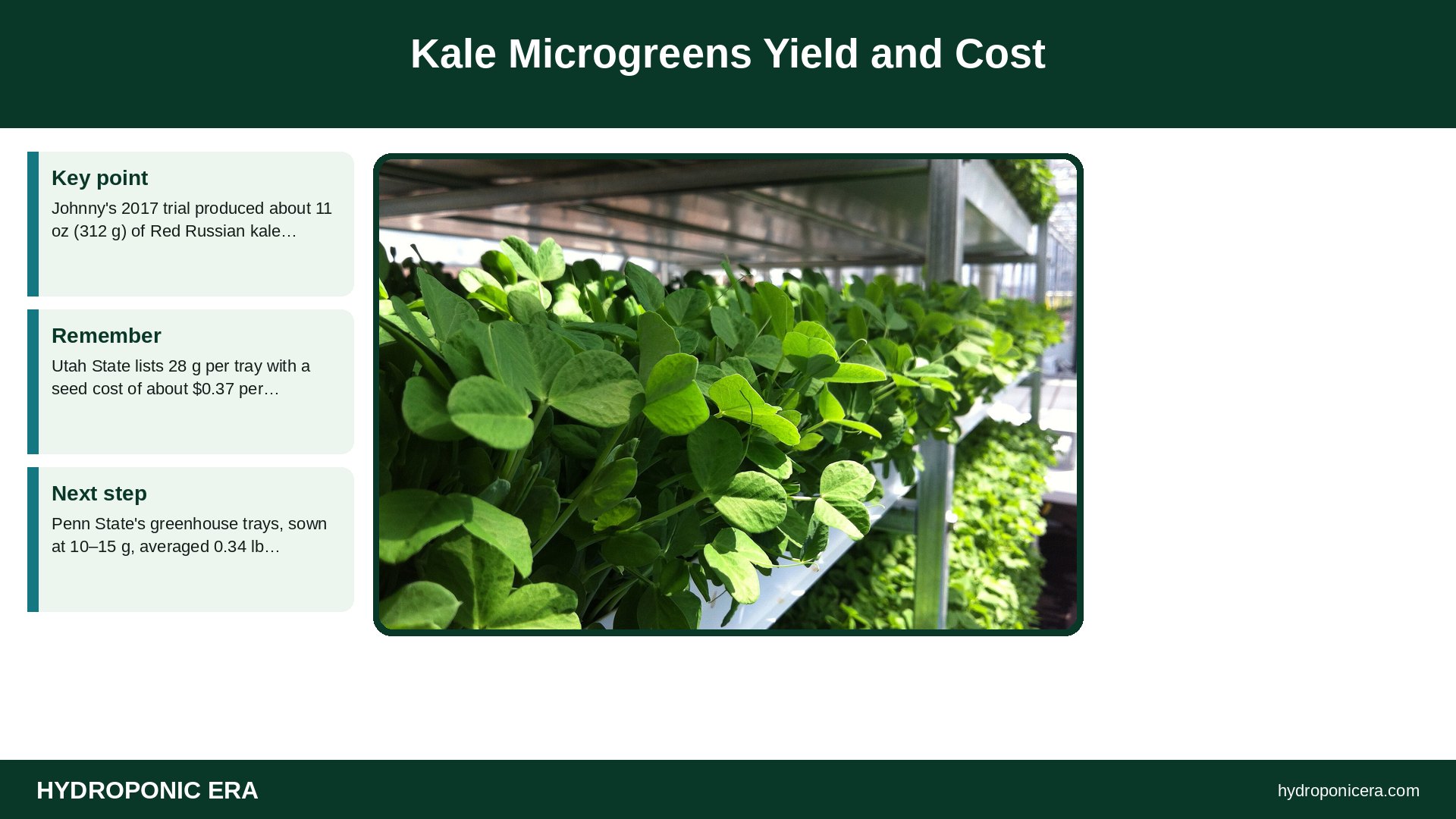
Johnny’s 2017 trial produced about 11 oz (312 g) of Red Russian kale microgreens from about 10 g of seed per tray, and noted that one ounce (28 g) of seed sowed about three flats. Utah State lists 28 g per tray with a seed cost of about $0.37 per tray at bulk prices. Penn State’s greenhouse trays, sown at 10–15 g, averaged 0.34 lb (154.6 g) for Russian kale and 0.26 lb (117.9 g) for Toscano over a 2-week cycle without supplemental light. Yields vary with seed lot, density and harvest stage, so record your own numbers. See microgreen seed density.
Nutrition
Virginia Cooperative Extension lists kale among microgreens that are high in vitamin C, and notes that cabbage-family microgreens were found to be good sources of potassium, calcium, iron and zinc. USDA research on 25 microgreens found microgreen leaves generally held higher concentrations of vitamins and carotenoids than mature leaves. Exact levels in kale microgreens vary by variety and growing conditions, so treat them as a nutrient-dense garnish or salad green rather than a supplement.
Common Problems
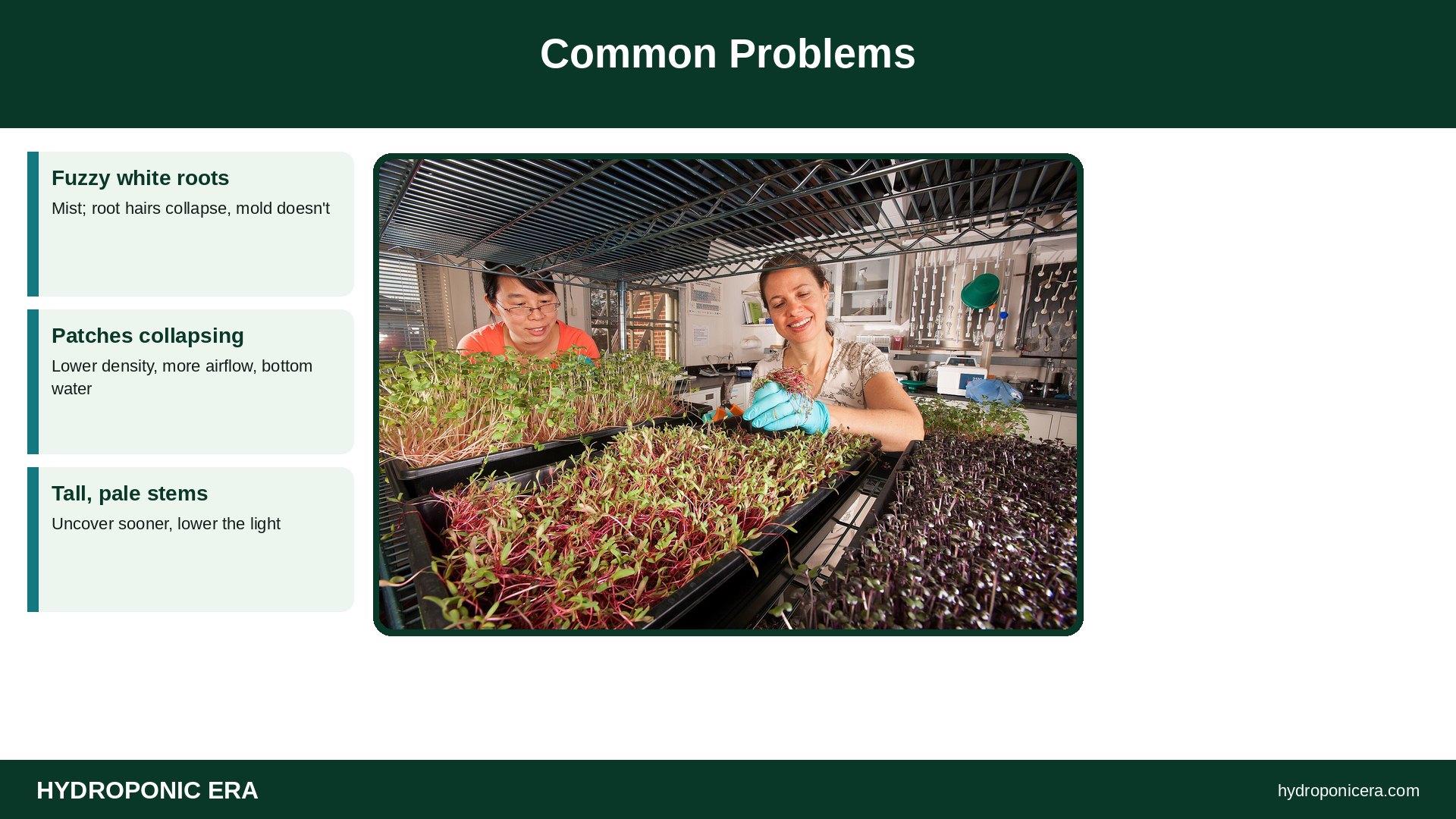
| Problem | Cause | Fix |
|---|---|---|
| Fuzzy white roots | Usually root hairs | Mist; root hairs collapse, mold doesn’t |
| Patches collapsing | Damping-off | Lower density, more airflow, bottom water |
| Tall, pale stems | Covered too long or low light | Uncover sooner, lower the light |
| Bitter taste | Harvested late | Cut at first true leaf |
| Seed hulls on leaves | Shallow sowing | Press seed into media; mist to loosen |
See microgreens mold and damping-off.
Storage and Uses
Store unwashed kale microgreens in a sealed container in the fridge and wash just before eating. Penn State reports microgreens kept at 41°F (5°C) in the dark can last 10–14 days. Use them on sandwiches, eggs, grain bowls, soups and smoothies. See how long microgreens last.
Kale microgreens are a reliable crop for beginners and a colorful addition for experienced growers. Start with Red Russian or a kale mix, follow the cabbage-family routine, and you’ll have a tray ready in under two weeks. See best microgreens to grow.
Planning a Weekly Kale Tray
In Johnny’s 2017 trial, Red Russian kale took about 13.5 days from sowing to harvest at the first true-leaf stage, and 1 oz (28 g) of seed sowed about three flats. That makes planning simple. If you want fresh kale microgreens every week, keep two trays going and sow a new one every 7 days: one tray is germinating or greening while the other is ready to cut. Write the sowing date and seed weight on each tray so you can compare yields and adjust your seed rate over time.
FAQs
How long do kale microgreens take to grow?
About 8–14 days from sowing.
Do kale seeds need soaking?
No; sow them dry.
How much kale seed per tray?
About 10–28 g per 10 x 20 inch (25 x 51 cm) tray.
Do kale microgreens taste bitter?
They’re milder than mature kale, especially when cut early.
Can kale microgreens regrow?
No; sow a new tray instead.
Which kale is best for microgreens?
Red Russian is popular; purple types add color.
Sources
- Johnny’s Selected Seeds — Micro Greens Yield Trial 2017
- Johnny’s Selected Seeds — Microgreens Comparison Chart
- Utah State University Extension — Grow Your Own Microgreens
- University of Maryland Extension — Growing Microgreens and Baby Greens Indoors
- Virginia Cooperative Extension — Introduction to Microgreen Production
- Xiao et al. (2012), Journal of Agricultural and Food Chemistry — Vitamin and Carotenoid Concentrations of Edible Microgreens
- Penn State Extension — Growing Microgreens
- Photo credits (Wikimedia Commons, edited with titles): -2020-10-01 Swede beet seedlings (Brassica napus subsp. Rapifera), Trimingham by Kolforn (CC BY-SA 4.0); Lufa Farms Microgreens in Trays by Lufa Farms (CC BY-SA 2.0); Dahlias started indoors by F. D. Richards from Clinton, MI (CC BY-SA 2.0); Lufa Farms Microgreens in Trays by Lufa Farms (CC BY-SA 2.0); Liping Kou observes microgreens by Peggy Greb (Public domain)