
Microgreens mold usually shows up as gray, white, or fuzzy cobweb-like growth that spreads across seeds and stems, smells musty, and leaves seedlings collapsing in patches. It is caused by too much moisture, dense sowing, warm still air, and dirty trays or seed. The fix is to remove affected trays, then prevent it with bottom watering, lighter seeding, constant airflow, cooler temperatures around 68–72°F, and clean equipment. Before you panic, check whether the “mold” is actually root hairs, which are harmless.
Key takeaway: Mist the fuzz: root hairs collapse and disappear, mold stays. Prevent mold with less water, more air, and clean trays and seed.
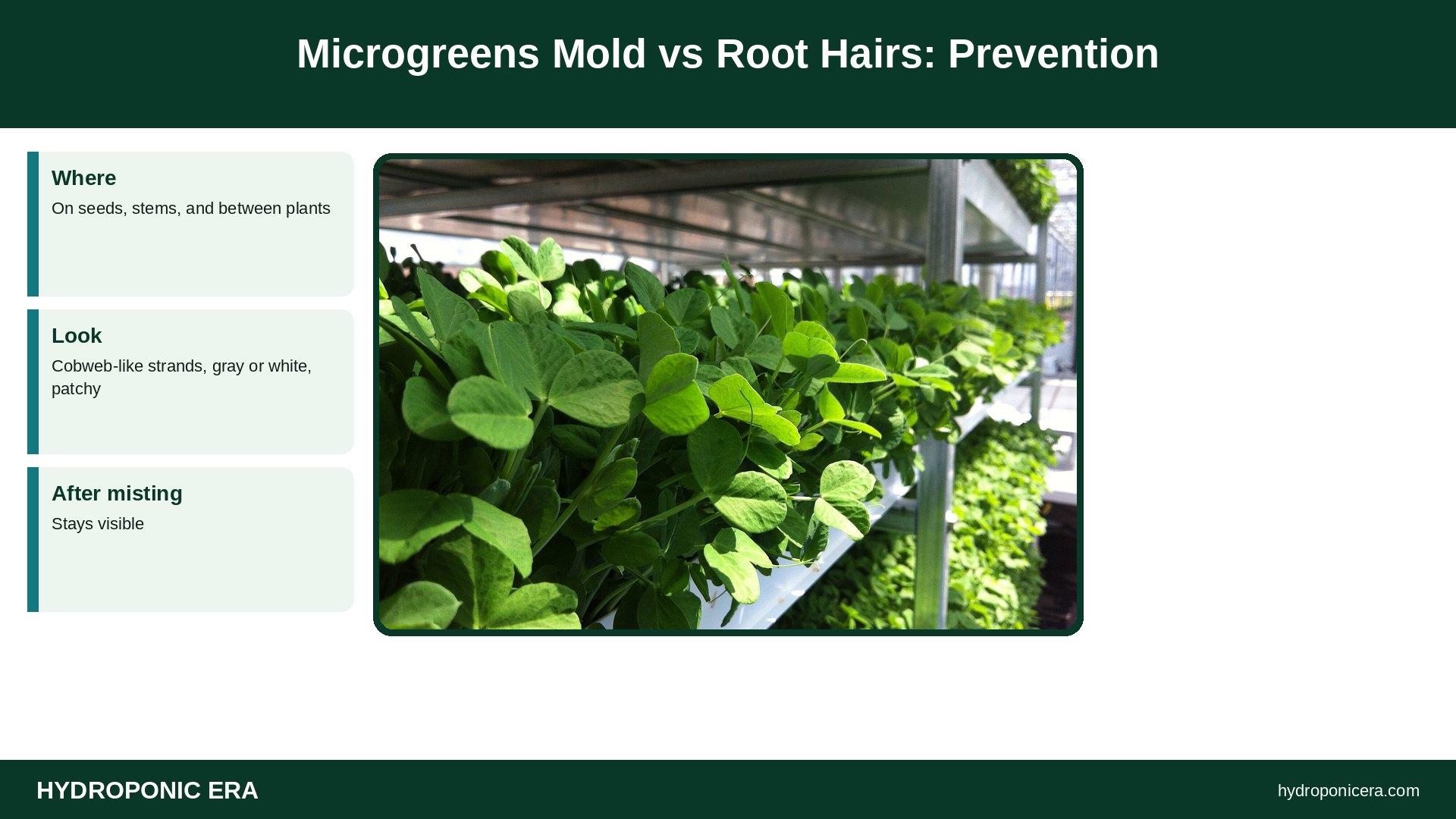
Microgreens Mold vs Root Hairs
| Sign | Root hairs | Mold |
|---|---|---|
| Where | Along roots, near the medium | On seeds, stems, and between plants |
| Look | Fine, fuzzy, evenly spread, bright white | Cobweb-like strands, gray or white, patchy |
| After misting | Collapses and nearly disappears | Stays visible |
| Smell | Fresh, earthy | Musty or sour |
| Plants | Healthy and upright | Stems darken, collapse in patches |
What Causes Microgreens Mold
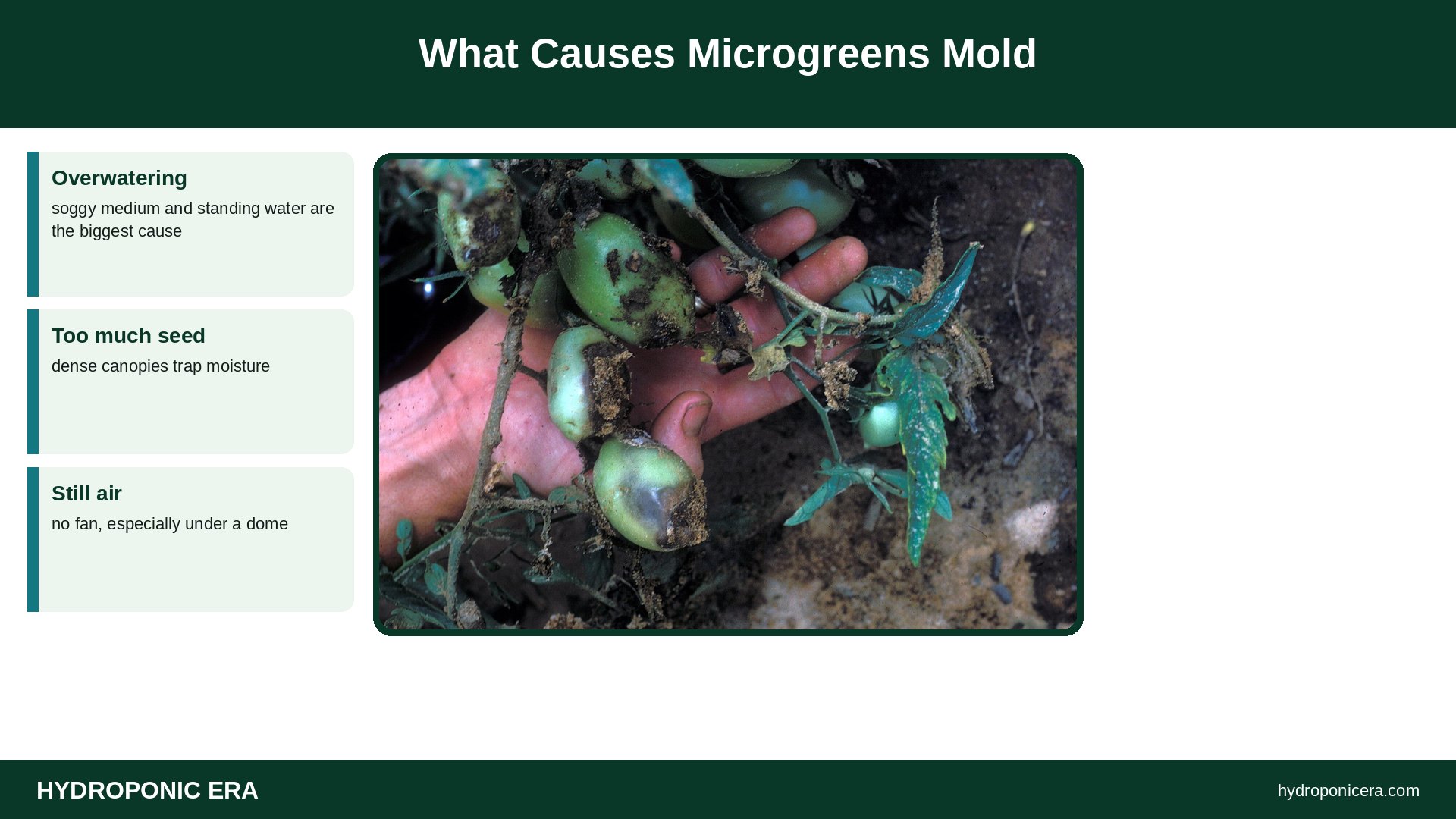
Mold spores are everywhere. They need moisture, warmth, still air, and food (seed coats and damaged tissue) to grow. Microgreen trays offer all four: thousands of seeds packed tightly, kept damp and covered during germination. The goal is not to eliminate spores, which is impossible, but to keep conditions unfriendly to them.
- Overwatering: soggy medium and standing water are the biggest cause.
- Too much seed: dense canopies trap moisture.
- Still air: no fan, especially under a dome.
- Heat and humidity: warm rooms above about 75°F with high humidity.
- Dirty trays and tools: spores carry over from the last crop.
- Seed quality: broken or contaminated seed.
- Long soaks: over-soaked seed can split and rot.
What to Do When You Find Microgreens Mold
- Confirm it. Mist the area. If the fuzz stays, it’s mold.
- Don’t eat moldy trays. Microgreens are eaten raw, and you can’t wash mold out of a dense tray. Compost or discard it.
- Clean everything. Wash the tray with soap and water, then sanitize. See cleaning and sterilizing.
- Find the cause. Check water, density, airflow, and temperature before sowing again.
Cutting around a small patch might seem tempting, but mold strands spread further than you can see. For a home garden, it isn’t worth the risk.
How to Prevent Microgreens Mold
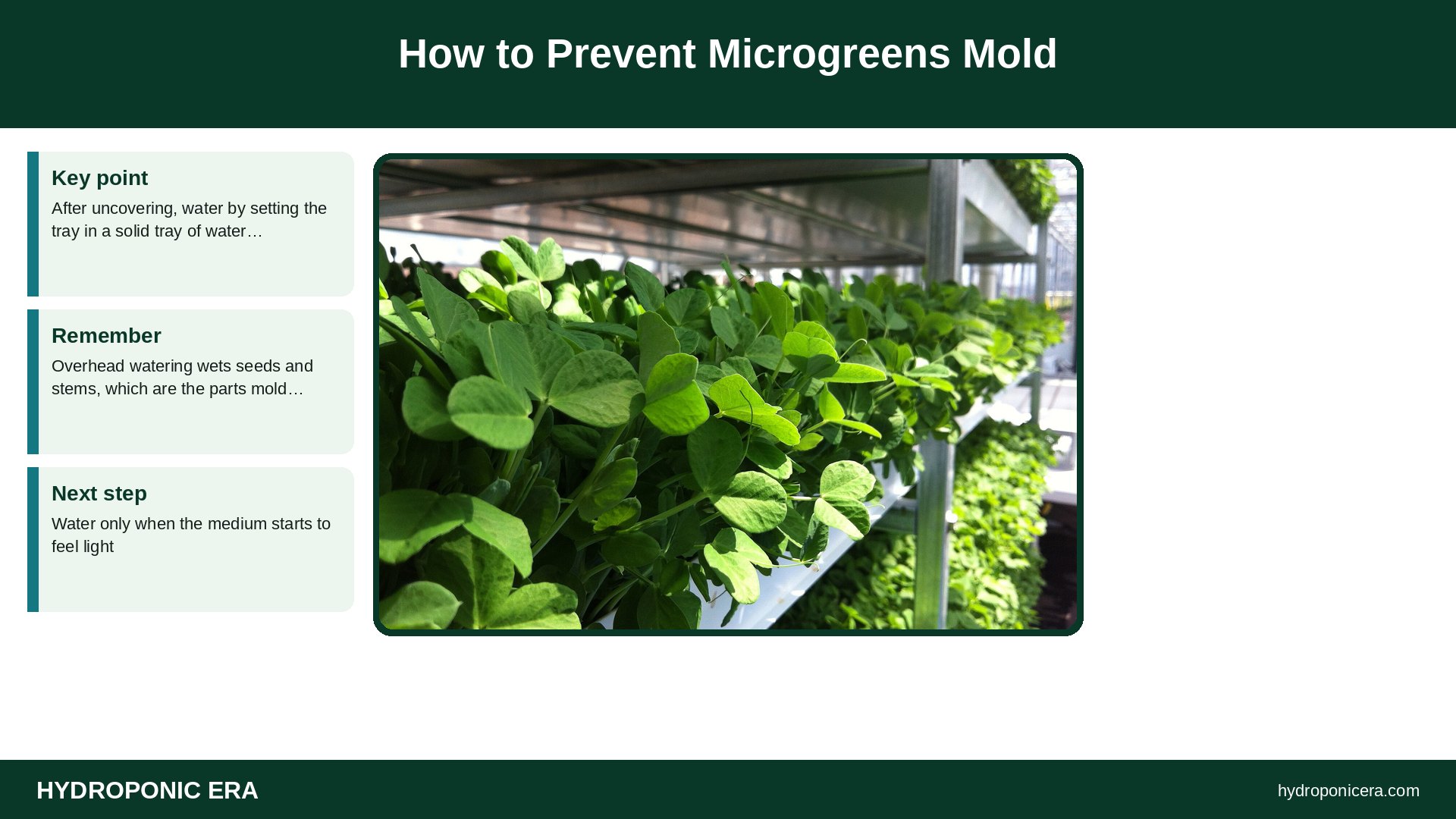
Water from below
After uncovering, water by setting the tray in a solid tray of water for a few minutes, then draining. Overhead watering wets seeds and stems, which are the parts mold attacks. Water only when the medium starts to feel light.
Sow at the right density
Follow tested rates rather than piling on seed. Utah State University Extension lists about 28 grams of broccoli or basil, 42 grams of radish, and 48 grams of sunflower per 1020 tray at home. If mold keeps appearing, cut your seed rate by 10–20%.
Keep air moving
Run a small fan all the time so it gently moves the leaves. Even a few hours of still air under a dome can start mold. See airflow and fans.
Control temperature and humidity
Utah State suggests about 74°F for germination, 72°F with lights on, and 68°F with lights off. Keep humidity moderate, ideally 40–60%. A dehumidifier helps in damp basements. See dehumidifiers and humidifiers.
Crops Most Prone to Microgreens Mold
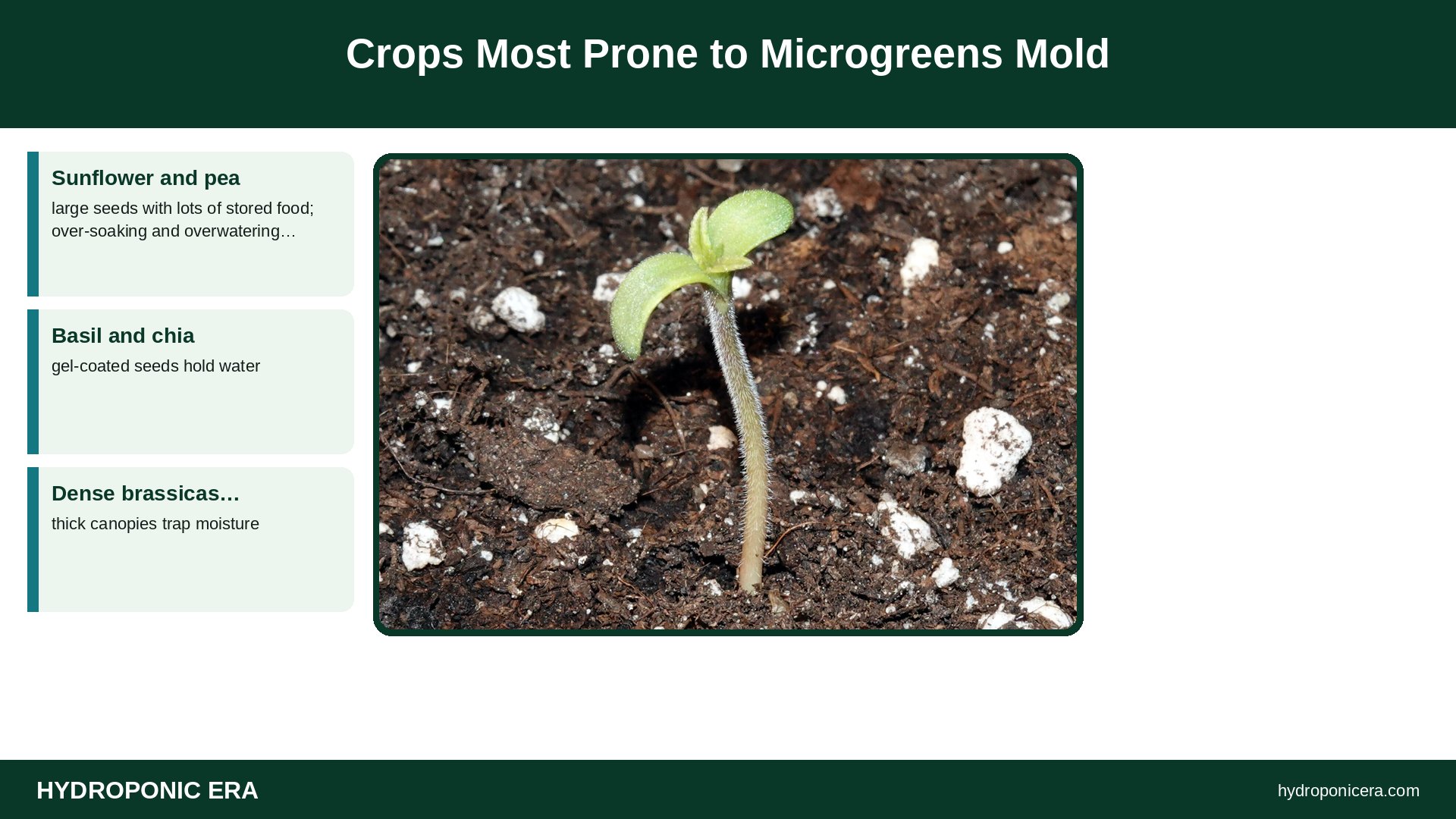
- Sunflower and pea: large seeds with lots of stored food; over-soaking and overwatering cause rot.
- Basil and chia: gel-coated seeds hold water.
- Dense brassicas (broccoli, kale, mustard): thick canopies trap moisture.
- Buckwheat: grows fast and tall, and dense trays mold quickly.
See sunflower microgreens, broccoli microgreens, and basil microgreens for crop-specific timing.
Seed Sanitizing
Some growers rinse seed in a dilute hydrogen peroxide solution before sowing to reduce surface spores, particularly for sprouting seed and larger seeds. Use food-grade 3% hydrogen peroxide diluted per the supplier’s guidance, then rinse well. Always buy seed from a supplier that tests for pathogens. See hydrogen peroxide uses and risks.
Is Microgreens Mold the Same as Damping Off?
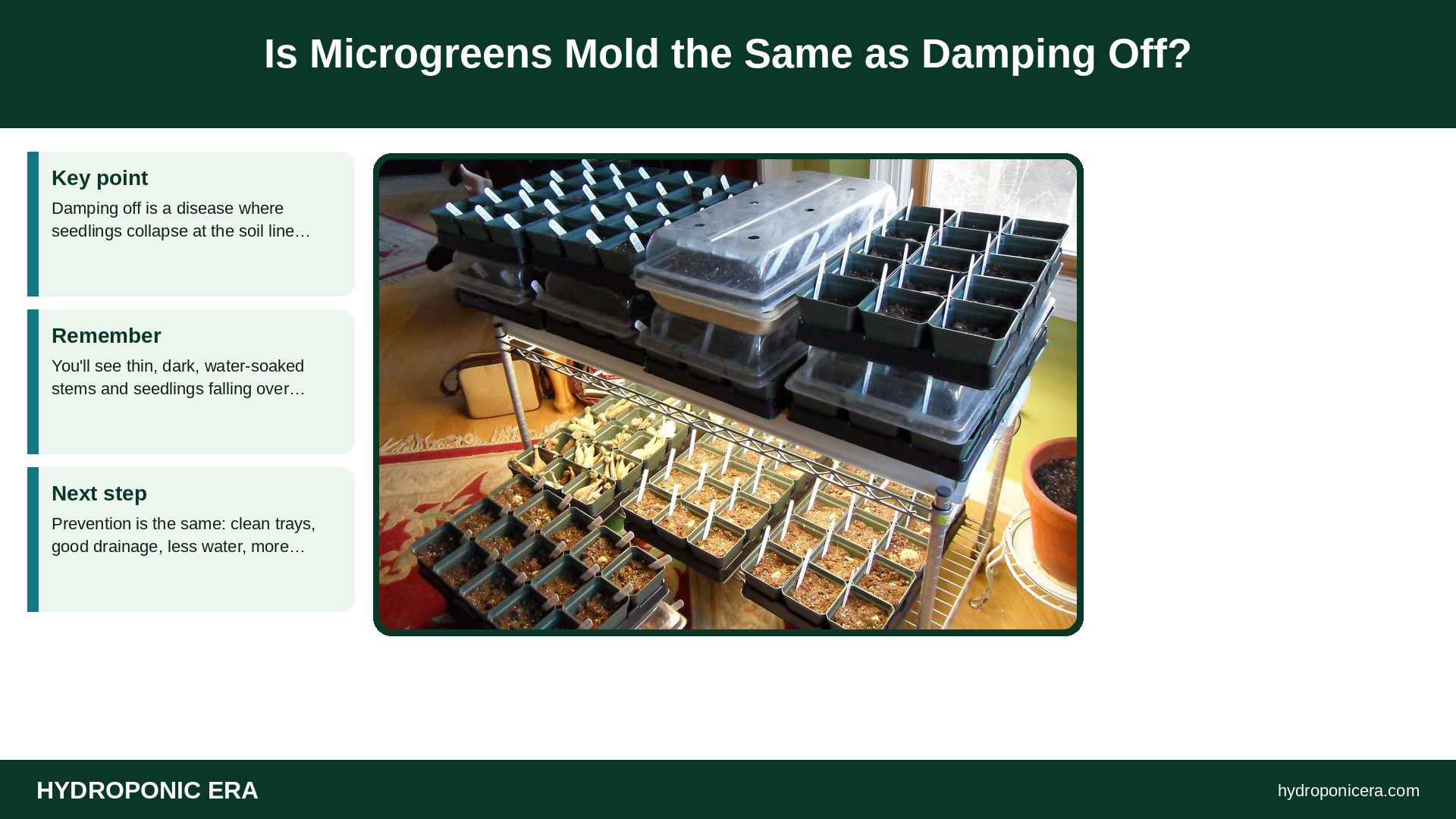
They overlap. Damping off is a disease where seedlings collapse at the soil line, usually caused by soilborne organisms such as Pythium, Rhizoctonia, or Fusarium. You’ll see thin, dark, water-soaked stems and seedlings falling over in patches, often with little visible fuzz. Prevention is the same: clean trays, good drainage, less water, more airflow. See damping off.
Growing Medium and Mold
Soggy media mold faster. Coco coir holds water well, so wring it out before filling trays. Hemp and felt mats dry faster but need more frequent watering. Never reuse medium from a moldy tray. See rockwool mold for mold on other media.
A Mold-Prevention Checklist
- Wash and sanitize trays between crops.
- Use fresh, tested seed at the right rate.
- Soak only seeds that need it, and only for the recommended time.
- Uncover as soon as most seeds germinate.
- Water from below; drain extra water.
- Run a fan 24/7.
- Keep the room around 68–72°F and moderate humidity.
- Harvest on time; older, crowded trays mold more.
When to Worry About Food Safety
Mold indicates conditions where other microbes can grow too. If a tray smells sour or slimy, discard it. Wash your hands, use potable water, and keep harvested greens cold. See hydroponic food safety at home.
Keeping a Simple Grow Log
When microgreens mold appears, a log helps you find the cause fast. For each tray, note the crop, seed weight, soak time, cover days, watering times, room temperature, humidity, and whether mold appeared. After a few weeks, patterns become clear: maybe mold shows up only when the room is above 75°F, or only on trays sown heavily. Change one thing at a time so you know what fixed the problem.
Commercial growers often keep the same kind of record for food safety audits, so it’s a good habit to start early if you plan to sell.
FAQs
How do I tell microgreens mold from root hairs?
Mist it. Root hairs collapse; mold stays.
Can I eat microgreens with a little mold?
No. Discard moldy trays.
What causes microgreens mold?
Overwatering, dense sowing, still air, warmth, and dirty trays.
Does hydrogen peroxide prevent mold?
A seed rinse can reduce surface spores but won’t fix poor conditions.
Which microgreens mold most?
Sunflower, pea, basil, and dense brassica trays.
Does a fan help?
Yes. Constant gentle airflow is one of the best preventions.
Sources
- Utah State University Extension — Grow Your Own Microgreens
- Virginia Cooperative Extension — Introduction to Microgreen Production in Indoor Vertical Farms and Greenhouses
- Perennia — Microgreens Fact Sheet
- Photo credits (Wikimedia Commons, edited with titles): Lufa Farms Microgreens in Trays by Lufa Farms (CC BY-SA 2.0); Tomaten Rhizoctonia damping-off, blight and rot (Rhizoctonia solani), J.G.Kühn by University of Georgia Plant Pathology , University of Georgia, Bugwood.org J.G. (CC BY 3.0); Lufa Farms Microgreens in Trays by Lufa Farms (CC BY-SA 2.0); Hanfsämling mit Wurzelhaaren am Stamm – Hemp seedling with root hairs on the stem by Vschlothauer (CC0); Dahlias started indoors by F. D. Richards from Clinton, MI (CC BY-SA 2.0)