
Basil microgreens take longer than most microgreens but deliver intense basil flavor in a tiny leaf. Sow about 28 grams of basil seed per 1020 tray (Utah State University Extension’s home rate) on a moist medium without soaking, keep the tray covered for 4–7 days, then grow under strong light and harvest at about 12–16 days. Basil seed forms a sticky gel when wet, so sow it dry onto a damp surface and mist gently. Keep the room warm, around 72–75°F, since basil germinates slowly in cool conditions.
Key takeaway: Don’t soak, sow dry on moist medium, keep warm and covered until germination is even, then give bright light and patience.
| Step | Guideline |
|---|---|
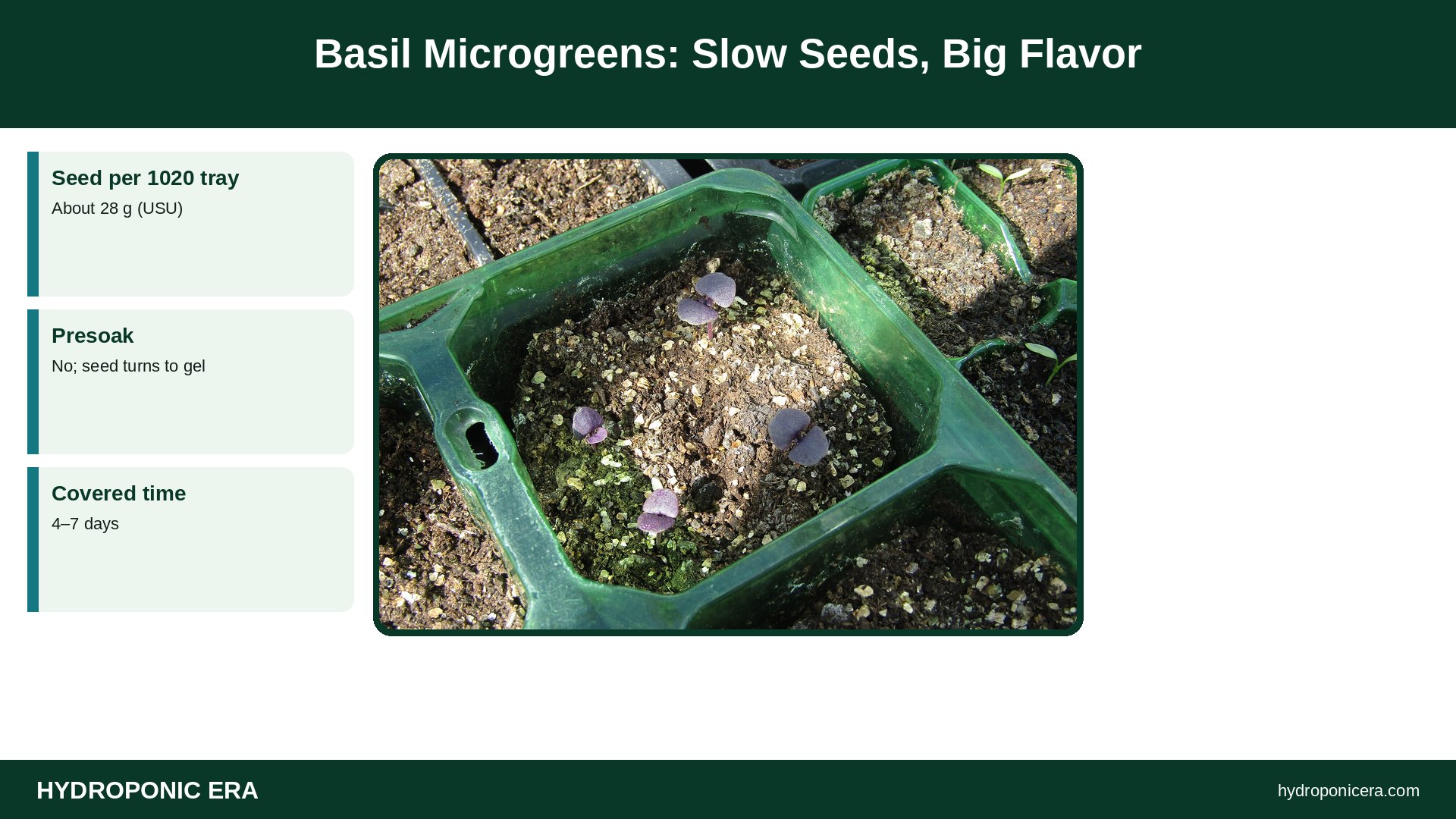
| Seed per 1020 tray | About 28 g (USU) |
| Presoak | No; seed turns to gel |
| Covered time | 4–7 days |
| Temperature | 72–75°F |
| Light | Up to 18 hours a day |
| Harvest | 12–16 days, or later for true leaves |
| Varieties | Genovese, Thai, lemon, purple (Dark Opal) |
Why Grow Basil Microgreens
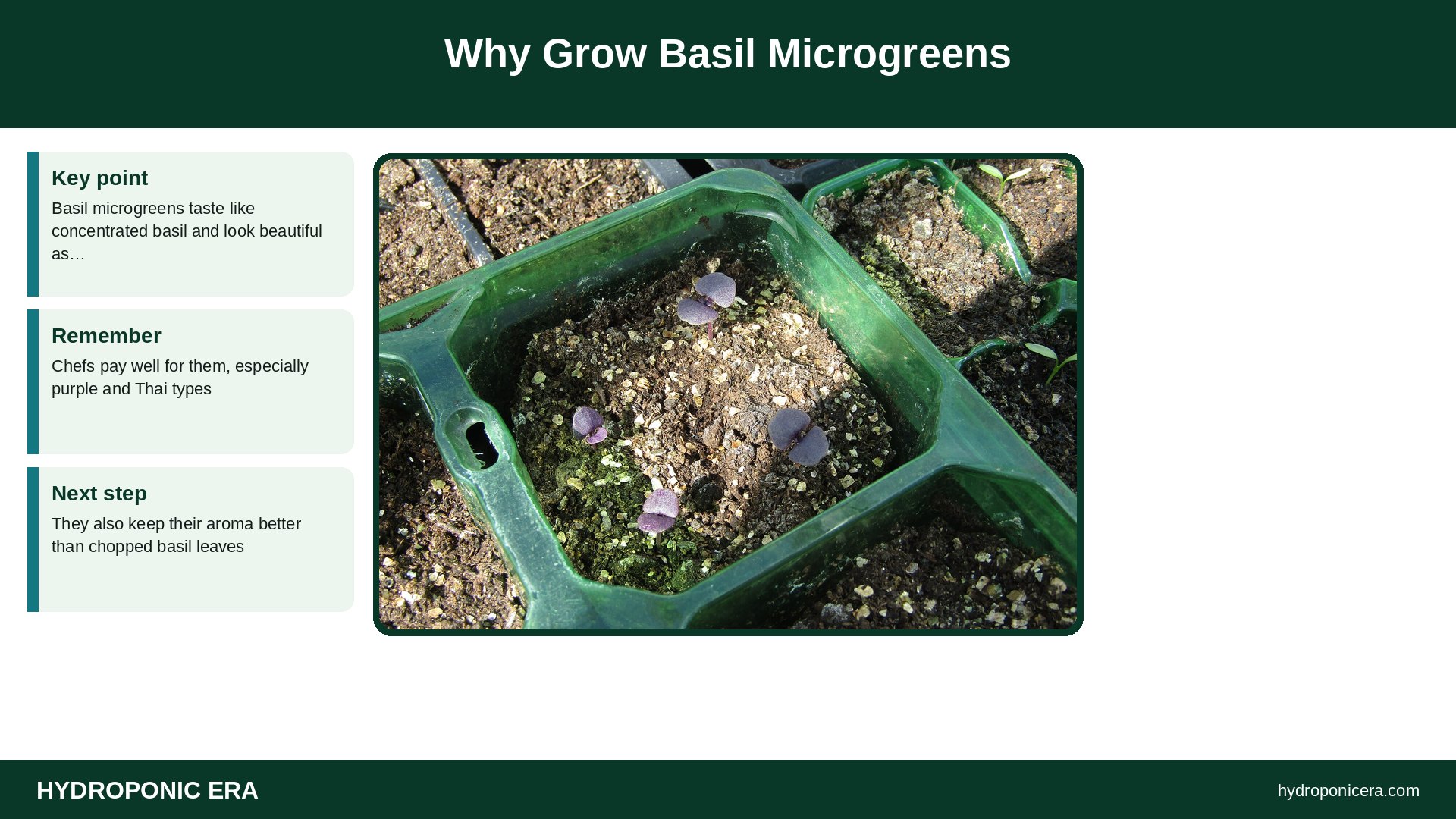
Basil microgreens taste like concentrated basil and look beautiful as a garnish on pizza, pasta, soups, and desserts. Chefs pay well for them, especially purple and Thai types. They also keep their aroma better than chopped basil leaves.
The challenge is speed. Utah State lists 12–16 days to harvest, about twice as long as radish. Basil also needs more warmth, and its gel-coated seed behaves differently from other microgreens.
Best Basil Varieties for Microgreens
- Genovese or sweet basil: classic flavor; the most common choice.
- Thai basil: anise and licorice notes, purple stems.
- Lemon basil: bright citrus aroma; popular for desserts.
- Purple or Dark Opal: deep color but slower and less vigorous.
- Cinnamon basil: spicy, warm notes.
For adult basil plants see how to grow basil hydroponically.
Why Basil Seed Is Different
When basil seed gets wet, its outer coat swells into a clear, sticky gel called mucilage. This is normal; it’s the same thing that happens in basil seed drinks. If you soak basil seed, it turns into a gooey clump that’s impossible to spread. That’s why the best method is to sow dry seed evenly onto pre-moistened medium, then mist.
How to Grow Basil Microgreens Step by Step
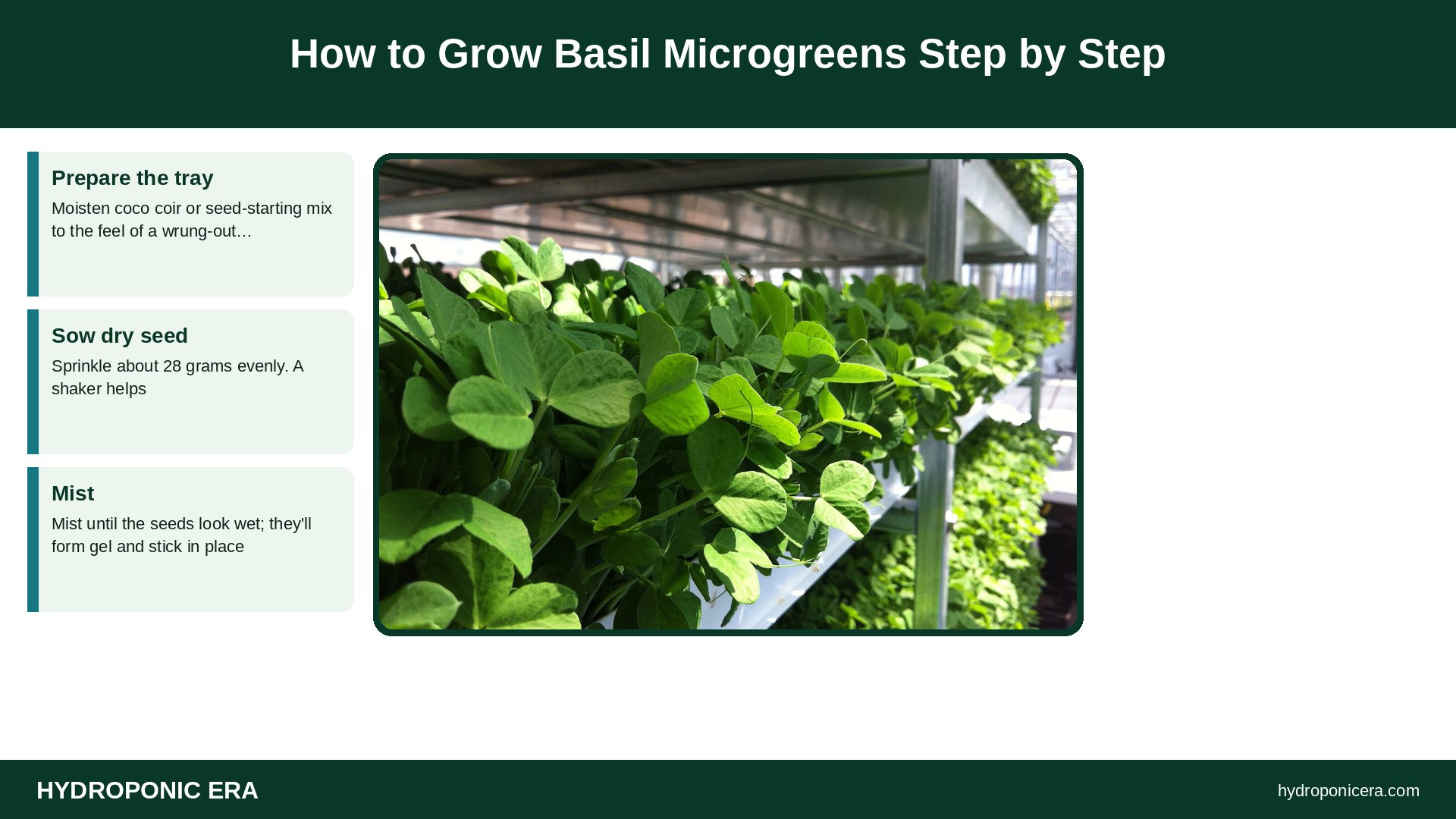
- Prepare the tray. Moisten coco coir or seed-starting mix to the feel of a wrung-out sponge and fill a 1020 tray about 1 inch deep. Smooth the surface. A hemp or felt mat also works.
- Sow dry seed. Sprinkle about 28 grams evenly. A shaker helps.
- Mist. Mist until the seeds look wet; they’ll form gel and stick in place.
- Cover. Use a tray or humidity dome. Weight is optional and lighter than for big seeds.
- Keep warm. Aim for 72–75°F. A heat mat helps in cool rooms.
- Uncover at 4–7 days when most seeds have sprouted.
- Grow under light with bottom watering and gentle airflow.
- Harvest at 12–16 days.
See how to grow microgreens hydroponically and heat mats and domes.
Light for Basil Microgreens
Basil wants bright light. Run lights up to 18 hours a day, as Utah State recommends for microgreens, with LEDs 6–12 inches above the tray. Purple varieties need strong light to keep their color. Weak light gives pale, stretched seedlings that tip over. See seed-starting shelf with grow lights.
Watering and Airflow
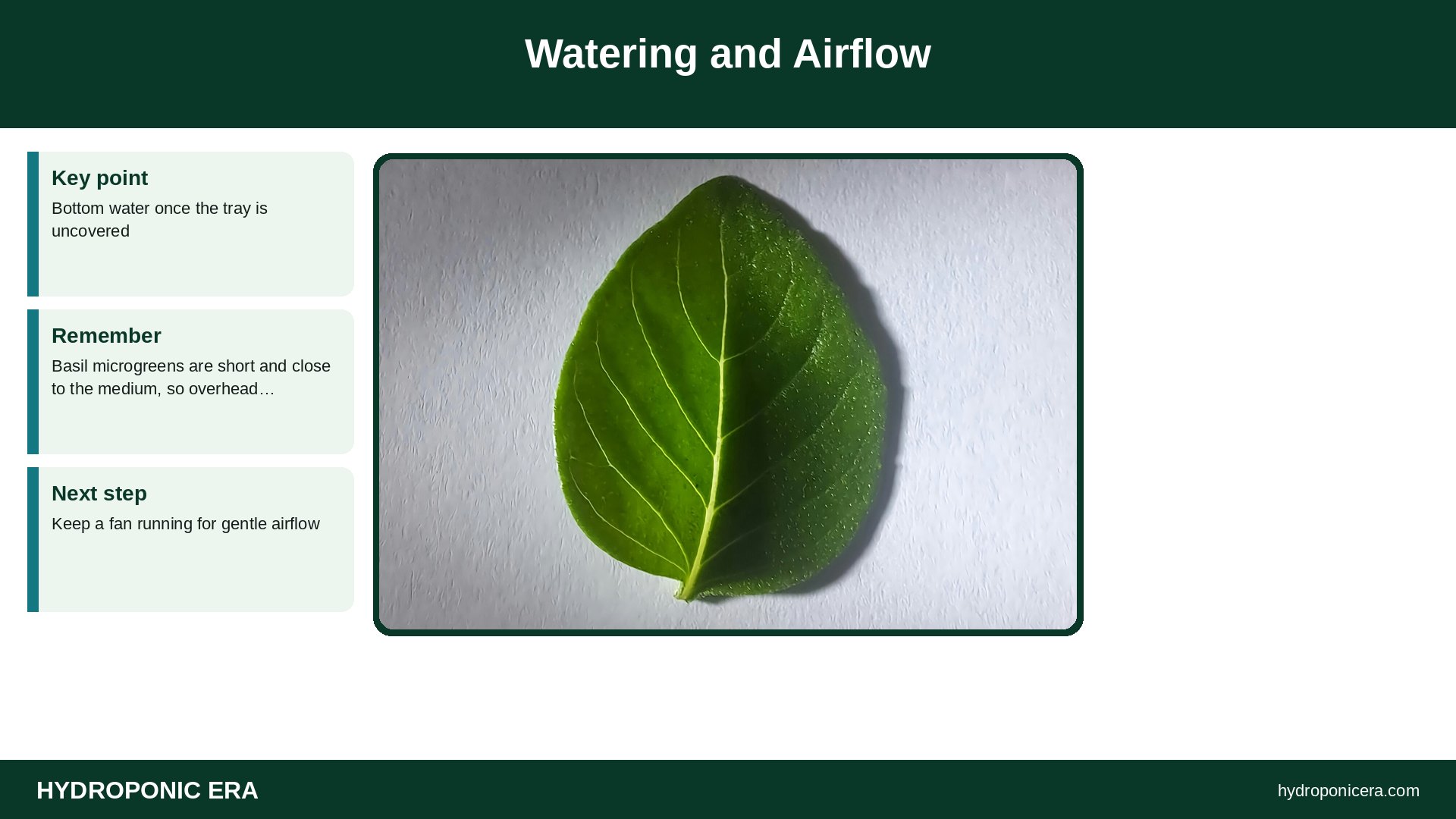
Bottom water once the tray is uncovered. Basil microgreens are short and close to the medium, so overhead watering wets leaves and stems and invites damping off. Keep a fan running for gentle airflow. Keep the medium evenly moist but not soggy, especially in the long first week. See damping off.
When to Harvest Basil Microgreens
You can harvest at two stages. At the cotyledon stage, about 12–16 days, the greens are small, mild, and tender. If you wait a few more days until the first true leaves appear, you get stronger basil flavor and a more recognizable basil shape. Cut just above the medium with sharp scissors. Basil microgreens don’t regrow well after cutting.
Do Basil Microgreens Need Nutrients?
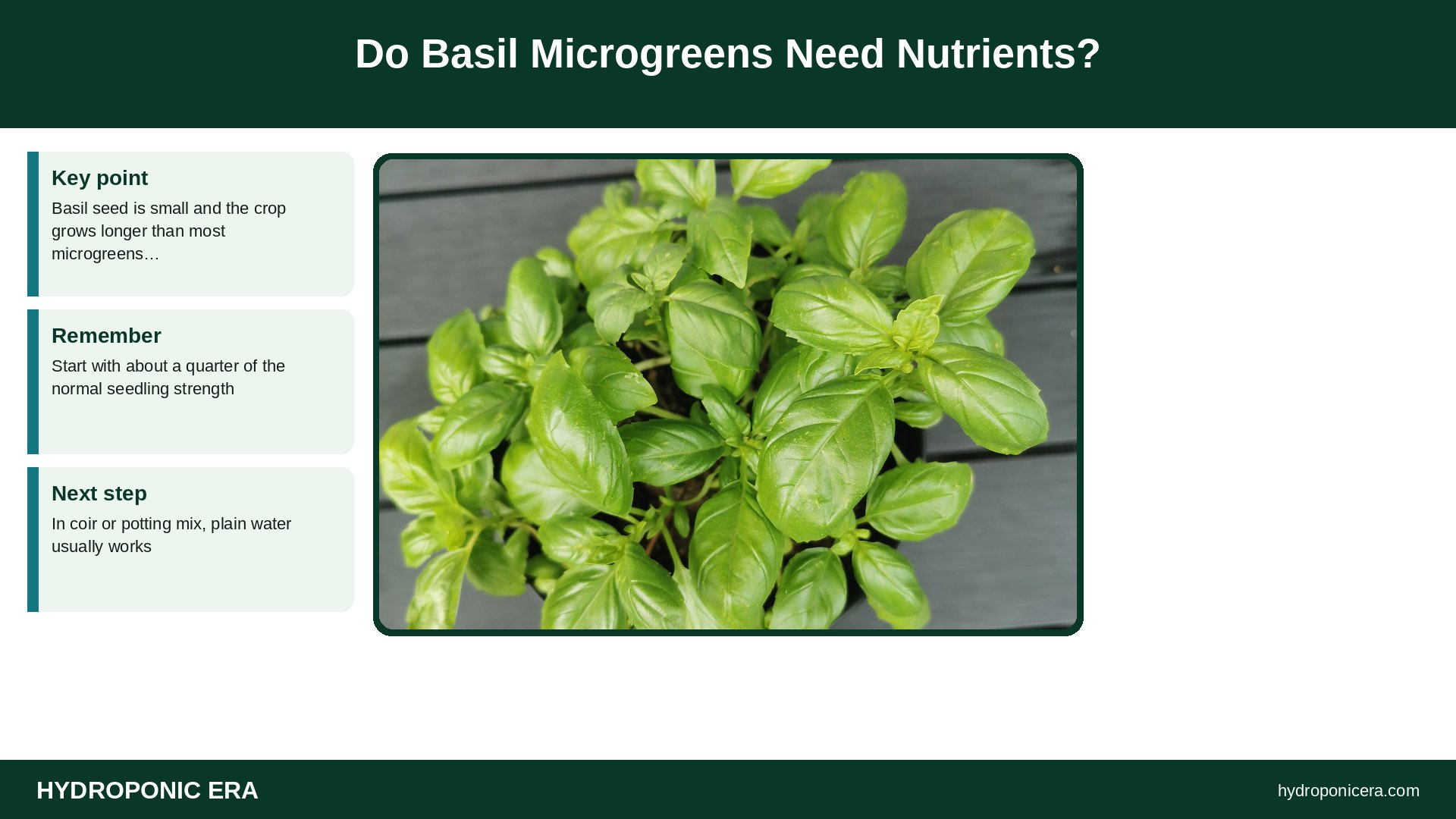
Basil seed is small and the crop grows longer than most microgreens, so a very mild nutrient solution after uncovering can help leaves stay green, especially on thin mats. Start with about a quarter of the normal seedling strength. In coir or potting mix, plain water usually works. See hydroponic nutrients for seedlings.
Common Basil Microgreens Problems
- Slow or patchy germination: too cool, old seed, or medium dried out.
- Seed gel clumps: seed was soaked or overwatered before sowing.
- Collapsed stems: damping off from wet, warm, still air.
- Pale leaves: uncovered too late or weak light.
- Seed coats stuck on leaves: mist and brush gently, or rinse after cutting.
Storing Basil Microgreens
Basil is sensitive to cold. Store basil microgreens at about 50°F if you can, not in the coldest part of the fridge, where they can darken. Keep them dry in a sealed container with a paper towel and use within 5–7 days. See basil leaves turning black.
Yield and Price
A 1020 tray of basil microgreens yields less than radish or broccoli, often 3–6 ounces. Utah State estimated basil seed at about $1.84 per tray in early 2026, one of the highest seed costs in its table. Because yields are lower and growing time is longer, basil microgreens usually sell at a premium. See selling microgreens to restaurants.
Growing Basil Microgreens Year-Round
Indoors, you can grow basil microgreens in any season, as long as you keep them warm. In winter, a heat mat under the tray during germination makes a big difference. In summer, extra airflow helps prevent damping off. Start a tray every week for a steady supply. See continuous harvest planning.
Using Basil Microgreens
Use basil microgreens as a finishing touch: scatter them over pizza, caprese salad, pasta, tomato soup, or bruschetta right before serving. Lemon basil microgreens pair well with fruit and desserts, and Thai basil microgreens suit noodle soups and curries. Because they’re so aromatic, a small handful flavors a whole dish.
FAQs
How long do basil microgreens take?
About 12–16 days.
Should I soak basil seeds?
No. They turn into gel; sow dry.
How much seed per tray?
About 28 grams for a 1020 tray.
Why are my basil microgreens slow?
Basil needs warmth; keep it at 72–75°F.
Can I store basil microgreens in the fridge?
Yes, in the warmest part, around 50°F if possible.
Which basil is best for microgreens?
Genovese for flavor, Thai and purple for color.
Sources
- Utah State University Extension — Grow Your Own Microgreens
- Clemson Cooperative Extension — Basil
- Virginia Cooperative Extension — Introduction to Microgreen Production in Indoor Vertical Farms and Greenhouses
- Photo credits (Wikimedia Commons, edited with titles): -2020-07-10 Purple basil (Ocimum basilicum) seedlings, Trimingham by Kolforn (Kolforn) I’d appreciate if you could mail me (Kolforn@gmail.com) if you (CC BY-SA 4.0); -2020-07-10 Purple basil (Ocimum basilicum) seedlings, Trimingham by Kolforn (Kolforn) I’d appreciate if you could mail me (Kolforn@gmail.com) if you (CC BY-SA 4.0); Lufa Farms Microgreens in Trays by Lufa Farms (CC BY-SA 2.0); Ocimum Basilicum leaf lighted by the left by BernaBotto (CC BY-SA 4.0); Basil plant in a pot 02 by Netha Hussain (CC BY-SA 4.0)