
Can you grow hydroponic ginseng? Yes, mostly as a research and specialty crop. Hydroponic ginseng is usually grown from one-year-old roots in aerated nutrient tanks under low light at about 68–72°F (20–22°C). Studies show it can produce leaves and young roots rich in ginsenosides within weeks, but it won’t replace the multi-year roots sold as traditional ginseng.
Key takeaway: Start with disease-free seedling roots, keep light low and water cool, use a mild nutrient solution near EC 1.0 dS/m, and watch closely for root rot. Check state and federal rules before selling American ginseng roots.
| Factor | What research used |
|---|---|
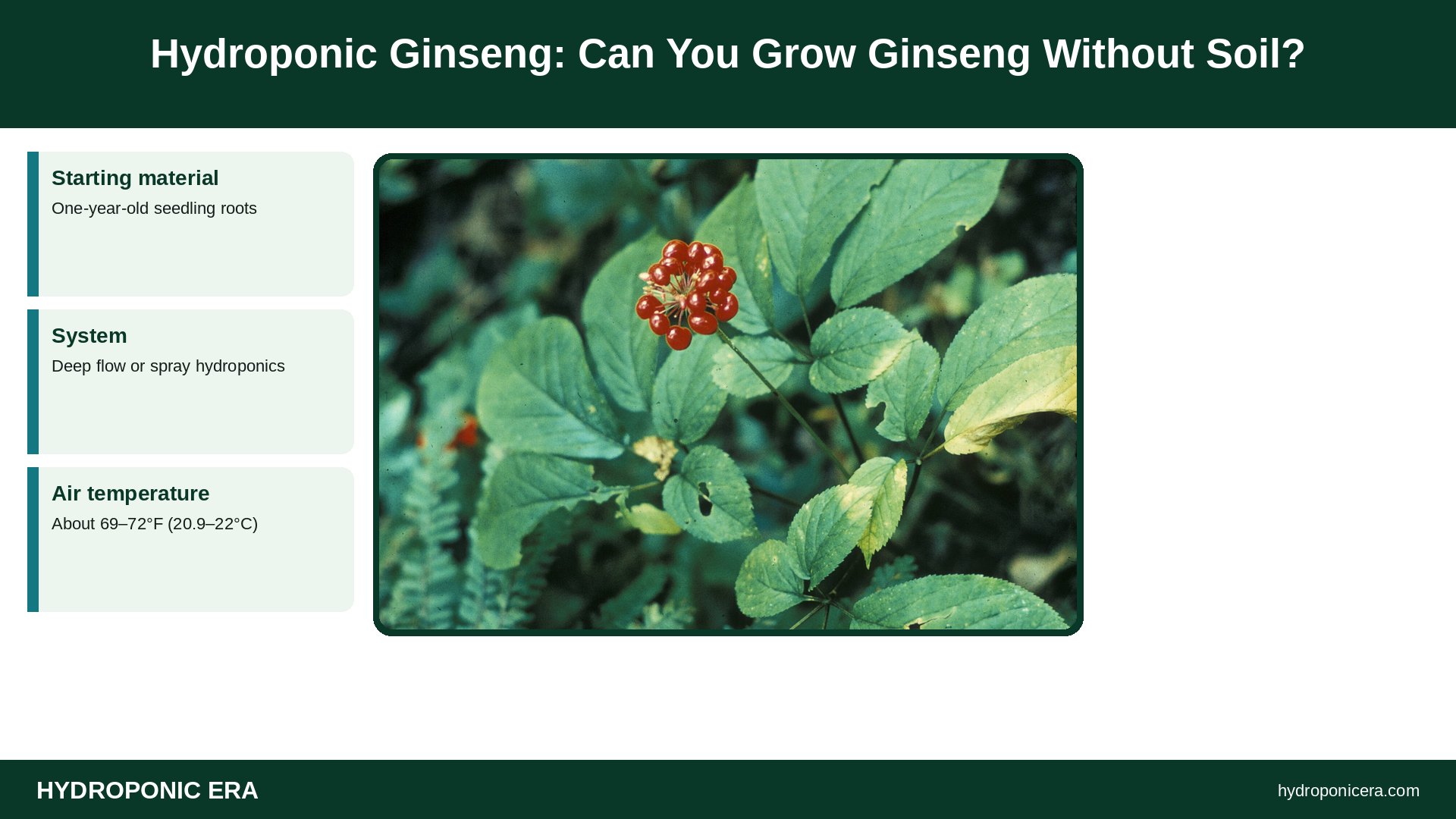
| Starting material | One-year-old seedling roots |
| System | Deep flow or spray hydroponics |
| Air temperature | About 69–72°F (20.9–22°C) |
| Solution | pH about 6.4, EC about 1.0 dS/m (one Panax ginseng study) |
| Calcium | About 320 mg/L best for American ginseng in one study |
| Crop time | 3–8 weeks in short-term trials |
What Is Hydroponic Ginseng?
Hydroponic ginseng is ginseng (Panax ginseng or American ginseng, Panax quinquefolius) grown with roots in a nutrient solution instead of soil. Field ginseng takes several years under heavy shade, so researchers in South Korea and elsewhere use hydroponics to grow young plants quickly in plant factories for their leaves, stems and young roots.
Most of this ginseng is sold or studied as a whole young plant, often eaten fresh or used as a functional food, rather than as a mature dried root. That distinction matters if you plan to sell it.
Does Hydroponic Ginseng Have Ginsenosides?
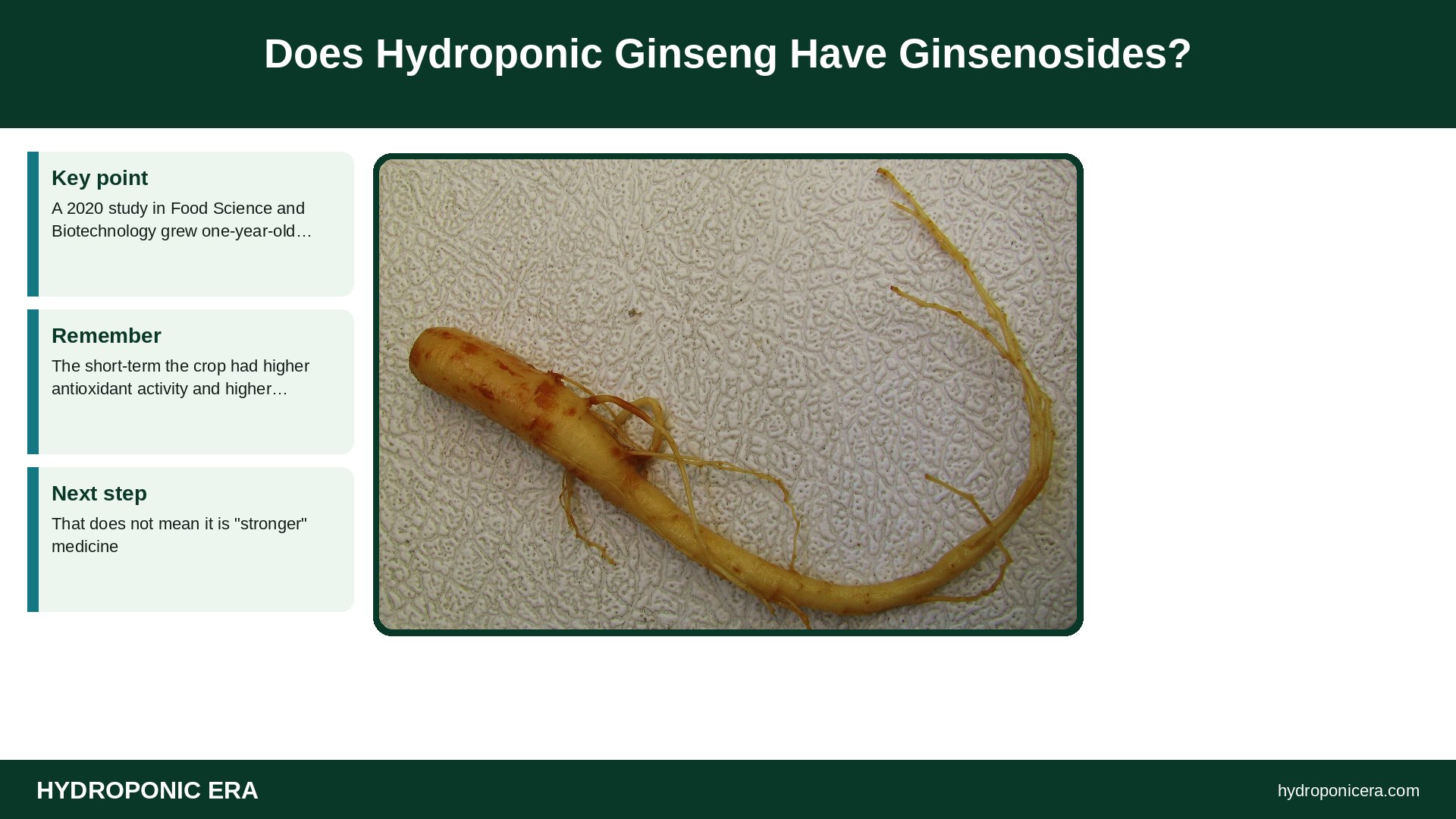
Yes. A 2020 study in Food Science and Biotechnology grew one-year-old Panax ginseng roots hydroponically for 21 days at 72°F (22°C) under red and blue LEDs. The short-term the crop had higher antioxidant activity and higher total ginsenoside and phenolic content than five-year-old field ginseng, with most ginsenosides concentrated in the shoots.
That does not mean it is “stronger” medicine. The shoots and roots have different ginsenoside profiles, and the study measured lab activity, not health effects in people. Treat health claims about any ginseng product with care.
How Do You Set Up a Hydroponic Ginseng System?
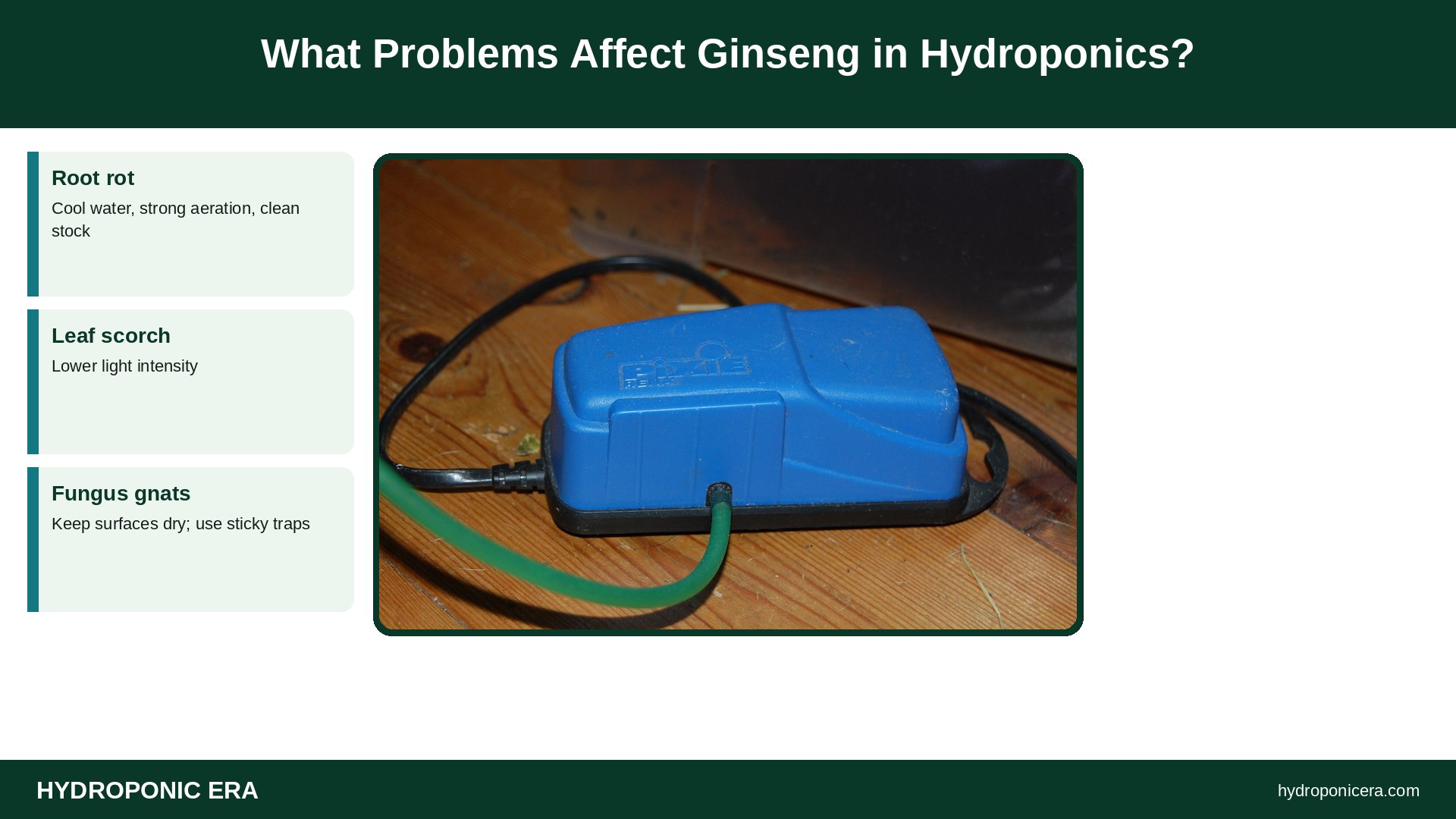
A simple hydroponic ginseng setup is a shallow, opaque tank with an air pump and air stone, a floating or fixed plate holding the roots, and an LED light. In a 2023 Biology study, researchers spaced one-year-old roots 1.6 in (4 cm) apart on a plate over a deep flow tank with constant aeration.
- Buy disease-free one-year-old roots from a reputable grower.
- Use an opaque tank about 6 in (15 cm) deep to keep light off roots.
- Fit a plate with holes so buds sit above the plate and roots hang below.
- Aerate continuously; the study kept dissolved oxygen near 11.7 mg/L.
- Mix a mild nutrient solution: the study ran about pH 6.4 and EC 1.0 dS/m.
- Keep air near 70°F (21°C) and humidity moderate.
- Replace solution on a regular schedule; the study supplied it every two weeks.
Our air pump guide helps with aeration.
What Light Does Ginseng Need Indoors?
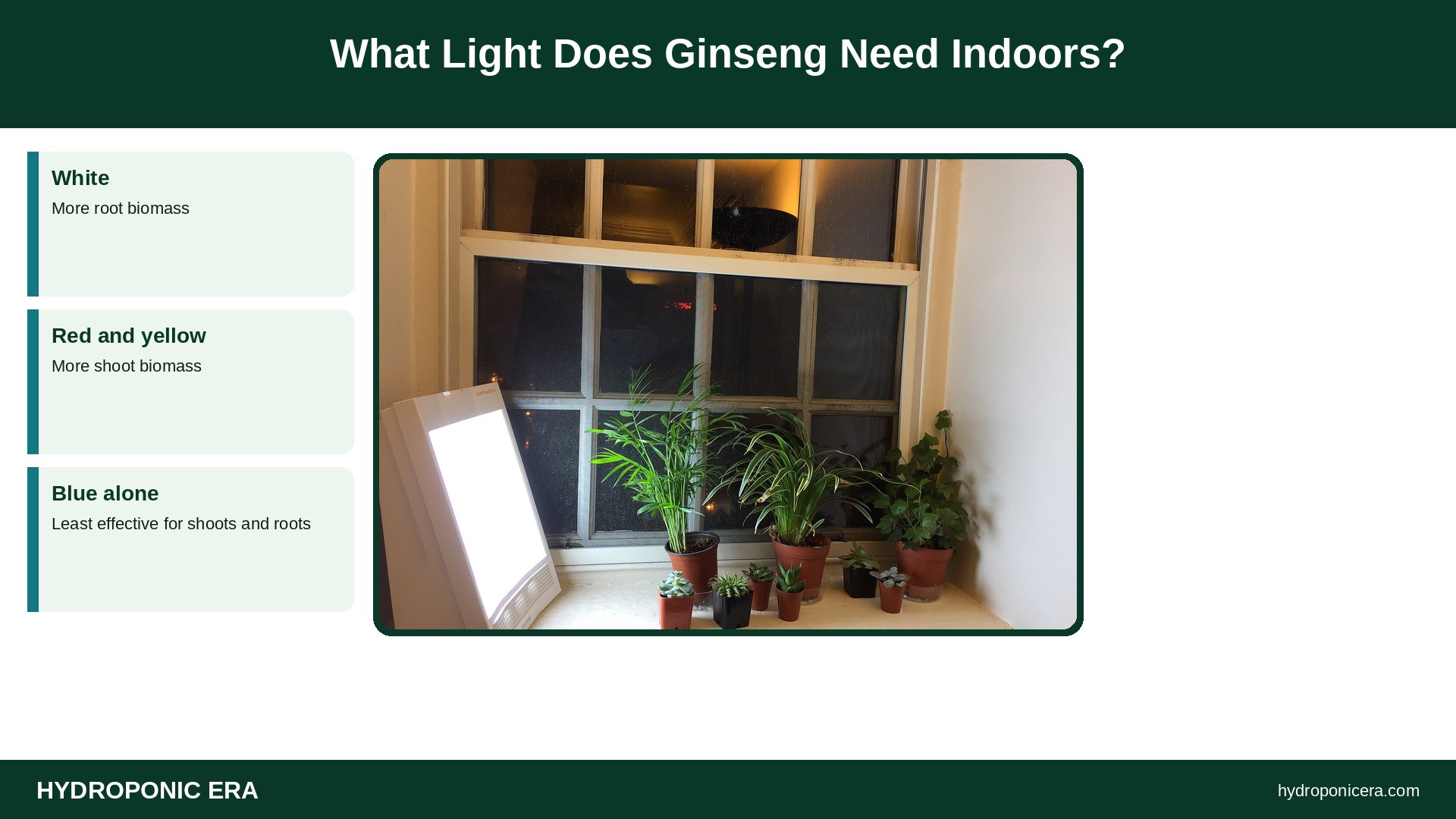
Hydroponic ginseng needs low to moderate light because ginseng is a shade plant. Field growers use heavy artificial shade. In the 2023 Biology study, red and yellow LEDs increased shoot biomass, while white LEDs boosted the photosynthetic rate and root biomass, and blue light alone was least effective.
| LED color | Effect in the 2023 study |
|---|---|
| White | More root biomass |
| Red and yellow | More shoot biomass |
| Blue alone | Least effective for shoots and roots |
Avoid strong light, which can scorch leaves. Our guide to light burn shows warning signs.
What Nutrients Does Ginseng Need in Water Culture?
Hydroponic ginseng prefers a mild, balanced solution. A 1990 study on American ginseng seedlings found the best growth at about 100 ppm nitrogen, 25 ppm phosphorus and 250 ppm potassium. A 2021 HortScience study found about 320 mg/L calcium gave the best photosynthesis and root activity in two-year-old American ginseng in hydroponics.
- Keep EC low compared with fruiting crops; about 1.0 dS/m worked in one study.
- Don’t overdo calcium: the highest rates tested in 2021 reduced performance.
- Use clean water and avoid softened water high in sodium.
Read about calcium and magnesium in hydroponics.
What Problems Affect Ginseng in Hydroponics?
Root rot is the biggest risk for hydroponic ginseng. Ginseng roots are prone to fungal and bacterial rots, especially in warm, low-oxygen water. Start with clean roots, keep water cool and aerated, sanitize tanks between runs, and remove any soft or discolored roots quickly. Fungus gnats can also damage roots in damp media.
| Problem | Prevention |
|---|---|
| Root rot | Cool water, strong aeration, clean stock |
| Leaf scorch | Lower light intensity |
| Fungus gnats | Keep surfaces dry; use sticky traps |
| Nutrient burn | Low EC; change solution regularly |
Is It Legal to Sell Hydroponic Ginseng in the US?
Growing hydroponic ginseng at home is legal, but selling American ginseng roots is regulated. American ginseng is listed under CITES, and the US Fish and Wildlife Service requires state or tribal certification and a CITES permit for export. Many states, such as Kentucky, also license dealers and define what counts as cultivated ginseng.
If you plan to sell, contact your state’s agriculture or natural resources department first. Our guide to controlled environment agriculture covers indoor farming basics.
Keep records of your source roots, growing dates and inputs. Those notes help with any state certification and make it easier to repeat good results.
FAQ About Hydroponic Ginseng
Can I grow ginseng from seed hydroponically?
It’s hard. Ginseng seed needs long stratification, so most growers start with roots.
How long does a hydroponic crop take?
Short-term trials harvested in 3–8 weeks.
Can I eat the leaves?
Researchers studied whole young plants, including shoots, as a possible food. Buy food-grade products and follow local rules.
Is it the same as wild ginseng?
No. It is young, cultivated ginseng with a different profile.
What temperature is best?
Studies used about 69–72°F (21–22°C).
Sources
- Food Science and Biotechnology (2020) — A Short-Term, Hydroponic-Culture of Ginseng Results in a Significant Increase in Anti-Oxidative Activity and Bioactive Components
- Biology (2023) — White LED Lighting Increases the Root Productivity of Panax ginseng in a Hydroponic Cultivation System of a Plant Factory
- HortScience (2021) — Calcium Affects Growth and Physiological Indices of Panax quinquefolium L.
- PubMed (1990) — Effects of Concentration and Ratio of N, P and K on Seedlings of Panax quinquefolium
- U.S. Fish and Wildlife Service — Export of American Ginseng (CITES)
- Kentucky Administrative Regulations via Cornell LII — 302 KAR 45:010 Ginseng
- Photo credits (Wikimedia Commons, edited with titles): Panax quinquefolius FWS by Pittillo, Dan J. (Public domain); Ginseng root (3526490396) by Daniel R. Blume from Toledo, Ohio, USA (CC BY-SA 2.0); Potted plants succulents under grow light Nov 2016 by Asdfjrjjj (CC BY-SA 4.0); Aquarium-air-pump by User:Corydoras-adolfoi (CC BY-SA 4.0)