
What are heirloom seeds? Heirloom seeds come from open-pollinated varieties that have been grown and passed down for generations, often 50 to 100 years or more. They grow true to type when saved, unlike hybrid seeds. Heirloom seeds work in hydroponics, but pick varieties whose size and habit suit your system.
Key takeaway: Heirloom seeds, open-pollinated seeds and hybrid seeds are not the same thing. All heirlooms are open-pollinated, but not all open-pollinated seeds are heirlooms. If you want to save seed, choose heirloom or open-pollinated types, and if you want disease resistance and uniformity, check hybrids.
| Seed type | How it is made | Will saved seed grow true? |
|---|---|---|
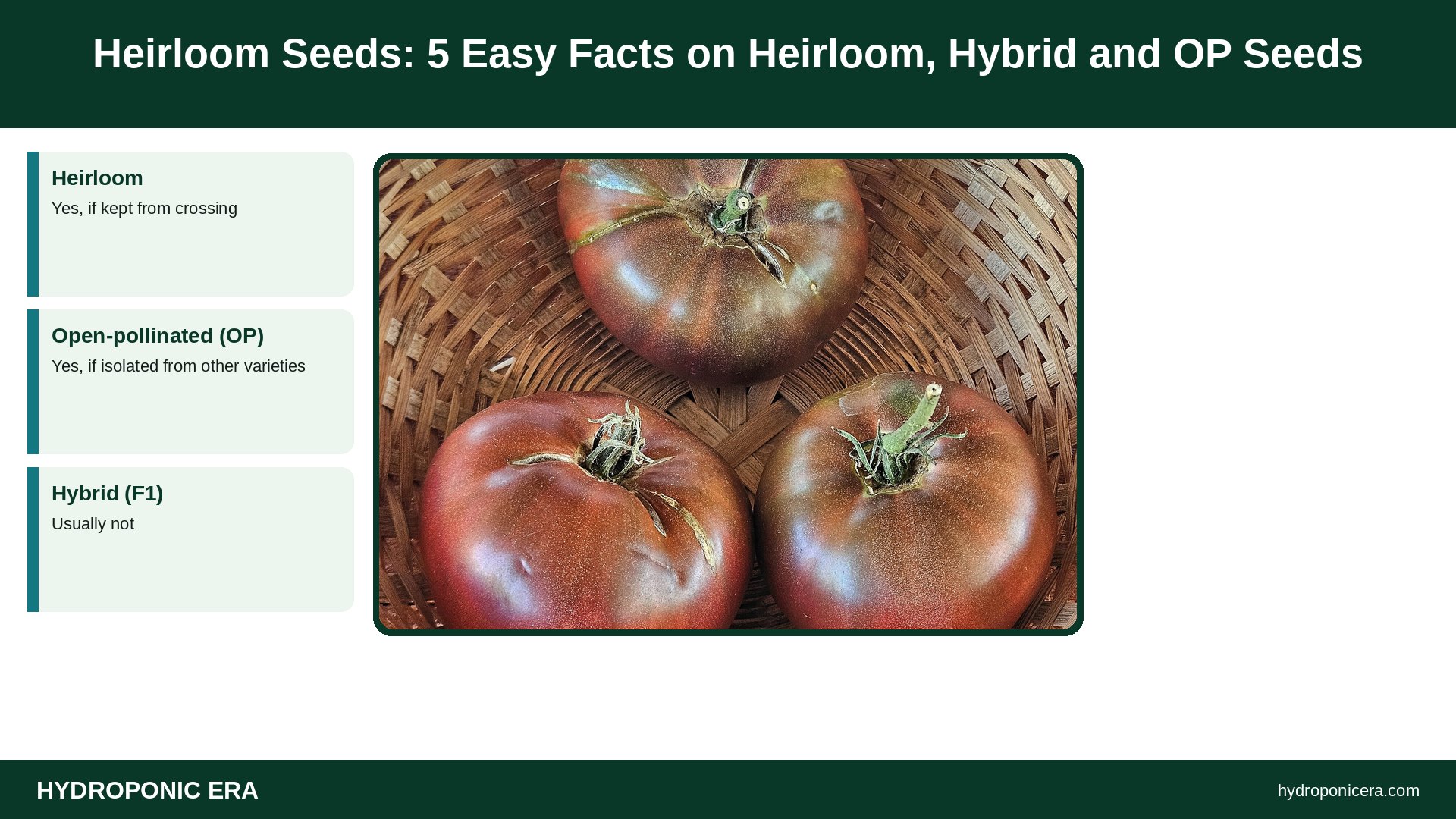
| Heirloom | Open-pollinated variety passed down for decades | Yes, if kept from crossing |
| Open-pollinated (OP) | Pollinated naturally, stable traits | Yes, if isolated from other varieties |
| Hybrid (F1) | Deliberate cross of two parent lines | Usually not |
| Treated or coated | Any seed with a protective coating | Depends on the variety |
Are Heirloom Seeds the Same as Open-Pollinated Seeds?
Not exactly. Heirloom seeds are a subset of open-pollinated varieties. Open-pollinated varieties produce seedlings like their parents when pollinated naturally. Heirloom seeds meet that rule and also have an older history, usually at least 50 years, though the exact cutoff varies between seed companies.
University of California, Oregon State, North Carolina State and Illinois extension guides describe the same split. Open-pollinated varieties stay stable from one generation to the next, hybrids come from crossing selected parents in controlled ways, and a seed packet should tell you which one you have. They are valued for flavor, color and history, rather than uniformity.
Do Heirloom Seeds Grow Well in Hydroponics?
Yes, heirloom seeds grow well in hydroponics, because the nutrient solution replaces soil and the genetics decide the plant’s size, flavor and habit. The main difference is variety. Many heirloom tomatoes are large indeterminate vines that need staking, space and consistent calcium, not beginner-friendly bush types.
Choose varieties that fit your setup. Compact lettuce, basil, kale and dwarf tomatoes do well in small systems, while big beefsteak tomatoes need a bucket system and a trellis. Our post on seed varieties for indoor hydroponic traits shows the traits to check, and micro dwarf tomatoes are a compact place to start.
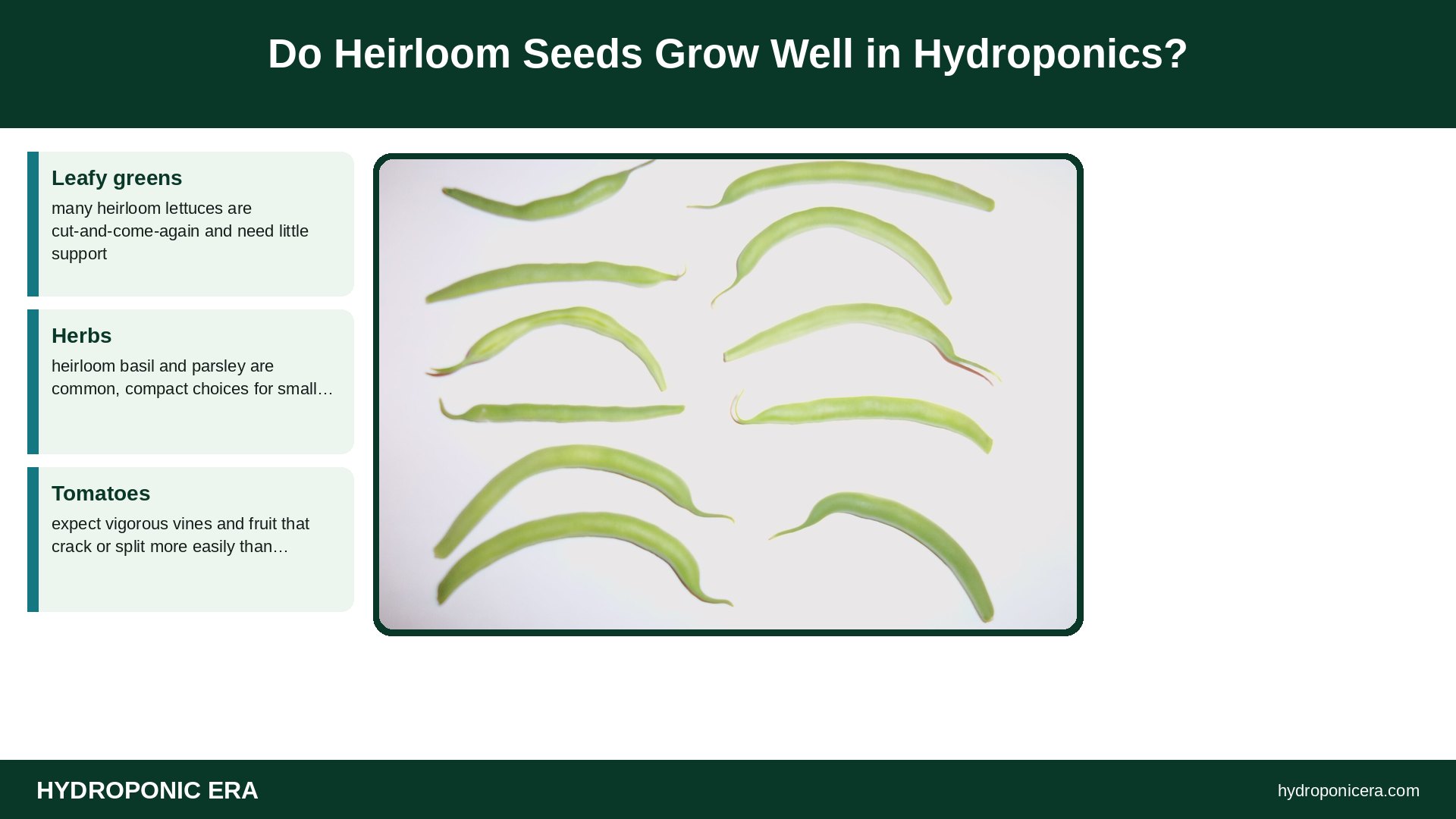
- Leafy greens: many heirloom lettuces are cut-and-come-again and need little support.
- Herbs: heirloom basil and parsley are common, compact choices for small systems.
- Tomatoes: expect vigorous vines and fruit that crack or split more easily than uniform hybrids. See tomato fruit cracking in hydroponics.
- Peppers: heirloom peppers vary widely in size and heat, so read the packet.
How Do Heirloom Seeds Compare With Hybrid Seeds?
These varieties usually give you flavor, variety and the option to save seed, while hybrids usually give you uniformity, vigor and built-in disease resistance. Neither is better in every case. Your choice should depend on your system, your climate and whether you want to save seed.
| Trait | Heirloom seeds | Hybrid seeds |
|---|---|---|
| Seed saving | Grow true to type | Offspring vary |
| Uniformity | Variable | Very uniform |
| Disease resistance | Varies, often less | Often bred in |
| Cost | Often similar or lower | Sometimes higher |
| Flavor range | Very wide | Varies |
University extension guidance also reminds growers that a hybrid is not the same as genetically modified. Hybrids come from conventional crossing of parent lines, and GMO seed for home gardeners is basically not sold in the garden market. Read the variety description for resistance codes such as V, F or N on tomato packets if disease is a concern.
How Do You Save Seed From Heirloom Seeds?
To save seed, grow open-pollinated plants, keep different varieties of the same crop apart to avoid crossing, collect seed from healthy plants and dry it fully. Self-pollinating crops such as lettuce, tomato and beans are the easiest. Cross-pollinating crops such as squash and corn need more isolation.
- Pick healthy, true-to-type plants as the seed parents.
- Let fruit or seed heads fully ripen, then clean and dry the seed on a plate, not paper towels that stick.
- Label each batch with variety and year.
- Store in a cool, dry, dark, sealed container.
- Test germination before the next season.
The University of Georgia seed-saving guide for homes and schools is a good starting point. Saved seed often stores well for several years if kept dry, and a quick paper-towel test tells you whether they are still worth sowing. Poor results usually link back to moisture or heat, as described in hydroponic seeds not germinating.
Where Should You Buy Heirloom Seeds?
Buy heirloom seeds from seed companies that label varieties clearly, give days to maturity and state the year of the seed. Look for a packed-for-year date, a variety name and a description. Local seed swaps and regional companies can offer varieties that match your growing conditions.
- Check the packet: variety name, year, days to maturity and whether it is OP or hybrid.
- Read the description: compact, vining, determinate or indeterminate matters in a small system.
- Choose the right size order: a small packet is plenty for most home hydroponic systems.
- Avoid unlabeled bargain bins: old seed germinates poorly.
What Should You Do When Heirloom Seeds Fail to Sprout?
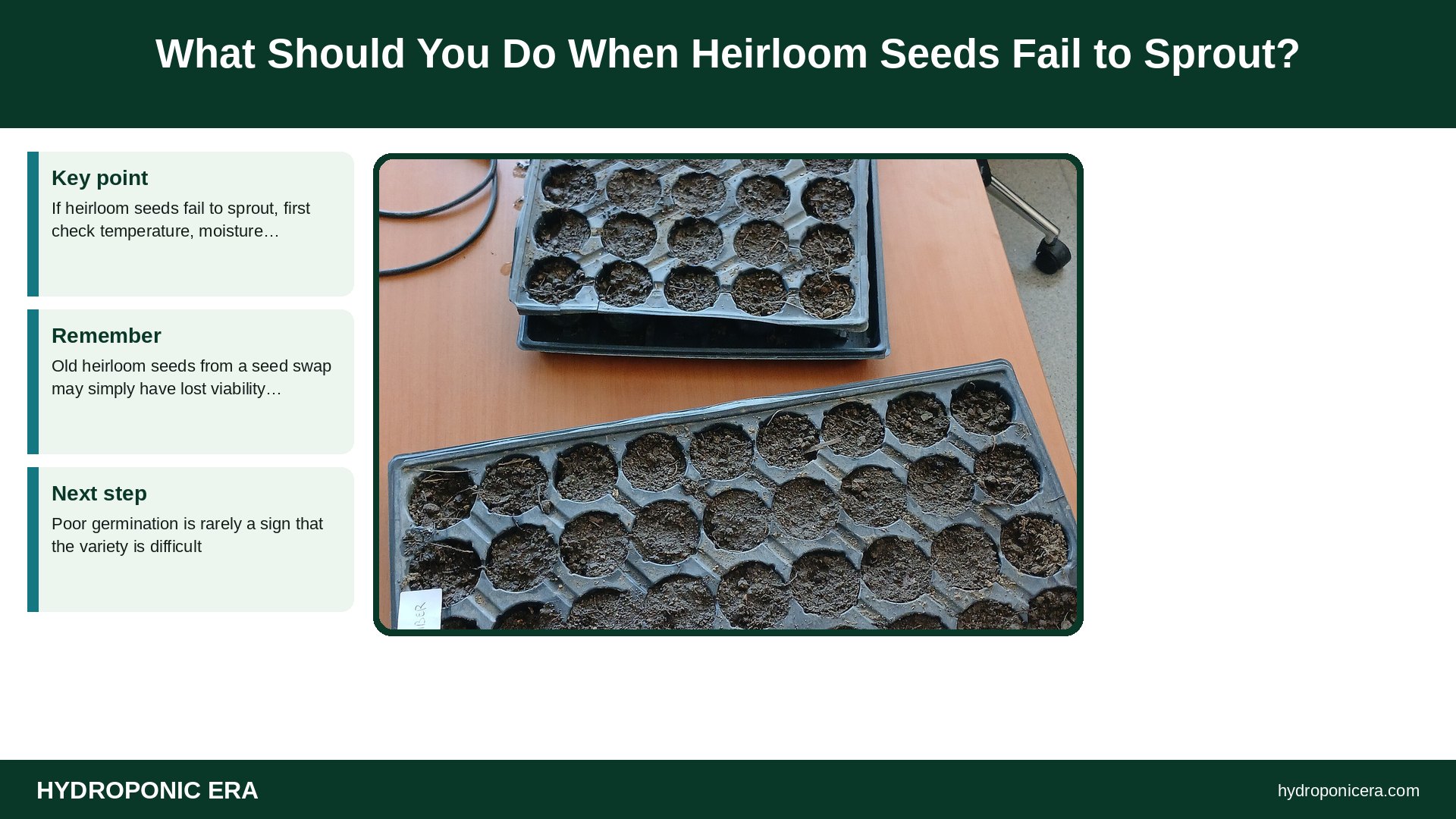
If heirloom seeds fail to sprout, first check temperature, moisture and seed age. Old heirloom seeds from a seed swap may simply have lost viability, so sow a few extra and test a sample with a damp paper towel. Poor germination is rarely a sign that the variety is difficult.
Keep the medium warm, around 70°F (21°C), damp but not soaked, and provide light as soon as seedlings emerge. If seedlings fall over, read about damping off in seedlings. Many of these varieties are open-pollinated, so seedlings in one tray can vary slightly, which is normal and not a sign of a bad packet.
FAQ About Heirloom Seeds
How old does a variety need to be to count as an heirloom?
There is no single legal rule. Many companies use 50 years or more, and some use 100. Check the seed company’s definition.
Are heirloom seeds organic?
Not automatically. Organic refers to how seed was grown, while heirloom refers to the variety.
Can I use heirloom seeds in aquaponics?
Yes. The plant genetics work the same, and the system choice matters more than seed type.
Do heirloom seeds taste better?
Many growers say so, but taste depends on variety, ripeness and nutrients. Try a few and compare.
Why are heirloom tomatoes harder in hydroponics?
They are often large, indeterminate and prone to cracking, so they need support and steady water.
Sources
- University of California ANR — Choosing vegetable varieties
- Oregon State University Extension — Heirloom, open-pollinated and hybrid seeds
- University of Illinois Extension — Grow confidence when choosing seed packets
- NC State Extension — Seed catalogs: terms to know before you buy
- University of Georgia Extension — Seed saving in Georgia gardens
- Photo credits (Wikimedia Commons, edited with titles): Heirloom tomatoes at county fair by Eric Polk (CC BY-SA 4.0); Organic Heirloom Empress Green Beans by Mattwj2002 (CC BY-SA 3.0); Heirloom tomatoes at county fair by Eric Polk (CC BY-SA 4.0); Pepper and tomato seedling trays at Boğaziçi University 2026 by Furkan Akkurt (CC BY-SA 4.0)