
How does horticultural oil kill pests? Horticultural oil is a refined petroleum or plant-based oil that coats soft-bodied pests, mites, scale crawlers and eggs, blocking their breathing openings so they suffocate. It works on contact only, leaves little residue, and should be used on a mild day, not in heat above about 85–90°F (29–32°C).
Key takeaway: Horticultural oil works by smothering, so every pest must be coated. Use a refined horticultural oil, not kitchen oil, mix to label rate, test a few leaves first, and avoid hot, humid or freezing weather. Never combine it with sulfur products, and skip tender plants such as ferns unless the label lists them.
| Condition | Safe approach | Risk if ignored |
|---|---|---|
| Temperature | Spray at about 50–85°F (10–29°C) | Leaf burn in heat, poor results in cold |
| Plant stress | Water plants first, spray healthy foliage | Leaf damage on dry, stressed plants |
| Mixing | Do not mix with sulfur or recent sulfur sprays | Severe plant injury |
| Plant type | Check label for ferns and tender growth | Burn on sensitive species |
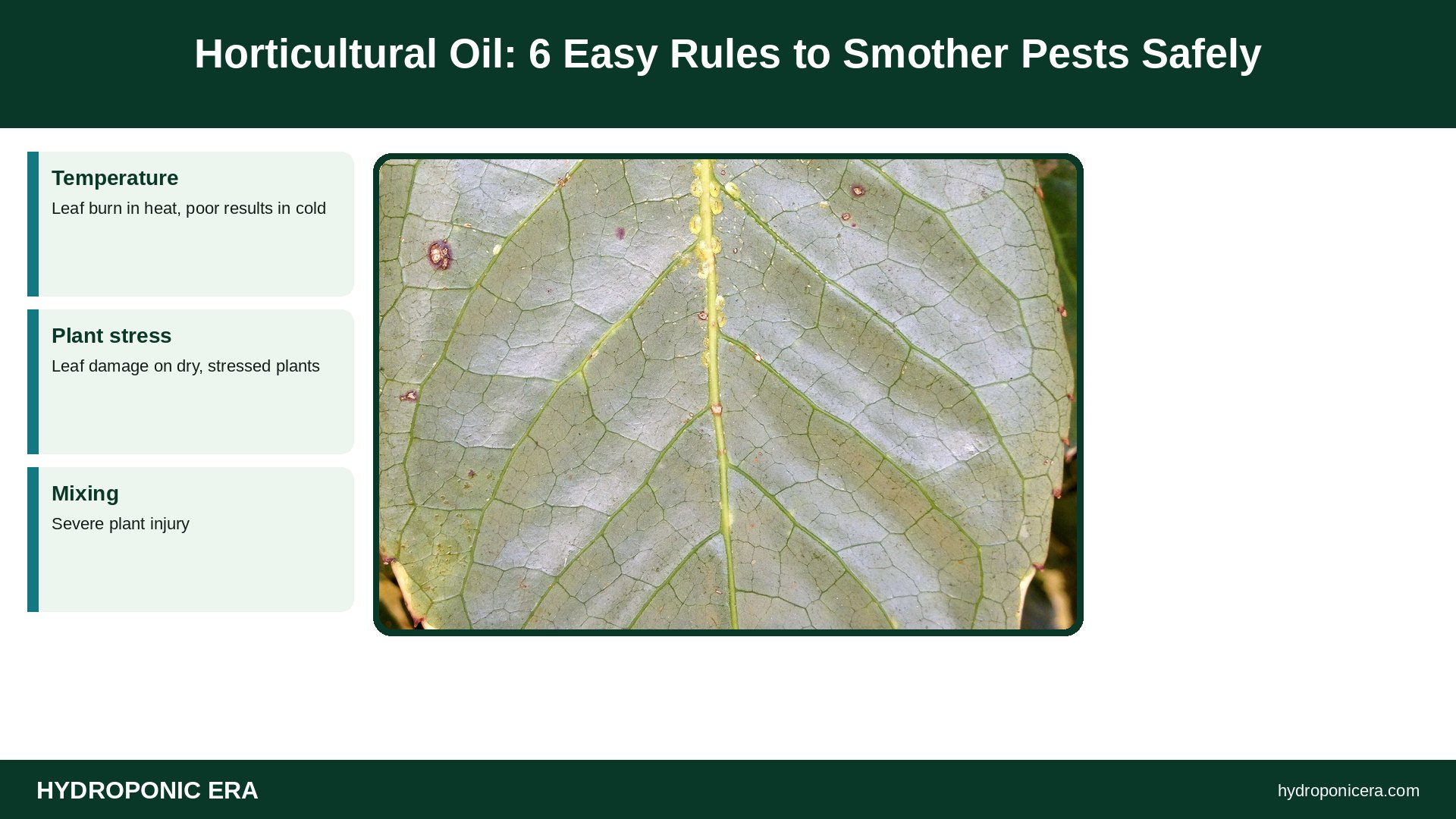
What Is Horticultural Oil?
Horticultural oil is a highly refined oil, usually from petroleum, though some products use plant oils, made to be sprayed on plants. It is mixed with water and an emulsifier, then sprayed on pests such as aphids, spider mites, scale and whiteflies. It is different from cooking oil, which can burn leaves.
University of Maryland Extension and UConn describe the oil as a low-toxicity contact insecticide with little residual. If you already use plant-derived products, compare it with neem oil for plants and insecticidal soap for plants.
How Does Horticultural Oil Work?
Horticultural oil works by coating pests and their eggs, which blocks the tiny openings insects use to breathe. It also disrupts feeding in some species. Because it works physically, resistance is unlikely, but coverage must be complete. Oil only kills what it touches and it breaks down in days.
- Smothers soft-bodied pests, mites and scale crawlers.
- Kills eggs of mites and some insects when coated.
- Leaves little residue, so repeat sprays are needed.
- Does not harm insects that arrive after the spray dries.
This is helpful when you need to protect predators, because the oil leaves little residual after it dries. Still, avoid spraying beneficials directly, such as ladybugs for aphids.
When Should You Use Horticultural Oil?
Use horticultural oil as soon as you see soft-bodied pests or mites, in mild weather, and in the evening or on a cloudy day. Avoid hot, humid days above about 85–90°F (29–32°C), and avoid temperatures below about 40–50°F (4–10°C). Iowa State and UConn publications advise reading the label for timing and limits.
Oil is most useful against aphids, scale crawlers, whiteflies and spider mites. For mite outbreaks, see spider mites in hydroponics. Pests such as thrips that hide in buds are harder to hit, and fungus gnat larvae in the medium are not affected.
How Do You Apply Horticultural Oil Safely?
Test the oil on a few leaves first and wait a day or two for damage. Mix to the label rate with clean water, shake often, and spray until wet but not dripping, covering leaf undersides. Wear gloves and eye protection, avoid breathing mist, and keep it off open flowers.
- Water the plant a day before, since dry plants are more easily damaged.
- Test a few leaves and wait one or two days.
- Mix the oil with water exactly as labeled and agitate often.
- Spray both sides of leaves in the evening or on a cloudy day.
- Repeat after the label interval, usually a week or so, if pests persist.
What Plants and Products Should You Avoid Mixing With Horticultural Oil?
Do not mix horticultural oil with sulfur sprays or use it soon after sulfur, because the combination can severely burn leaves. Some plants, including ferns and new tender growth, are sensitive. Avoid using it on plants stressed by drought or heat, and follow the label’s list of sensitive species.
| Item | Advice | Why |
|---|---|---|
| Sulfur products | Never mix, and wait as the label says | Burns foliage |
| Ferns and new growth | Test or skip | Tender tissue is sensitive |
| Drought-stressed plants | Water first | Stress raises injury risk |
| Food crops | Use only labeled products | Observe the pre-harvest interval |
Is Horticultural Oil Safe for Edible Plants and Hydroponics?
Many the oil products are labeled for edible crops, but you must read the label, follow the pre-harvest interval and rinse produce. Use a refined the oil, not cooking oil or an unlabeled mix. In a hydroponic system, cover reservoirs and keep oil from reaching the nutrient solution, where it can coat roots.
Our overview of hydroponic pests such as aphids and mites shows where oil fits with other controls like traps and clean growing practices.
How Do Summer Oils Differ From Dormant Oils?
Dormant oils are heavier and are used on bare woody plants in late winter, while lighter summer or superior oils can be used on leafy plants in the growing season. Labels spell out which type is allowed on which crop, so never spray a dormant product on foliage unless the label says so.
Houseplant and greenhouse growers nearly always want the lighter type. Choose a product designed for foliage use, read the plant list, and avoid improvised kitchen blends. If a plant is on the label’s sensitive list, treat other pest control options first.
Does Horticultural Oil Leave a Residue on Leaves?
A thin film can remain on leaves, especially when overapplied or sprayed in cool, humid conditions. The film breaks down within days. Rinse edible plants as the label directs, and wipe off heavy residue from houseplant leaves with a damp cloth so they can photosynthesize and breathe normally.
Keep the container tightly closed and store it away from freezing temperatures and direct sun. Shake it well before mixing, since the emulsifier can separate. Do not mix more than you can spray in one session, and never spray from a container that has held herbicide, because traces of weed killer can damage the plants you are trying to protect.
FAQ About Horticultural Oil
Can I use cooking oil instead?
No. Refined horticultural oil is made to emulsify and dry, while cooking oil can burn leaves and go rancid.
How often can I spray it?
Follow the label. The interval depends on the product.
Does it kill beneficial insects?
It can if sprayed directly, but it leaves little residue once dry.
Can I use it on tomatoes?
If the label lists them, and observe the pre-harvest interval.
Is it the same as neem oil?
No. Horticultural oil is a refined oil, while neem oil is a plant extract with its own properties.
Sources
- University of Maryland Extension — Pesticide profile: horticultural oil
- UConn Home and Garden Education Center — Horticultural oils
- University of Nevada Extension — Horticultural oil publication
- Iowa State University Extension — Horticultural oil sprays
- Photo credits (Wikimedia Commons, edited with titles): Panax (Polycias guilfoylei) Scale insects and bacterial leaf blight (15263962534) by Scot Nelson (CC0); Farm and garden annual (16172344714) by A. Currie & Company.; Henry G. Gilbert Nursery and Seed Trade Catalog Collec (Public domain); Neem oil plant by Ayyuha Sideeq (CC0); 14-spotted Ladybird larva eating an aphid (16475286350) by Line Sabroe from Denmark (CC BY 2.0)