
How do you use predatory mites on spider mites? Release the predatory mite Phytoseiulus persimilis at the first sign of two-spotted spider mites, spreading them over infested leaves in the evening. Keep temperatures about 59–77°F (15–25°C) and humidity above 70%. Light infestations need roughly 3–10 predators per square meter (10.8 sq ft), repeated weekly for at least two weeks.
Key takeaway: Predatory mites are living biocontrol, so timing, temperature and humidity decide success. Release at first detection, keep conditions mild and humid, avoid broad-spectrum sprays, and repeat releases. Phytoseiulus persimilis targets spider mites only, so identify the pest before you buy.
| Infestation level | Release rate (per square meter) | Frequency |
|---|---|---|
| Preventive | 1–2 | Every 2–3 weeks |
| Light | 3–10 | Weekly for at least 2 weeks |
| Heavy | 20–50 | Weekly until controlled |
What Are Predatory Mites?
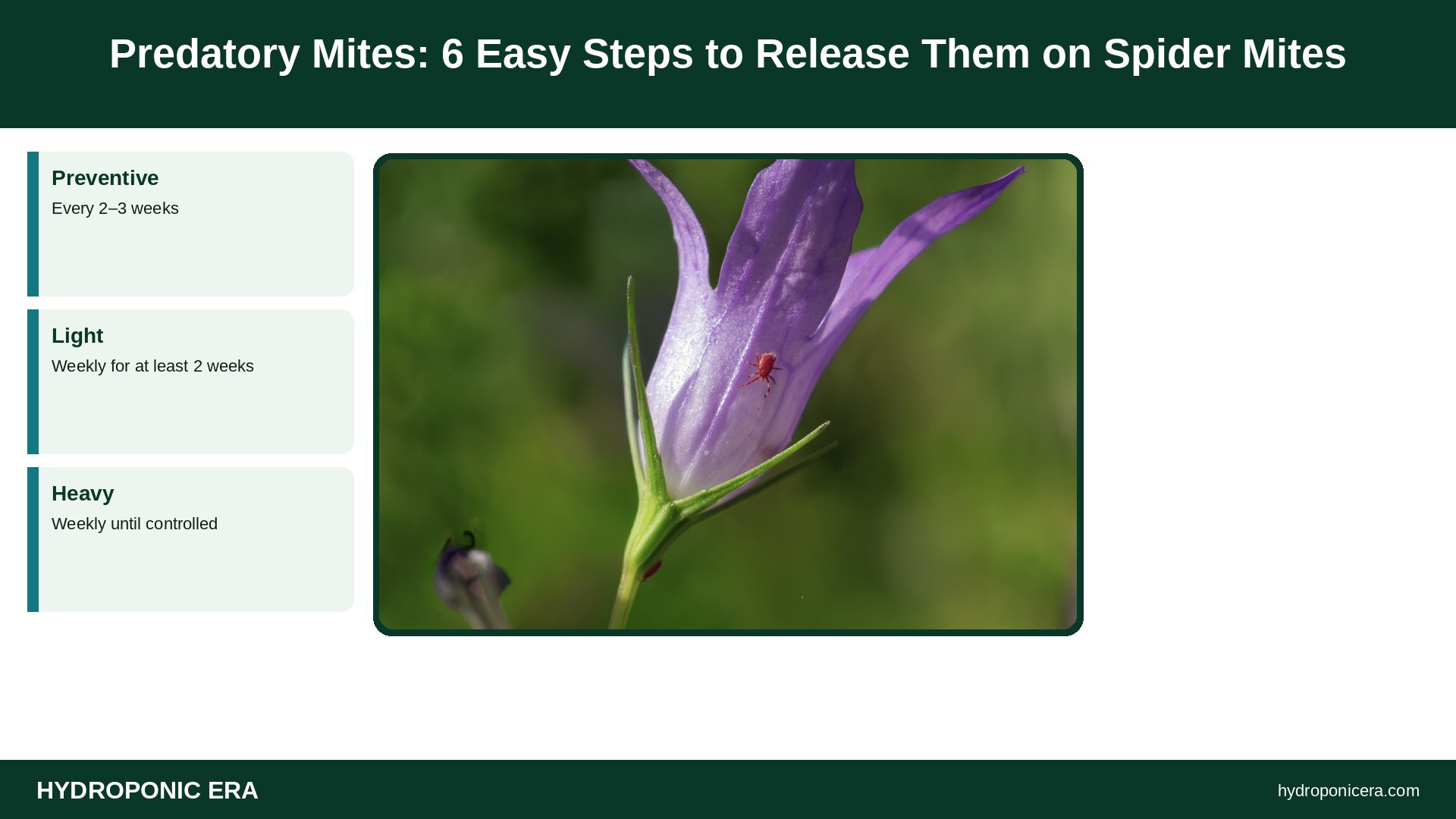
These tiny beneficial mites eat pest mites and their eggs. The species most used against spider mites is Phytoseiulus persimilis, a fast-moving red-orange predator that feeds almost only on spider mites. It is released in bottles or sachets onto infested plants and works best at first detection.
UConn’s biological control fact sheet describes P. persimilis as a leading predator for greenhouse spider mite control. If you are not sure that spider mites are the problem, see spider mites in hydroponics first, and compare with broad mites and russet mites, which need different control.
How Many Predatory Mites Should You Release?
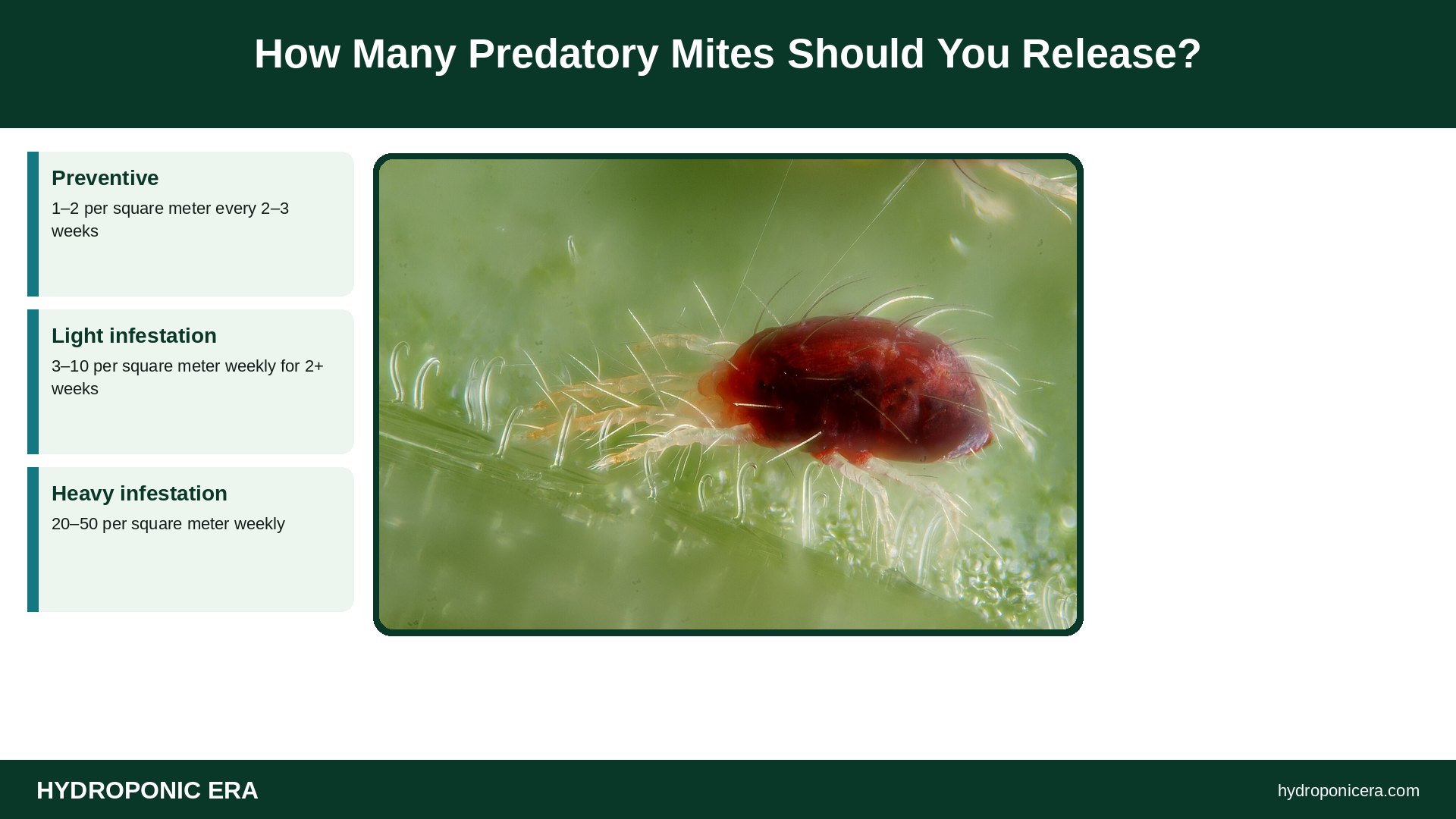
Release rates depend on infestation level. A Danish Environmental Protection Agency research report lists about 1–2 predators per square meter (10.8 sq ft) every 2–3 weeks for prevention, 3–10 per square meter weekly for at least two weeks for light infestations, and 20–50 per square meter weekly for heavy infestations.
- Preventive: 1–2 per square meter every 2–3 weeks.
- Light infestation: 3–10 per square meter weekly for 2+ weeks.
- Heavy infestation: 20–50 per square meter weekly.
Suppliers give their own rates and package sizes. For a small home garden, divide the label dose across hot spots rather than spreading it evenly over bare leaves.
How Do You Release Predatory Mites?
Release in the evening, shaking the carrier gently over infested leaves or hanging sachets close to hot spots. Do not spray pesticides before or after the release without checking residual effects. Place most of the predators where spider mite webbing and stippling are heaviest.
- Identify spider mites by stippled leaves and fine webbing.
- Order predatory mites close to your release date and keep them cool.
- Release in the evening on infested leaves, focusing on hot spots.
- Avoid spraying broad-spectrum pesticides around the release.
- Check again after a week, and repeat at the rate that fits your infestation.
Our broader pest overview for hydroponics covers scouting and sticky traps to track results.
What Temperature and Humidity Do Predatory Mites Need?
P. persimilis does best at 59–77°F (15–25°C), tolerates about 55–81°F (13–27°C), and needs humidity above 70–75%. Above about 86°F (30°C) its performance declines, and above about 95°F (35°C) feeding stops. In hot, dry grow rooms, the predators may fail and spider mites will explode.
| Condition | Good range | Problem |
|---|---|---|
| Temperature | 59–77°F (15–25°C) | Declines above 86°F (30°C) |
| Humidity | Above 70–75% | Dry air slows predator eggs |
| Heat extreme | Below 95°F (35°C) | Feeding stops at 95°F (35°C) |

Why Do Predatory Mites Fail?
Releases fail when conditions are too hot or dry, pesticide residue is present, infestations are already heavy, or the wrong species was released. They also starve when pests are scarce. A second release a week later often helps, and so does pairing with spot treatments of soap or oil applied well before the release.
If conditions are poor, fix the room first. Lower the heat, raise humidity and increase airflow. Consider insecticidal soap on heavy hot spots at least a few days before you release the predators, and follow supplier advice on timing.
How Do You Confirm Spider Mites Before Buying?
Look at the undersides of leaves with a hand lens. Spider mites are tiny, about the size of a grain of pepper, and cause pale stippling on the top of the leaf. Later you will see fine webbing along stems and leaf edges. Tap a branch over white paper and watch for specks that crawl. Misidentifying the pest wastes money, since predators are specific.
Once you confirm the pest, record where it is worst. Spider mites often start on the lowest, warmest leaves and move upward. Mark those plants so you can place the release material where it matters, and recheck after a week to see whether stippling is slowing.
Can You Combine Biocontrol With Other Controls?
Yes, but order matters. Use soap or oil on severe hot spots first, wait the interval the supplier recommends, then release. Avoid broad-spectrum insecticides and miticides that leave residues. Keep leaves clean, remove heavily webbed leaves in a sealed bag, and keep humidity up, since spider mites love hot, dry air and predators prefer humid conditions.
How Should You Store Predatory Mites Before Release?
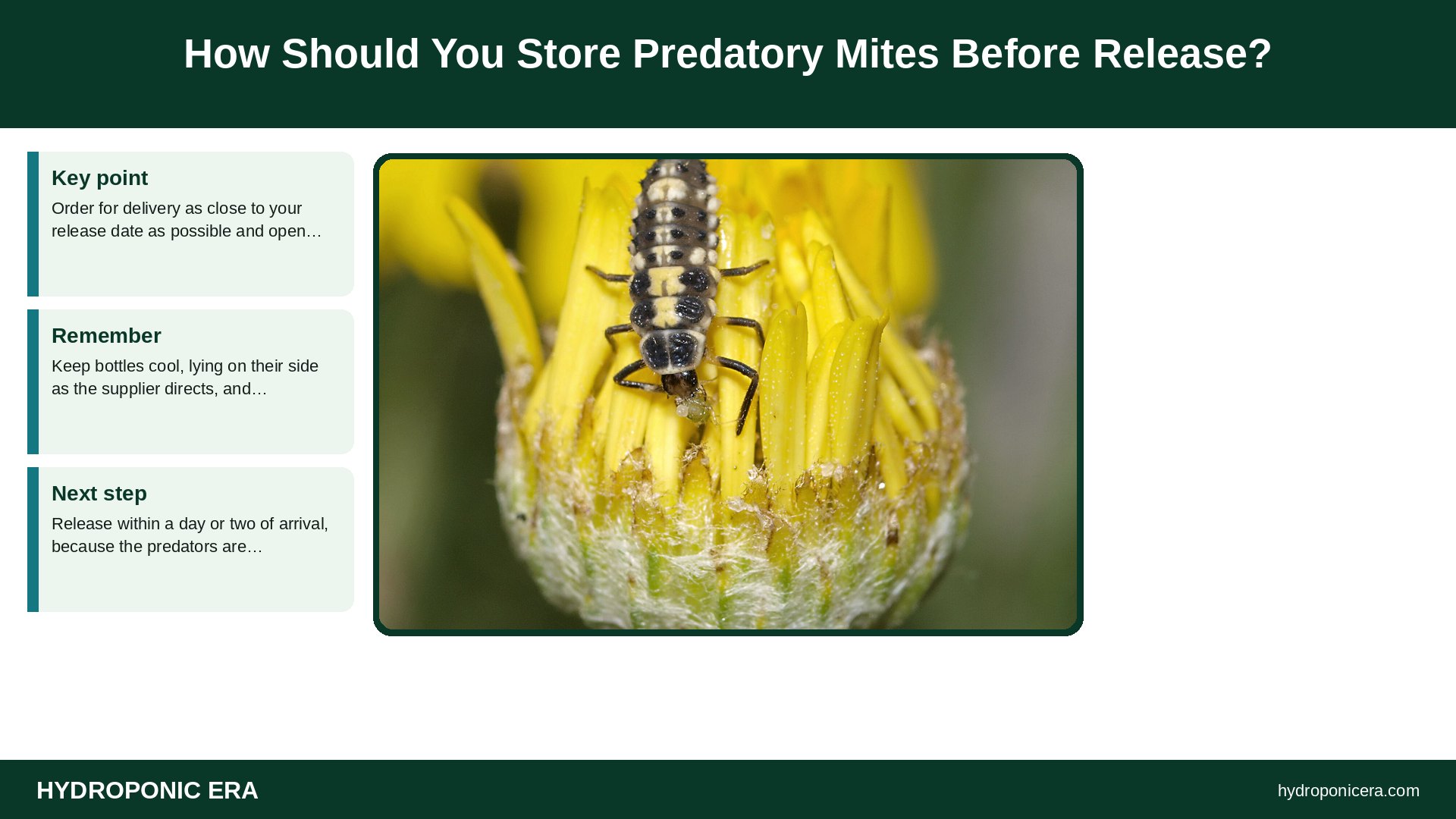
Order for delivery as close to your release date as possible and open the shipment right away. Keep bottles cool, lying on their side as the supplier directs, and away from direct sun. Release within a day or two of arrival, because the predators are hungry and will not survive long without prey. Predatory mites that arrive hot or dead should be replaced by the supplier.
Do not mix the carrier material in water or shake it hard. Gently turn the bottle to spread the contents, then sprinkle it onto leaves or into the plant canopy. Avoid releasing during the hottest part of the day, and keep the grow-room fans off the plants for a few hours so the predators can settle.
Are Predatory Mites Safe for Plants, Pets and People?
These beneficials are harmless to plants, people and pets. They eat only mites and small pests and will not bite or damage leaves. They do die back when the pest mites are gone. Keep them out of sprays that kill mites, and store them cool until release as the supplier instructs.
FAQ About Predatory Mites
Which predatory mites control spider mites?
Phytoseiulus persimilis is the most common choice for two-spotted spider mites.
When should I release predatory mites?
At the first signs of spider mites, ideally before heavy webbing.
How many predatory mites do I need?
From 1–2 per square meter for prevention up to 20–50 for heavy outbreaks, according to a Danish report.
Do they work in hot rooms?
Not well. Performance falls above about 86°F (30°C).
Can they control broad mites?
Not P. persimilis. Broad mites need different control.
Sources
- Danish Environmental Protection Agency — Biological control of spider mites (2007 report)
- UConn IPM — Biological control of spider mites fact sheet
- Koppert — Spidex product page (supplier)
- Photo credits (Wikimedia Commons, edited with titles): (MHNT) Campanula rapunculus with Phytoseiulus persimilis by Didier Descouens (CC BY-SA 4.0); Tetranychus urticae with silk threads by Gilles San Martin (CC BY-SA 2.0); Neem oil plant by Ayyuha Sideeq (CC0); 14-spotted Ladybird larva eating an aphid (16475286350) by Line Sabroe from Denmark (CC BY 2.0)