
How do you make kokedama? Kokedama is a Japanese moss ball planter. To make one, mix lightweight potting mix or peat with a coarse clay such as akadama, shape it around a plant’s roots, wrap it in rehydrated moss and tie it with string. Water by soaking the ball until it feels heavy, then let it drip dry.
Key takeaway: Kokedama is a moss-wrapped soil ball that holds a houseplant. Choose plants that tolerate drier conditions, rehydrate the moss, wrap the roots in a firm soil ball, tie it securely and water by soaking about 5–20 minutes whenever the ball feels light.
| Material | Purpose | Notes |
|---|---|---|
| Lightweight potting mix or peat | Soil base | Holds moisture and shape |
| Akadama (coarse clay) | Drainage and structure | Used in bonsai soil |
| Sheet or Spanish moss | Outer wrap | Soak for about 1 hour first |
| String or twine | Holds the ball together | Natural or decorative |
| Houseplant | Living part | Ferns, philodendron, dracaena, spider plant |
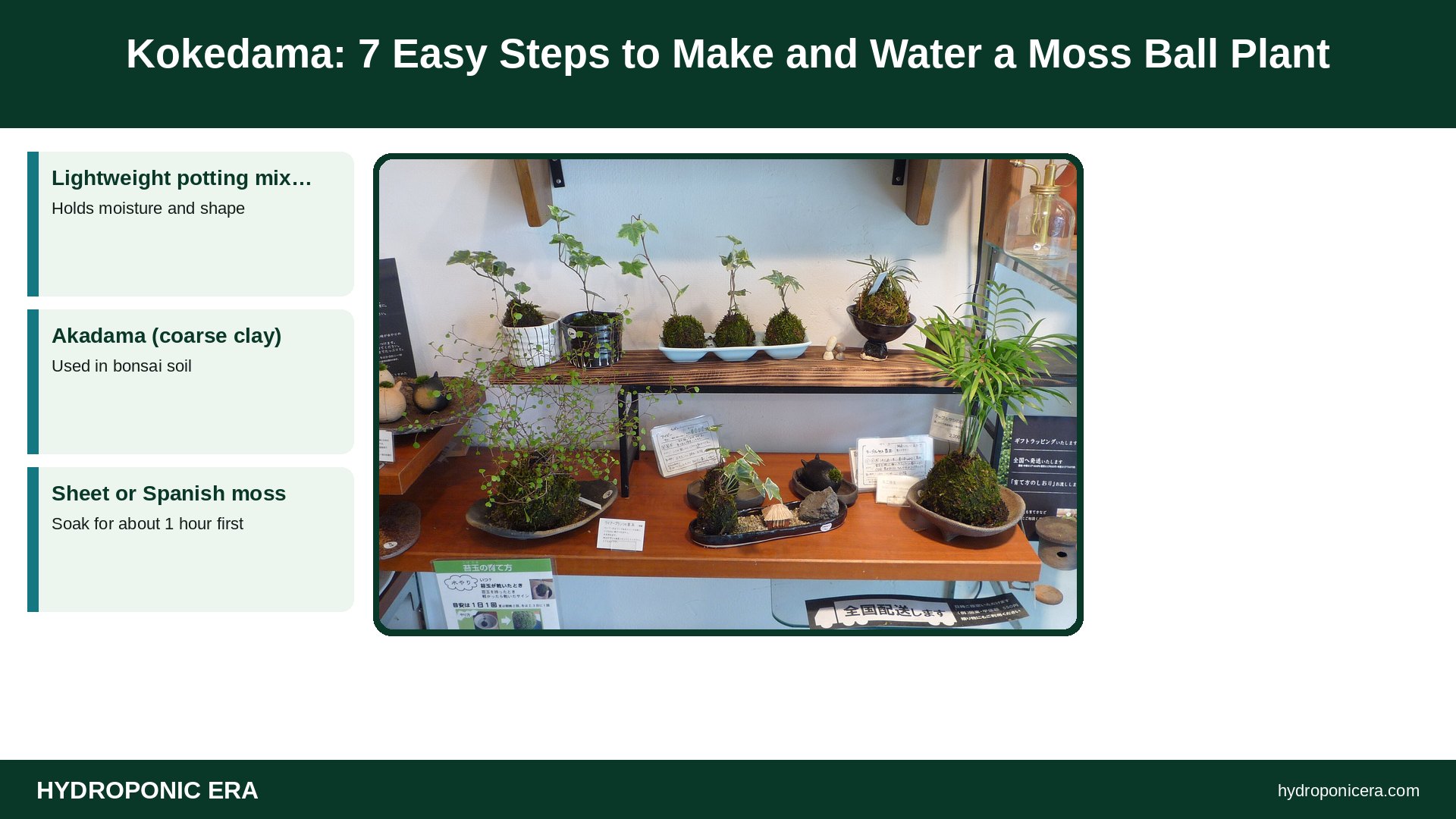
What Is Kokedama?
This Japanese form of bonsai grows a plant grows in a ball of special soil wrapped in moss, rather than in a pot. University of Illinois Extension describes kokedama as a uniquely beautiful way to grow houseplants. The ball can sit on a dish or tray, rest on driftwood or hang from string.
Because it has no drainage hole, water management matters more than with a normal pot. The soil ball dries in days, and it is easy to tell by weight when it needs water.
Which Plants Work Best in Kokedama?
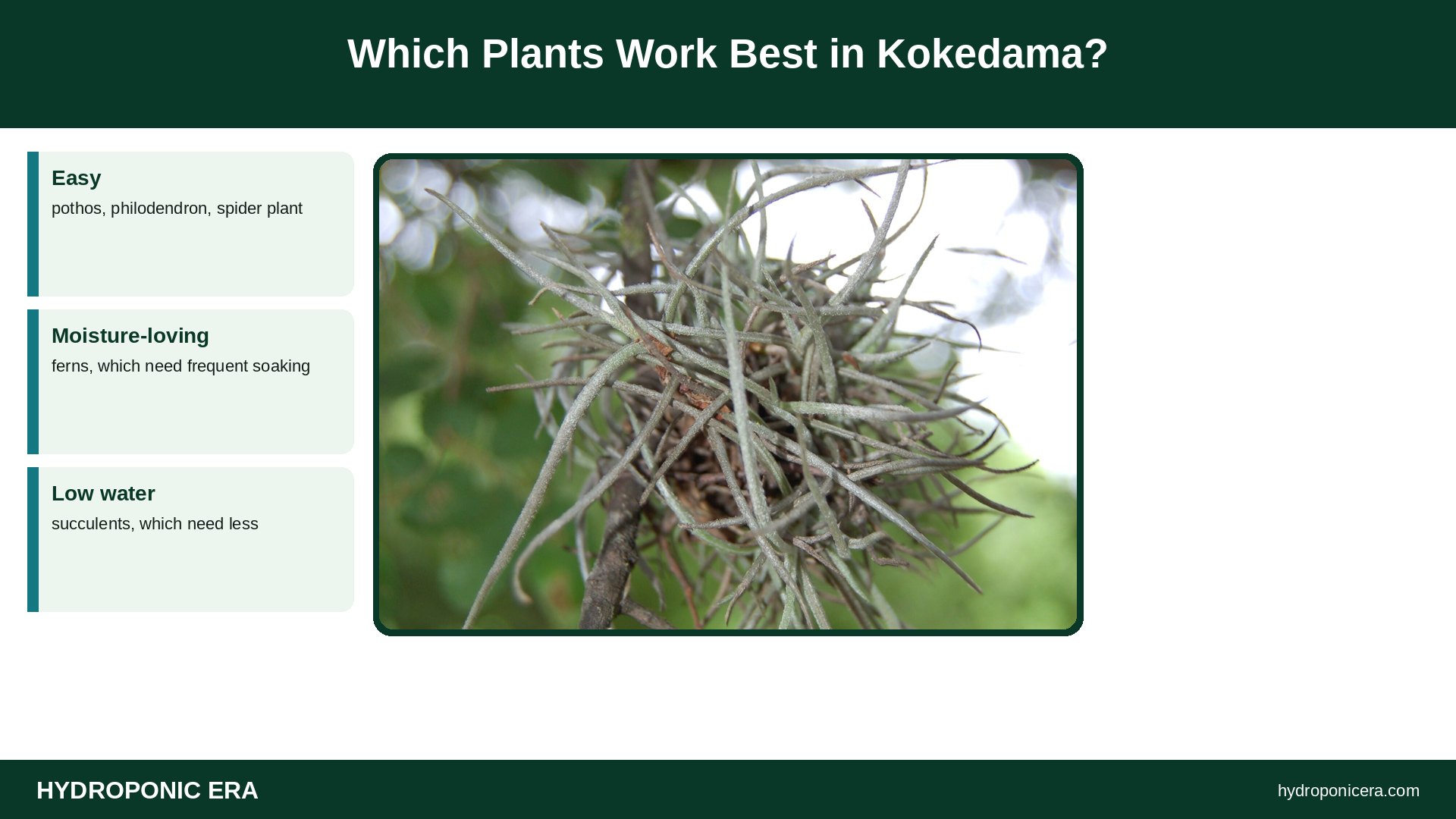
Ferns, philodendron, dracaena, spider plants and small orchids suit moss balls, according to University of Illinois Extension. Succulents also work but need less water. Choose a plant that tolerates slightly drier conditions, and match the ball size to the root mass. Established houseplants that need repotting are ideal candidates.
- Easy: pothos, philodendron, spider plant.
- Moisture-loving: ferns, which need frequent soaking.
- Low water: succulents, which need less.
- Avoid: plants that need constantly wet soil.
What Materials Do You Need for Kokedama?
Gather a lightweight potting mix or peat moss, akadama, sheet or Spanish moss, string, scissors, water and a plant. Illinois Extension says akadama is a coarse, clay-like mineral used as bonsai soil. Soak the moss in a bucket of water for about an hour so it rehydrates, then squeeze out the excess.
For more on soil mixes and what they do, see our guides to growing media, coco coir and perlite and vermiculite.
How Do You Make Kokedama Step by Step?
- Soak the moss for about an hour, then squeeze it gently.
- Mix the soil with a little water until it holds together like clay.
- Remove the plant from its pot, and gently shake off old soil from the roots.
- Pack the damp soil mix around the roots into a firm ball.
- Wrap the ball in moss, pressing it on evenly.
- Tie string around it several times, crisscrossing, and tie it off.
- Trim loose string and moss, and place it on a dish or hang it.
Make the ball firm, because a loose one crumbles when watered. A larger plant needs a larger ball to hold its roots.
How Do You Water Kokedama?
Soak the ball plant-side up in lukewarm water until it feels heavy. Illinois Extension suggests about 15–20 minutes, while Missouri Botanical Garden suggests 5–10. Lift it out, let it drip dry, and mist the moss between soakings. Check the weight regularly, since a light ball means it is time to water again.
Water frequency depends on the plant, the room and the season. A fern may need soaking every few days, while a succulent may need it every week or two. Use clean water, and review our guide on chlorine and chloramine in tap water if you are unsure about yours.
What Light and Care Does a Moss Ball Plant Need?
Most plants in moss balls need bright, indirect light, similar to their potted relatives. Rotate the ball for even growth, and trim dead leaves. Fertilize lightly, since the soil ball holds few nutrients, using a diluted houseplant fertilizer. Hanging balls dry faster, so check weight often, especially in heated winter rooms.
How Do You Display and Hang Kokedama?
Set the ball on a shallow dish, tray or piece of driftwood that catches drips, or hang it with string or wire from a hook. Choose a spot with the plant’s preferred light, away from cold drafts and heating vents. Hung planters dry fastest, so lift one occasionally to feel its weight and soak as needed.
Group several pieces of kokedama at different heights for a string garden. Protect furniture and floors from drips by hanging them over a sink, tub or tray when watering, and let them drain fully before rehanging.
How Do You Repot or Refresh Kokedama?
After a year or two, roots fill the ball and the moss thins. Unwrap the old moss gently, loosen the roots and add fresh soil mix to make a slightly bigger ball. Wrap new moss over the top, tie it again and soak it. Plants usually settle back in within a few weeks if kept in good light.
If a plant declines, check the roots for rot. Trim brown, mushy roots with clean scissors before remaking the ball. You can also move the plant to a conventional pot with fresh mix if the moss ball style is not working in your home, and try again with a hardier plant later.
Why Is My Moss Ball Moldy, Dry or Falling Apart?
Mold, drying and crumbling come from watering mistakes or a loose ball. Fuzzy mold means the ball stays too wet, so water less and increase airflow. A light, hard ball is too dry and needs a longer soak. If the ball crumbles, rewrap it with fresh moss and tighter string. Fungus gnats can also appear, as covered in our fungus gnat guide.
FAQ About Kokedama
How long does a moss ball last?
With regular care, the plant can live for years, and the moss may need replacing.
Does it need drainage?
It has no pot, so let it drip dry after soaking.
How often should I water it?
When the ball feels light, usually every few days to weekly, depending on the plant.
Can I use any plant?
Many work. Choose plants that tolerate drier conditions.
Can I hang a moss ball?
Yes, using string or wire, but check weight often since it dries faster.
Sources
- University of Illinois Extension — Give houseplants new life with DIY kokedama moss balls
- Missouri Botanical Garden — How to make a kokedama
- University of Illinois Extension — Kokedama fact sheet (PDF)
- Photo credits (Wikimedia Commons, edited with titles): Fleuriste de kokedama a Kyoto by Seyriu-en (CC BY-SA 3.0); Tillandsia recurvata by Kohlnf (CC BY-SA 3.0); Perlite1 by KENPEI (CC BY-SA 3.0); 5670Farm Ready Seedling Facility East West Seed Philippines 20 by Judgefloro (CC0)