
Is pacu aquaponics a good idea? Pacu aquaponics is possible in warm water, but it is a risky choice for most beginners. Red-bellied pacu grow large, need heated tanks in most of the US, and are regulated in some states. USFWS reports they have been found in 43 states, mostly from aquarium releases. Check local rules first.
Key takeaway: Pacu aquaponics needs warm water, big tanks and a legal check before you buy fish. The fish can reach 88 cm (35 in) and 25 kg (55 lb), are often sold as juveniles and must never be released. Beginners usually do better with tilapia, catfish or goldfish.
| Question | Answer | Source |
|---|---|---|
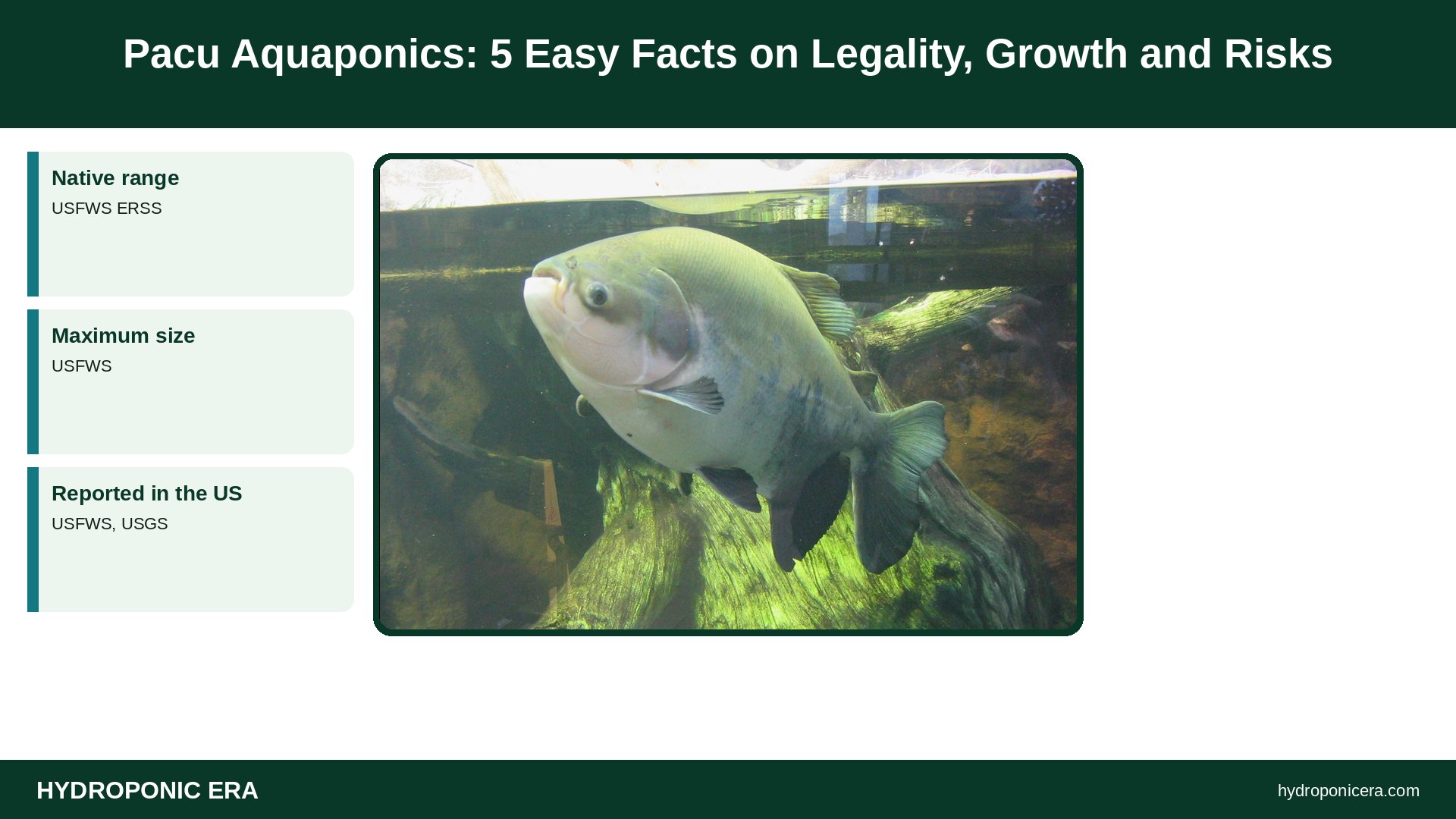
| Native range | Amazon River basin | USFWS ERSS |
| Maximum size | Up to 88 cm (35 in) and 25 kg (55 lb) | USFWS |
| Reported in the US | 43 states, mostly aquarium releases | USFWS, USGS |
| Established breeding populations | None documented | USFWS |
| Regulated | Hawaii and New Mexico | USFWS ERSS |
What Is Pacu Aquaponics?
Pacu aquaponics raises pacu, a South American relative of piranha, in a recirculating tank that feeds plants. Fish waste supplies nutrients, and plants clean the water. Red-bellied pacu, also called pirapitinga, is mostly vegetarian in the wild, which is why some growers consider it for aquaponics and why it grows large.
Pacu are often sold as small juveniles in pet stores. They look harmless but grow quickly, so plan for the adult size before you buy.
Is It Legal to Keep Pacu for Aquaponics?
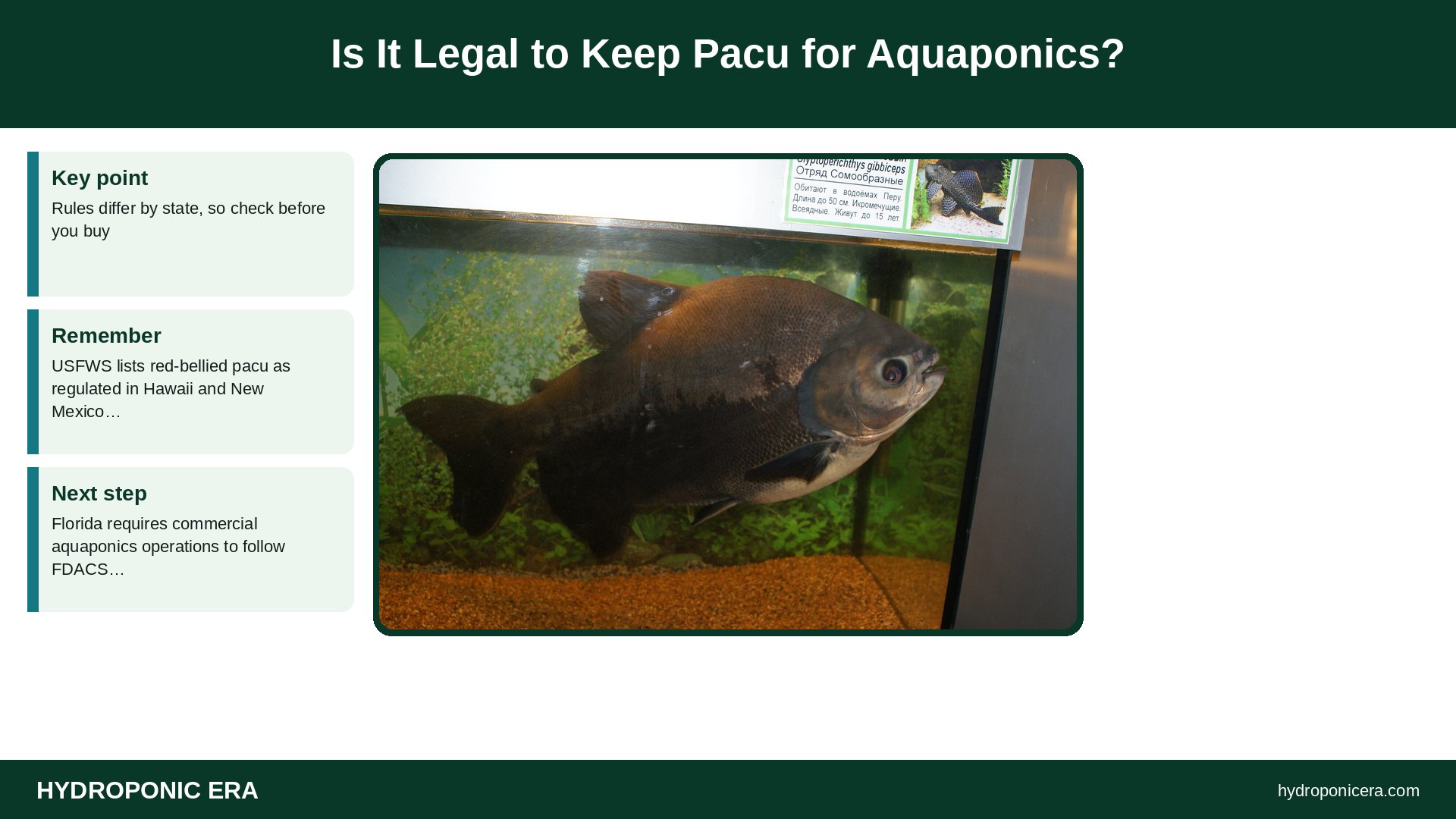
Rules differ by state, so check before you buy. USFWS lists red-bellied pacu as regulated in Hawaii and New Mexico, and notes the list may not be complete. Florida requires commercial aquaponics operations to follow FDACS aquaculture rules, including a Certificate of Registration. Home growers should confirm with their state wildlife agency.
Our guide to whether tilapia is legal shows how state fish rules work in practice.
How Big Do Fish Get in Pacu Aquaponics?
Red-bellied pacu can reach up to 88 cm (35 in) and 25 kg (55 lb), according to USFWS. In practice, tank-raised fish grow quickly in warm water, but you need a large, strong tank and a lot of biofiltration. A small home system will be outgrown, so many growers harvest or rehome fish before they get very large.
- Tank size: plan for large volumes per adult fish.
- Biofilter: big fish produce a lot of waste.
- Lid: use a secure cover so fish cannot leap out.
- Plan: decide what you will do with large fish before buying.
Compare other fish in our guides to tilapia aquaponics and catfish aquaponics.
What Are the Risks of Pacu Aquaponics?
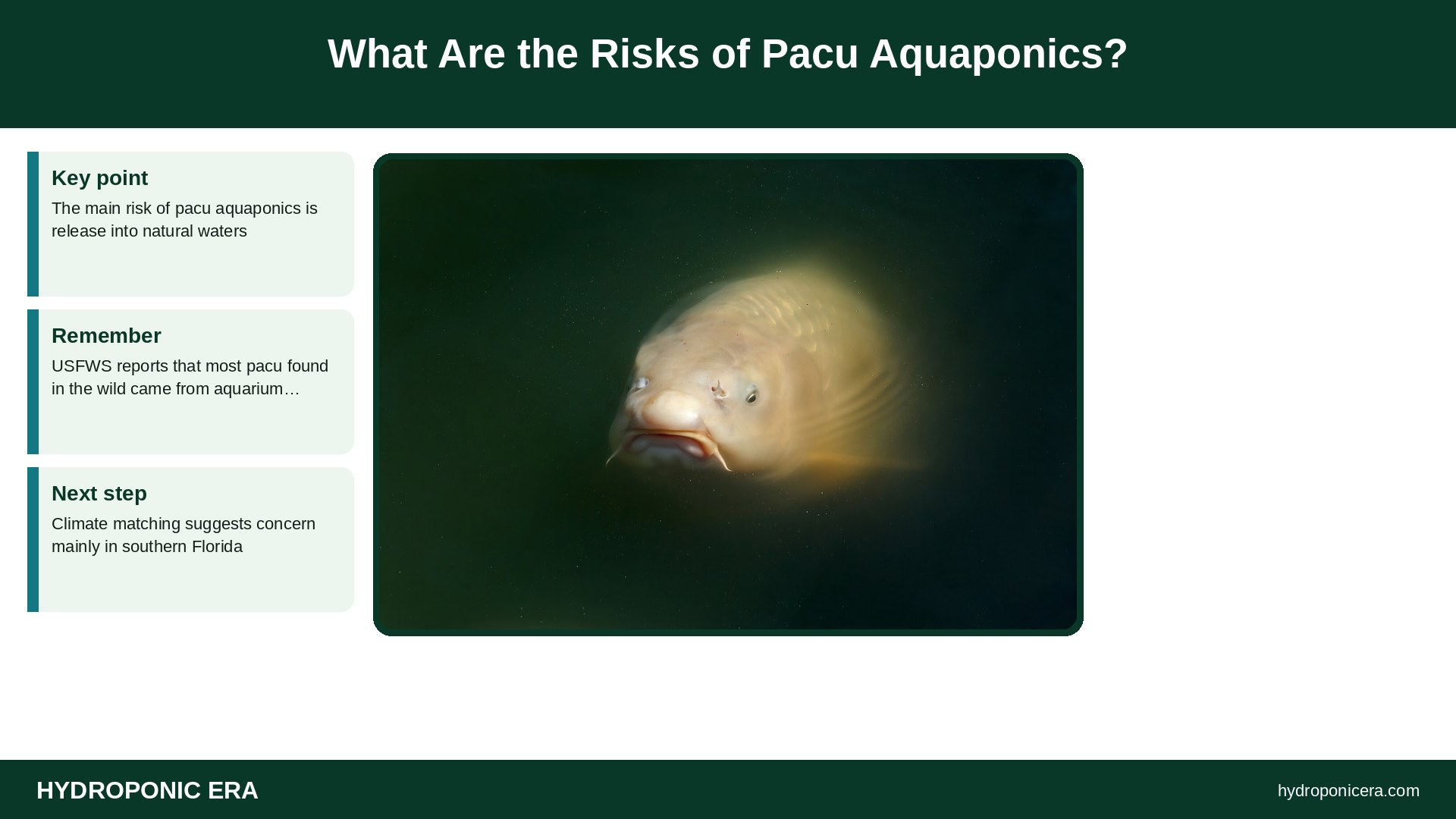
The main risk of pacu aquaponics is release into natural waters. USFWS reports that most pacu found in the wild came from aquarium releases and that impacts such as effects on native fish are mostly anecdotal. Climate matching suggests concern mainly in southern Florida. Never release pacu, and ask a vet, store or wildlife agency how to rehome them.
Other risks include aggressive feeding, nipping and large waste loads. Handle large fish with care and never put hands near feeding fish.
How Do You Set Up and Feed a Pacu Aquaponics System?
Use a heated, large tank with strong filtration, a secure lid and plenty of grow bed area. Feed a quality pellet diet and avoid overfeeding, which pollutes the system. Test ammonia, nitrite, nitrate and pH regularly. New fish should be quarantined, as described in our quarantine guide.
- Confirm local rules for keeping pacu.
- Build a large, covered tank with a strong biofilter.
- Cycle the system before adding fish.
- Add a few fish, and feed small amounts.
- Test water weekly, and adjust feeding.
- Plan for adult size and harvest or rehoming.
Which Plants Work in Pacu Aquaponics?
Leafy greens, herbs and fruiting plants suit pacu aquaponics and most other systems, as long as nutrient levels match. Heavy fish loads support larger plants like tomatoes and peppers, while lettuce and basil suit lighter loads. Start with hardy greens, and watch EC and pH. For basics see fish farming for beginners.
How Warm Does Pacu Aquaponics Need to Be?
Pacu are tropical fish from the Amazon basin, and USFWS climate matching shows most of the contiguous US is a poor match for them, except southern Florida. That means pacu aquaponics indoors or in greenhouses needs reliable heating, and a power outage can be deadly in winter. Plan for a backup heater, insulation and an alarm for temperature drops.
Heating costs add up with large tanks. Compare operating costs against hardier fish before you commit, and consider whether you can keep the system warm all year. If you cannot, choose a fish suited to your climate instead.
What Does Pacu Aquaponics Cost, and Is It Worth It?
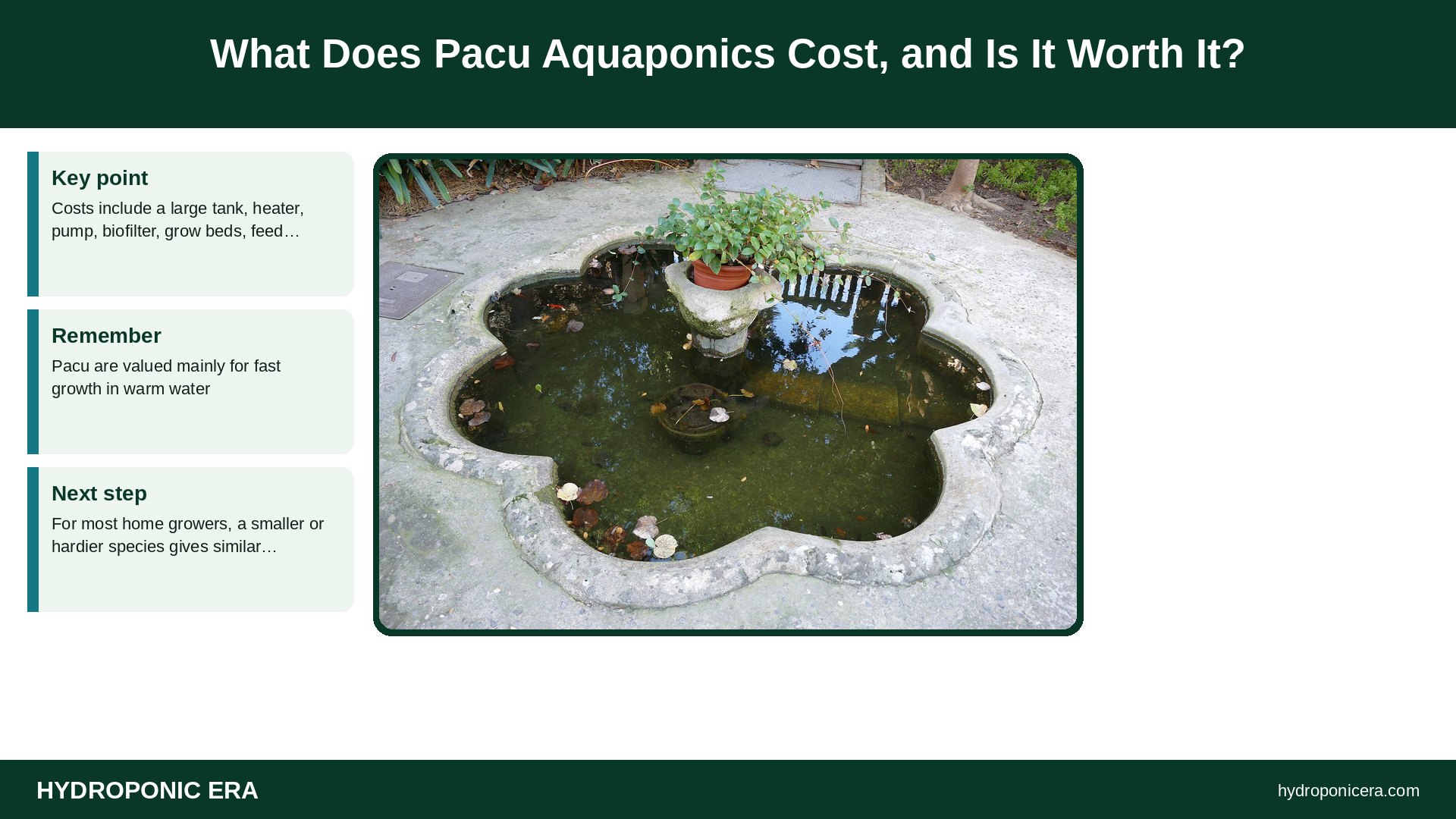
Costs include a large tank, heater, pump, biofilter, grow beds, feed and electricity, plus a plan for the fish when they outgrow the system. Pacu are valued mainly for fast growth in warm water. For most home growers, a smaller or hardier species gives similar plant yields with less risk and expense.
If you still want pacu aquaponics, start with a short test run using a small number of fish and keep a log of feed, growth, water tests and plant yield. Decide up front whether you will eat the fish, sell them where allowed or rehome them, since releasing them is never an option.
What Are Better Fish for Beginners Than Pacu Aquaponics?
Tilapia, catfish and goldfish are easier and more widely used than pacu aquaponics. Goldfish and koi are legal in most places and tolerate a range of temperatures, while tilapia and catfish are common in food-fish systems where the law allows them. Check our goldfish aquaponics guide if you want a low-risk way to start.
FAQ About Pacu Aquaponics
Can I raise pacu in aquaponics at home?
Possibly, but check state rules and plan for a large, warm, covered tank.
Are pacu dangerous?
They are not piranha, but large fish can bite and should be handled carefully.
Are pacu legal in the US?
Regulated in Hawaii and New Mexico, and rules vary by state.
Can pacu survive in US lakes?
USFWS notes none have established breeding populations, but they have been found in 43 states.
What do pacu eat?
They are mostly vegetarian in their native range, but they can also eat insects and fish.
Sources
- U.S. Fish & Wildlife Service — Ecological Risk Screening Summary: Pirapitinga (Piaractus brachypomus), May 2026
- USGS NAS — Pirapitinga, red-bellied pacu species profile
- Florida Department of Agriculture — Species used in commercial aquaponics systems: rules and regulations
- Photo credits (Wikimedia Commons, edited with titles): Pacu shedd by Omnitarian (CC BY-SA 3.0); Piaractus brachypomus in Minsk Zoo by Хомелка (CC BY-SA 3.0); Koi in a garden pond in Tuntorp 3 by W.carter (CC BY-SA 4.0); Fountain with goldfish in Jardí del Bisbe 03 by Kritzolina (CC BY-SA 4.0)