
Is tilapia legal in your state? Often yes, but with conditions. Tilapia aren’t native to the US, so many states treat them as exotic or restricted species. Some states allow hobby aquaponics with certain tilapia species and no permit, others require a permit, and some limit tilapia to specific areas or ban some species. Texas, Florida, and California, three of the most-asked-about states, each handle tilapia differently. Check with your state fish and wildlife agency before buying fingerlings.
Key takeaway: Tilapia legality depends on the species, your state, your region within the state, and whether you sell fish.
This is general information, not legal advice. Confirm with your state agency before stocking.
| State | Tilapia for hobby aquaponics (as published) |
|---|---|
| Texas | Blue, Nile, Mozambique, and Wami allowed without a permit in noncommercial recirculating systems with no discharge, under TPWD conditions |
| Florida | Blue, Nile, and hybrids allowed without a permit in four FWC regions; Northwest needs a permit; Mozambique and Wami need authorization; others prohibited |
| California | Blue and Nile are restricted species needing a permit; some species limited to certain southern counties |

Why Tilapia Is Regulated

Tilapia are hardy, breed fast, and tolerate poor water, which is why they’re popular in aquaponics. Those same traits make them risky if they escape in warm waters, where they can compete with native fish. States also worry about disease spread with imported fish. In colder states, tilapia can’t survive the winter outdoors, so some states are more relaxed, while warm states like Florida and Texas have detailed rules.
Is Tilapia Legal in Texas?
TPWD announced that from January 11, 2021, blue, Nile, Mozambique, and Wami tilapia may be kept without a permit in noncommercial, recirculating aquaponic systems with no discharge. The conditions are:
- Fish can’t be sold.
- Fish must come from a permitted Texas seller, and you keep the exotic species transport invoice for one year.
- The system must prevent escape.
Commercial operations need a TPWD Exotic Species Aquaculture Permit.
Is Tilapia Legal in Florida?
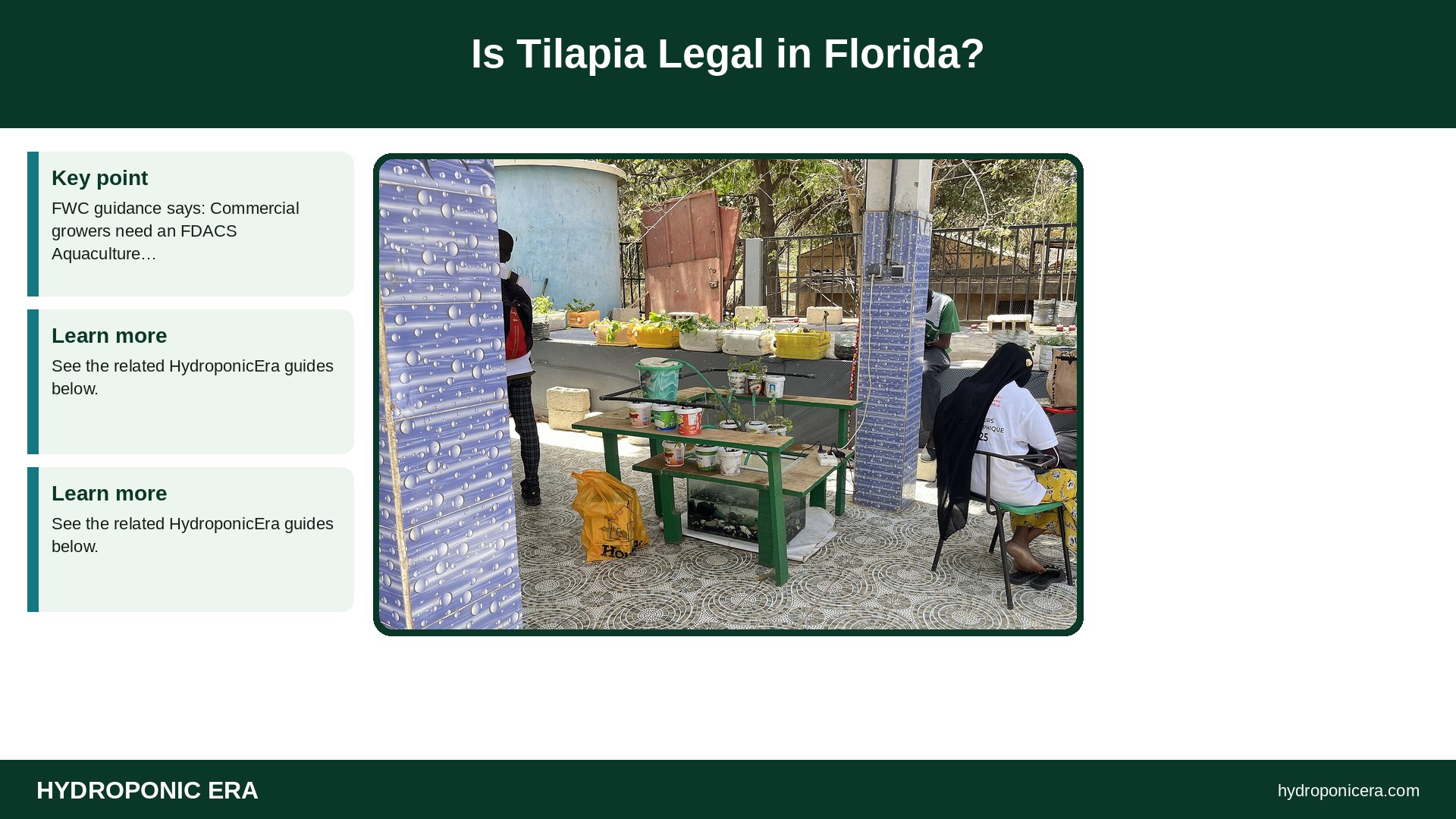
FWC guidance says:
- Blue tilapia, Nile tilapia, and their hybrids need no permit in the Northeast, North Central, South, and Southwest FWC regions.
- The Northwest region requires a conditional species permit for these.
- Mozambique and Wami tilapia are conditional species that require authorization.
- All other tilapia species are prohibited.
Commercial growers need an FDACS Aquaculture Certificate of Registration.
Is Tilapia Legal in California?
California lists blue and Nile tilapia as restricted species under Title 14, Section 671, so possession needs a CDFW Restricted Species Permit. A UC Davis fact sheet notes that some tilapia species, including Mozambique tilapia, are allowed only in Los Angeles, Orange, Riverside, San Bernardino, San Diego, and Imperial counties, with growers registered as aquaculturists. Restricted species must be held in closed systems.
Is Tilapia Legal in Other States?

Rules vary widely. To find your answer:
- Search your state fish and wildlife agency site for “tilapia” or “exotic species.”
- Check the approved, restricted, and prohibited species lists.
- Ask whether a hobby system needs a permit.
- Ask whether you must buy from a licensed dealer.
- Ask about selling fish.
Your county extension office or state aquaculture coordinator can help. See aquaculture permit basics.
Which Tilapia Species Do You Have?
Rules differ by species, so knowing what you buy matters. Common species in aquaponics include Nile tilapia (Oreochromis niloticus), blue tilapia (O. aureus), Mozambique tilapia (O. mossambicus), and hybrids. Buy from a licensed hatchery that labels the species and keep the receipt.
Alternatives if Tilapia Isn’t Allowed

If tilapia is restricted where you live, consider native species. Bluegill and other sunfish, yellow perch, and channel catfish are native in large parts of the US. Trout suit cold water. Goldfish and koi suit ornamental systems. See tilapia aquaponics, bluegill aquaponics, perch aquaponics, and trout aquaponics.
Never Release Tilapia
Whatever your state’s rules, never release tilapia, or any aquarium or aquaponic fish, into ponds, lakes, or streams. Many states make it illegal, and it can harm native fish.
Is Tilapia Legal to Transport Across State Lines?
Moving live fish between states can bring in federal and state rules, including health certificates and import permits. Buying fingerlings from an out-of-state hatchery doesn’t make them legal in your state. Ask both the hatchery and your state agency before ordering, and keep the paperwork.
Is Tilapia Legal to Eat From Your System?
Eating your own fish from a legal hobby system is generally fine. Selling them is where most rules apply. Florida requires commercial growers to register with FDACS, and Texas limits hobby systems to noncommercial use. If you plan to sell, start with the state’s commercial aquaculture rules before you buy fish. Always ask “is tilapia legal” for your exact situation, not just your state. See tilapia aquaponics for care basics.
How to Check if Tilapia Is Legal Where You Live
Search your state wildlife agency site, call the aquaculture coordinator, and ask these questions: Which tilapia species are allowed? Do I need a permit for a noncommercial recirculating system? Must I buy from a licensed dealer? What records must I keep? Can I sell fish or vegetables? Write down the answers, the date, and who you spoke with.
Is Tilapia Legal Indoors?
Keeping tilapia indoors doesn’t automatically change the rules. Texas’s exemption is for noncommercial recirculating systems with no discharge, whether indoors or out, and California’s restricted species rules apply to possession wherever the fish are kept. A basement system is easier to secure against escape, which several states require, but you should still confirm whether tilapia is legal for your setup before buying.
FAQs: Is Tilapia Legal
Is tilapia legal in Texas?
Certain species are allowed in noncommercial recirculating aquaponics without a permit, under TPWD conditions.
Is tilapia legal in Florida?
Blue, Nile, and hybrids are allowed without a permit in four FWC regions; other rules apply elsewhere.
Is tilapia legal in California?
Blue and Nile tilapia are restricted species needing a permit.
Can I sell my tilapia?
Usually only with a commercial permit or registration.
What fish can I use instead?
Native fish like bluegill, perch, or catfish, depending on your state.
Sources
- TPWD — Tilapia in aquaponics rule news release
- FWC — Aquaponics
- CDFW — Restricted Species
- UC Davis — Aquaponics food safety fact sheet
- Photo credits (Wikimedia Commons, edited with titles): Oreochromis-niloticus-Nairobi by Bjørn Christian Tørrissen (CC BY-SA 3.0); Raceways at Ennis National Fish Hatchery (51267218370) by USFWS Mountain Prairie (Public domain); AQUAPONIE by Hopeballa (CC BY-SA 4.0); Bluegill (Lepomis macrochirus) black background by USFWS Mountain Prairie (Public domain); D3149-1. yellow perch (Perca flavescens) by Robert Colletta (Public domain)