
How do you grow vallisneria? Vallisneria, also called tapegrass or eelgrass, is a hardy submerged plant with ribbon-like leaves that grows in tanks and ponds. Plant its roots in the substrate with the crown at the surface, give it good light, and keep water between 55°F and 100°F (13–38°C), with about 82°F (28°C) best.
Key takeaway: Vallisneria spreads by runners and forms dense stands. Keep the crown above the substrate, give it bright light and water above about 55°F (13°C), and trim runners to control it. In some countries outside its native range, it can become invasive.
| Fact | Detail | Source |
|---|---|---|
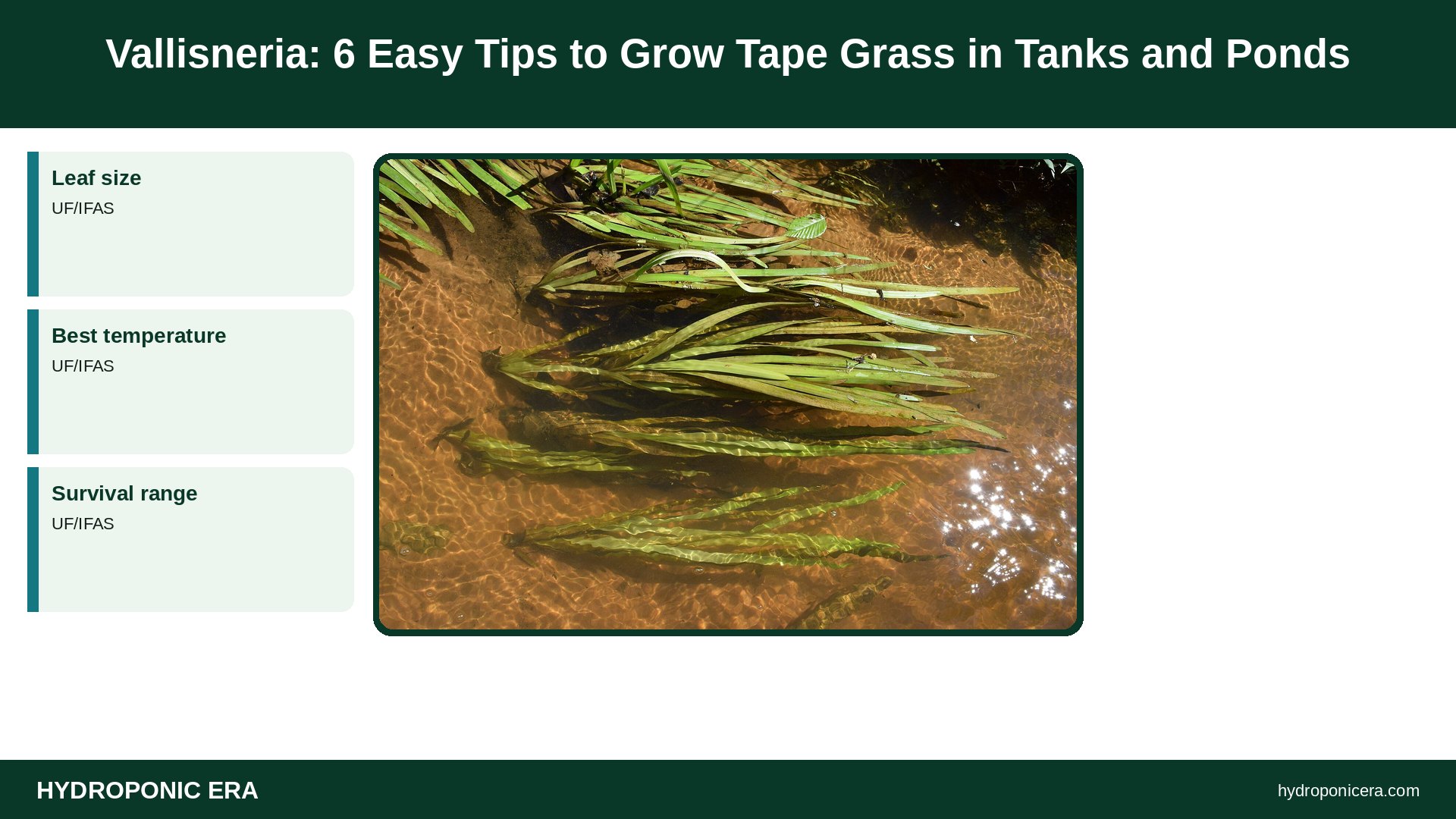
| Leaf size | Up to 6 ft (1.8 m) long, 1 in (2.5 cm) wide | UF/IFAS |
| Best temperature | About 82°F (28°C) | UF/IFAS |
| Survival range | 55–100°F (13–38°C) | UF/IFAS |
| Salinity | Grows best below 5 ppt, tolerates 10–12 ppt | UF/IFAS |
| Spread | Runners and winter buds | UF/IFAS |
What Is Vallisneria?
The genus is a group of submerged aquatic plants in the frog’s-bit family. UF/IFAS describes Vallisneria americana as native to Florida and a key species that gives sediment stability, clearer water and habitat for fish and invertebrates. It has clusters of flat, thin, ribbon-like leaves and is often sold as tape grass or eelgrass.
Do not confuse it with true marine eelgrass, which is a seagrass. UF/IFAS notes that the common name causes mix-ups.
How Do You Plant Vallisneria in a Tank or Pond?
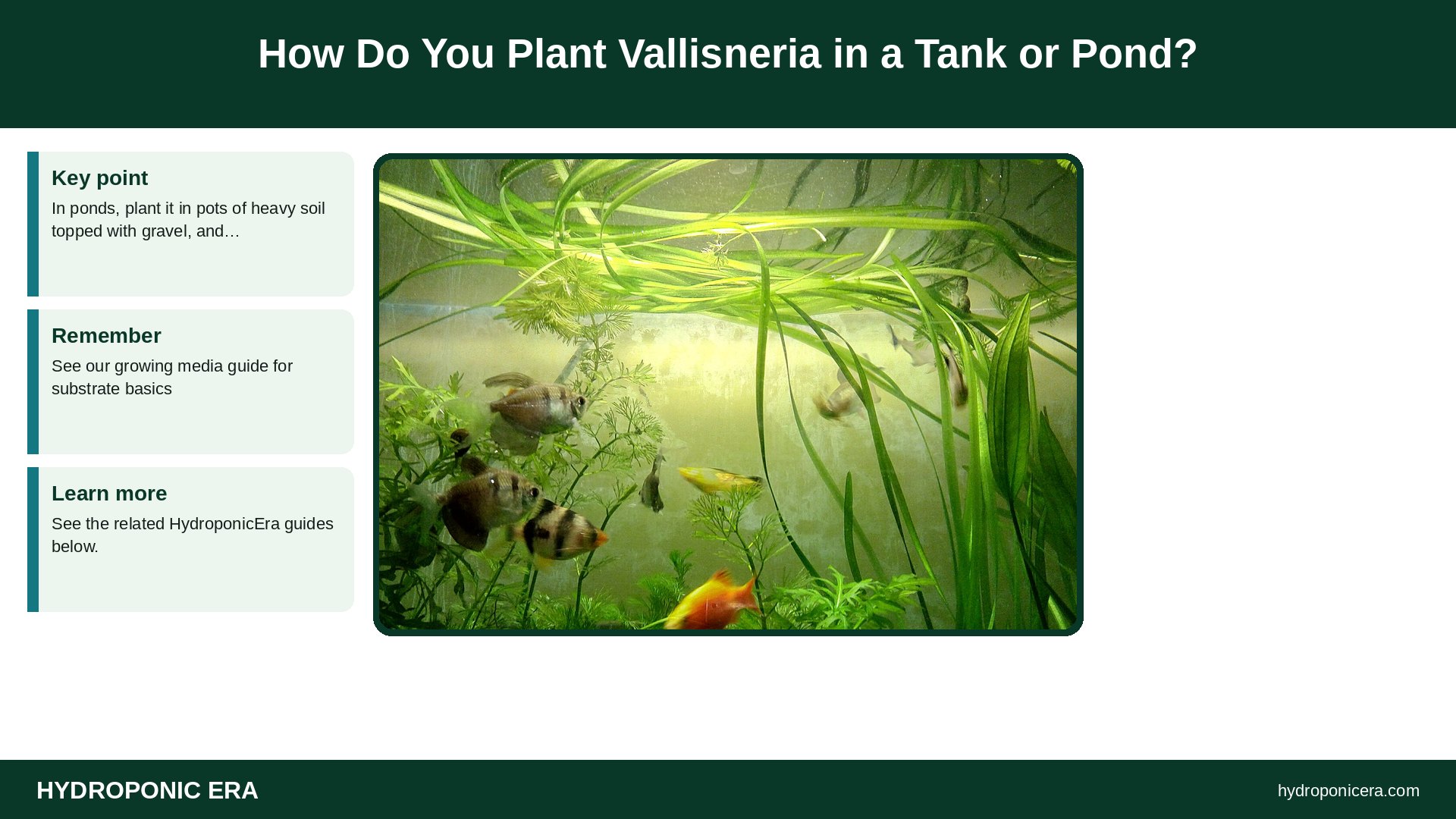
- Rinse the plant, and trim dead or damaged leaves.
- Set the roots in the substrate.
- Keep the crown, where the leaves meet the roots, at or just above the surface.
- Anchor the roots with a small rock if fish disturb them.
- Leave space for runners to spread.
In ponds, plant it in pots of heavy soil topped with gravel, and place the pots in the shallow zone. See our growing media guide for substrate basics.
How Much Light and Warmth Does Vallisneria Need?
UF/IFAS says vallisneria survives 55–100°F (13–38°C) and grows best near 82°F (28°C). It uses a photosynthesis pathway that helps it handle low carbon and strong light, so it grows well in bright light. In cooler places, northern types form winter buds called turions to survive the cold.
- Bright light supports fast growth.
- Warm water speeds spread.
- Cold water slows it, but winter buds can survive.
How Does Vallisneria Spread?
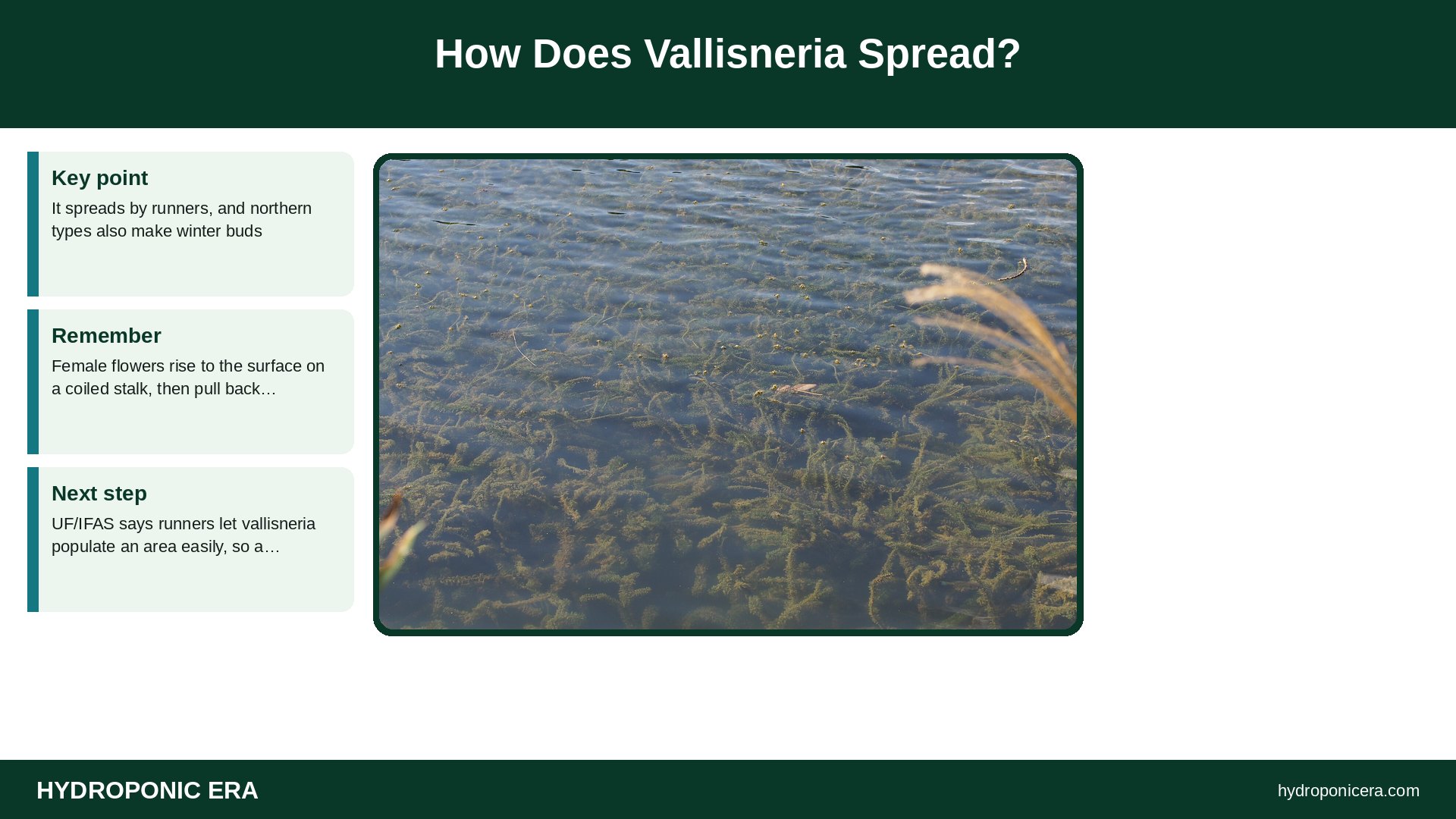
It spreads by runners, and northern types also make winter buds. Female flowers rise to the surface on a coiled stalk, then pull back under water after pollination, and seedpods form below. UF/IFAS says runners let vallisneria populate an area easily, so a few plants can fill a tank. Trim runners to keep it in bounds.
Is Vallisneria Invasive?
It depends on where you live. It is native to Florida and much of North America, but UF/IFAS reports that in Canada, New Zealand and the Netherlands it is not native and is potentially invasive, forming dense patches that restrict boating and water movement. Never dump aquarium plants into ponds or streams, and check local rules.
Dispose of trimmings in a sealed bag in the trash, not in a ditch or waterway. Rinse nets and containers, let them dry and check for stray runners before you move any water or equipment between ponds. Small pieces can root, so a careful cleanup protects both your pond and the lakes and streams nearby.
Does Vallisneria Tolerate Salt?
To a point. UF/IFAS reports that it grows best below 5 ppt salinity and tolerates about 10–12 ppt, and a higher level can kill plants within two to four weeks. Seawater is about 35 ppt. If your tank has salt or brackish water, keep salinity low and consistent, and avoid sudden jumps.
What Wildlife Use Vallisneria in Ponds?
Texas A&M AquaPlant says ducks and other waterfowl eat the seeds, roots and leaves of eelgrass, while dense underwater stands provide habitat for invertebrates and fish. Those invertebrates feed fish, amphibians, reptiles and ducks. When plants die, bacteria and fungi break them down, and the detritus feeds more small animals.
UF/IFAS adds that turtles, manatees and other grazers can heavily graze native stands, so restoration projects sometimes protect new plantings with cages until mats establish. In a home pond with turtles or waterfowl, expect some grazing and plant extra.
How Do You Propagate It?
Separate young plants from the runners once they have roots and several leaves, then replant them with the crown above the substrate. UF/IFAS says transplanting mature plants succeeds more often than planting seeds in restoration work, so division is the practical home method. Take only what you need from natural waters, and never collect from public lakes without permission.
Plant cuttings soon after separating them, and keep them wet during transport. Spacing plants a few inches apart gives each room to send out runners without crowding the neighbors.
What Problems Can Occur?
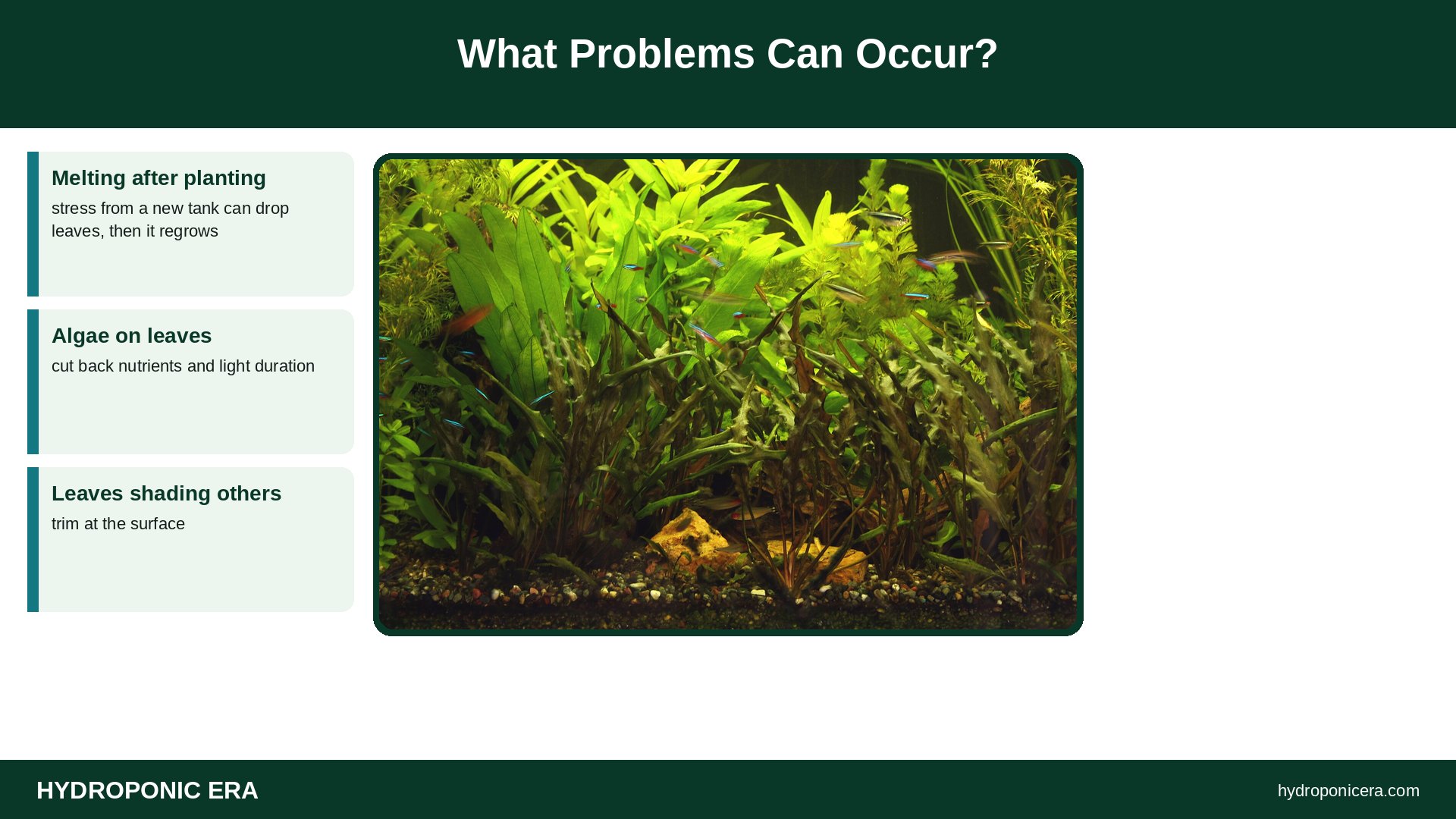
- Melting after planting: stress from a new tank can drop leaves, then it regrows.
- Algae on leaves: cut back nutrients and light duration.
- Leaves shading others: trim at the surface.
- Cold water: growth slows, and winter buds may form.
A slow start does not mean failure. Wait a few weeks, keep conditions stable and look for new leaves from the crown.
How Do You Trim and Control Vallisneria?
Cut older leaves at the base with sharp scissors, and remove surplus runners before they root. In tanks, trim leaves that reach the surface and shade other plants. Dense stands help clarity, but overgrowth can need control. Keep nutrient levels moderate, since extra nutrients also feed algae, which UF/IFAS says reduces tapegrass growth.
See our GH and KH water test guide to check your water, and our pH control guide for stable conditions.
FAQ About Vallisneria
Is it easy to grow?
Yes. It is hardy and spreads by runners.
How tall does it grow?
Leaves can reach up to 6 feet (1.8 m) in natural waters, shorter in tanks.
Can it live in brackish water?
It tolerates low salinity, about 10–12 ppt at most.
Does it need CO2?
No. It tolerates low carbon, according to UF/IFAS.
Is it safe to release outdoors?
No. Never release aquarium plants.
Sources
- UF/IFAS — Tapegrass, eelgrass or wild celery (Vallisneria americana), AG437
- Texas A&M AquaPlant — Eel grass, tapegrass, wild celery
- Minnesota DNR — Aquarium owners: prevent invasive species
- Photo credits (Wikimedia Commons, edited with titles): Vallisneria americana UMFS 3 by Fredlyfish4 (CC BY-SA 4.0); Fish Aquarium with Vallisneria by Damitr (CC BY-SA 4.0); Egeria densa (22205195903) by harum.koh from Kobe city, Japan (CC BY-SA 2.0); Planted Tank 03 – Flickr – The Wandering Angel by The Wandering Angel from Makati City, Philippines (CC BY 2.0)