
What is the difference in determinate vs indeterminate tomatoes? With determinate vs indeterminate tomatoes, the difference is how growth stops. Determinate (bush) plants end each stem in a flower cluster, stay about 2–4 feet (60–120 cm) tall and ripen most fruit within 4–6 weeks. Indeterminate (vining) plants keep growing and fruiting until cold weather or the end of the crop.
Key takeaway: Choose determinate for compact containers, a short season or one big harvest for canning. Choose indeterminate for a tall trellis, a long greenhouse or hydroponic season and a steady supply of fresh fruit.
| Trait | Determinate (bush) | Indeterminate (vining) |
|---|---|---|
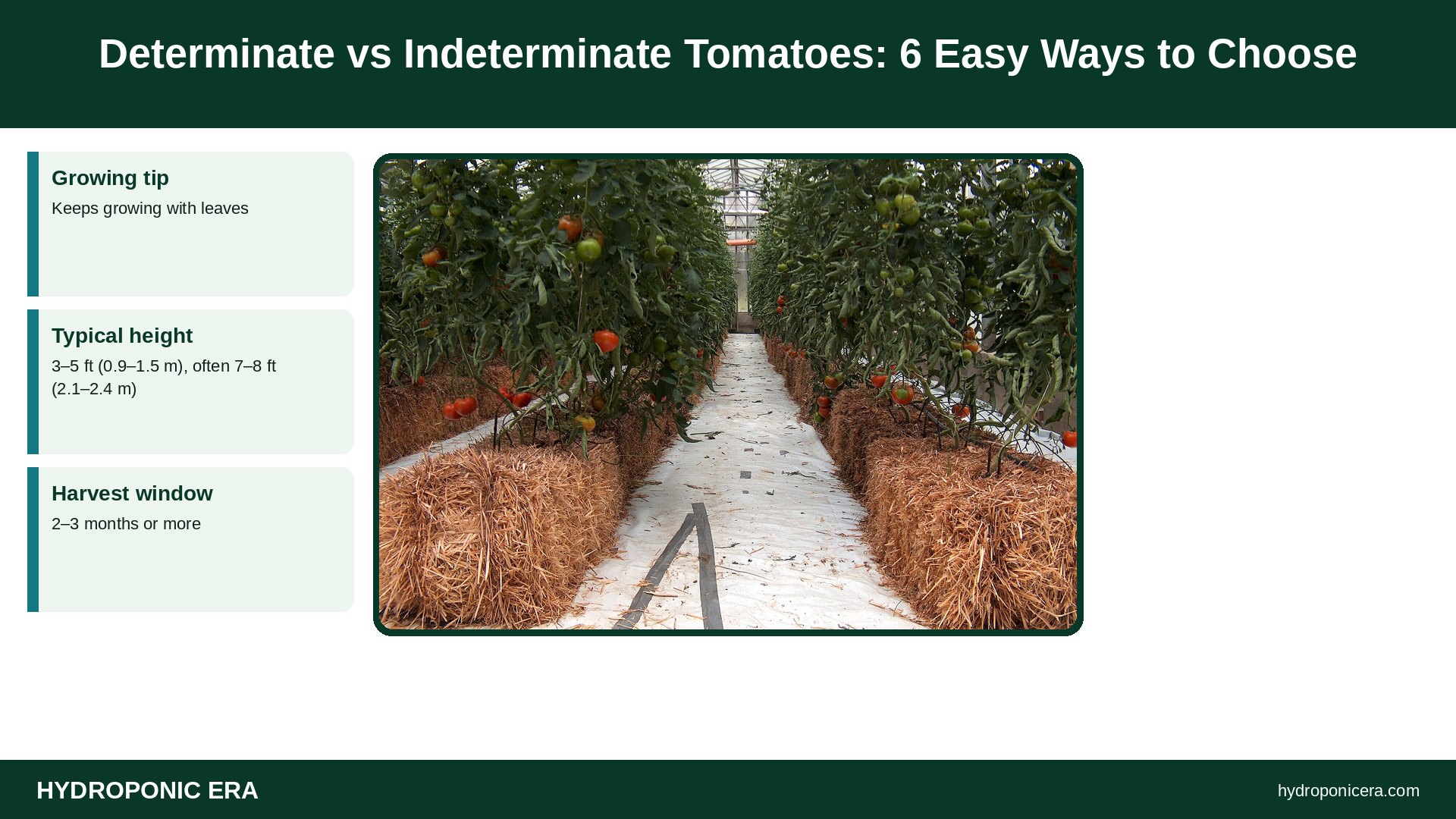
| Growing tip | Ends in a flower cluster | Keeps growing with leaves |
| Typical height | 24–30 in (60–75 cm) to about 4 ft (1.2 m) | 3–5 ft (0.9–1.5 m), often 7–8 ft (2.1–2.4 m) |
| Harvest window | About 4–6 weeks | 2–3 months or more |
| Support | Cage or short stake | Tall stake, trellis or high wire |
| Pruning | Only below the first flower cluster | Suckers removed every 7–10 days for 1–2 stems |
How Do You Tell Determinate vs Indeterminate Tomatoes Apart?
Look at the top of the main stem. University of Minnesota Extension explains that on bush (determinate) plants the top, or terminal, growing point ends with flowers and fruit, which stops height growth. On vining (indeterminate) plants the terminal point keeps growing with the leaves. When comparing determinate vs indeterminate seed, packets usually print “determinate,” “indeterminate” or “semi-determinate.”
Minnesota Extension adds a simple field clue. On vining plants, flowers and fruit grow on side branches along a stem that never stops. Bush plants produce a set number of fruit, so the plant reaches a fixed size and does not need pruning, staking or trellising.
If a packet says nothing about determinate vs indeterminate habit, check the variety name in the seller’s catalog. Illinois Extension notes that older, self-saved heirloom varieties are usually large, sprawling and late, while many compact patio and paste types are bush plants.
Which Is Better for Hydroponics: Determinate vs Indeterminate?
For most hydroponic and greenhouse systems with tall headroom, indeterminate tomatoes are the better fit because they keep producing for months on one root system. Iowa State Extension notes their harvest often extends over two to three months and yields are generally higher. Determinate types suit short tents, small buckets and growers who want one fast crop.
In the determinate vs indeterminate choice, commercial greenhouses grow vining tomatoes on high wires for this reason. Home growers with a 5–6 foot (1.5–1.8 m) tent can still use indeterminate plants if they lower or bend the stem. If your light hangs low, a compact variety saves frustration. See our list of the best tomato varieties for hydroponics and the guide to how to grow hydroponic tomatoes.
How Tall Do Determinate vs Indeterminate Tomatoes Grow?
Minnesota Extension lists bush types at about 24 to 30 inches (60–75 cm), while Oregon State Extension says determinate plants can reach 3 to 4 feet (0.9–1.2 m). Indeterminate plants grow 3 to 5 feet (0.9–1.5 m) or more, and Oregon State notes they can easily reach 7 to 8 feet (2.1–2.4 m). Plan support and light height for determinate vs indeterminate plants before you plant.
- Under 2 ft (60 cm) of headroom: dwarf or micro-dwarf types.
- 3–4 ft (0.9–1.2 m): determinate or patio types in a cage.
- 5 ft (1.5 m) or more: indeterminate on a string trellis.
Iowa State also describes a third group, dwarf tomatoes, that may stay 8 to 12 inches (20–30 cm) tall but fruit a few at a time. These suit a countertop garden. Our micro dwarf tomatoes guide covers them.
How Should You Prune Determinate vs Indeterminate Tomatoes?
The determinate vs indeterminate pruning rules differ. Oregon State Extension says the only pruning a determinate plant needs is removing side shoots below the bottom flower cluster, because the shoots above it bear fruit. Indeterminate plants are usually trained to one or two stems, with suckers in the leaf axils removed every 7 to 10 days. Heavy pruning of a bush type cuts your harvest.
- Identify the growth habit from the packet or catalog.
- On determinate plants, remove only suckers below the first flower cluster.
- On indeterminate plants, choose one or two main stems.
- Pinch suckers while they are small, using your thumb and index finger.
- Tie the stem loosely to a stake or twist it around a support string.
For step-by-step cuts in a water-based system, read our hydroponic tomato pruning guide.
What Is a Semi-Determinate Tomato?
A semi-determinate tomato sits between the two habits. Illinois Extension groups tomatoes into three growth habits, determinate, indeterminate and semi-determinate, and notes that habit sets plant size, ripening pattern and the support and pruning you need. Semi-determinate plants grow taller than bush types but stay shorter than true vining plants. Check the catalog, then give them a medium cage or stake.
When Do Determinate vs Indeterminate Tomatoes Ripen?
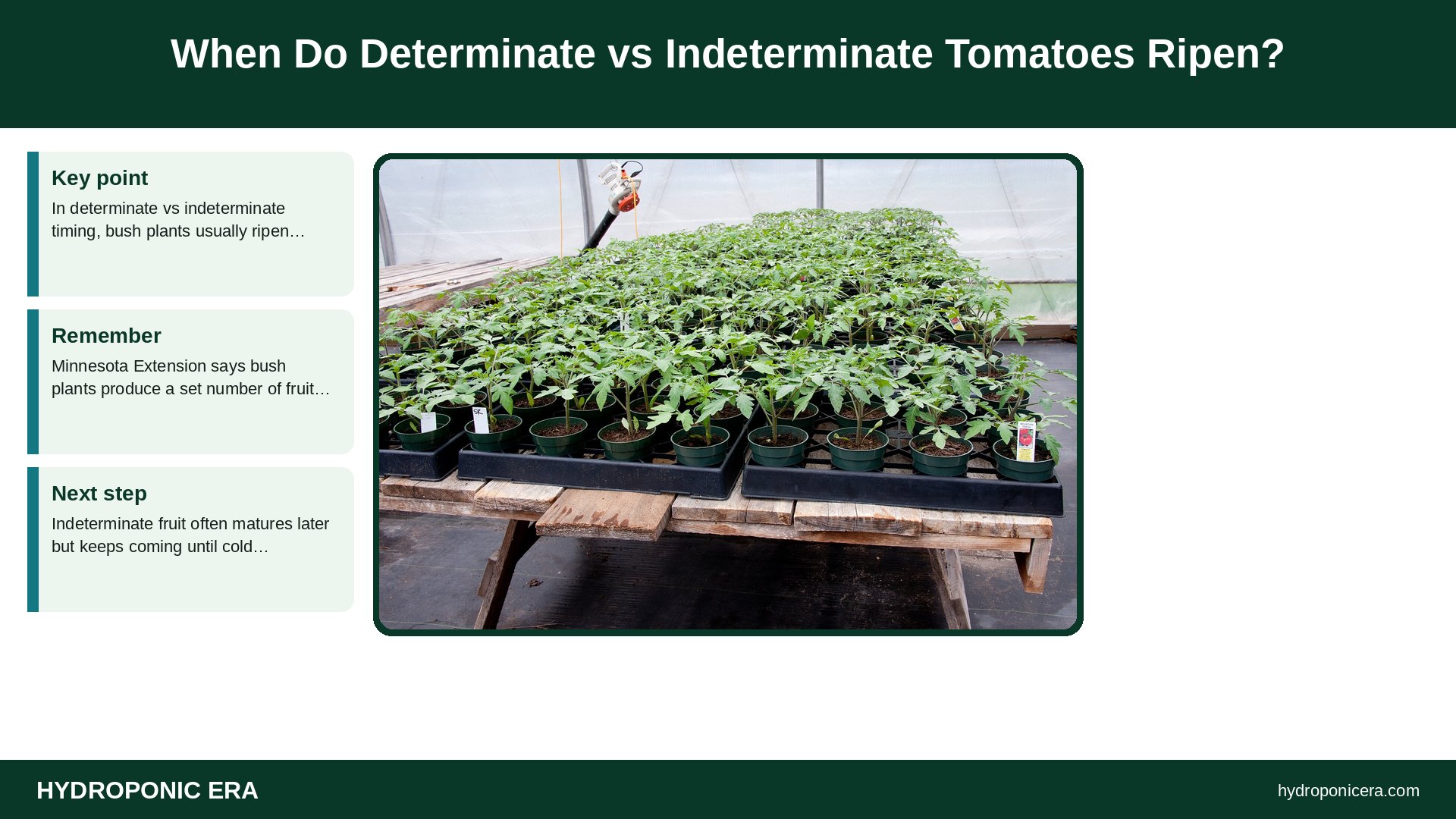
In determinate vs indeterminate timing, bush plants usually ripen earlier and all at once. Minnesota Extension says bush plants produce a set number of fruit that ripen within a four- to six-week period, which is ideal for canning. Indeterminate fruit often matures later but keeps coming until cold weather. Illinois Extension suggests successive plantings of determinate types if you want a longer harvest.
Indoors, there is no frost to end the season, so an indeterminate plant can keep fruiting until it gets too tall, too old or diseased. Many hydroponic growers replace vining plants after several months to restart with vigorous young stock.
What Support Do Determinate vs Indeterminate Tomatoes Need?
For determinate vs indeterminate support, bush types stand in a sturdy cage, while vining types need a tall stake or trellis. Oregon State suggests a homemade cage about 4 to 5 feet (1.2–1.5 m) tall and at least 18 inches (46 cm) across for determinate plants. For indeterminate plants, it recommends staking each plant and tying stems loosely with soft twine.
In a tent or greenhouse, a vertical string hung from an overhead bar works well for vining plants. Clip the stem to the string every few nodes. Our hydroponic trellising and pruning guide shows several layouts.
Common Mistakes With Determinate vs Indeterminate Tomatoes
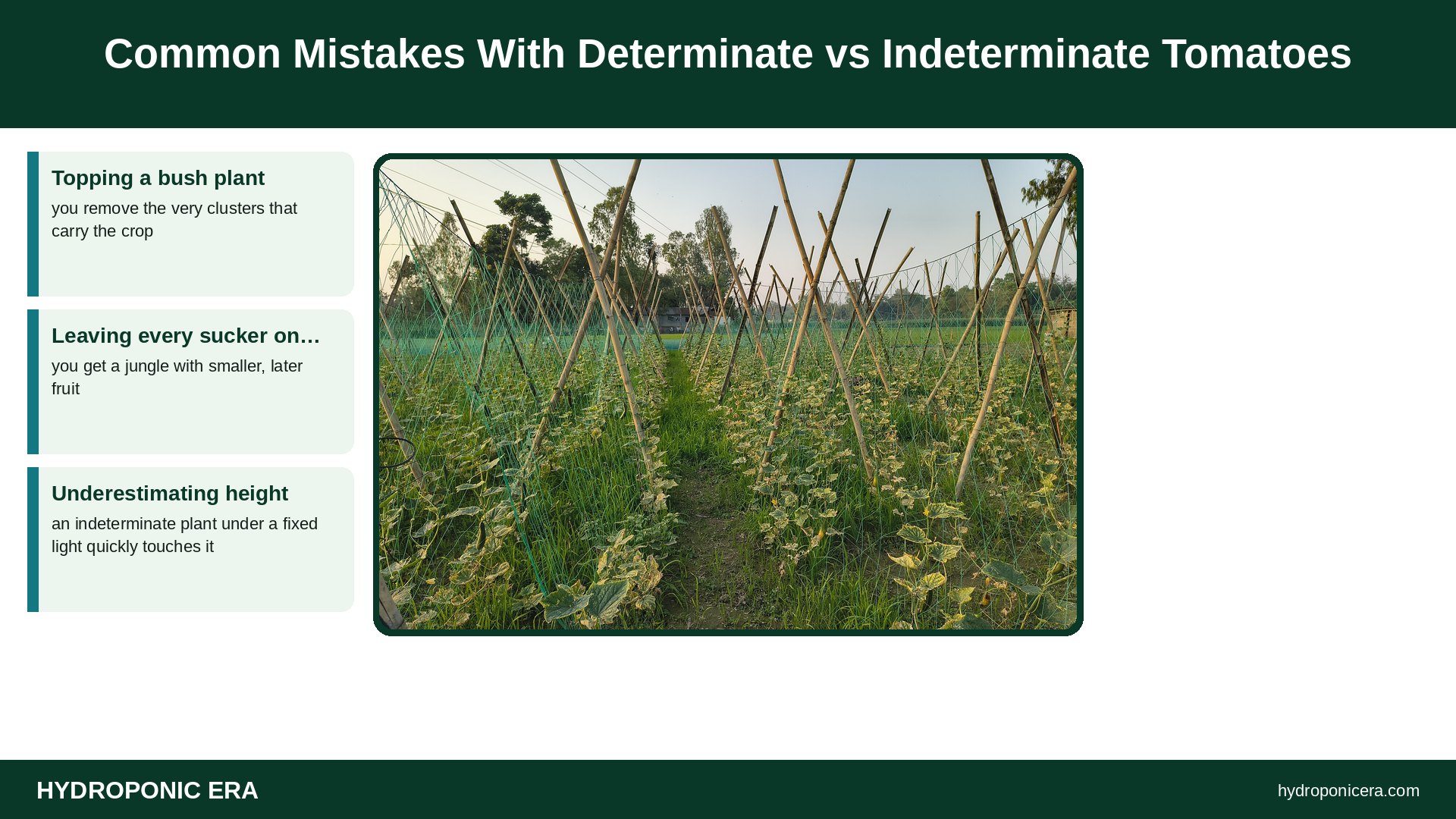
- Topping a bush plant: you remove the very clusters that carry the crop.
- Leaving every sucker on a vining plant: you get a jungle with smaller, later fruit.
- Underestimating height: an indeterminate plant under a fixed light quickly touches it.
- Expecting a long harvest from a bush type: plant a second round instead.
Match determinate vs indeterminate habit to your space, light and goals, and most problems disappear. If fruit fails to ripen, see tomatoes not turning red.
FAQ About Determinate vs Indeterminate Tomatoes
Are cherry tomatoes determinate or indeterminate?
Most cherry tomatoes are indeterminate, but compact patio cherries exist. Check the packet.
Which gives a bigger yield?
Iowa State says indeterminate yields are generally higher because the harvest lasts longer.
Can I grow indeterminate tomatoes in a small tent?
Yes, if you train one stem and lower or bend it as it grows.
Should I top determinate tomatoes?
No. The growing tips end in fruit, so topping cuts yield.
Are Roma tomatoes determinate?
Many Roma types are determinate, which is why they suit canning.
Sources
- University of Minnesota Extension — Growing tomatoes in home gardens
- Iowa State University Extension — Recommended cultivars and types of tomatoes
- Oregon State University Extension — Grow your own tomatoes and tomatillos (EC 1333)
- University of Illinois Extension — Tomato
- Photo credits (Wikimedia Commons, edited with titles): Hydroponic g12 by Giancarlo Dessì (CC BY-SA 3.0); Tomato je by Softeis (CC BY-SA 3.0); Early tomatoes (5673784575) by Dwight Sipler from Stow, MA, USA (CC BY 2.0); Cucumber cultivation on a trellis, Kurigram, Bangladesh by Tanvir Rahat (CC BY-SA 4.0)