
What is cold stratification? Cold stratification is a moist, cold treatment that breaks seed dormancy. Mix seeds with damp paper towel, sand, peat or vermiculite, seal them in a bag and refrigerate at 33–40°F (1–4°C) for about 30–60 days, or one to three months for some species. Then sow them warm, and dormant seeds can finally sprout.
Key takeaway: Cold stratification copies winter. Seeds need moisture plus cold, not just a cold drawer. Check the packet or a species guide for the length, look for mold every week, and plant any seed that sprouts early.
| Plant | Treatment | Source |
|---|---|---|
| Most native perennials | Cold, moist 30–60 days | Illinois Extension |
| Many seeds in general | 33–40°F (1–4°C) for 1–3 months | Illinois Extension |
| Most tree seeds | 32–40°F (0–4°C) for 3–4 months | Iowa State Extension |
| Sugar maple | 33–41°F (1–5°C) for 40–90 days | Iowa State Extension |
| Redbud | Scarify, then 35–41°F (2–5°C) for 5–8 weeks | Iowa State Extension |
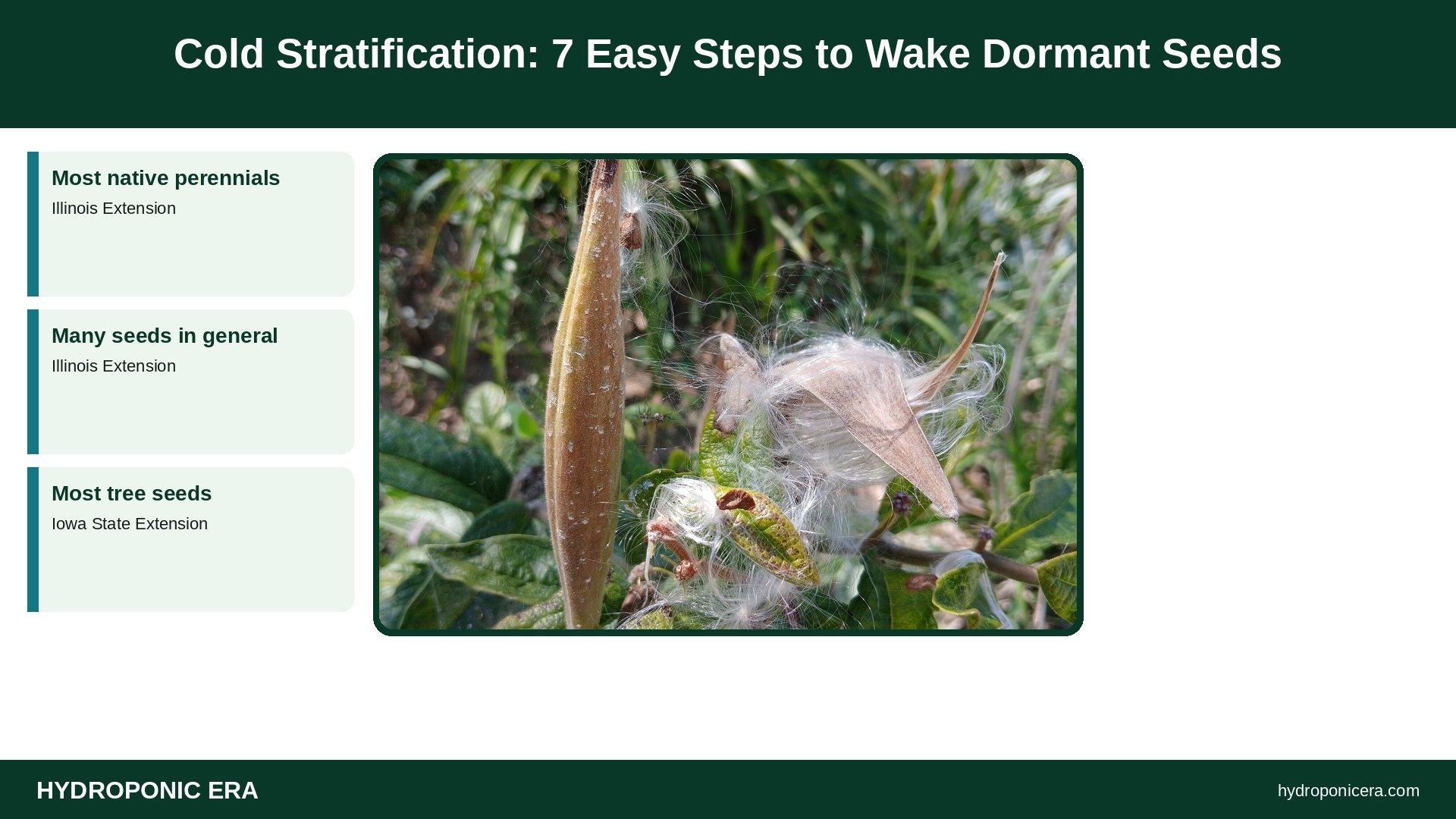
What Does Cold Stratification Do to Seeds?
Cold stratification ends a dormancy period that stops seeds from sprouting at the wrong time. Illinois Extension explains that it happens naturally when seeds sit outdoors through winter, a survival trick that prevents premature germination. Many woody plants and herbaceous perennials need it. The cold, moist weeks signal that winter has passed, so the seed is safe to grow.
This is why a packet of native wildflower seed can fail on a heat mat. The seed is alive, but it is still “asleep.” If your other seeds also struggle, check our guide to hydroponic seeds not germinating for moisture and temperature problems.
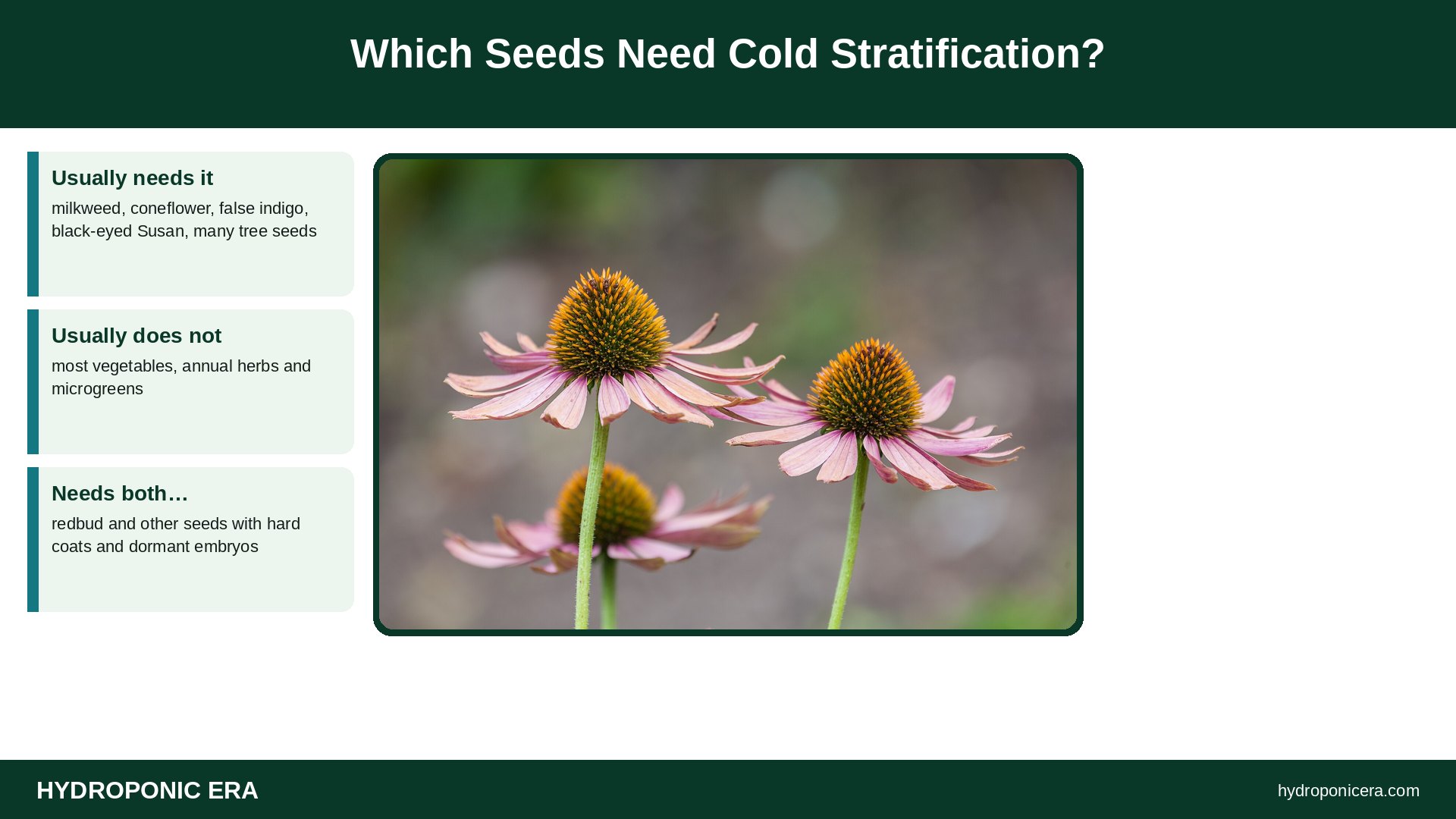
Which Seeds Need Cold Stratification?
Many native perennials, wildflowers, shrubs and trees need cold stratification. Illinois Extension lists many milkweed species, purple coneflower, false indigo, black-eyed Susan, flowering dogwood and redbud. Common vegetable seeds such as lettuce, tomatoes and basil do not need it. Seed packets often say when a cold period is required, but research any seed you collect yourself.
- Usually needs it: milkweed, coneflower, false indigo, black-eyed Susan, many tree seeds.
- Usually does not: most vegetables, annual herbs and microgreens.
- Needs both scarification and cold stratification: redbud and other seeds with hard coats and dormant embryos.
How Do You Do Cold Stratification in the Refrigerator?
Use a sealed bag or container with a moist medium, then refrigerate it. Illinois Extension recommends a damp paper towel, sand, peat or vermiculite in a closed container or sealed plastic bag at 33–40°F (1–4°C). Iowa State suggests a 50:50 mix of sand and peat moss for tree seed, with air holes punched in a rigid lid. Follow these cold stratification steps.
- Look up how many days your species needs.
- Dampen the medium until it feels like a wrung-out sponge.
- Mix the seeds into the medium or fold them into a paper towel.
- Seal the bag or container and label it with the plant name and start date.
- Place it in the refrigerator, not the freezer, at 33–40°F (1–4°C).
- Check every week for drying, excess water, mold or early sprouts.
- Sow the seeds once the time is up, or sooner if they sprout.
Keep seed bags away from fruit in the refrigerator. A paper towel method is similar to the one in our hydroponic germination methods guide.
How Long Does Cold Stratification Take?
Most seeds need about 30 to 90 days, depending on species. Illinois Extension says simple cold stratification is usually needed for 30–60 days for native perennials, and its seed guide lists one to three months in general. Iowa State recommends three to four months for most tree seeds. Check a species-specific source, because too short a cold period often means few sprouts.
Illinois Extension also gives a planning tip. Because cold stratification can add one to three months to seed starting, start it early. For a spring garden, that often means starting in winter.
Is Cold Stratification the Same as Freezing Seeds?
No. Cold stratification needs moisture and steady cool temperatures, usually just above freezing in a refrigerator. Dry seeds in a freezer are only being stored, not stratified. Illinois Extension notes you can stratify naturally by sowing outdoors in fall or keeping seeds in an unheated shed, where natural winter cycles do the work. Indoors, the refrigerator is the controlled option.
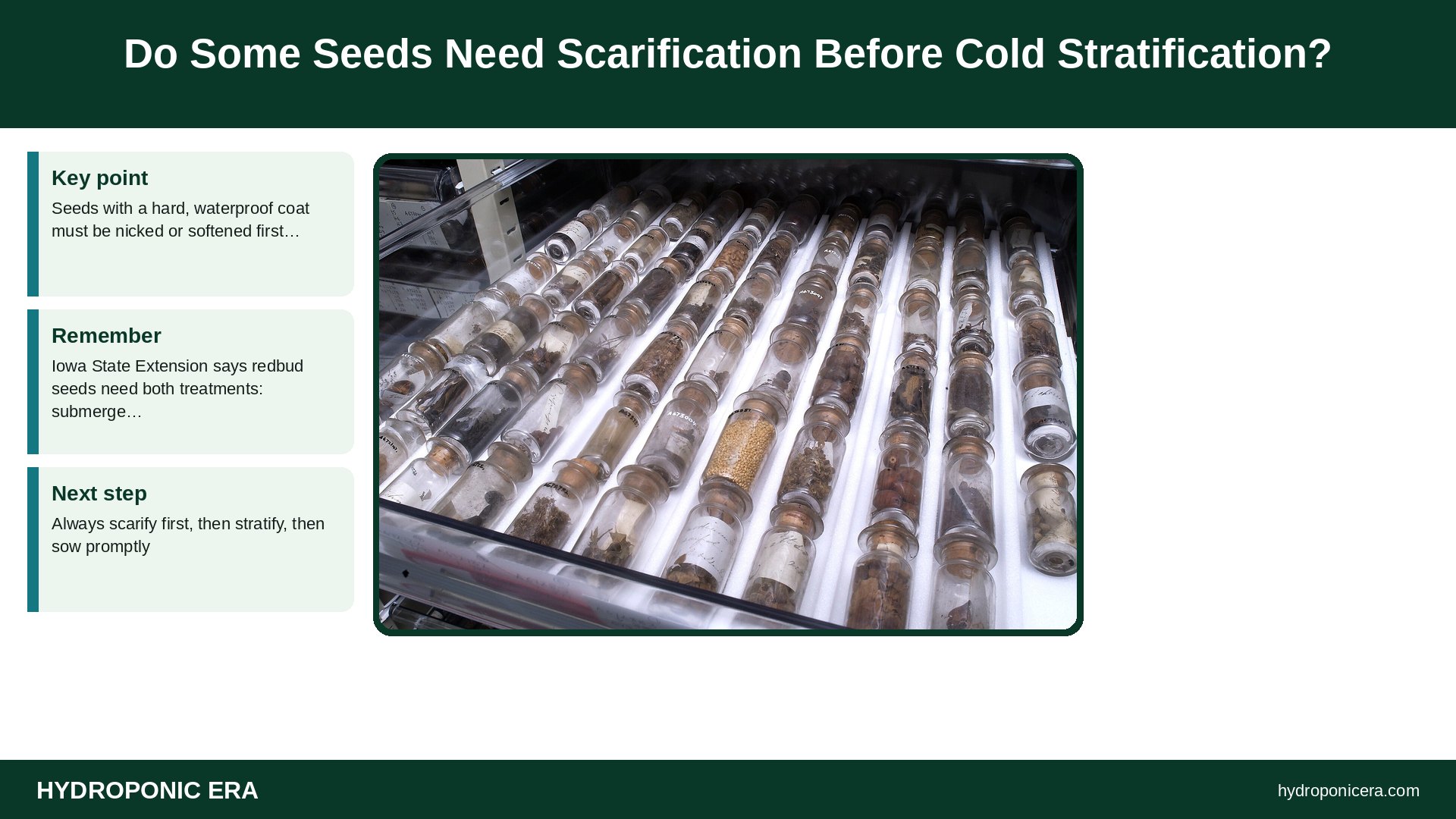
Do Some Seeds Need Scarification Before Cold Stratification?
Yes. Seeds with a hard, waterproof coat must be nicked or softened first so water can reach the embryo. Iowa State Extension says redbud seeds need both treatments: submerge them in boiling water for one minute, then stratify at 35–41°F (2–5°C) for five to eight weeks. Always scarify first, then stratify, then sow promptly.
Other ways to break a hard seed coat include a metal file or coarse sandpaper, according to Iowa State. Only use these on seeds that a reliable guide says need it.
What Is Warm Stratification?
Warm stratification is a moist, warm treatment that some seeds need before or instead of cold. Illinois Extension describes keeping the sealed container at 68–85°F (20–29°C). A few species need warm and then cold periods in sequence, which mimics summer followed by winter. If a guide lists both, finish the warm period first, then move seeds into cold stratification.
Common Cold Stratification Mistakes
- Using dry seed: cold alone does not break dormancy without moisture.
- Soaking the medium: too much water causes mold and rot, so squeeze it out first.
- Using the freezer: a steady 33–40°F (1–4°C) is the target.
- Stopping too early: follow the full number of days for your species.
- Forgetting labels: you will not remember start dates for several bags.
Mold on seeds is a common problem in any damp method. Our microgreens mold guide explains how to tell mold from root hairs, and seed starting trays covers containers for sowing after treatment.
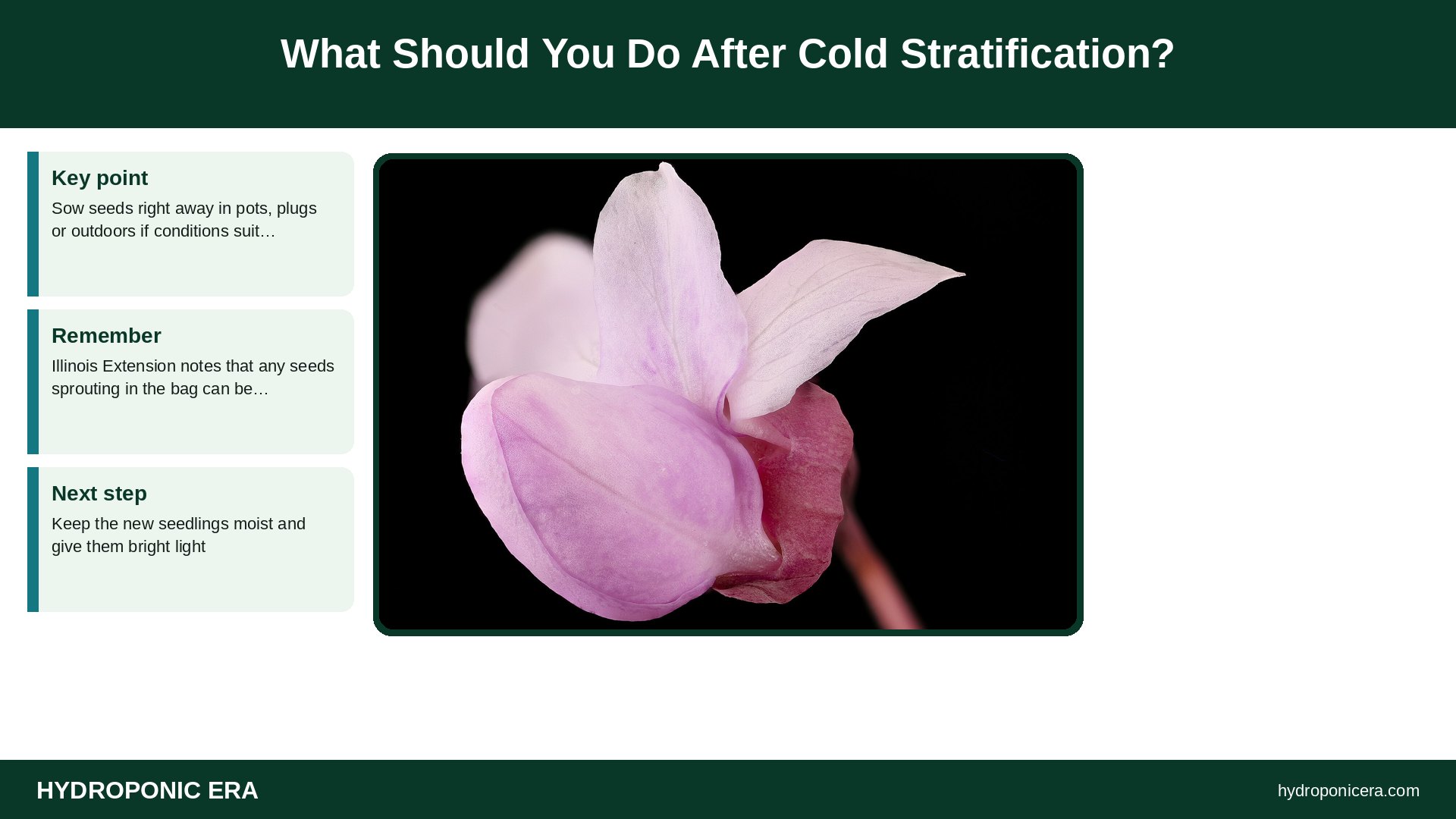
What Should You Do After Cold Stratification?
Sow seeds right away in pots, plugs or outdoors if conditions suit the plant. Illinois Extension notes that any seeds sprouting in the bag can be planted immediately. Keep the new seedlings moist and give them bright light. Stratified seeds have used up their dormancy, so do not let them dry out again before sowing.
FAQ About Cold Stratification
Can I cold stratify seeds in a paper towel?
Yes. Illinois Extension lists a moist paper towel in a sealed bag or container.
What temperature is best?
Illinois Extension recommends 33–40°F (1–4°C), a normal refrigerator range.
How do I know if seeds need it?
Check the packet or a species guide. Many native perennials and trees need it.
Can I stratify outdoors?
Yes. Fall sowing or an unheated shed lets winter do the work.
Do vegetable seeds need cold stratification?
Most common vegetables do not.
Sources
- University of Illinois Extension — Seed stratification: What seeds require cold treatment
- University of Illinois Extension — Seed stratification: How to get seeds from native perennials to grow
- Iowa State University Extension — Germination of tree seed
- Photo credits (Wikimedia Commons, edited with titles): Asclepias tuberosa pod opening by Cbaile19 (CC0); Echinacea purpurea, Jardín Botánico, Múnich, Alemania, 2013-09-08, DD 01 by Diego Delso (CC BY-SA 3.0); Seeds and roots in jars Wellcome L0036767 by Unknown (CC BY 4.0); Cercis canadensis, 2, Redbud, Howard County, Md, 2018-05-17-14.36 (42203890380) by USGS Bee Inventory and Monitoring Lab from Beltsville, Maryland, USA (Public domain)