
How do you propagate creeping fig? Take 4- to 6-inch (10 to 15 cm) creeping fig cuttings from the small-leaved juvenile stems, strip the lower leaves and root them in water or moist mix in bright indirect light. Clemson Extension notes that juvenile growth roots easily, even without rooting hormone. Wear gloves, since the milky sap can irritate skin.
Key takeaway: Creeping fig (Ficus pumila) climbs walls with clusters of short roots, much like English ivy. Its juvenile stems root readily in water or mix. Keep it in bright indirect light with regular watering, prune often to hold the small-leaved juvenile form, and handle the sap with care.
| Step | What to do | Source |
|---|---|---|
| 1. Pick juvenile stems | Small leaves, thin flexible vines | Clemson HGIC |
| 2. Cut | 4 to 6 in (10 to 15 cm), remove lower leaves | NC State |
| 3. Root | Node in water or moist mix | University of Maryland, Clemson |
| 4. Humidity | High humidity, bright indirect light | NC State |
| 5. Pot and train | Soil-based mix; give it a surface to climb | NC State |
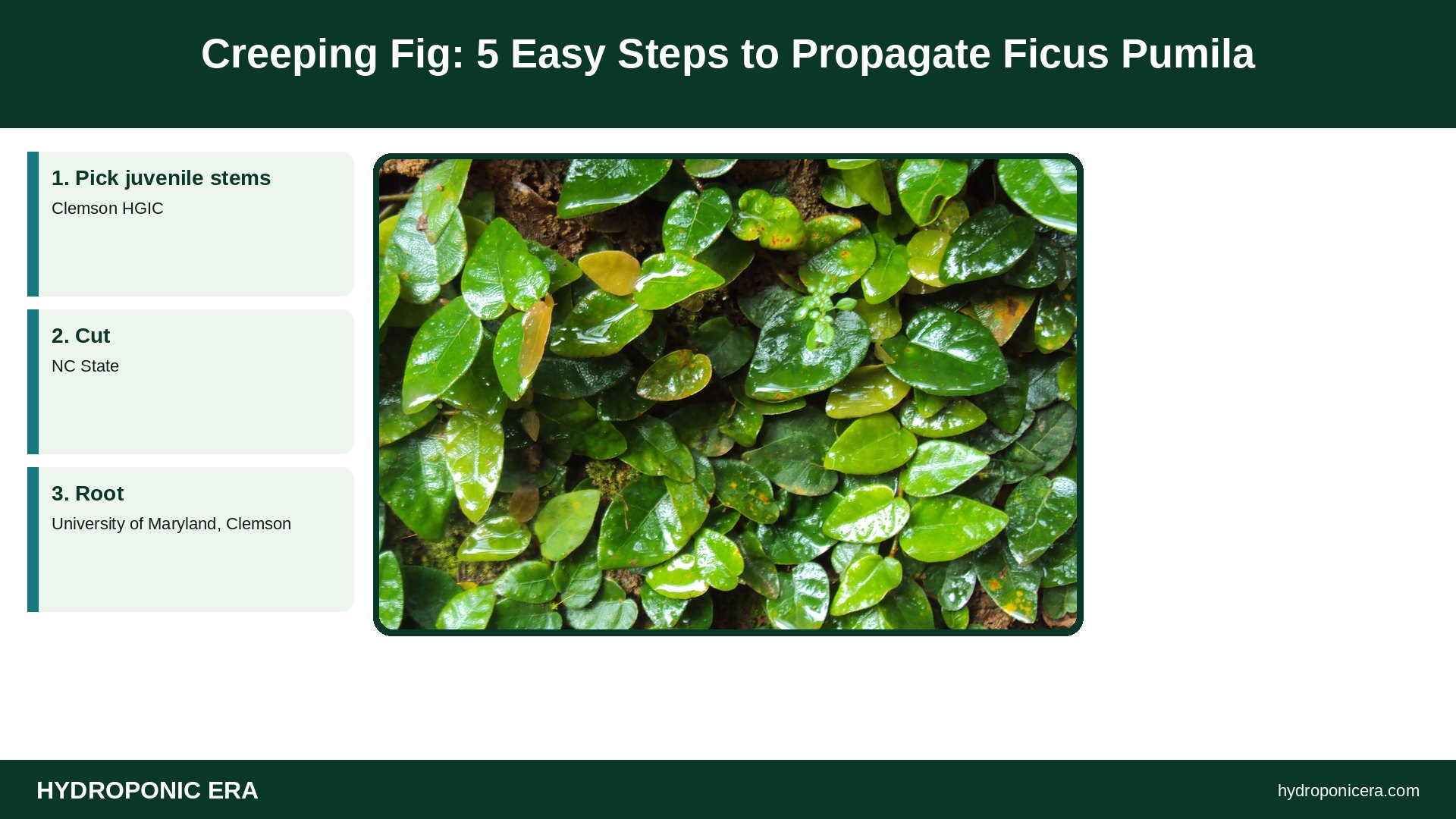
What Is Creeping Fig?
Creeping fig is Ficus pumila, an evergreen vine that clings to walls, trellises and moss forms. NC State Extension says it climbs by clusters of short roots, the same way English ivy does. Indoors it grows well as a trailing or climbing houseplant, and outdoors it can cover masonry in warm climates.
Clemson Extension explains that it has two growth stages. Juvenile stems carry leaves under 1 inch (2.5 cm) long and can grow up to 1 foot (30 cm) a year. Mature shoots bear larger leaves and inedible fruit about 3 by 2 inches (7.5 by 5 cm).
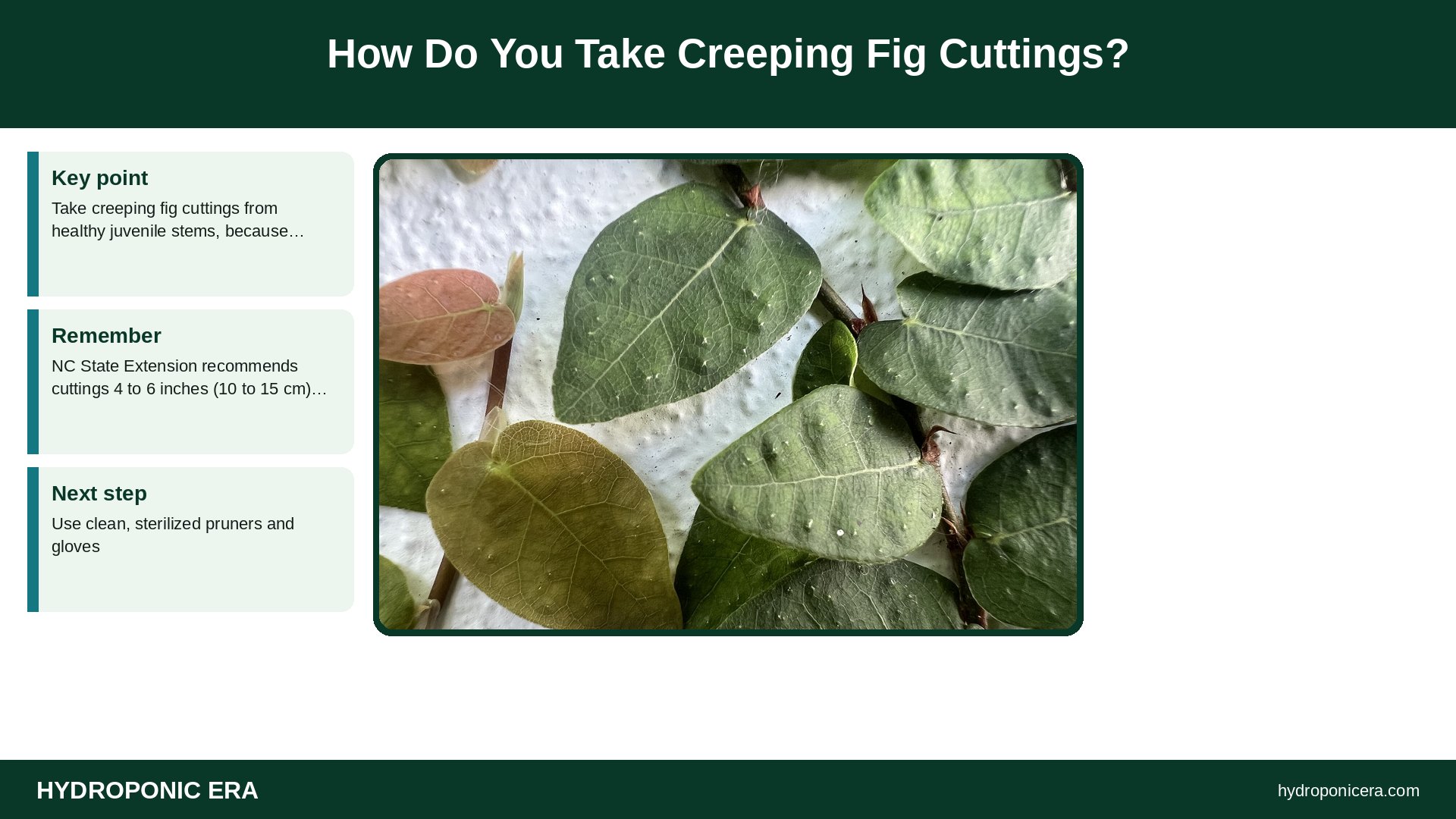
How Do You Take Creeping Fig Cuttings?
Take creeping fig cuttings from healthy juvenile stems, because Clemson Extension notes that juvenile growth roots easily without rooting hormone. NC State Extension recommends cuttings 4 to 6 inches (10 to 15 cm) long with the lower third to half of the leaves removed. Use clean, sterilized pruners and gloves.
- Put on gloves to keep the milky sap off your skin.
- Choose a vigorous, small-leaved stem with several nodes.
- Cut just below a node with clean pruners.
- Strip leaves from the lower part of the stem.
- Rinse sap from the cut end before rooting.
Take cuttings in the morning, when stems are fully hydrated, and keep them in a damp paper towel if you cannot root them right away.
Can You Root Creeping Fig in Water?
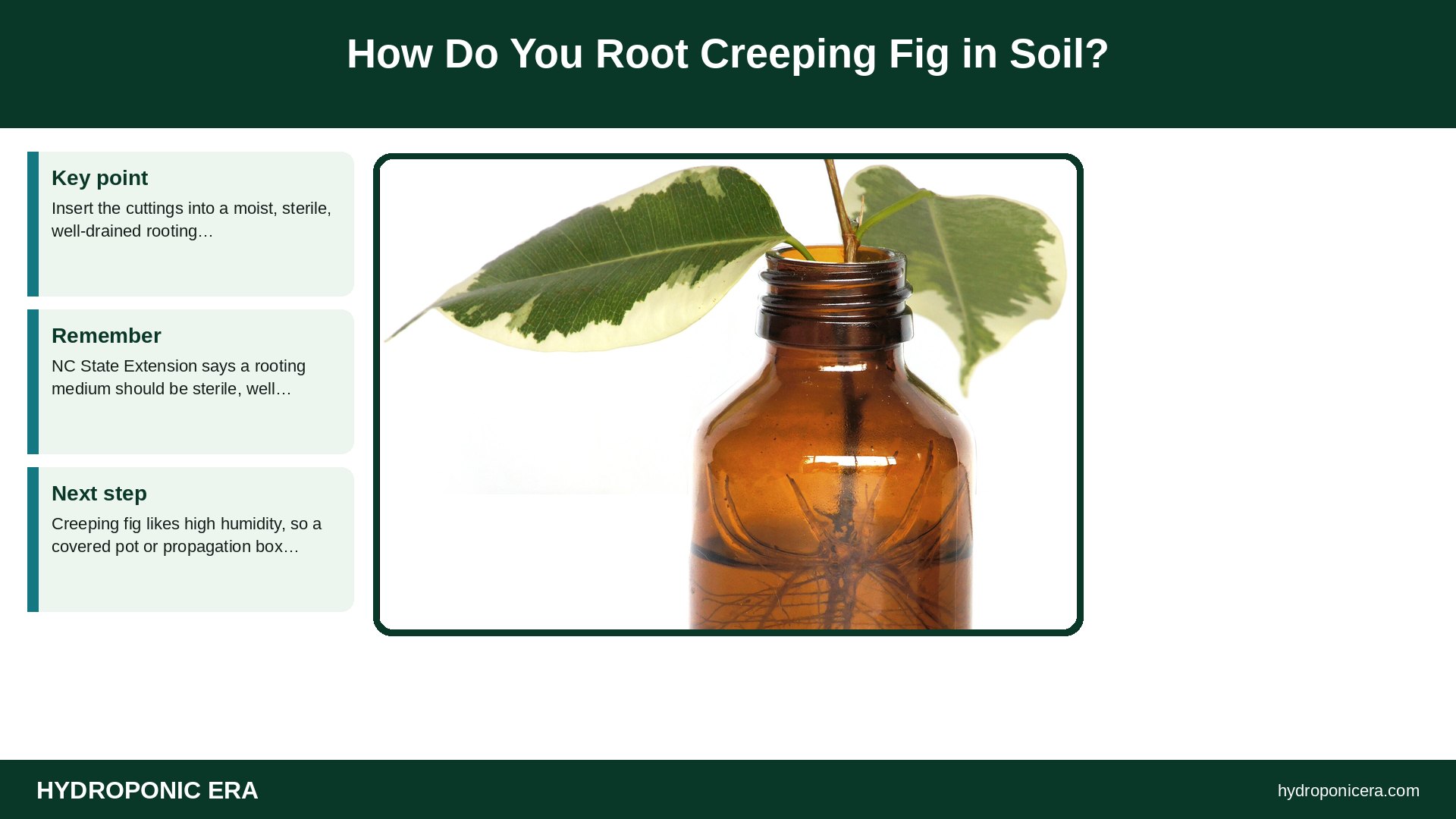
Yes. Set the stripped stem in a clear jar so the nodes sit under water and the leaves stay dry. University of Maryland Extension recommends bright but indirect light, about 70°F (21°C), and changing the water twice a week. Creeping fig in water is easy to monitor, because you can watch the roots form.
- Change the water at least twice a week or when cloudy.
- Keep the jar out of hot direct sun.
- Move rooted cuttings to soil once roots are established.
- Group several cuttings in one jar for a fuller plant later.
For more fig family methods, see our guides to fig cuttings in water and fiddle leaf fig in water.
How Do You Root Creeping Fig in Soil?
Insert the cuttings into a moist, sterile, well-drained rooting medium and cover the pot with a clear bag to hold humidity. NC State Extension says a rooting medium should be sterile, well drained and moisture-retentive. Creeping fig likes high humidity, so a covered pot or propagation box gives cuttings a strong start.
A simple propagation box or humidity dome works well for several cuttings at once.
How Do You Care for Creeping Fig Indoors?
Indoors, grow creeping fig in a soil-based mix with bright indirect light or part shade. NC State Extension advises protecting it from hot afternoon sun, watering regularly during the growing season and less in fall and winter, and providing high humidity. Dry air and dry soil quickly crisp the thin leaves.
| Need | Guideline | Source |
|---|---|---|
| Light | Bright indirect or part shade | NC State |
| Soil | Soil-based potting mix | NC State |
| Water | Regular in growth, less in fall and winter | NC State |
| Humidity | High | NC State |
| Pruning | Periodic; remove mature shoots | Clemson HGIC |
Is Creeping Fig Sap an Irritant?
Yes, for some people. NC State Extension notes that Ficus latex can cause minor skin irritation, especially with sun exposure, and lists the genus as a problem for cats, dogs and children with low severity. Wear gloves when taking cuttings or pruning, and keep plants away from pets that chew leaves.
Will Creeping Fig Damage Walls?
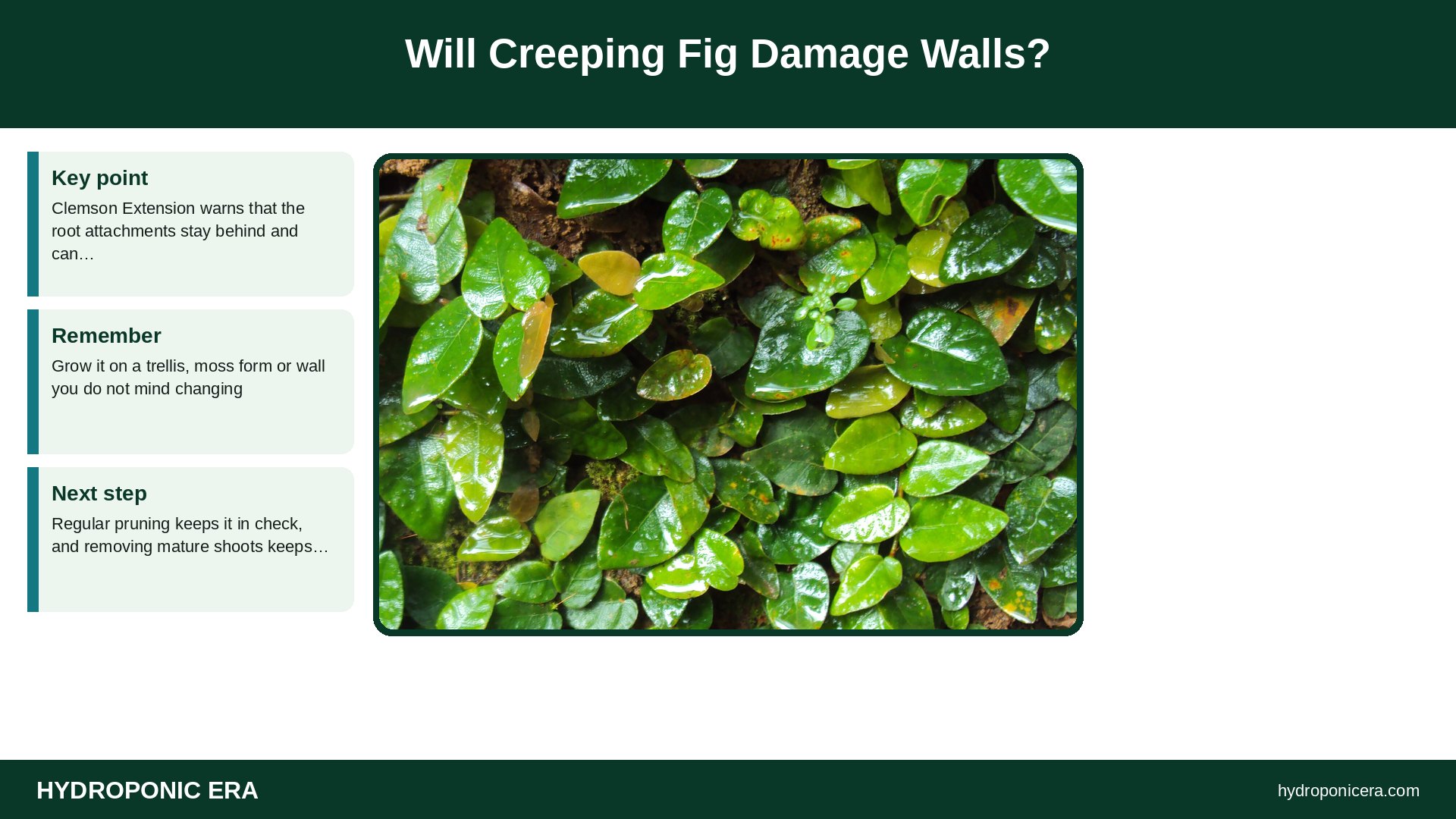
It can mark them. Clemson Extension warns that the root attachments stay behind and can mar walls when the vine is pulled off. Grow it on a trellis, moss form or wall you do not mind changing. Regular pruning keeps it in check, and removing mature shoots keeps the fine juvenile foliage.
- Train indoor plants on a moss form or small trellis instead of paint.
- Prune several times a year to control spread.
- Cut out larger-leaved mature shoots promptly.
Why Are My Cuttings Failing to Root?
Most failures come from stale water, low humidity, cold rooms or cuttings taken from mature, large-leaved shoots. Clemson Extension notes that juvenile growth is the form that roots easily, so start with thin, small-leaved stems. NC State’s propagation handbook also stresses clean tools and a sterile medium to prevent rot.
| Problem | Likely cause | Fix |
|---|---|---|
| Slimy, black stem base | Stale water or dirty tools | Recut, sterilize tools, change water |
| Leaves dry and curl | Low humidity | Cover with a clear bag or dome |
| No roots after weeks | Cold room or mature shoot | Move somewhere warmer; use juvenile stems |
| Wilting in soil | Roots disturbed or mix too dry | Keep mix evenly moist and humid |
Take a few extra cuttings each time. Losing one or two is normal, and the spares give you a fuller pot when they all root.
FAQ About Creeping Fig
How fast does creeping fig grow?
Clemson Extension says juvenile growth can extend up to 1 foot (30 cm) per year.
Do I need rooting hormone?
No. Clemson notes juvenile growth roots easily without it.
Is the fruit edible?
Clemson describes the fruit of creeping fig as inedible.
Why are the leaves crispy?
Usually dry air or dry soil. Raise humidity and water more regularly in summer.
Can it grow as a hanging plant?
Yes. Without a support it trails over the pot edge.
Sources
- NC State Extension Gardener Plant Toolbox. Ficus pumila.
- Clemson Cooperative Extension HGIC. Climbing fig.
- NC State Extension Gardener Plant Toolbox. Ficus.
- University of Maryland Extension. Make more plants from cuttings: 5 plants that root easily in water.
- NC State Extension. Extension Gardener Handbook: Propagation.
- Photo credits (Wikimedia Commons, edited with titles): Ficus pumila plant on a wall by Vinayaraj (CC BY-SA 3.0); Ficus pumila leaves with cystoliths 02 by KATHERINE WAGNER-REISS (CC BY-SA 4.0); Ficus cuttings with roots in a bottle, White background by Biusch (CC BY-SA 3.0)