
Do mycorrhizal fungi work in hydroponics? Sometimes. A 2024 meta-analysis in Sustainability found mycorrhizal fungi colonized hydroponic roots at 52.3% on average versus 61.1% in soil. About a third of studies saw no biomass or yield gain. Results are best with host crops, low phosphorus (under about 15 mg/L), and calm root zones such as ebb and flow.
Key takeaway: Arbuscular mycorrhizal fungi (AMF) trade nutrients for plant sugars. In hydroponics they can help, but fertilizer strength, system type and crop choice decide the result.
| Factor | What the research found | Source |
|---|---|---|
| Average root colonization | 52.3% hydroponic vs 61.1% soil | Othman et al. 2024 |
| Early colonization | 2–20% at 10 days; over 50% after 30–65 days | Othman et al. 2024 |
| Phosphorus | 0.15–15.5 mg/L suits AMF; 40–75 mg/L cut colonization | Othman et al. 2024 |
| System type | Air bubbles and constant flow may damage hyphae | Othman et al. 2024 |
| Non-host crops | Broccoli, cabbage, kale, spinach, beets, chard | UConn Extension |
| Product reliability | About 80% of commercial treatments gave little or no colonization | UConn, citing New Phytologist |
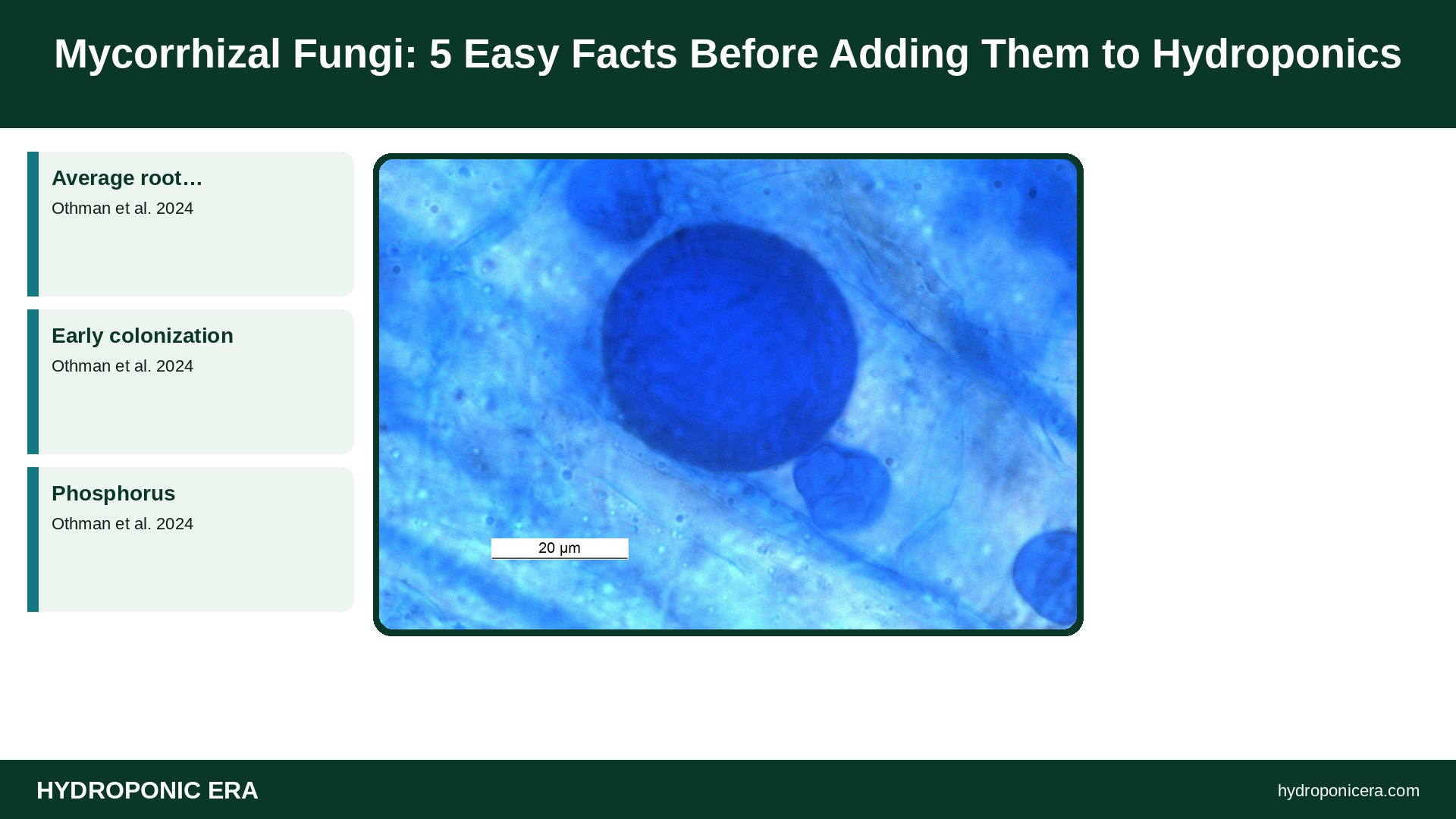
What Are Mycorrhizal Fungi?
Mycorrhizal fungi are soil fungi that partner with plant roots. UConn Extension explains that their thin hyphae extend into the root zone, widening the area for water and nutrient uptake, while the plant feeds them sugars. Arbuscular types (AMF) are most common on vegetables such as tomatoes, peppers, corn, squash and beans.
Many hydroponic growers also use bacteria products; see our beneficial bacteria and enzymes guide.
Do Mycorrhizal Fungi Help Hydroponic Plants?
The evidence is mixed. In the Othman et al. meta-analysis, about 34% of hydroponic studies showed no or negative effect on biomass or yield, 37% on fruit or leaf quality, and 60% on tissue nutrients. The authors note hydroponics already delivers nutrients in ready form, so plants have less reason to rely on the fungus.
Some trials were positive. Inoculated pepper in perlite gained 17–36% dry weight, and melon at 80% nutrient strength yielded 49.5% more than the control.
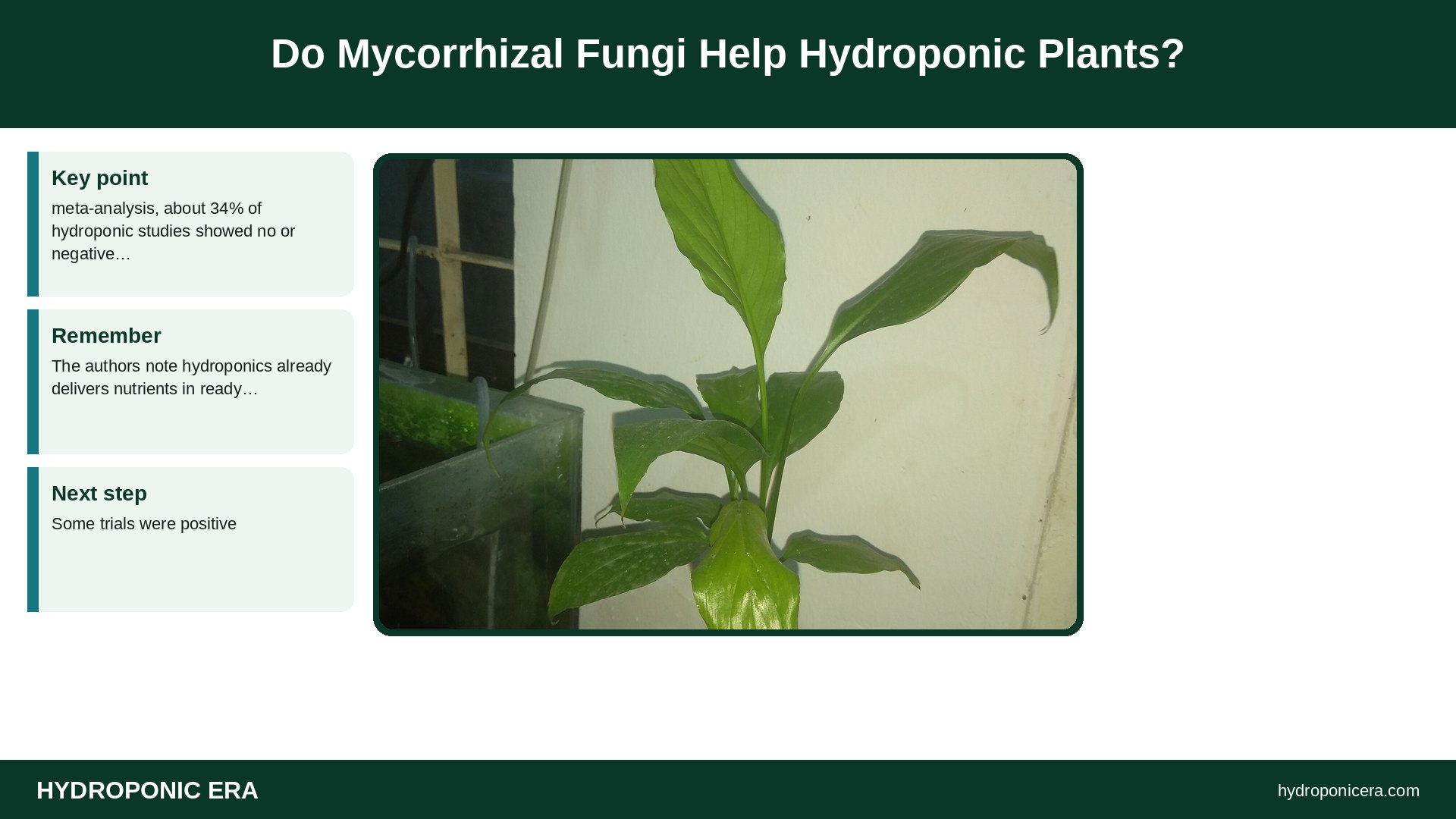
Which Hydroponic Systems Suit Mycorrhizal Fungi?
Systems with media and calmer roots do best. The meta-analysis notes that constant circulation and air-pump bubbles in floating systems may damage spores and hyphae. One cited trial found ebb and flow gave higher colonization (79%) than deep flow. Another used short aeration bursts, 2 hours four times daily, to limit disturbance.
- Best fit: ebb and flow with perlite, coir or clay media.
- Possible: NFT, which one study found gave enough air without disturbing hyphae.
- Hardest: aerated DWC rafts with constant bubbling.
- Media choice matters; compare options in our growing media guide.
How Much Phosphorus Is Too Much for AMF?
High phosphorus is the biggest barrier. The meta-analysis recommends keeping solution phosphorus at about 0.15–15.5 mg/L (ppm), because 40–75 mg/L significantly cut colonization. UConn Extension agrees that high phosphorus reduces AMF colonization. Many standard hydroponic recipes run above that low range, so trials often pair AMF with reduced-strength feeding.
Watch for shortage if you cut back; our phosphorus deficiency guide shows the signs.
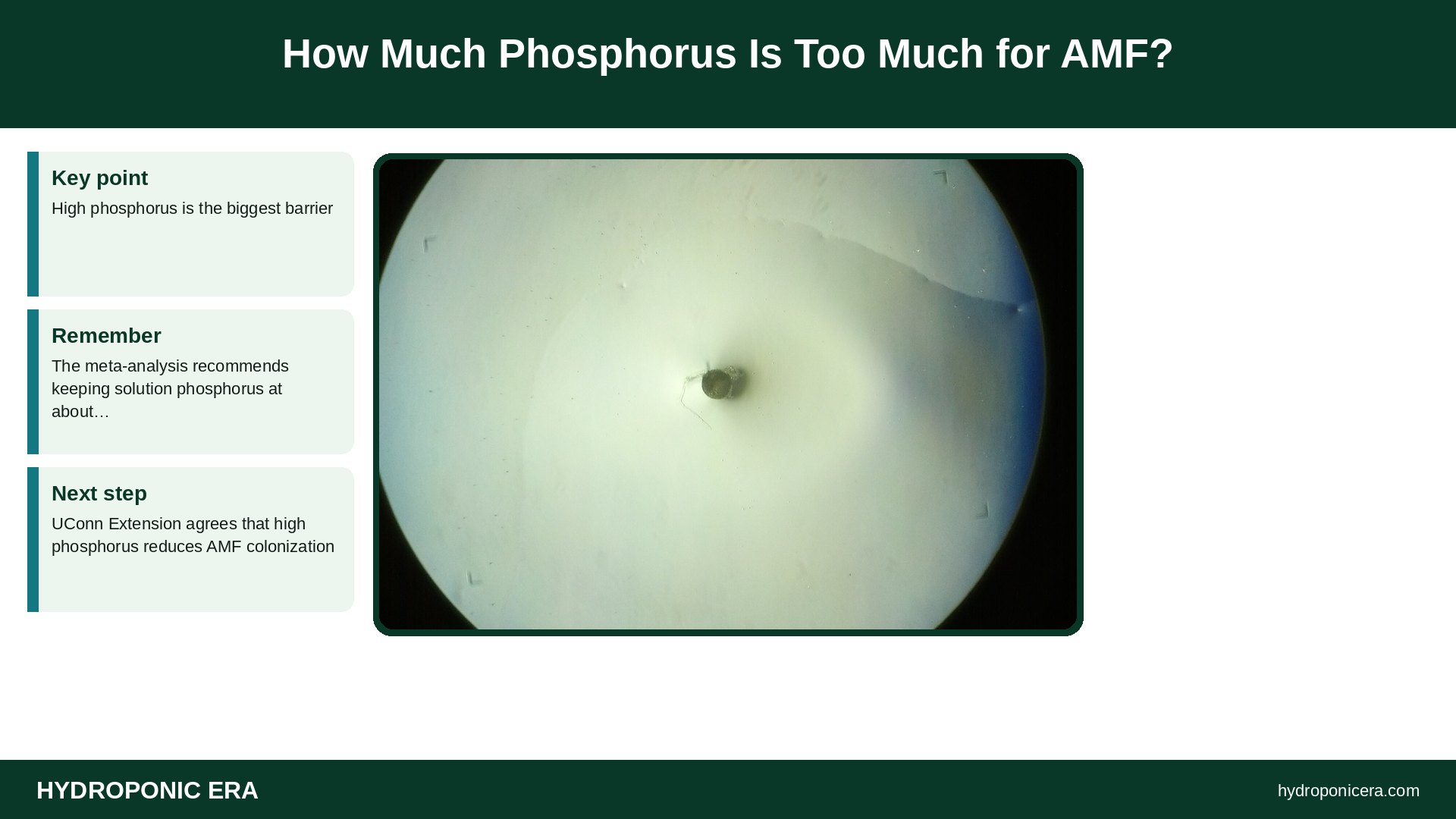
Which Crops Do Not Benefit From Mycorrhizal Fungi?
Some crops rarely form the partnership at all. UConn Extension lists broccoli, cabbage, kale, cauliflower, mustard and radish as generally non-mycorrhizal, plus beets, chard and spinach. Adding an inoculant to these crops is unlikely to help. Fruiting crops like tomato, pepper, cucumber and strawberry, and herbs like basil, appear in positive hydroponic trials.
How Do You Add Mycorrhizal Fungi to a Hydroponic System?
- Choose a host crop, such as tomato, pepper or basil.
- Buy an inoculant that names the fungal species, such as Rhizophagus irregularis.
- Inoculate seeds, plugs or the media at transplant, so spores touch young roots.
- Keep phosphorus low, ideally within 0.15–15.5 mg/L.
- Prefer media-based ebb and flow over bubbling rafts.
- Re-inoculate if needed; the review lists repeat doses as one option.
- Allow 30–65 days before judging colonization.
The review also notes inoculation is labor-intensive. Das et al. (2020) note that many lab setups first colonize roots in solid media, then move plants to hydroponics after several weeks.
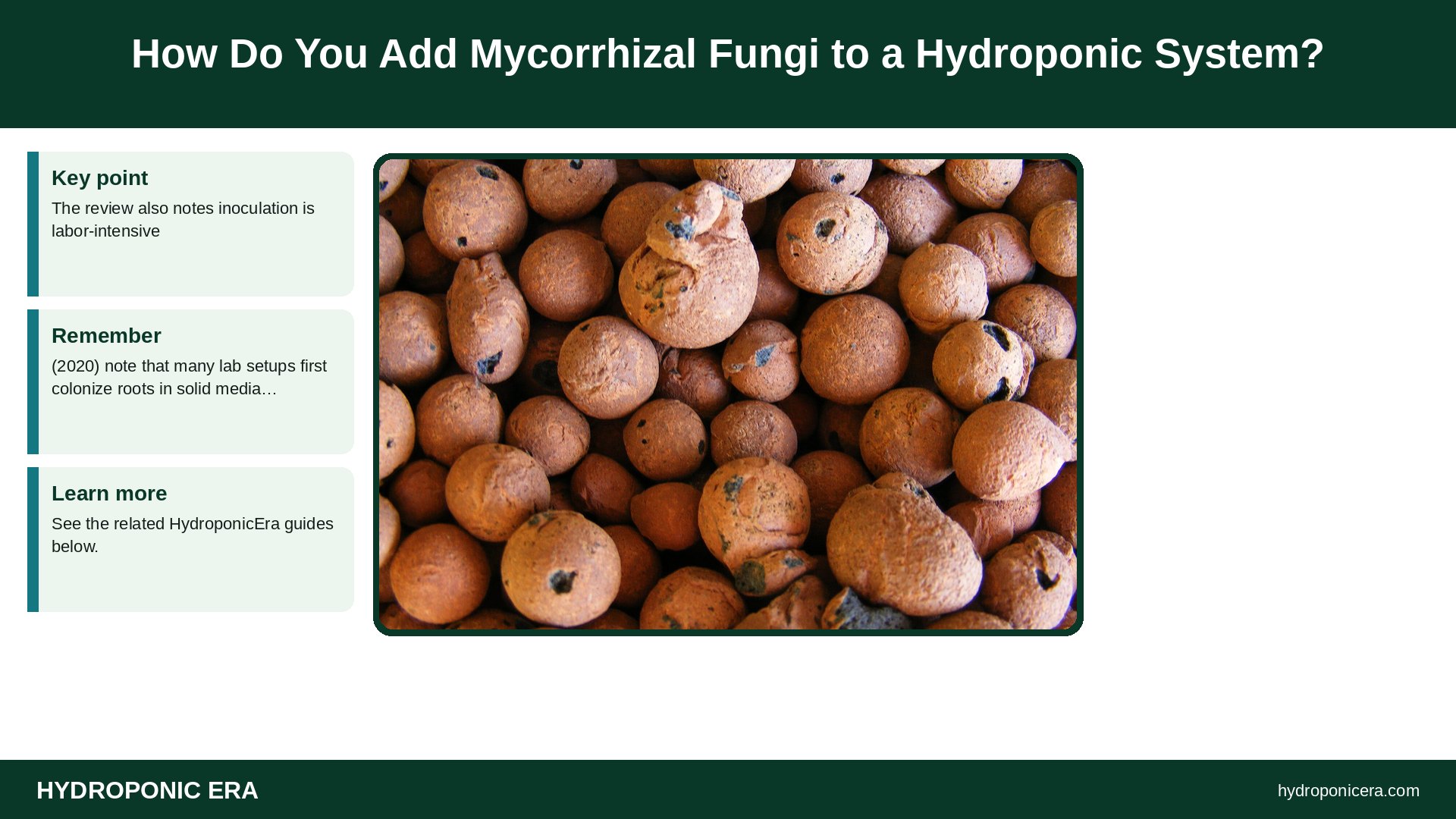
Are Commercial Mycorrhizal Products Reliable?
Not always. UConn Extension cites a New Phytologist meta-analysis finding about 80% of commercial inoculant treatments gave minimal or no root colonization, and a 2025 University of Zürich test in which none of seven home-garden products established symbiosis. Fungi can lose viability in storage. UConn adds that soilless media is one place inoculation is more plausible.
Can Mycorrhizal Fungi Protect Against Root Disease?
Some trials suggest a modest benefit, but do not rely on it. The meta-analysis cites tomato in sawdust where inoculation lowered Fusarium root infection, and petunia where one species reduced Thielaviopsis symptoms. Clean water, good oxygen and sanitation still matter most; see our Pythium root rot guide.
FAQ About Mycorrhizal Fungi in Hydroponics
Can I add mycorrhizae to a DWC reservoir?
You can, but bubbling and flow may damage hyphae, so results are often poor.
How long does colonization take?
Often 2–20% after 10 days and over 50% after 30–65 days.
Does lettuce benefit?
Results vary; one NFT trial and one float trial showed gains, another in rockwool showed none.
Do mycorrhizae replace fertilizer?
No, though one soilless trial pairing them with bacteria cut mineral fertilizer by 20%.
Are endomycorrhizae the same as AMF?
Yes, products often label AMF as endomycorrhizae.
Sources
- Othman, Alananbeh and Tahat, Sustainability (2024) — Can Arbuscular Mycorrhizal Fungi Enhance Crop Productivity and Quality in Hydroponics? A Meta-Analysis
- University of Connecticut Home & Garden Education Center — Do Home Gardens Need Mycorrhizal Inoculants?
- Das et al., Frontiers in Plant Science (2020) — A Flexible, Low-Cost Hydroponic Co-cultivation System for Studying Arbuscular Mycorrhiza Symbiosis
- Photo credits (Wikimedia Commons, edited with titles): Vesicular Arbuscular Mycorrhizae 40X0031 07 by Rajarshi Rit(https://orcid.org/0000-0003-3122-5926) (CC BY 4.0); Spathiphyllum wallisii hydroponically grown by Kephalian (CC BY-SA 4.0); Single spore of glomus mosseae by Samson90 (CC0); Hydroton by Lucis (CC BY-SA 3.0)