
Quick Answer
Ebb and flow (flood and drain) hydroponics periodically floods a tray or bed of plants in media with nutrient solution, then drains it back to a reservoir. Roots get water, nutrients, and then air. It suits many beginners who want media-based culture for herbs and fruiting plants, but it depends on reliable pumps, timers, and drain plumbing. Failures look like dry wilt or waterlogging if timing is wrong.
Compare with Dutch bucket, DWC, growing media, and coco coir.
Key Takeaways
- Oklahoma State hydroponics fact sheet outlines major system types and management themes.
- University of Georgia soilless media bulletin (B1314) supports media selection thinking for container culture.
- Flood height, drain speed, and media water-holding must match.
- Timer failure is the classic risk—use backups and check often.
- Overlapping floods without full drain invite root disease.
- Reservoir design still needs opacity, volume, and hygiene.
- Good fit for transplanting plugs into media baskets or pots.
Related HydroponicEra guides

How Flood and Drain Works
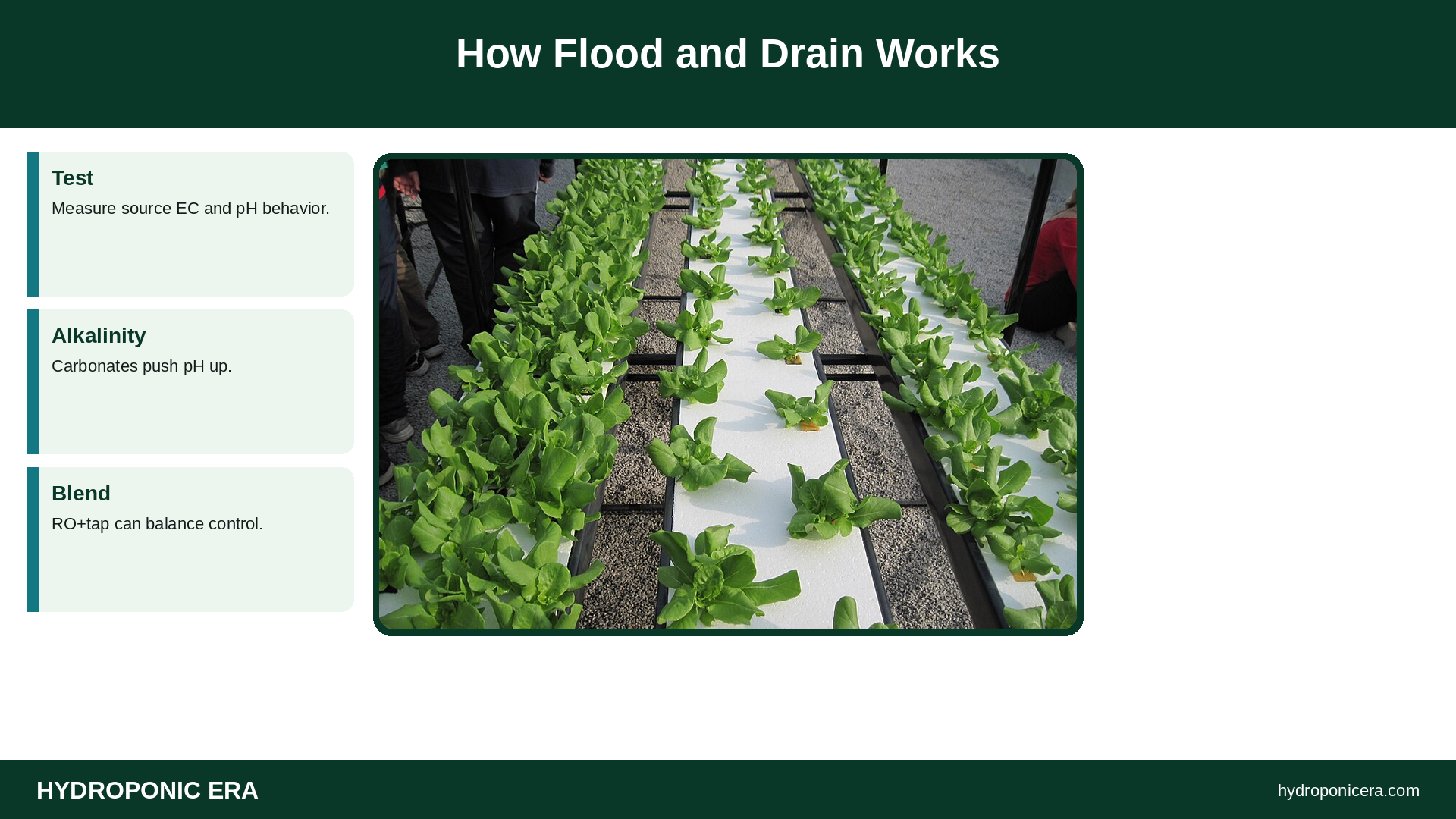
A pump pushes nutrient solution into a watertight tray until media is wetted to a target height, then the pump stops and solution drains back—often through the same fitting—into the reservoir. During the drained phase, air re-enters pore spaces. That alternating pattern is why media choice matters: coco, rockwool cubes/slabs, perlite mixes, and clay pebbles behave differently.
University soilless media guidance (UGA B1314) helps you think about porosity and water-holding. HydroponicEra’s growing media overview and coco deep-dive complement this system page.
Build Checklist
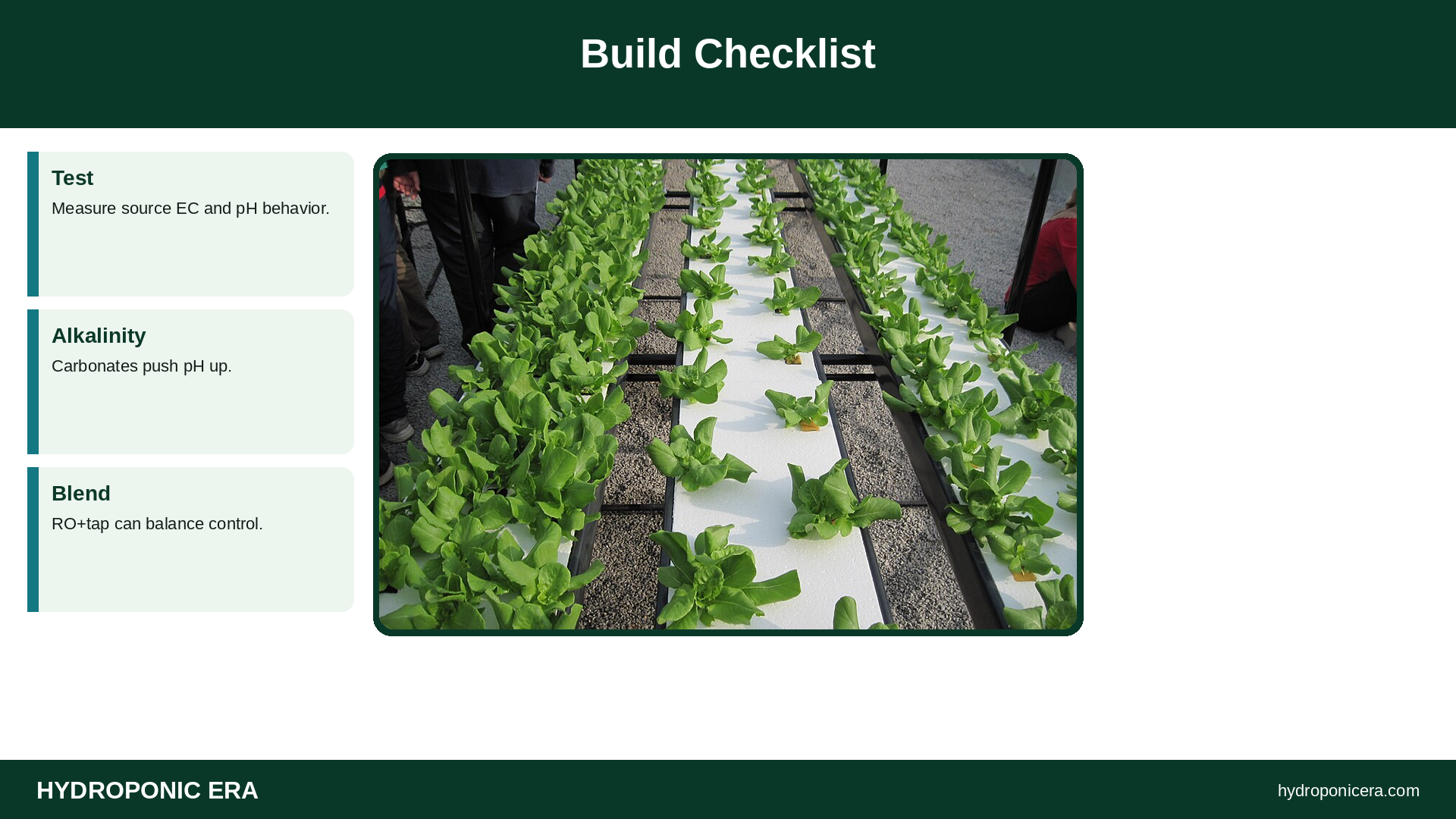
- Level, leak-tested flood tray with overflow protection.
- Reservoir below tray with enough volume for a full flood plus reserve.
- Pump sized to fill in a reasonable time without violent splashing.
- Timer with intervals matched to crop stage and media.
- Reliable drain path—no standing puddles after cycle.
- Opaque reservoir and covered return to limit algae.
- Tray stand that supports wet weight safely.
Timer Strategy Framework
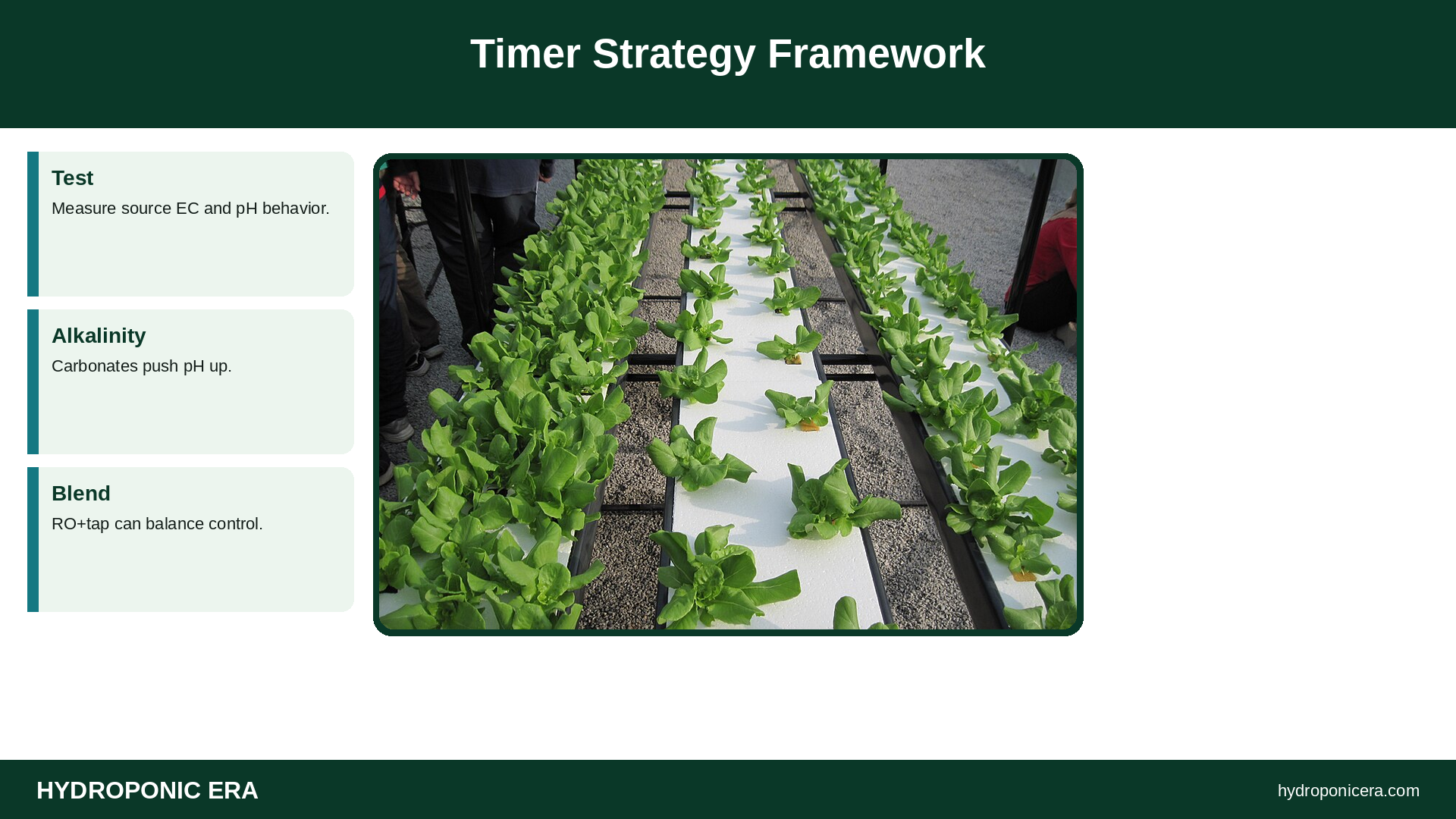
| Stage | Flood tendency | Watch-outs |
|---|---|---|
| Seedlings/plugs | Shorter, more frequent light floods | Do not wash out tiny plugs |
| Vegetative leafy | Moderate cycles | Media should not stay saturated all day |
| Fruiting in warm rooms | Often more frequent | Confirm full drain; avoid chronic hypoxia |
| Lights-off | Usually fewer floods | Prevent all-night saturation |
There is no single timer setting for every room. Observe media moisture at the bottom of pots an hour after drain. If still dripping-swampy, lengthen drain time or reduce frequency. If bone dry and wilting, shorten intervals—after ruling out pump failure.
Common Failures
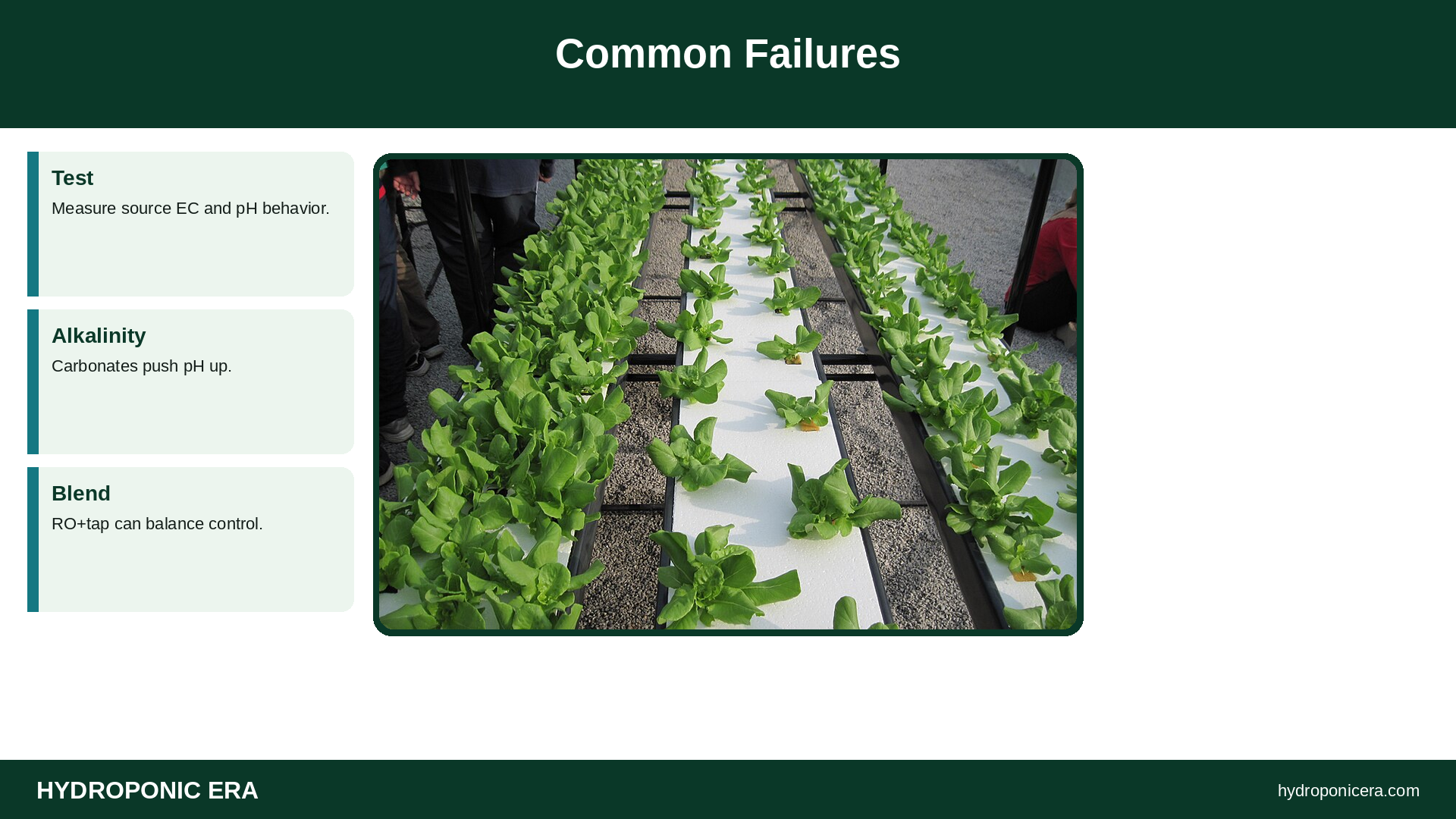
- Timer unplugged or incorrect AM/PM programming
- Clogged drain fitting leaving a permanent flood
- Tray not level, drowning one side
- Media that holds too much water for the chosen schedule
- Reservoir running dry mid-flood (pump damage + dry plants)
- Ignoring root smell until collapse
Step-by-Step First Run
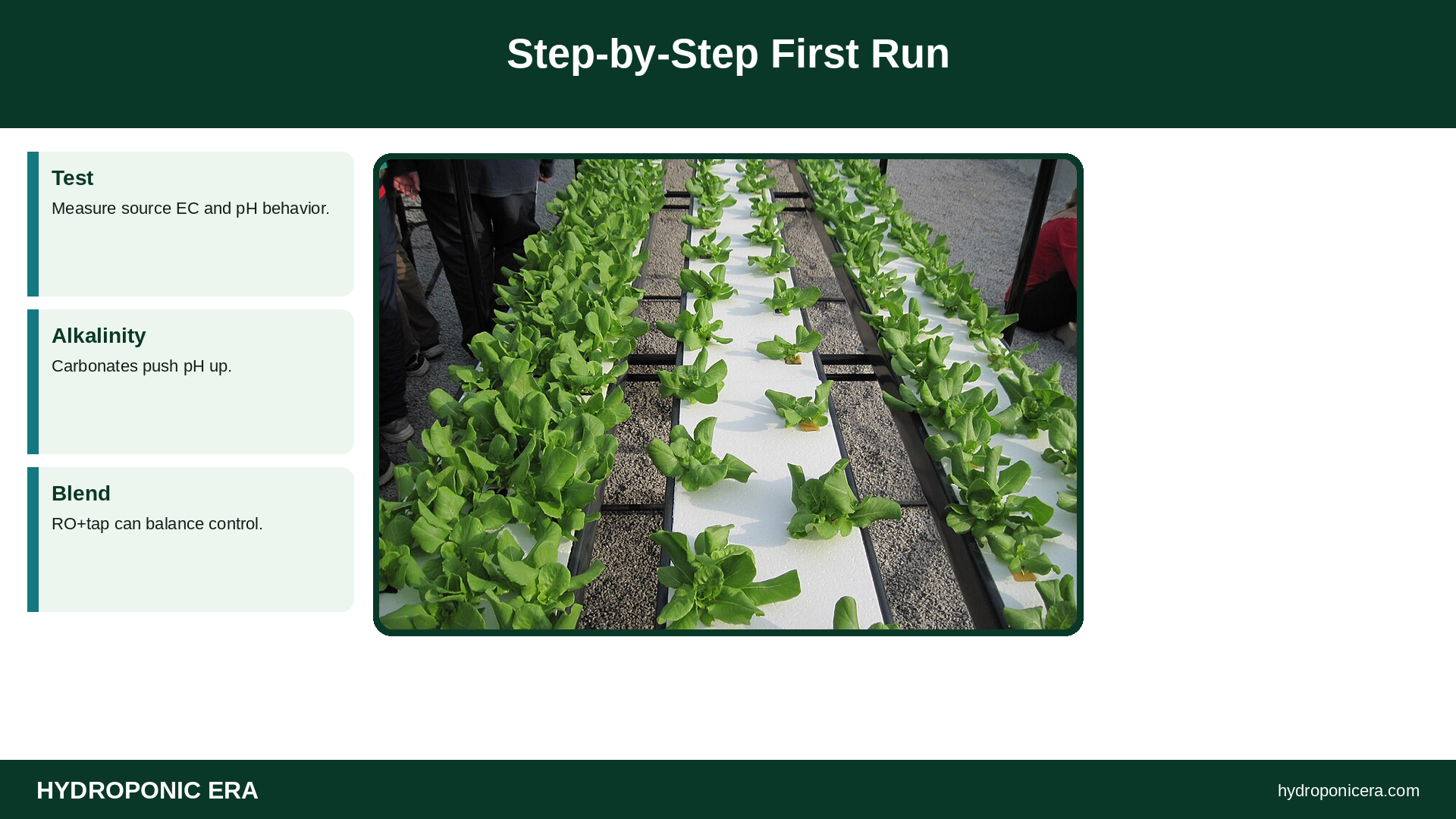
- Leak-test with plain water and no plants.
- Confirm fill height and complete drain.
- Mix nutrients; set pH; log EC.
- Transplant into rinsed/appropriate media.
- Start conservative flood frequency; watch for 48 hours.
- Adjust based on wilt vs waterlogging signals.
- Clean between crops thoroughly.
Extra depth for practitioners

Ebb and flow pairs well with crops that dislike constant stem wetness but want periodic fertigation. Peppers and tomatoes in media pots can thrive when irrigation is stable—important for blossom end rot prevention. See BER and Dutch bucket guides if you specialize in fruiting crops.
Power outages freeze timers. Battery backup for controllers, or manual watering plans, protect against dry-out. The wilting article’s diagnostic order applies when floods fail.
Sanitation: media reuse decisions depend on disease history. When in doubt after root rot, replace media and sanitize trays using the cleaning guide and Kentucky hydroponic root disease prevention themes.
FAQs

Is ebb and flow good for beginners?
Yes if you can manage leaks and timers. It is more hardware than Kratky, more flexible for media crops than basic jars.
Clay pebbles or coco?
Both can work. Coco holds more water; pebbles drain faster. Match timer to media—see coco article and media guide.
How long should a flood last?
Long enough to wet the root zone, short enough to drain fully. Exact minutes depend on tray plumbing—observe, do not copy strangers blindly.
Can I run NFT and ebb-flow on one reservoir?
Advanced plumbing can share reservoirs, but beginners should master one loop first to avoid cross-failures.
Why do plants wilt with a working pump?
Drain clogs, channeling in media, heat, or root disease can still wilt plants. Diagnose systematically.
Practice log and next steps
Keep a simple logbook for this topic: date, meter readings when relevant, what you changed, and what the plants did over the next three to seven days. Hydroponics rewards slow feedback loops more than frantic daily recipe rewrites.
When in doubt, return to calibrated pH and EC, root inspection, and light adequacy before buying another bottle. Extension hydroponic and plant nutrition resources emphasize fundamentals for a reason.
Link outward to the matching HydroponicEra cluster pages so readers can continue into systems, water, crops, or troubleshooting without dead ends. Internal links are part of topical authority, not decoration.
Sanitation and opaque reservoirs prevent many secondary problems that look like nutrient mysteries. Clean systems make diagnosis clearer.
If you sell produce or teach workshops, document procedures. Consistency protects customers and your future self.
Field notes
Photograph your timer settings. After power blips, people reprogram incorrectly and blame nutrients for wilt.
Install a manual bypass or watering can protocol for outages. Media systems dry faster than DWC during multi-hour failures.
Check that return lines cannot siphon the reservoir empty after pumps stop—plumbing details matter.
Start seedlings on a nursery tray before full flood height to avoid washing plugs sideways.
Cycle-ready reminder
Readers evaluating this topic should also cross-check related HydroponicEra cluster articles on water chemistry, system choice, and troubleshooting so advice stays connected rather than isolated tips. Measure first, change one major variable at a time, and keep notes through at least one full crop cycle before declaring a method a failure. University extension hydroponic and plant nutrition pages remain the external evidence backbone whenever a claim needs grounding beyond grower habit.
Readers evaluating this topic should also cross-check related HydroponicEra cluster articles on water chemistry, system choice, and troubleshooting so advice stays connected rather than isolated tips. Measure first, change one major variable at a time, and keep notes through at least one full crop cycle before declaring a method a failure. University extension hydroponic and plant nutrition pages remain the external evidence backbone whenever a claim needs grounding beyond grower habit.
Readers evaluating this topic should also cross-check related HydroponicEra cluster articles on water chemistry, system choice, and troubleshooting so advice stays connected rather than isolated tips. Measure first, change one major variable at a time, and keep notes through at least one full crop cycle before declaring a method a failure. University extension hydroponic and plant nutrition pages remain the external evidence backbone whenever a claim needs grounding beyond grower habit.
Sources
- Oklahoma State University Extension — Hydroponics
- University of Georgia Extension — B1314: Soilless Growing Media
- University of Florida IFAS — HS1279: Leafy Greens in Hydroponics and Protected Culture for Florida
- University of Kentucky Greenhouse Horticulture — Root disease management in hydroponic systems (PDF)
- Michigan State University Extension — Hydroponics as an agricultural production system
- Oklahoma State University Extension — Electrical Conductivity and pH Guide for Hydroponics
3 thoughts on “Ebb and Flow Hydroponics: Flood and Drain Guide”