
Can hydroponics be used for horticultural therapy? Yes. Horticultural therapy is plant-based activity led by a trained horticultural therapist toward set treatment goals, and an indoor hydroponic garden can be the activity. A 2025 pilot study found home hydroponic gardening improved mental wellbeing and quality of life in cancer patients. Solo home growing is wellbeing gardening, not formal therapy.
Key takeaway: Horticultural therapy needs a trained therapist and a treatment plan; hydroponics makes plant care possible indoors, year-round and without bending.
| Term | Who leads it | Goal |
|---|---|---|
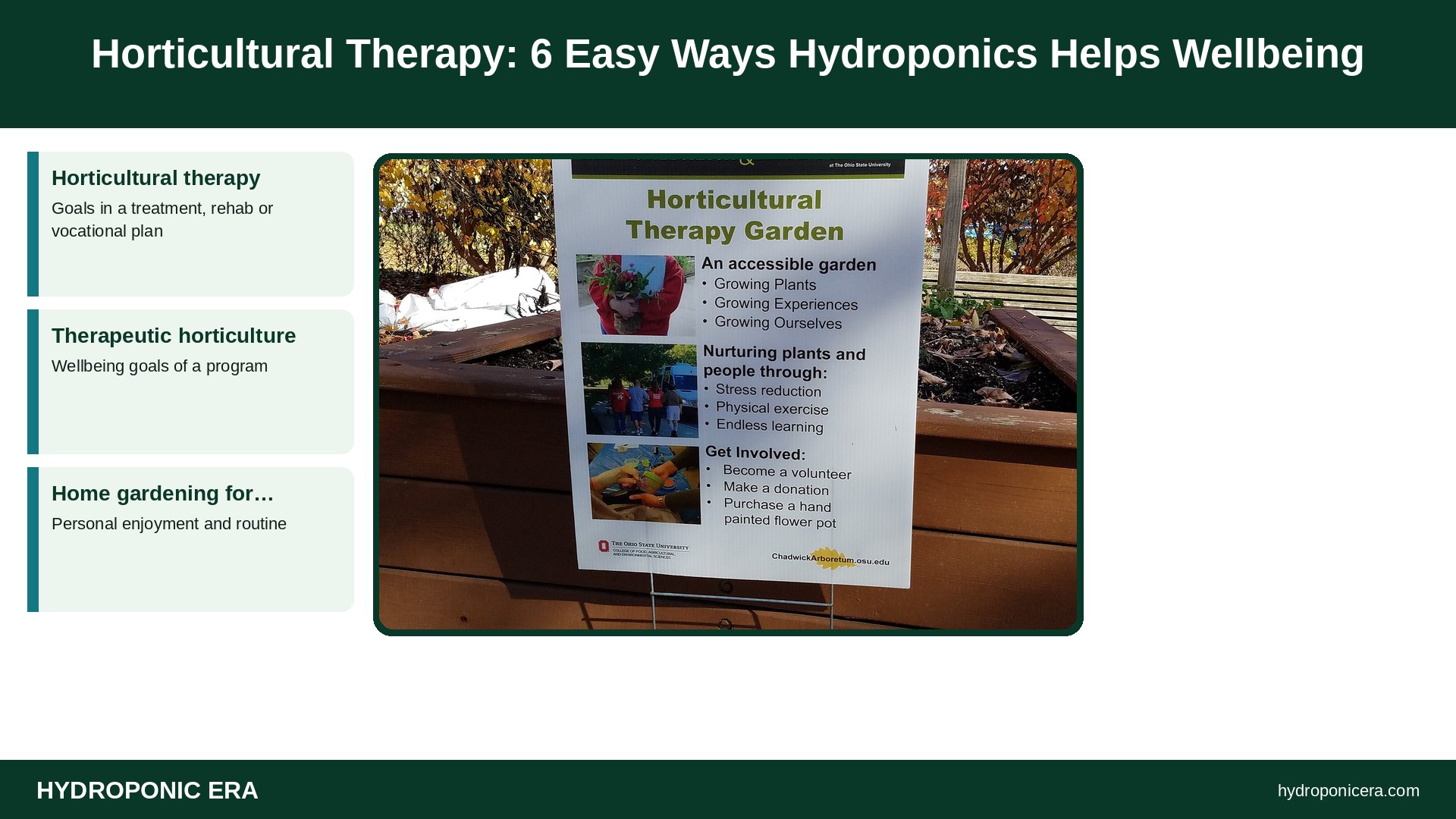
| Horticultural therapy | Registered or board-certified horticultural therapist | Goals in a treatment, rehab or vocational plan |
| Therapeutic horticulture | Therapist or trained professional | Wellbeing goals of a program |
| Home gardening for wellbeing | You | Personal enjoyment and routine |
What Is Horticultural Therapy?
A clinical use of gardening. The American Horticultural Therapy Association (AHTA) defines horticultural therapy as participation in horticultural activities facilitated by a registered horticultural therapist to meet specific goals in an established treatment, rehabilitation or vocational plan. AHTA stresses that the process itself, not the harvest, is the therapeutic activity.
How Is Horticultural Therapy Different From Therapeutic Horticulture?
Goals and leadership differ. AHTA says horticultural therapy serves individual goals in a treatment plan and documents outcomes. Therapeutic horticulture can be led by a therapist or other trained professional and supports a program’s broader wellbeing goals. Both involve a participant with an identified illness, disability or life circumstance.
What Does Research Show About Gardening and Health?
Consistently positive, with caveats. A 2017 meta-analysis by Soga, Gaston and Yamaura in Preventive Medicine Reports pooled 22 studies, including horticultural therapy. It found a significant positive effect of gardening on outcomes such as depression, anxiety, life satisfaction and sense of community. The effect remained after adjusting for publication bias, though sizes varied by group.
Has Hydroponic Gardening Been Studied for Wellbeing?
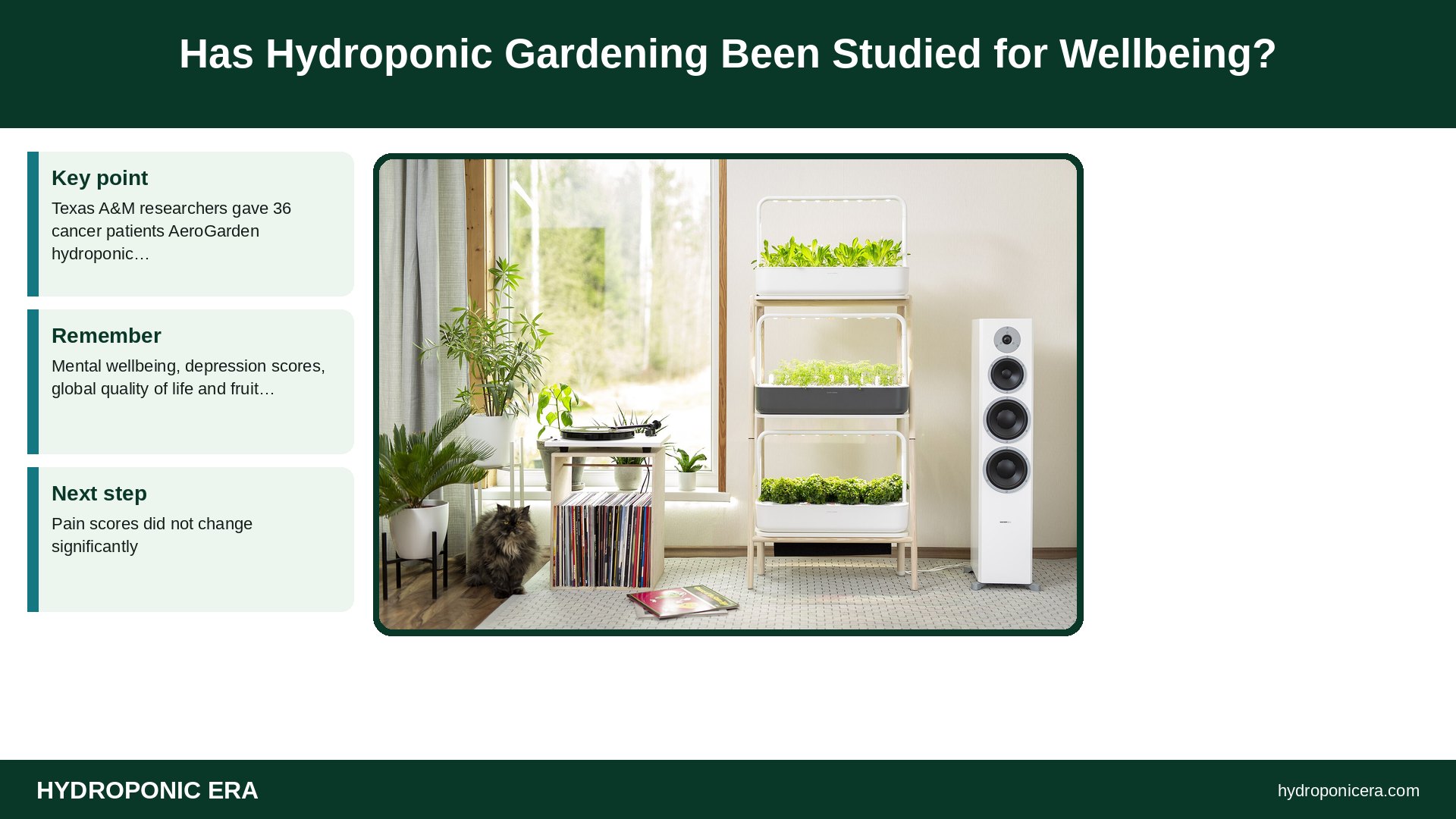
In a small pilot, yes. Texas A&M researchers gave 36 cancer patients AeroGarden hydroponic systems with LED lights and salad-green seed pods for 8 weeks at home. Mental wellbeing, depression scores, global quality of life and fruit and vegetable intake improved significantly. Pain scores did not change significantly.
The authors note no control group and possible self-selection, so treat the result as promising, not proven. For similar countertop kits, see our AeroGarden troubleshooting guide.
Why Does Hydroponics Suit Horticultural Therapy?
It removes common barriers. The Texas A&M team chose hydroponics as an indoor alternative to traditional gardening, usable by people with no experience. Units sit at table height, avoid soil handling and run under grow lights in any season. That makes plant care possible for people with limited mobility, small homes or harsh winters.
- Pick a countertop or table-height unit with a built-in light.
- Start with fast greens or herbs for quick visible progress.
- Set a simple routine: check water, observe growth, harvest.
- Keep a log or photo journal to track progress.
- Ask a therapist to set goals if the garden is part of treatment.
For easy first crops, browse our indoor herb garden guide or the passive Kratky method.

How Do You Become a Horticultural Therapist?
Through education and supervised practice. AHTA’s definition calls for at least a bachelor’s degree with coursework in plant science, human science and horticultural therapy, plus a 480-hour supervised internship. AHTA stopped accepting new HTR (Horticultural Therapist-Registered) applications on July 1, 2026, and says the HT-BC board certification will replace it.
Can You Practice Horticultural Therapy at Home?
You can garden for wellbeing at home, but the formal kind requires a trained therapist and a plan. AHTA emphasizes appropriate training to keep participants safe. If you are recovering from illness or managing a mental health condition, pair home growing with your care team instead of replacing treatment.
Which Crops Work Best for a Wellbeing Hydroponic Garden?
Fast, forgiving leafy greens. The Texas A&M pilot used kits of heirloom salad greens, and participants planted, tended and harvested them on their own. Lettuce, basil and other herbs show progress within days, which keeps motivation up. Harvesting and eating the crop also links the activity to diet, one of the outcomes that improved.
Families can share the routine too; see our hydroponics with kids projects.
What Are the Limits of the Evidence?
Studies are small and varied. The meta-analysis found effect sizes differed across subgroups and detected publication bias before adjustment. The hydroponic pilot had 36 participants, lasted 8 weeks and lacked a control group, and its authors call for larger, longer studies. Present gardening as a supportive activity, not a cure.
FAQ About Horticultural Therapy
Who can provide horticultural therapy?
A registered or board-certified horticultural therapist, per AHTA.
Does hydroponics count?
Yes, if a therapist uses it toward treatment goals.
What did the hydroponic pilot measure?
Wellbeing, depression, quality of life, diet and pain over 8 weeks.
Is gardening proven to help depression?
A meta-analysis found positive effects; more trials are needed.
What credential replaces HTR?
AHTA says the HT-BC board certification.
Sources
- American Horticultural Therapy Association — AHTA Definitions and Positions and HTR credential update
- Preventive Medicine Reports, Soga, Gaston and Yamaura (2017) — Gardening is beneficial for health: A meta-analysis
- Frontiers in Public Health, Roh et al., Texas A&M (2025) — Indoor hydroponic vegetable gardening to improve mental health and quality of life in cancer patients
- Photo credits (Wikimedia Commons, edited with titles): Horticultural Therapy Garden (24694163678) by Dan Keck from Ohio (CC0); Therapeutic Garden at VDNG 04.07.26 (photo 6) by Anon13131313 (CC0); Click & Grow Smart Garden 27 by Janar Raidla (CC BY-SA 4.0); Park bench with wheelchair space City Botanic Gardens Brisbane L1000297 by John Robert McPherson (CC BY-SA 4.0)