
What is the best hydroponics for seniors? The best hydroponics for seniors puts plants at a comfortable working height, about 24 to 36 inches (61 to 91 cm), with no heavy lifting. Countertop units, tabletop systems and waist-high channels cut bending and kneeling. Ohio AgrAbility, Illinois Extension and WSU Master Gardeners stress reach, seating and safe lifting.
Key takeaway: Choose waist-high or countertop systems, keep reservoirs light, sit while working and follow safe-lifting habits.
| Setup | Working height | Best for | Source basis |
|---|---|---|---|
| Countertop smart garden | Table or counter | Herbs, greens, limited mobility | Ohio AgrAbility containers |
| Tabletop Kratky tubs | Table height | Low-cost lettuce | Ohio AgrAbility containers |
| Waist-high NFT or channels | Standing or seated | Larger harvests | Ohio AgrAbility beds |
| Table-style system with leg room | Seated, wheelchair | Wheelchair users | Ohio AgrAbility, WSU |
| Rolling stand unit | Movable | Small spaces | Ohio AgrAbility |

Why Is Gardening Good for Seniors?
Strong evidence supports it. Illinois Extension cites a meta-analysis finding gardening can improve physical, psychological and social health, and another review of 77 studies suggesting gardening could be a social prescription for people with long-term conditions. It notes gardening brings contact with nature, exercise, social interaction and more fresh fruits and vegetables.
Why Choose Hydroponics for Seniors Instead of Soil Beds?
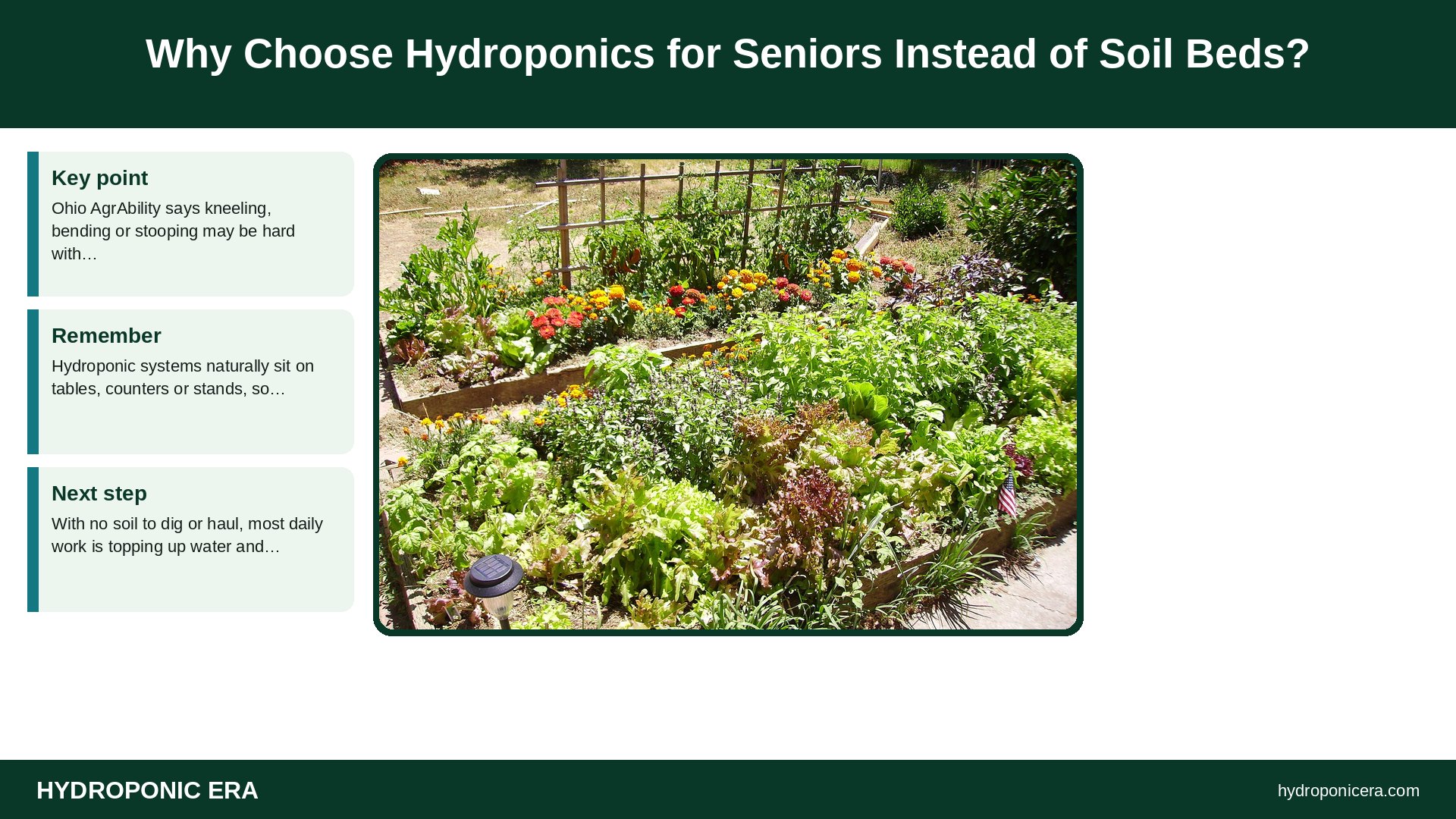
Height and lighter work. Ohio AgrAbility says kneeling, bending or stooping may be hard with chronic pain, and that raised, vertical and container gardens reduce that need. Hydroponic systems naturally sit on tables, counters or stands, so plants are already raised. With no soil to dig or haul, most daily work is topping up water and harvesting.
Start with our hydroponics for beginners guide.
What Height Works Best for Hydroponics for Seniors?
Roughly waist height. Ohio AgrAbility says container gardens should ideally sit at least 24 to 36 inches (61 to 91 cm) high, and beds can be waist height so gardeners stand or lean without bending. For wheelchair users, it suggests a table-like bed with leg room underneath, so you roll up as you would to a dinner table.
How Wide Should a Senior-Friendly Setup Be?
Narrow enough to reach the center. Illinois Extension recommends beds no more than 2 feet (61 cm) across when worked from one side and no more than 4 feet (1.2 m) across from both sides. Ohio AgrAbility adds that you should reach the back or middle comfortably without straining or over-reaching. Apply the same limits to hydroponic tables.
Which Systems Make the Best Hydroponics for Seniors?
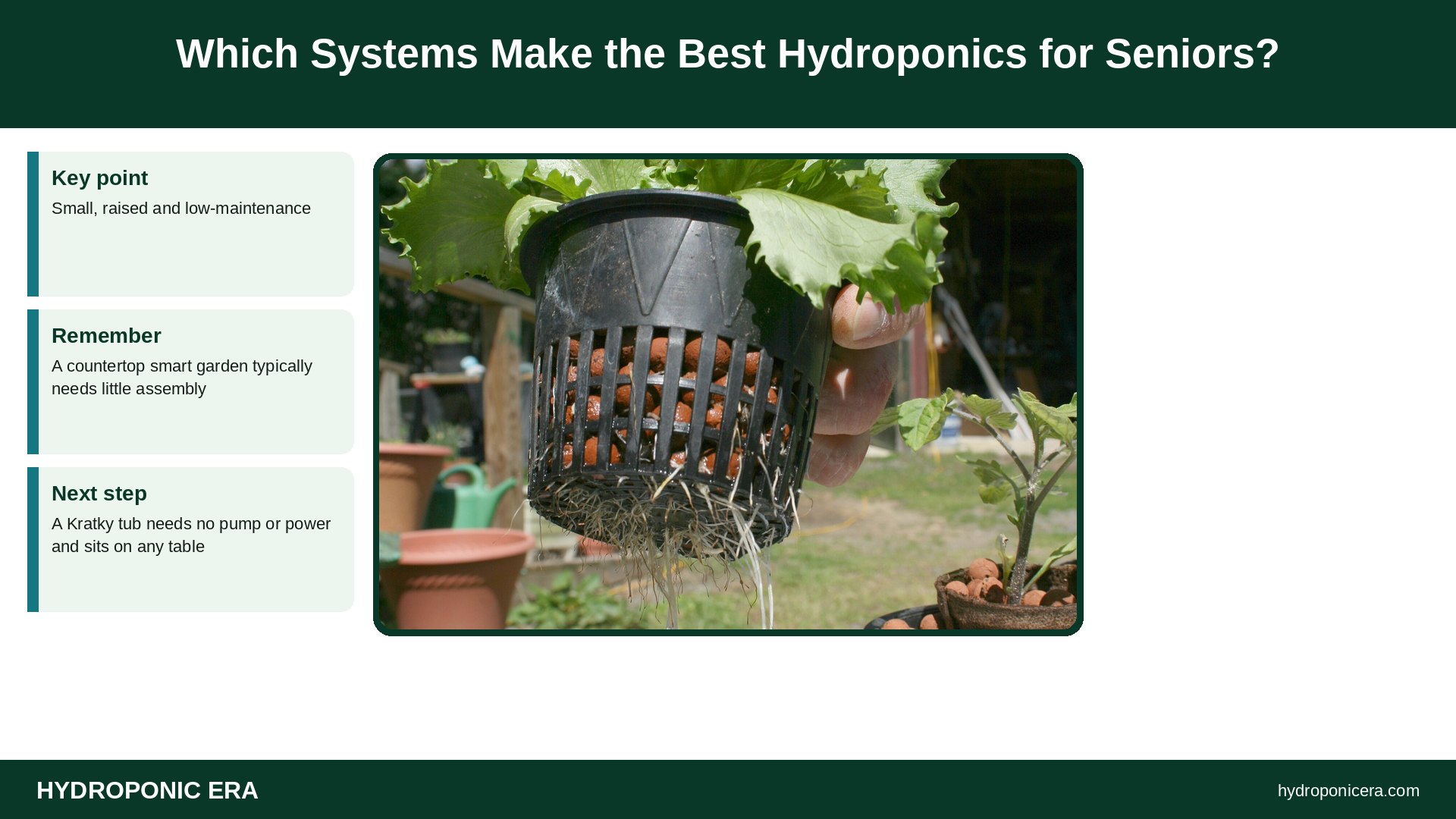
Small, raised and low-maintenance. A countertop smart garden typically needs little assembly. A Kratky tub needs no pump or power and sits on any table. Waist-high NFT channels or towers grow more but need some setup help. Pick by your space, budget and how often you can check water.
Compare options in our guides to smart gardens and the Kratky method.
How Can Seniors Avoid Lifting Heavy Reservoirs?
Never carry a full tank. Ohio AgrAbility warns that plants and water are heavy and suggests rolling stands. WSU Master Gardeners advise avoiding heavy or awkward lifts, using carts, lifting with the legs and never twisting at the waist. Fill and drain reservoirs in place with a pitcher or small pump.
What Safety Tips Matter Most for Hydroponics for Seniors?
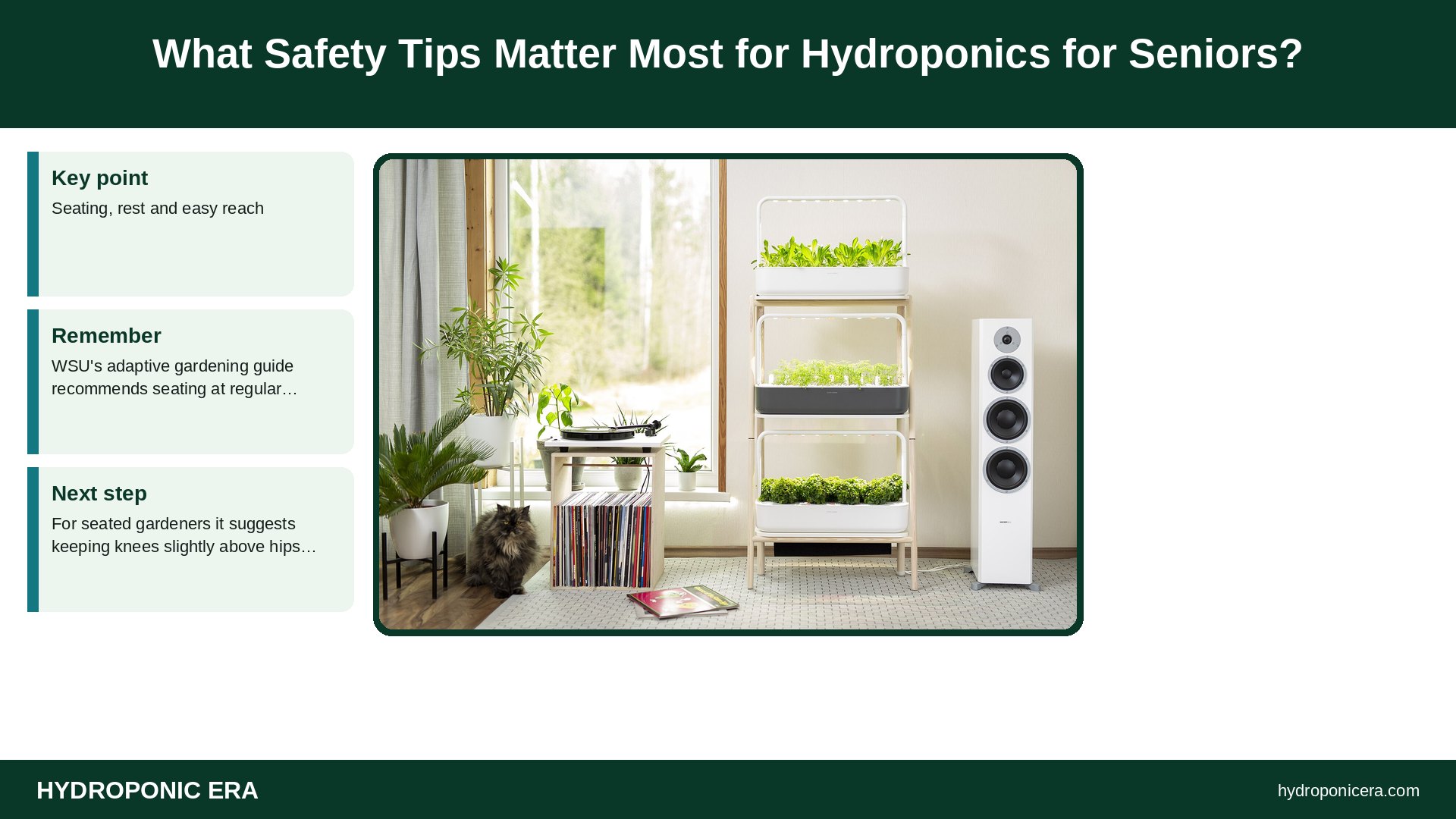
Seating, rest and easy reach. WSU’s adaptive gardening guide recommends seating at regular intervals, alternating tasks with rest, stretching first and keeping a phone or whistle nearby to call for help. For seated gardeners it suggests keeping knees slightly above hips and arranging work to minimize bending, reaching and twisting.
- Place the system at 24 to 36 inches (61 to 91 cm).
- Keep a chair beside the work area.
- Fill reservoirs in place, never carry them full.
- Keep tools and nutrients within easy reach.
- Work in short sessions with rests.
Can Hydroponics for Seniors Work in Care Homes?
Yes, with shared, raised setups. Illinois Extension points to the Chicago Botanic Garden’s Enabling Garden, which uses wide, level paths, containers, raised beds and vertical gardens within easy reach, plus adapted tools. Tabletop hydroponic units fit the same design ideas in common rooms, where residents can tend plants from a chair.
What Should You Grow First in Hydroponics for Seniors?
Leafy crops and herbs. Lettuce, basil, mint and chives stay compact and give frequent small harvests without ladders, staking or heavy pruning. Tall fruiting plants such as indeterminate tomatoes need trellising and overhead reaching, which WSU advises limiting to avoid back strain.
See our indoor herb garden guide for easy herbs.
FAQ About Hydroponics for Seniors
Can wheelchair users garden hydroponically?
Yes. Ohio AgrAbility recommends table-style beds with leg room underneath.
Is hydroponics expensive for retirees?
A Kratky tub costs little; smart gardens cost more but need less setup.
Do medications affect gardening safety?
WSU notes some medications raise sun sensitivity; ask your doctor or pharmacist.
How much water should I drink while gardening?
WSU suggests at least 8 ounces (240 mL) of fluid per hour in warm weather.
Sources
- Ohio AgrAbility, Ohio State University — Raised, Vertical and Elevated Beds and Container Gardens
- University of Illinois Extension — Raised Bed and Container Gardening for Accessibility (PDF)
- Washington State University Master Gardeners — A Guide to Garden Adaptations (PDF)
- Photo credits (Wikimedia Commons, edited with titles): “Life in Every Drop.” by Athram naneshwar (CC BY-SA 4.0); Raised bed by Srl (CC BY-SA 3.0); 2009-03-30 Lettuce roots by Ildar Sagdejev (Specious) (CC BY-SA 4.0); Click & Grow Smart Garden 27 by Janar Raidla (CC BY-SA 4.0)