
Can verticillium wilt affect hydroponic tomatoes? Rarely, but it can. Verticillium wilt is caused by a soilborne fungus that enters through the roots, so clean hydroponic systems with soilless media avoid the main source. Infection can still arrive through soil on boots, tools, seedlings or reused media, and NC State notes no treatment cures plants once they are infected.
Key takeaway: Verticillium wilt causes yellow V-shaped patches on lower leaves, afternoon wilting with overnight recovery and tan streaks inside the stem. It is a soil fungus, so hydroponics already removes most risk. Keep soil out of the system, choose varieties marked “V” and remove infected plants rather than trying to treat them.
| Factor | What sources report | Source |
|---|---|---|
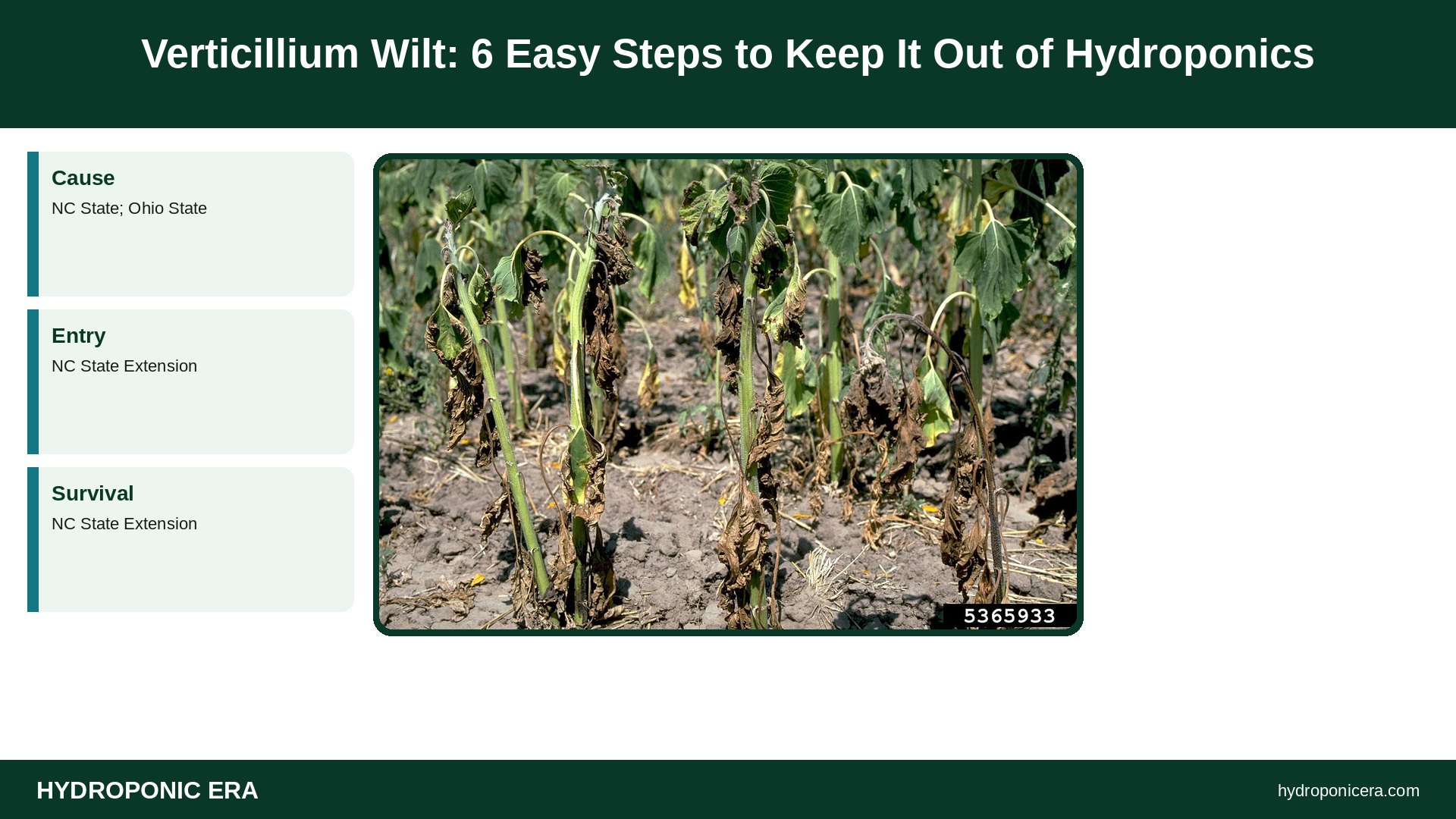
| Cause | Verticillium dahliae and V. albo-atrum | NC State; Ohio State |
| Entry | Roots, often through wounds | NC State Extension |
| Survival | Microsclerotia up to 10 years in soil | NC State Extension |
| Favored by | Cool soil and air temperatures | UC IPM |
| Key sign | V-shaped yellow leaf lesions | NC State; UC IPM |
| Resistance | Varieties marked “V” (Race 1) | WSU; UC IPM |
What Is Verticillium Wilt?
Verticillium wilt is a fungal vascular disease caused mainly by Verticillium dahliae and V. albo-atrum. NC State Extension says it affects more than 300 host families, with tomatoes, eggplant, potatoes and peppers among the most severely affected. The fungus grows inside the water-conducting tissue and blocks water and nutrient movement.
UC IPM says it seldom kills tomato plants outright but reduces vigor and yield. WSU adds that young plants may be killed, while older plants usually suffer slower growth and lower yields. Ohio State notes two races of V. dahliae infect tomatoes.
How Do You Identify Verticillium Wilt?
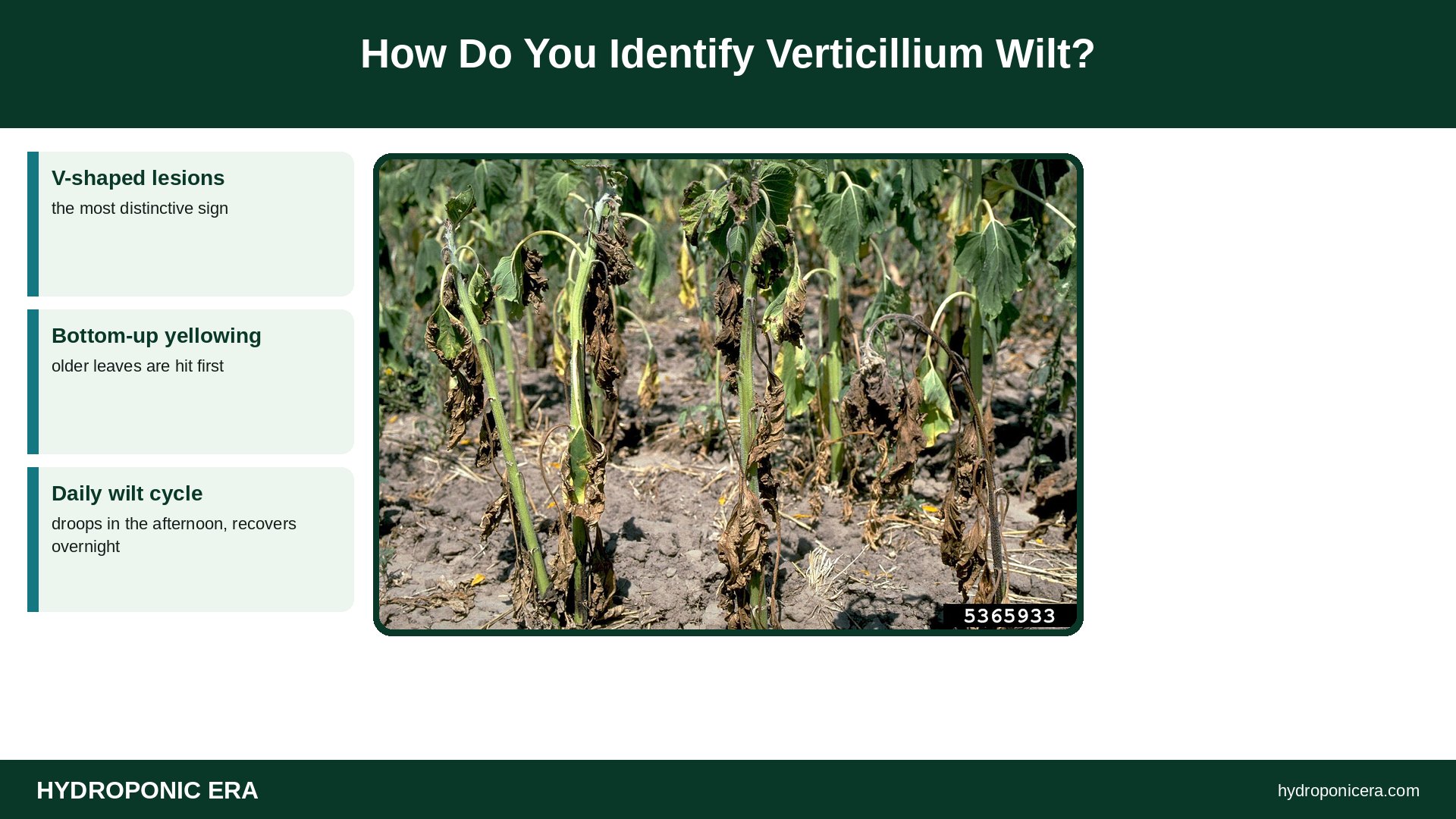
Identify verticillium wilt by yellow, V-shaped patches that start at the edge of older leaves and narrow inward, then turn brown. NC State says plants may wilt in the afternoon and recover by morning. Cutting the lower stem shows light tan to brown streaks in the vascular tissue, strongest near the base.
- V-shaped lesions: the most distinctive sign.
- Bottom-up yellowing: older leaves are hit first.
- Daily wilt cycle: droops in the afternoon, recovers overnight.
- Stem streaks: tan discoloration inside the base.
UC IPM says it is hard to tell from Fusarium wilt without a lab test. Compare symptoms with our guide to fusarium wilt in hydroponics and rule out water stress with why hydroponic plants wilt.
How Does Verticillium Wilt Get Into Hydroponics?
Verticillium wilt needs the fungus to reach roots. NC State says microsclerotia survive up to 10 years in soil and germinate when they sense root exudates, entering through root openings or wounds. In hydroponics, likely routes are field soil on shoes or tools, soil-grown transplants, garden compost and reused media from infected crops.
Ohio State lists Verticillium wilt among soilborne diseases found in long-term protected tomato production and advises cleaning soil from boots and equipment between fields and high tunnels. The same habit protects a hydroponic room: keep outdoor soil out of the system.
How Do You Prevent Verticillium Wilt in Hydroponics?
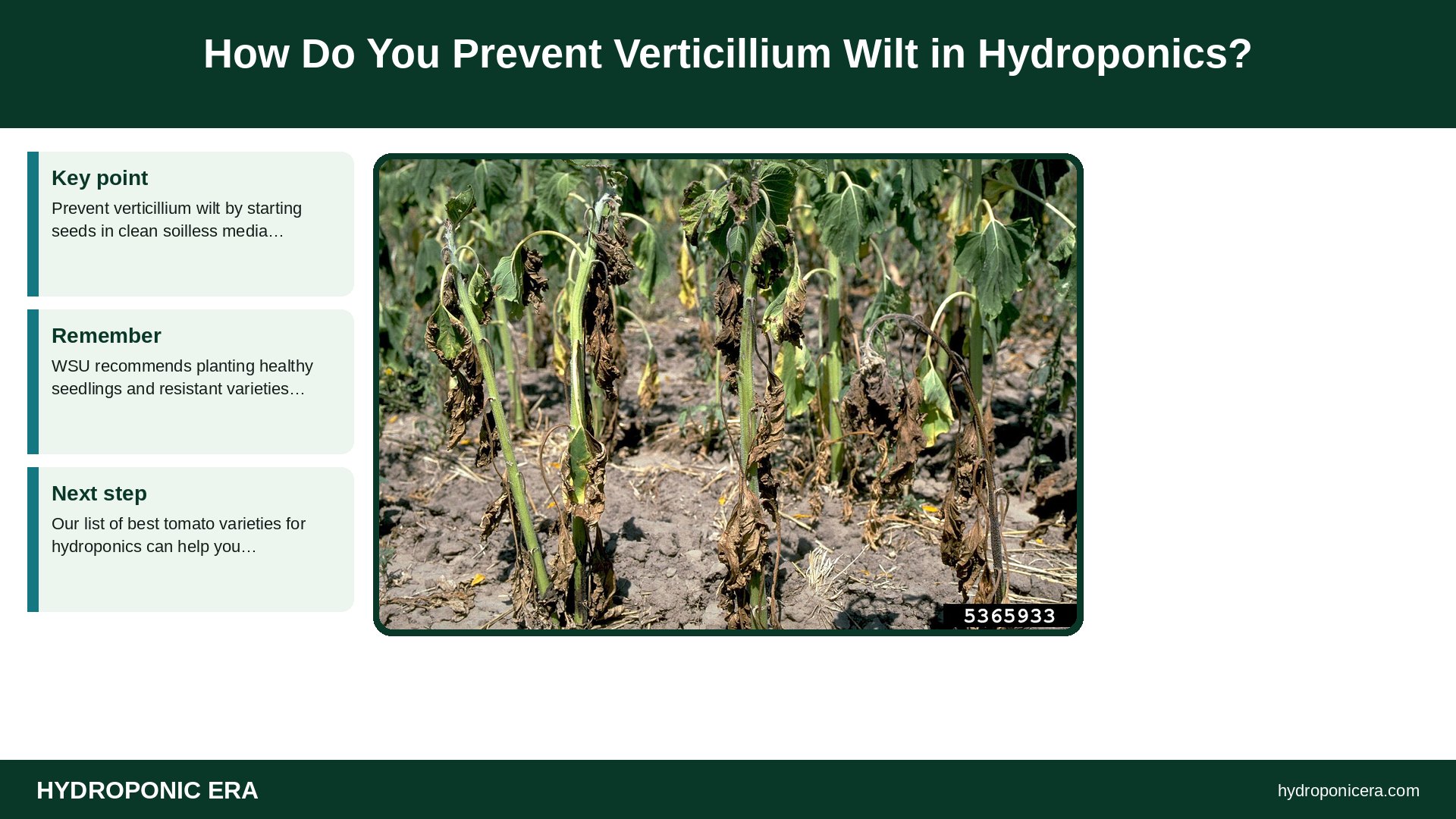
Prevent verticillium wilt by starting seeds in clean soilless media, choosing tomato varieties labeled “V” for resistance, keeping soil and soil-grown plants away from the system, and cleaning boots and tools. WSU recommends planting healthy seedlings and resistant varieties, and controlling nightshade weeds that can host the fungus.
- Start seeds in new rockwool, coco or other soilless plugs.
- Choose varieties with “V” in the disease code.
- Do not bring garden soil or compost into the grow room.
- Clean boots and tools after working outdoors.
- Replace or sterilize reused media.
- Remove debris from infected crops promptly.
Our list of best tomato varieties for hydroponics can help you shortlist resistant types.
Can You Cure Verticillium Wilt in Hydroponic Plants?
No. NC State Extension says that once plants are infected, it is impossible to eradicate the disease with treatment, and WSU recommends no chemical controls for home growers. Remove infected plants, roots and media, and clean the system. Keep healthy neighbors well fed and unstressed while you watch them.
| Action | Purpose | Source |
|---|---|---|
| Confirm with a lab | Separate from Fusarium wilt | UC IPM |
| Remove infected plants and roots | Limit fungus buildup | WSU; Ohio State |
| Discard, do not compost | Avoid recycling the fungus | WSU |
| Clean equipment | Stop soil movement | UC IPM; Ohio State |
After removal, follow our guide to cleaning and sterilizing a hydroponic system before replanting.
Which Hydroponic Crops Get Verticillium Wilt?
Tomatoes, eggplant, peppers and potatoes are most severely affected, says NC State, with strawberries, cucumbers and cabbage-family crops also susceptible. WSU lists celery, lettuce, peas, beans and asparagus as Verticillium-resistant vegetables. That makes leafy greens a safer crop if a room has a history of the disease.
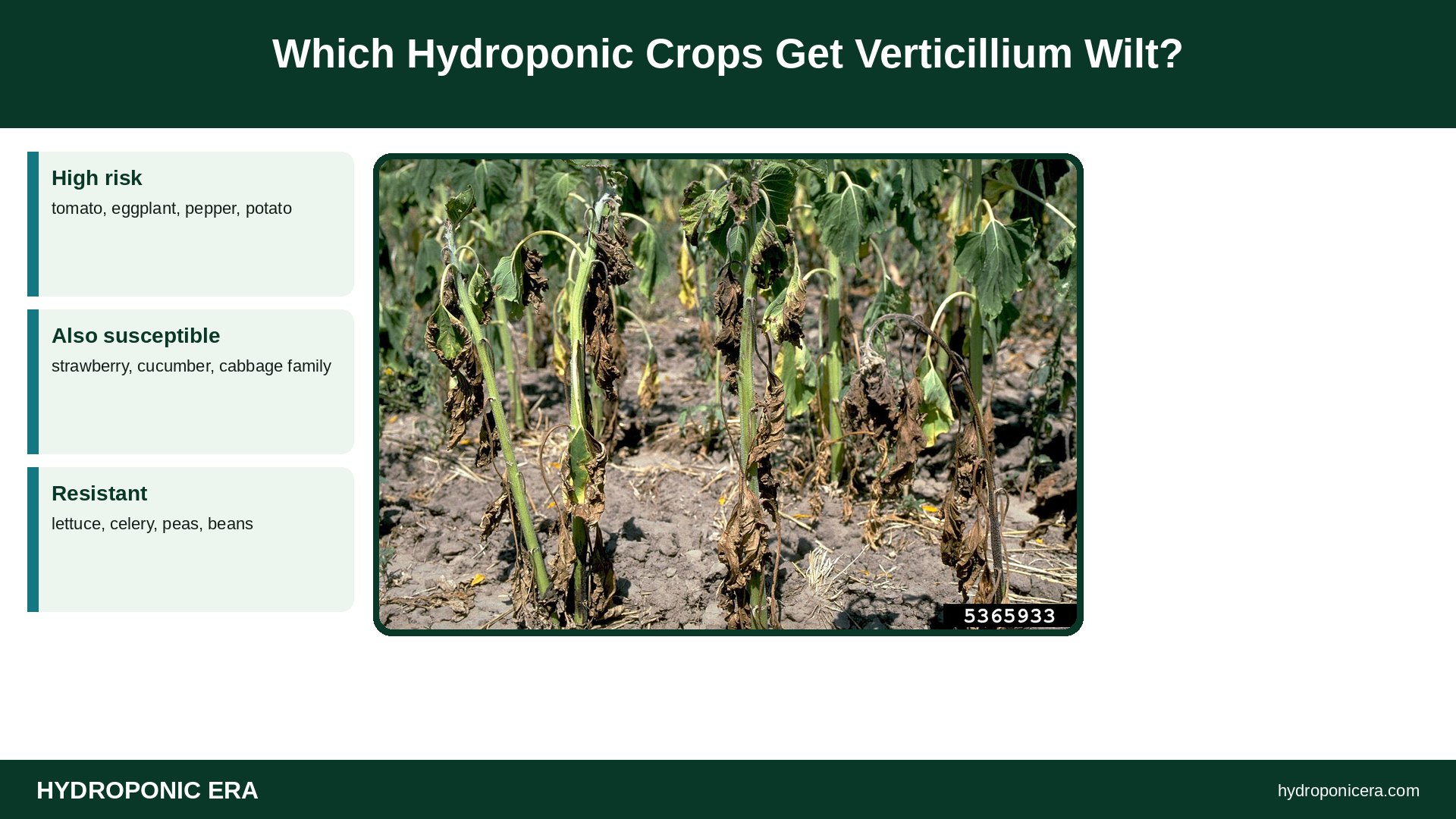
- High risk: tomato, eggplant, pepper, potato.
- Also susceptible: strawberry, cucumber, cabbage family.
- Resistant: lettuce, celery, peas, beans.
What Does “V” Mean on Tomato Seed Packets?
The “V” code means the variety has resistance to Verticillium wilt, according to WSU. UC IPM notes that resistant cultivars work against Race 1, and no commercial resistance to Race 2 is available. Ohio State says Verticillium and Fusarium resistance is built into most modern tomato varieties.
How Is Verticillium Wilt Different From Root Rot in Hydroponics?
Root rot shows up in the roots first: they turn brown, soft and slimy, often with a bad smell, and the whole plant wilts. With a vascular wilt, roots can look fairly normal while lower leaves yellow in V-shapes and the stem shows tan streaks inside. Checking both roots and stems narrows the cause quickly.
- Root rot: brown, slimy roots and warm, low-oxygen solution.
- Vascular wilt: streaked stem tissue and V-shaped leaf patches.
- Water stress: wilting that fixes itself after the pump or timer is fixed.
Ohio State notes that several soilborne diseases can occur together in long-term protected tomato production. If symptoms do not match one pattern, a lab test is worth the cost before you replant.
FAQ About Verticillium Wilt
Is verticillium wilt common in hydroponics?
It is a soilborne disease, so it is uncommon in clean soilless systems.
Does verticillium wilt spread through nutrient solution?
Sources describe root infection from soil; keep soil and infected roots out of the system.
How long does verticillium wilt survive?
NC State says microsclerotia survive up to 10 years in soil.
Can tomatoes with verticillium wilt still produce fruit?
Yes, but UC IPM says vigor and yield drop.
Is lettuce safe to grow after verticillium wilt?
WSU lists lettuce among Verticillium-resistant vegetables.
Sources
- NC State Extension — Verticillium wilt of tomato and eggplant
- UC IPM — Verticillium wilt of tomato
- Washington State University Hortsense — Tomato: Verticillium wilt
- Ohio State University Extension — Soilborne diseases of tomato
- Photo credits (Wikimedia Commons, edited with titles): Verticillium wilt dahliae by Howard F. Schwartz, Colorado State University, Bugwood.org (CC BY 3.0 us)