
Are hydroponic vegetables GMO? No. Are hydroponic vegetables GMO just because they grow in water? No: hydroponics is a growing method, not a type of seed. A hydroponic tomato or lettuce is only genetically engineered if the seed variety itself was bioengineered, and genetically engineered lettuce, herbs, cucumbers and peppers are not sold. Most hydroponic crops come from the same conventional, hybrid or heirloom seeds used in soil.
Key takeaway: University of Georgia Extension states plainly that GMO lettuce does not exist and could not be bought even if you wanted it. Lettuce is the most common hydroponic crop, so for most home and commercial growers the answer to “are hydroponic vegetables GMO” is a clear no.
| Question | What sources report | Source |
|---|---|---|
| Is GMO lettuce sold? | No, it does not exist | University of Georgia Extension |
| Fresh GMO produce | Potatoes, summer squash, apples, papayas, pink pineapples | U.S. FDA |
| US bioengineered food list | Includes corn, soybean, canola, sugarbeet, potato | USDA AMS |
| Hybrid vs GMO | All GMOs are hybrids; not all hybrids are GMO | University of Georgia Extension |
| Home garden GM seed | Not sold to home gardeners (2023) | NC State Extension |
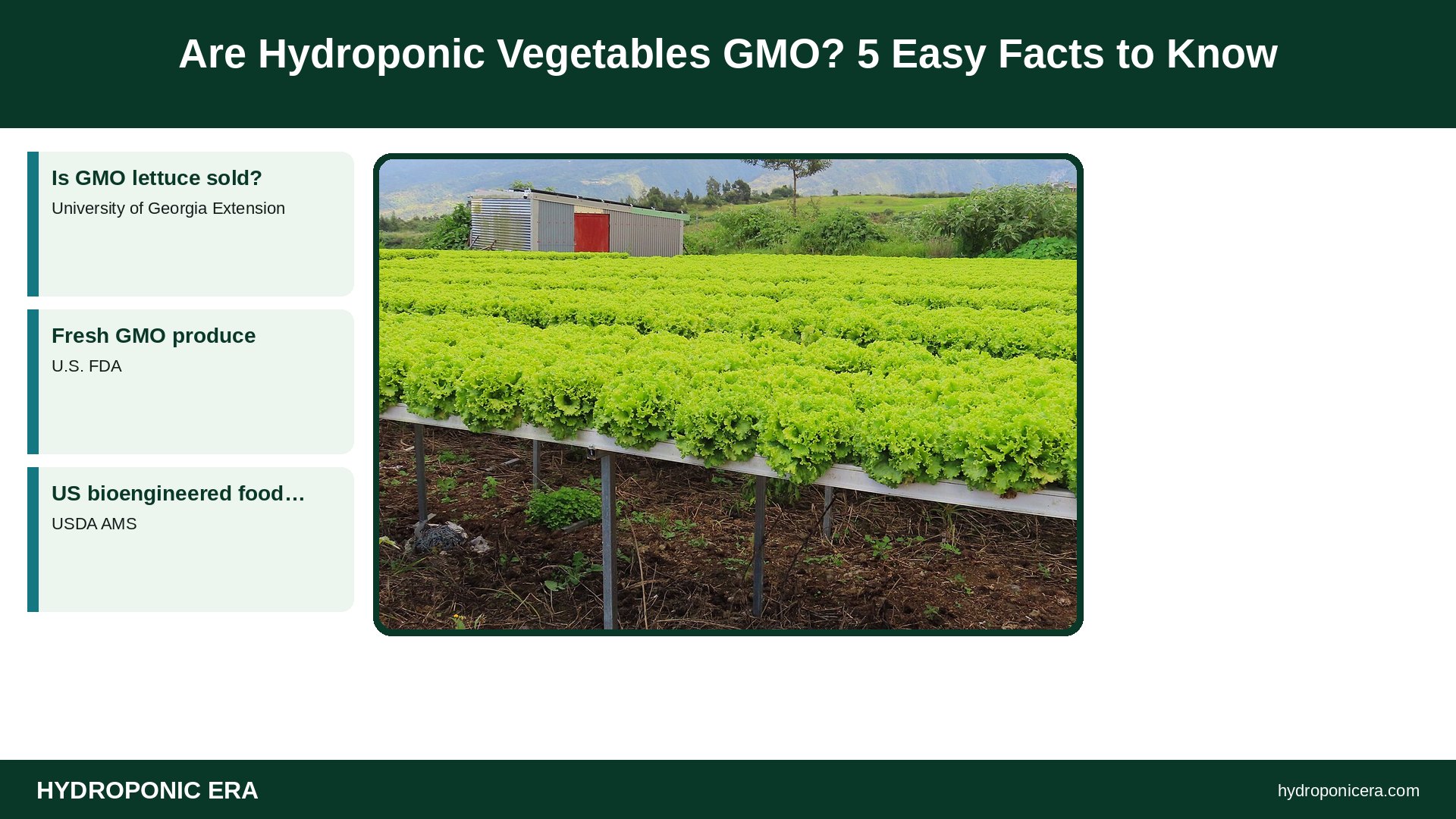
Are Hydroponic Vegetables GMO by Definition?
No. Hydroponics describes how roots are fed, using a nutrient solution instead of soil. Genetic engineering describes how a seed was bred. The U.S. Food and Drug Administration explains that genetic engineering and genome editing are plant breeding processes that use modern biotechnology to add desirable traits. Growing a plant in water does not change its genes.
That means the answer to “are hydroponic vegetables GMO” depends only on the variety planted. Our comparison of hydroponics vs soil explains what does change: the root zone, water use and feeding.
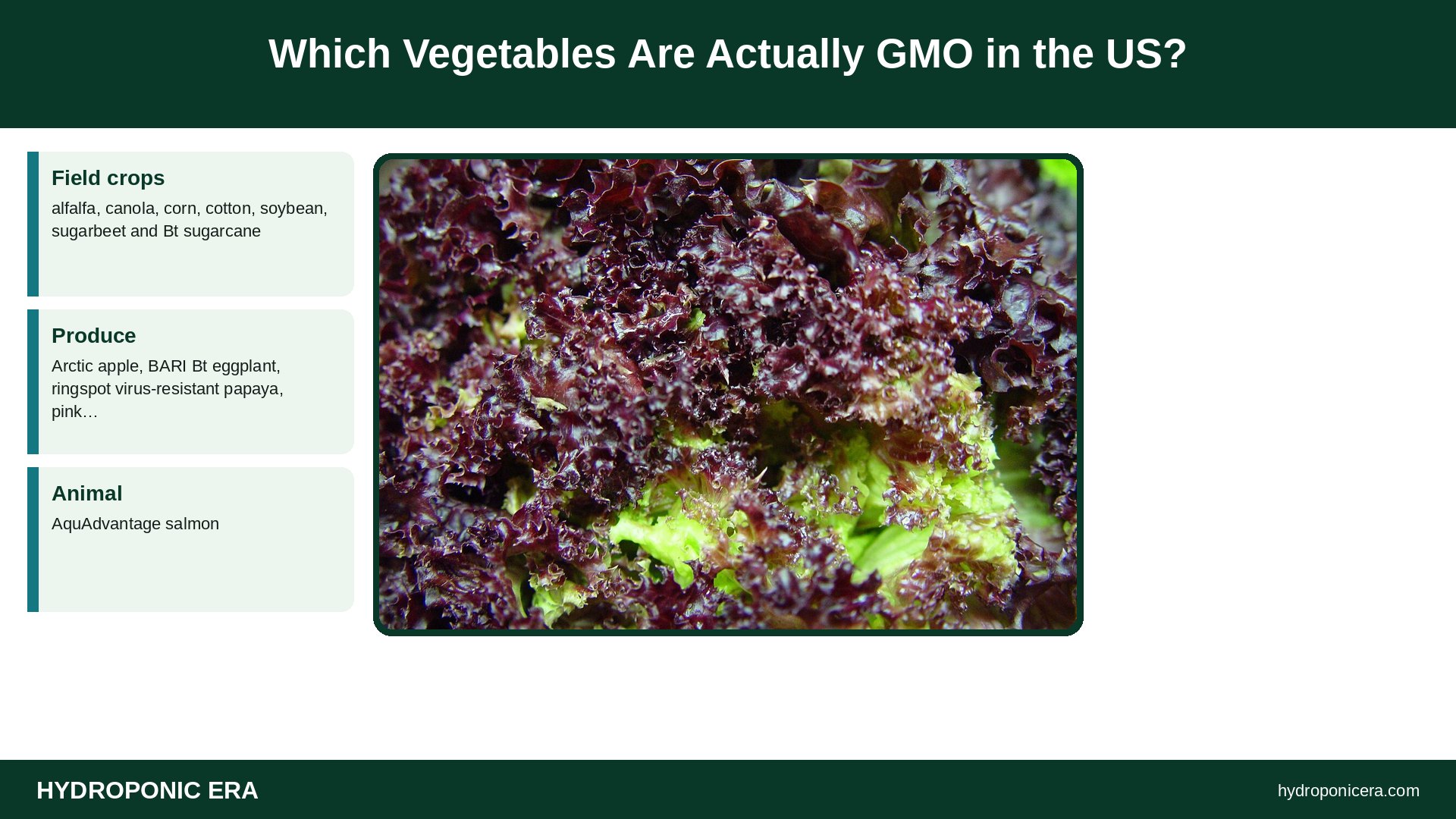
Which Vegetables Are Actually GMO in the US?
Very few fresh ones. The FDA says a few fresh fruits and vegetables are available in GMO varieties, including potatoes, summer squash, apples, papayas and pink pineapples. Most GMO crops are field crops such as corn, soybeans, canola and sugar beets that become ingredients or animal feed, not salad greens.
The USDA Agricultural Marketing Service keeps a List of Bioengineered Foods. It includes:
- Field crops: alfalfa, canola, corn, cotton, soybean, sugarbeet and Bt sugarcane.
- Produce: Arctic apple, BARI Bt eggplant, ringspot virus-resistant papaya, pink pineapple, potato and virus-resistant summer squash.
- Animal: AquAdvantage salmon.
Lettuce, spinach, kale, basil, cucumber, pepper and strawberry are not on that list.
Are Hydroponic Vegetables GMO if the Seeds Are Hybrids?
No. University of Georgia Extension explains that hybrid and GMO are often confused. All GMOs would be hybrids, but not all hybrids are GMO. A hybrid seed comes from crossing two parent plants, as breeders have done for generations. A seed packet labeled F1 is a hybrid, not a bioengineered variety.
If you prefer open-pollinated seed you can save, see our guide to heirloom seeds for hydroponics.
Can Home Gardeners Buy GMO Seeds?
Not in practice. A 2023 NC State Extension article says genetically modified seed was not sold to home gardeners, and lists only a handful of GM crops grown in the US, such as corn, soybeans, cotton, alfalfa, sugar beets, canola, papaya, squash and potato. It also notes the Flavr Savr tomato was approved but only marketed for three years.
So seed packets labeled “non-GMO” for lettuce or basil are not offering a special choice. Every packet of those crops is already non-GMO.
Why Do Shoppers Ask, Are Hydroponic Vegetables GMO?
Marketing is one reason. The NC State Extension article calls “GMO-free” seed labels on home garden seed a marketing strategy aimed at buyers who do not know that genetically engineered seed is not freely available to home gardeners. University of Georgia Extension makes the same point about “non-GMO” lettuce labels in stores.
Hydroponics also looks high-tech, with pumps, lights and nutrient solution, so people assume the plants are engineered too. The honest answer to “are hydroponic vegetables GMO” is that the method has nothing to do with it. When someone asks “are hydroponic vegetables GMO,” point them to the seed variety, not the growing system.
What About Gene-Edited and CRISPR Vegetables?
Gene editing is newer. University of Georgia Extension describes CRISPR as a technology that edits genes already in the organism, turning them on, off or deleting them. The FDA says genome editing is one of the tools breeders use to add desirable traits. These varieties are separate from the hybrid seeds most hydroponic growers use. Check the seed supplier’s description for a specific variety.
Are Hydroponic Vegetables GMO in Grocery Stores?
Very unlikely. University of Georgia Extension says the produce aisle is very unlikely to contain GMOs. Hydroponic lettuce, herbs, tomatoes and cucumbers sold in stores are grown from conventional varieties. The USDA list also helps regulated food companies decide whether they must make a bioengineered food disclosure.
- Lettuce and herbs: not on the USDA bioengineered list.
- Tomatoes and peppers: grown from conventional or hybrid seed.
- Strawberries: not on the bioengineered list.
- Potatoes and squash: GMO varieties exist, but are rarely grown hydroponically.
Taste and nutrition differences come from variety, light and feeding, not genes. Read more in hydroponic vs soil taste.
Can Hydroponic Vegetables Be Certified Organic?
In the US, some can. Organic is a separate label from GMO status, and it covers inputs and growing practices as well as seed. Our guide to USDA organic hydroponics explains the current status and what certifiers check before a hydroponic farm can use the organic seal.
FAQ About Whether Hydroponic Vegetables Are GMO
Are hydroponic vegetables GMO?
No; hydroponics is a growing method, and most crops grown this way have no GMO varieties.
Is hydroponic lettuce genetically modified?
No; University of Georgia Extension says GMO lettuce does not exist.
Are F1 hybrid seeds GMO?
No; hybrids come from crossing plants, not genetic engineering.
Which fresh vegetables have GMO versions?
The FDA lists potatoes and summer squash, plus some fruits.
Does hydroponic water change plant genes?
No; the nutrient solution feeds roots but does not alter DNA.
Are hydroponic vegetables GMO if grown in a vertical farm?
No; the farm type does not change the seed’s genetics.
Where can I check if a food is bioengineered?
The USDA AMS List of Bioengineered Foods.
Sources
- University of Georgia Extension — GMOs in Your Food
- NC State Extension — GMO-Free Seeds?
- U.S. FDA — GMO Crops, Animal Food, and Beyond
- U.S. FDA — Understanding New Plant Varieties
- USDA Agricultural Marketing Service — List of Bioengineered Foods
- Photo credits (Wikimedia Commons, edited with titles): Hydroponic lettuce @ Plaine des Cafres 01 by Rémih (CC BY-SA 4.0); Hydroponic lettuce leaves dark red by Leon Brooks (Public domain)