
How do you care for air plants? Air plant care comes down to bright indirect light, weekly soaking or misting, and fast drying. Soak or rinse about once a week, shake out the water, and let it dry within about 4 hours. Keep temperatures in the 65–85°F (18–29°C) range, per Penn State and UNH Extension.
Key takeaway: Air plant care works best with bright, indirect light, a weekly soak for 10–30 minutes, thorough drying afterward and good airflow. Curled, rolled or dull leaves usually mean thirst, while mushy bases mean the plant stayed wet too long.
| Need | Guideline | Source |
|---|---|---|
| Light | Bright, indirect, east or west window | UF/IFAS, UNH |
| Water | Soak 10–30 min weekly, or mist 2x week | Clemson, Penn State, UNH |
| Drying | Dry within about 4 hours after watering | Penn State, UNH |
| Temperature | Days 65–85°F (18–29°C), nights 50–65°F (10–18°C) | UNH, Penn State |
| Fertilizer | Monthly at 1/4 strength bromeliad or orchid food | Clemson, Penn State |
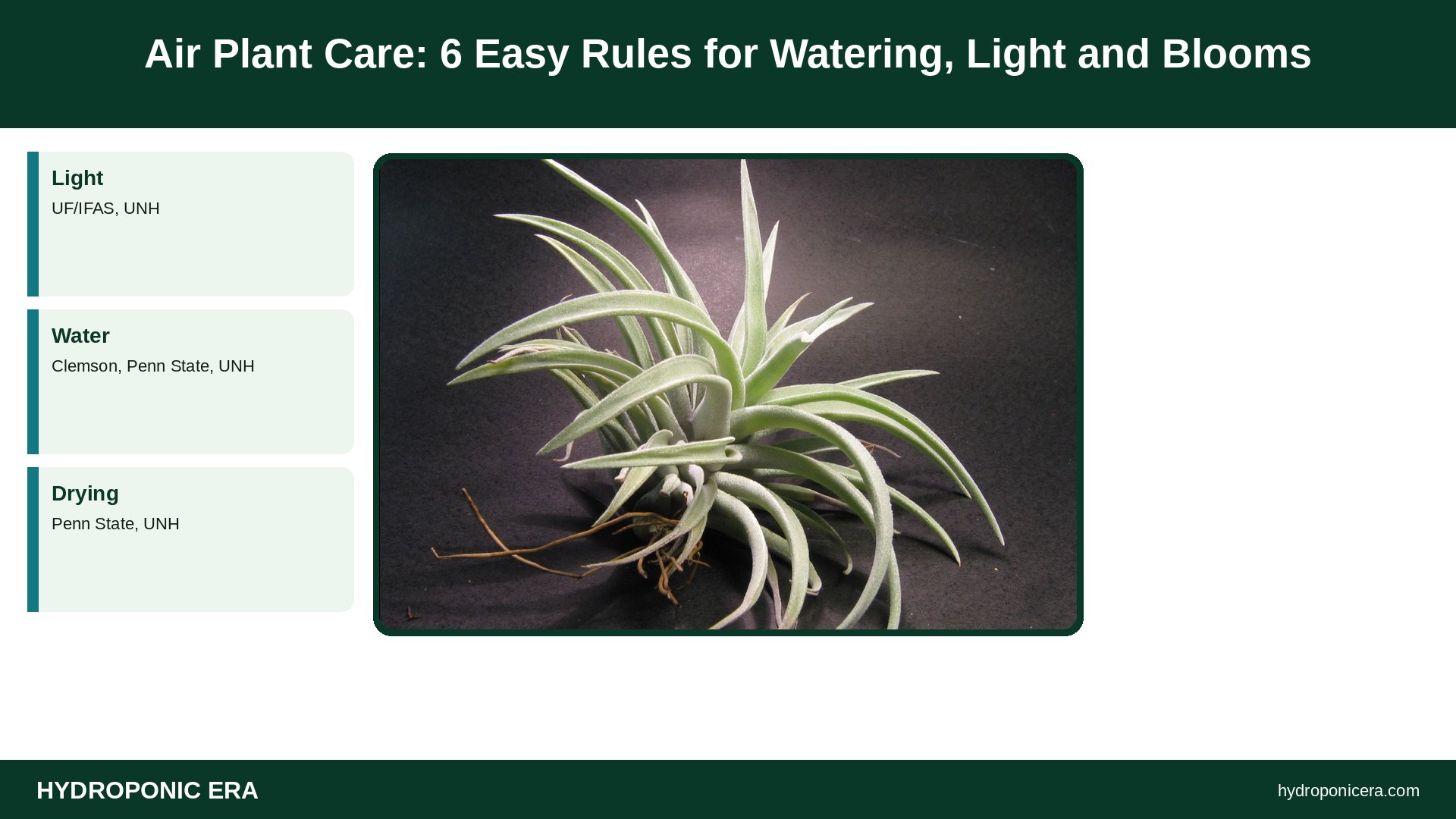
What Is an Air Plant?
Air plants are Tillandsia species, bromeliads that grow without soil and absorb water and some nutrients through scales on their leaves. In nature they cling to trees and rocks. At home, they are displayed on wood, in glass globes or in terrariums, as long as the arrangement allows quick drying.
Because the roots are small and mostly for attaching, watering style and airflow are the main parts of air plant care.
How Much Light Does Air Plant Care Require?
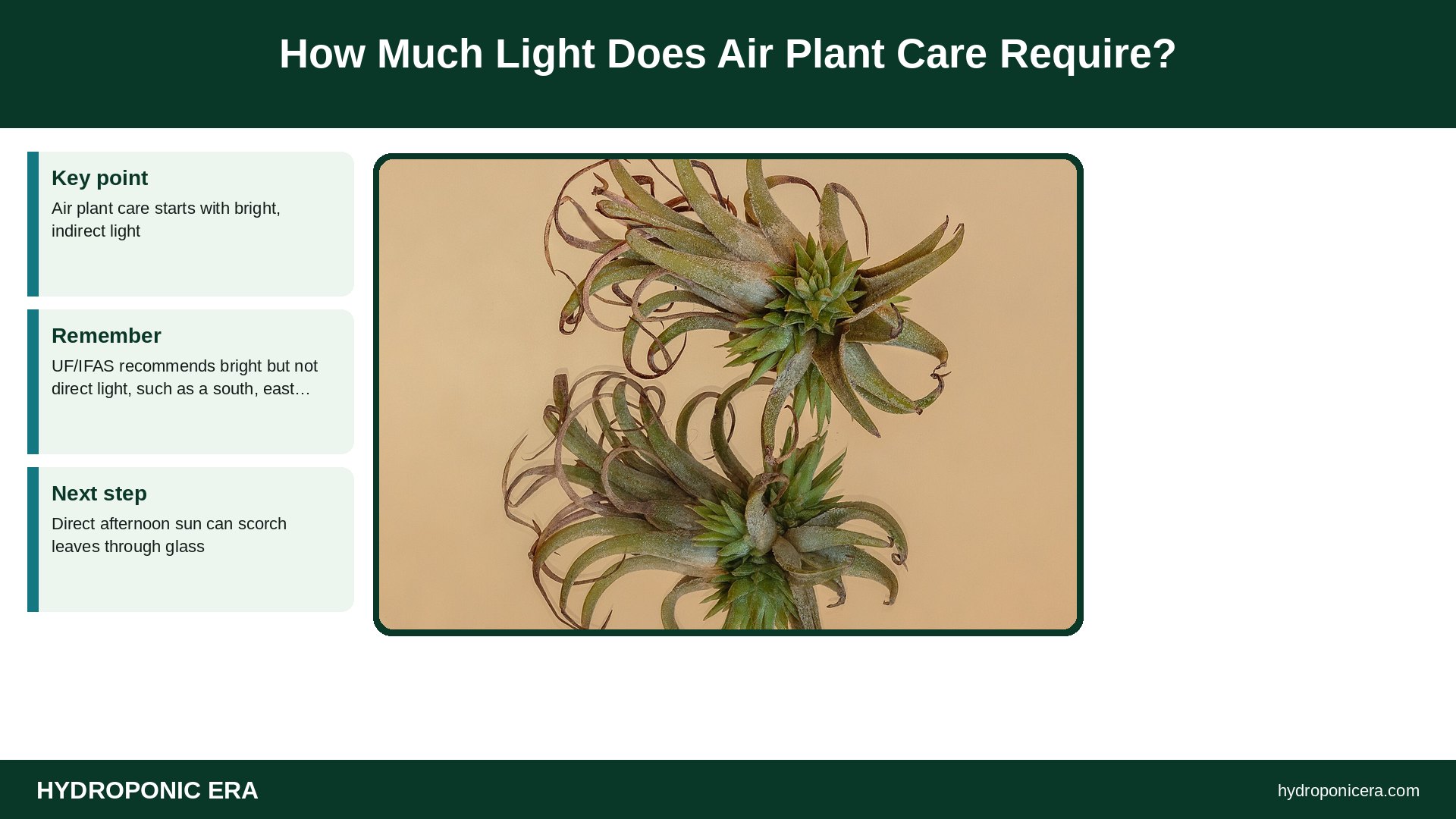
Air plant care starts with bright, indirect light. UF/IFAS recommends bright but not direct light, such as a south, east or west window, while UNH suggests east or west windows. Direct afternoon sun can scorch leaves through glass. If light is low, a small LED grow light works, as explained in our LED grow light guide.
For good air plant care, watch the signs. Too little light causes slow growth, pale or stretched leaves and loss of color. Signs of too much include bleached, crispy or burned tips.
How Often Should You Water in Air Plant Care?
For air plant care, water about once a week by soaking them for 10–30 minutes, shaking out the water and letting them dry. Clemson suggests 20–30 minutes weekly, UNH suggests 10–20 minutes one or two times a week, and Penn State suggests misting or rinsing twice a week or soaking weekly. Adjust to your home’s dryness.
- Submerge the plant in room-temperature water for 10–30 minutes.
- Lift it out, and shake gently so water drains from the center.
- Turn it upside down on a towel or rack.
- Let it dry in bright light with good airflow, ideally within about 4 hours.
- Return it to its holder only when completely dry.
Dry-air homes in winter may need more frequent watering. Humid bathrooms need less. Our humidity and VPD guide explains how air moisture changes plant needs.
What Water Is Best for Air Plant Care?
Rainwater, filtered water or tap water that has sat out all work for air plant care, while softened water is a poor choice because of its sodium. UNH notes air plants are sensitive to chlorine. Let tap water sit uncovered for a day, or use collected rain. See rainwater collection and chlorine and chloramine.
Never use water that was run through a salt-based softener, since sodium is a problem for most plants.
How Do You Spot Air Plant Care Mistakes?
Curled or rolled leaves, dull color and brown tips mean thirst, according to UF/IFAS and Clemson. Soft, mushy or blackened bases and leaves that fall out mean rot from staying wet too long. Soak a thirsty plant, but for rot, remove damaged leaves, dry the plant fully and improve airflow.
| Sign | Likely cause | Fix |
|---|---|---|
| Rolled or curled leaves | Thirst | Soak longer |
| Brown, crispy tips | Dry air or too much sun | Water more, move out of direct sun |
| Mushy or black base | Rot | Dry fully, improve airflow |
| Pale color | Low light | Move closer to a bright window |
Does Air Plant Care Include Fertilizer and Airflow?
Fertilizer is optional in air plant care, but monthly feeding helps. Clemson and Penn State suggest a bromeliad or orchid fertilizer at 1/4 strength, added to the soaking water. Good airflow speeds drying and prevents rot, so do not seal air plants in closed glass. Our airflow guide explains why moving air matters.
How Should You Display and Mount Air Plants?
Mount air plants on driftwood, cork, rock or in open holders where water cannot pool. UF/IFAS notes the mount should not hold water. Use non-toxic glue or wire, and avoid copper wire or treated wood, which can harm tillandsias. Never bury the base in soil or sand, because it will stay wet and rot.
Hanging globes are popular, but choose ones with a wide opening so you can remove the plant for watering and drying. Place the plant where you can reach it easily, because a plant that is awkward to water is a plant that gets forgotten.
What Seasonal Changes Does Air Plant Care Need?
In summer, plants dry quickly and may need more frequent watering or misting. In winter, heated indoor air is dry, but cooler windowsills slow growth and drying, so check the plants before every soak. Keep them away from cold glass and heating vents, and move them back from windows on freezing nights, since tillandsias do not tolerate frost.
Adjust your schedule to the plant, not the calendar. Feel the leaves, watch the color and note how long it takes to dry. A simple weekly check keeps air plant care steady through the year.
Do Air Plants Bloom After Good Air Plant Care?
Yes. With steady air plant care, a mature plant blooms once, and the mother plant slowly dies after, according to UF/IFAS. Before and after blooming, it produces small offsets called pups. Once pups are large enough to handle, you can gently separate them. Keep watering the mother until she fades, and the pups carry on.
FAQ About Air Plant Care
How often should I water air plants?
Soak weekly for 10–30 minutes or mist twice a week, then dry within about 4 hours.
Can air plants live without soil?
Yes. They absorb moisture through leaf scales and use roots to anchor.
Why are my air plant’s leaves curling?
Curling usually means thirst, so soak it.
Do air plants need sunlight?
They need bright, indirect light, not direct sun.
Can I keep air plants in a closed terrarium?
Only if you can remove them to dry. Poor airflow causes rot.
Sources
- UF/IFAS Gardening Solutions — Air plants
- Penn State Extension — Tillandsias as houseplants
- Clemson HGIC — Air plants
- UNH Extension — How do you grow air plants?
- Photo credits (Wikimedia Commons, edited with titles): Tillandsia harrisii (43971695) by James Ho (CC BY-SA 2.0); Tillandsia ionantha (luchtplantje). 20-12-2020. (actm.) 01 by Agnes Monkelbaan (CC BY-SA 4.0); 2008-09-20 Thermometer reading by Ildar Sagdejev (Specious) (CC BY-SA 4.0); Electrical conductivity meter by Nuno Nogueira (Nmnogueira) (CC BY-SA 2.5)