Fulvic and humic acids are organic compounds from decomposed plant matter, sold as supplements that may improve nutrient uptake and root growth. In hydroponics, fulvic acid is the more practical choice because it stays soluble across a wide pH range, while humic acid can precipitate in acidic nutrient solutions (around pH 5.5–6.0) and cloud reservoirs. Research shows some positive effects on root growth and micronutrient availability, but results vary. They are optional additives, not essential nutrients.
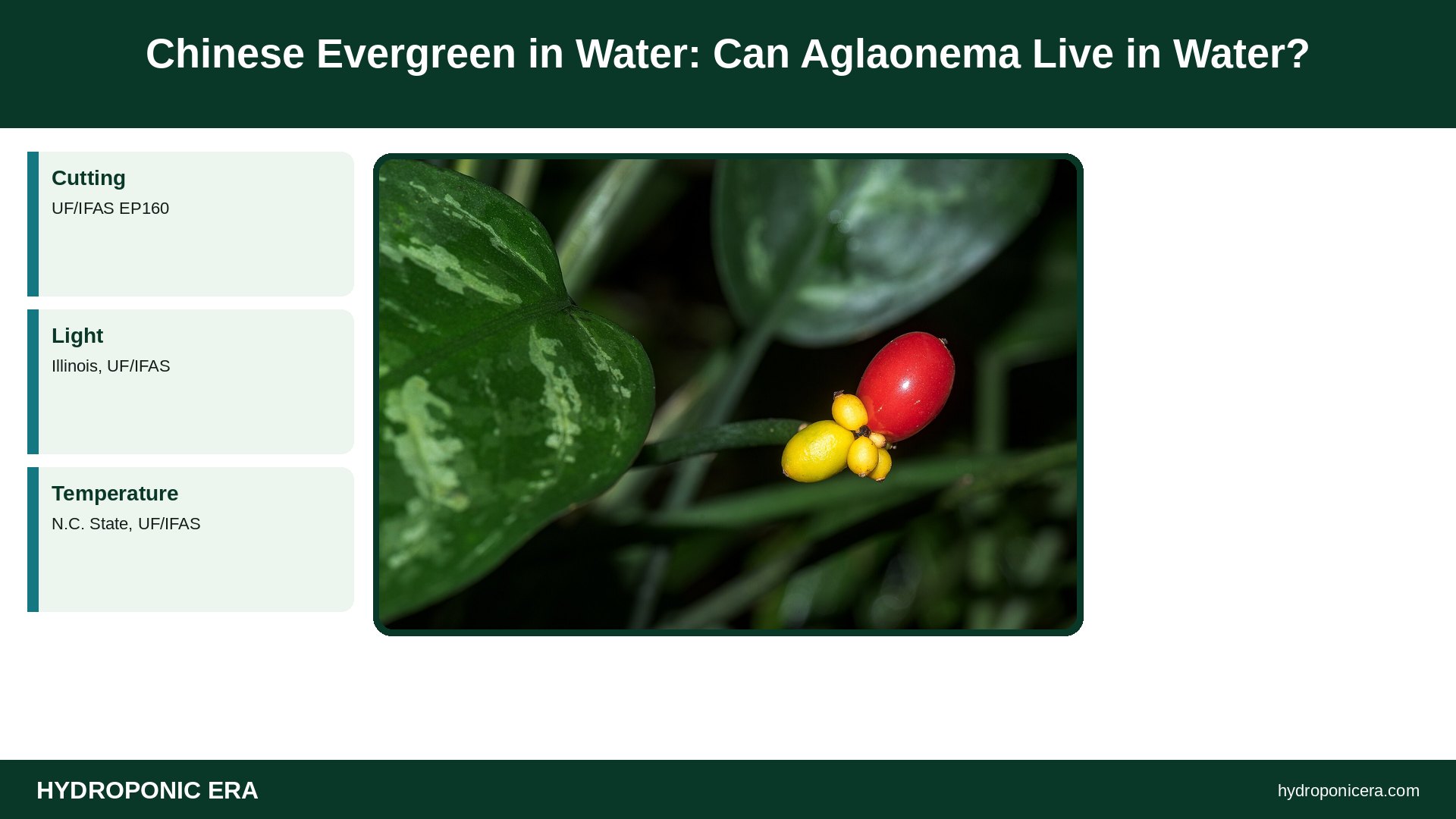
Yes, Chinese evergreen in water works: University of Illinois Extension says Aglaonema can be grown in water or in humus-rich potting soil. To root one, take a healthy stem tip with four or five leaves, cut just below a node, remove any leaves that would sit underwater, and stand it in a jar of room-temperature water in bright, indirect light. Keep it above 65°F (18°C), never below 55°F (13°C), and change the water weekly. Roots typically take several weeks. You can leave it in water long term with dilute fertilizer, or pot it once roots are a few inches long.
Tradescantia in water is one of the easiest houseplant projects: the succulent stems naturally root at their nodes. Snip a 3–6 inch (8–15 cm) stem tip with several nodes, remove the leaves from the bottom 1–2 nodes, and set it in room-temperature water with no leaves submerged. Keep it in bright, indirect light at 65–75°F (18–24°C) and replace the water whenever it turns cloudy. Roots usually start within days to a few weeks. Pot the cutting once roots reach about 1–3 inches (2.5–8 cm), or keep several in a jar as a living display.
Yes, coleus in water roots easily, often within a few weeks. Cut a 3–5 inch (8–13 cm) stem tip just below a node, strip the lower leaves and any flower spikes, and stand it in clean tap water with no leaves underwater. Keep it at about 70°F (21°C) in bright, indirect light, change the water at least twice a week, and pot it up once roots are about 1 inch (2.5 cm) long, or after they’ve grown another week or two. N.C. State Extension notes that coleus cuttings root easily in water or clean potting soil.
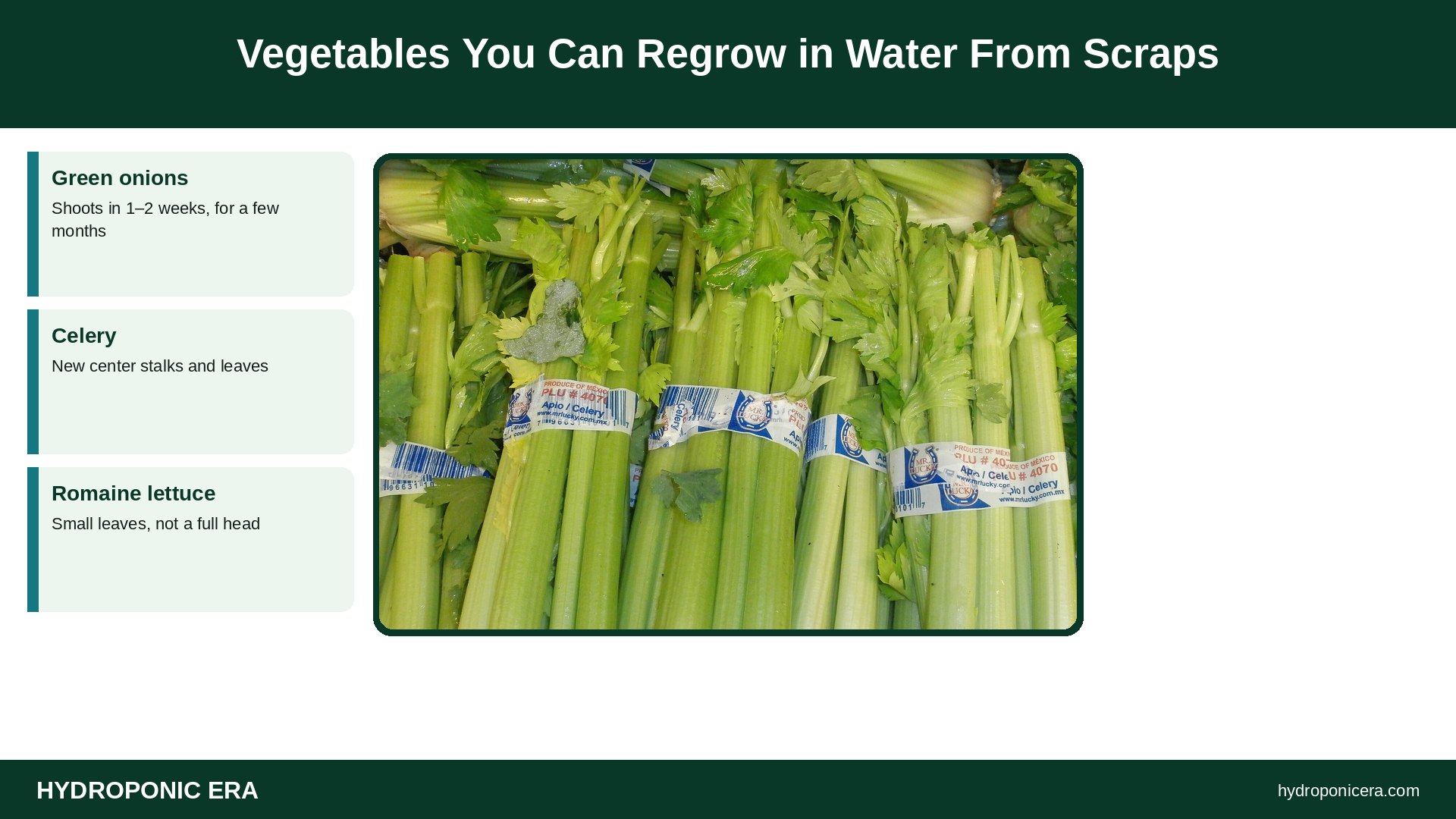
The vegetables you can regrow in water from kitchen scraps are mainly green onions (scallions), celery, romaine lettuce, bok choy and Napa cabbage, plus the leafy tops of beets, turnips and carrots and cuttings of herbs like basil and mint. Set the root end or base in a shallow dish of water, give it a sunny window, and change the water every 2–3 days. Expect a bonus harvest of leaves or shoots, not a full new vegetable. Garlic, ginger and pineapple tops regrow too, but they need soil or a rooting medium rather than water.
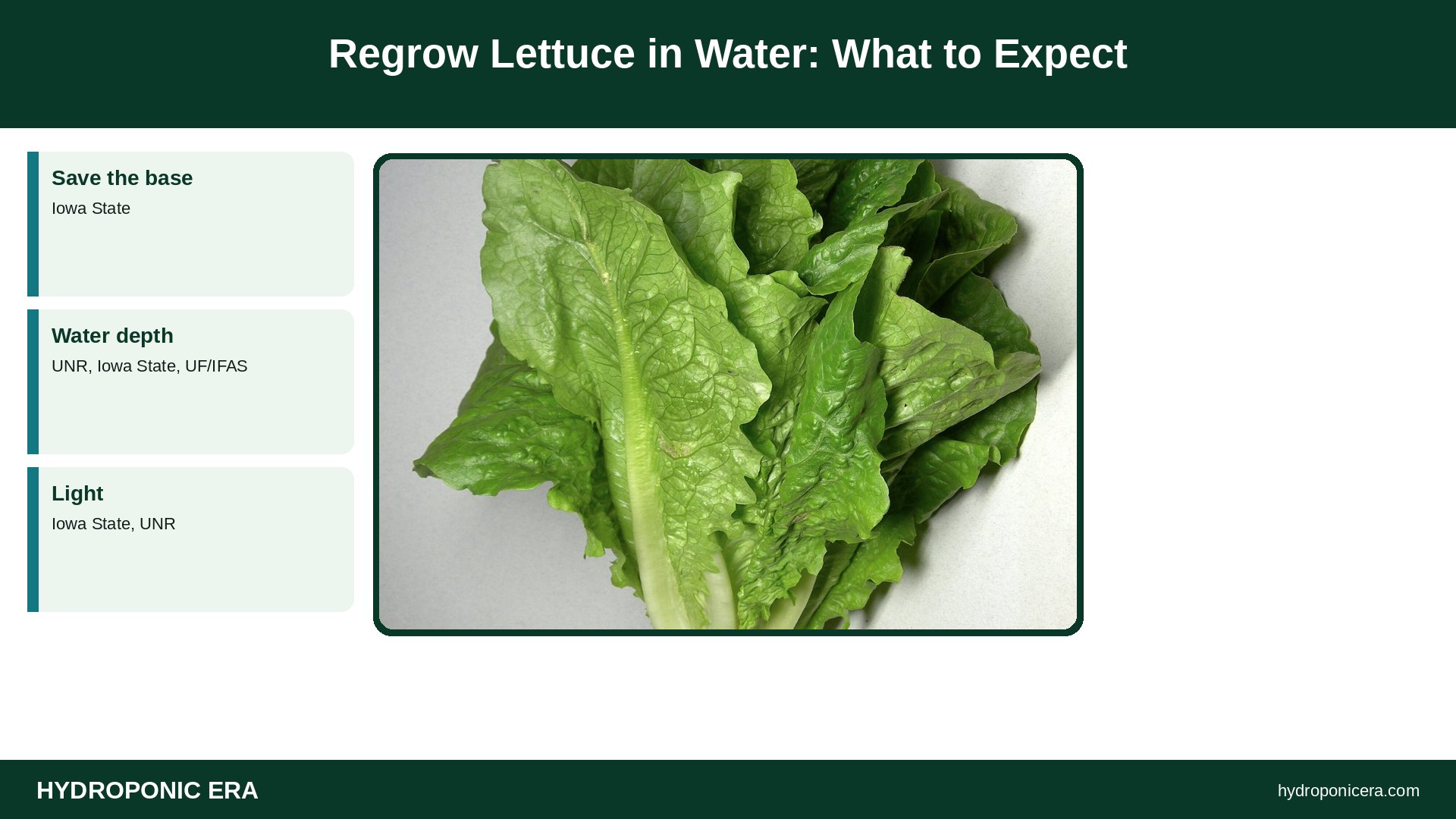
You can regrow lettuce in water from the base of a romaine head, but you’ll get a small crop of tender leaves, not a new full head. Save the bottom 2 inches (5 cm) of the root end, set it in a shallow dish with about ½–1 inch (1.3–2.5 cm) of water, place it in a sunny window, and change the water every 2–3 days. New leaves appear from the center within days to weeks. Harvest them young, and move the base to potting mix or a hydroponic system if you want more growth.
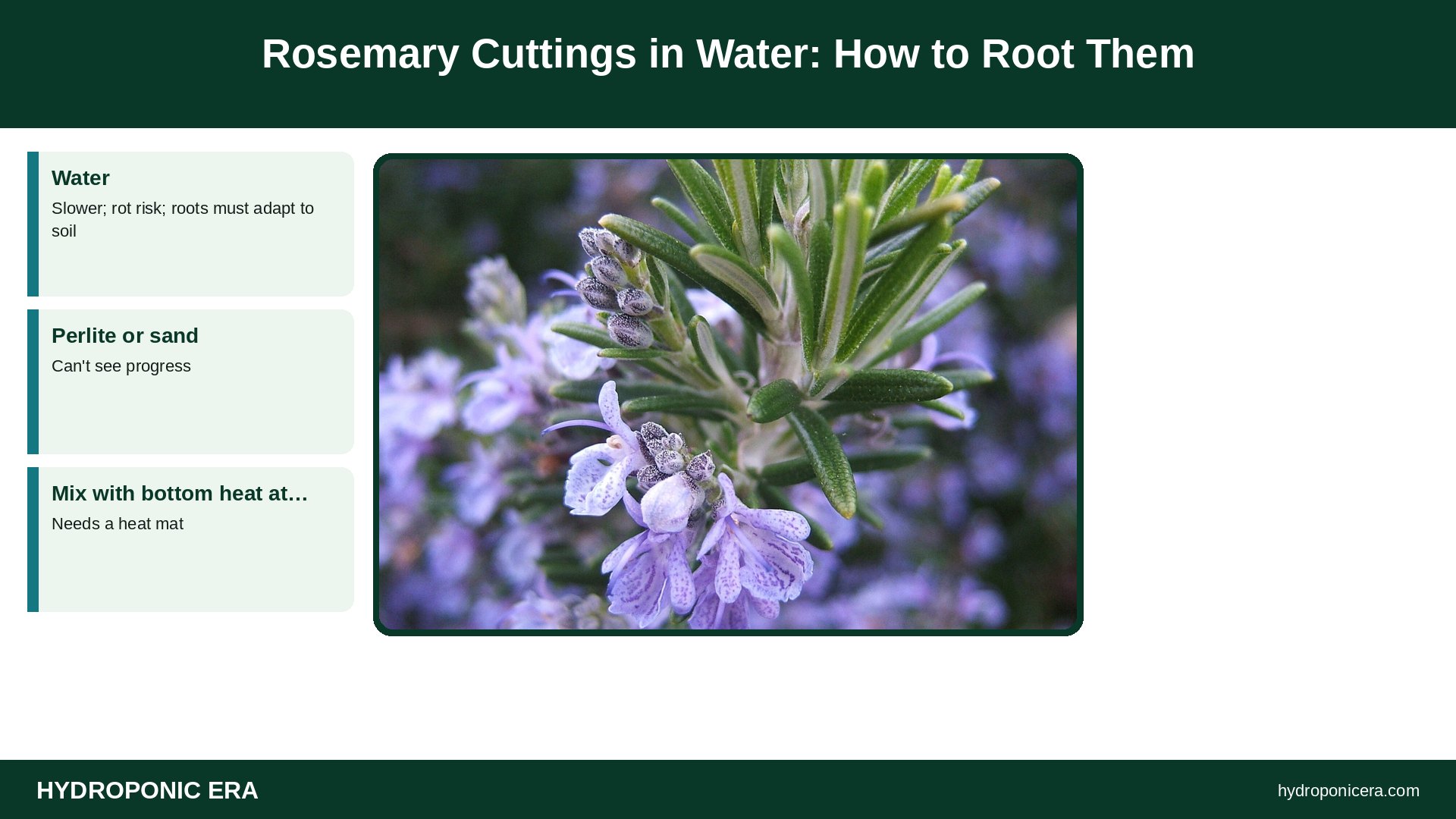
Rosemary cuttings in water can root, but more slowly and less reliably than soft herbs like basil. Take 4–6 inch (10–15 cm) green, flexible, flower-free tips in late spring or summer, strip the lower 2–3 inches (5–8 cm) of leaves, and stand them in clean water with a node or two submerged. Change the water every few days and keep them in bright, indirect light. Expect several weeks for roots, and pot them up once roots are 1–2 inches (2.5–5 cm) long. Extension sources generally prefer rooting rosemary in a light, well-drained mix such as perlite or sand, where roots typically form in 2–6 weeks.
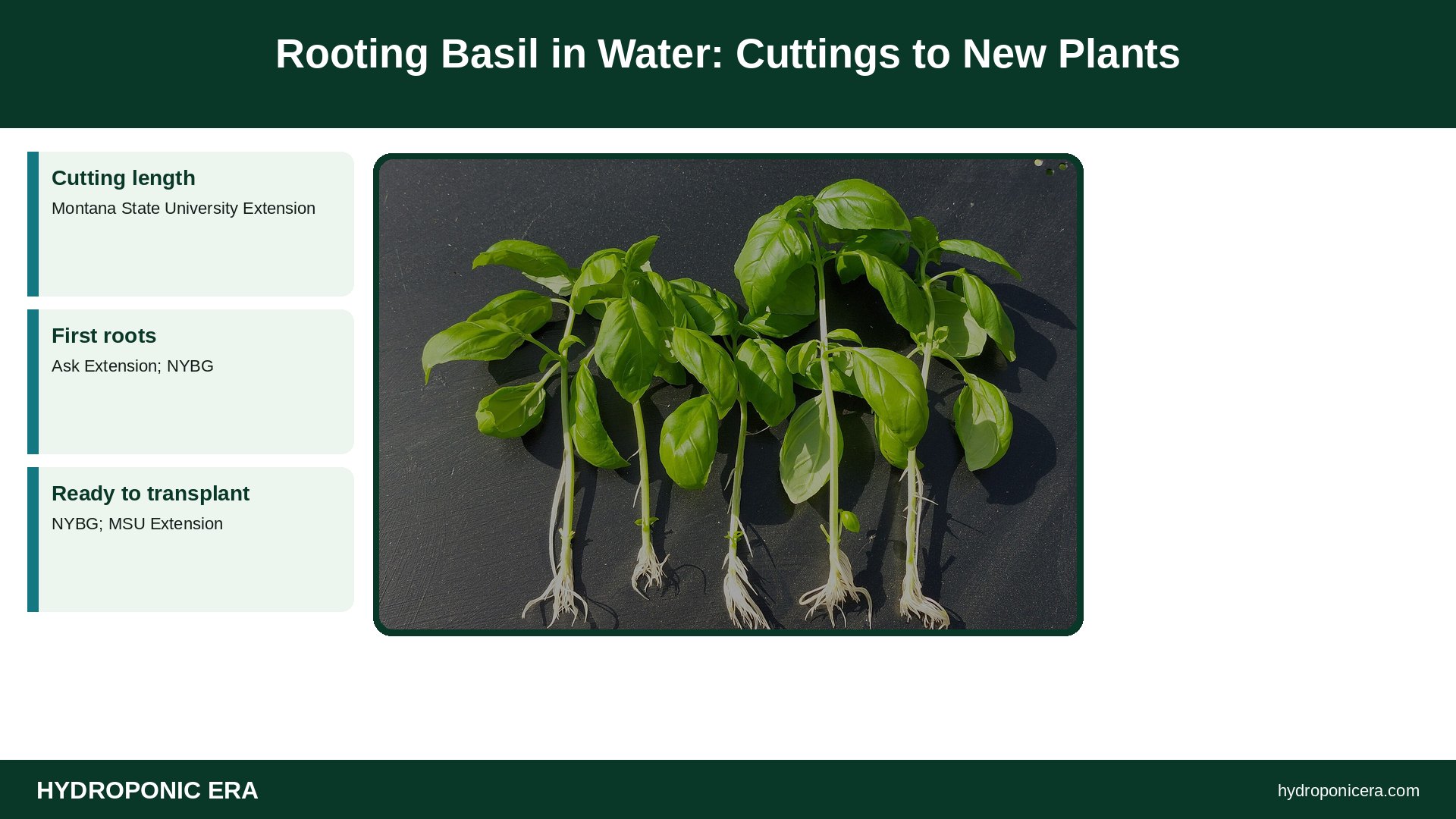
Rooting basil in water is one of the easiest ways to get new plants. Cut a 4–6 inch (10–15 cm) non-flowering stem just below a leaf node, strip the lower leaves, and stand it in a glass of room-temperature water with at least one node submerged. Roots usually start in about 8 days, and in about 2 weeks the cutting is ready to plant, according to the New York Botanical Garden’s plant experts. Cuttings also beat seeds: Texas A&M AgriLife research found basil from cuttings reached harvest size about 2 weeks sooner and produced 49% more fresh harvest.
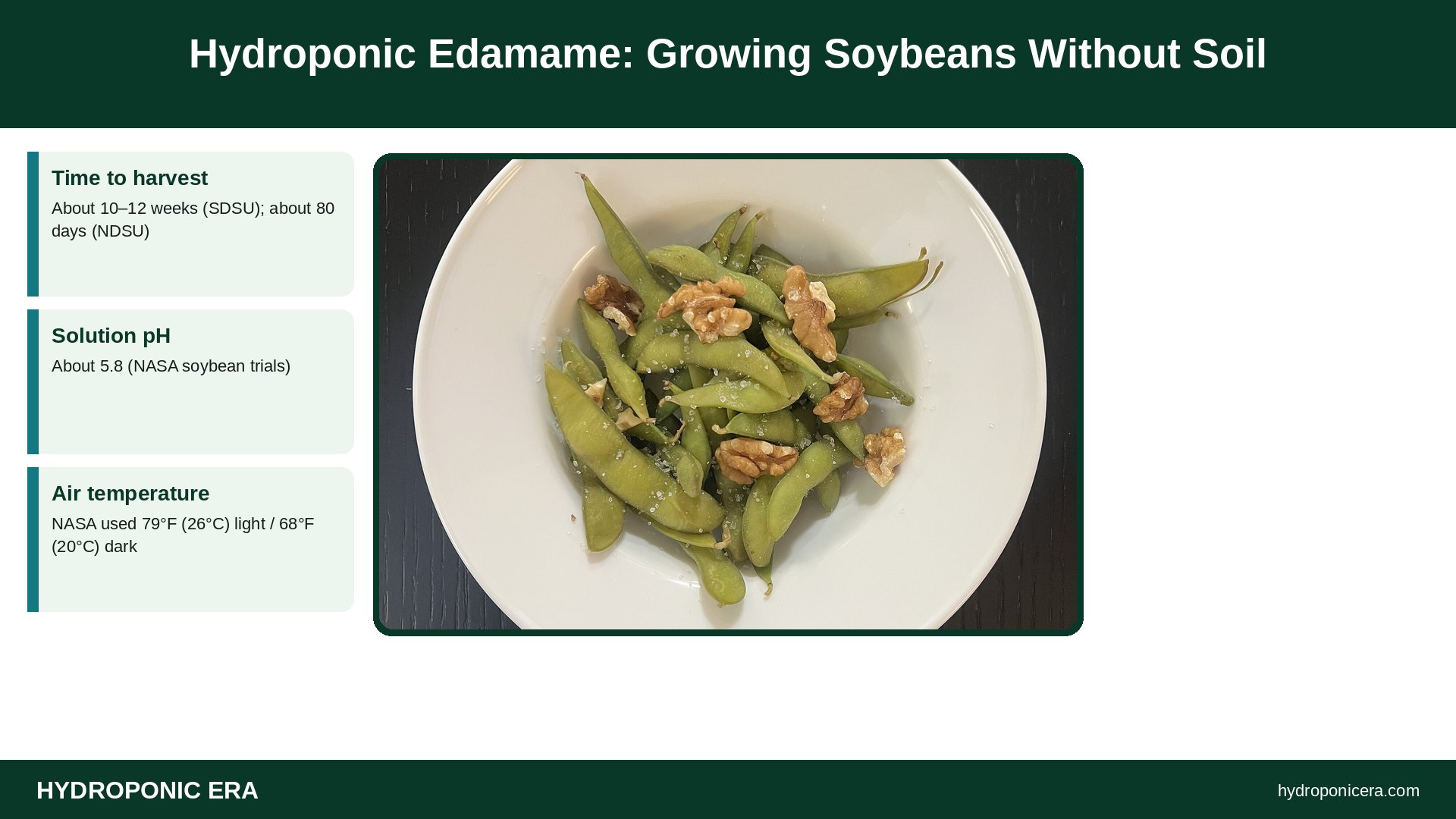
Hydroponic edamame works well: edamame is just a soybean picked green, and NASA has grown soybeans from seed to maturity in recirculating hydroponic systems for decades. Grow it in Dutch buckets, a media bed or a deep-water setup with support, keep the solution near pH 5.8, give strong light and harvest when pods are plump, bright green and the beans nearly touch, about 10–12 weeks after planting. South Dakota State University Extension notes edamame can even be produced hydroponically, and the harvest window lasts only a few days.
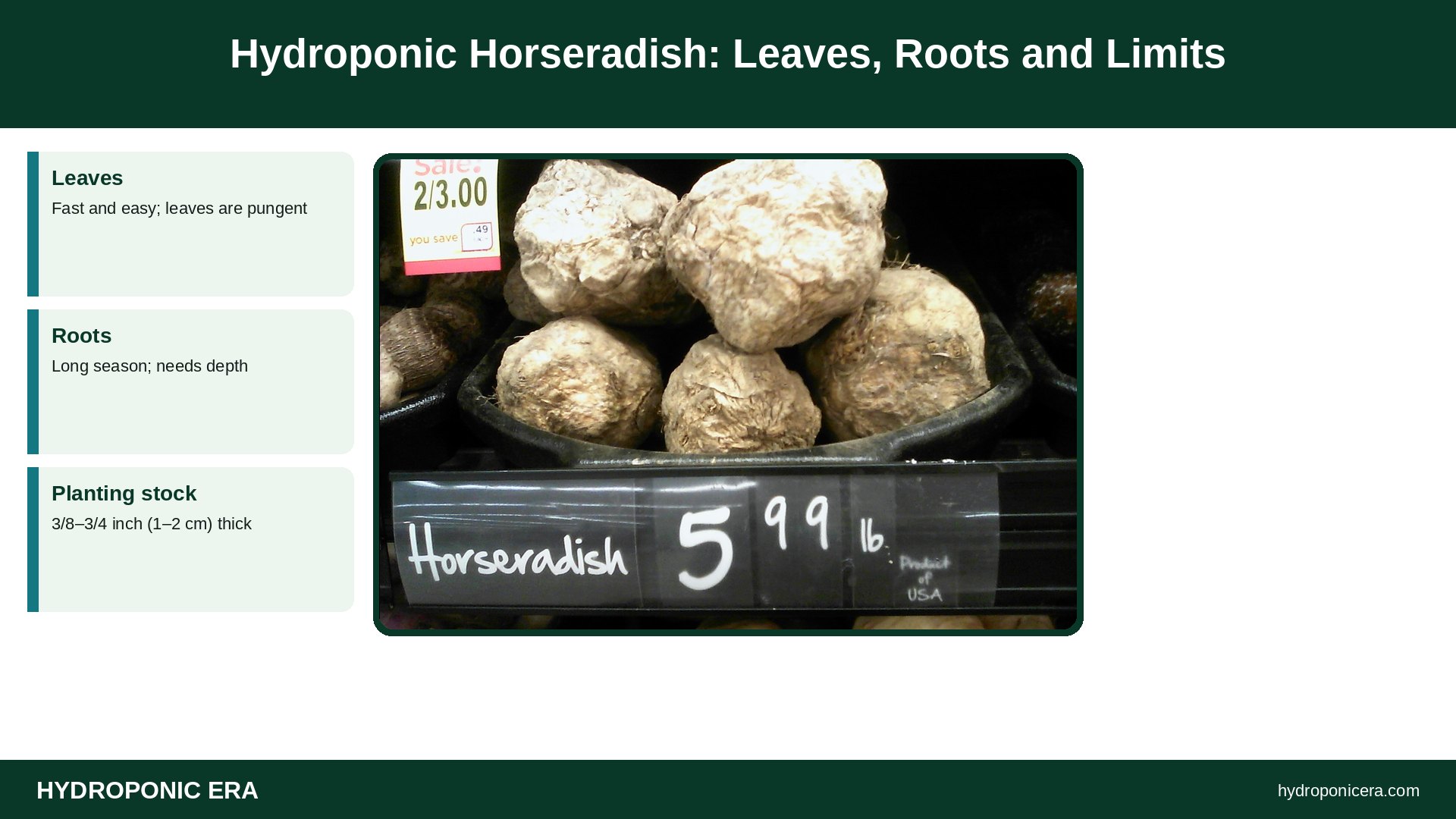
Hydroponic horseradish is doable, but it’s better for leaves than for big roots. Horseradish grows from root cuttings, not seed, and the plant makes its thick, pungent root over a long season, about a year in the field according to Oregon State University. In water culture you’ll get plenty of leafy growth and some root, but the long, straight roots sold in stores need deep, loose media. The practical method: plant an 8–14 inch (20–36 cm) root cutting at a 45-degree angle in a deep drip-fed container of coco coir or perlite, and harvest after cool weather.