This aquaponics nutrient deficiencies chart helps you match a leaf symptom to the most likely missing nutrient and the aquaponics-safe fix. The first clue is where symptoms start. Problems on old, lower leaves point to mobile nutrients such as nitrogen, phosphorus, potassium and magnesium. Problems on new growth point to immobile ones such as iron, calcium and sulfur. In fish-fed systems, the three most common aquaponics nutrient deficiencies are iron, potassium and calcium, because fish feed is designed for fish, not plants. Always check pH first; many “deficiencies” are really nutrient lockout.
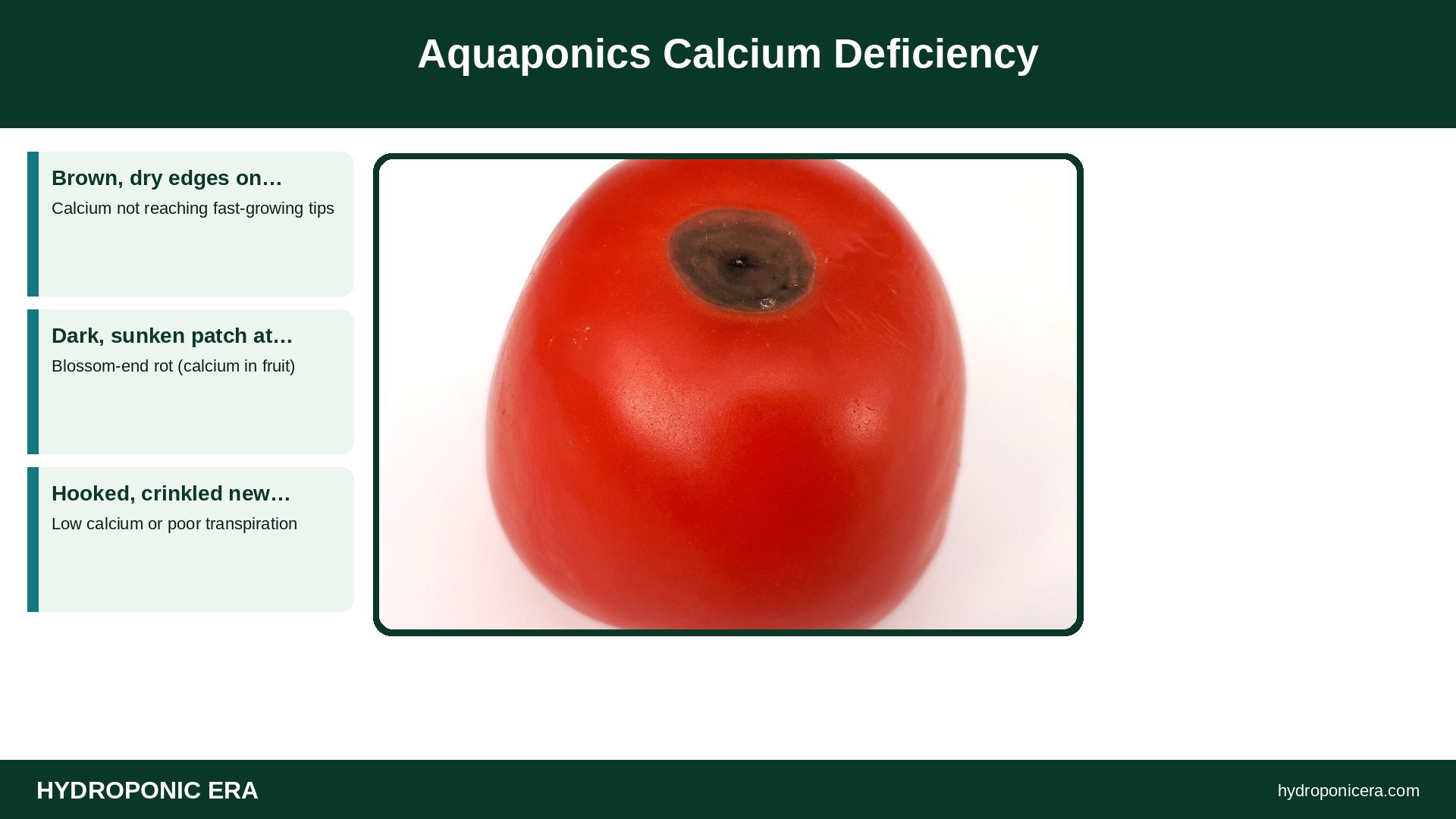
Aquaponics calcium deficiency shows up on the newest growth: lettuce tip burn, blossom-end rot on tomatoes and peppers, and distorted, hooked young leaves. Fish feed doesn’t supply enough calcium for most crops, so aquaponic growers add it while buffering pH, usually with calcium hydroxide (hydrated lime), calcium carbonate, crushed coral or seashells. Because calcium moves only with water flow through the plant, good airflow and steady transpiration are just as important as the amount in the water.
Aquaponics potassium deficiency is common because fish feed contains far less potassium than fruiting plants need. It shows first on older leaves as yellowing or brown, scorched spots along the margins, weak stems and poor flowering or fruit fill. The standard fix is to add potassium while you correct pH: dose small amounts of potassium hydroxide or potassium carbonate whenever pH drifts toward 6.0, and alternate with a calcium base. Seaweed extract is a gentler organic option for small systems.
Aquaponics mineralization is the bacterial breakdown of captured fish solids into dissolved nutrients that plants can use. In media bed systems it happens inside the gravel or clay; in raft (DWC) and NFT systems you usually add a separate, well-aerated mineralization tank. Solids from the filter go into the tank, air stones keep it oxygenated, and after the waste has broken down you decant the clear, nutrient-rich water back into the system. Done right, aquaponics mineralization returns more potassium, phosphorus, calcium and micronutrients to plants; done badly, it creates oxygen-starved sludge.
Is hydroponics worth it for a home grower? It can be, if you value fresh greens and herbs year-round, have limited outdoor space, or enjoy a hands-on hobby. It is usually not worth it purely to save money on groceries in the first year, because equipment, lights, and electricity add up. Hydroponics pays off best for fast, high-value crops you eat often (lettuce, basil, herbs, microgreens) and when you build or buy a system sized to what your household actually eats.
Hybrid striped bass aquaponics works best in larger, well-aerated systems run by growers who already have some fish experience. Hybrid striped bass (a cross of striped bass and white bass) grow fastest at about 77–81°F, prefer dissolved oxygen of 6 mg/L or more, tolerate a wide pH range with 7.0–8.5 as the optimum, and usually reach a harvest size of 1.5–2.5 pounds in 18–24 months. They are aggressive, high-protein carnivores, so they need feed-trained fingerlings, strong solids removal and careful stocking.
Largemouth bass aquaponics is possible, but bass are harder to raise than tilapia or catfish. They’re predators that don’t naturally eat pellets, so you must buy feed-trained fingerlings, feed a high-protein floating pellet (about 40–45% protein), and sort fish by size often to prevent cannibalism. Keep water about 75–85°F for best growth, dissolved oxygen above 5 mg/L, and stock lightly. Bass are also regulated game fish in many states, so check permits before buying.
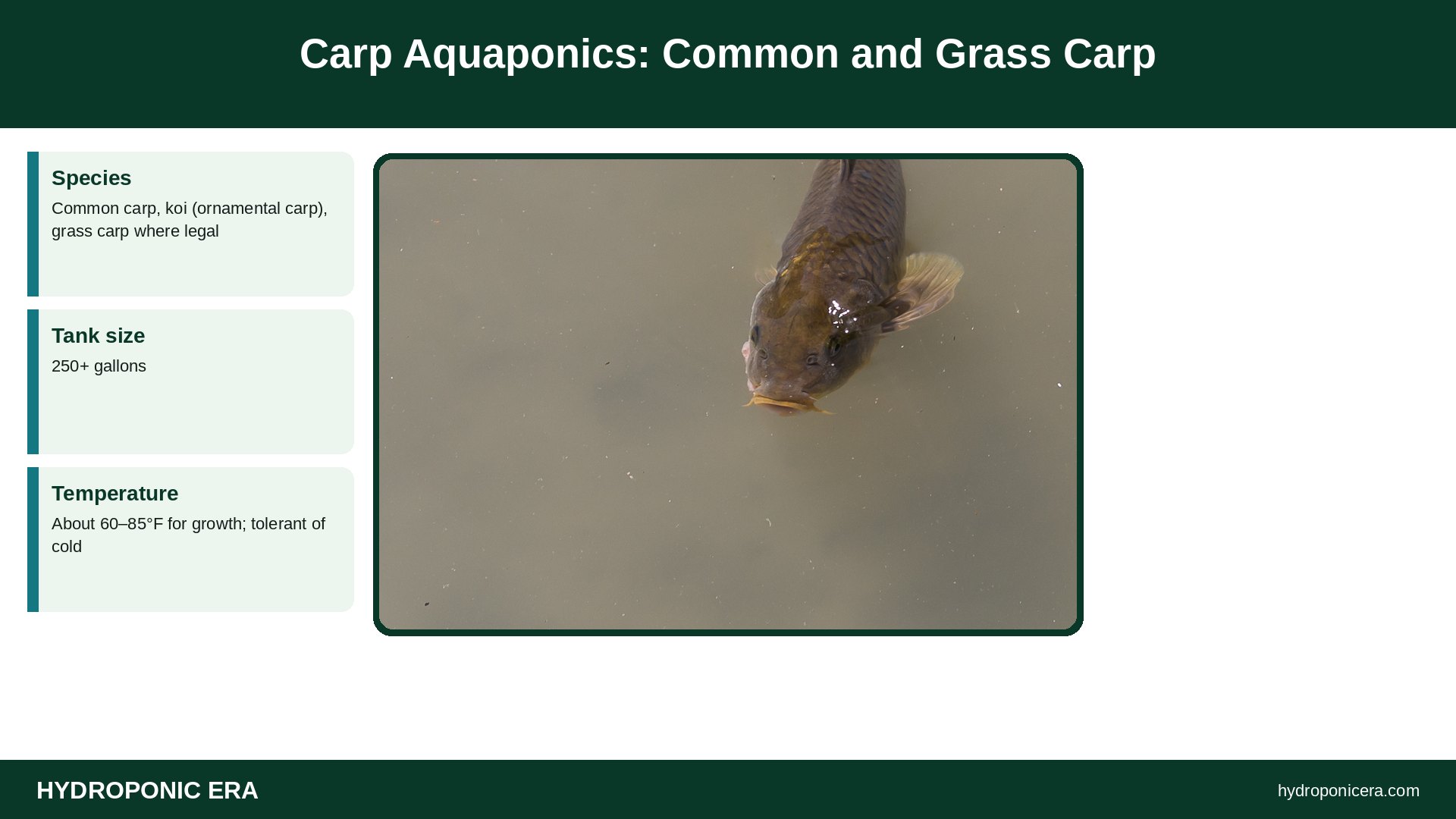
Carp aquaponics works well because common carp are hardy, eat almost anything, tolerate a wide range of temperatures and grow quickly in warm water. They suit backyard systems of about 250 gallons or more, ideally with good solids filtration because carp produce a lot of waste and stir up sediment. Keep water roughly 60–85°F for steady growth, pH near 7.0, and dissolved oxygen above 5 mg/L. Check state rules first: common carp and grass carp are restricted in many US states.
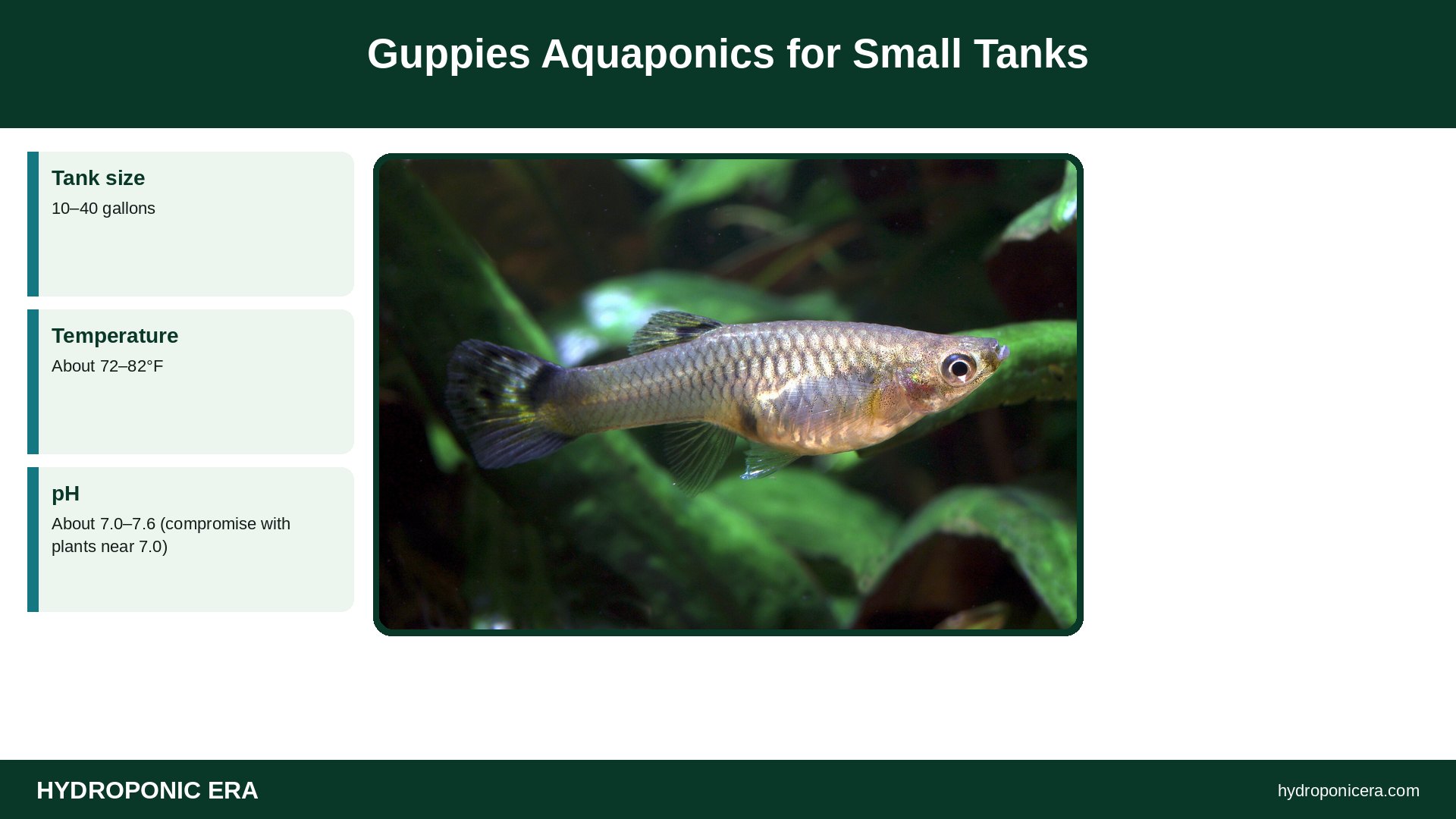
Guppies are a good choice for small, ornamental aquaponics systems such as desktop units and aquarium setups of 10–40 gallons. A guppies aquaponics system needs warm water (about 72–82°F), gentle flow, a pH around 7.0–7.6, and enough fish to feed a few herbs or lettuce plants. Guppies breed constantly and produce little waste per fish, so they’re forgiving for beginners, but they can’t support a large vegetable bed and aren’t food fish. Never release them outdoors.
For an aquaponics fish harvest , stop feeding the fish 1–3 days beforehand to empty their guts, net only the fish you’ll process right away, and dispatch them quickly and humanely, usually by a sharp blow to the head or a stun followed by bleeding, or by an ice slurry for small warm-water fish. Chill the fish immediately on ice, clean them within a few hours, and keep them at 40°F or below. Cook fish to 145°F. Harvest a portion of the tank at a time so the system’s nutrient supply for plants doesn’t crash.