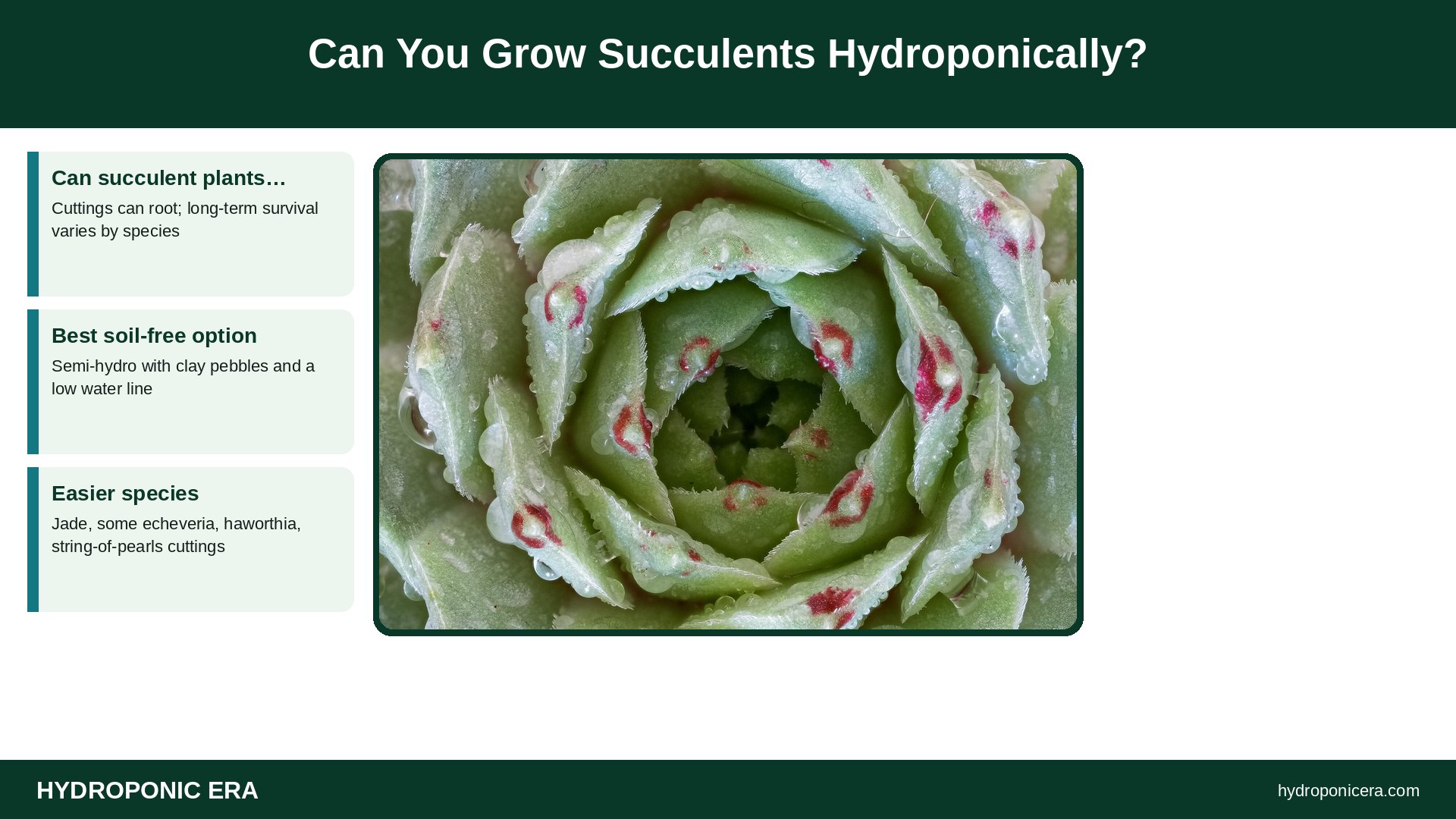
Some succulents can grow hydroponically, but most do better in fast-draining soil. Cuttings and rosettes of succulents like echeveria, jade, and haworthia can root in water, and some growers keep them in semi-hydro setups with clay pebbles. The challenge is rot: succulents are built to store water and dry out between drinks, so constant moisture works against them. If you try growing succulents without soil, use shallow water, airy media, strong light, and plenty of patience.
Aloe vera can grow in hydroponics, but it is one of the harder houseplants to keep healthy without soil. Aloe is a succulent from dry climates that stores water in thick leaves and is very prone to rot when its roots or base sit in water. Aloe vera pups can root in water and survive in semi-hydro setups such as clay pebbles or a wick pot with lots of air, but a pot of fast-draining cactus mix remains the more reliable home for most growers in the US.
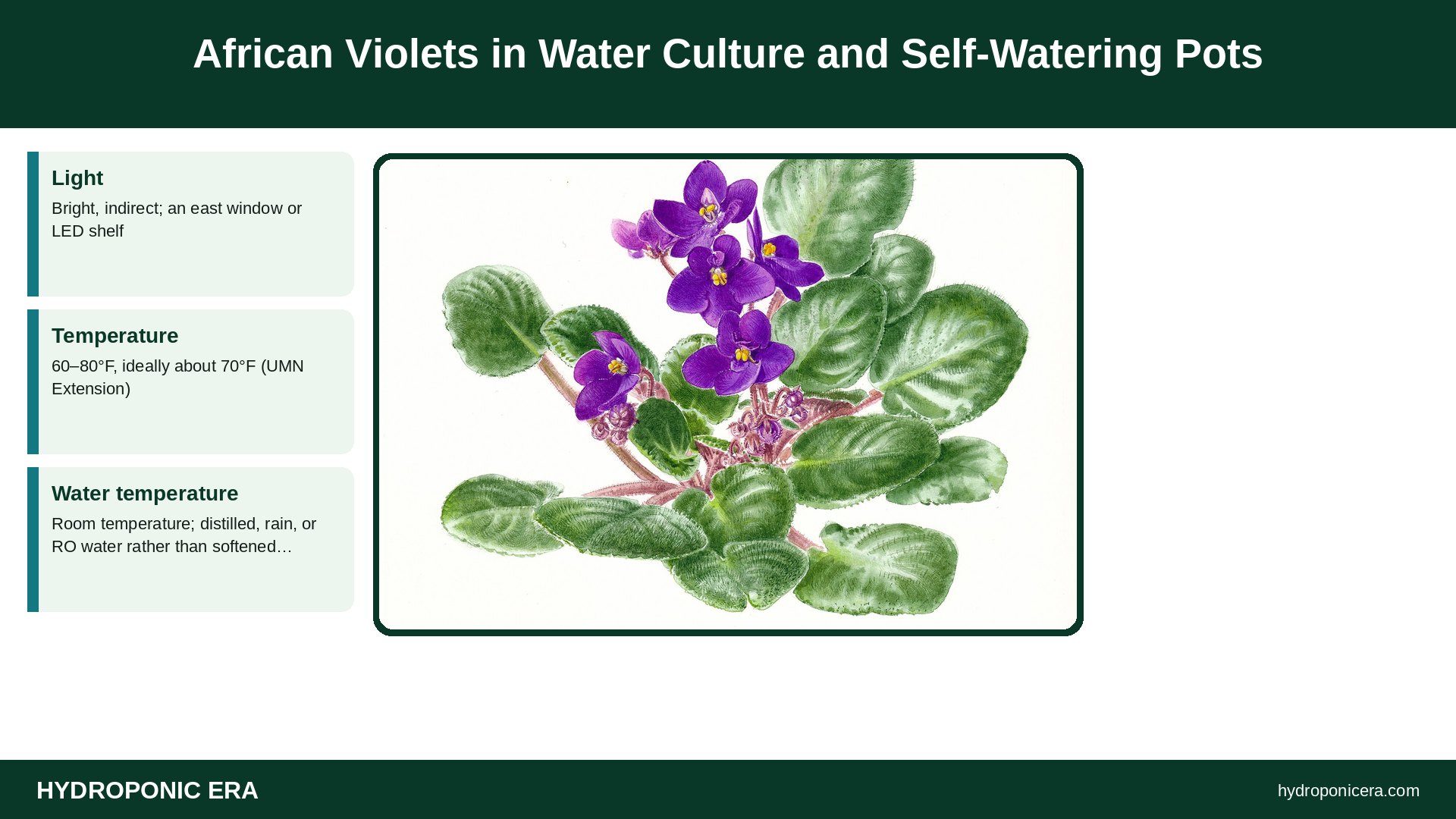
African violets can grow without soil in two practical ways: true water culture, where roots sit in a dilute nutrient solution, and self-watering or wick pots, where a cord or porous inner pot draws water up from a reservoir. Both work because African violets (Saintpaulia, now classified as Streptocarpus sect. Saintpaulia) like evenly moist roots, room temperatures around 60–80°F (ideally near 70°F), and bright indirect light. The key rule for African violets in water is that the crown and leaves must stay dry and the water should be room temperature.
Snake plant in water can work, but it is riskier than with most houseplants. Snake plants (Dracaena trifasciata, formerly Sansevieria) are succulent and store water in their leaves, so they rot easily if the base sits in stagnant water. Leaf cuttings and small divisions do root in water, often slowly, and some people keep a snake plant in water for a long time. The safest approach is shallow water, frequent changes, warmth, and moving rooted cuttings to a fast-draining mix.
English ivy in water roots quickly from stem cuttings and can live in a vase as a trailing display for months or longer with fresh water and very light feeding. Cut 4–6 inch tips with a few nodes, strip the lower leaves, set the bare nodes in water in bright indirect light, and change the water weekly. One important US caveat: English ivy (Hedera helix) is considered invasive in many states, so keep it indoors and never dump cuttings outside.
Philodendron in water works well for vining types like the heartleaf philodendron (Philodendron hederaceum): take a cutting with at least one node, set the node in clean water, give bright indirect light, and add a very dilute fertilizer once roots form. A philodendron in water can grow for a long time as a trailing display, but it needs regular water changes and some nutrients, because water alone cannot sustain healthy growth.
Spider plant in water is one of the simplest ways to grow a houseplant without soil. Snip a baby plantlet (a “pup” or “spiderette”), set its base in a small glass of water, and roots usually appear within a couple of weeks. A spider plant in water can keep growing for a long time if you change the water regularly and add a very dilute fertilizer, and the ASPCA lists spider plants as non-toxic to cats and dogs, which makes them a favorite for pet households.
Lucky bamboo care in water comes down to five things: keep the stalks in a few inches of clean water, change that water every week or two, give bright indirect light, keep the room between about 65°F and 90°F, and feed very lightly. Lucky bamboo is not bamboo at all. It is Dracaena sanderiana, a tropical plant that roots easily in water, which is why it is sold in vases, pebbles, and braided arrangements across the US.
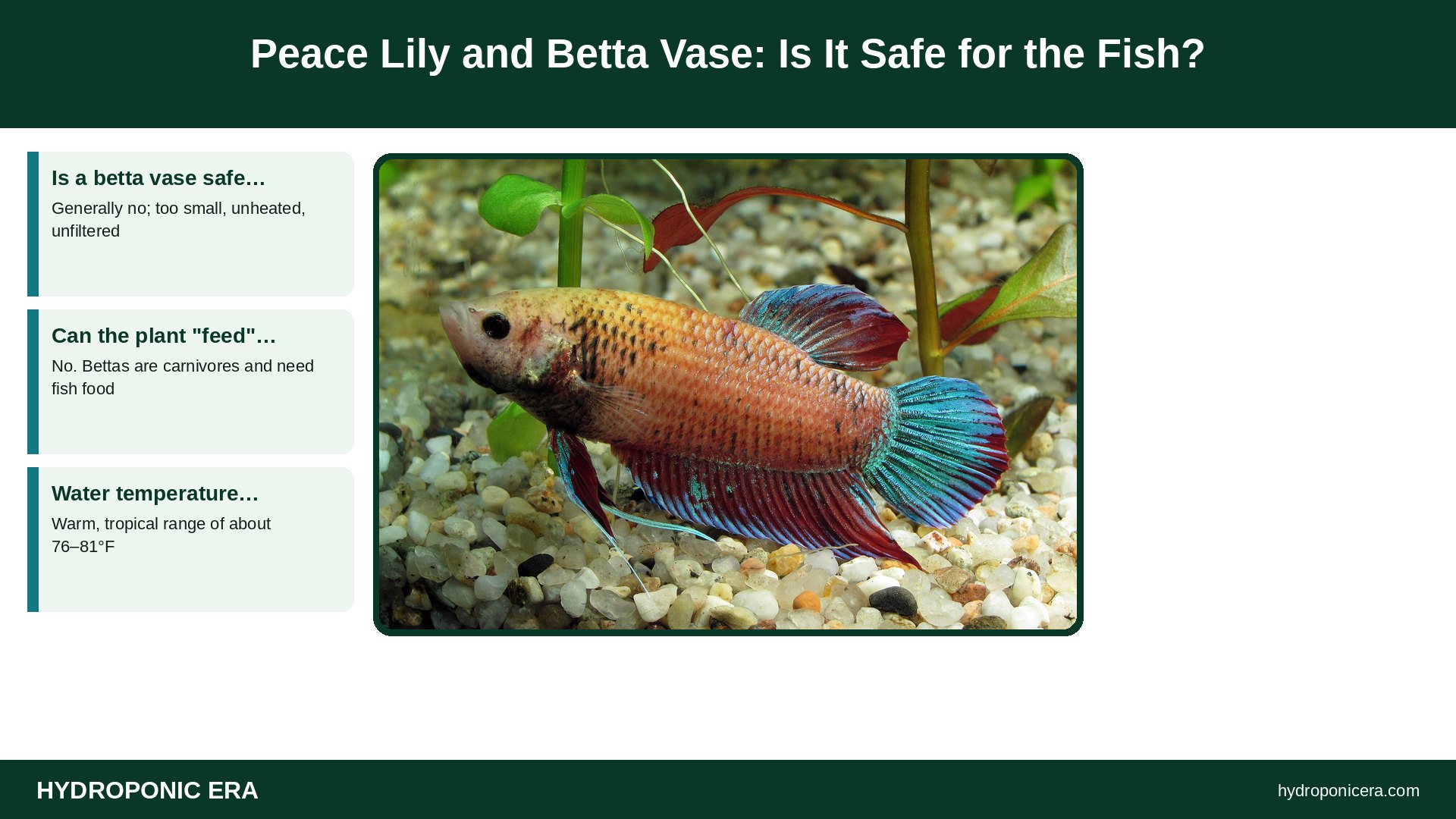
A betta vase , the popular setup where a peace lily sits on top of a vase and a betta fish lives underneath, is not a safe long-term home for the fish. Bettas need several gallons of filtered, heated water around 76–81°F, room to swim, and access to air at the surface. A typical betta vase offers less than a gallon, no heater, no filter, and roots that can block the surface. The peace lily part can work. The fish part usually does not.
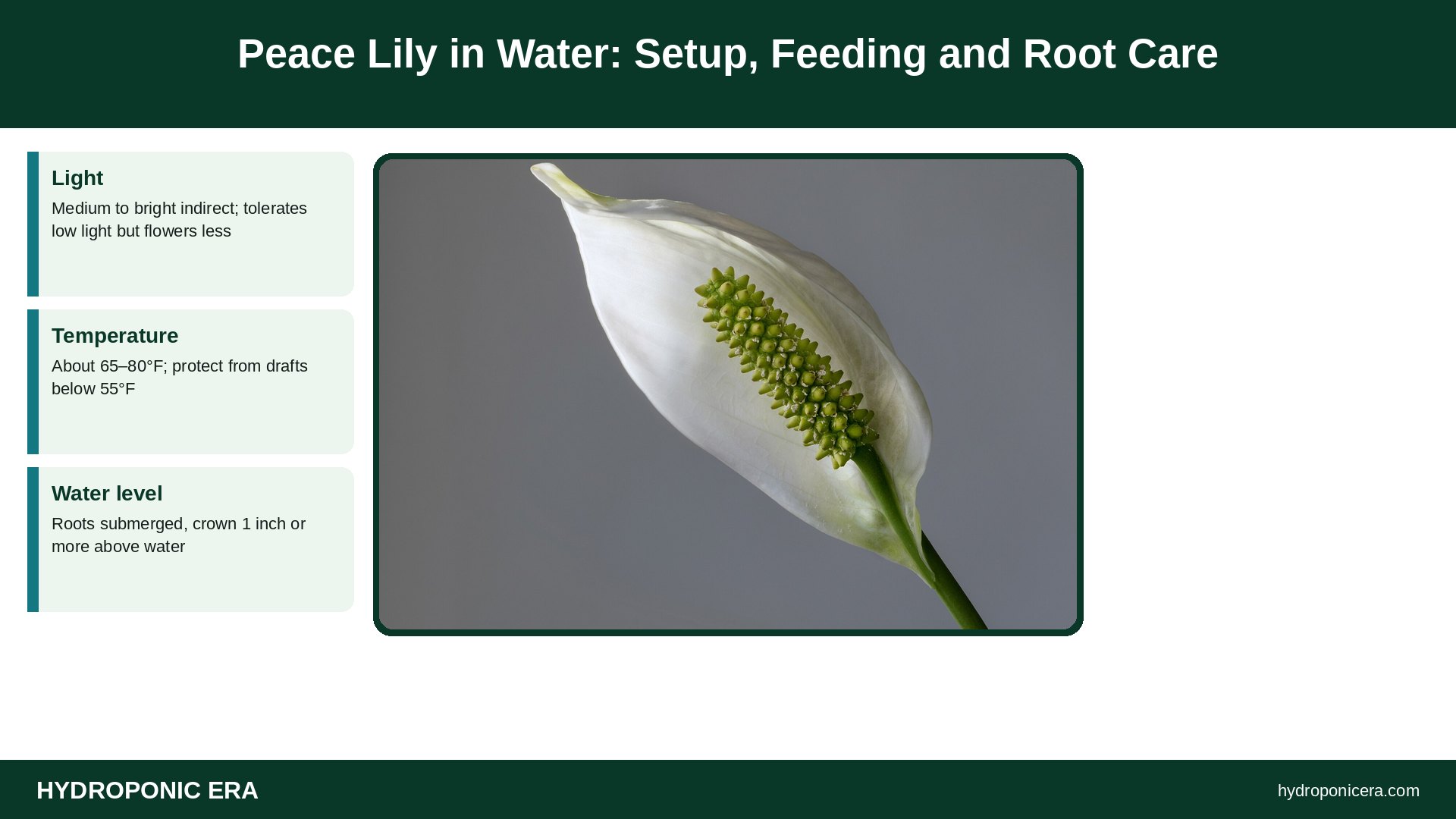
Peace lily in water is one of the easiest soil-free houseplant setups: keep the crown and leaves above the waterline, let only the roots sit in clean water, feed with a very dilute complete fertilizer, and refresh the water every one to two weeks. Peace lilies (Spathiphyllum) tolerate lower light than most flowering houseplants, which makes a peace lily in water a good fit for offices and north-facing rooms, as long as you watch for stagnant water and root rot.