The main farm loans for a US hydroponic farm come from USDA’s Farm Service Agency (FSA), which offers microloans up to $50,000, direct operating loans up to $400,000, direct farm ownership loans up to $600,000, and guaranteed loans made through commercial lenders. Hydroponic, greenhouse, and other nontraditional operations can qualify if they meet FSA eligibility rules, including being unable to get credit elsewhere for direct loans. Other options include Farm Credit lenders, SBA-backed loans, local banks and credit unions, and state agricultural programs. Grants are separate and don’t need repayment.
Selling microgreens online in the US usually requires a business registration, any state or local food license that applies to fresh produce sales, sales tax registration where required, product liability insurance, and a shipping method that keeps the greens cold and moving fast. Rules depend on your state, and on whether you sell raw microgreens or processed items. Many small growers fall below the size threshold for full coverage under the FDA Produce Safety Rule (farms with average annual produce sales of $35,247 or less, adjusted for inflation, are not covered), but they still must sell safe food and follow state rules. Call your state department of agriculture before your first online sale.
Peristaltic dosing pumps automatically add small, measured amounts of nutrient concentrate or pH adjuster to a hydroponic reservoir, either on a schedule or when a controller reads EC or pH outside your target. For most home growers with one small reservoir, dosing pumps are a convenience, not a necessity; hand-dosing works fine. They earn their keep in larger reservoirs, multiple systems, or when you’re away often, as long as you calibrate them, use quality sensors, and set hard safety limits.
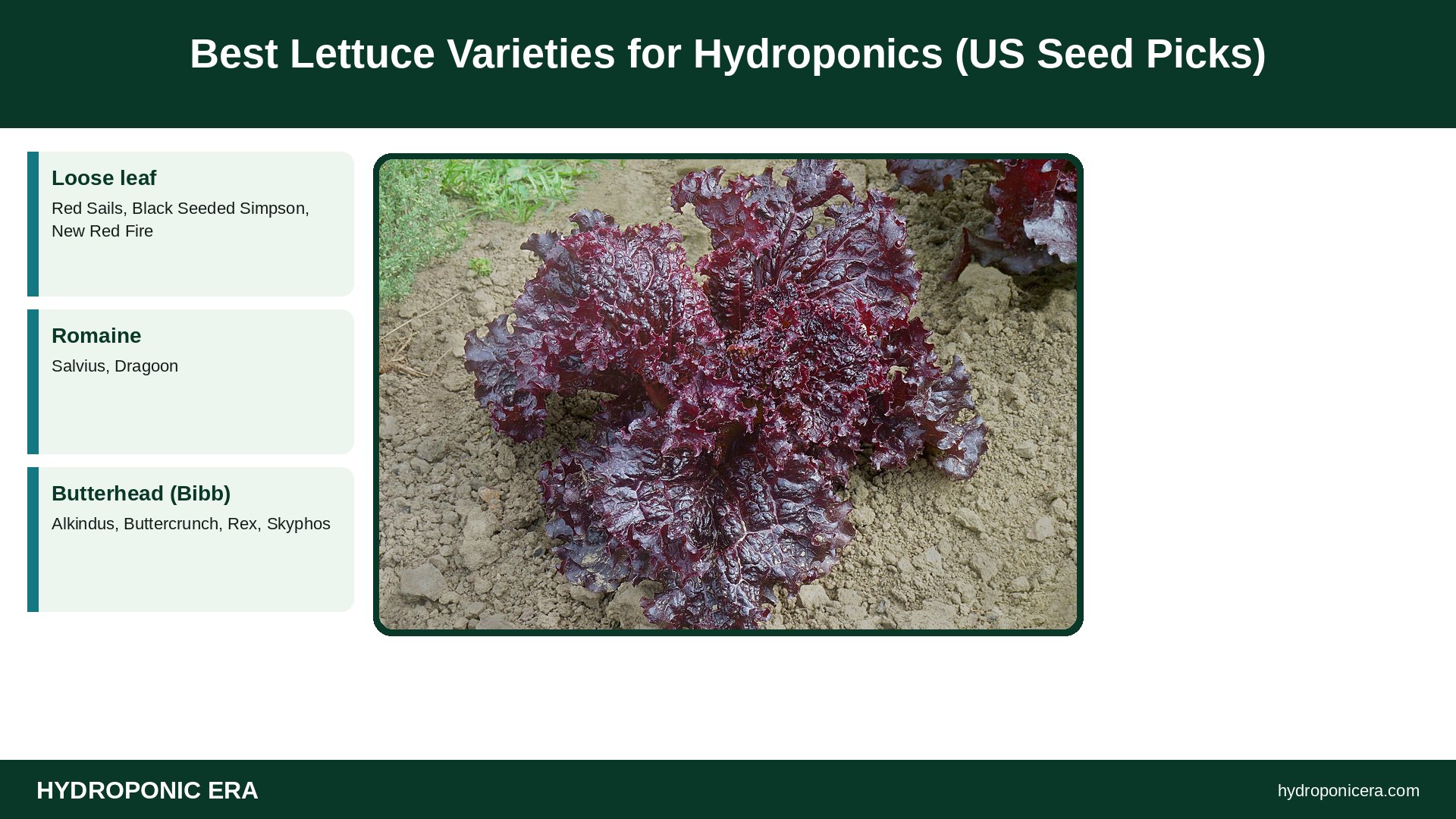
The best lettuce varieties for hydroponics depend on your system and your room temperature, but leaf and romaine types usually give the highest yields, butterheads give the softest texture, and heat-tolerant, slow-bolting cultivars matter most in warm US summers. A Purdue University trial of 24 lettuce varieties in NFT and floating systems found leaf and romaine groups produced higher yields overall, with ‘Red Sails’ (leaf), ‘Salvius’ (romaine), ‘Salanova’ (oakleaf), and ‘Alkindus’ (butterhead) topping their groups. Choosing lettuce varieties by type, heat tolerance, and tipburn resistance is the fastest way to better harvests.
Bay laurel (Laurus nobilis), the source of culinary bay leaves, can be grown indoors and even in a soilless, hydroponic-style setup, but it is a slow woody shrub, not a fast herb. Cuttings root slowly, plants grow only a few inches a year indoors, and they prefer a well-drained root zone with air around the roots. For most US growers outside the mild-winter zones, the practical approach is a container bay laurel in a soilless mix or semi-hydro medium, brought indoors for winter and harvested a few leaves at a time.
You can grow cucamelon hydroponically with the same basic setup you’d use for cucumbers: a drip, Dutch bucket, or deep water culture system, a trellis, warm temperatures, and lots of light. Cucamelon (Melothria scabra), also called mouse melon or Mexican sour gherkin, is a fast vine native to Mexico and Central America that produces grape-sized fruits with a lemony cucumber flavor. Penn State Extension notes the vines can reach about 10 feet, so plan for vertical support.
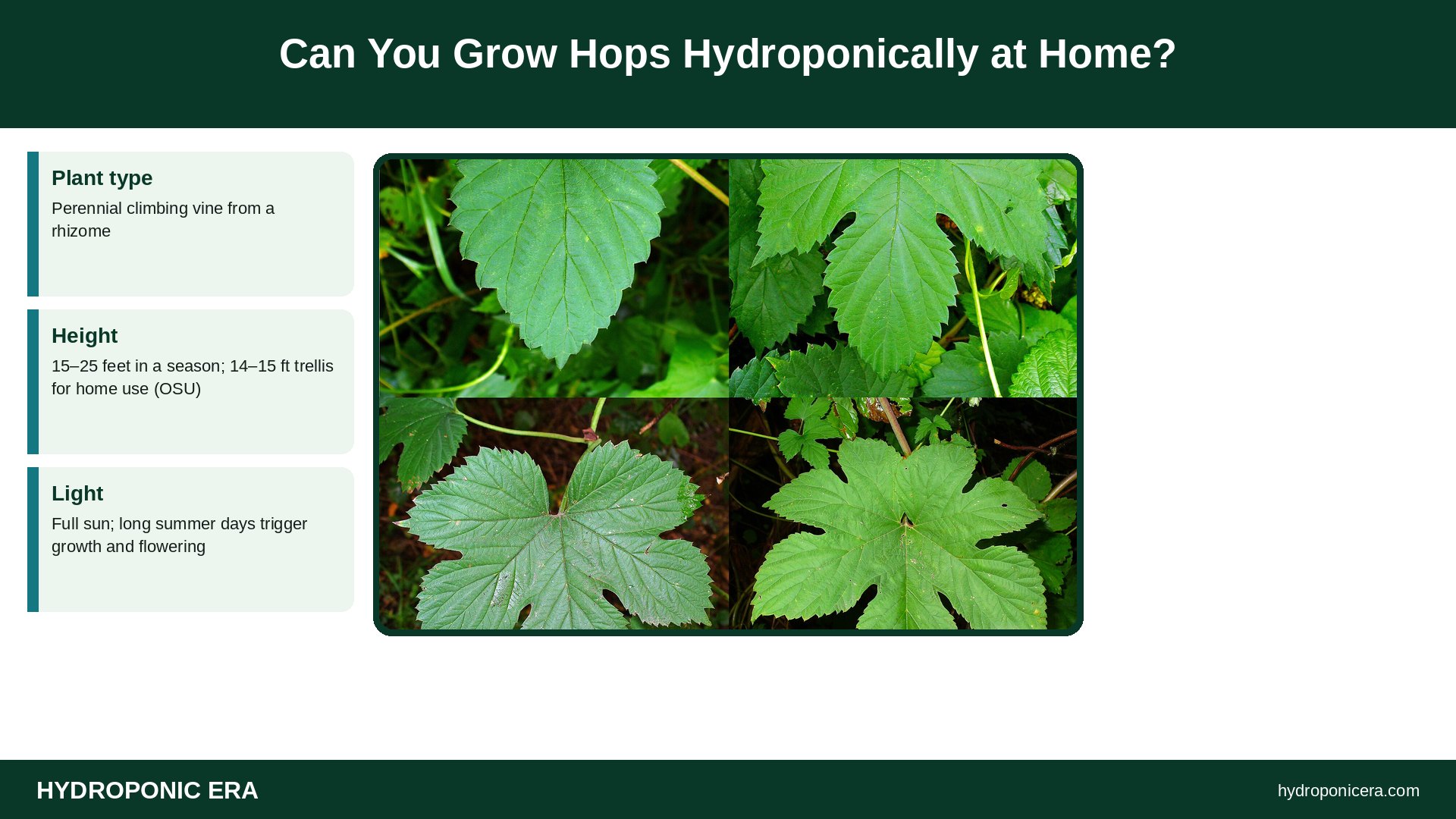
You can grow hops hydroponically at home, but they are a big, demanding plant. Hops (Humulus lupulus) are perennial vines that climb 15–25 feet in a season, want long days and full sun, and only produce their brewing cones on female plants after the root system is established. Oregon State University Extension notes that a 14–15 foot trellis is enough for home use and that plants usually reach full production in their second or third season. A hydroponic system can feed hops well, but you still need height, light, and a winter rest.
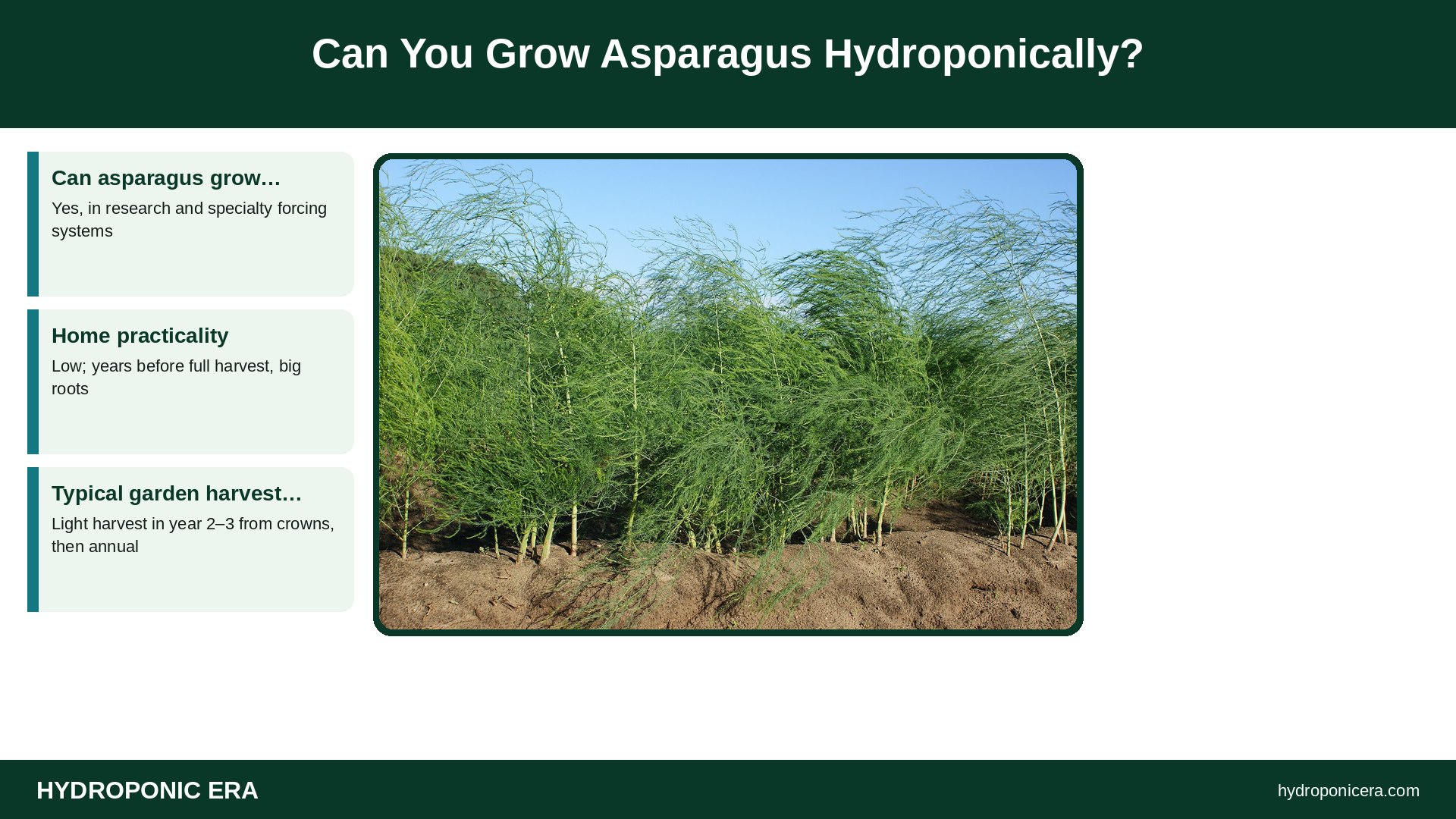
You can grow asparagus hydroponically, but it is one of the least practical crops for a home system. Asparagus is a long-lived perennial that builds a large crown and storage roots for two to three years before a good spear harvest, and each crown wants a lot of root space. Researchers have grown asparagus in hydroponics and soilless containers, including forcing white spears in dark climate rooms in Belgium, but for most US home growers, a garden bed or large container outdoors makes far more sense.
You can grow leeks hydroponically , but plan for a long crop. Leeks are slow, upright alliums that often need about 120–150 days from seed to full size, according to University of Minnesota Extension, though some newer cultivars mature in about 90 days. In a home system they do best in deep water culture, Dutch buckets, or deep media beds with a mild nutrient solution, cool temperatures around 60–75°F, plenty of light, and a way to blanch the lower stem white.
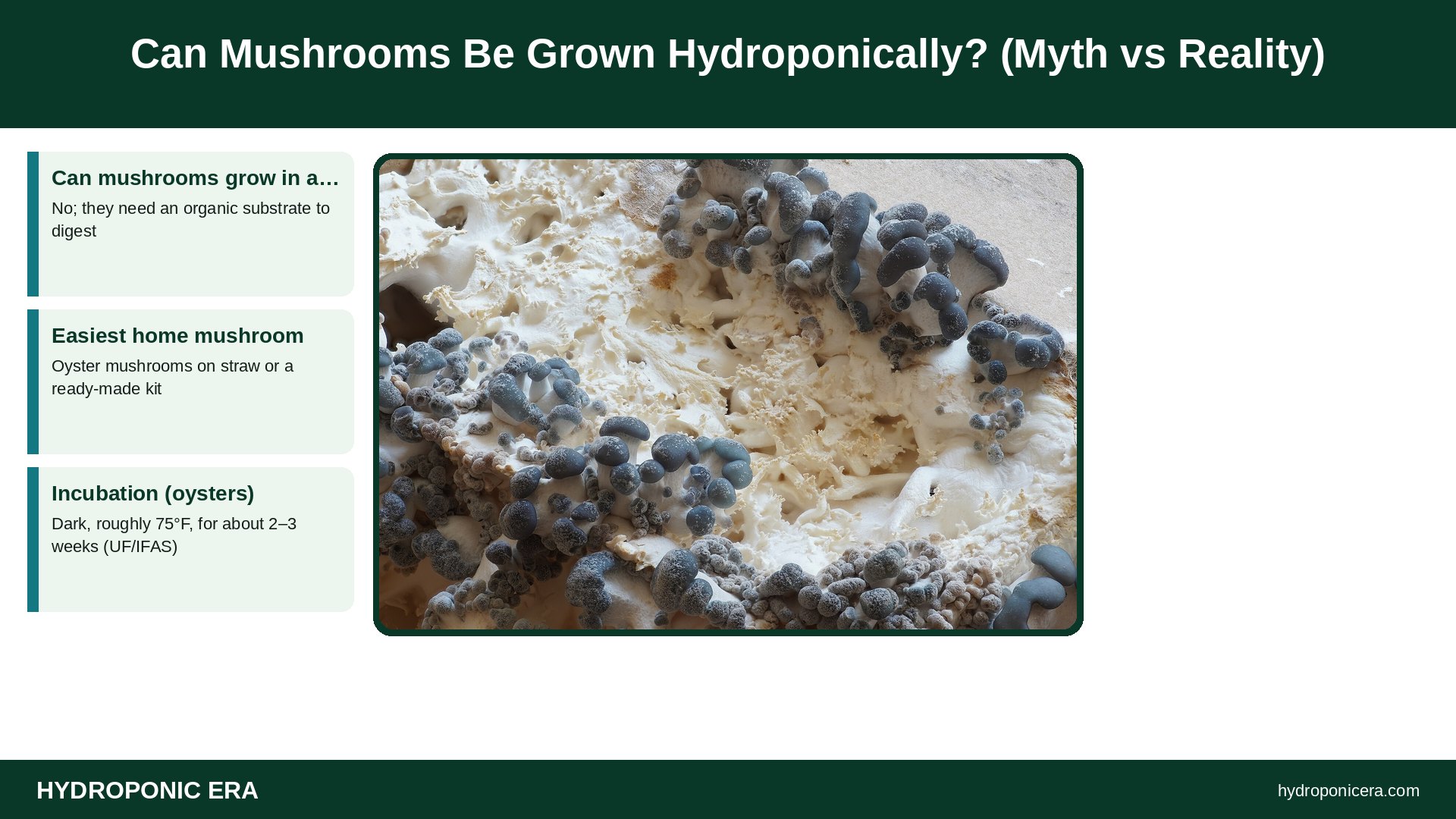
Mushrooms cannot be grown hydroponically in the usual sense, because they are fungi, not plants. Mushrooms have no roots, no leaves, and no chlorophyll, so they don’t take up dissolved mineral nutrients from water or make food from light. Instead, the mushroom’s body (mycelium) digests an organic substrate such as pasteurized straw, hardwood sawdust, or compost. You can absolutely grow mushrooms indoors next to your hydroponic garden, but the method is substrate cultivation, not a nutrient solution.