
Find the best plants for hydroponics. Start with lettuce, basil, and other hydroponic plants, then learn why fruiting crops wait and how to match a tower, DWC, or Kratky.

Find the best plants for hydroponics. Start with lettuce, basil, and other hydroponic plants, then learn why fruiting crops wait and how to match a tower, DWC, or Kratky.

Learn how to use hydroponic nutrients for beginners. Mix water first, then A and B, set EC, keep pH in range, and avoid yellow-leaf mistakes.
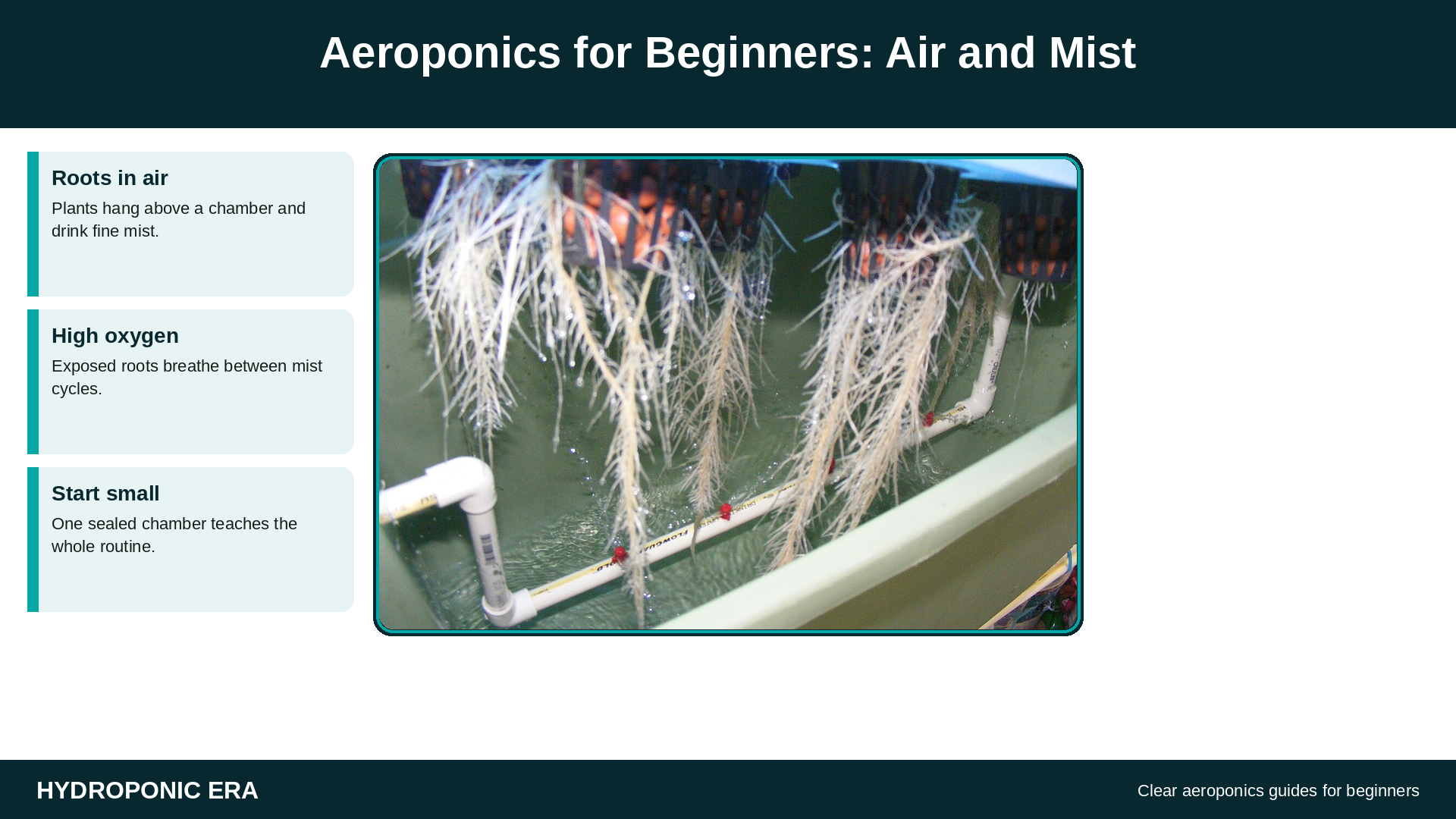
Learn aeroponics for beginners: how an aeroponic system uses air and mist, gear, setup, nutrients, pH, mist timing, best plants, and common mistakes to avoid.

Introduction A hydroponic tower garden lets you grow a lot of food in a small footprint. Instead of spreading plants across a bed, the tower stacks them vertically and sends nutrient solution past the roots. This beginner guide explains what a hydroponic tower garden is, how it works, what to grow first, and how to
Hydroponic Tower Garden: Complete Beginner’s GuideRead More »

Introduction If your plants look hungry even though you are feeding them, you need to learn how to control pH in hydroponics. There is no soil to buffer the root zone, so the solution you mix is the environment the roots live in. This guide keeps the process simple: measure, mix nutrients, then adjust slowly.

Learn how to set up an indoor hydroponic garden, choose the right plants, manage lighting and nutrients, and avoid common problems with this beginner-friendly guide

The Best Grow Lights for Hydroponics are the ones that provide enough usable light for your particular plants, cover your growing area evenly, and allow you to control the lighting environment as your plants grow.

Learn how often to change hydroponic water, what affects water-change frequency, how to test pH and EC, and how to safely replace your hydroponic nutrient solution.

If you’ve ever wondered how to grow lettuce hydroponically, you’re starting with one of the easiest and most rewarding crops for a hydroponic garden

Growing fresh vegetables, herbs, and even fruit without traditional garden soil may sound complicated, but the basic idea behind a hydroponic garden is surprisingly simple: give plant roots the water, oxygen, nutrients, light, and environmental conditions they need, while removing the need for ordinary soil.