Aquaponics bell siphon devices drain a media bed automatically, so it floods and empties on a cycle without a pump timer. Water flows into the bed at a steady rate, rises to the top of a standpipe, and starts dripping down it. A capped pipe called the bell sits over the standpipe; as water falls, the bell’s airtight seal creates suction, the siphon kicks in, and the bed drains faster than it fills.
Aquaponics media bed systems grow plants in a tray of gravel or clay pebbles that also acts as the biofilter and solids filter. FAO’s aquaponics manual recommends a bed about 12 inches (30 cm) deep for large fruiting crops like tomatoes, or 6–8 inches (15–20 cm) for small leafy greens, filled with volcanic gravel or expanded clay pebbles (LECA) about 5/16 to 3/4 inch (8–20 mm) across. Avoid limestone, which raises pH. Standard beds are about 3 feet (1 m) wide and 3–10 feet (1–3 m) long. Water reaches the bed by trickle, constant flow, or flood-and-drain with a bell siphon or a timer.
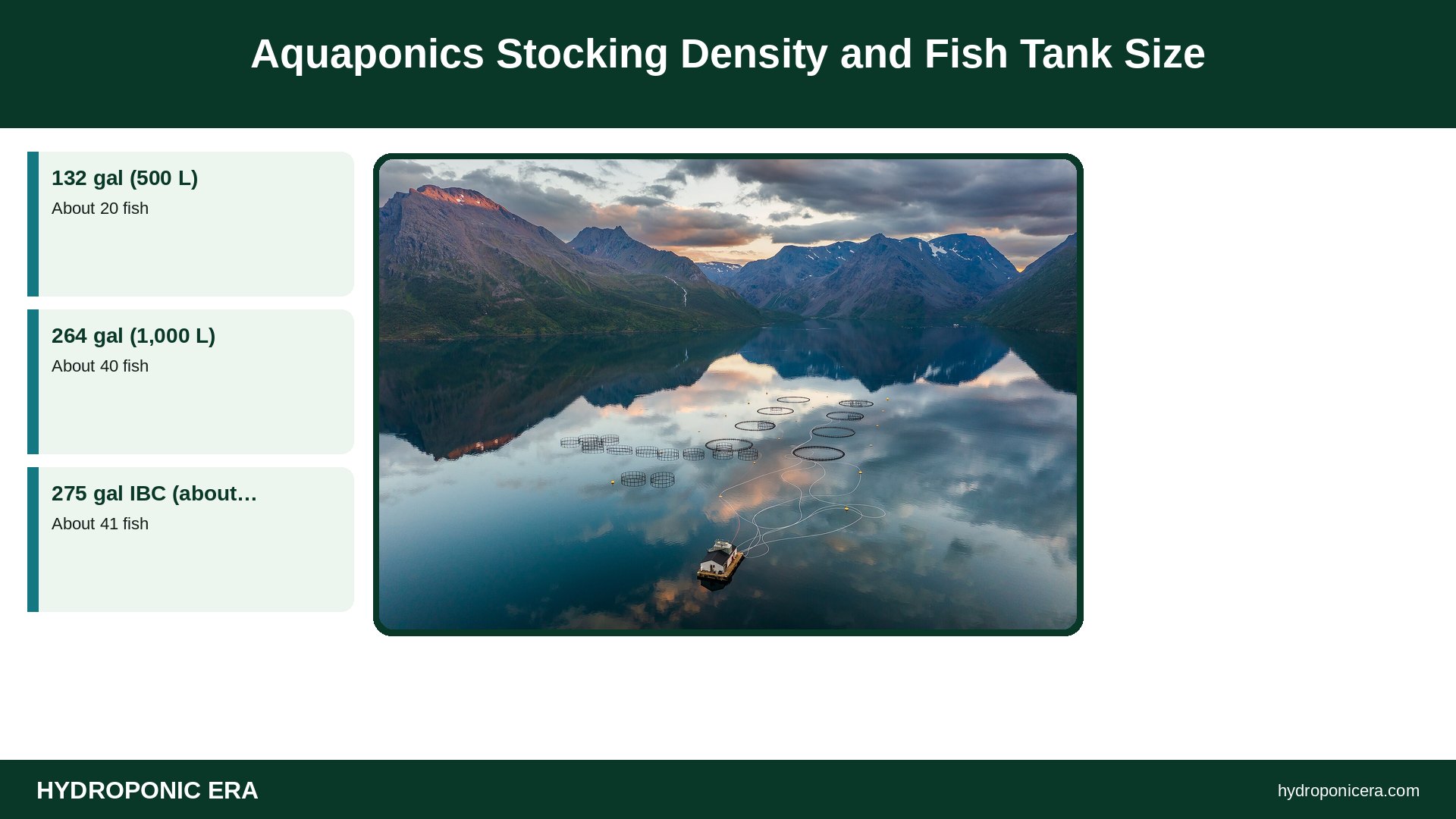
Aquaponics stocking density for home and small-scale systems should stay at or below about 20 kg of fish per 1,000 liters of water, which works out to roughly 0.17 pounds of fish per gallon, or about 44 pounds in a 264-gallon tank. That’s FAO’s recommended maximum for new aquaponic farmers, with 10–20 kg per 1,000 liters as the normal working range. FAO advises halving the density (about 1 kg per 100 liters, or 0.08 lb per gallon) in tanks under 500 liters (about 132 gallons), and says tanks that small aren’t recommended for growing food fish at all. Measure aquaponics stocking density by fish weight, not by fish count, and plan for the weight at harvest.
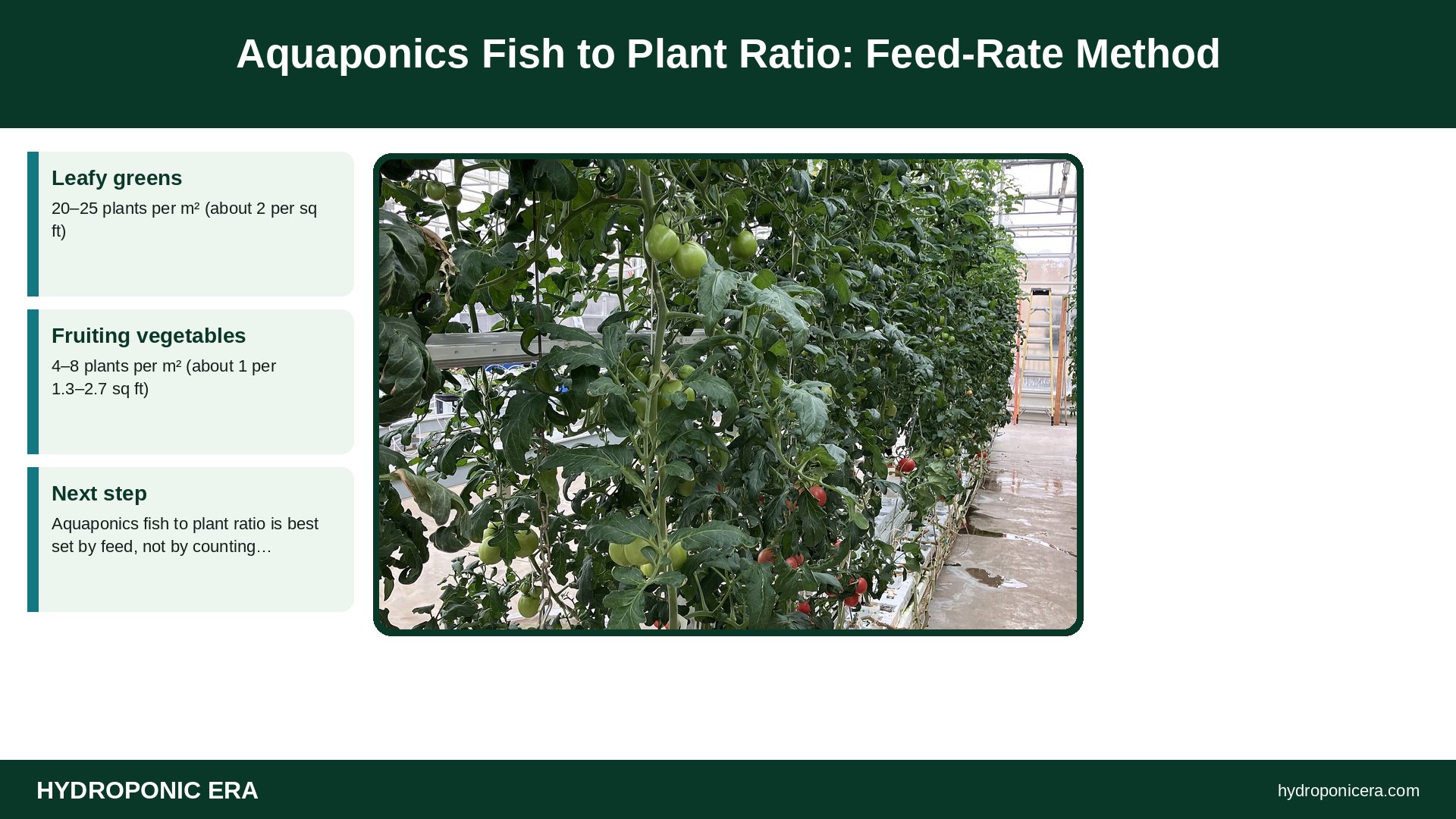
Aquaponics fish to plant ratio is best set by feed, not by counting fish. FAO’s aquaponics manual calls the feed rate ratio the most important calculation in aquaponics: feed about 40–50 grams of fish feed per square meter of leafy greens per day (roughly 3.7–4.6 grams per square foot), or 50–80 grams per square meter for fruiting crops like tomatoes (about 4.6–7.4 grams per square foot). Then size the fish to eat that feed: grow-out fish eat about 1–2% of their body weight per day. FAO’s worked example: 25 heads of lettuce a week needs about 4 m² (43 sq ft) of growing space, 200 g (7 oz) of feed daily, and 10–20 kg (22–44 lb) of fish.
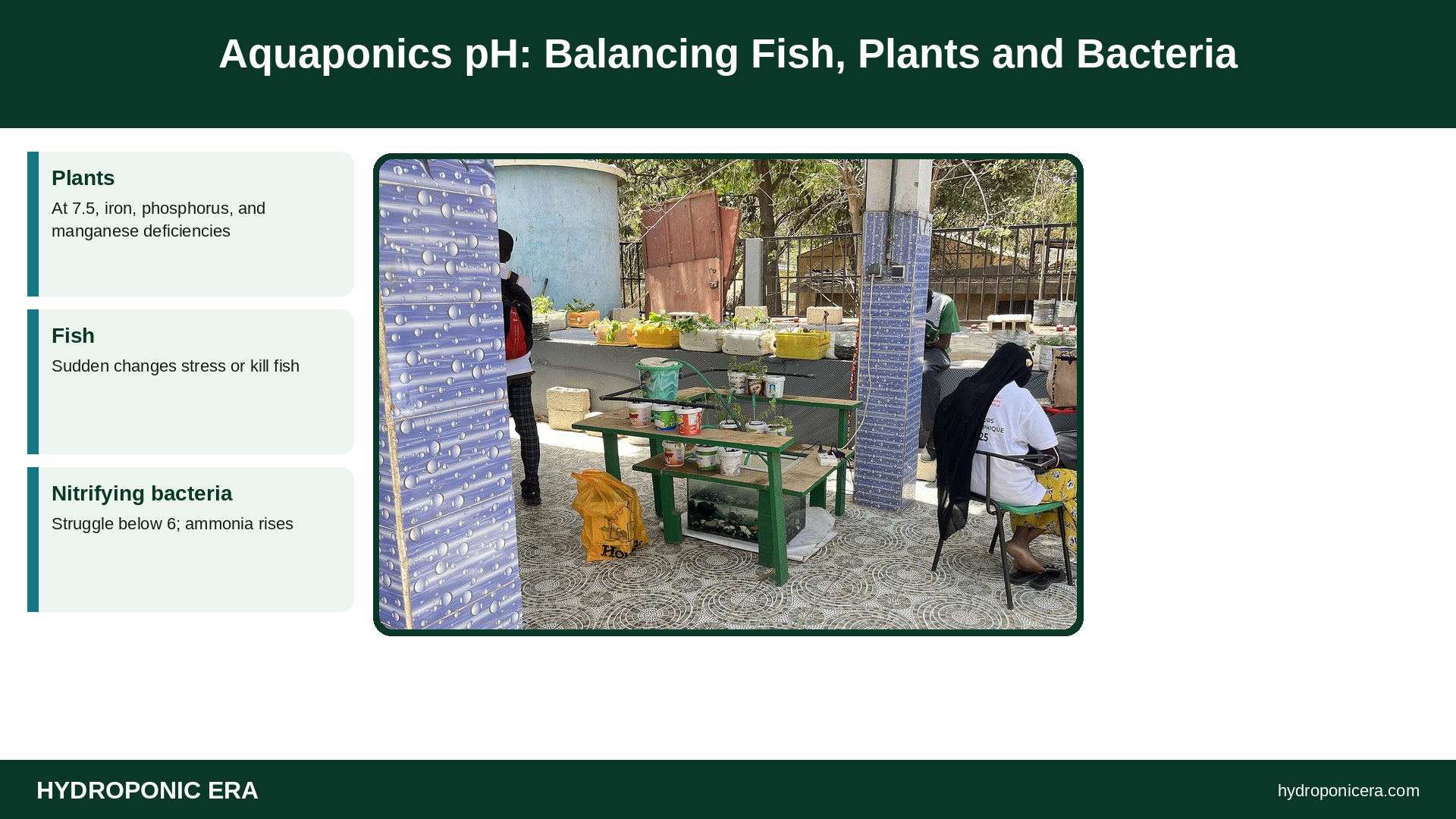
Aquaponics pH should usually sit between 6 and 7. FAO’s aquaponics manual calls this range a compromise: plants take up nutrients best around 6.0–6.5, fish do best at about 6.5–8.5, and nitrifying bacteria prefer about 7.2–8.2 but struggle below 6. Because nitrification constantly produces acid, most aquaponics systems drift downward over time. Raise pH gently with calcium carbonate or potassium carbonate (for example crushed eggshells or seashells in a mesh bag in the sump), and lower it only when hard, high-pH source water demands it, using phosphoric acid in top-up water rather than in the system. Never use baking soda or citric acid.
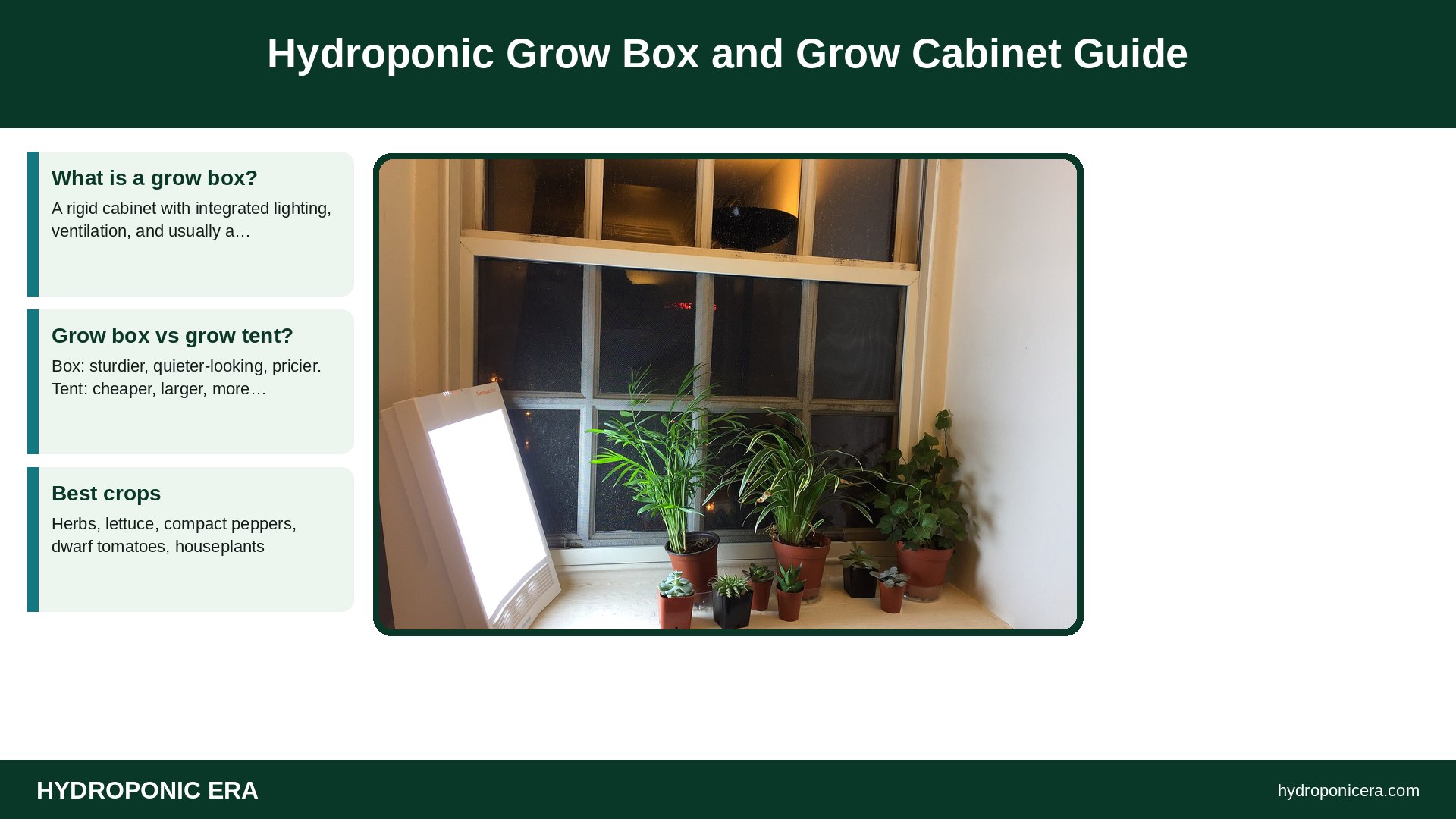
A hydroponic grow box is an enclosed cabinet with built-in lights, fans, and often a hydroponic system, so you can grow indoors without setting up a separate tent. A grow box suits small spaces, renters, and anyone who wants a tidy, light-tight, odor-controlled setup in a closet or living room. The trade-off is price and flexibility: per square foot, a grow box usually costs more than a tent kit, and its built-in parts are harder to upgrade.
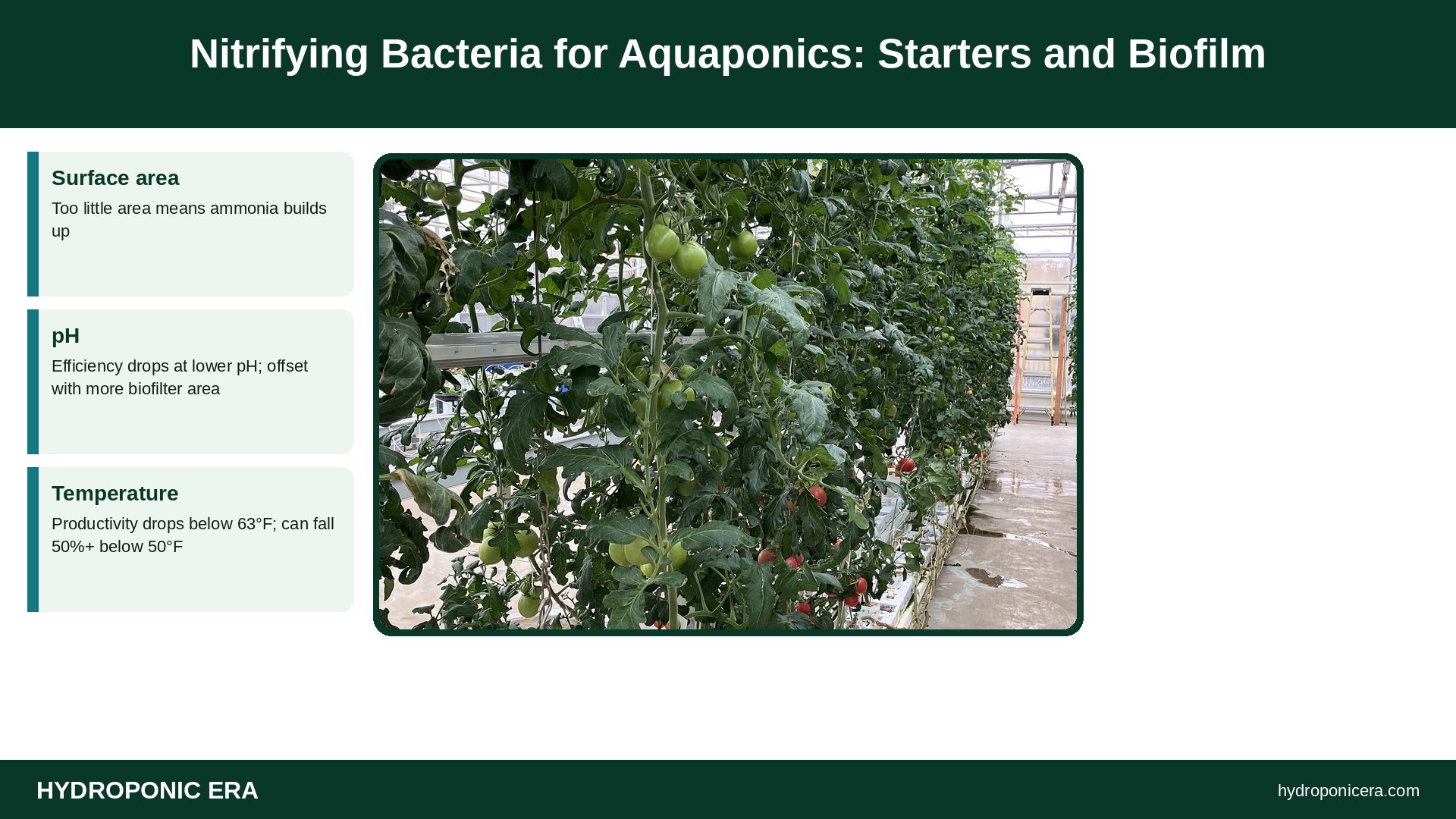
Nitrifying bacteria are the invisible workers that make the whole system run. They turn toxic fish ammonia into nitrite and then into nitrate that plants absorb. FAO’s aquaponics manual names Nitrosomonas as the most common ammonia-oxidizing group and Nitrobacter as the most common nitrite-oxidizing group, and lists five keys to keeping them productive: lots of surface area, pH around 6–7, water at about 63–93°F (17–34°C), dissolved oxygen of 4–8 mg/L, and shade from direct sunlight. You can start them with an ammonia source and patience, speed things up with seeded media from a mature system, or use bottled bacteria.
Aquaponics ammonia , nitrite, and nitrate are the three nitrogen readings that tell you whether your fish are safe and your plants are fed. FAO’s aquaponics manual gives clear targets: ammonia (total ammonia nitrogen) and nitrite should be near zero in a mature system and are toxic above about 1 mg/L, with nitrite causing problems from as low as 0.25 mg/L. Nitrate is far less toxic; FAO recommends keeping it between 5 and 150 mg/L and exchanging some water when it climbs higher. High aquaponics ammonia or nitrite means the biofilter is too small or not working; low nitrate means too many plants or too few fish.
Aquaponics cycling is the process of growing a colony of nitrifying bacteria in a new system before you add fish, so the bacteria can turn toxic ammonia into nitrite and then into nitrate that plants use. FAO’s aquaponics manual says aquaponics cycling normally takes 3–5 weeks, or about 25–40 days in good conditions, and up to two months in cool water. You add a steady ammonia source to reach about 1–2 mg/L, test every 2–3 days, and call the cycle complete when nitrite reads 0, ammonia is below 1 mg/L, and nitrate is steadily rising. Fishless aquaponics cycling with ground fish food or pure ammonia is the safest method.
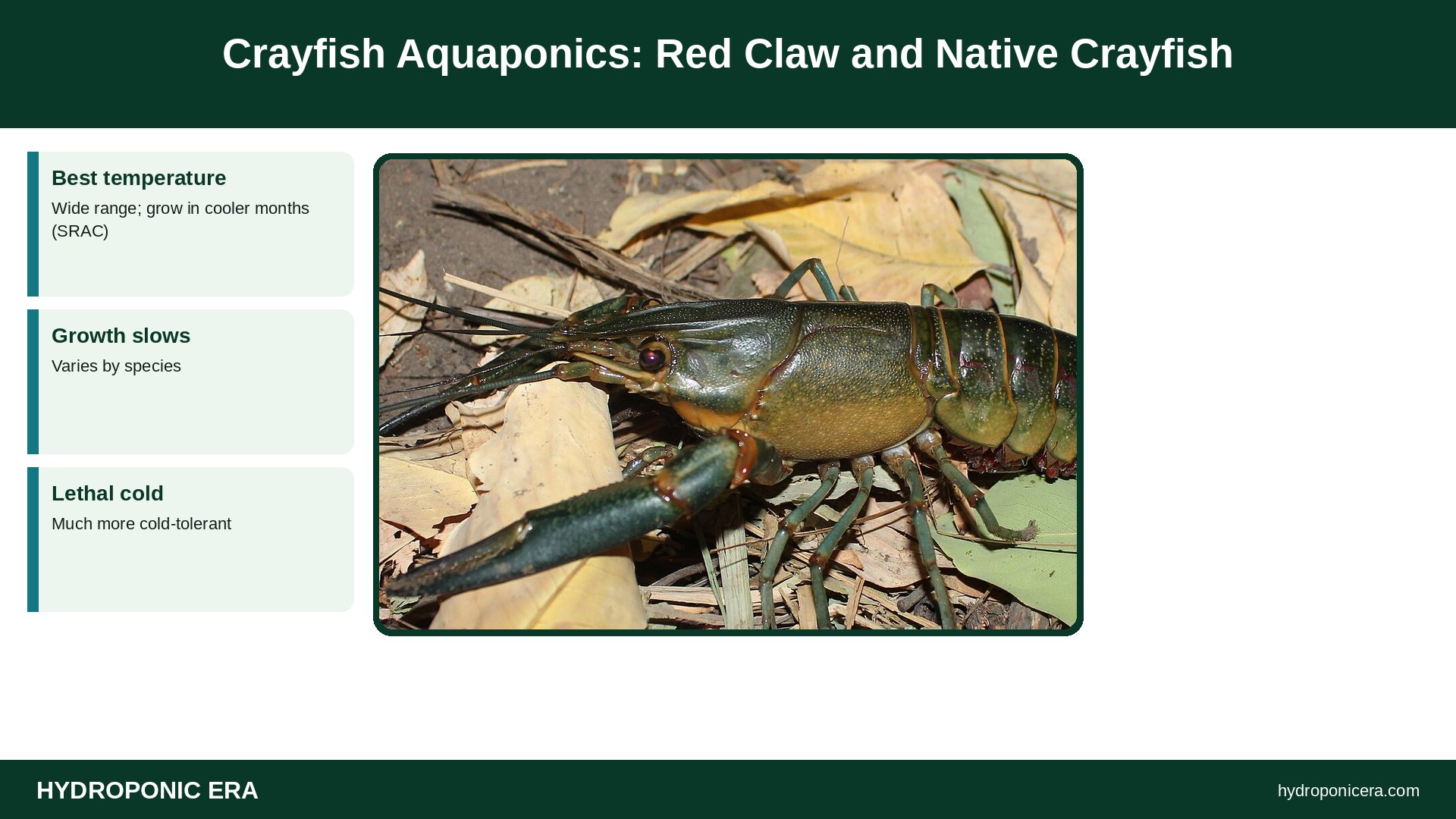
Crayfish aquaponics means adding crayfish to the fish tank as bottom scavengers and a bonus harvest. The two common choices in the US are Australian red claw ( Cherax quadricarinatus ) and native species such as red swamp crayfish ( Procambarus clarkii ). The Southern Regional Aquaculture Center (SRAC) says red claw grow best in 75–85°F water, slow sharply below 70°F, and die below 50°F, while native crayfish tolerate a wider temperature range. Legality is the biggest hurdle: SRAC notes most states restrict exotic species, and red swamp crayfish are prohibited in states such as Michigan and Washington. Check your state before buying any live crayfish.