
A hydroponic grow box is an enclosed cabinet with built-in lights, fans, and often a hydroponic system, so you can grow indoors without setting up a separate tent. A grow box suits small spaces, renters, and anyone who wants a tidy, light-tight, odor-controlled setup in a closet or living room. The trade-off is price and flexibility: per square foot, a grow box usually costs more than a tent kit, and its built-in parts are harder to upgrade.
Key takeaway: Buy a grow box for convenience, looks, and discretion. Buy a tent if you want the most growing area and upgrade options for your money.
| Question | Short answer |
|---|---|
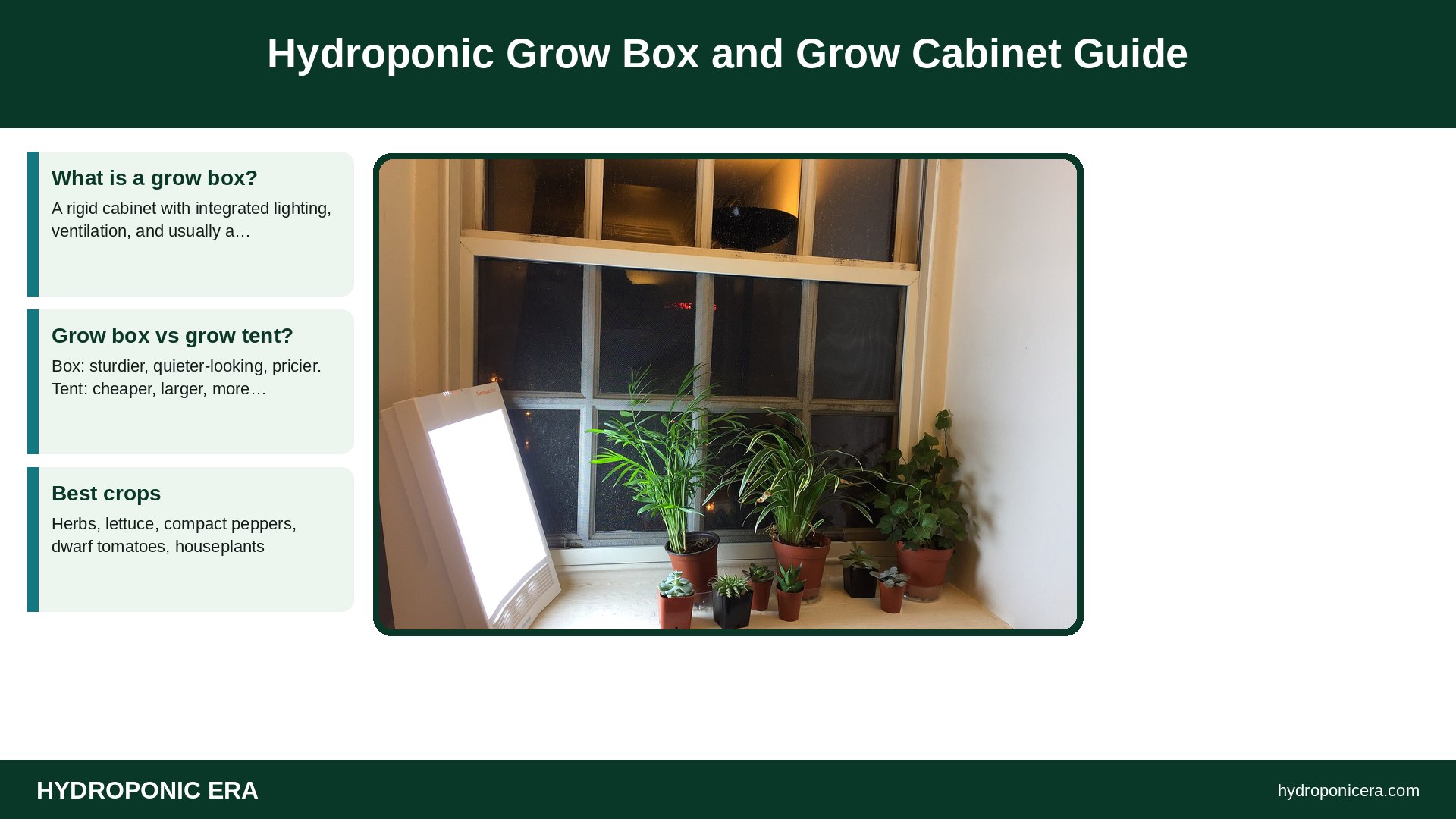
| What is a grow box? | A rigid cabinet with integrated lighting, ventilation, and usually a growing system |
| Grow box vs grow tent? | Box: sturdier, quieter-looking, pricier. Tent: cheaper, larger, more modular |
| Best crops | Herbs, lettuce, compact peppers, dwarf tomatoes, houseplants |
| Key specs to compare | Interior height, light PPFD, fan CFM, filter, power draw |
| Main risks | Heat buildup, humidity, small reservoir, proprietary parts |
What a Grow Box Includes
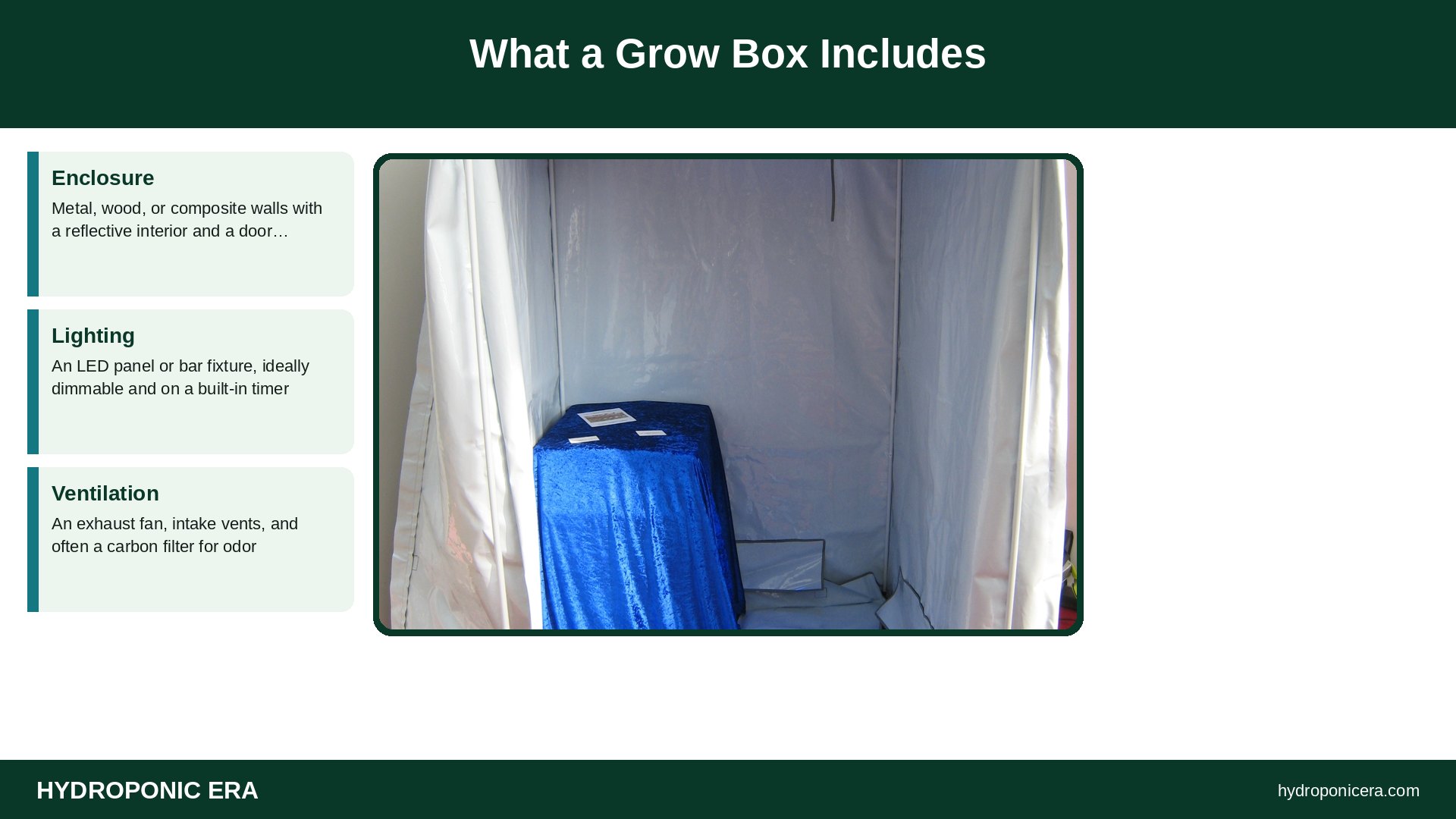
Most cabinets sold for home growing combine several parts that you would otherwise buy one by one for a grow tent setup:
- Enclosure. Metal, wood, or composite walls with a reflective interior and a door that seals out light.
- Lighting. An LED panel or bar fixture, ideally dimmable and on a built-in timer.
- Ventilation. An exhaust fan, intake vents, and often a carbon filter for odor.
- Growing system. Some boxes ship with a deep water culture tub, an ebb and flow tray, or simply room for pots.
- Controls. Better units add temperature and humidity sensors, an app, or a controller for fan speed.
Not every grow box includes all of this. Read the spec sheet line by line, because “complete” can mean anything from a fully plumbed hydroponic cabinet to an empty light-tight box with one fan.
Grow Box vs Grow Tent vs Open Shelf
| Option | Strengths | Weaknesses |
|---|---|---|
| Grow box / cabinet | Sturdy, neat, light-tight, lockable, quieter appearance | Higher cost per sq ft, limited height, harder upgrades |
| Grow tent kit | Cheap, many sizes, easy to swap lights and fans | Fabric looks utilitarian, zippers wear, needs more assembly |
| Open shelf with lights | Cheapest, great for greens and seedlings | No light or odor containment, harder humidity control |
If you mainly grow lettuce and herbs, an open shelf with grow lights may be all you need. A grow box makes more sense when you want an enclosed space in a shared room, need light leaks controlled for photoperiod crops, or want to keep pets and kids away from the reservoir.
Sizing: Footprint and Interior Height
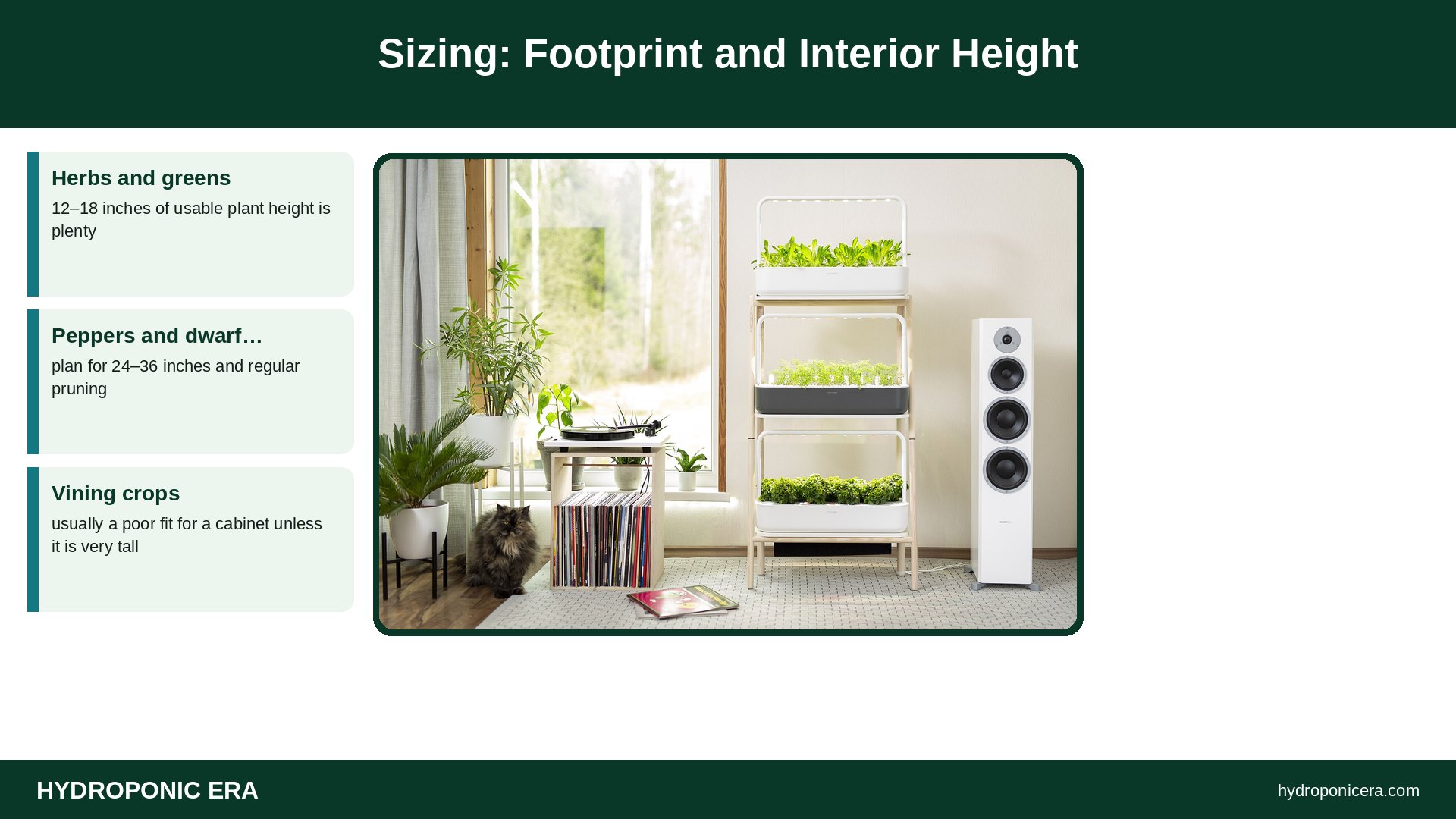
Interior height matters more than the outside dimensions. Subtract the height of the light fixture, the hanging gap above the canopy, and the height of the reservoir or pots. What’s left is your real plant height. A cabinet that looks tall can leave only a couple of feet for plants once the light and a deep water culture tub are inside.
- Herbs and greens: 12–18 inches of usable plant height is plenty.
- Peppers and dwarf tomatoes: plan for 24–36 inches and regular pruning.
- Vining crops: usually a poor fit for a cabinet unless it is very tall.
Our guide to light hanging height by stage helps you estimate the gap you need between the fixture and the canopy.
Lighting: What to Check
Ignore claims like “equivalent to 600W HPS.” Look for a PPFD map (light intensity across the floor in µmol/m²/s) and the actual power draw in watts. Leafy greens do well around the lower end of typical indoor intensities, while fruiting plants need more. Our PPFD and DLI guide explains target ranges, and you can check your own unit with a phone-based PPFD reading as a rough guide.
A dimmer is valuable in any grow box. It lets you run lower intensity for seedlings and reduces heat when the room is warm.
Heat, Humidity, and Airflow
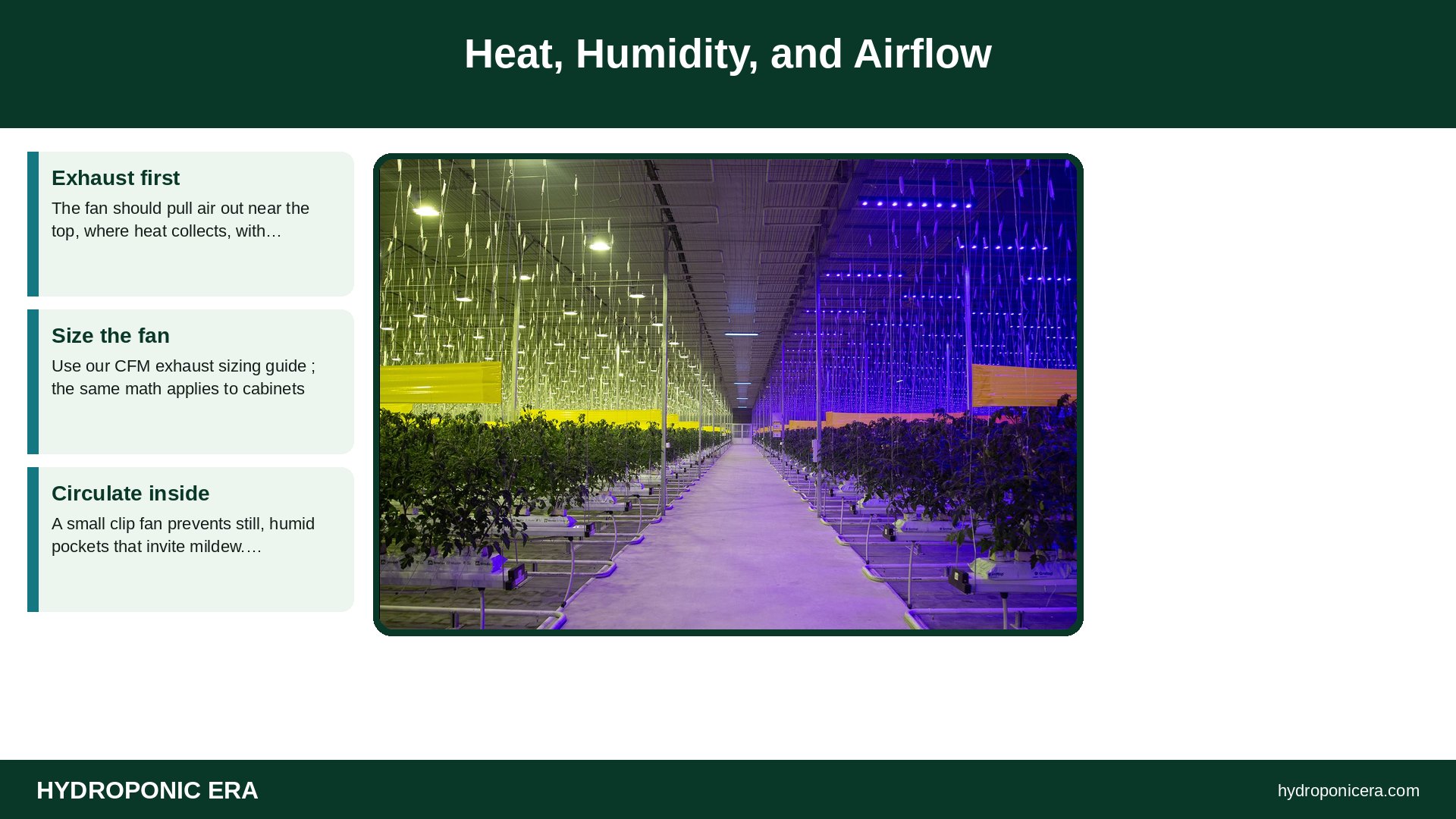
The biggest practical problem in a small enclosed cabinet is heat. LEDs are efficient, but in a closed box a 100–200W fixture can still push the inside several degrees Fahrenheit above room temperature. Warm air also holds more moisture, and transpiring plants add humidity quickly.
- Exhaust first. The fan should pull air out near the top, where heat collects, with passive or filtered intake low on the opposite side.
- Size the fan. Use our CFM exhaust sizing guide; the same math applies to cabinets.
- Circulate inside. A small clip fan prevents still, humid pockets that invite mildew. See hydroponic airflow and fans.
- Watch the reservoir. Warm boxes warm the nutrient solution; aim to keep it in the mid-60s °F. Our reservoir temperature guide covers fixes.
Choosing a Hydroponic System for a Cabinet
The system inside a grow box needs to fit the floor and be easy to service through the door.
- Deep water culture: simple and quiet, but a full tub is heavy and hard to lift out. See DWC for beginners.
- Ebb and flow tray: flexible for several small plants; the reservoir can sit underneath or outside.
- Kratky containers: no pump, no noise, ideal for lettuce in a small box. See the Kratky method.
- Coco or clay pebble pots: easy to move and rearrange; watered by hand or drip.
Power, Noise, and Safety
Add up the wattage of the light, fans, pumps, and any heater, and plug into a GFCI-protected outlet. Water and electricity share a small space in a grow box, so keep power strips above the floor and use drip loops on cords. Our electrical safety guide lists the basics.
For noise, fan speed control is the biggest win. A larger fan running slowly is quieter than a small fan at full speed. If you live in an apartment, see our tips on pump noise and vibration.
Buying Checklist
- Usable interior height after light and system are installed
- Published PPFD map and true wattage, with a dimmer
- Exhaust fan with speed control and room for a carbon filter
- Light-tight door seals and cable ports
- Standard parts (fans, lights) you can replace later
- Reservoir volume and how you’ll drain or change it
- Warranty length and US customer support
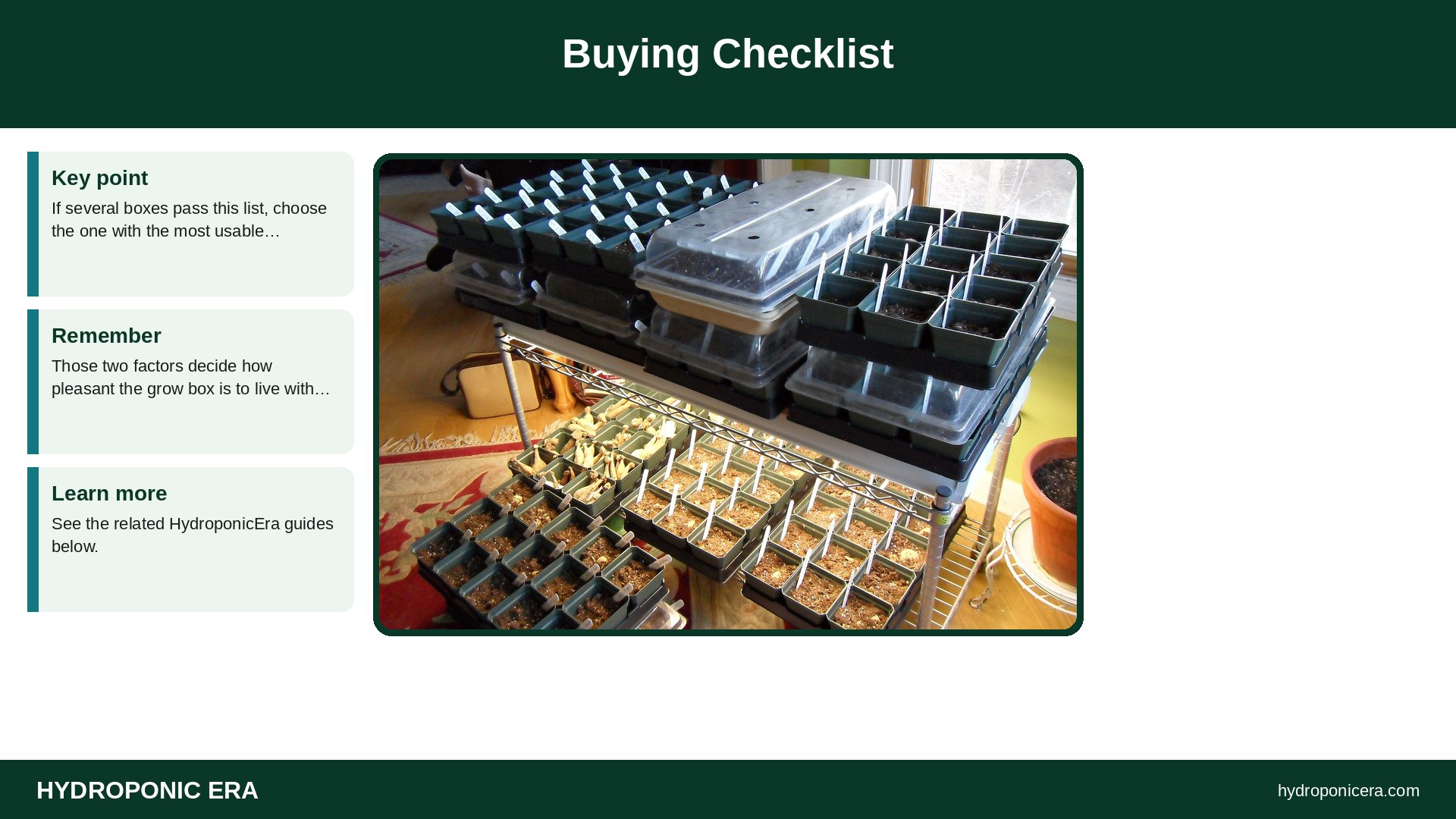
If several boxes pass this list, choose the one with the most usable height and the easiest access for reservoir changes. Those two factors decide how pleasant the grow box is to live with day to day.
DIY Grow Box Options
Many growers convert a wardrobe, old entertainment center, or metal locker. Line the inside with white paint or reflective film, add an LED fixture, cut a vent hole for a small inline fan, and seal light leaks with foam weatherstripping. Use materials that tolerate moisture, and leave room for a drip tray. Our guide to reflective materials compares coatings.
A DIY grow box can cost much less than a commercial one, but it takes careful work on airflow and light sealing. Test the empty box with the light running for a day and log temperatures before adding plants.
First-Week Setup Routine for a New Grow Box
- Run it empty for 24 hours. Turn on the light, fans, and pump with no plants inside, then check the interior temperature at the top of the cabinet at the end of the light period. If it runs more than about 10°F above room temperature, add exhaust before planting.
- Check for light leaks around doors and cable holes if the grow box sits in a living space.
- Set a timer for the light and confirm it switches at the right times.
- Fill and level the reservoir, then watch for drips under the system for a day.
- Start with easy crops such as lettuce or basil before trying fruiting plants.
Write down temperature and humidity for the first two weeks. Those notes show whether the grow box needs more airflow once plants fill out. See humidity and VPD.
FAQs: Grow Box Basics
Is a grow box better than a grow tent?
Not better, just different. A grow box is sturdier and tidier; a tent is cheaper per square foot and easier to upgrade.
Can I grow vegetables in a grow box?
Yes. Herbs, lettuce, and compact fruiting plants such as peppers and dwarf tomatoes fit well. Tall vining crops usually do not.
Does a grow box need a carbon filter?
Only if odor matters. Most vegetables don’t smell much, but herbs like basil or flowering plants can, and a filter also helps in shared homes.
How hot does a grow box get?
That depends on light wattage, room temperature, and fan size. Measure it. If the inside runs more than a few degrees above the room, increase exhaust or dim the light.
Can I use a grow box in a closet?
Yes, but the closet itself needs some air exchange, or the cabinet will just recycle warm, humid air. Crack the closet door or duct exhaust out.
Related Guides
- Hydroponics in apartments and small spaces
- Best grow lights for hydroponics
- Humidity and VPD indoors
Sources
- University of Missouri Extension — Controlled Environment Agriculture: Understanding Grow Lights
- Kusuma, Pattison and Bugbee (2020), Horticulture Research — From physics to fixtures to food: current and potential LED efficacy
- USDA National Agricultural Library — Hydroponics resources
- Photo credits (Wikimedia Commons, edited with titles): Potted plants succulents under grow light Nov 2016 by Asdfjrjjj (CC BY-SA 4.0); Led digital visuals-leds in grow box PNr°0082 by D-Kuru (CC BY-SA 3.0 at); Click & Grow Smart Garden 27 by Janar Raidla (CC BY-SA 4.0); Greenhouse in Kazakhstan by Gakon Netafim (CC BY-SA 4.0); Dahlias started indoors by F. D. Richards from Clinton, MI (CC BY-SA 2.0)