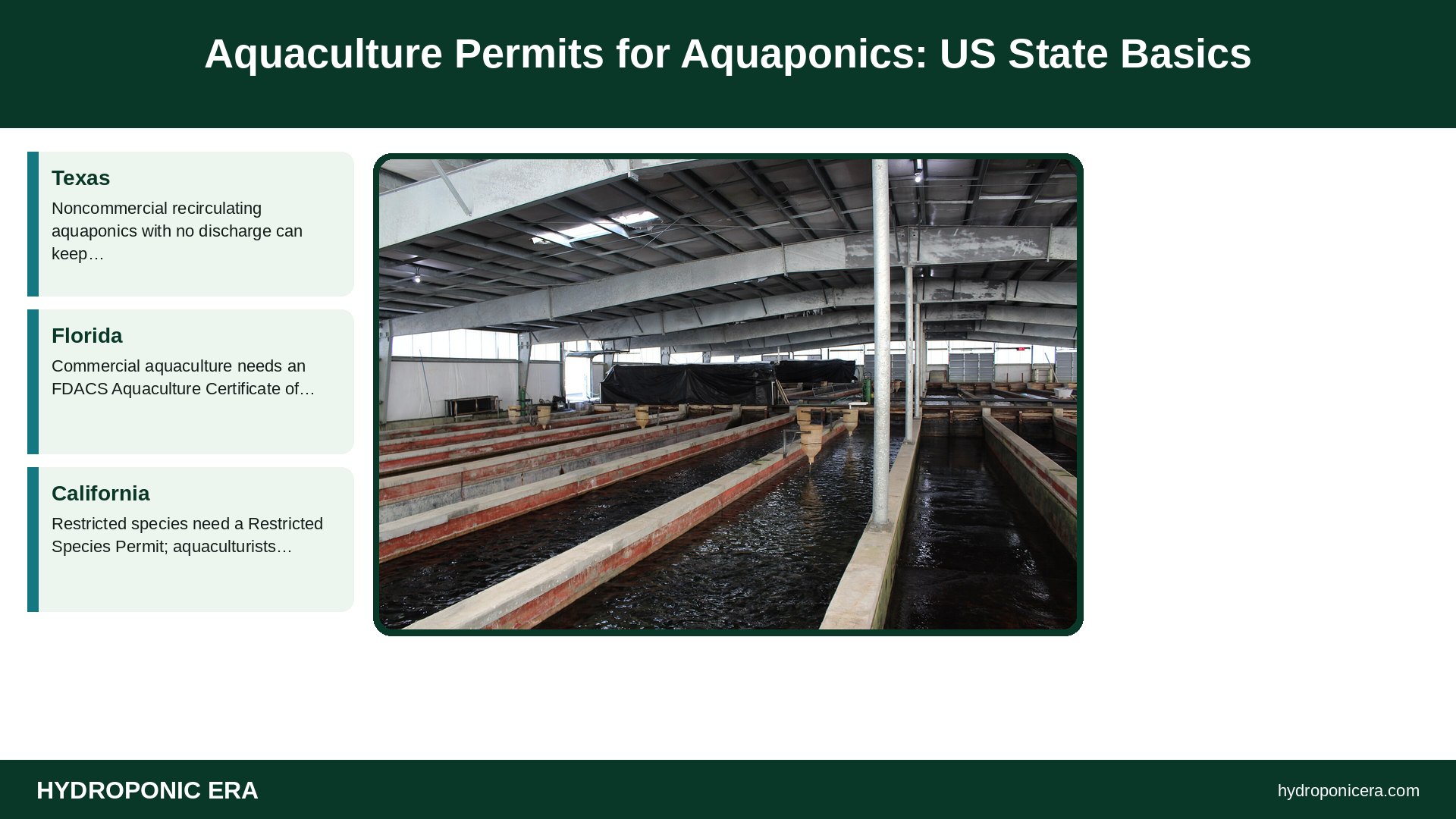
Whether you need an aquaculture permit for aquaponics depends on your state, the fish species, and whether you sell fish or discharge water. In most states, aquaculture is regulated by the state fish and wildlife agency, the department of agriculture, or both. Commercial growers generally need some form of registration or license. Hobby systems with native or approved species are often exempt, but exotic species like tilapia usually trigger extra rules. Texas, Florida, and California show how different the rules can be, so always check with your own state agency before you buy fish.
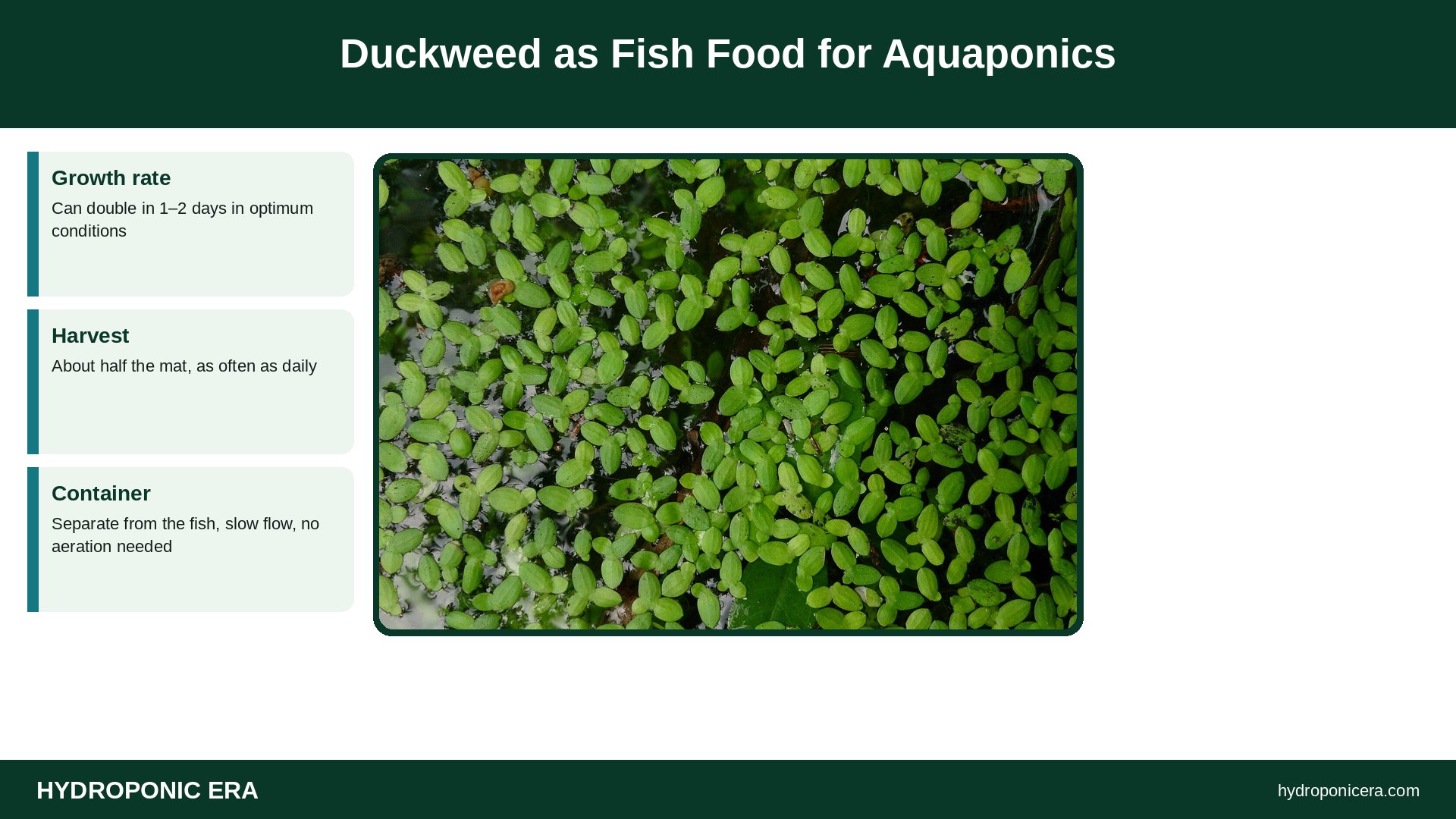
Duckweed fish food is a cheap, homegrown supplement for herbivorous and omnivorous fish such as tilapia, carp, koi, and goldfish. FAO’s aquaponics manual describes duckweed as a fast-growing floating plant rich in protein that can double its mass every 1–2 days in good conditions, so about half can be harvested daily. FAO advises growing it in a separate container, with slow water flow and no aeration, because fish would eat the whole stock if it grew in their tank. It’s a supplement to complete pellets, not a full replacement, and it works especially well placed on the return line, where it cleans up nutrients before water goes back to the fish.
Aquaponics fish food should be a complete commercial pellet sized for your fish, because the feed is the only real nutrient input for both fish and plants. FAO’s aquaponics manual recommends standard manufactured pellets as a whole feed with the right balance of protein, fats, carbohydrates, vitamins, and minerals. Omnivores such as tilapia and carp need about 32% protein, while carnivores such as trout need more, around 42%. Feed what the fish eat in about 30 minutes, usually 1–2% of their body weight per day for grow-out fish, and remove leftovers so they don’t rot and spike ammonia.
Aquarium aquaponics means growing plants on top of a home fish tank so the fish waste feeds the plants and the roots help clean the water. It works well for herbs, houseplants, and small greens on 10- to 55-gallon tanks, using a small pump to lift water into a planter tray or simply letting roots of plants like pothos hang into the water. It’s not a replacement for filtration or water changes in a stocked aquarium, and for bettas it’s only safe with a proper heated, filtered tank of at least 5 gallons, not a vase where the fish must live off plant roots.
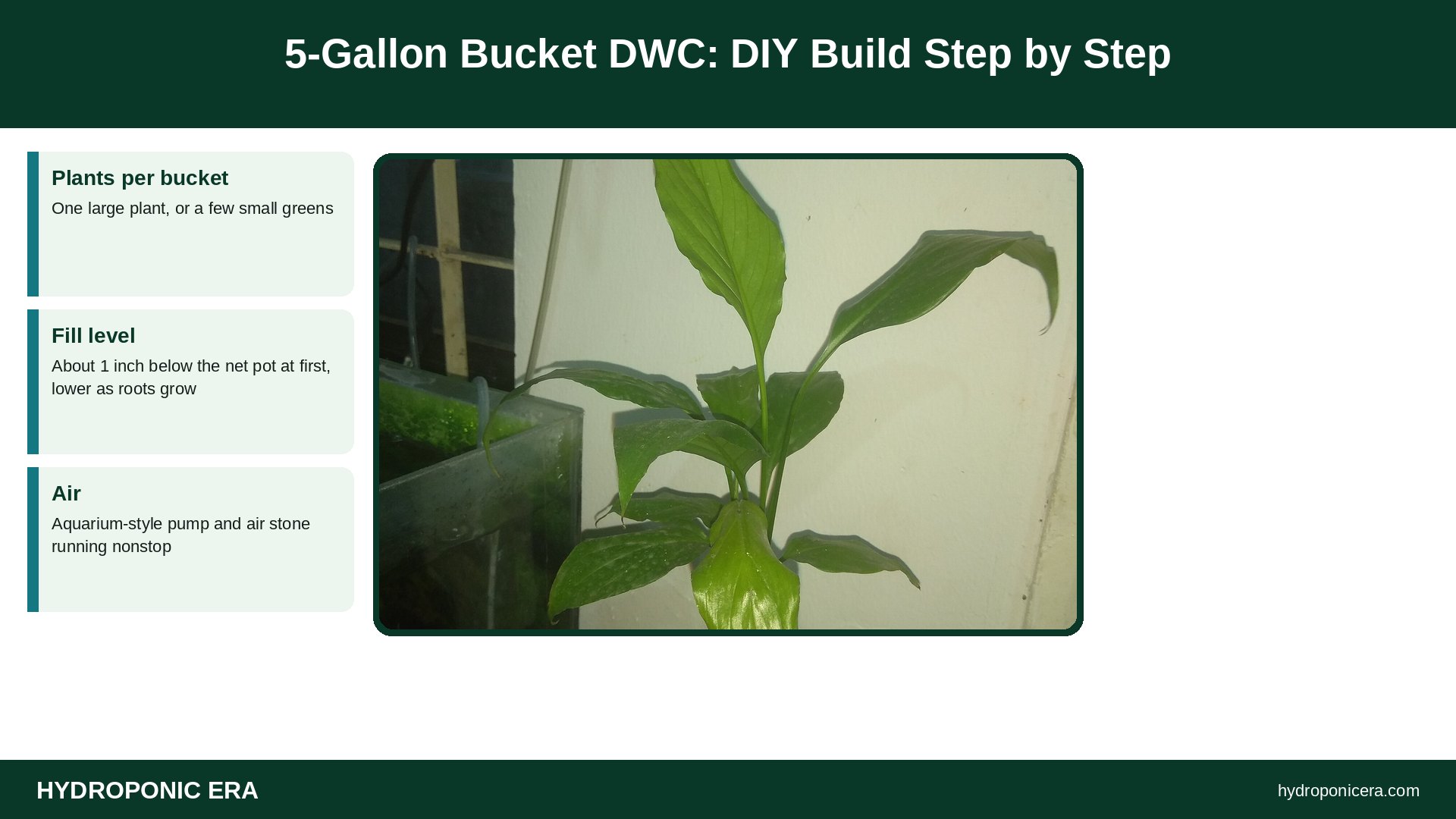
A 5 gallon bucket DWC (deep water culture) system is the simplest powered hydroponic build: one food-grade bucket, a net pot lid, an air pump, and an air stone. Roots hang in aerated nutrient solution, and one bucket grows one large plant, such as a tomato, pepper, or a big head of lettuce. You can build it in under an hour for roughly the cost of a store-bought starter kit or less, using parts from a hardware store and an aquarium aisle.
DIY indoor aquaponics works best as a small media bed system: a fish tank of at least 20–50 gallons, a grow bed on top or beside it filled with expanded clay pebbles, a small submersible pump, and an air pump. Water pumps from the tank to the bed, trickles or siphons through the media, and drains back. FAO’s aquaponics manual notes that very small units with fish tanks up to about 200 liters (53 gallons) can pump straight from the fish tank to the grow bed without a sump. Indoors, plan for light, weight, humidity, and noise, and choose hardy ornamental fish such as goldfish, since FAO doesn’t recommend growing food fish in tanks under 500 liters.
Aquaponics sump tank is the collection tank at the lowest point of the system, where water drains by gravity and the pump sends it back up. FAO’s aquaponics manual recommends the pump sit in the sump, a design called CHIFT-PIST: constant height in fish tank, pump in sump tank. That way evaporation, leaks, and flood-and-drain cycles change only the sump level, never the fish tank. FAO says the sump should be smaller than the fish tank, about one-quarter to one-third of its volume, but large enough to hold all the water from flood-and-drain grow beds when they’re full.
IBC aquaponics uses intermediate bulk containers, the caged 275- or 330-gallon plastic totes common on farms, to build a fish tank, grow beds, and sump cheaply. FAO’s aquaponics manual includes a full build plan from three IBC totes: one whole tote becomes the fish tank (about 1,000 liters, or roughly 264 gallons), and two more are cut into three 12-inch-deep (30 cm) media beds plus a sump. The most important rule is to use only totes that held food-grade or non-toxic contents, wash them thoroughly, and shade the translucent plastic so algae doesn’t take over.
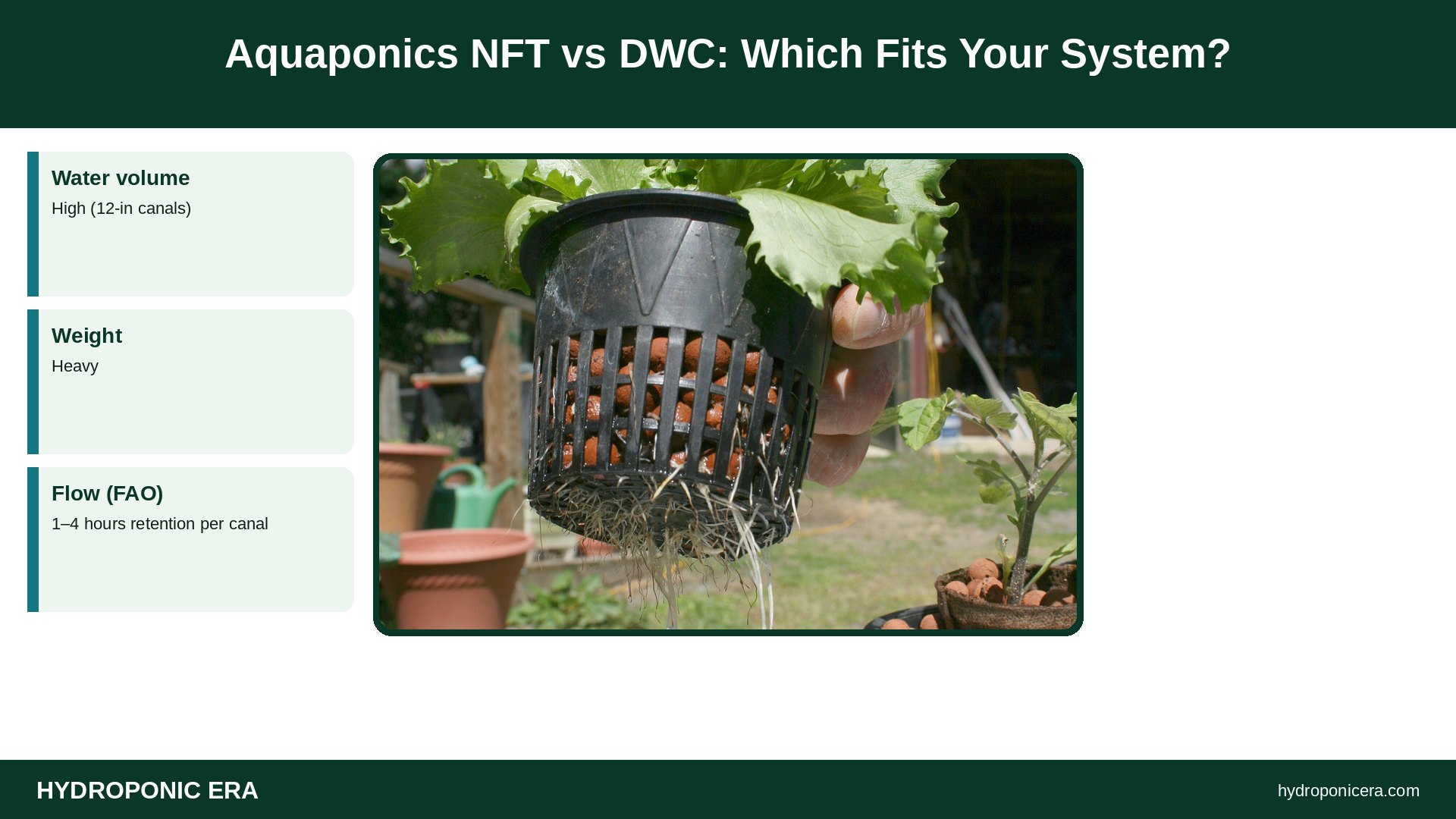
Aquaponics NFT (nutrient film technique) runs a thin stream of fish water through sloped pipes, while DWC (deep water culture, or raft) floats plants over deep canals. For most home growers, DWC is easier and more forgiving because its large water volume buffers temperature, oxygen, and nutrient swings and keeps roots wet if the pump stops. NFT is lighter, uses less water, and fits walls, fences, and rooftops, but it’s less forgiving: FAO notes fruiting plants in NFT can wilt almost immediately if flow is disrupted, and pipes can clog with roots. Both methods need a dedicated solids filter and biofilter, unlike media beds.
Aquaponics raft system designs, also called deep water culture (DWC), float plants on foam rafts over long, water-filled canals, with roots hanging straight into nutrient-rich fish water. FAO’s aquaponics manual calls the DWC aquaponics raft system the most common method for large commercial aquaponics, especially for lettuce, salad greens, and basil. FAO recommends canals about 12 inches (30 cm) deep, a retention time of 1–4 hours (the time it takes to replace all the water in a canal), and air stones releasing about 4 liters of air per minute for every 2–4 m² (roughly 21–43 sq ft) of canal. Unlike media beds, raft systems need a separate solids filter and biofilter at normal stocking.