
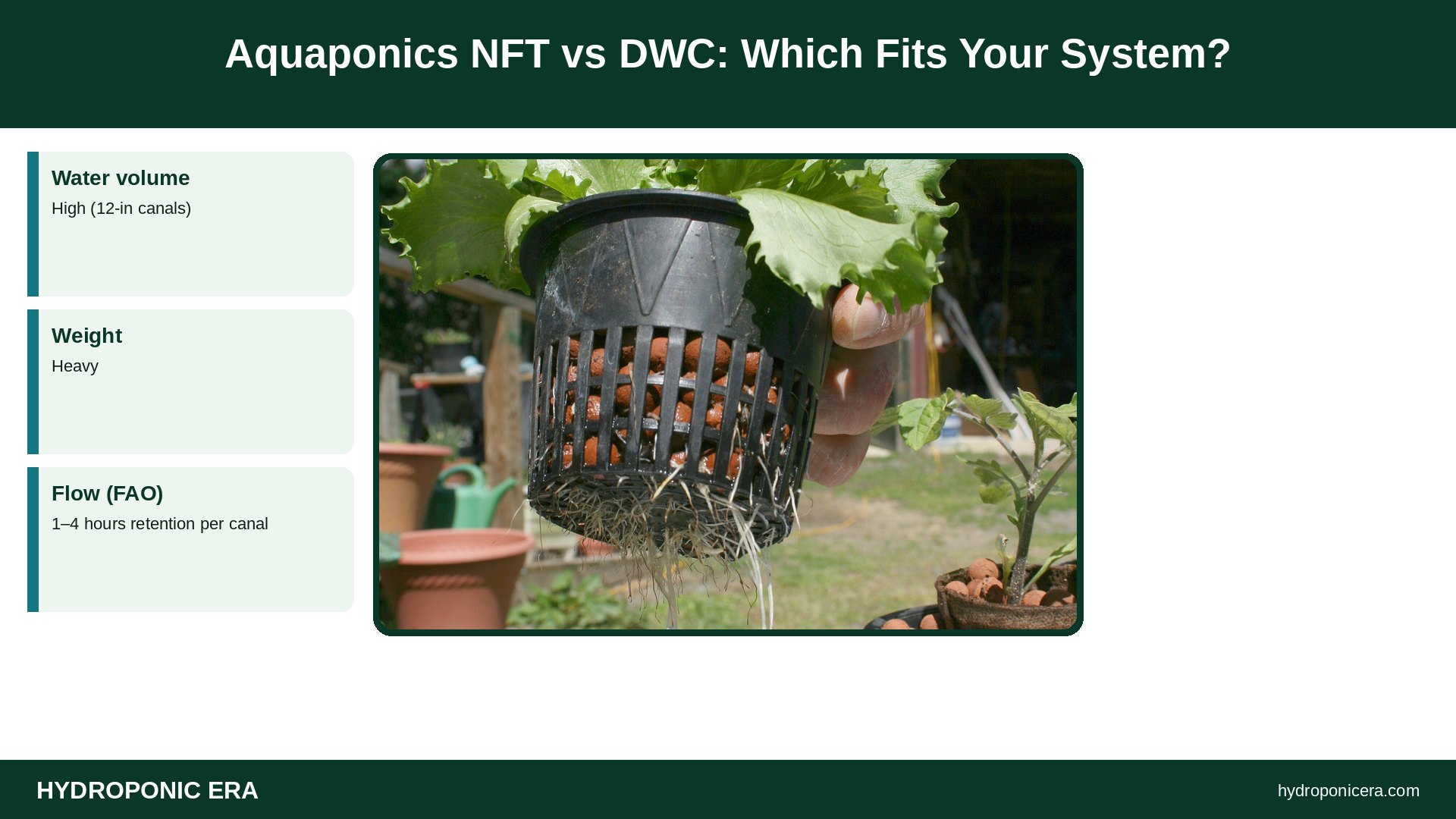
Aquaponics NFT (nutrient film technique) runs a thin stream of fish water through sloped pipes, while DWC (deep water culture, or raft) floats plants over deep canals. For most home growers, DWC is easier and more forgiving because its large water volume buffers temperature, oxygen, and nutrient swings and keeps roots wet if the pump stops. NFT is lighter, uses less water, and fits walls, fences, and rooftops, but it’s less forgiving: FAO notes fruiting plants in NFT can wilt almost immediately if flow is disrupted, and pipes can clog with roots. Both methods need a dedicated solids filter and biofilter, unlike media beds.
Key takeaway: Choose DWC for leafy greens where floor space and weight aren’t a problem; choose NFT where weight, water, or vertical space limits you, and add a reliable pump backup.
| Factor | NFT | DWC (raft) |
|---|---|---|
| Water volume | Low (thin film) | High (12-in canals) |
| Weight | Light; good for rooftops and walls | Heavy |
| Flow (FAO) | No more than 1–2 L/min (about 16–32 GPH) per pipe | 1–4 hours retention per canal |
| Power failure risk | High; roots dry quickly | Lower; roots stay submerged |
| Temperature stability | Lower | Higher |
| Aeration | Built in (thin film, air space) | Air stones required in canals |
| Best crops | Leafy greens, herbs, strawberries | Lettuce, salad greens, basil |
| Filtration | Mechanical + biofilter required | Mechanical + biofilter required |
How Aquaponics NFT Works
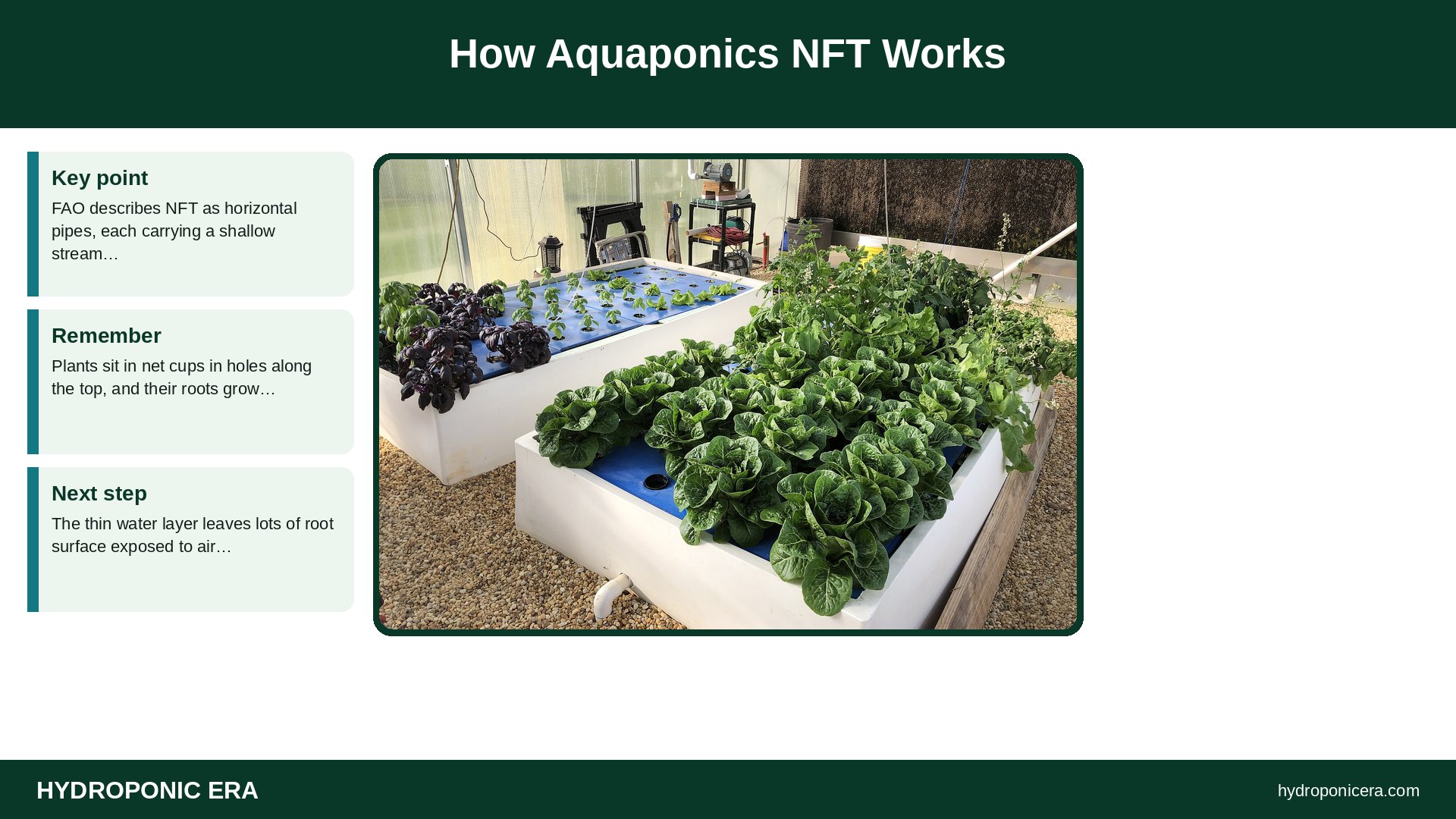
FAO describes NFT as horizontal pipes, each carrying a shallow stream of nutrient-rich water along the bottom. Plants sit in net cups in holes along the top, and their roots grow into the film. The thin water layer leaves lots of root surface exposed to air, giving roots plenty of oxygen. FAO says NFT and DWC both suit commercial scale better than media beds, and that NFT has very low evaporation because the water is shielded from the sun. It’s especially useful in cities, for vertical setups or weight-limited spaces.
How DWC Works Compared With Aquaponics NFT
DWC floats plants on foam rafts over canals about 30 cm (12 inches) deep, with roots hanging in the water. FAO calls it the most common method for large commercial aquaponics growing lettuce, salad leaves, or basil. The deep water holds more nutrients and resists sudden change, but needs air stones in the canals. Full details are in aquaponics raft systems.
The Shared Plumbing: FAO’s “Figure 8”
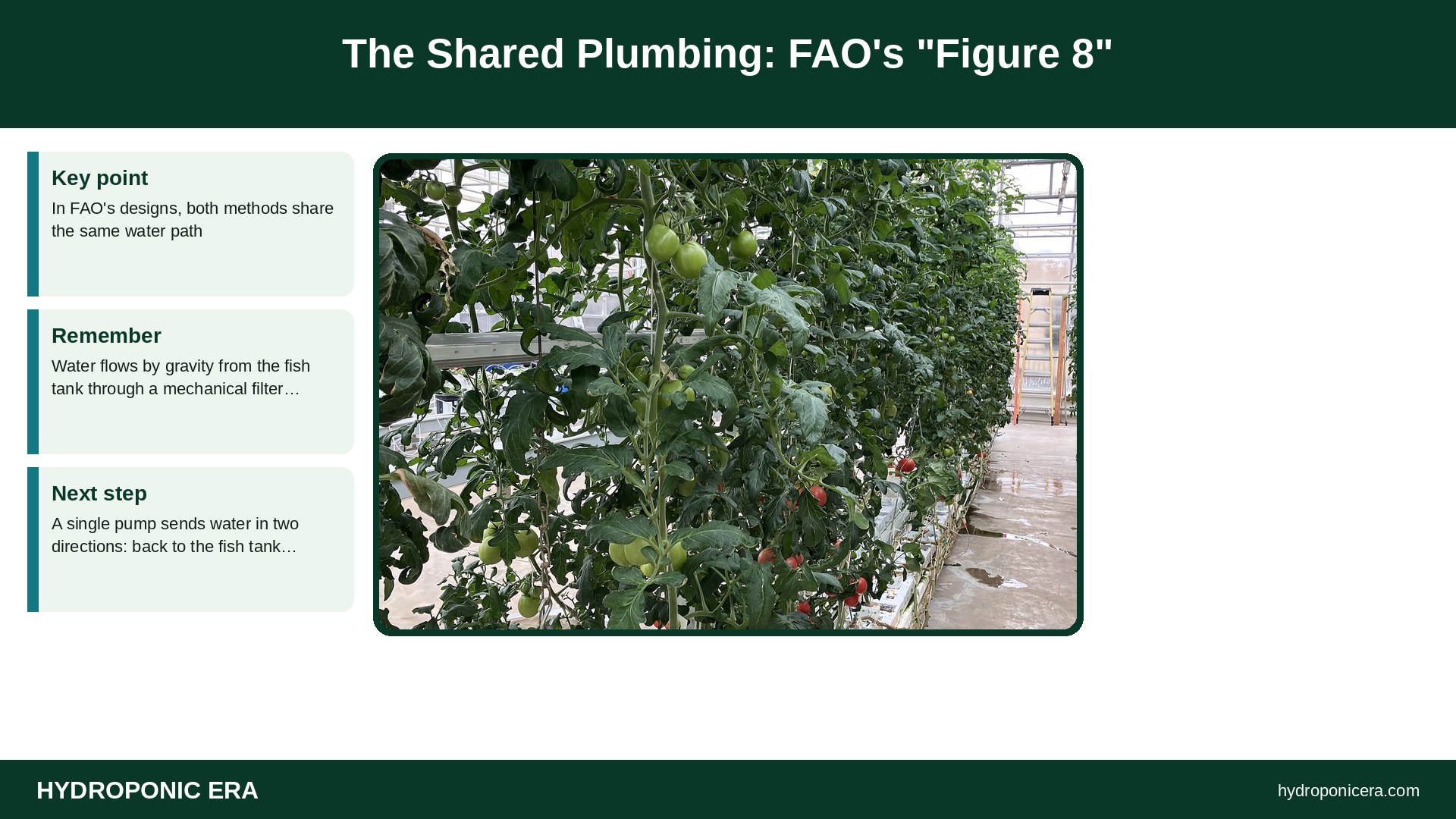
In FAO’s designs, both methods share the same water path. Water flows by gravity from the fish tank through a mechanical filter into a combined biofilter and sump. A single pump sends water in two directions: back to the fish tank and to the plant pipes or canals. FAO says the pump generally returns about 80% of the water to the fish tank and 20% to the plants, adjusted with a valve. This avoids needing a sump set lower than the rest of the system, so it works on slabs and rooftops.
Filtration: Both Need It
FAO says dedicated filtration is critical in both NFT and DWC because, unlike media beds, there’s no gravel to trap solids or host bacteria. FAO’s designs use a swirl filter to catch solids, a mesh screen for leftovers, and an aerated biofilter with media like Bioballs, nylon netting, or bottle caps. Without enough filtration, FAO says both systems clog, go anoxic, and grow poorly. See nitrifying bacteria.
Aquaponics NFT Design Details From FAO
- Flow: no more than 1–2 liters per minute per pipe.
- Pipe size: about 3 inches (7.5 cm) for fast leafy greens; about 4.3 inches (11 cm) for larger fruiting crops or mixed planting.
- Shape: square or rectangular pipes (about 4 × 2.75 inches) give a wider film; round PVC is acceptable. Some growers use vinyl fence posts.
- Color: white, to reflect sun and keep roots cool.
- Length: about 3–40 feet (1–12 m). Longer pipes can leave the last plants short of nutrients.
- Slope: about 1 cm per meter, roughly 1/8 inch per foot.
- Holes: 7–9 cm (about 2.75–3.5 inches), at least 21 cm (about 8 inches) apart center to center.
FAO warns that tomatoes and mint can grow root masses big enough to clog even large pipes. See NFT clogs and dry-outs.
Pros and Cons Side by Side
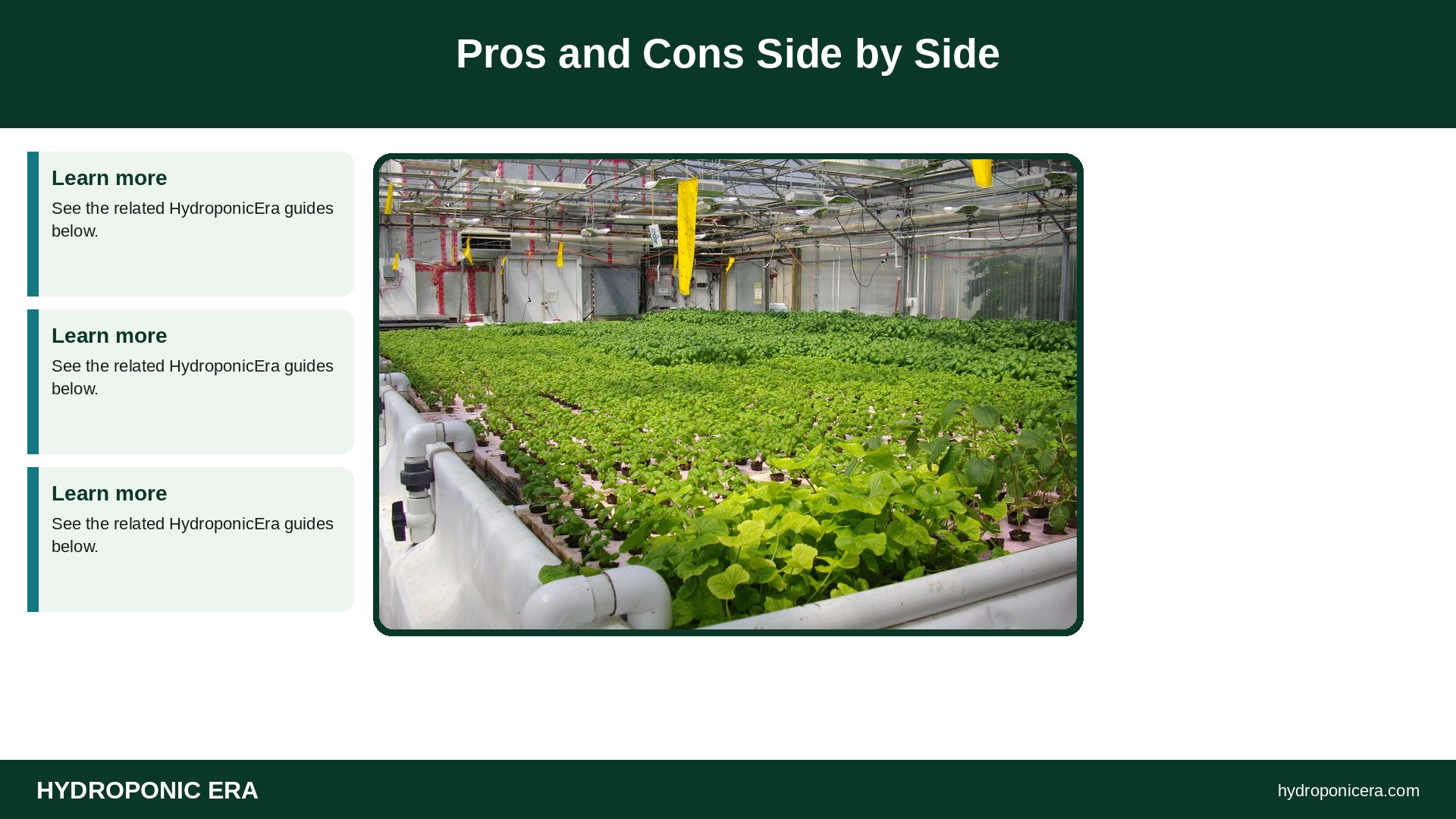
Aquaponics NFT advantages
- Lightweight and space-efficient; works on walls and fences.
- Low water volume and evaporation.
- Good root oxygen without canal air stones.
Aquaponics NFT disadvantages
- Pump or power failure can dry roots within a short time.
- Small water volume heats up quickly in summer.
- Roots can clog pipes.
DWC advantages
- Large water volume buffers temperature and nutrients.
- Roots stay wet if the pump stops briefly.
- Simple to plant and harvest by moving rafts.
DWC disadvantages
- Heavy; needs solid ground.
- Needs air stones in canals.
- Solids that settle in canals can reduce oxygen.
Which Should You Choose?
- Beginner, backyard, leafy greens: DWC, or a media bed. See media beds.
- Rooftop, balcony, or vertical wall: aquaponics NFT.
- Hot climate: DWC handles heat better than thin NFT films; FAO also notes the Kratky-style DWC air gap helps release heat.
- Unreliable power: DWC, plus backup aeration. See backup power.
- Large fruiting crops: media beds usually beat both.
Combining Methods
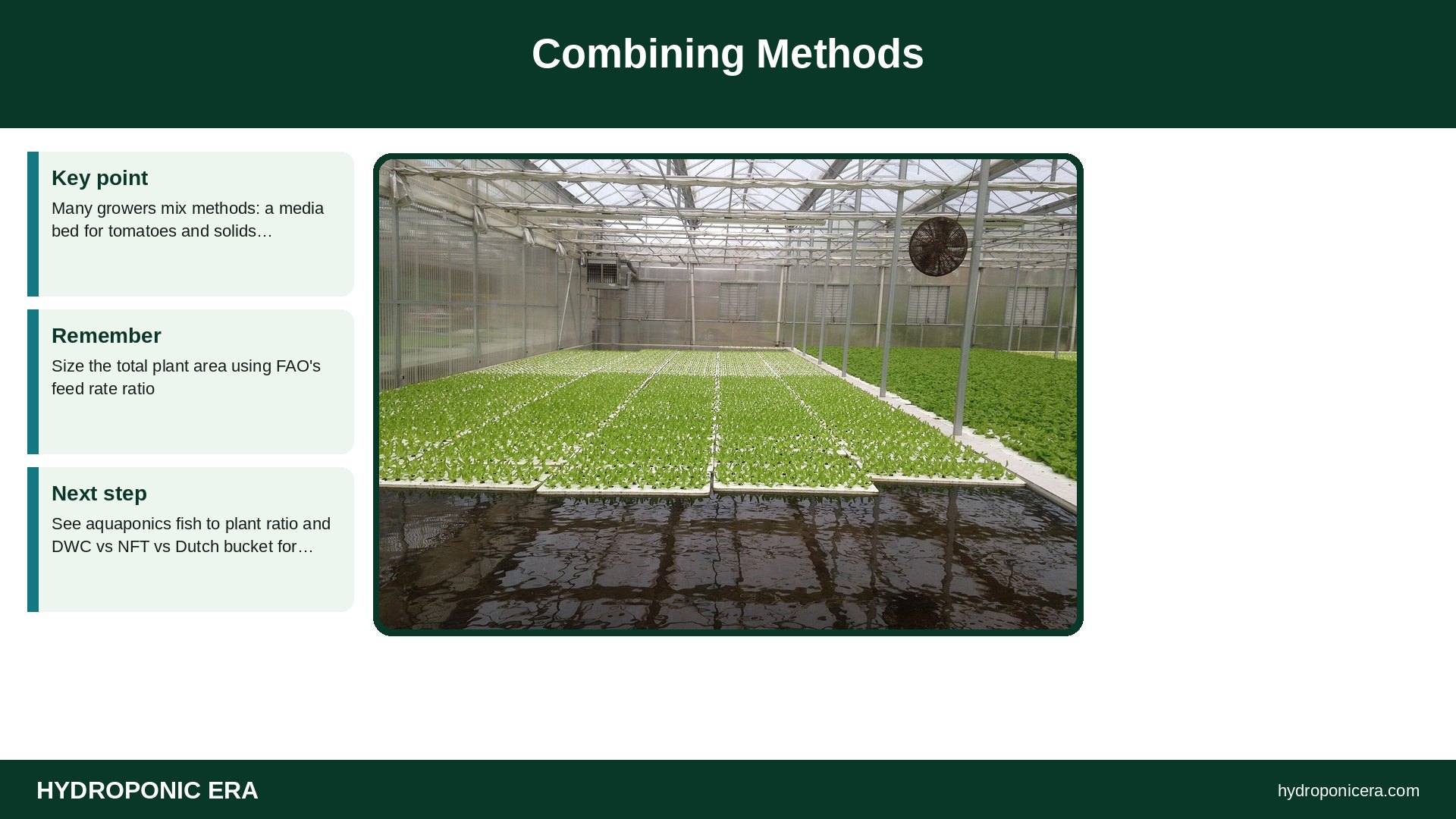
Many growers mix methods: a media bed for tomatoes and solids processing, plus NFT or DWC for greens. Size the total plant area using FAO’s feed rate ratio. See aquaponics fish to plant ratio and DWC vs NFT vs Dutch bucket for the hydroponic comparison.
Cost and Build Effort
FAO describes NFT as more complicated and expensive than media beds, and DWC as more complicated than media beds on a small scale. Both need the same extra filtration hardware. NFT needs more fittings and careful leveling of pipes, while DWC needs larger canals and more liner and foam. If you’re on a tight budget, a media bed is still the simplest place to start.
FAQs: Aquaponics NFT vs DWC
Is aquaponics NFT or DWC better?
DWC is more forgiving for most home growers; NFT suits weight-limited or vertical spaces.
What flow rate does aquaponics NFT need?
FAO recommends no more than 1–2 liters per minute per pipe.
Does aquaponics NFT need a biofilter?
Yes. FAO says both NFT and DWC need dedicated mechanical and biological filtration.
Can tomatoes grow in aquaponics NFT?
They can in larger pipes, but their roots may clog them. Media beds are easier.
What slope do aquaponics NFT pipes need?
About 1 cm per meter, roughly 1/8 inch per foot.
Sources
- FAO — Small-scale aquaponic food production
- Photo credits (Wikimedia Commons, edited with titles): 2009-03-30 Lettuce roots by Ildar Sagdejev (Specious) (CC BY-SA 4.0); Deepwater Aquaponics Floating Rafts Growing Lettuce, Basil and Arugula by Alabama Extension (CC0); Solanum lycopersicum in aquaponics at the NC Greenhouse Nursery by Gogerr (CC BY-SA 4.0); CDC South Aquaponics Raft Tank 1 2010-07-17 by Bryghtknyght (CC BY 3.0); Deep water culture by ArcadiYay (CC BY-SA 4.0)