
How do you get rid of brown diatom algae in an aquarium? Brown diatom algae usually fades on its own as a new tank matures. Aquarium Science says the film lessens in four to six months, and constant scrubbing keeps it immature. Wipe the front glass, feed lightly, add nerite snails or Amano shrimp, and avoid blue-only lights.
Key takeaway: Brown diatom algae is a soft brown film common in new aquariums. It is harmless, wipes off easily and usually declines within months as other microbes and grazers take over. Tropica’s tests found Amano shrimp the most efficient grazer of a diatom and green algae biofilm, about twice as efficient as nerite snails.
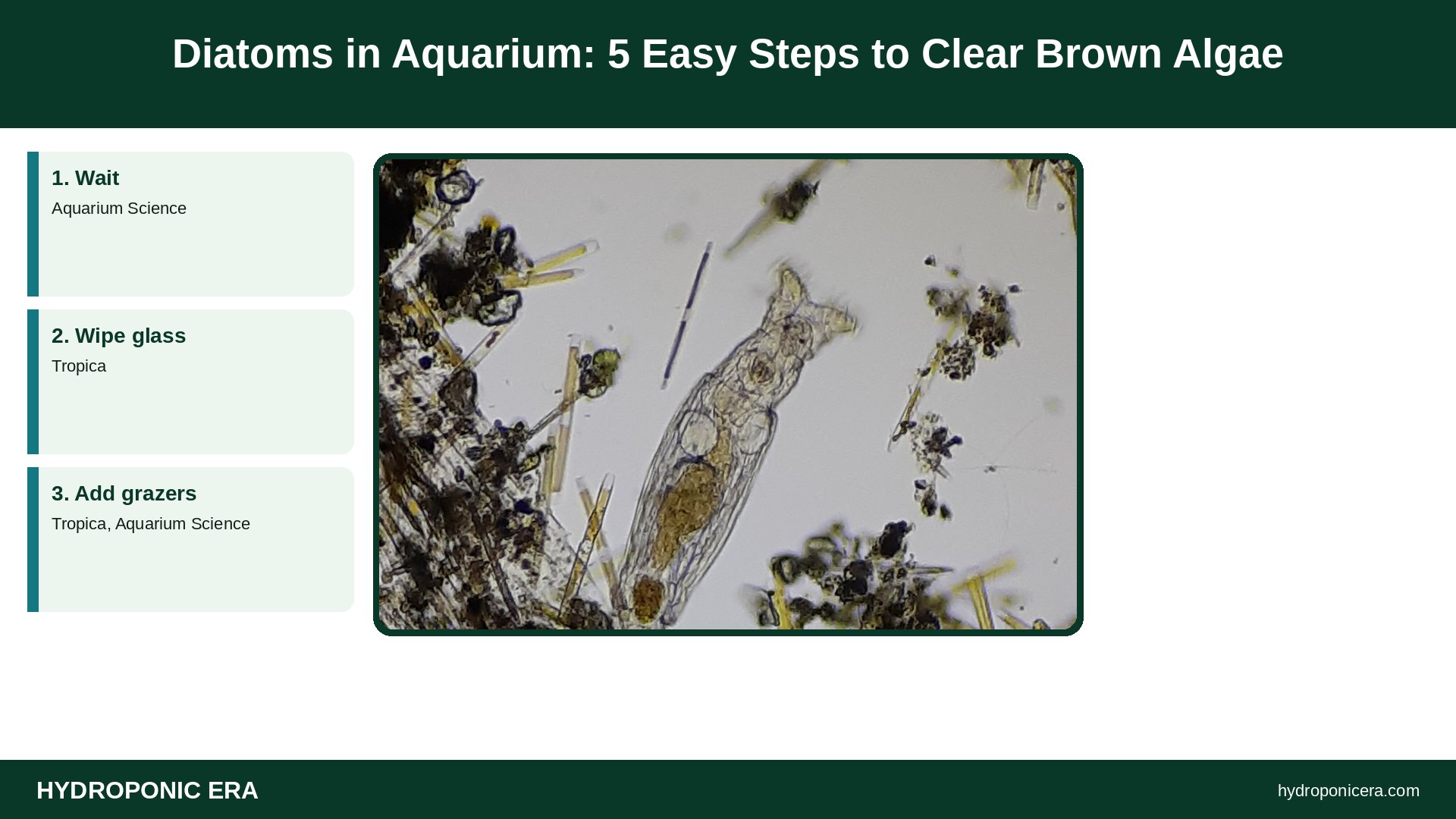
| Step | What to do | Source |
|---|---|---|
| 1. Wait | Film usually lessens in 4–6 months | Aquarium Science |
| 2. Wipe glass | Use a soft sponge on viewing panes | Tropica |
| 3. Add grazers | Amano shrimp, nerite snails, bristlenose plecos | Tropica, Aquarium Science |
| 4. Fix lighting | Avoid blue-only LEDs | Aquarium Science |
| 5. Feed lightly | Limit excess food and nutrients | Aquarium Science |
What Is Brown Diatom Algae?
It is a thin brown coating made largely of diatoms, single-celled algae with glass-like silica walls. USGS describes diatoms as unicellular phytoplankton with silica cell walls called frustules that live in almost every wet place on Earth. Aquarium Science adds that aquarium “brown algae” is roughly half detritus and slime and half mixed microbes.
That mix includes diatoms, other algae, cyanobacteria, bacteria and tiny protozoa, so the film is a whole community rather than one organism.
Why Does Brown Diatom Algae Appear in New Tanks?
New tanks offer bare surfaces with no established competitors. Aquarium Science says the brown film typically grows rampant for the first few months of an aquarium’s life, starting as nutrient-poor diatoms that fish will not graze. As it matures into nutrient-rich periphyton, more fish eat it and the problem usually shrinks with time.
It notes that moderate light, especially blue light, plus high silicate favors diatoms, while low light favors bacteria.
Does Silica Cause Brown Diatom Algae?
Silica helps, but it is hard to control. Diatoms need silica to build their shells, and Aquarium Science notes every water change adds more silica. It calls the idea that quartz sand leaches silica a myth, because quartz is insoluble at aquarium temperatures and pressures. Focus on time, grazers and lighting rather than chasing silicate.
- Do not replace sand just to fix a diatom bloom.
- Normal water changes are still important for fish health.
- A brown film can form even without silica, per Aquarium Science.
Is It Diatoms or Cyanobacteria?
Check the color, texture and smell. Brown diatom algae is soft, golden to chocolate brown and wipes away easily. Tropica describes the troublesome blue-black coatings as blue-green algae, which are cyanobacteria, and says they usually appear from excessive feeding in fish tanks. Cutting back feeding usually makes them disappear again. Diatoms respond better to grazers and time.
| Sign | Diatom film | Cyanobacteria |
|---|---|---|
| Color | Golden to dark brown | Blue-green to blue-black |
| Texture | Thin, dusty, wipes off | Slimy sheets |
| Main trigger | New tank, blue light | Overfeeding, per Tropica |
| Best first fix | Wipe and add grazers | Reduce feeding |
Tropica also notes that thin algal coatings of diatoms, red algae and green algae are rarely a big problem once a tank has a good population of algae-eating shrimp and fish.
Which Animals Eat Brown Diatom Algae?
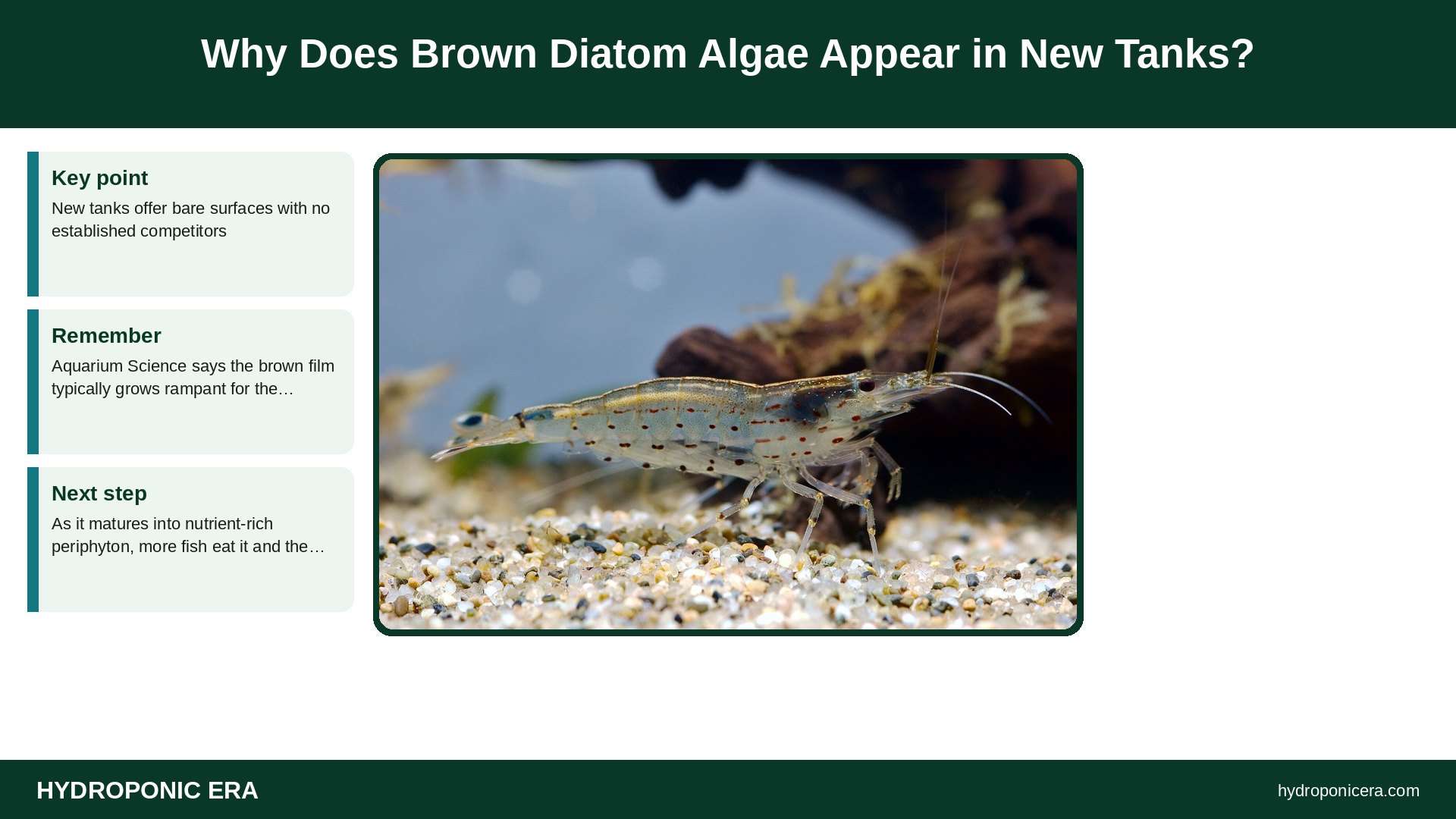
Amano shrimp, nerite snails and bristlenose plecos are the best grazers. Tropica cultivated a diatom and green algae biofilm on tiles and found Amano shrimp about twice as efficient as zebra nerite snails and six times as efficient as cherry shrimp. Aquarium Science says bushy-nosed plecos and snails can normally remove most brown algae.
- Amano shrimp: almost twice as efficient per gram as cherry shrimp, per Tropica.
- Siamese algae eater: over 5 times less efficient per gram than Amano shrimp.
- Stocking: add grazers only after the tank has cycled.
Can Lighting Reduce Brown Diatom Algae?
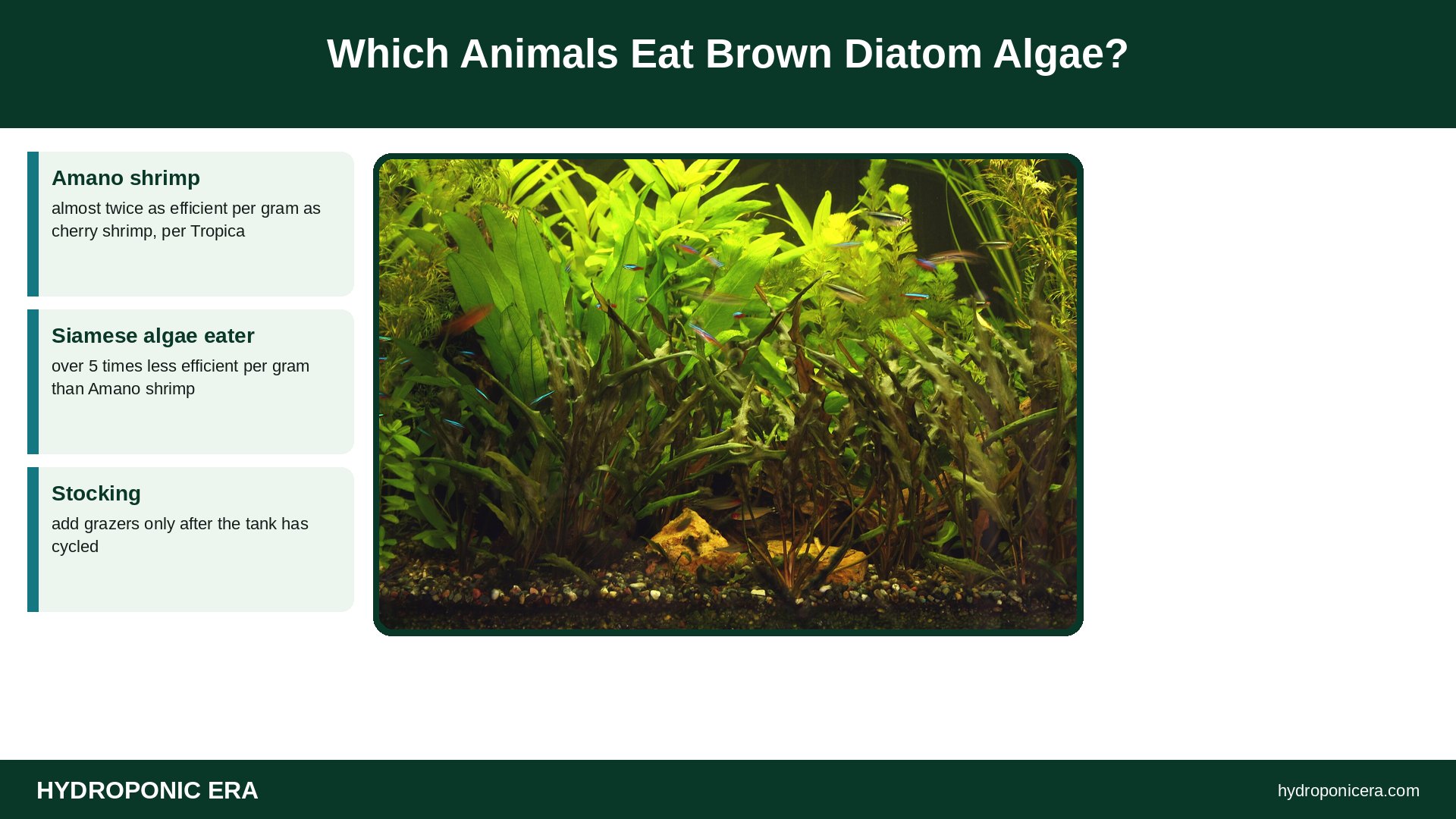
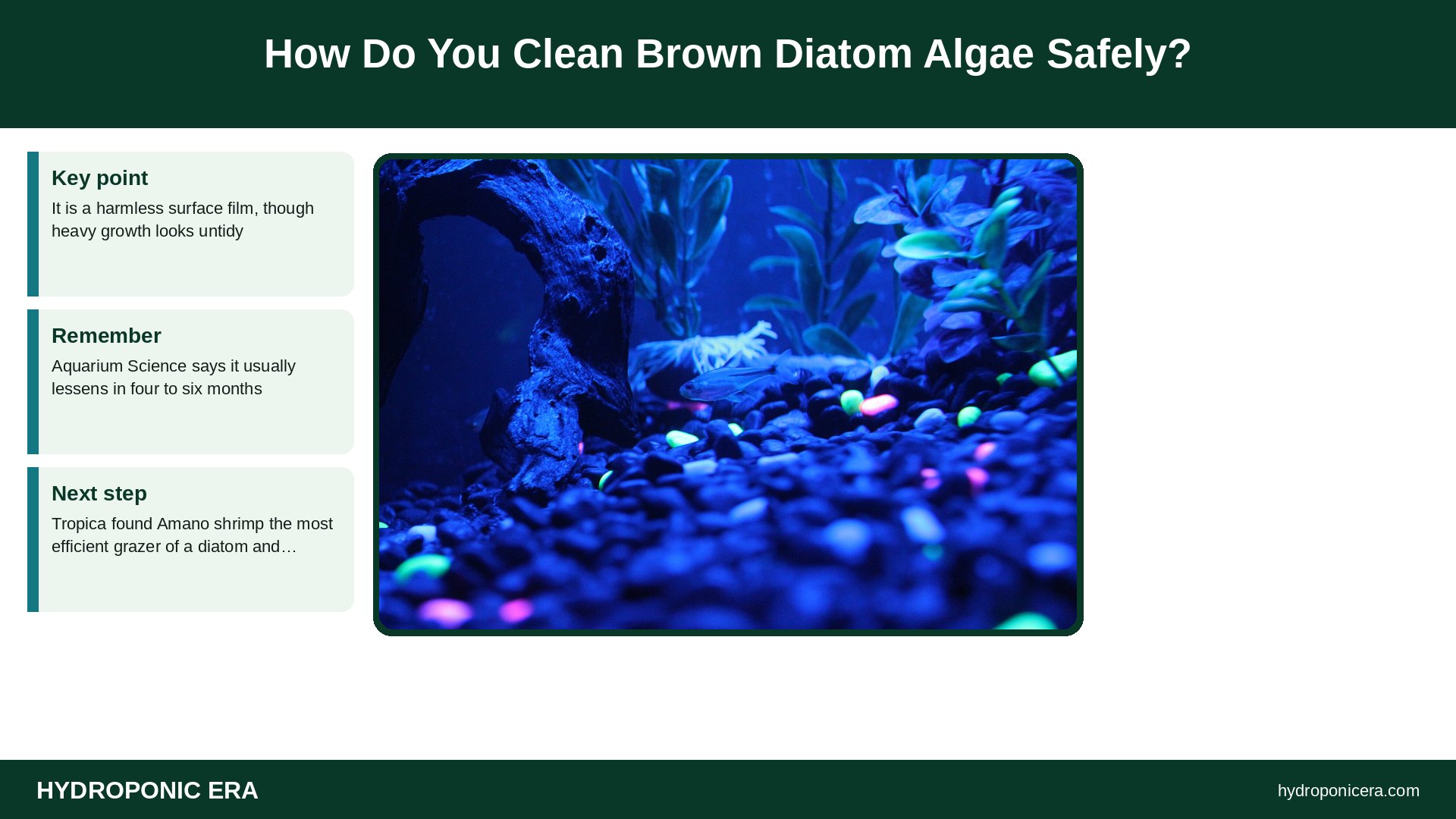
Yes. Aquarium Science explains that diatoms carry carotenoid pigments that absorb blue light, so fixtures with only blue and white LEDs, often sold for reef tanks, can trigger outbreaks. Most freshwater lights mix blue, red and white LEDs, which grow green plants well with less brown film. A steady photoperiod also helps plants outcompete it.
For a fish-and-plant setup, see our aquarium aquaponics guide. Choose a balanced spectrum with our grow light for aquarium guide.
How Do You Clean Brown Diatom Algae Safely?
Remove brown diatom algae only where you need to see. Tropica recommends a varied population of algae-eating fish and shrimp plus wiping glass with a soft sponge. Aquarium Science suggests cleaning front and side glass every few weeks while leaving the film on rocks and the back glass, so it matures and grazers can feed on it.
- Wipe the front glass with a soft sponge or algae pad.
- Leave decor alone unless the film looks unsightly.
- Feed lightly; Aquarium Science suggests small daily portions per fish.
- Plant heavily; settled planted tanks have little brown film, per Aquarium Science.
Do not confuse it with the brown biofilm inside filters, which Aquarium Science says is beneficial bacteria. See our aquaponics algae control and algae in hydroponic reservoirs guides for other systems.
Is brown diatom algae harmful to fish?
No. It is a harmless surface film, though heavy growth looks untidy.
How long does brown diatom algae last?
Aquarium Science says it usually lessens in four to six months.
Do Amano shrimp eat diatoms?
Yes. Tropica found Amano shrimp the most efficient grazer of a diatom and green algae biofilm.
Does quartz sand cause diatoms?
No. Aquarium Science calls that a myth because quartz is insoluble in aquarium conditions.
Will a blackout kill brown algae?
It is rarely needed; time, grazers and balanced lighting usually work.
Sources
- Aquarium Science. 16.8 Brown Algae.
- Tropica Aquarium Plants. Test of algae eaters.
- Tropica Aquarium Plants. Types of algae.
- U.S. Geological Survey. Environmental investigations using diatom microfossils.
- Photo credits (Wikimedia Commons, edited with titles): Rotifer and diatoms by Dhj54 (CC BY-SA 4.0); Caridina multidentata(Hamamatsu,Shizuoka,Japan,2007) by Seotaro (CC BY-SA 3.0); Planted Tank 03 – Flickr – The Wandering Angel by The Wandering Angel from Makati City, Philippines (CC BY 2.0); Glow light tetra by Jim Zamichieli (CC BY-SA 3.0)