
What is bubbleponics? Bubbleponics is a top-fed form of deep water culture (DWC). Roots hang in an aerated nutrient reservoir like normal DWC, but a small pump also drips or sprays solution onto the top of each plant’s media. That top feed helps young seedlings and clones before their roots reach the water, then it becomes optional.
Key takeaway: The setup adds one pump and a drip ring to a standard DWC bucket. It speeds early growth for small transplants, but it also adds a clog point. Strong aeration, cool water, steady pH and EC, and a light-proof reservoir matter more than the top feed itself.
| Feature | Standard DWC | Bubbleponics |
|---|---|---|
| Air pump and stone | Yes | Yes |
| Top feed to media | No | Yes, via small water pump |
| Best stage | Plants with roots in water | Seedlings and fresh clones |
| Extra parts | None | Pump, tubing, drip ring or halo |
| Main risk | Warm water, root rot | Same, plus clogged lines |
How Does Bubbleponics Work?
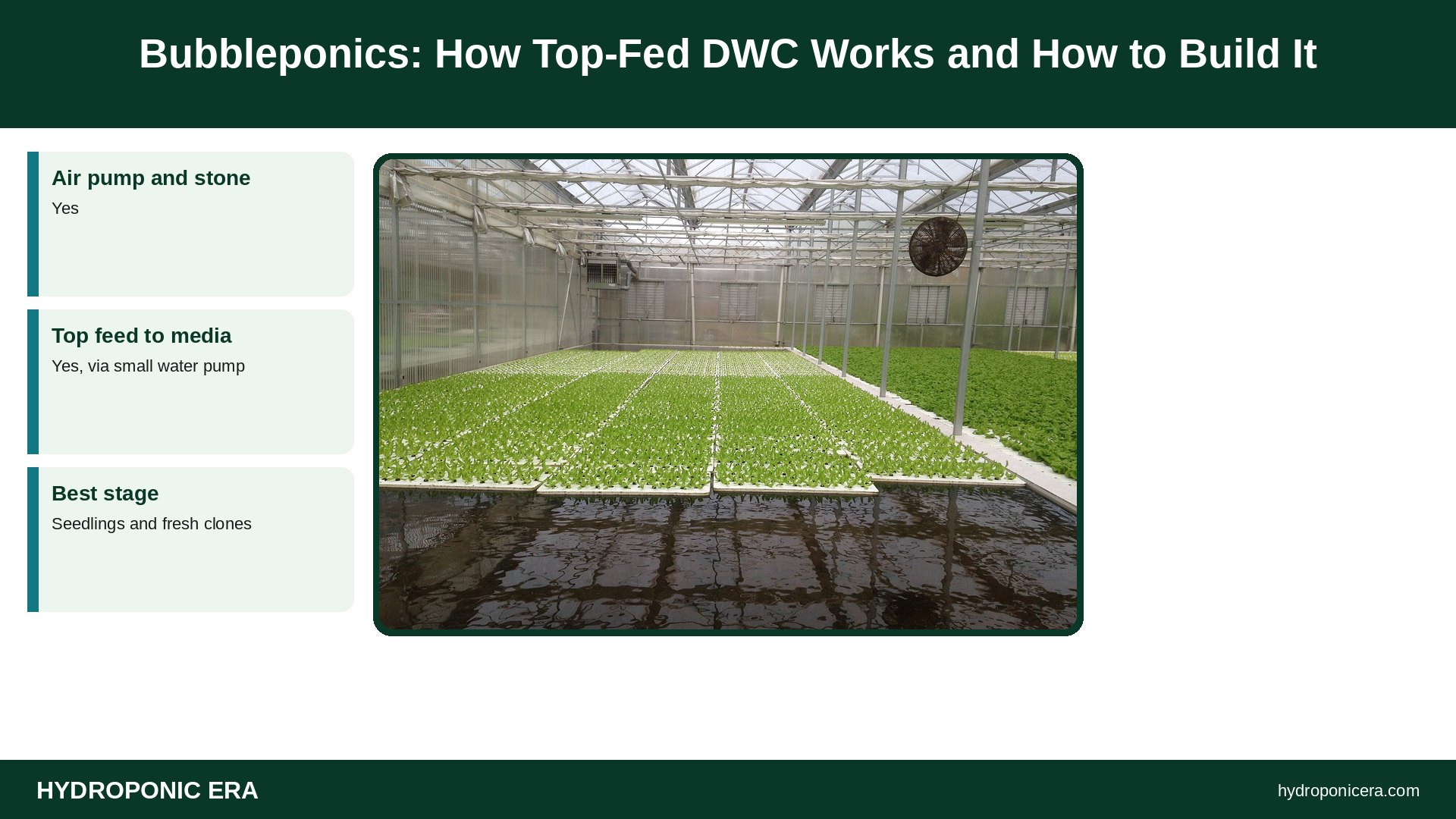
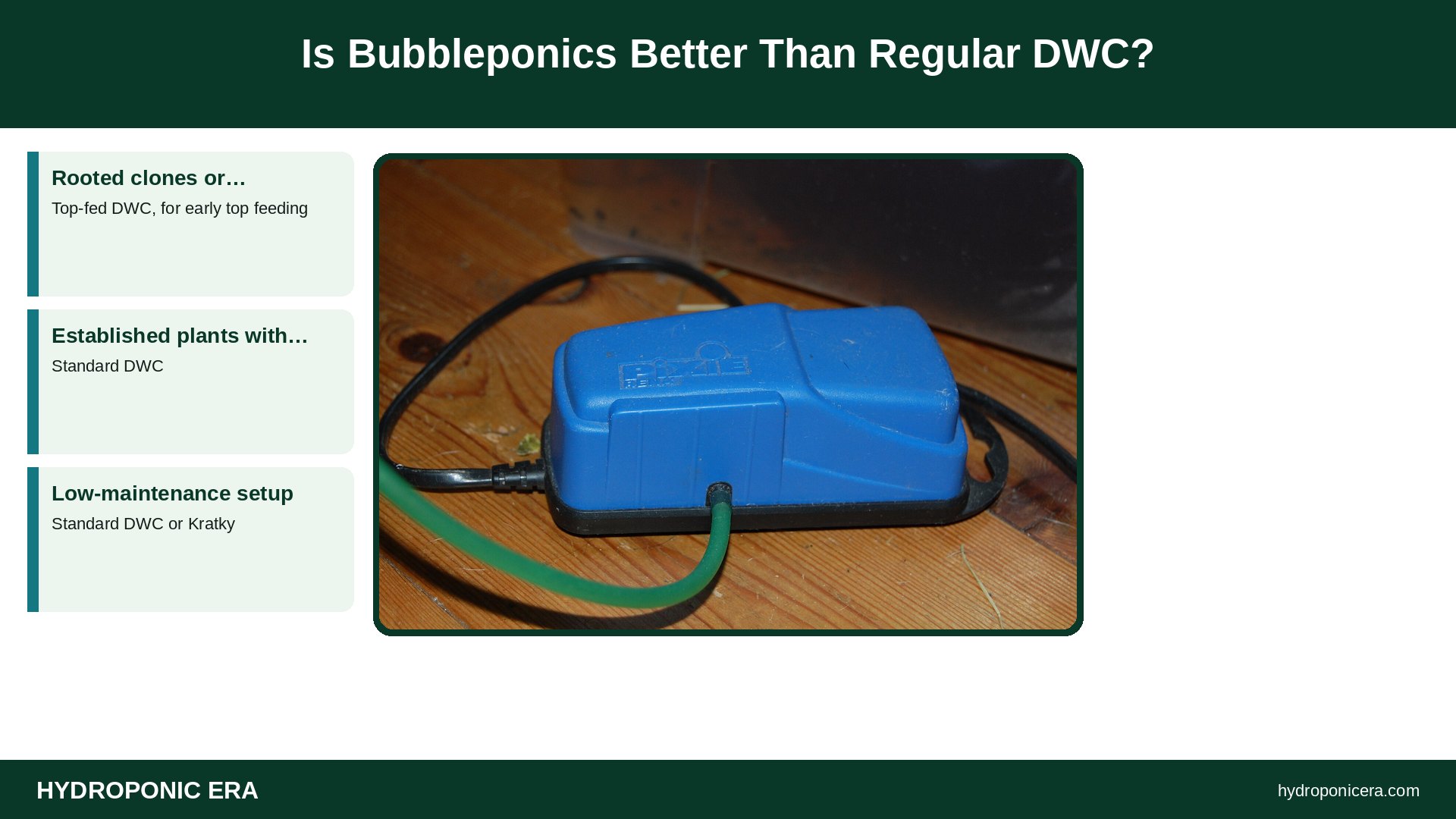
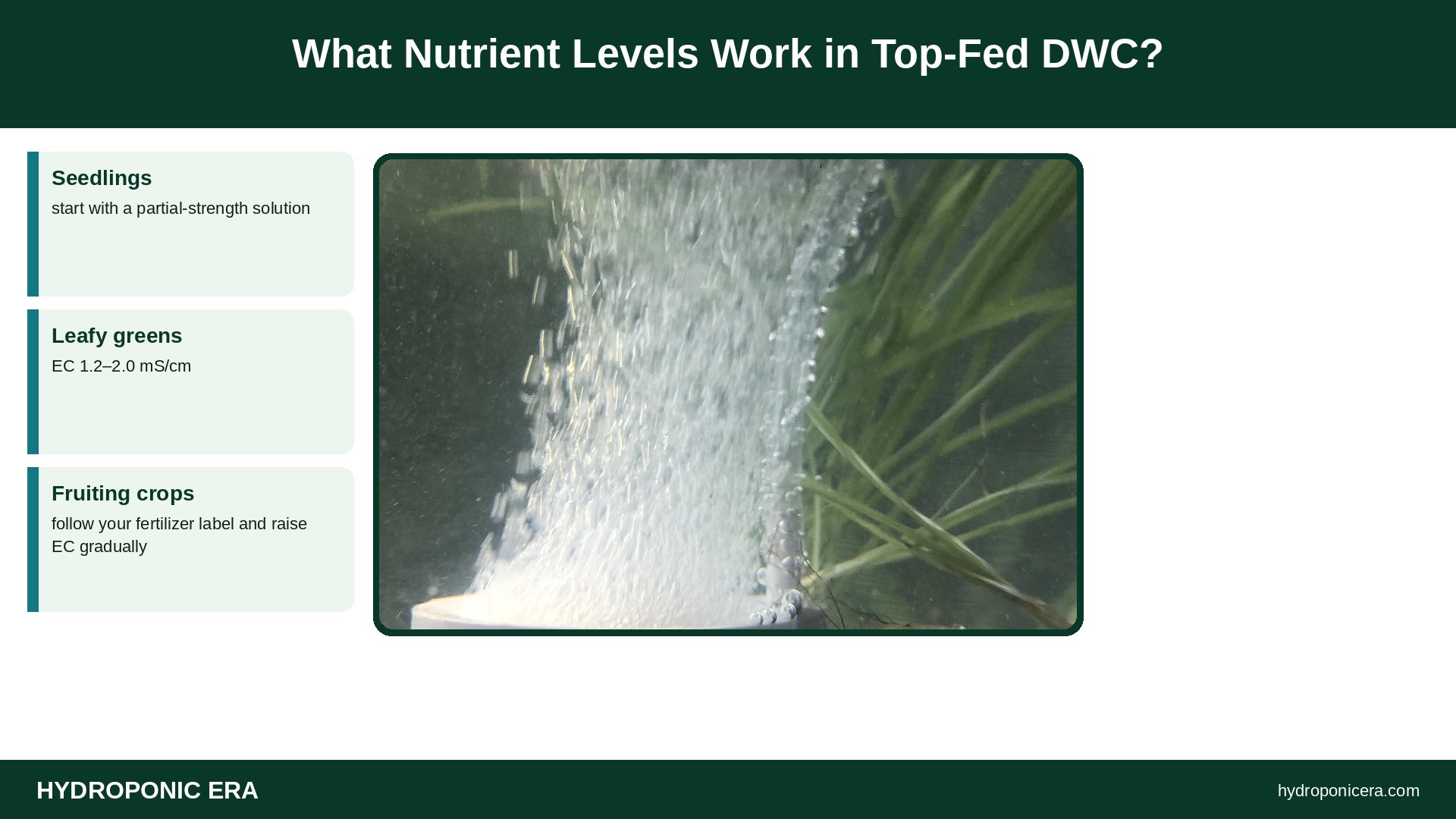
Bubbleponics works by combining two flows. An air pump pushes air through an air stone so bubbles add oxygen to the nutrient solution, as in any DWC system. A small submersible water pump then lifts solution through tubing to a drip ring or sprayer above the net pot, wetting the media and young roots from the top.
Oregon State University Extension notes that DWC systems need effective aeration because the water moves very little. The top feed adds water movement, but the air pump is still the main oxygen source. Our guide to air pumps and air stones explains sizing.
Is Bubbleponics Better Than Regular DWC?
Bubbleponics is better only during the first weeks, when roots are too short to touch the reservoir. Once roots reach the water, a well-aerated DWC bucket does the same job with fewer parts. Many growers run the top feed for seedlings and clones, then switch it off or remove the pump.
| Situation | Better choice |
|---|---|
| Rooted clones or seedlings in small plugs | Top-fed DWC, for early top feeding |
| Established plants with long roots | Standard DWC |
| Low-maintenance setup | Standard DWC or Kratky |
| Multiple connected buckets | RDWC |
How Do You Build a Bubbleponics System?
To build a bubbleponics system, start with a light-proof 5 gal (19 L) bucket, a lid with a net pot hole, an air pump and stone, and a small submersible pump. Run tubing from the pump to a drip ring above the net pot. Fill with nutrient solution so the water sits just below the net pot.
- Use an opaque bucket to block light and prevent algae.
- Cut the lid to fit a 3–6 in (8–15 cm) net pot.
- Place the air stone on the bottom and run the air line out through a small hole.
- Add the water pump and run 1/4 in (6 mm) tubing to a drip ring or sprayer.
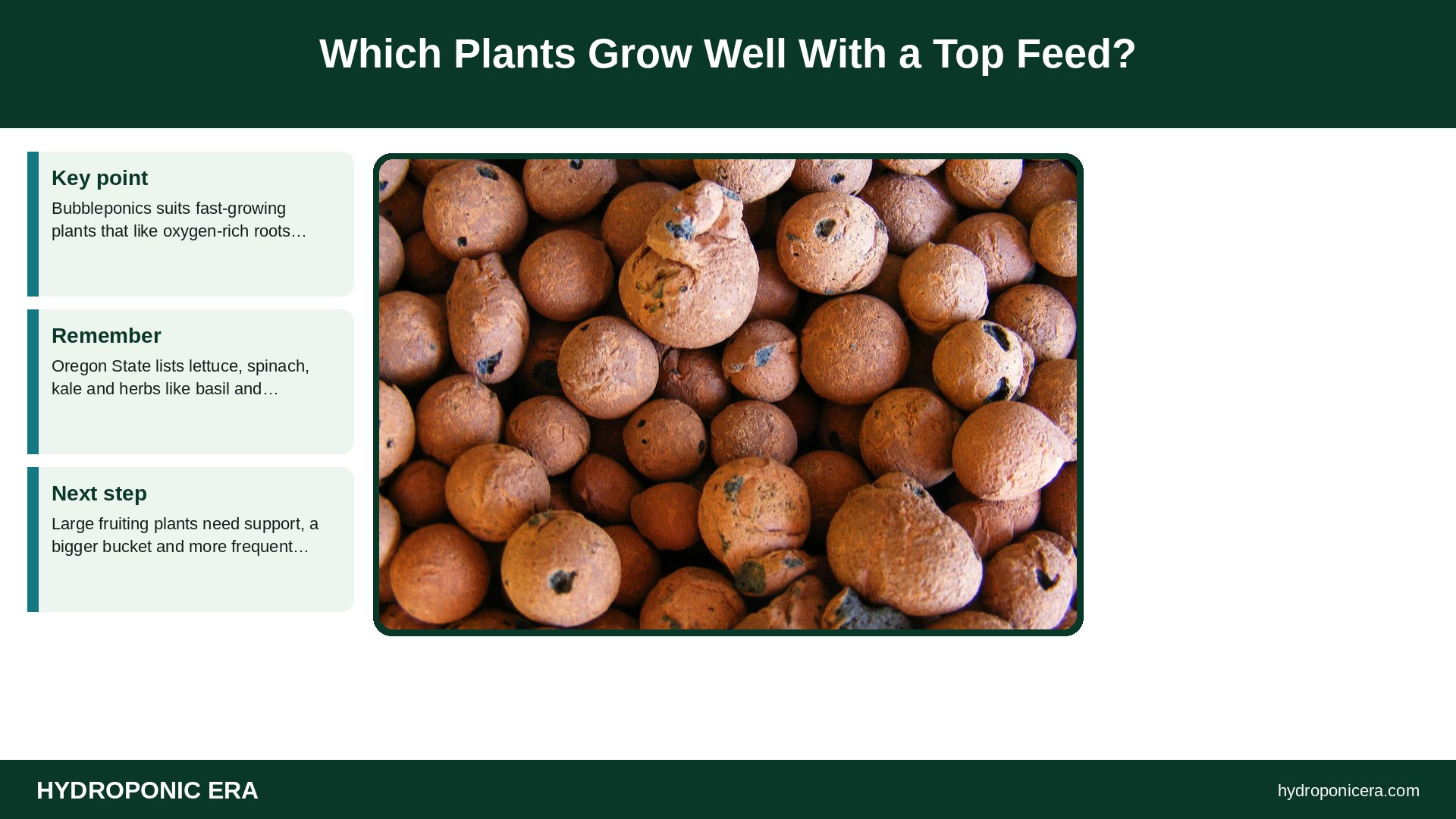
- Fill the net pot with clay pebbles or another inert medium around the plug.
- Mix nutrients and check pH and EC before adding plants.
- Run the air pump 24/7; run the top feed on a timer or continuously while roots are short.
What Nutrient Levels Work in Top-Fed DWC?
Bubbleponics uses the same nutrient targets as DWC. Virginia Cooperative Extension says leafy greens in DWC perform well at EC 1.2–2.0 mS/cm and a slightly acidic pH, and that EC and pH should be checked two to three times a week. Fruiting crops often need a stronger feed, around 2.0–3.0 mS/cm.
- Seedlings: start with a partial-strength solution.
- Leafy greens: EC 1.2–2.0 mS/cm.
- Fruiting crops: follow your fertilizer label and raise EC gradually.
- Tools: see our pH and EC meter guide.
What Problems Happen in Top-Fed Buckets?
The most common bubbleponics problems are clogged drip lines, warm water and root rot. Nutrient salts and root debris can block small emitters, starving the top of the root zone. Warm solution holds less oxygen and favors Pythium root rot. Light leaks cause algae, which competes for oxygen and clogs parts further.
| Problem | Sign | Fix |
|---|---|---|
| Clogged drip ring | Dry media on top | Clean or replace emitters; filter pump intake |
| Root rot | Brown, slimy, smelly roots | Cooler water, more air, clean reservoir |
| Algae | Green film inside bucket | Block light, cover openings |
| pH drift | Leaf spots, slow growth | Check and adjust two to three times a week |
Learn more about light-proofing reservoir lids.
Which Plants Grow Well With a Top Feed?
Bubbleponics suits fast-growing plants that like oxygen-rich roots: lettuce, basil, mint, kale, spinach and other leafy greens, plus larger crops such as tomatoes, peppers and cucumbers in single buckets. Oregon State lists lettuce, spinach, kale and herbs like basil and parsley as common DWC crops, and those same plants do well with a top feed.
Large fruiting plants need support, a bigger bucket and more frequent reservoir changes because they drink and feed heavily.
How Do You Maintain the System?
Maintain bubbleponics by checking pH and EC two to three times a week, topping off with plain water, and changing the solution every one to two weeks. Clean the drip ring and pump intake at each change. Keep air pumps running all the time; a few hours without air can harm roots in warm weather.
- Place air pumps above water level, or use a check valve.
- Keep spare air stones and tubing on hand.
- Rinse and sanitize buckets between crops.
How Much Does a Bubbleponics Bucket Cost?
A single bubbleponics bucket is inexpensive to build at home because most parts are standard aquarium and hardware items. You need a food-safe opaque bucket and lid, a net pot, an air pump with tubing and an air stone, a small submersible pump, a drip ring, growing media, and a pH and EC meter. The meter is often the largest cost.
- Reuse parts: buckets, pumps and net pots last many crops if cleaned.
- Skip cheap meters: an accurate meter saves crops.
- Plan for power: two small pumps run around the clock.
Compare bucket options in our guide to food-grade containers.
FAQ About Bubbleponics
Do I need both an air pump and a water pump?
Yes. The air pump oxygenates; the water pump top-feeds.
Should the top feed run all the time?
It can while roots are short; many growers use a timer or turn it off later.
Can I convert a DWC bucket to a top-fed system?
Yes. Add a small pump, tubing and a drip ring.
How big should the bucket be?
3–5 gal (11–19 L) for one large plant is common.
Is this method good for beginners?
Yes, though standard DWC is simpler.
Sources
- Oregon State University Extension (2025) — Hydro Hints: Deep Water Culture (EM 9455)
- Virginia Cooperative Extension — Hydroponic Production of Edible Crops: Deep Water Culture (DWC) Systems
- University of Tennessee and University of Florida Extension — W 844-C Tomatoes, Peppers and Cucumbers in Small-Scale Soilless and Hydroponics Systems
- Photo credits (Wikimedia Commons, edited with titles): Deep water culture by ArcadiYay (CC BY-SA 4.0); Aquarium-air-pump by User:Corydoras-adolfoi (CC BY-SA 4.0); Air Stone Disk aquarium Germany 2024 by Nimmerwelk (CC BY-SA 4.0); Hydroton by Lucis (CC BY-SA 3.0)