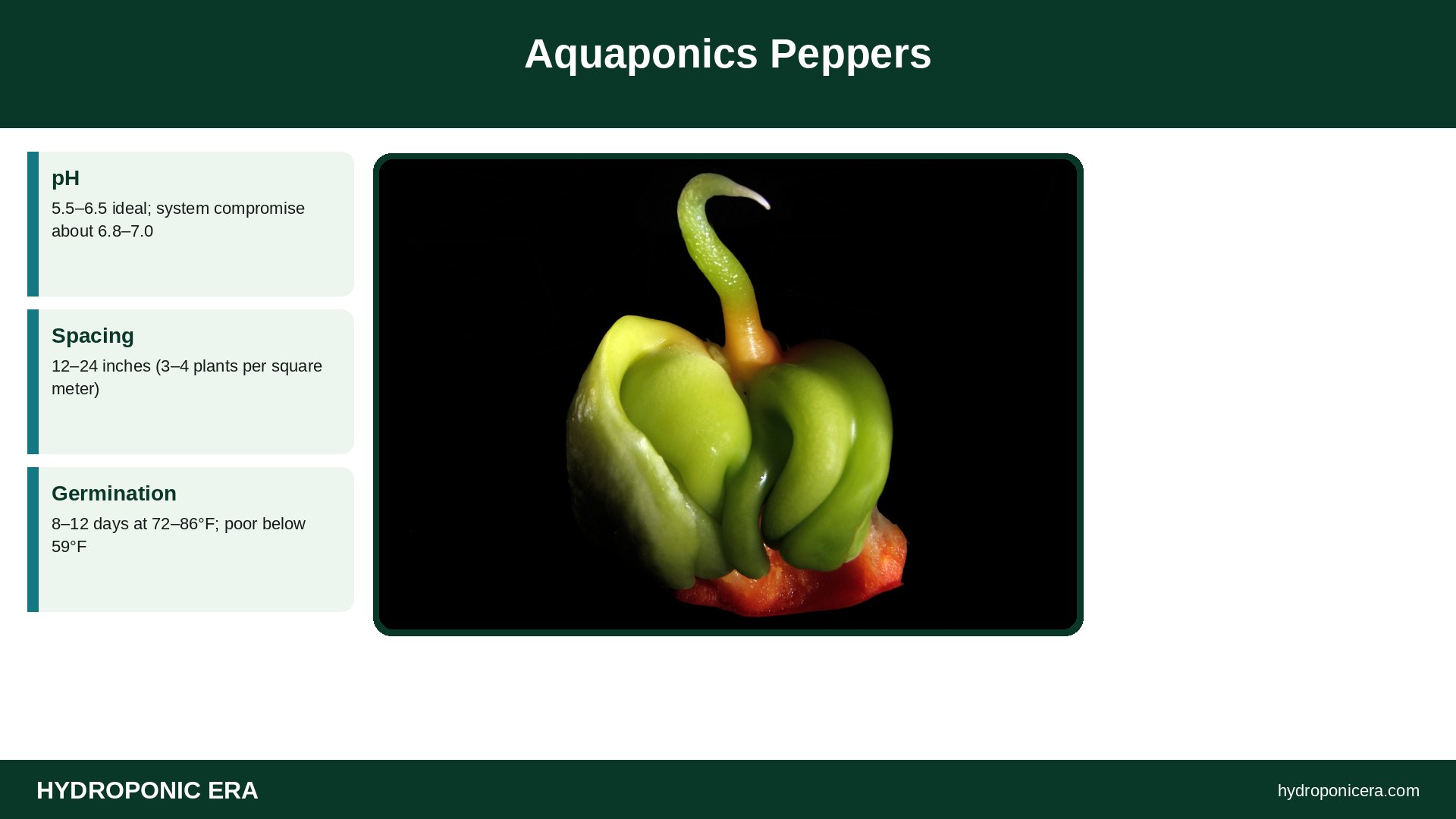
Aquaponics peppers , from sweet bells to jalapeños, grow best in media beds in a mature, warm system. Peppers like days of about 72–86°F and nights of 57–61°F, root-zone temperatures of about 59–68°F, full sun and 12–24 inches between plants. They need more potassium and phosphorus once flowering starts, so plan to supplement potassium and iron. Expect harvests to begin about 60–95 days after transplanting. Heat above about 86–95°F causes flowers to drop.
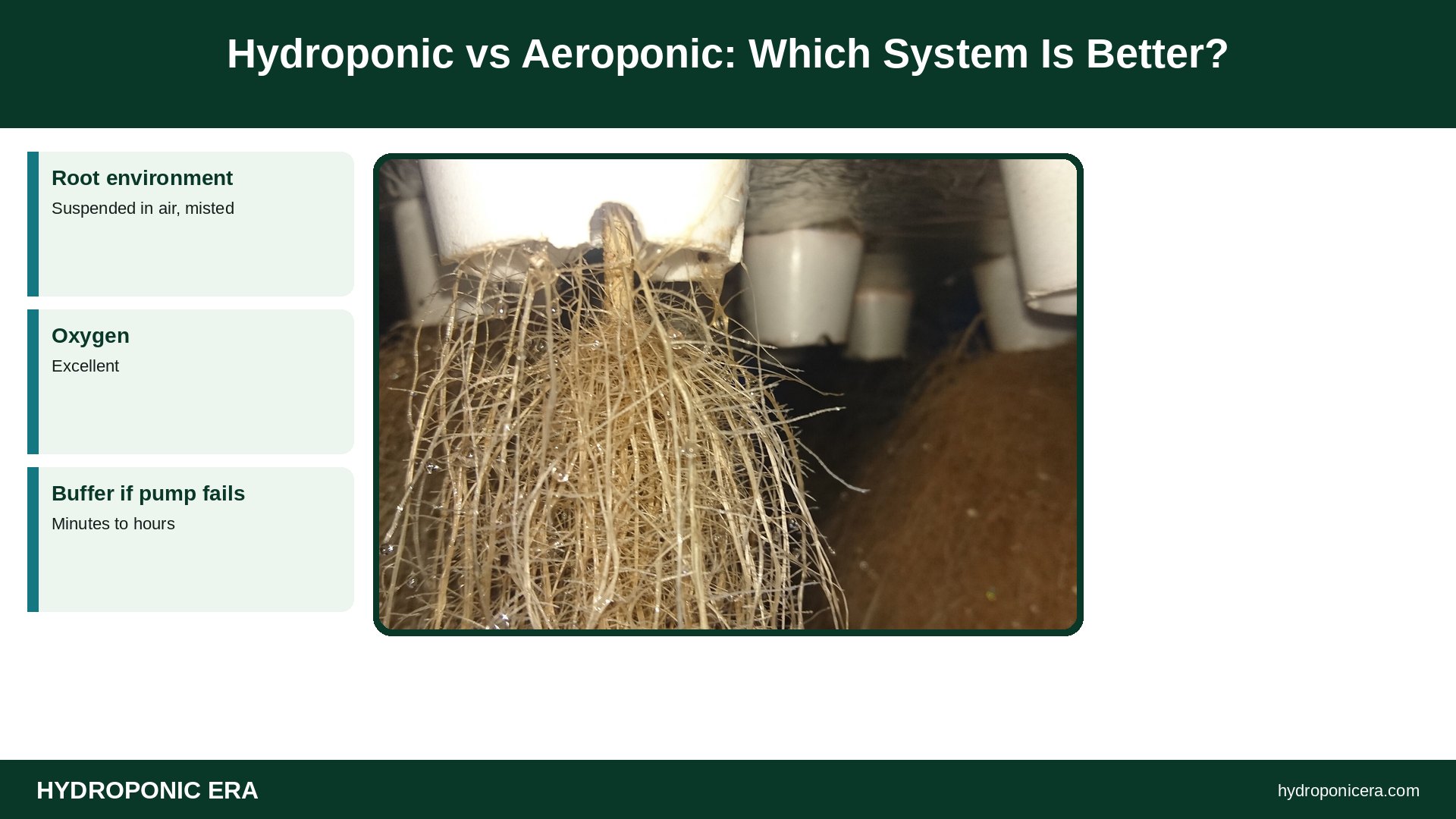
In the hydroponic vs aeroponic debate, aeroponics is technically a type of hydroponics: both grow plants without soil using nutrient solution. The difference is how roots get that solution. Most hydroponic systems bathe roots in water or a thin film, while the mist method hangs roots in air and sprays them with a fine mist. Aeroponics can deliver excellent root oxygen and fast growth, but it is more complex and less forgiving. For most home growers, standard hydroponics (DWC, NFT, Kratky, drip) is easier and more reliable.
Aquaponics tomatoes grow well in media beds and deep water (raft) systems once your fish load is large and steady, because tomatoes are hungry for nutrients, especially potassium. Plan on 16–24 inches between plants, day temperatures of about 72–79°F with nights near 55–61°F, and supplements of potassium, calcium and chelated iron. Expect first harvest about 50–70 days after transplanting, with indeterminate vines fruiting for months. New systems should grow leafy greens first and add aquaponics tomatoes after a few months.
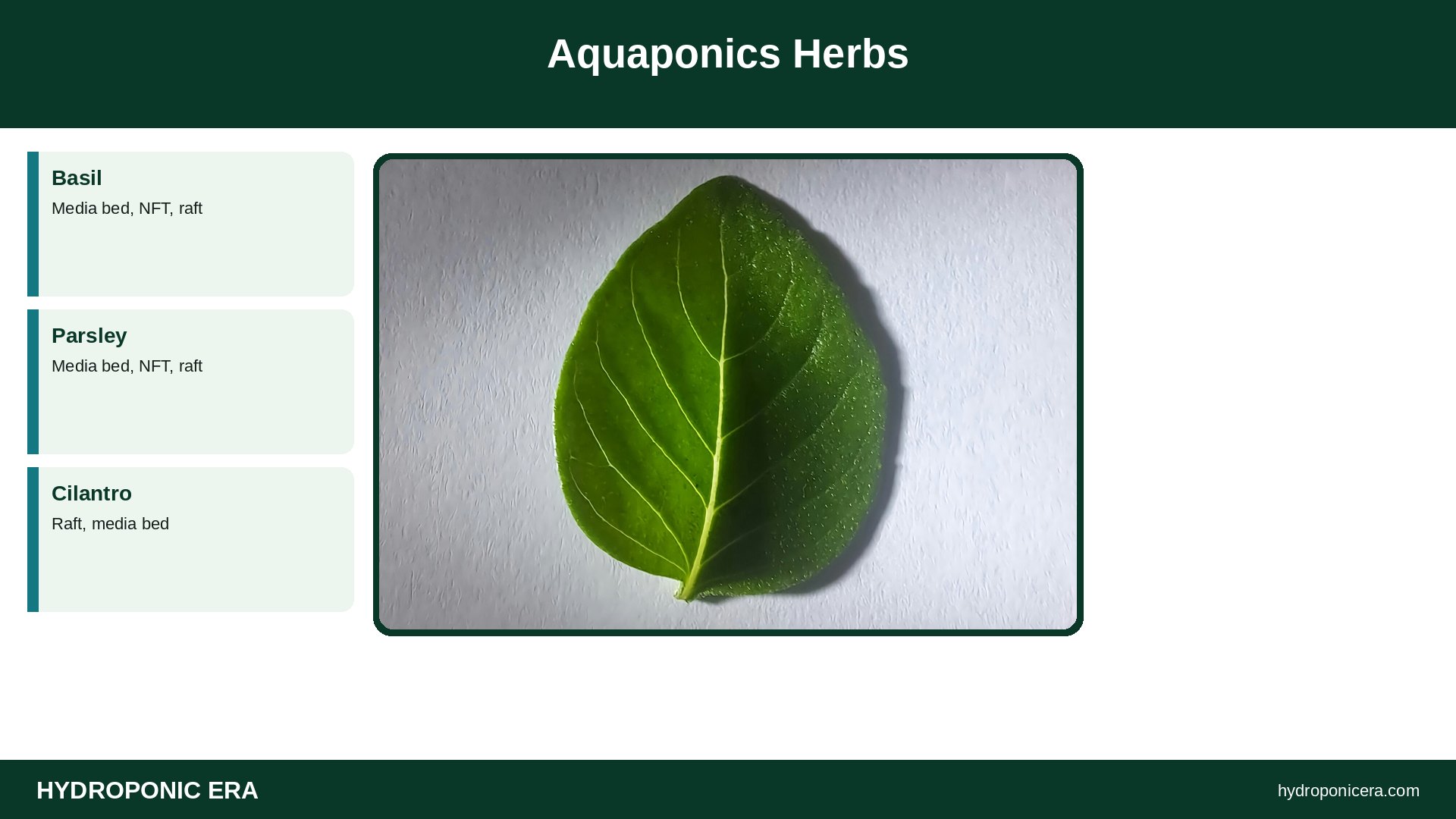
Aquaponics herbs are among the best crops you can grow with fish. Basil, mint, parsley, cilantro, chives and watercress have low nutrient needs, grow quickly at the aquaponics pH of about 6.8–7.0, and can be cut again and again. Research at the University of the Virgin Islands found culinary herbs earned far more per square foot than fruiting crops. Basil is the star: it likes warm water (above about 70°F) and is ready to start cutting about 5–6 weeks after transplanting. Mint and other vigorous herbs need room because their roots can clog pipes.
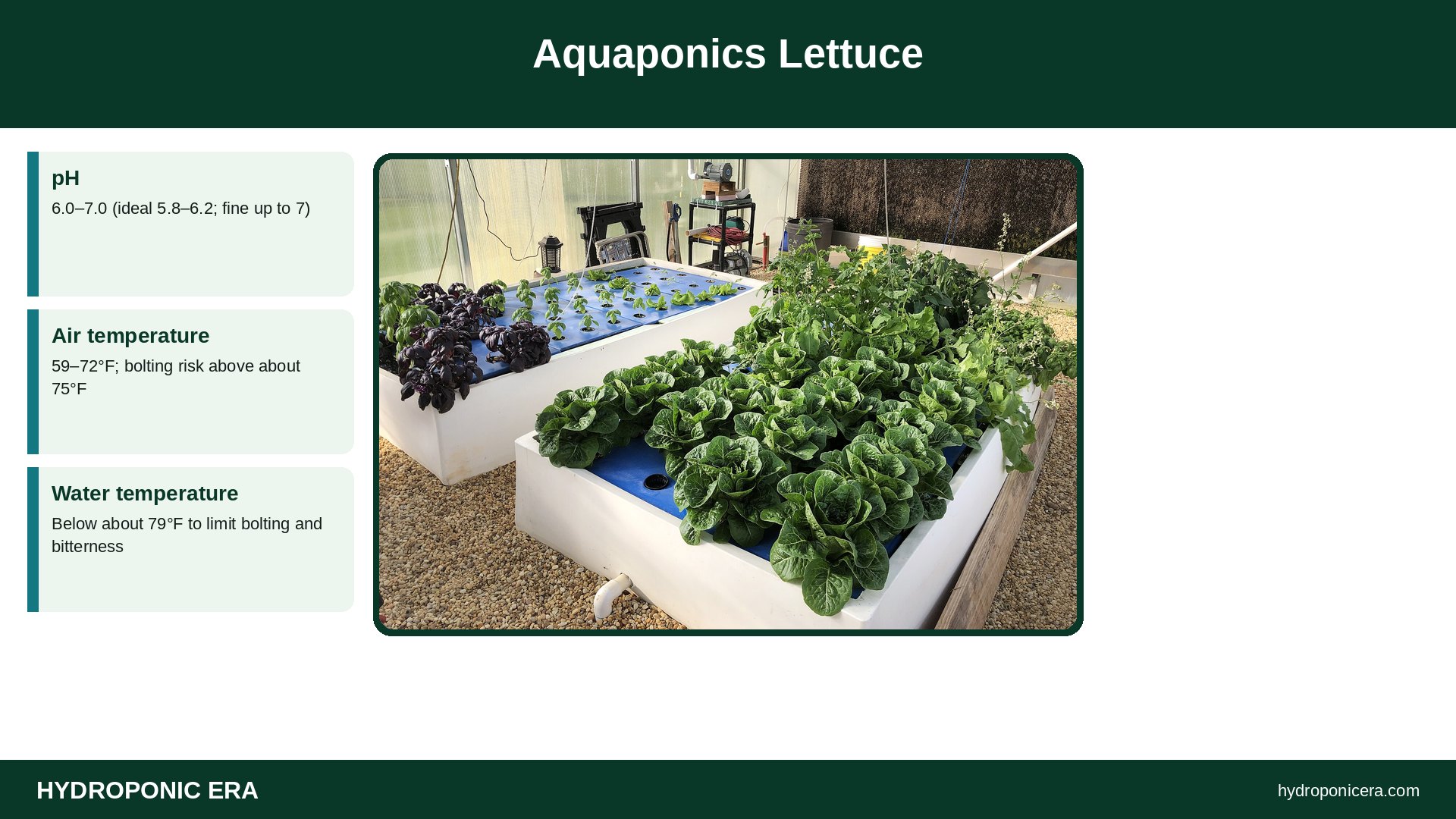
Aquaponics lettuce is the easiest and most reliable crop for a new fish system. Lettuce has low nutrient demand, grows well at the aquaponics pH compromise of about 6.8–7.0, and is ready about 3–4 weeks after transplanting in a raft (DWC) system. Keep water below about 79°F and air around 59–72°F to avoid bolting and bitterness, give each head about 7–12 inches of space, and add chelated iron so leaves stay deep green. Raft beds are the classic choice, but media beds and NFT work too.
You can grow aquaponics microgreens , but the system adds less than you might expect. Microgreens are harvested 7–21 days after sowing, when they still run mostly on energy stored in the seed, so they need very little of the nutrients fish provide. The safest method is to grow them on trays or mats beside the system and bottom-water with aquaponic water, keeping that water off the leaves. Floating mats directly on a raft bed also works but raises food safety and cleanliness questions, because fish water touches the plant base right at harvest.
The easiest way to grow aquaponics seedlings is to start seeds in a separate nursery tray filled with an inert medium such as rockwool, coco coir, peat plugs or vermiculite, then transplant them into the system once they have two to five true leaves. Starting seeds directly in the fish water is possible but riskier, because tiny roots can dry out, wash away or rot. Lettuce is usually ready to transplant at about three weeks; tomatoes and peppers at three to six weeks. Harden plants off and transplant in the evening to reduce shock.
Aquaponics pest control has one hard rule: anything that reaches the water must be safe for fish and beneficial bacteria. Synthetic pesticides are off the table, and many “organic” sprays such as neem, pyrethrum and rotenone are toxic to fish too. Fish-safe integrated pest management (IPM) relies on prevention, screens and sticky traps, hand removal and water sprays, beneficial insects such as ladybugs, lacewings and parasitic wasps, and narrow biological products like Bacillus thuringiensis (Bt) for caterpillars. If you must use a stronger spray, move plants away from the system and let them dry before returning them.
This aquaponics nutrient deficiencies chart helps you match a leaf symptom to the most likely missing nutrient and the aquaponics-safe fix. The first clue is where symptoms start. Problems on old, lower leaves point to mobile nutrients such as nitrogen, phosphorus, potassium and magnesium. Problems on new growth point to immobile ones such as iron, calcium and sulfur. In fish-fed systems, the three most common aquaponics nutrient deficiencies are iron, potassium and calcium, because fish feed is designed for fish, not plants. Always check pH first; many “deficiencies” are really nutrient lockout.
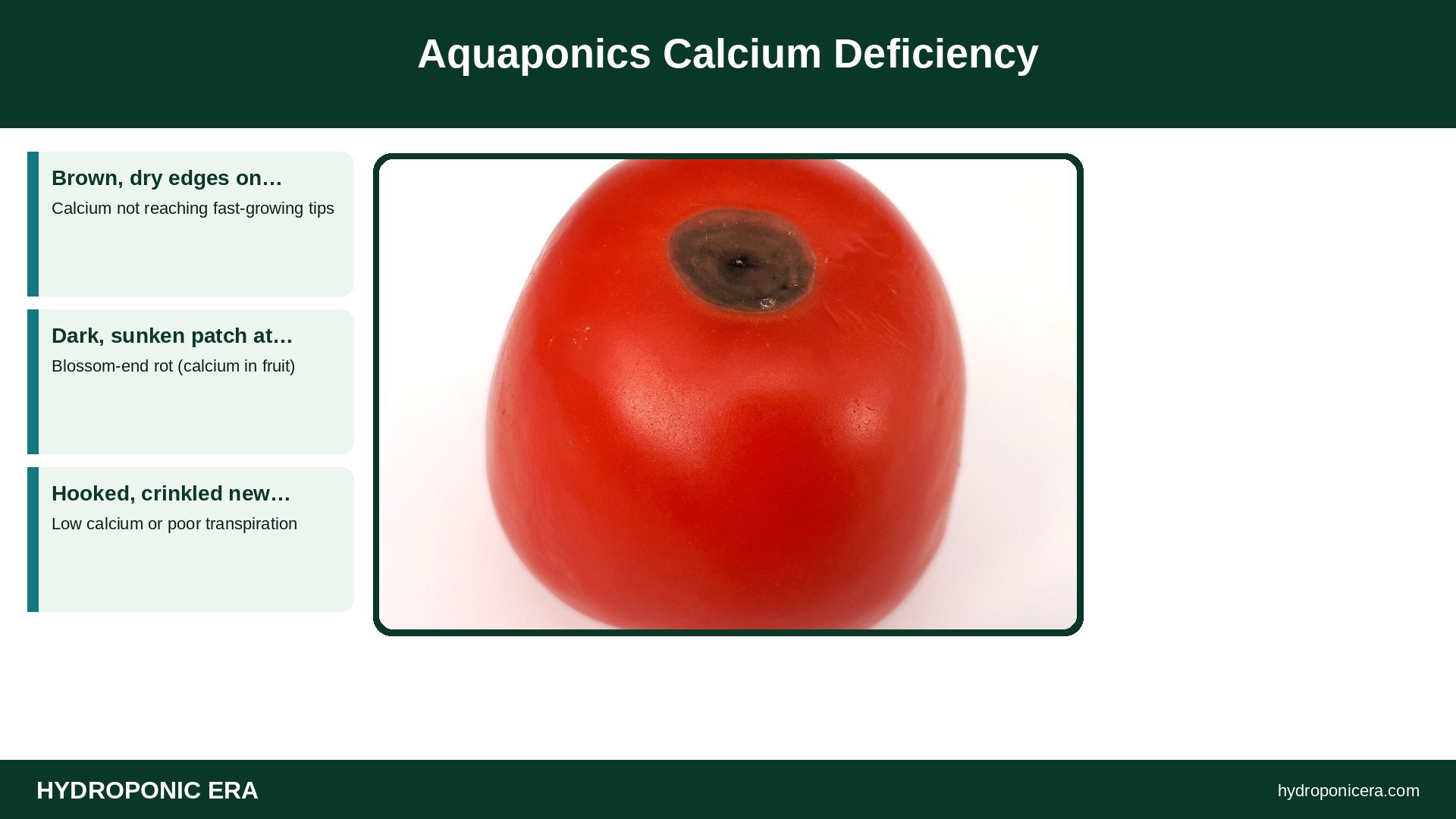
Aquaponics calcium deficiency shows up on the newest growth: lettuce tip burn, blossom-end rot on tomatoes and peppers, and distorted, hooked young leaves. Fish feed doesn’t supply enough calcium for most crops, so aquaponic growers add it while buffering pH, usually with calcium hydroxide (hydrated lime), calcium carbonate, crushed coral or seashells. Because calcium moves only with water flow through the plant, good airflow and steady transpiration are just as important as the amount in the water.