
You can grow aquaponics microgreens, but the system adds less than you might expect. Microgreens are harvested 7–21 days after sowing, when they still run mostly on energy stored in the seed, so they need very little of the nutrients fish provide. The safest method is to grow them on trays or mats beside the system and bottom-water with aquaponic water, keeping that water off the leaves. Floating mats directly on a raft bed also works but raises food safety and cleanliness questions, because fish water touches the plant base right at harvest.
Key takeaway: Use aquaponic water to bottom-water microgreen trays, never overhead, and harvest above the mat. If you sell microgreens, many growers use clean municipal or filtered water instead to keep food safety simple.
| Method | How it works | Pros | Cons |
|---|---|---|---|
| Bottom-watered trays | Fill a tray below the mat with system water | Leaves stay dry; easy | Manual watering |
| Floating mat on raft | Grow mat sits on a raft over the water | Automatic moisture | Water contacts stems; harder to keep clean |
| Media bed sowing | Scatter seed on fine media | No mats needed | Hard to harvest cleanly |
| Separate tap-water trays | Standard microgreen setup | Simplest for sales | Doesn’t use fish water |

Do Aquaponics Microgreens Need Fish Nutrients?
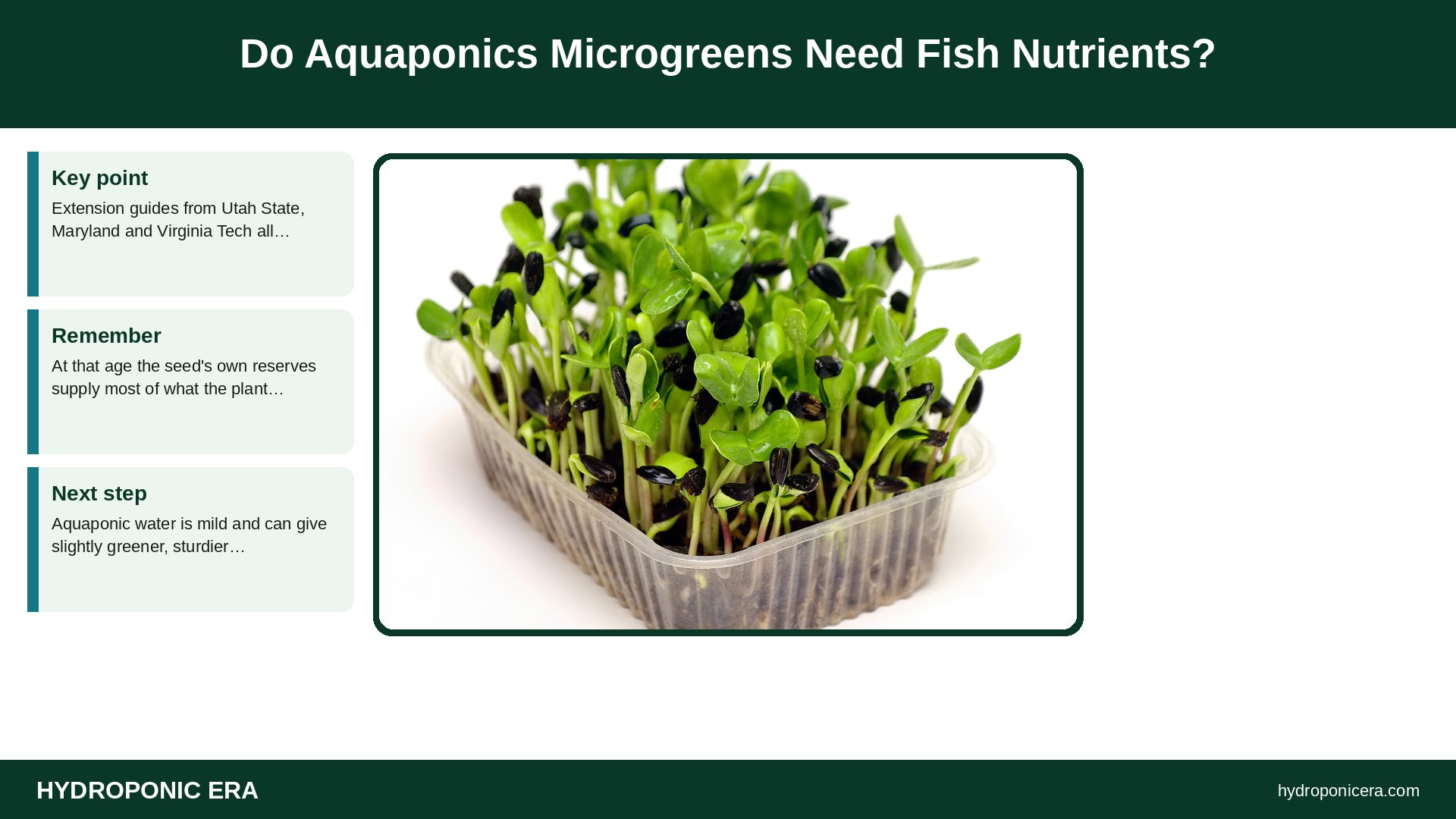
Extension guides from Utah State, Maryland and Virginia Tech all describe microgreens as young seedlings harvested at the cotyledon or first true leaf stage, usually within two to three weeks. At that age the seed’s own reserves supply most of what the plant needs, which is why many growers raise them on plain water. Aquaponic water is mild and can give slightly greener, sturdier growth in crops grown to the true-leaf stage, but don’t expect big yield differences. For standard methods, see hydroponic microgreens.
Food Safety Comes First
Microgreens are often eaten raw, and you cut them right at the surface where water sits. The FAO’s aquaponics manual advises never letting system water touch the produce at harvest, and not touching produce with wet hands or gloves, because any pathogens are mostly in the water. Fish water itself is a low-risk source compared with animal manure, but warm, moist trays can still grow bacteria. Practical rules:
- Bottom-water only; keep leaves dry.
- Harvest with clean scissors well above the mat.
- Use food-grade trays and new or sanitized mats each cycle.
- Keep pets, birds and rodents away from the system.
- Rinse and chill microgreens after harvest.
If you plan to sell, read home food safety and selling microgreens online.
How to Grow Aquaponics Microgreens Step by Step
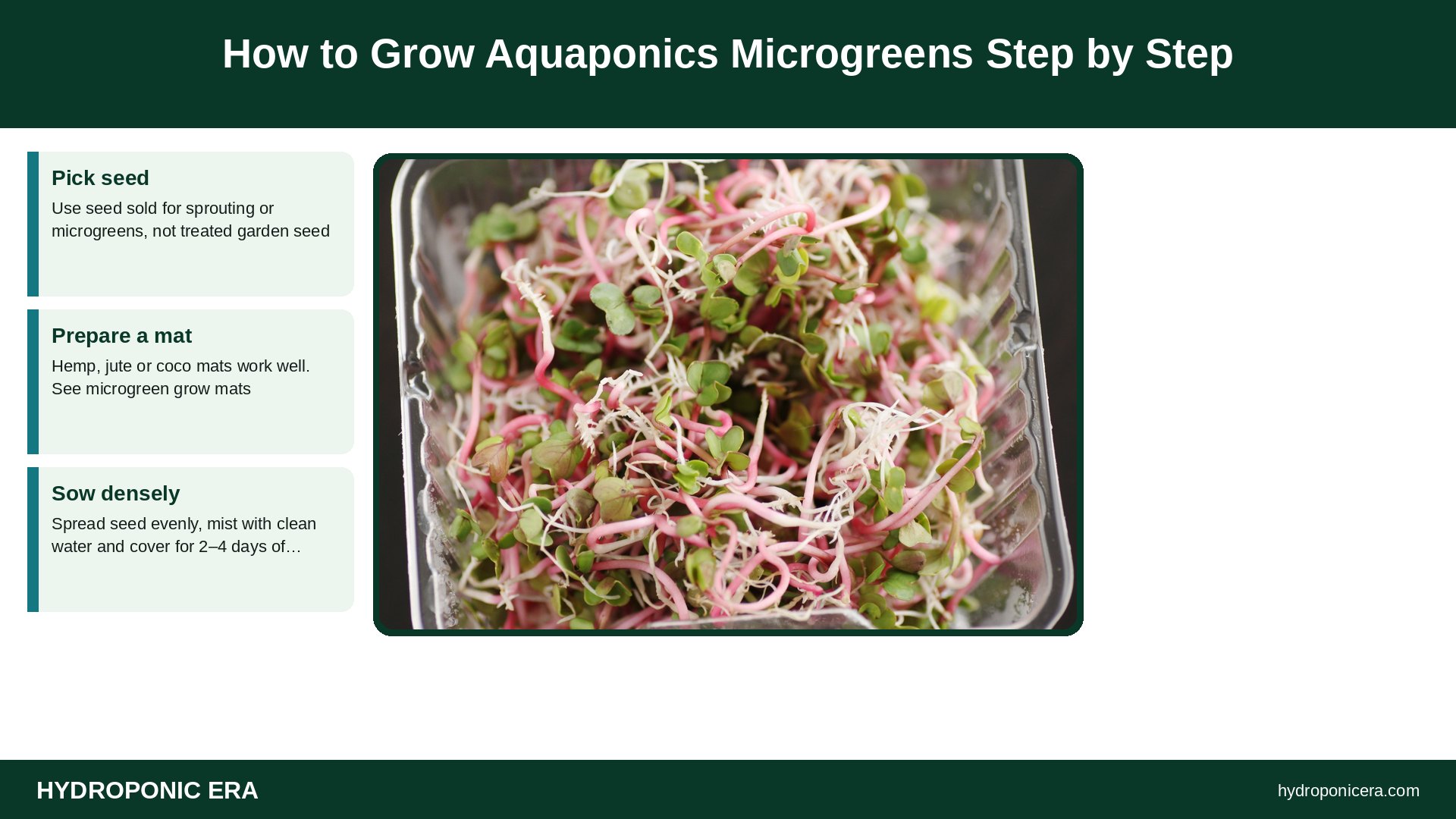
- Pick seed. Use seed sold for sprouting or microgreens, not treated garden seed.
- Prepare a mat. Hemp, jute or coco mats work well. See microgreen grow mats.
- Sow densely. Spread seed evenly, mist with clean water and cover for 2–4 days of blackout.
- Bottom-water. Once roots grip the mat, add a shallow layer of aquaponic water to the solid tray below.
- Light. Uncover and give 12–16 hours of light.
- Refresh water. Replace tray water every day or two; don’t let it go stale.
- Harvest. Cut above the mat at the cotyledon or first true leaf stage. See how to harvest microgreens.
Best Crops for Aquaponics Microgreens
| Crop | Typical harvest | Notes |
|---|---|---|
| Radish | About 7–12 days | Fast, spicy; see radish microgreens |
| Sunflower | About 8–14 days | Soak seeds first; see sunflower microgreens |
| Broccoli | About 8–14 days | Mild; see broccoli microgreens |
| Pea shoots | About 10–14 days | Sweet; see pea shoots |
| Basil | About 14–21 days | Slow; see basil microgreens |
Days are typical ranges from extension microgreen guides and seed suppliers; your timing depends on temperature and light.
Floating Mats on Rafts
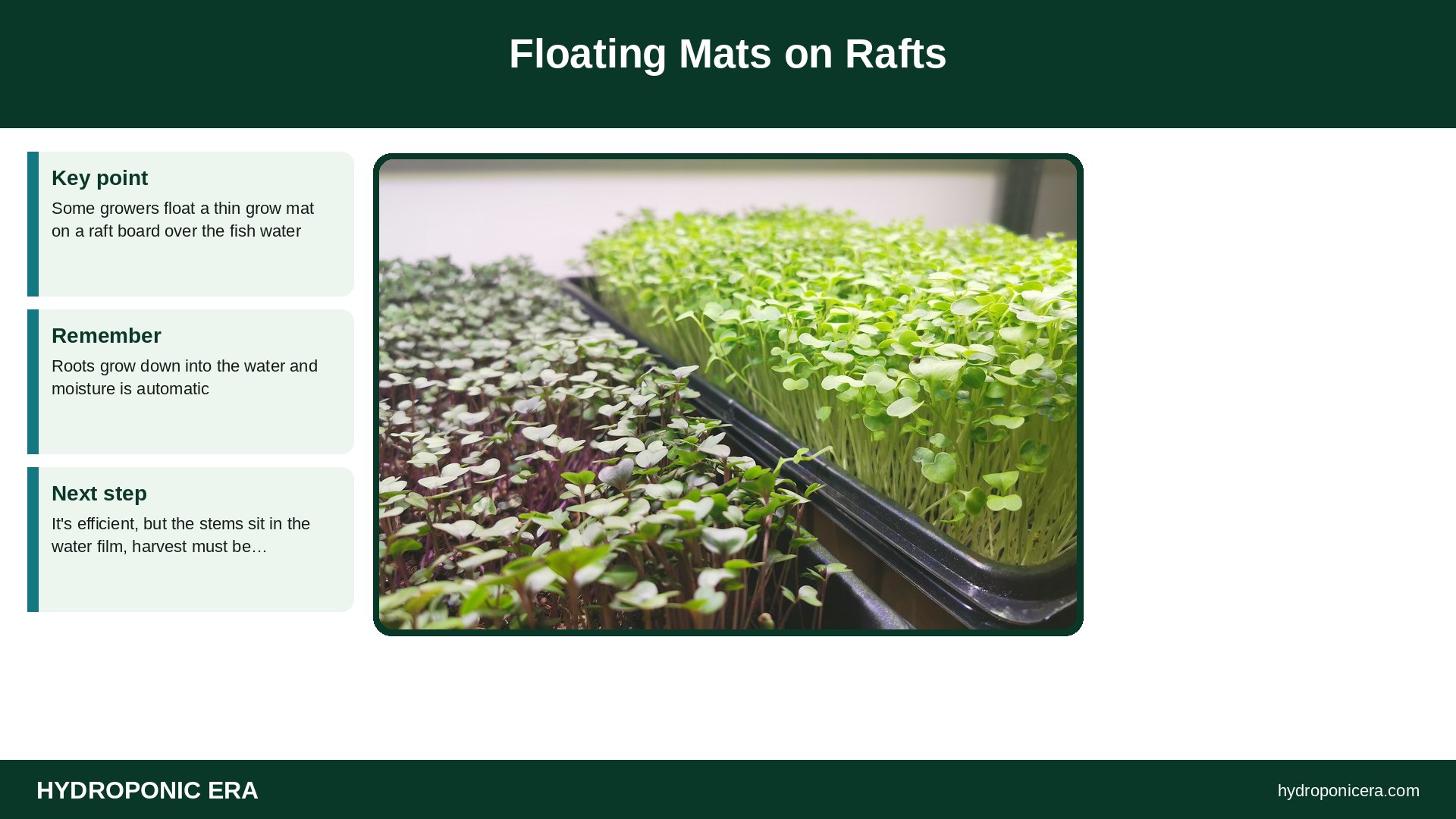
Some growers float a thin grow mat on a raft board over the fish water. Roots grow down into the water and moisture is automatic. It’s efficient, but the stems sit in the water film, harvest must be very careful, and mats shed fibers that can reach pumps. If you try it, use a dedicated raft away from fish inflow, cut high, and replace the mat each cycle. Many hobby growers find bottom-watered trays easier to manage.
Common Aquaponics Microgreens Problems
- Mold: often harmless root hairs, but fuzzy gray growth on stems is mold. Increase airflow, sow less densely and water from below. See microgreens mold.
- Damping-off: seedlings fall over at the base; clean trays and reduce moisture.
- Leggy, pale greens: more light or less blackout time.
- Uneven growth: uneven sowing or dry corners on the mat.
- Smelly tray water: change it more often; stagnant water breeds bacteria.
Is It Worth It?

Aquaponics microgreens make sense if you already run a system and want a quick crop with a second use for system water. They’re not a reason to build a fish system: microgreens don’t use enough nutrients to balance a tank of fish. Pair them with leafy greens and herbs that actually consume nitrate. See aquaponics fish to plant ratio and aquaponics for beginners.
Light and Space Tips
Microgreens need modest light compared with fruiting crops. A shelf of LED shop lights over 10×20 inch trays is enough for most varieties. Keep lights a few inches to a foot above the canopy and run them 12–16 hours. A small fan helps prevent mold. See light schedule.
Aquaponics Microgreens Tray Setup Checklist
- Two nested 10×20 inch trays: one with drainage holes for the mat, one solid tray underneath for water.
- A clean grow mat cut to size.
- Untreated microgreen seed and a scale or measuring spoon for even sowing.
- A blackout cover or an upside-down tray for the first few days.
- A pitcher for drawing aquaponic water from the sump, not from the fish tank, where solids are higher.
- A small fan and an LED light on a timer.
With this setup, aquaponics microgreens take only a few minutes a day. Draw fresh water each time rather than leaving it to sit, and rinse trays with hot soapy water between crops. Running two or three trays a week staggered by a few days gives a steady supply without overwhelming your kitchen.
FAQs
Can you grow aquaponics microgreens?
Yes, ideally on bottom-watered trays using system water.
Do microgreens need fish nutrients?
Very little; most nutrition comes from the seed.
Is fish water safe for microgreens?
Keep it off the leaves and harvest above the mat.
How long do microgreens take?
Usually 7–21 days depending on crop.
What’s the easiest microgreen to start?
Radish, broccoli or sunflower.
Can I reuse mats?
No; use new or sanitized mats each cycle.
Sources
- Utah State University Extension — Grow Your Own Microgreens
- University of Maryland Extension — Growing Microgreens and Baby Greens Indoors
- Virginia Cooperative Extension — Introduction to Microgreen Production in Indoor Vertical Farms and Greenhouses
- FAO — Small-scale aquaponic food production
- Photo credits (Wikimedia Commons, edited with titles): Lufa Farms Microgreens in Trays by Lufa Farms (CC BY-SA 2.0); Sunflower microgreens 01 by Pannet (CC BY 4.0); 11 microgreens by Stacy Spensley (CC BY 2.0); Mikrolistki – brokuł i rzodkiewka na tacach plastikowych by Teogenesis (CC BY-SA 4.0); AQUAPONIE by Hopeballa (CC BY-SA 4.0)