
Aquaponics peppers, from sweet bells to jalapeños, grow best in media beds in a mature, warm system. Peppers like days of about 72–86°F and nights of 57–61°F, root-zone temperatures of about 59–68°F, full sun and 12–24 inches between plants. They need more potassium and phosphorus once flowering starts, so plan to supplement potassium and iron. Expect harvests to begin about 60–95 days after transplanting. Heat above about 86–95°F causes flowers to drop.
Key takeaway: Grow aquaponics peppers in deep media beds, transplant only when nights stay above 50°F, stake bushy plants, add potassium at flowering, and pick fruit often to keep plants producing.
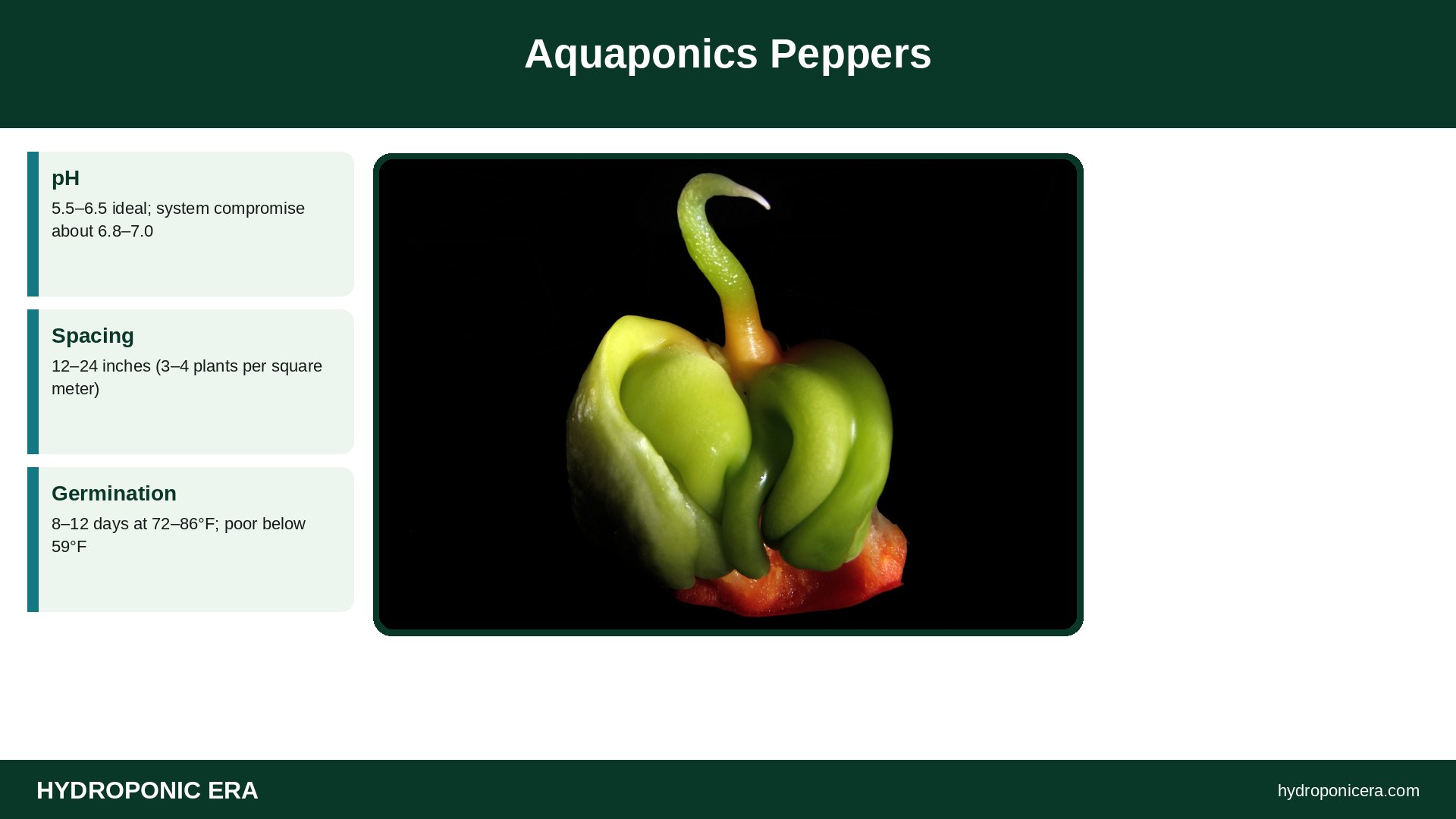
| Factor | Aquaponics peppers target (FAO) |
|---|---|
| pH | 5.5–6.5 ideal; system compromise about 6.8–7.0 |
| Spacing | 12–24 inches (3–4 plants per square meter) |
| Germination | 8–12 days at 72–86°F; poor below 59°F |
| Day / night temperature | 72–86°F / 57–61°F |
| Root zone | About 59–68°F optimal |
| Growth time | 60–95 days |
| Best system | Media beds |
Why Aquaponics Peppers Need a Mature System

The FAO’s aquaponics manual says all pepper types, from sweet bells to hot chilies such as jalapeño and cayenne, can be grown with aquaponics, and recommends media beds as the best method. Peppers might also grow in 4-inch (11 cm) NFT pipes with extra support. The FAO notes that nitrate supports early vegetative growth (an optimum range of 20–120 mg/L), but higher potassium and phosphorus are needed for flowering and fruiting. Like tomatoes, aquaponics peppers are nutrient-hungry fruiting crops, so start them once the fish load is established. See fish to plant ratio.
Temperature for Aquaponics Peppers
The FAO lists daytime temperatures of 72–82°F and nights of 57–61°F as best for fruiting, with relative humidity around 60–65%. Air below about 50–54°F stops growth and deforms fruit, and temperatures above 86–95°F lead to flower abortion. The FAO also notes spicier peppers develop at higher temperatures, and that the top leaves shade hanging fruit from sunscald. If your system runs warm tilapia water, peppers usually cope, but shade the greenhouse in heat waves. See aquaponics water temperature and blossom drop.
How to Grow Aquaponics Peppers Step by Step
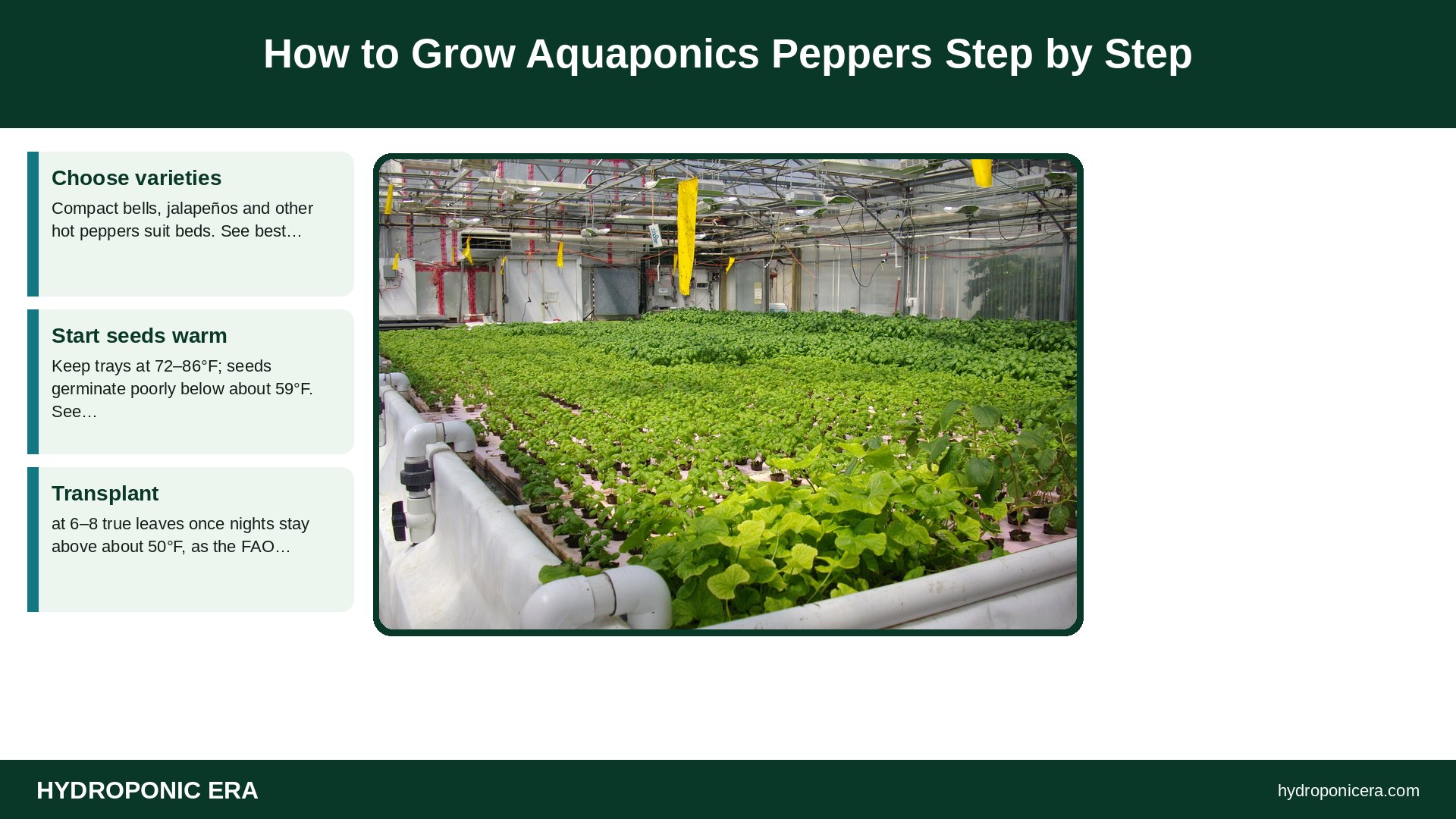
- Choose varieties. Compact bells, jalapeños and other hot peppers suit beds. See best pepper varieties.
- Start seeds warm. Keep trays at 72–86°F; seeds germinate poorly below about 59°F. See aquaponics seedlings.
- Transplant at 6–8 true leaves once nights stay above about 50°F, as the FAO suggests.
- Space plants 12–24 inches apart depending on size.
- Support heavy plants with stakes or strings from overhead wires.
- Pinch early flowers. The FAO recommends removing the first few flowers to push plant growth before fruiting.
- Thin flowers if fruit set is excessive, so remaining peppers reach good size.
- Harvest continually to encourage more flowering.
Nutrients for Aquaponics Peppers
- Potassium: increase potassium buffering as flowers appear. See aquaponics potassium deficiency.
- Calcium: prevents blossom-end rot on peppers too. See aquaponics calcium deficiency.
- Iron: chelated iron at about 2 mg/L. See aquaponics iron deficiency.
- Nitrogen: plenty early on; too much later gives leafy plants with few fruit.
The FAO’s feed rate ratio for fruiting crops is 50–80 grams of fish feed per square meter per day. For hydroponic comparisons, see nutrients for peppers.
Pruning and Pollination

Peppers are self-pollinating, but indoors they benefit from gentle shaking or a fan to move pollen. Light pruning of lower leaves improves airflow and makes pest checks easier. Some growers top or prune bell peppers to a few main stems for better light; hot peppers usually need less pruning. See pepper pruning and indoor pollination.
Harvesting and Storage
The FAO advises picking when peppers reach marketable size, or leaving them to fully change color for sweeter flavor and higher vitamin C. For red bells, leave green fruit on the plant until it turns red. Regular picking keeps plants flowering. The FAO notes peppers store fresh for about 10 days at 50°F with high humidity, or can be dried for long-term storage.
Common Aquaponics Peppers Problems

| Problem | Likely cause | Fix |
|---|---|---|
| Flowers drop | Heat above ~86–95°F, or cold nights | Shade, ventilate; protect at night |
| Deformed fruit | Cold air below ~50–54°F | Delay planting, add heat |
| Blossom-end rot | Calcium delivery | Calcium base, steady flow |
| Leafy, few peppers | Too much nitrogen | More plants per fish, potassium boost |
| Pale new leaves | Iron or high pH | Chelated iron, pH near 7.0 |
| Aphids, mites | Pests | Fish-safe IPM |
See aquaponics pest control for fish-safe options.
Aquaponics Peppers vs Tomatoes
Peppers grow more slowly than tomatoes and produce less weight per plant, but they’re more compact, need less pruning, and many hot varieties are high value. Both need potassium, calcium and iron support. If bed space is limited, a mix works well: tomatoes on the north side where they won’t shade, peppers in front. See aquaponics tomatoes.
Growing Aquaponics Peppers Indoors
Indoors, choose compact or dwarf varieties, give strong LED light for 14–16 hours, keep air around 72–80°F by day, and use a fan for airflow and pollen movement. A small media bed over a 50–100 gallon tank can support a few pepper plants alongside herbs once the system is mature. Expect slower growth than outdoors in summer, but harvests can continue for many months.
Aquaponics Peppers Weekly Checklist
- Test water: check pH, ammonia, nitrite and nitrate once a week. See ammonia, nitrite and nitrate.
- Watch new leaves: yellow new growth with green veins suggests iron shortage. See aquaponics iron deficiency.
- Check old leaves for scorched edges that may signal low potassium. See aquaponics potassium deficiency.
- Scout for aphids under leaves and near growing tips. See aquaponics pest control.
- Support heavy plants with stakes so fruiting branches don’t snap.
- Pick ripe fruit regularly so the plant keeps setting new peppers.
Aquaponics peppers reward patience. Plants are slower than greens, so pair them with lettuce or herbs in the same system to keep income and harvests steady while peppers mature. See aquaponics nutrient deficiencies.
FAQs
Can you grow aquaponics peppers?
Yes; all pepper types grow well in media beds.
Why are my pepper flowers falling off?
Usually heat above about 86–95°F or cold nights.
Do peppers need extra nutrients in aquaponics?
Usually potassium, calcium and iron.
How long until harvest?
About 60–95 days depending on variety.
Should I pinch the first flowers?
The FAO recommends it to encourage plant growth.
Are hot peppers easier than bells?
Many hot peppers are more compact and forgiving.
Sources
- FAO — Small-scale aquaponic food production
- Southern Regional Aquaculture Center — SRAC 454: Aquaponics—Integrating Fish and Plant Culture
- UF/IFAS Extension — Pepper Production
- Photo credits (Wikimedia Commons, edited with titles): Baby Bell pepper ”Capsicum annuum” by Brocken Inaglory (CC BY-SA 3.0); Pepper No. 30 by Edward Weston (Public domain); CDC South Aquaponics Raft Tank 1 2010-07-17 by Bryghtknyght (CC BY 3.0); AQUAPONIE by Hopeballa (CC BY-SA 4.0); 2008-09-20 Thermometer reading by Ildar Sagdejev (Specious) (CC BY-SA 4.0)