What are the best grow lights for peppers? The best grow lights for peppers are full-spectrum LED fixtures strong enough to deliver a daily light integral (DLI) of at least 15, and preferably over 20, mol/m²/day for fruiting plants, per Michigan State University. Indoors, that’s roughly 350–400 µmol/m²/s for 14–16 hours. Seedlings need less: about 10–15 mol/m²/day.
How long do LED grow lights last? Quality LED grow lights are commonly rated around 50,000 hours before output falls to about 70% of new, according to Oklahoma State University Extension. At 16 hours a day that’s roughly 8.5 years; at 12 hours, about 11 years. Heat, drive current and the driver usually decide real-world life, so a fixture can dim or fail sooner.
What is pond aquaponics? Pond aquaponics uses a backyard fish pond as the nutrient source for plants. Water is pumped from the pond through a solids filter and a planted bed or floating raft, where bacteria turn fish waste into nitrate that plants absorb, then returns cleaner. It’s an easy way to clear green water and grow herbs or ornamentals.
Do plants need infrared light? Not much. Infrared light for plants matters mainly at the far-red edge, about 700–750 nm, which boosts leaf expansion and photosynthesis when combined with regular light. Longer infrared from heat lamps only warms plants and air. For indoor growing, a full-spectrum LED with a little far-red beats any infrared heat lamp.
Does UV light for plants help? A small amount can. Research shows UV-A can boost seedling growth and UV-B can deepen red and purple leaf color and raise protective compounds. But UV light for plants is a supplement, not a main grow light, and too much UV-B stunts and burns leaves. UV is also hazardous to your eyes and skin, so use shielded fixtures and timers.
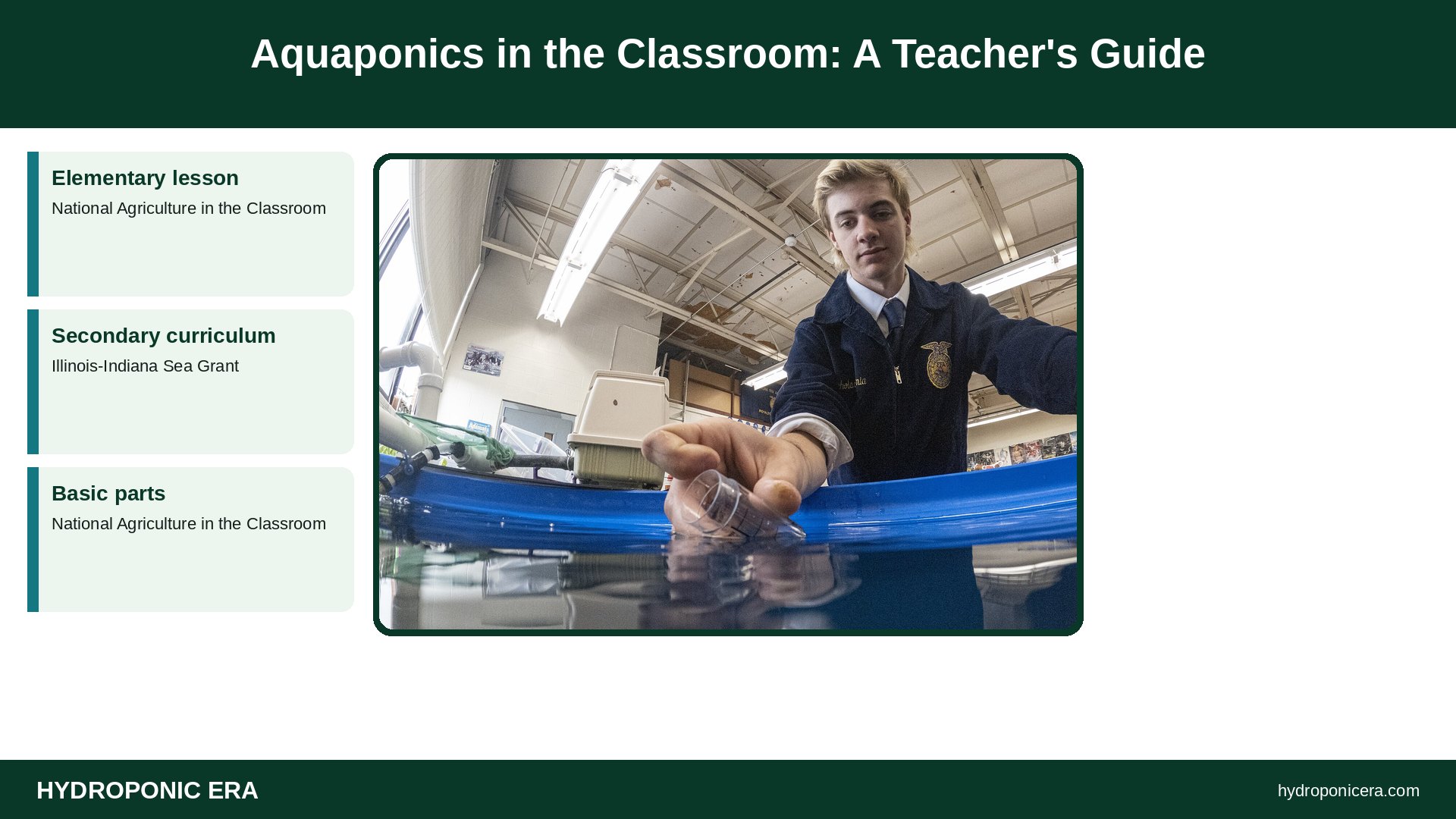
Aquaponics in the classroom turns biology, chemistry and math into something students can see, measure and eat. A small system, often a 10–20 gallon (38–76 L) aquarium with a grow bed on top, a pump, an air stone, a grow light, hardy fish such as goldfish, and fast plants like lettuce or basil, is enough to teach the nitrogen cycle, water testing, plant needs and ecosystems.
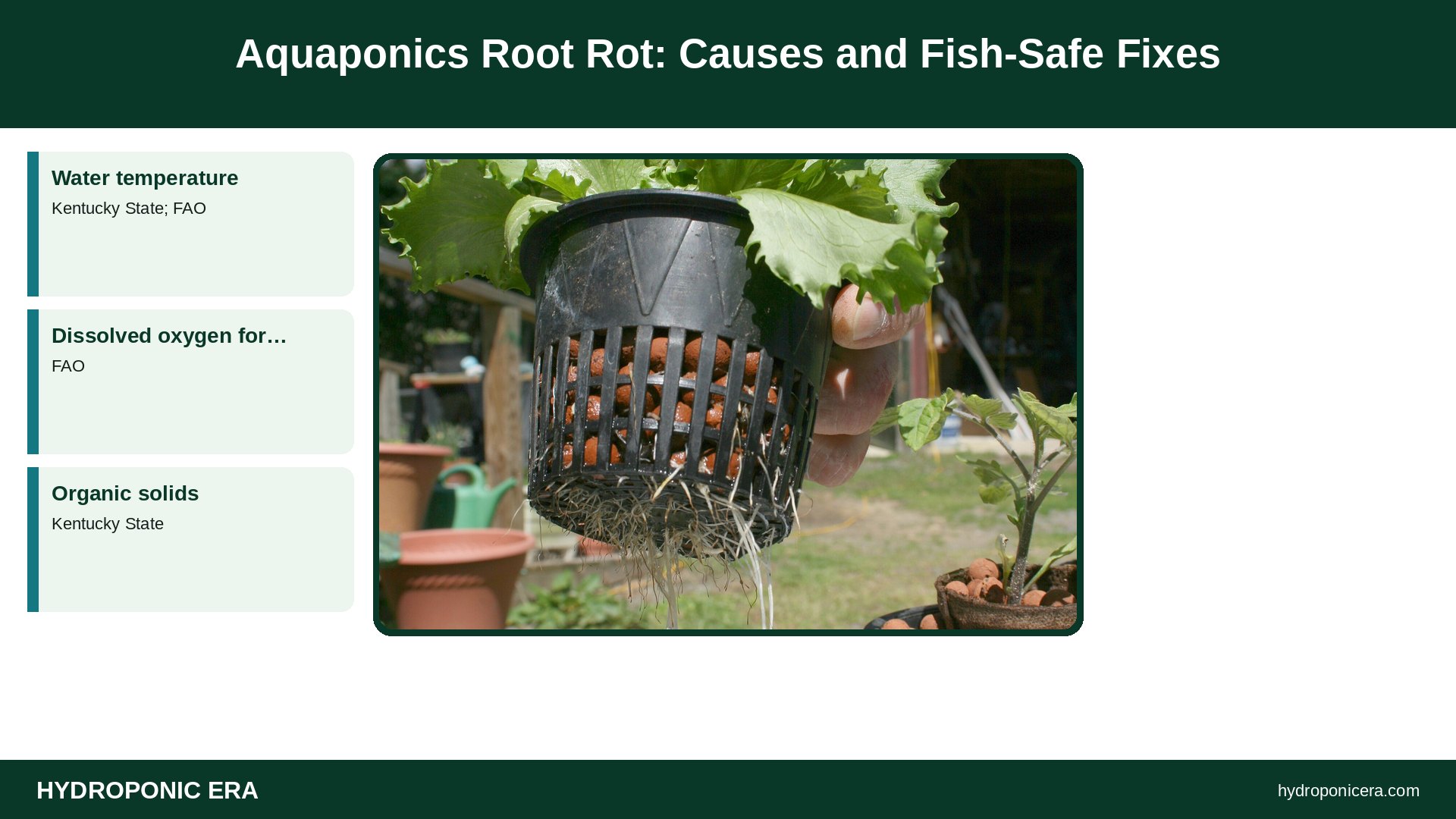
Aquaponics root rot is usually caused by Pythium , a water mold that thrives in warm, low-oxygen water full of organic solids. Healthy roots are white or cream and firm; rotting roots turn brown, slimy and slough off when touched, while plants wilt or look nutrient-starved. The fix starts with the water, not chemicals: keep water below about 78–82°F (26–28°C), raise dissolved oxygen with more aeration, remove solids faster, and pull out badly infected plants. Don’t use fungicides or harsh disinfectants in a system with fish, because they can harm the fish and the nitrifying bacteria.
Aquaponics snails are a mixed bag. Small aquarium snails such as ramshorns and Malaysian trumpet snails eat algae, leftover feed and detritus, and many home growers keep them as a cleanup crew. But snails can also become pests. The Southern Regional Aquaculture Center reports that snails in raft tanks eat plant roots and nitrifying bacteria, and the FAO lists snails among animals that can carry fish parasites into a system. The safe approach: don’t add snails to a food-fish system on purpose unless you know their source, keep populations small by not overfeeding, and never release snails or system water outdoors.
Most indoor systems need aquaponics grow lights , and a modern full-spectrum LED is the best choice for nearly all of them. Light the grow beds, not the fish: aim for a daily light integral (DLI) of about 12–17 mol/m²/day for lettuce and leafy greens, which works out to roughly 210–295 µmol/m²/s of PPFD for 16 hours a day. Fruiting crops like tomatoes need more. Keep the fish tank covered and shaded, because light on the water grows algae. Choose a fixture with a rated efficacy of about 2.5 µmol/J or better, mount it securely above splash height, and plug everything into a GFCI outlet.
Backyard aquaponics works best on a level, solid, wind-protected spot that gets plenty of sun on the grow beds but keeps the fish tank shaded. Start with a system the FAO calls small-scale and family-sized: about a 264-gallon (1,000 L) fish tank and roughly 32 square feet (3 m²) of grow beds.