aquaponics kit — Aquaponics Kit: How to Choose One

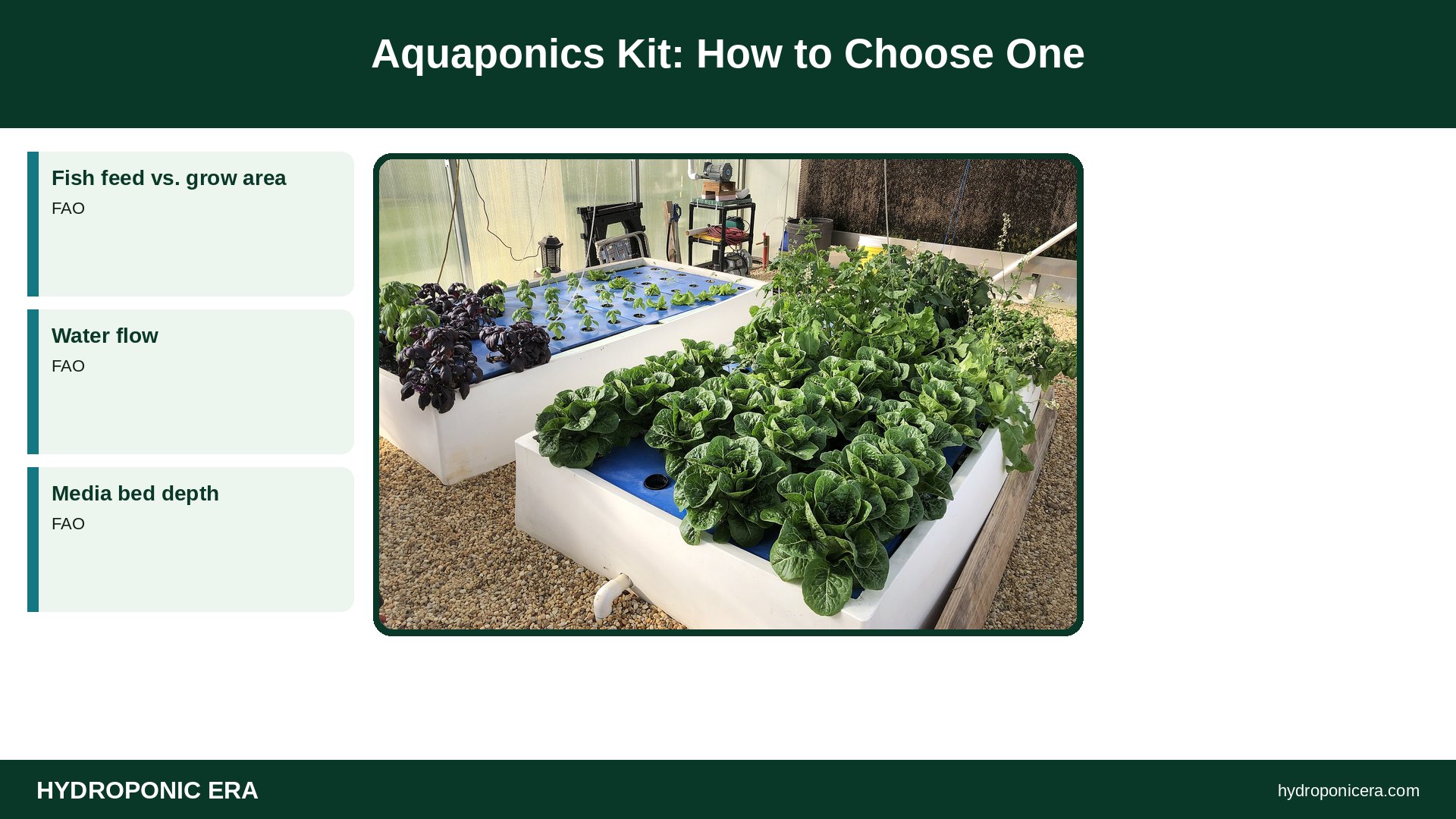
The best aquaponics kit for you depends on what you want to grow. Small 3–10 gallon (11–38 L) desktop kits are great for learning and a few herbs, but they hold too few fish to feed much plant growth. For real harvests, look for a kit with a fish tank of roughly 50–264 gallons (190–1,000 L), a grow bed sized to your daily fish feed, a pump that moves the tank’s volume about once or twice an hour, an air pump, and food-safe, UV-resistant plastic.

sand culture hydroponics — Sand Culture Hydroponics: How Sand Beds Work

Sand culture hydroponics grows plants in clean, inert sand that is watered with a complete nutrient solution, which then drains away. The sand only anchors roots; all the food comes from the solution. It’s one of the oldest soilless methods, refined at US agricultural experiment stations in the 1920s and 1930s. Sand holds more water than gravel, so it suits drip and wick setups, but fine sand can block air. Use medium to coarse silica sand of about 0.01–0.08 inch (0.25–2 mm) that is free of lime, and let every watering drain fully.

pea gravel hydroponics — Pea Gravel Hydroponics: Cheap but Heavy Media

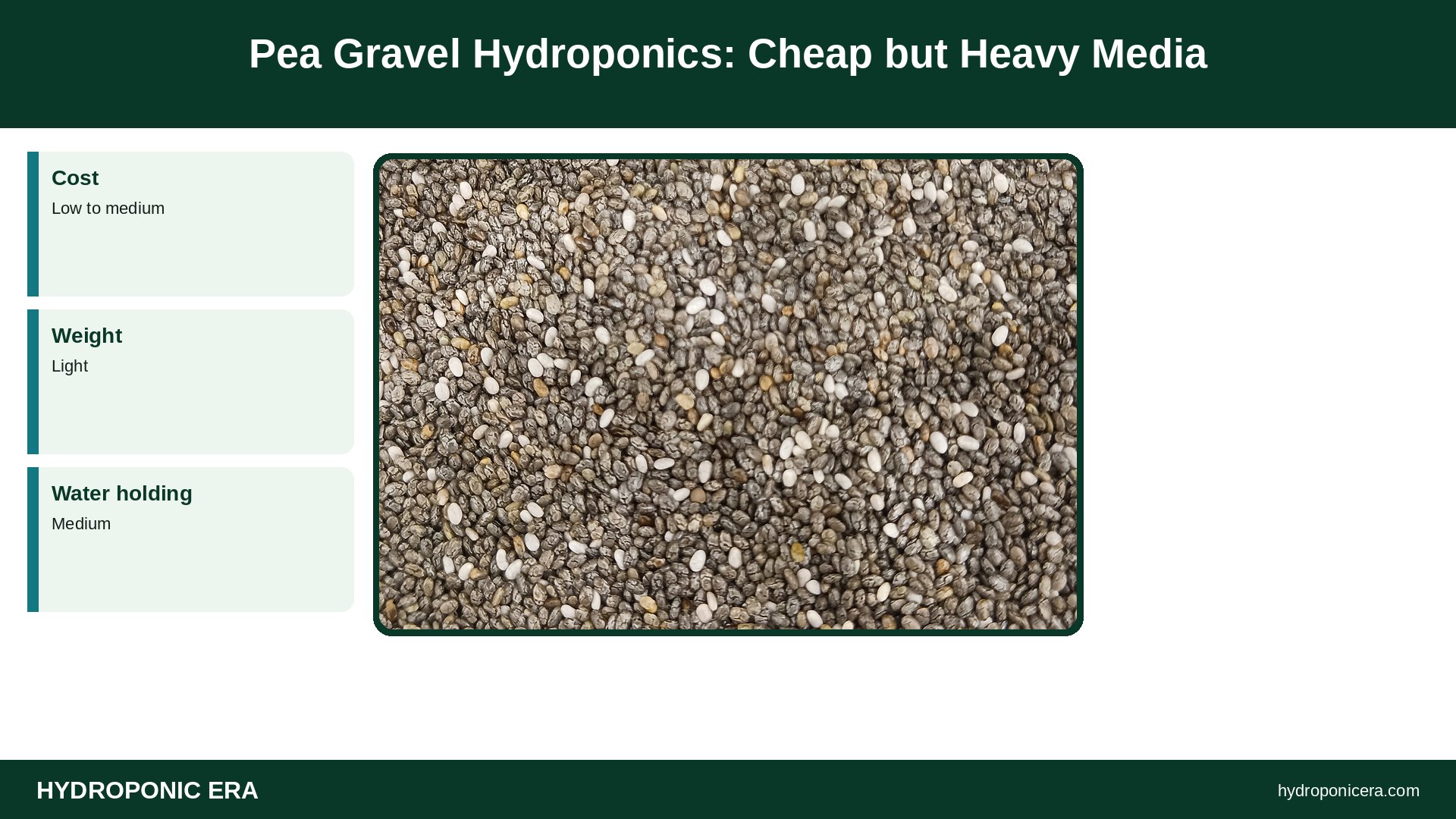
Pea gravel hydroponics uses small, rounded stones, usually about 1/4–3/8 inch (6–10 mm), as the growing medium. It’s one of the oldest and cheapest hydroponic media: gravel culture was the most widely used soilless method in Hawaii, according to a University of Hawaii extension circular. Gravel drains fast, never breaks down and anchors tall plants well. The downsides are weight, low water holding and the risk that limestone gravel will push your pH up. Use only washed, non-calcareous gravel and pick a flood-and-drain or drip system.

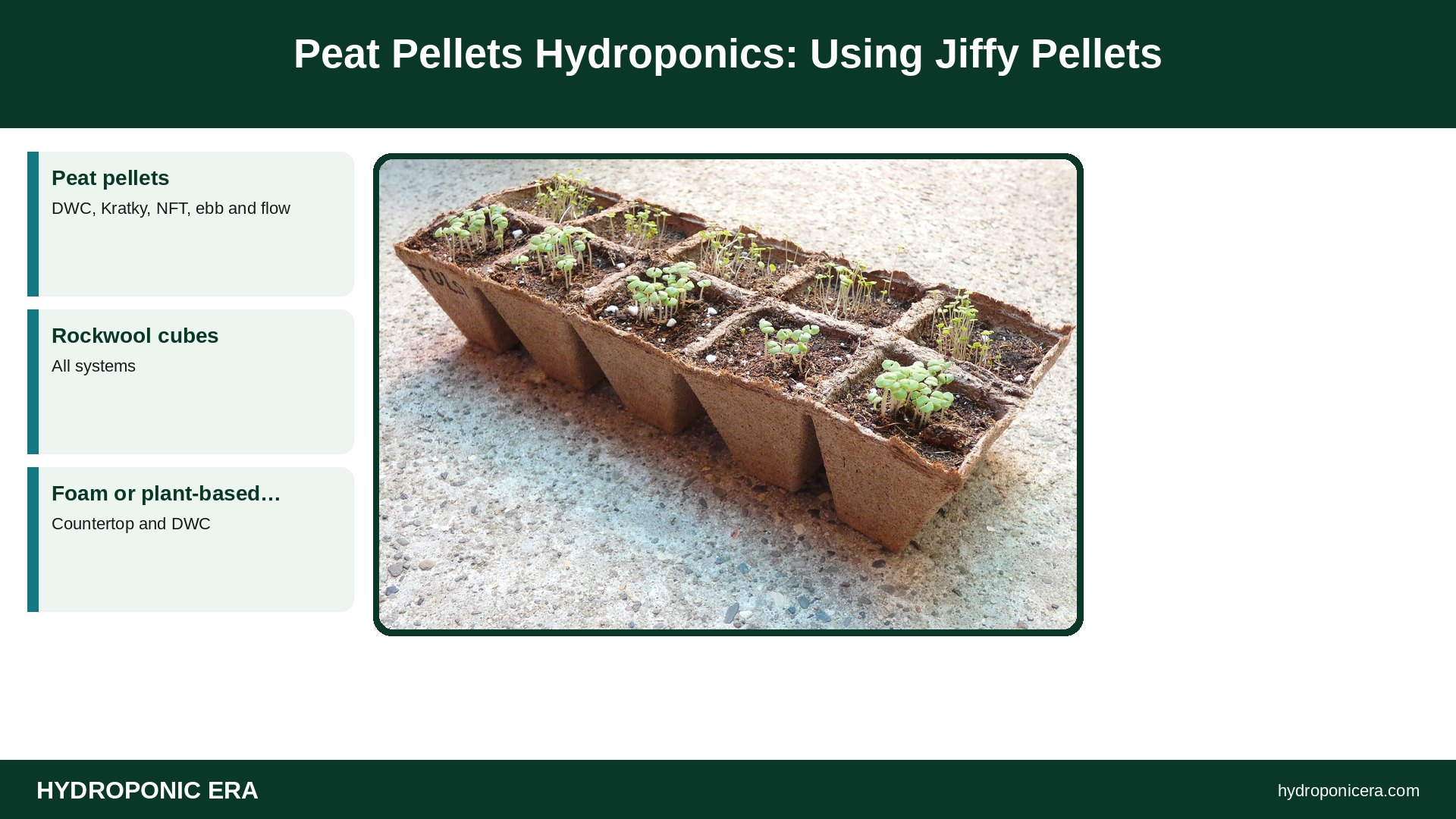
peat pellets hydroponics — Peat Pellets Hydroponics: Using Jiffy Pellets

Peat pellets hydroponics means starting seeds in compressed peat discs, often sold as Jiffy pellets, and then moving the rooted pellet into a hydroponic system. It works well. Pellets swell in water in about 10 minutes, hold moisture without drowning seeds and let you transplant with almost no root disturbance. A University of Georgia study in deep water culture even found peat-based plugs outgrew rockwool for lettuce and arugula. The main risk is loose peat breaking off into the water, so contain the pellet in a net cup and keep the mesh on.

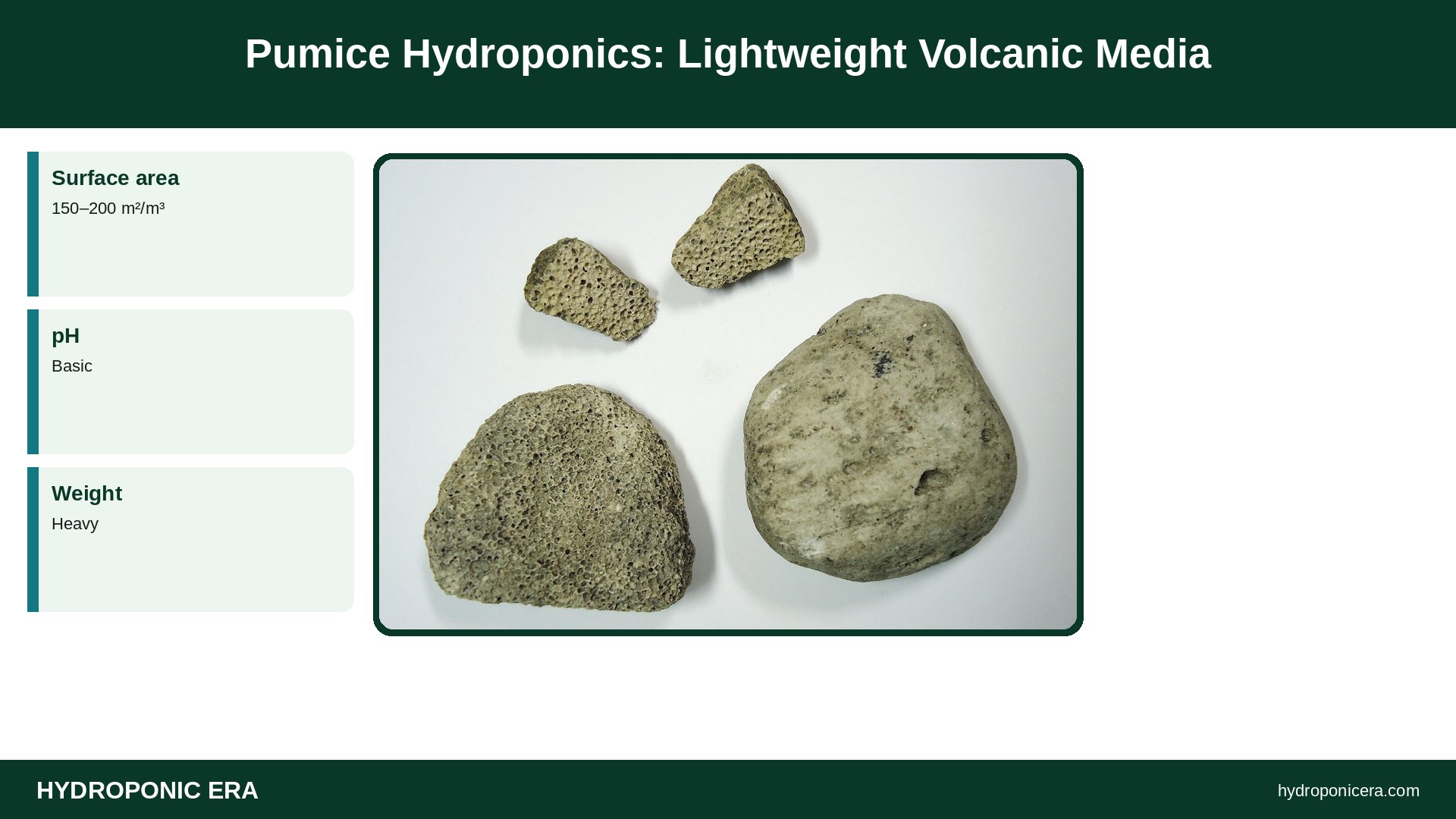
pumice hydroponics — Pumice Hydroponics: Lightweight Volcanic Media

Pumice hydroponics uses crushed pumice, a light, porous volcanic rock, as the growing medium. Pumice is chemically close to inert, holds a moderate amount of water inside its pores, drains freely and lasts for years without breaking down. The UN Food and Agriculture Organization (FAO) lists pumice as a neutral-pH, lightweight, long-lasting medium that is easy to work with. Studies show tomatoes grow well in pumice-based beds, and it is a strong, cheaper alternative to clay pebbles in drip, ebb and flow and aquaponics media beds.

growstones hydroponics — Growstones Hydroponics: Recycled Glass Growing Media

Growstones hydroponics means growing plants in Growstones, a lightweight, porous aggregate made from recycled glass. It holds more air than perlite, wicks and holds water inside its pores and can be reused. Research found Growstones produced tomato and cucumber yields equal to rockwool, with a drier root zone and less Pythium. The main catch: new Growstones can push water pH above 10, so rinse and soak them before planting and check pH for the first few weeks.

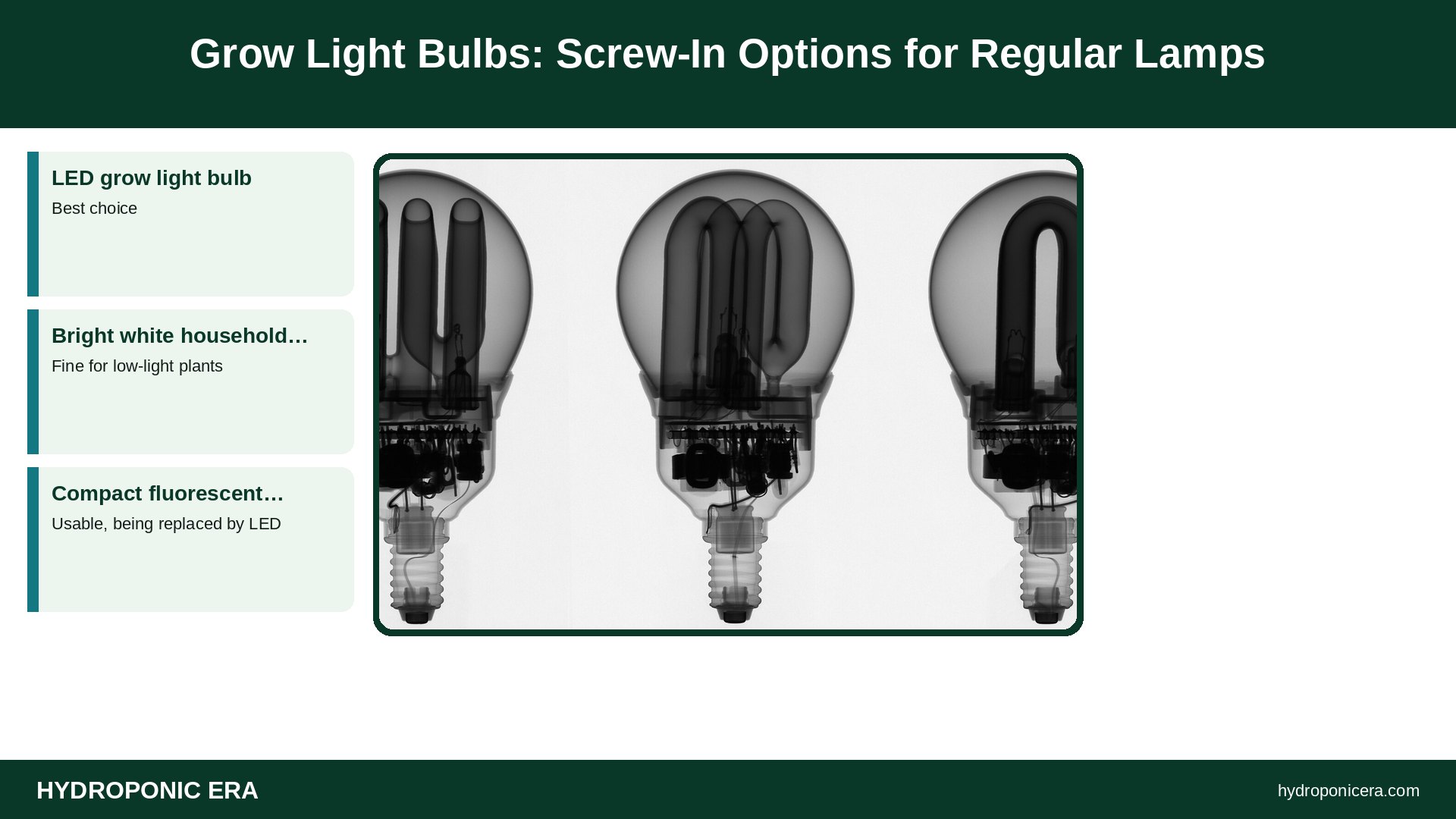
grow light bulbs — Grow Light Bulbs: Screw-In Options for Regular Lamps

Grow light bulbs are screw-in bulbs made to fit a regular lamp socket (in the US, usually the standard E26 medium base) while putting out light that plants can use. The best choice today is an LED grow light bulb: it runs cool, uses little power and lasts for years. A single bulb works for one to a few houseplants, a small herb pot or a seedling flat placed close underneath. Skip incandescent bulbs, which Iowa State University Extension calls poor sources of plant light because they are inefficient, run hot and are weak in blue.

regular led lights grow plants — Can Regular LED Lights Grow Plants?

Yes, regular LED lights grow plants. Plants don’t care whether a bulb says “grow light” on the box; they respond to how much photosynthetic light reaches their leaves and for how many hours. A bright white household LED or a 4-foot LED shop light can grow seedlings, herbs, lettuce and houseplants if you keep it close and run it long enough. University of New Hampshire Extension says LED shop lamps work fine for starting seedlings, because failure under lamps is usually about light quantity, not spectrum. The catch: most regular LED lights are too weak for fruiting crops like tomatoes and peppers.

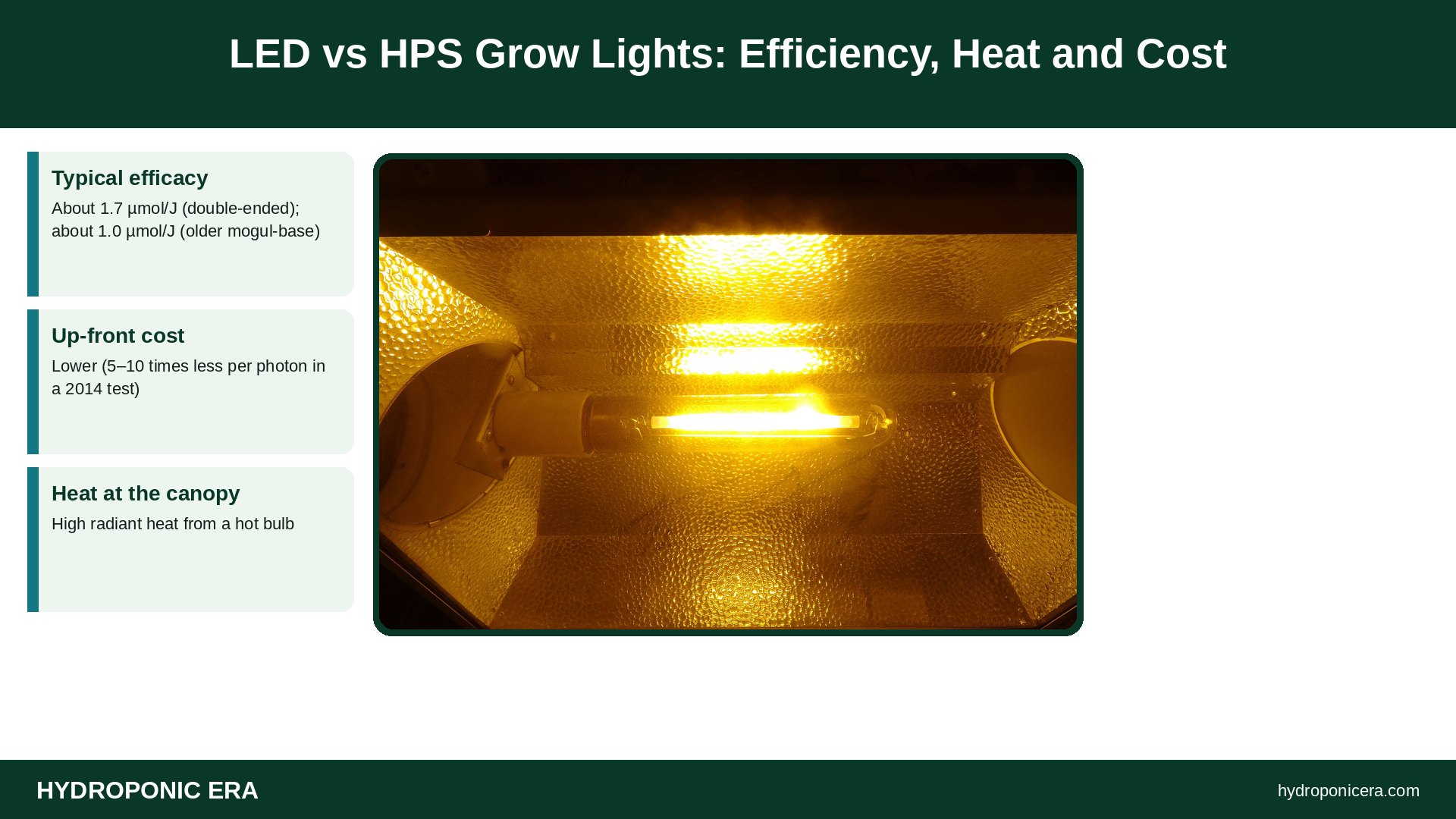
led vs hps — LED vs HPS Grow Lights: Efficiency, Heat and Cost

LED vs HPS comes down to this: modern LED grow lights turn electricity into plant light more efficiently than high pressure sodium (HPS), run cooler at the canopy and last longer, while HPS fixtures cost far less up front and add useful heat in a cold greenhouse. Peer-reviewed tests show the best double-ended HPS fixtures top out near 1.7 µmol/J, while today’s typical LED fixtures deliver about 2–3 µmol/J. For a home grow room, tent or hydroponic shelf in the US, LED is the better buy in almost every case.

full spectrum grow lights — Full Spectrum Grow Lights: What They Are and Why They Matter

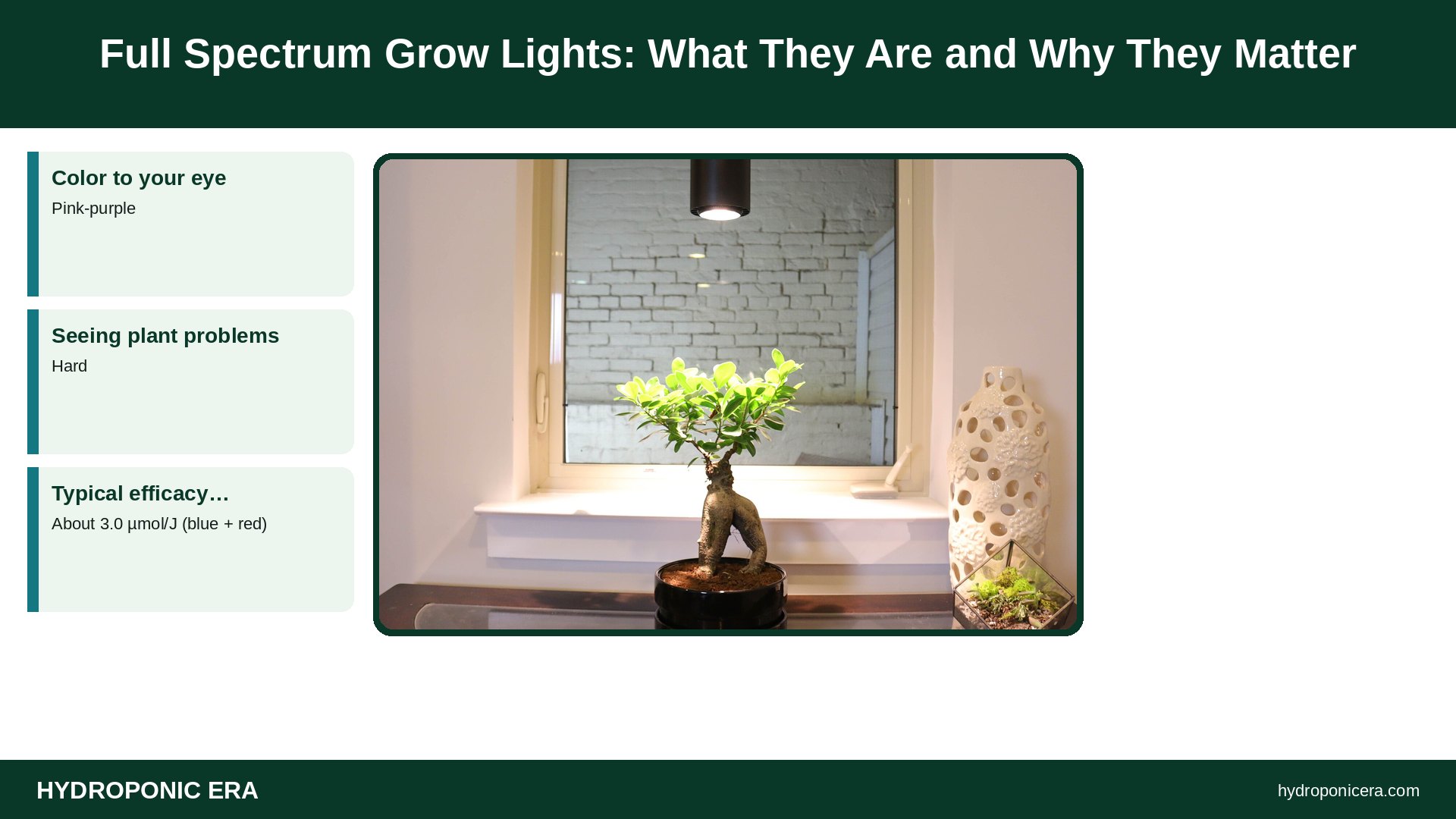
Full spectrum grow lights are grow lights, usually white LEDs, that emit a broad mix of colors similar to sunlight instead of just red and blue. That makes plants look natural, makes pests and deficiencies easier to spot, and is easier on your eyes. “Full spectrum” has no legal definition, though, so it doesn’t guarantee a good light. Judge a fixture by its PPFD (how much usable light reaches the plants) and its efficacy in µmol/J, not by the label or by lumens. A good modern full-spectrum LED delivers about 2.5 µmol/J or more.