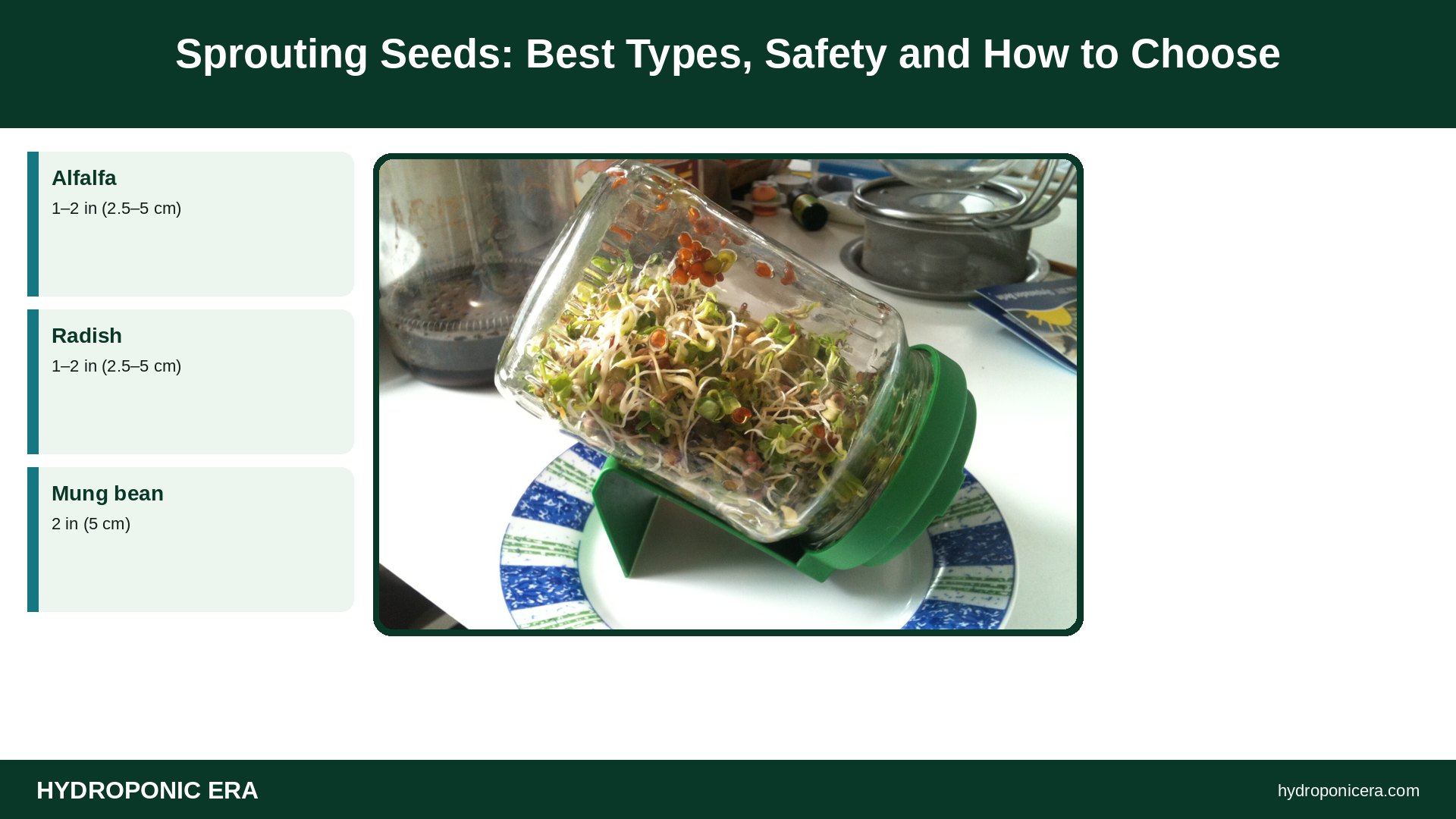
What are sprouting seeds? Sprouting seeds are seeds sold for eating as sprouts, such as alfalfa, broccoli, radish, mung bean, lentil and clover. You soak them, then rinse and drain them for about 3–5 days until short shoots form. Buy seed labeled for sprouting, ideally pathogen-tested, because UC food safety experts trace most sprout illness outbreaks to contaminated seed.
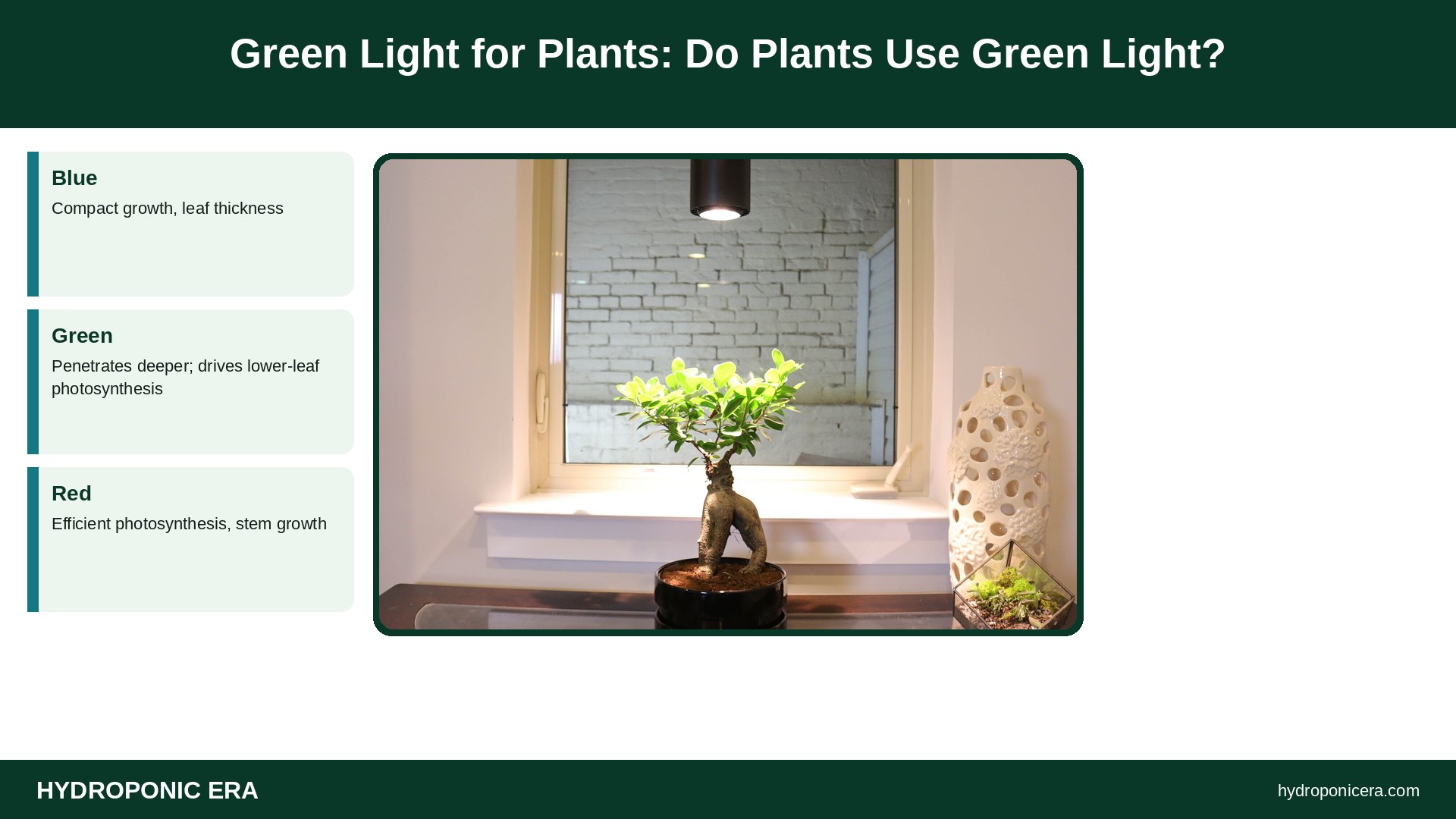
Do plants use green light? Yes. Green light for plants is not wasted. Leaves reflect more green than red or blue, but they still absorb much of it, and green light reaches deeper into leaves and lower in the canopy. Research on lettuce found that adding some green to red and blue LEDs improved growth, so full-spectrum white LEDs are a sound choice.
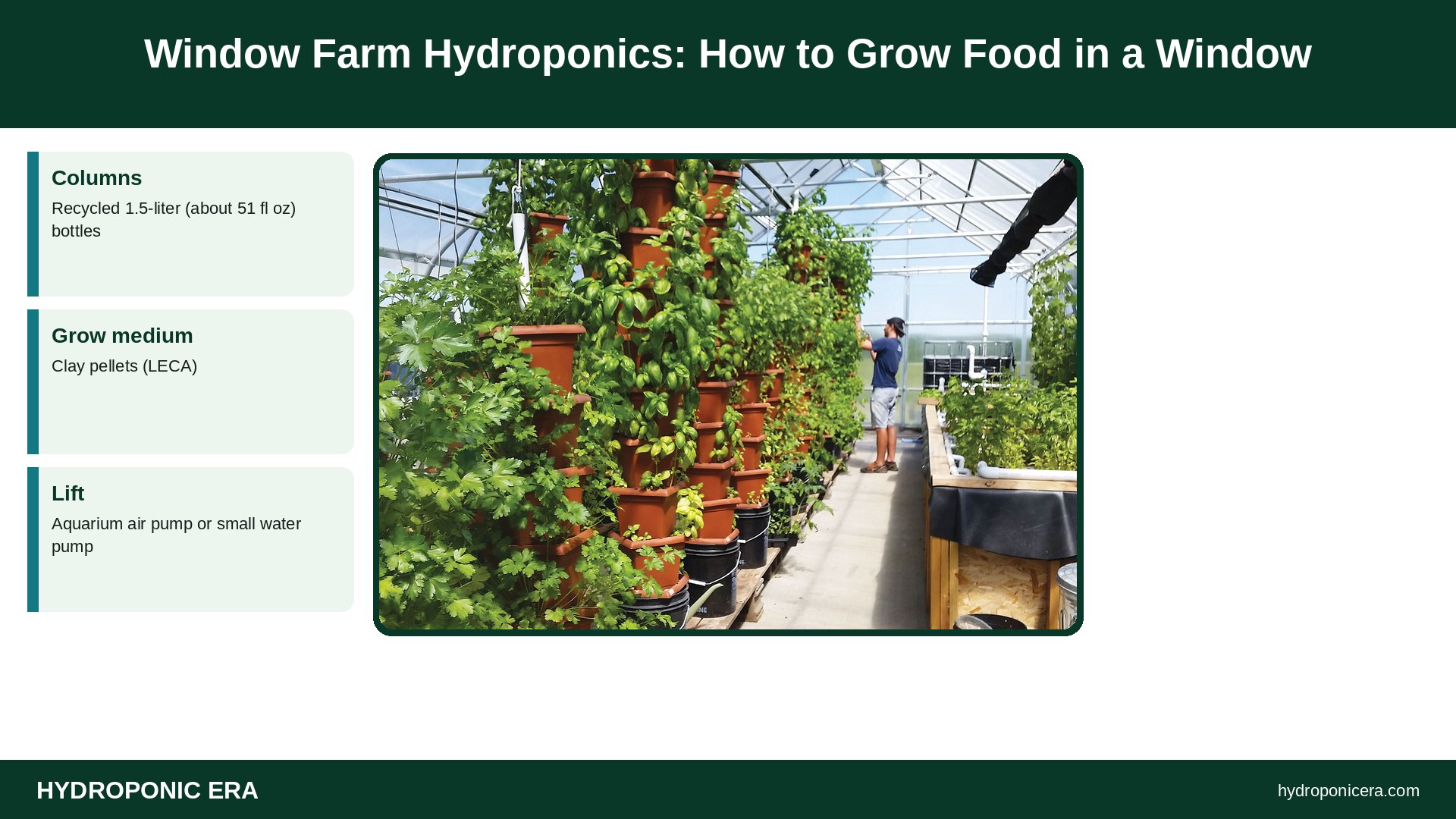
What is a window farm? A window farm is a small vertical hydroponic garden that hangs in a sunny window. The classic design stacks upside-down plastic bottles with holes for plants, and a small air pump lifts nutrient water to the top so it trickles back down past the roots. It grows herbs and greens without soil in tiny apartments.
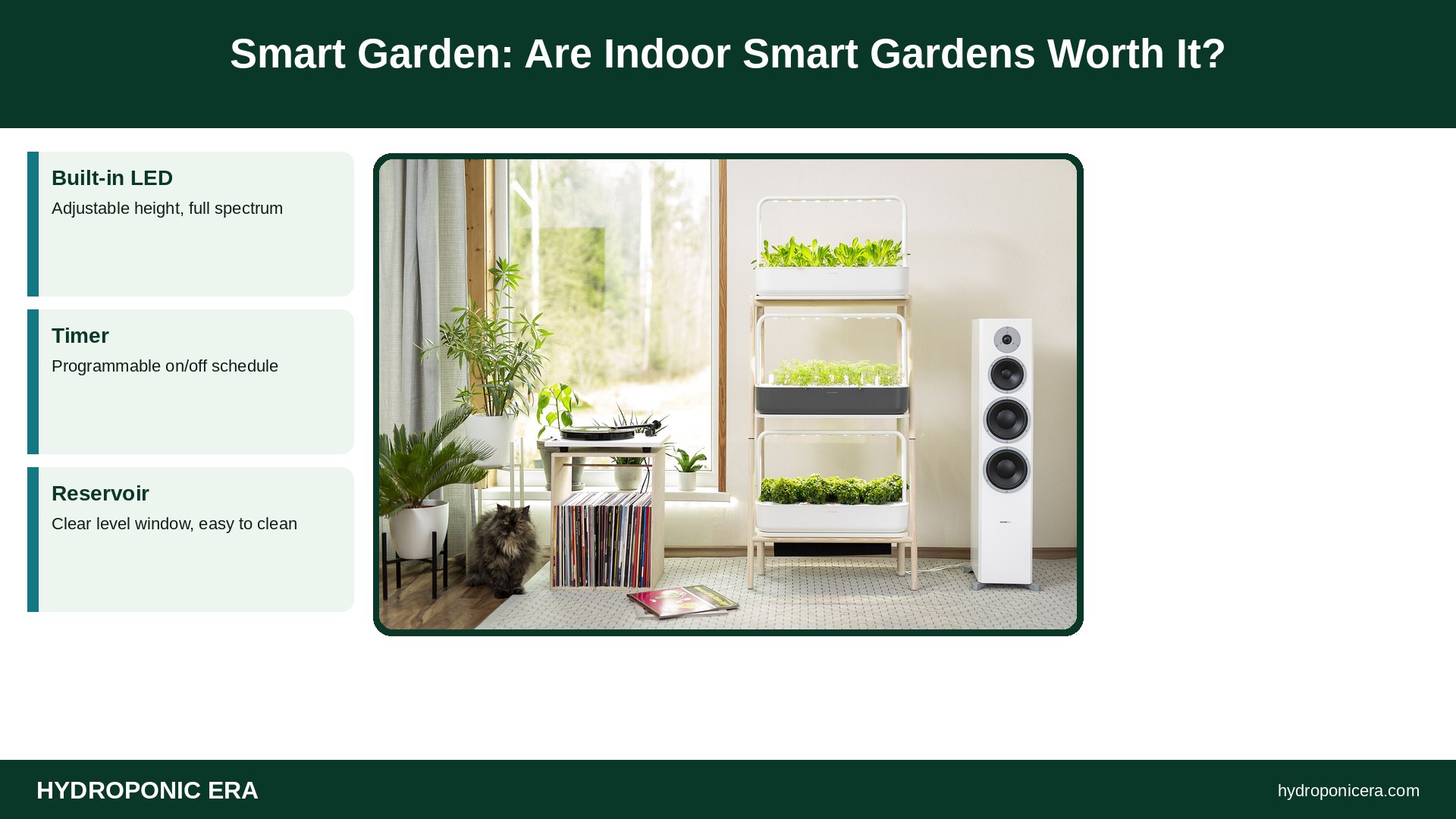
Is a smart garden worth it? A smart garden is worth it if you want fresh herbs or lettuce indoors with little effort. It combines a small hydroponic reservoir, seed pods and a built-in LED light on a timer. It suits leafy greens and herbs best; tomatoes and peppers need more light, space and patience than most countertop units give.
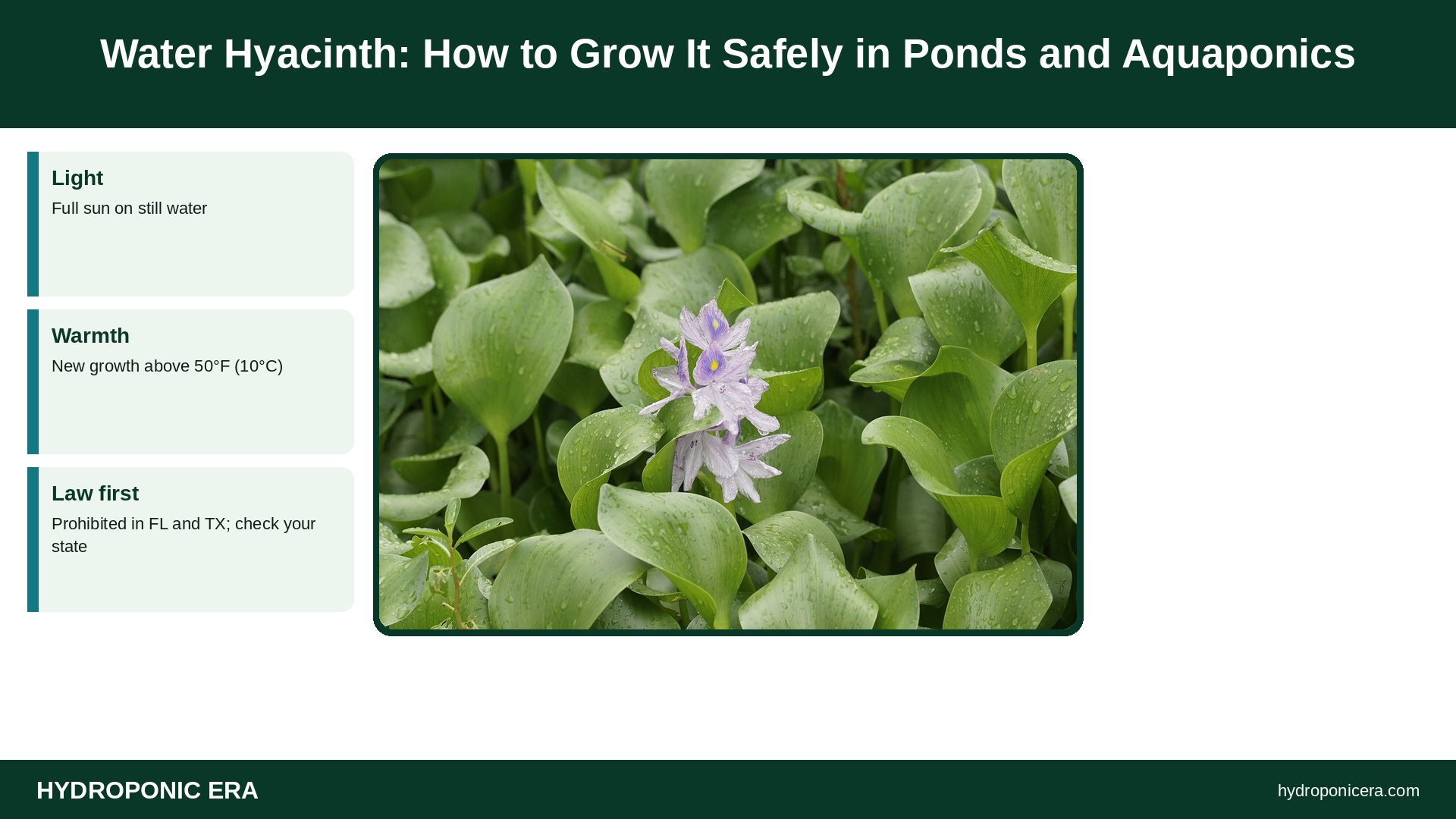
How do you grow water hyacinth? Float young plants on still water in full sun after your last frost, keep the water above 50°F (10°C) and thin the mat often, because populations can double in 6–18 days. Before buying, check your state list: water hyacinth is illegal to possess in Florida and Texas and regulated in several other states.
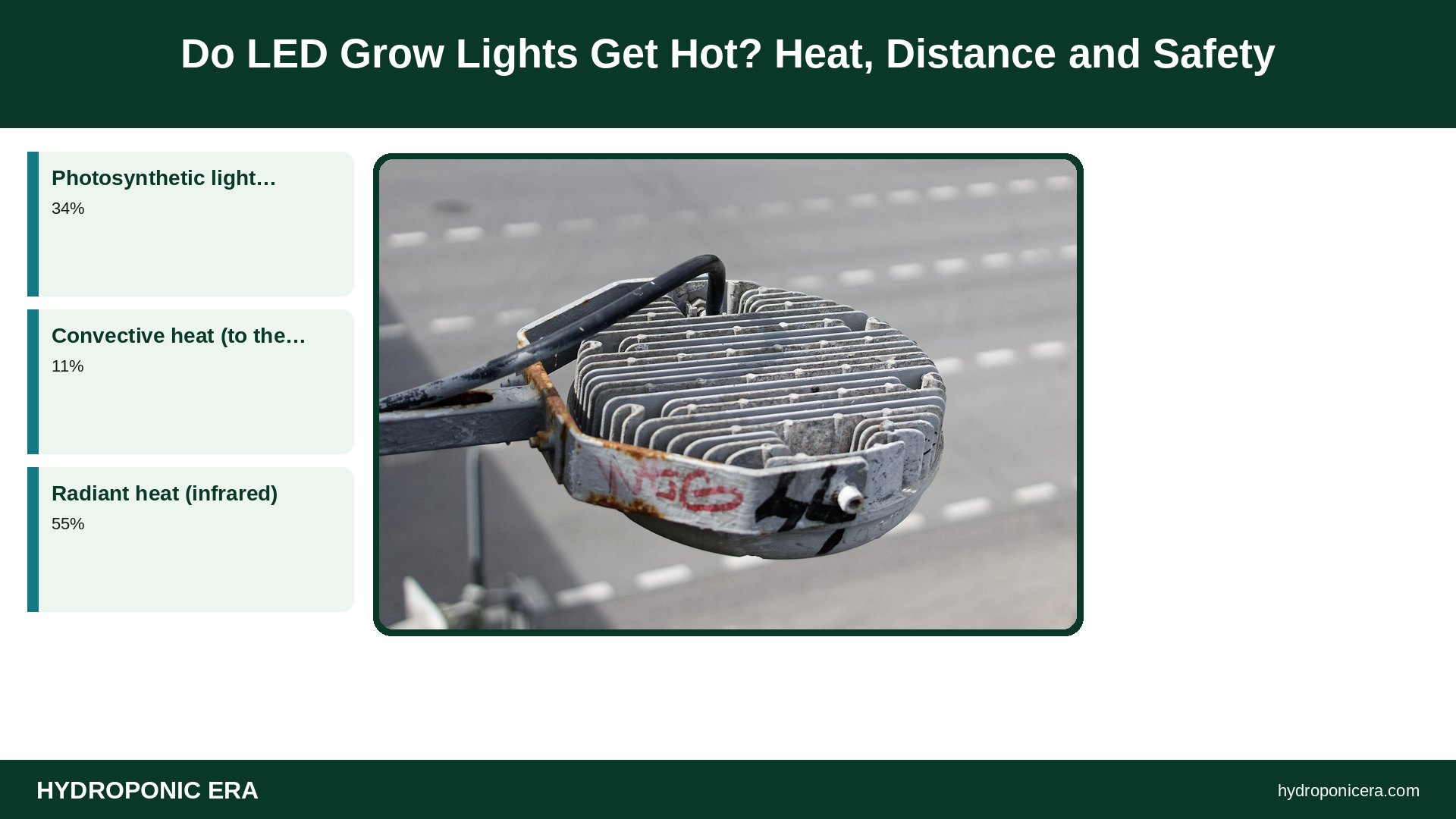
Do LED grow lights get hot? Yes, they get warm, and the heat sink can be hot to touch, but they send far less heat toward plants than HPS lamps. Greenhouse modeling puts LED output at about 47% light and 27% radiant heat, versus 34% light and 55% radiant heat for HPS. Nearly all the electricity still ends up as heat in your room.
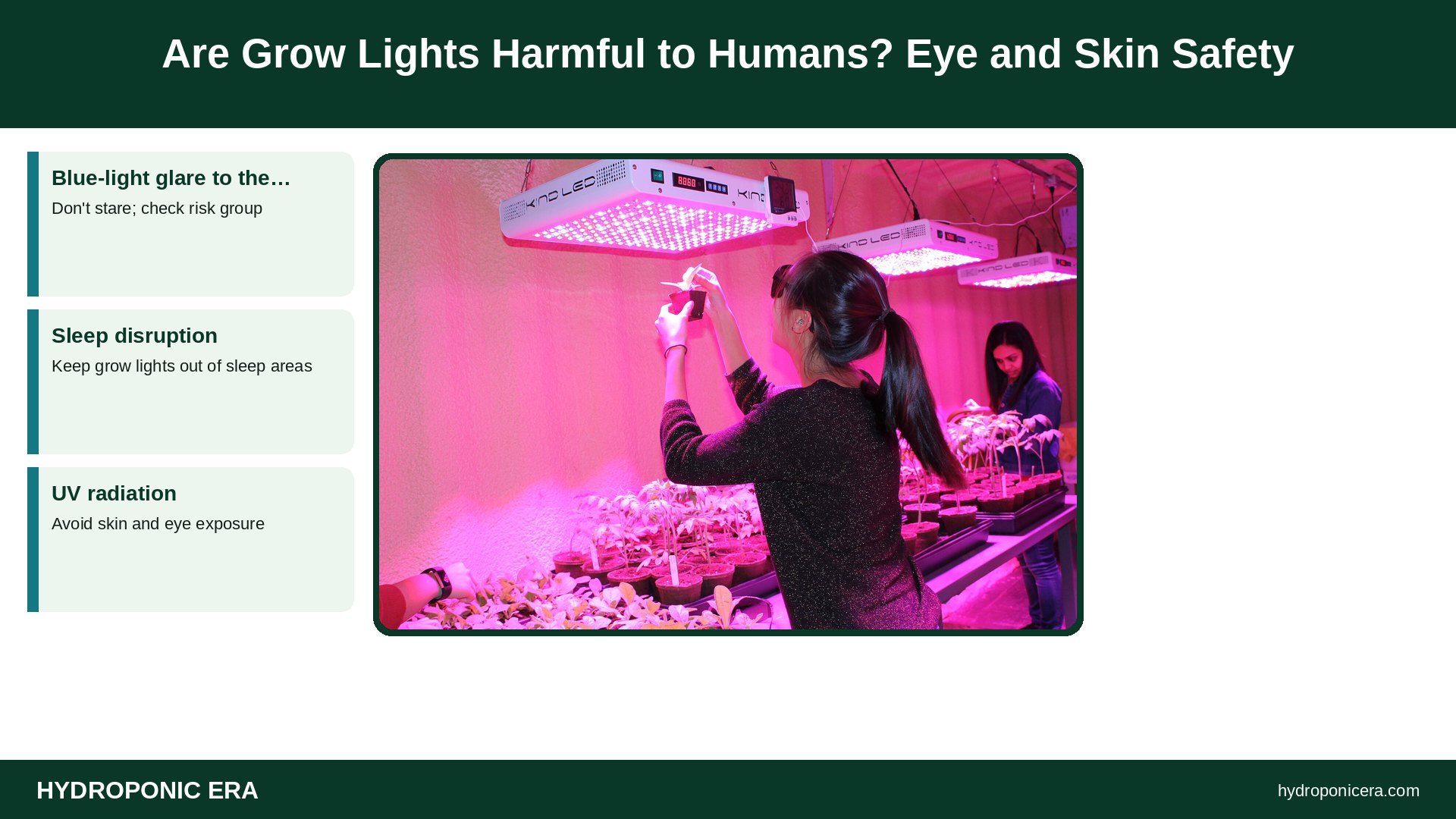
Are grow lights harmful to humans? For normal home use, no, provided you don’t stare into them. Most LED grow lights emit no UV, and North American horticultural fixtures are rated for eye risk under UL 8800 and IEC 62471. The real concerns are glare from intense blue light, sleep disruption from bright evening light, UV or infrared add-ons, and hot or poorly wired fixtures.
How many lumens do plants need? Lumens measure brightness for human eyes, not plant light, so extension specialists recommend PPFD and DLI instead. As a rough sunlight-equivalent guide, leafy greens need about 1,000–1,500 lumens per square foot (about 11,000–16,000 lux) for 16 hours a day, while tomatoes need closer to 1,700–2,600.
Is red or blue light better for plants? In the red vs blue light debate, plants grow best with both. Red light drives photosynthesis efficiently and red LEDs deliver more photons per watt. Blue light keeps plants compact and leaves photosynthetically normal: a Wageningen study found cucumber grown under pure red developed dysfunctional photosynthesis, while just 7% blue prevented it. Most homes should use full-spectrum LEDs.
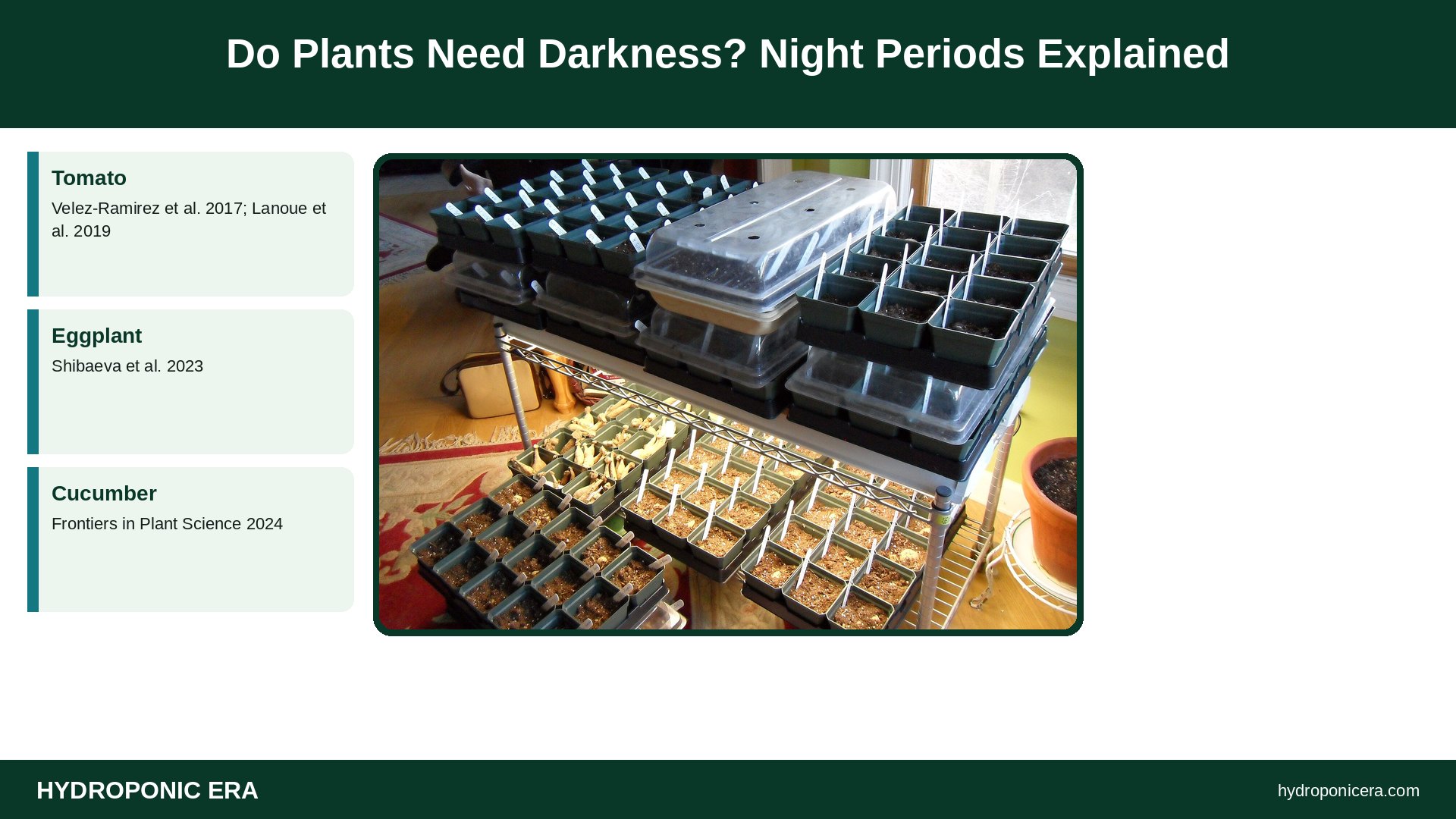
Do plants need darkness? Most plants do better with a daily dark period. Research shows tomatoes, eggplants and several other crops develop leaf yellowing and injury under 24-hour light, and short-day plants like holiday cactus need long nights to flower. Cucumbers and some leafy crops tolerate longer days. For home grow lights, 14–18 hours on and 6–10 hours off is a safe range.