
Is filtered water better for plants? Filtered water for plants helps mainly when your tap water carries something specific: chlorine taste, fluoride for sensitive species like dracaena, or high minerals. Carbon filters remove chlorine; reverse osmosis (RO) removes most dissolved minerals. For most plants, ordinary tap water is fine, and Virginia Tech, CDC and Oregon State guidance explain why.
Key takeaway: Filter only for a reason: carbon for chlorine, RO or distilled for fluoride and hard water.
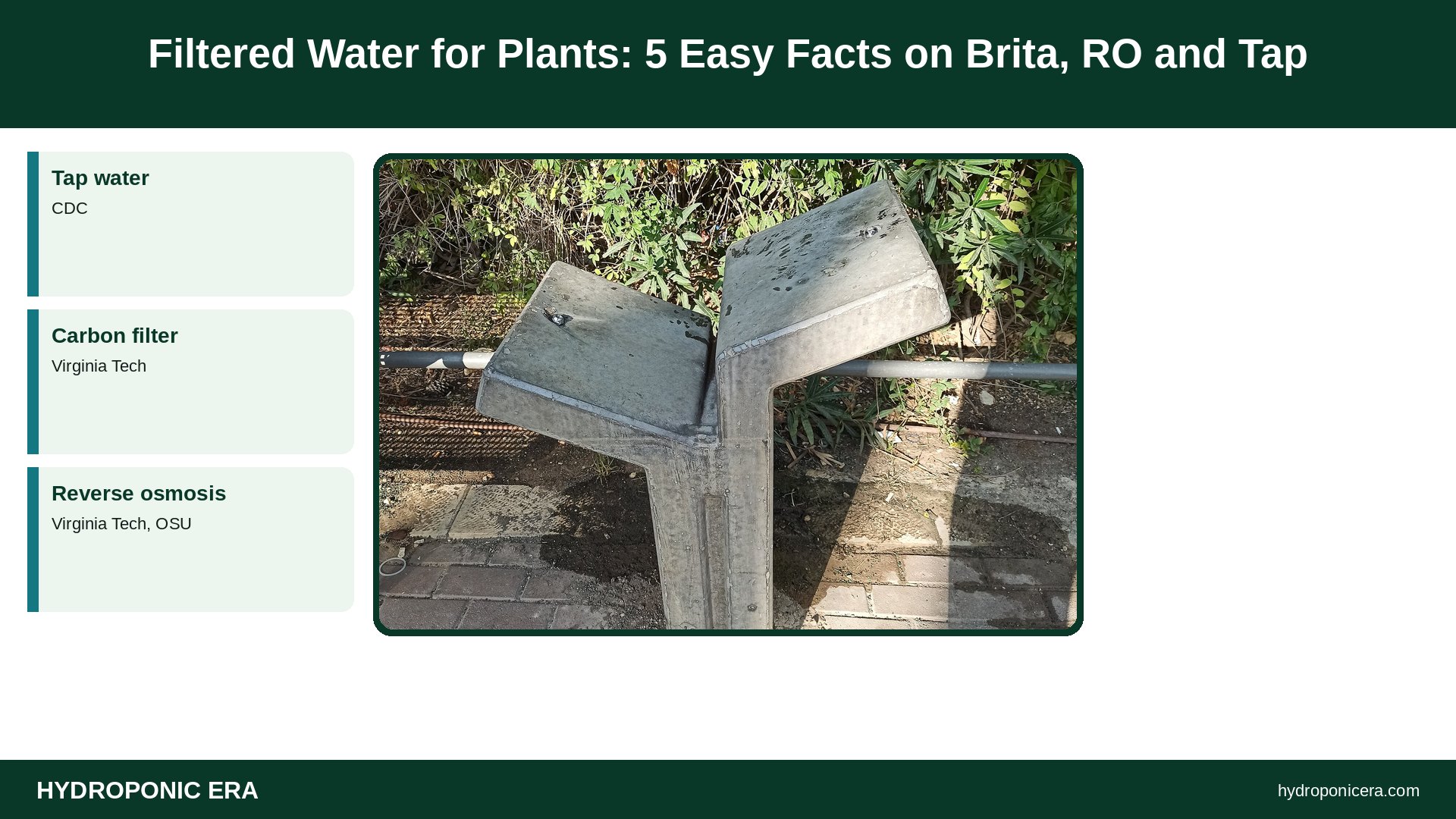
| Water type | What it removes | Best use | Source |
|---|---|---|---|
| Tap water | Nothing | Most plants | CDC |
| Carbon filter | Chlorine, some organics, lead if rated | Taste or chlorine concerns | Virginia Tech |
| Reverse osmosis | Most dissolved minerals | Hard water, fluoride-sensitive plants, hydroponics | Virginia Tech, OSU |
| Distilled | Most impurities | Small volumes, sensitive plants | Virginia Tech |
| Softened | Swaps calcium and magnesium for sodium | Avoid for plants | Virginia Tech |
Does Tap Water Hurt Plants?
Usually not. The CDC explains that utilities add chlorine or chloramine to kill germs, and levels up to 4 mg/L (4 ppm) are considered safe for drinking. Most garden and houseplants tolerate this well. Problems arise with sensitive species, very hard water, or softened water. Test or read your utility report before buying filtered water for plants.
What Does Carbon-Filtered Water for Plants Remove?
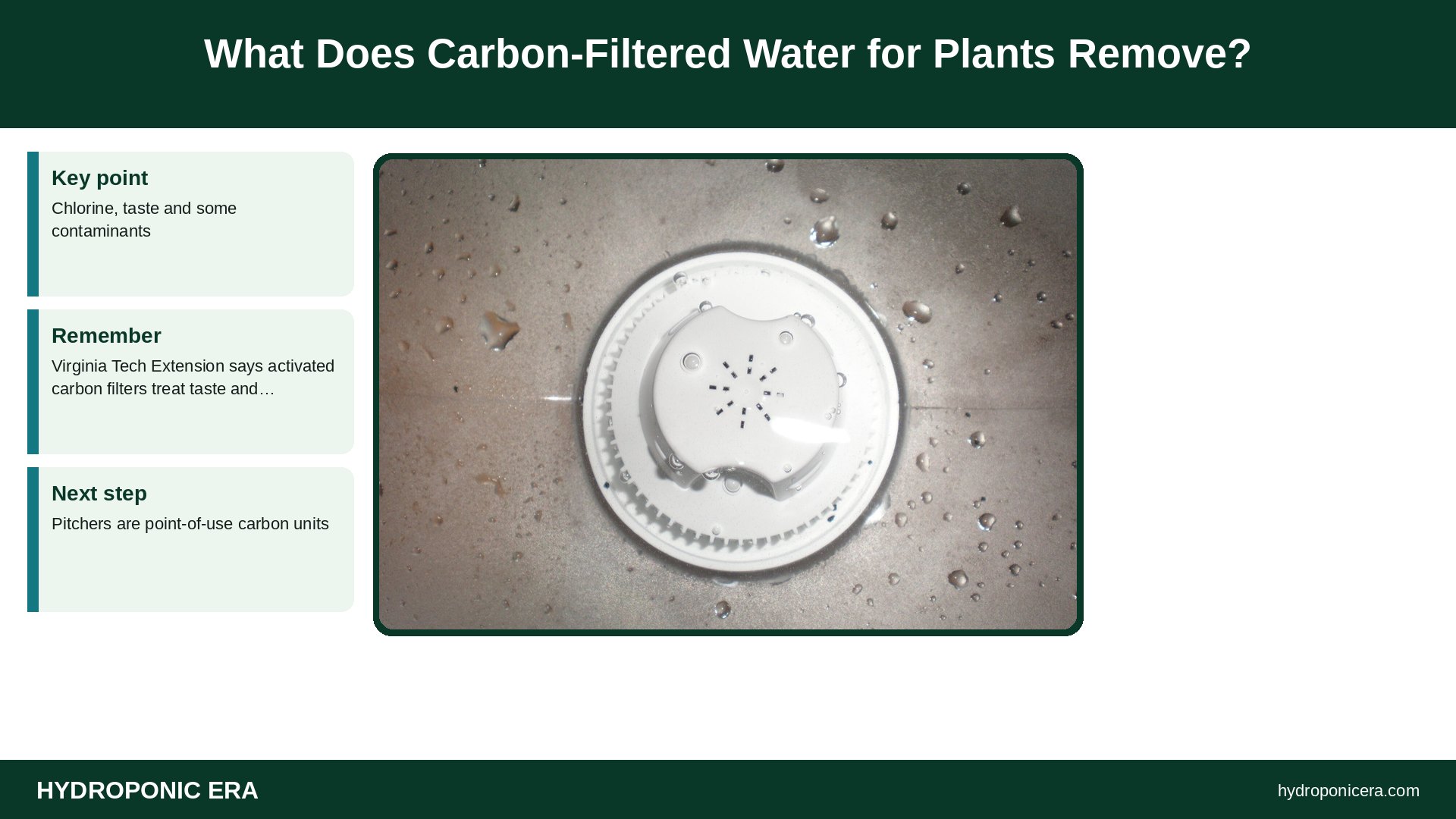
Chlorine, taste and some contaminants. Virginia Tech Extension says activated carbon filters treat taste and odor by removing chlorine, some organic compounds, radon and some heavy metals such as lead, if designed for them. Pitchers are point-of-use carbon units. Change cartridges on schedule, because spent carbon stops working and the filtered water for plants is then no better than tap.
Is Reverse Osmosis Water Good for Plants?
Yes, especially for hydroponics. Virginia Tech says RO units force water through a semipermeable membrane that blocks most dissolved and suspended inorganic impurities. That gives you a near-blank baseline for nutrient mixing. The trade-off is waste: only 10 to 20 percent of incoming water exits as treated water, and 80 to 90 percent drains away.
Learn how to build a nutrient mix from pure water in our guide to distilled water hydroponics.
Which Species Need Filtered Water for Plants?
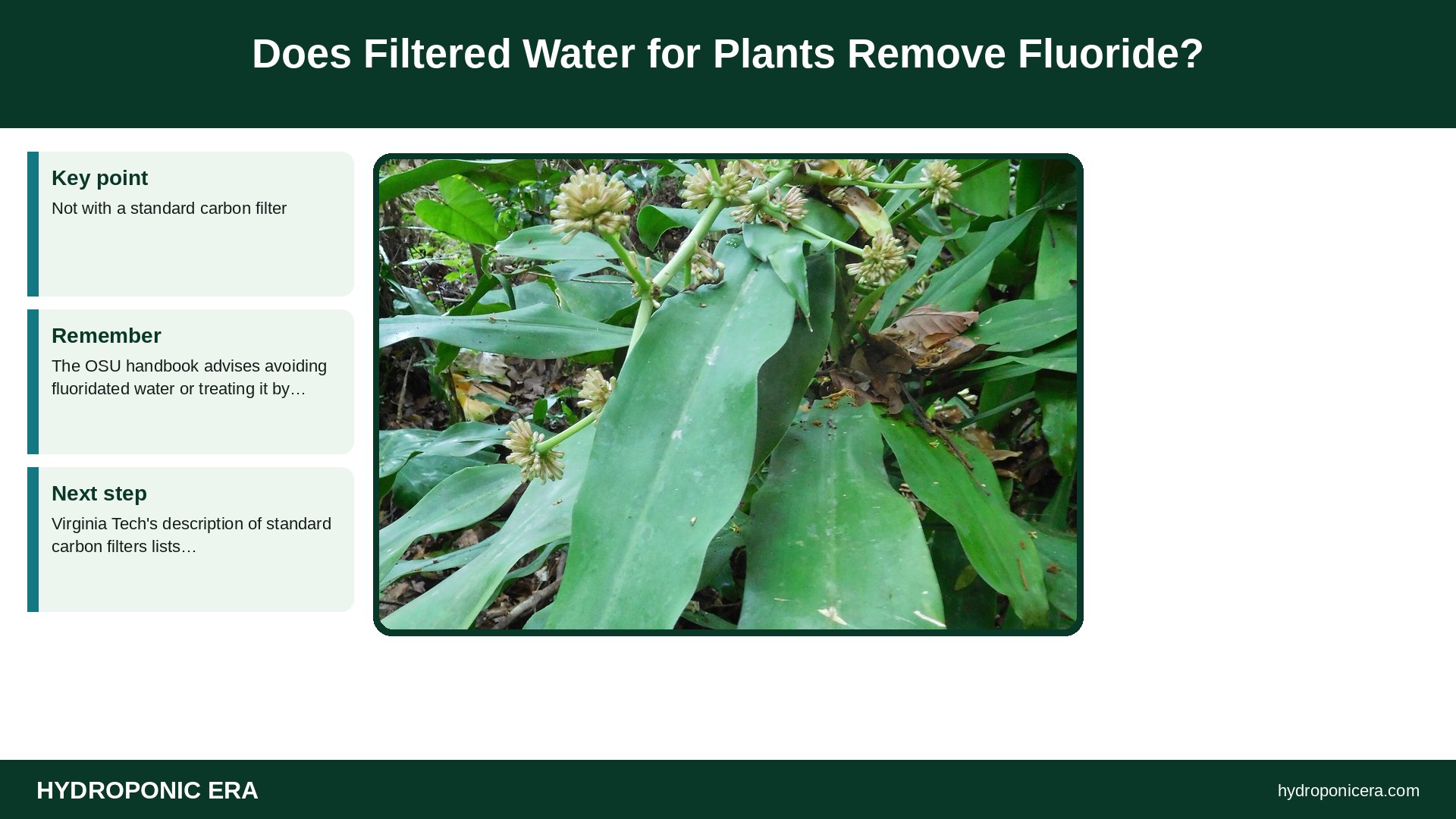
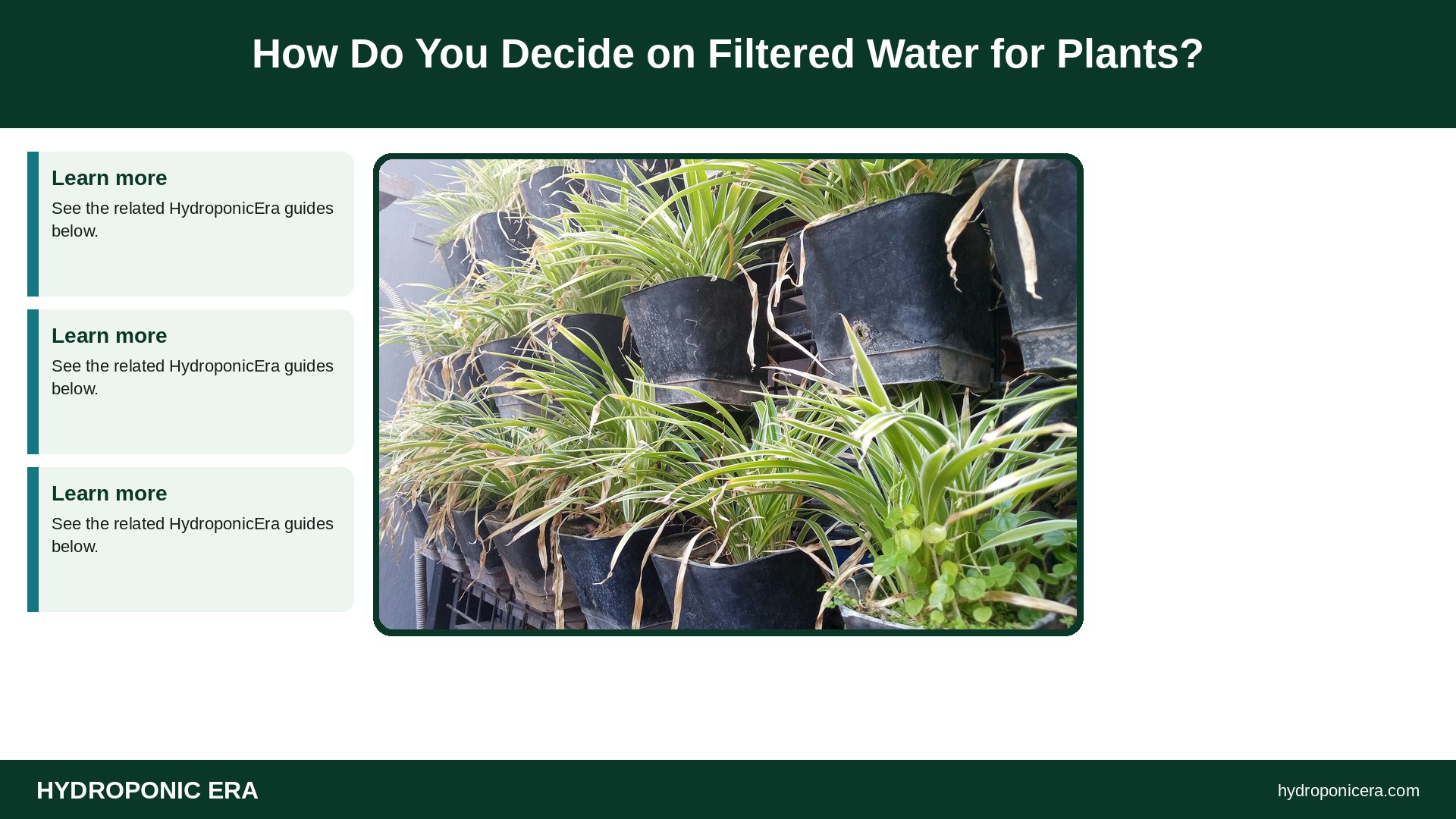
Fluoride-sensitive foliage plants. Oregon State University’s Pacific Northwest handbook says Dracaena deremensis and corn plant (D. fragrans) are very sensitive to fluoride, which many cities add at about 1 ppm. Spider plant and Tahitian bridal veil are also sensitive. Fluoride builds up in leaf margins, causing brown, dead tips. Filtered water for plants like these prevents new damage.
Does Filtered Water for Plants Remove Fluoride?
Not with a standard carbon filter. The OSU handbook advises avoiding fluoridated water or treating it by reverse osmosis, condensation (distillation) or charcoal. Virginia Tech’s description of standard carbon filters lists chlorine, organics, radon and lead, not fluoride. For dracaena and spider plants, RO, distilled water or collected rainwater is the safer choice when tips keep browning.
Should You Use Softened Water on Plants?
No. Virginia Tech explains that cation-exchange softeners replace calcium and magnesium with sodium. That removes nutrients plants need and adds sodium, which builds up in pots and recirculating systems. If your home has a softener, use an outside tap that bypasses it, or use RO water. See our guide to rainwater for hydroponics too.
How Do Chlorine and Chloramine Differ for Plants?
Chloramine lasts longer. The CDC explains chloramine is chlorine combined with ammonia and keeps killing germs in pipes longer than chlorine, and some utilities switch between the two during the year. That persistence matters for fish and for hydroponic reservoirs with beneficial microbes. Check your utility’s report to see which one you have.
Our guide to chlorine and chloramine in tap water covers treatment options for nutrient tanks.
Is Filtered Water Worth It for Hydroponics?
Often, when tap water is hard. Hydroponic nutrients assume a starting water you understand. Filtered water for plants grown in water removes minerals that skew EC and pH, so your nutrient recipe behaves predictably. Virginia Tech notes hard water above about 7 to 8 grains per gallon (120 mg/L) causes scale, a sign it also adds minerals to nutrient tanks.
How Do You Decide on Filtered Water for Plants?
- Read your water utility report for disinfectant, hardness and fluoride.
- Use plain tap water for tolerant plants.
- Use a carbon filter if chlorine taste or odor bothers you.
- Use RO, distilled or rainwater for dracaena, spider plants and hydroponics with hard water.
- Never use softened water on plants.
FAQ About Filtered Water for Plants
Is pitcher filtered water for plants worth it?
Yes, but it mostly removes chlorine and some metals, not minerals or fluoride.
Is boiled water better for plants?
Virginia Tech describes boiling as disinfection; it does not remove minerals. Cool it fully first.
Is distilled water bad for plants?
No, but it has no nutrients, so feed plants normally.
Do RO systems remove bacteria?
Virginia Tech says RO is not typically recommended for removing organic impurities, including bacteria.
Why are my spider plant tips brown?
Fluoride is one cause; OSU also lists excess drying and heavy fertilizing.
Sources
- Virginia Cooperative Extension (Virginia Tech) — Household Water Treatment, BSE-366 (PDF)
- U.S. Centers for Disease Control and Prevention — About Water Disinfection with Chlorine and Chloramine
- Oregon State University, Pacific Northwest Plant Disease Management Handbook — Dracaena Tip Burn
- Photo credits (Wikimedia Commons, edited with titles): Water faucet 2 by Yasmine.shal (CC BY-SA 4.0); Brita water filter in use by BrokenSphere (CC BY-SA 3.0); Dracaena fragrans (Leaves) by Filo gèn’ (CC BY-SA 4.0); Spider Plant (Chlorophytum Comosum) by S.samsamyang (CC BY 4.0)