
Quick Answer
Grow chamomile hydroponically means choosing German (Matricaria chamomilla, usually annual tea flowers) vs Roman (Chamaemelum nobile, perennial groundcover type) and harvesting blooms for tea with bright light and moderate nutrition. UMN edible-flower guidance lists both for apple-scented tea; Wisconsin Horticulture covers German chamomile. See edible flowers, herbs, germination, PPFD, and food safety.
Key takeaways for grow chamomile hydroponically
- Grow chamomile hydroponically is a practical home-hydro workflow—not filler.
- German vs Roman—pick for tea flowers vs perennial mat goals.
- Harvest blooms at the right openness for drying/tea.
- Reseeding German types can volunteer—label trays.
- Prefer university/extension sources over forum myths.
- Food-safe drying and storage matter for tea use.
- Original ops card keeps Grow chamomile hydroponically decisions consistent.
- Grow chamomile hydroponically fails when growers skip the boring checks.
Related HydroponicEra guides
Why This Matters
Grow chamomile hydroponically is a flower-harvest herb project more than a leaf-herb project. UMN describes German and Roman chamomile flowers for tea. Extension culture generally wants sun and moderate water—hydro should keep blooms clean (no reservoir splash) and plants upright enough to pick.
Comparison / Decision Table
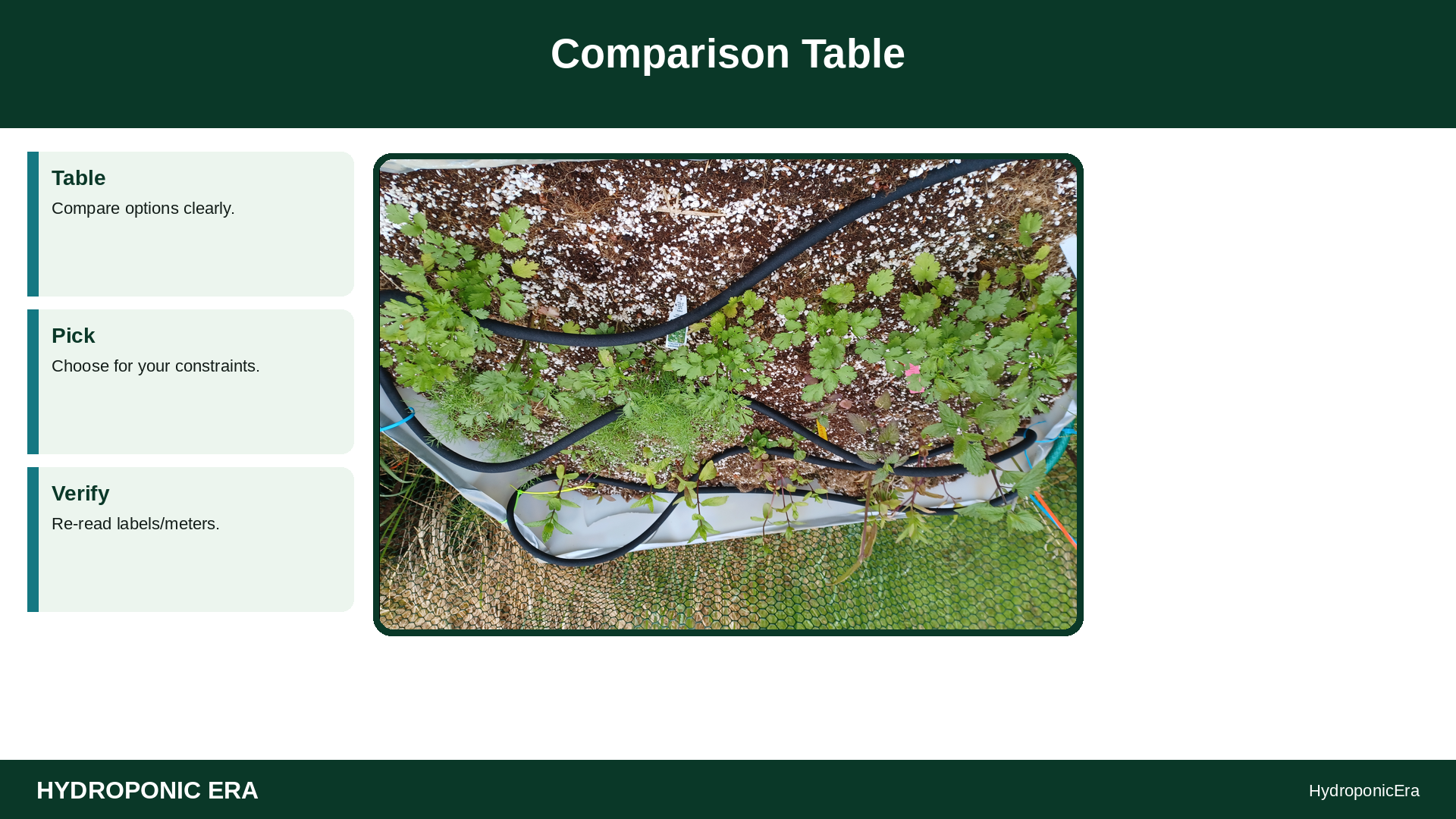
| Type | Hydro lean | Note |
|---|---|---|
| German (annual) | Strong for tea succession | May reseed |
| Roman (perennial) | OK as longer pot culture | Different habit |
| Deep splashy DWC | Watch | Keep flowers clean |
| Heavy fruiting EC | Poor | Soft stretch, fewer quality blooms |
Step-by-Step Workflow
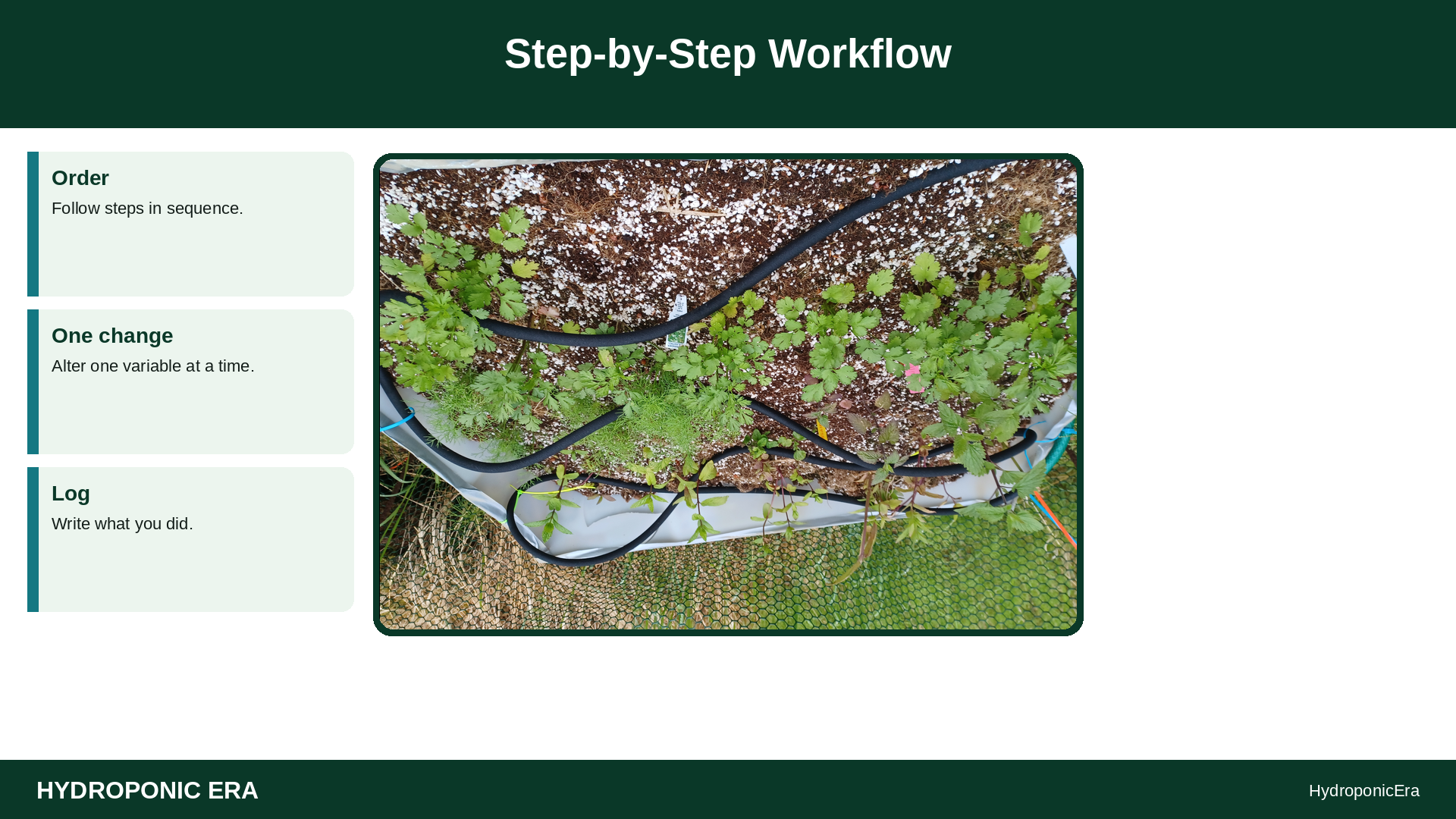
- Choose German vs Roman intentionally.
- Surface-sow fine seed as packet directs; keep evenly moist.
- Transplant clumps carefully into mild herb nutrition.
- Provide bright light for compact flowering.
- Space for airflow around bloom zones.
- Harvest flowers when petals are fresh for tea goals.
- Dry with food-safe methods; store sealed and labeled.
- Deadhead if you want continuous bloom vs seed set.
- Prevent algae/splash onto harvestable flowers.
- Plan a second sowing for German continuity.
Key Variables
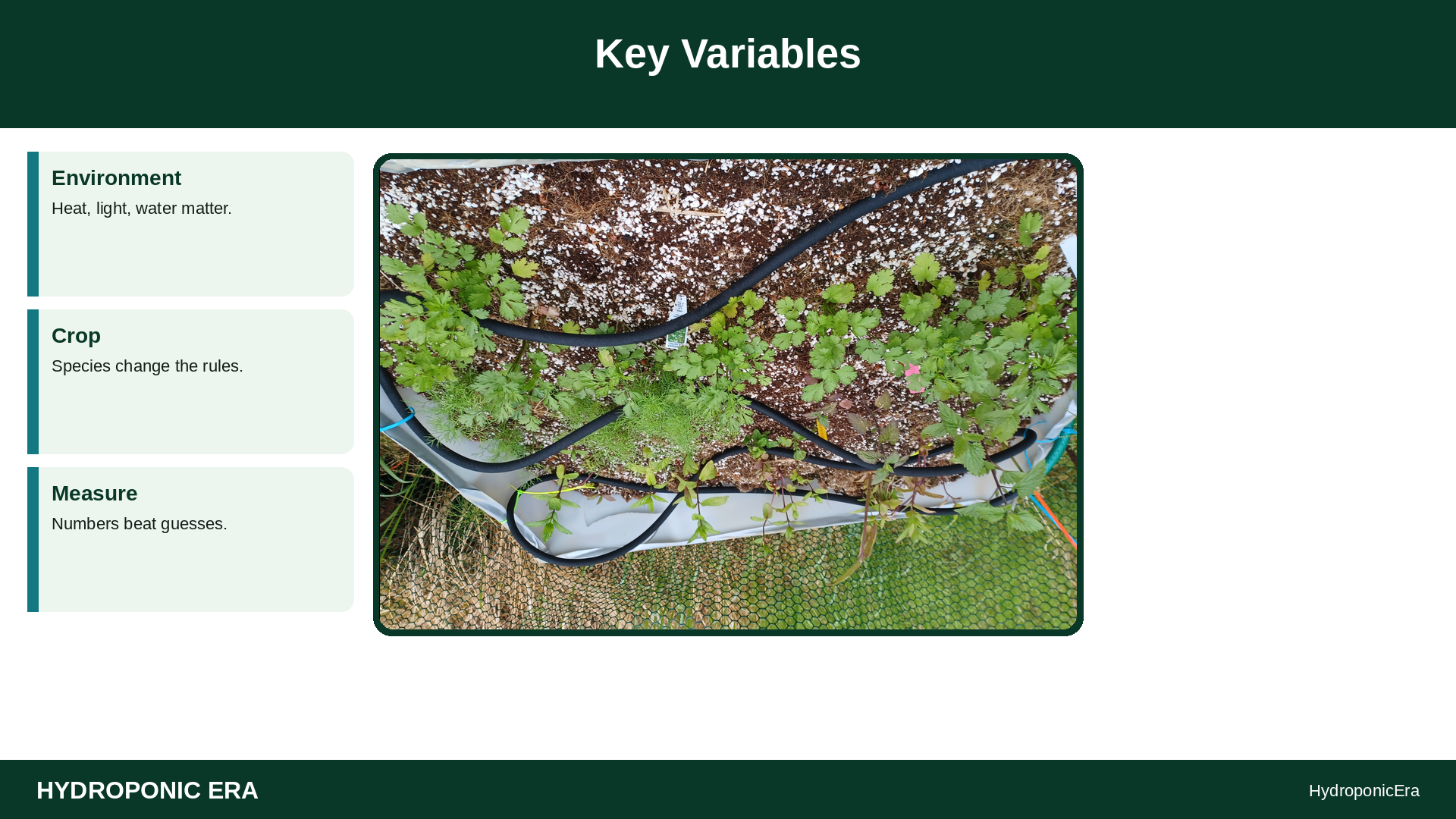
| Variable | Effect | Link |
|---|---|---|
| Species choice | Annual tea vs perennial mat | edible flowers |
| Light | Bloom density | PPFD |
| Harvest hygiene | Tea safety/quality | food safety |
| Nutrition | Vegetative sprawl vs bloom | EC |
Common mistakes with grow chamomile hydroponically
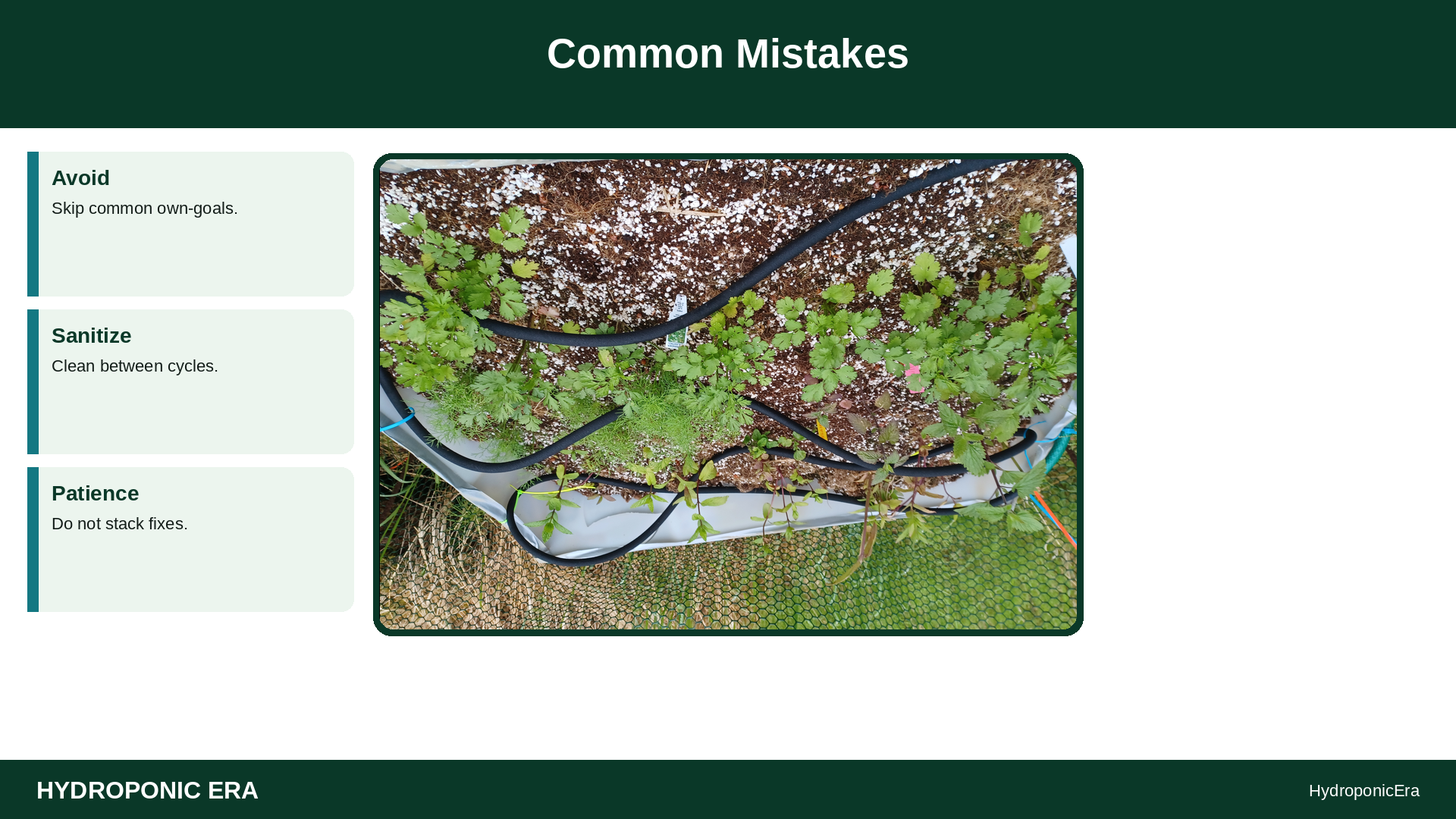
- Confusing the two chamomiles
- Picking dirty splash-zone flowers for tea
- Overfeeding into lanky stems
- Zero airflow leading to foliar issues
- Skipping species labels on dried jars
- Expecting leaf-herb yields like basil
Troubleshooting

| Signal | Action |
|---|---|
| Few flowers | More light; ease nitrogen-heavy feed |
| Leggy stems | PPFD up; spacing; airflow |
| Mold on dry-down | Better drying airflow; thinner layers |
| Volunteers everywhere | Deadhead German types earlier |
Practical Framework

Chamomile card: German or Roman? | bloom harvest plan? | clean dry method? | mild EC?.
Closing practice for grow chamomile hydroponically: tea quality starts with clean flowers and correct species—not stronger nutrients.
What to Check Before Starting Chamomile for Tea Flowers
- Species chosen?
- Fine-seed germination plan?
- Bright light ready?
- Harvest/dry workflow clean?
- Mild nutrition?
- Labels for jars?
FAQs about grow chamomile hydroponically
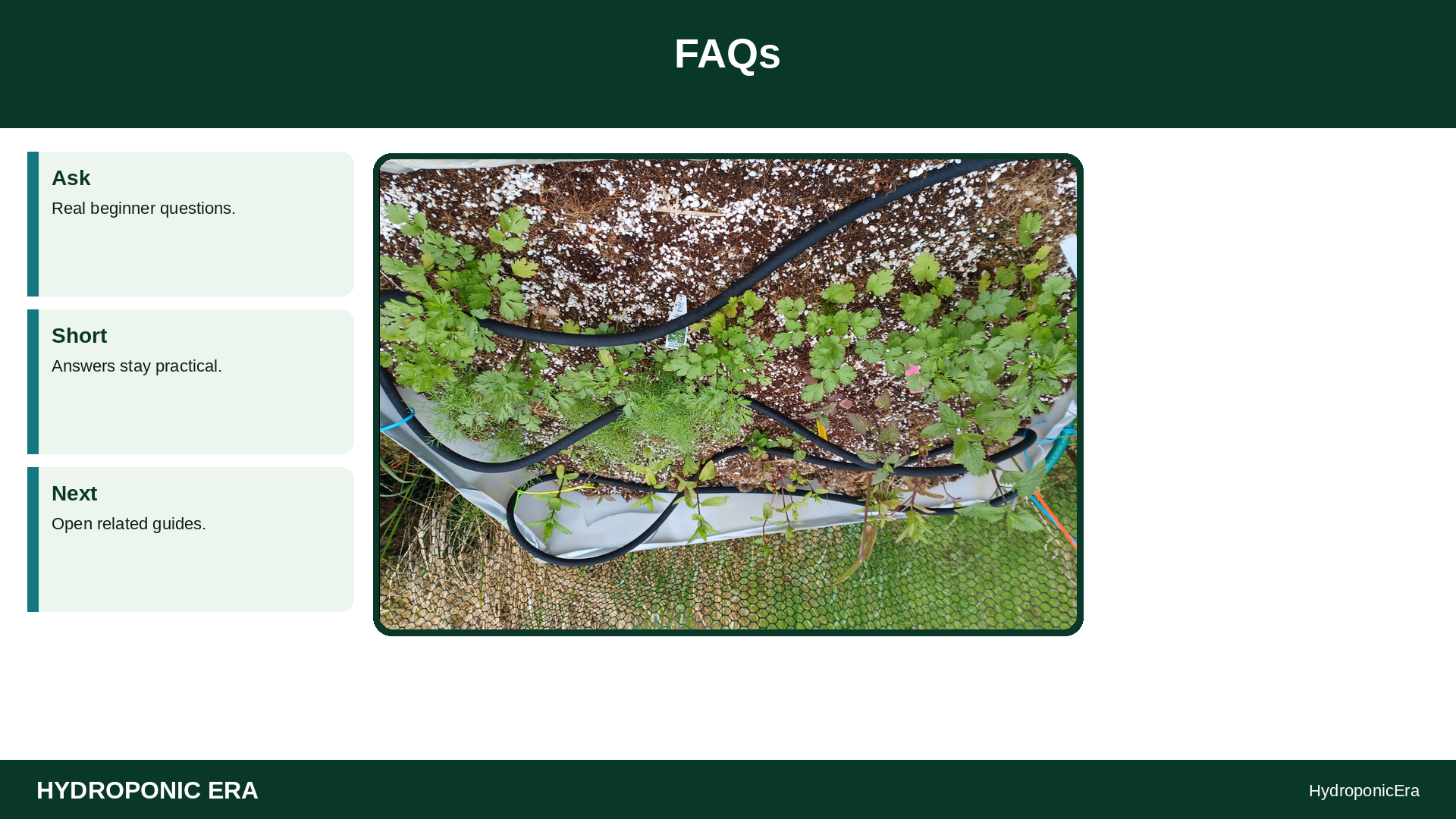
German vs Roman for tea?
Both used; German is the common annual tea flower crop.
Edible flowers guide?
Yes—see site edible flowers overview.
Medical claims?
Not made here—cultivation only.
NFT?
Possible; support stems and keep blooms clean.
Interplant with lettuce?
OK if light/EC compatible; watch height.
Save seed?
German can reseed—label intentionally.
Flower Harvest and Drying Hygiene

UMN edible-flower guidance lists German and Roman chamomile for apple-scented tea; Wisconsin Horticulture covers German chamomile. Hydro success is clean blooms plus correct species choice—not high EC. Keep reservoir splash off flowers you intend to dry.
German types suit succession tea harvests and may reseed; Roman types behave more like perennial mats. Dry in thin layers with airflow, label jars by species, and use food-safe storage. Few flowers usually means light or excess vegetative push—not a missing micronutrient myth. Deadhead if you want continuous bloom instead of seed rain across trays.
This page is cultivation and kitchen hygiene—not medical advice.
Dry flowers in a single layer with airflow and label jars German vs Roman. Keep splash guards on reservoirs near bloom height. If stems stretch, fix light before adding fertilizer.
Deadhead if you do not want volunteer seed carpets in every tray.
Practice Notes for Home Systems
Keep changes sequential. If you alter reservoir temperature, nutrient strength, and photoperiod on the same day, you will not know which lever worked. Write the date, the single change, and the plant response on new growth—not on already-damaged leaves. Prefer opaque, light-proof reservoirs, calibrated meters, and clean measuring tools over boutique additives.
Internal links on this site exist to prevent orphan pages: open the related guides when a symptom points outside this article’s scope. Extension sources in the Sources list are the external backbone—use them when you need deeper greenhouse or crop-culture context, and do not invent ppm tables the citations do not support.
For edible crops, food-safety hygiene (clean hands, clean harvest tools, no storm-drain dumping of nutrients) is part of hydro ops, not an afterthought. If a step feels unclear for your municipality or building, pause and ask a local authority rather than improvising a risky shortcut.
Fine seed likes surface sowing and even moisture—do not bury deep. Once flowering, pick on a dry-canopy day so drying starts clean. Screen out insects and debris before jars. Store away from heat and light. If Roman mats creep sideways, give them a dedicated tray so they do not smother neighbors.
German volunteers are useful only when labeled; otherwise they become weeds in your herb map. Keep EC mild so plants flower instead of building soft bulk.
Setup Checklist Recap
Before you scale plant count, confirm the system class matches the crop class: leafy rafts for chicories and purslane, aerated media or Dutch buckets for sprawling tomatillos and bitter melon vines, and well-drained media for woody or drainage-sensitive herbs like French tarragon and lemon verbena. Match EC lane, climate, and support hardware on paper first. Keep a quarantine mindset for new cuttings and a sanitation step between cycles. Use meters on a schedule, not only when leaves complain. When something fails, change one variable, log it, and judge new growth. That ops discipline is the real upgrade path—not another unlabeled bottle.
Return to the related HydroponicEra guides linked above whenever symptoms point to pH, EC, pests, lights, or food safety. Extension sources remain the external authority layer for crop biology and greenhouse principles cited in this article.
Keep expectations honest: home hydro rewards steady measurement and sanitation more than secret recipes. If a week goes wrong, reset the reservoir, confirm meter calibration, and restart the checklist from the top of this article before adding new products.
Extended Home-Grower Walkthrough
Use this extended walkthrough as a second pass after the Quick Answer. Walk the system with a notebook: write the date, crop, EC, pH, reservoir temperature, and one observation about roots or leaves. Change only one control at a time when a problem appears. If last week’s fix did not show in new growth, revert and try the next smallest lever. Keep university and extension principles in mind—oxygen, sanitation, and measured nutrition beat product stacking.
Photograph the canopy and the reservoir surface weekly. Dated photos settle arguments about algae, tip burn, or stretch faster than memory. When a helper waters for you, leave a one-page card with do-not-touch items and the exact top-off rule. Store calibration sachets next to the meters so “I will calibrate later” stops being the default. Review timers after any power event. Confirm air stones still roar. Confirm drains still drain.
At the end of the week, score the cycle 1–5 for ease and plant quality. Low scores should trigger a sanitation or climate review before you buy new hardware. Link neighboring HydroponicEra guides when the symptom matches a cluster page. Prefer labeled procedures over improvisation under stress. Healthy boring routines are the real upgrade path for home hydroponics.
Keep grow chamomile hydroponically on your ops card so helpers follow one standard.
Keep grow chamomile hydroponically on your ops card so helpers follow one standard.
Keep grow chamomile hydroponically on your ops card so helpers follow one standard.
Keep grow chamomile hydroponically on your ops card so helpers follow one standard.
Keep grow chamomile hydroponically on your ops card so helpers follow one standard.
Keep grow chamomile hydroponically on your ops card so helpers follow one standard.
Keep grow chamomile hydroponically on your ops card so helpers follow one standard.
Keep grow chamomile hydroponically on your ops card so helpers follow one standard.
Practical note: grow chamomile hydroponically belongs in weekly review notes.
Sources
- University of Minnesota Extension — Edible flowers
- Wisconsin Horticulture / Extension — Chamomile (Matricaria chamomilla)
- University of Florida IFAS — HS1421: Growing Herbs in Small Hydroponic Systems
- Penn State Extension — Growing herbs indoors
- Clemson HGIC — Herbs
- Oklahoma State University Extension — Hydroponics