
Hydroponic onions are easiest grown as green onions (scallions), which regrow quickly in DWC, NFT, or Kratky systems. Bulb onions are harder: they need a deep, well-drained medium and the right day length for the variety. University of Maryland Extension explains that onions bulb in response to day length: short-day types start forming bulbs at about 10–12 hours of daylight, intermediate types at roughly 12–15 hours, and long-day types need 14 hours or more. Indoors, you control day length with grow lights, so match the light schedule to the variety you plant.
Key takeaway: Grow scallions for fast, easy harvests; for bulbs, pick a short- or intermediate-day variety, use media like perlite or coco, and set lights to match.
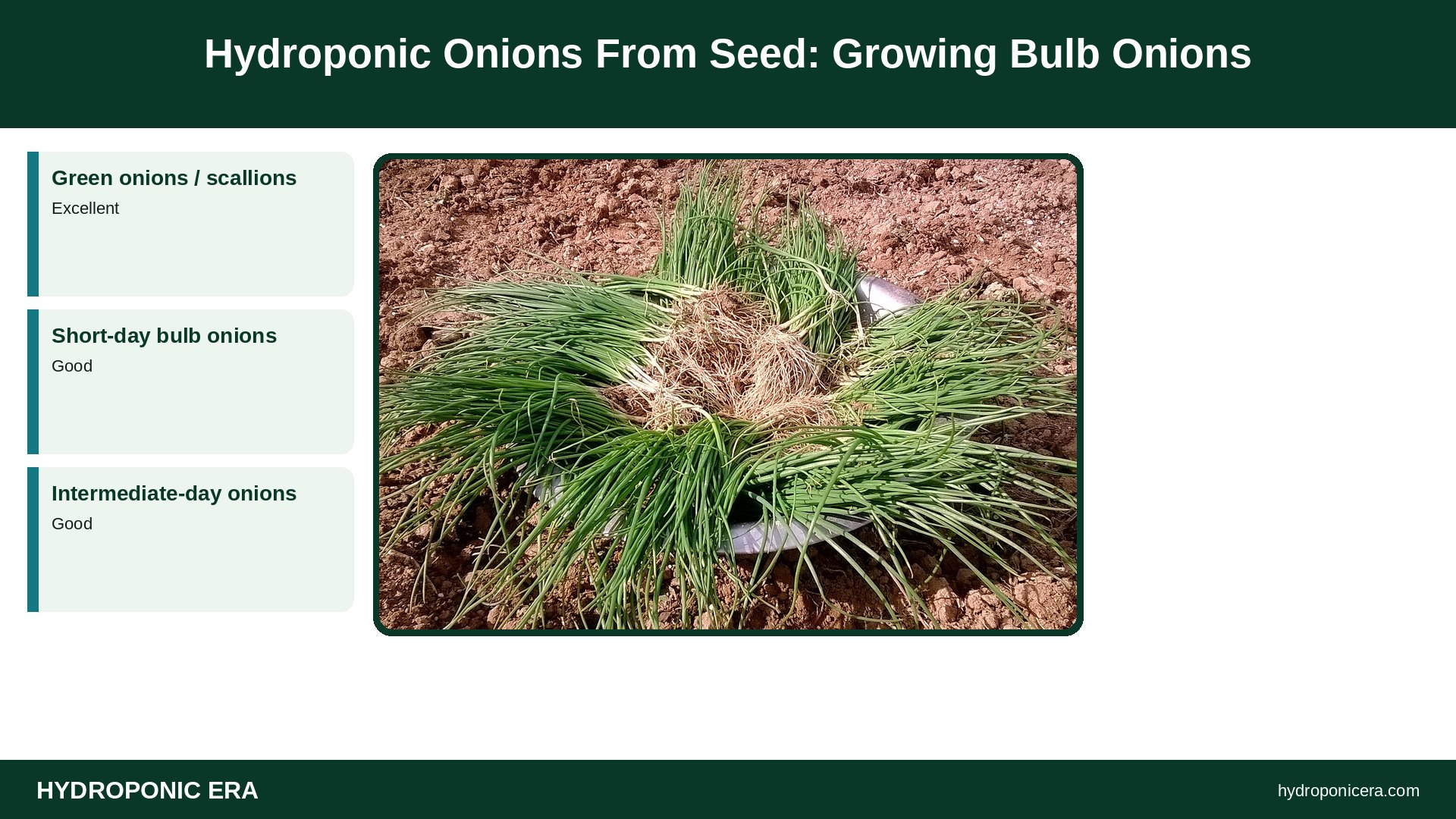
| Type | Day length to bulb | Indoor fit |
|---|---|---|
| Green onions / scallions | Not grown for bulbs | Excellent |
| Short-day bulb onions | About 10–12 hours (UMD) | Good |
| Intermediate-day onions | About 12–15 hours (UMD) | Good |
| Long-day bulb onions | 14+ hours; sources vary up to 16 (UMD) | Possible with long light schedules |
Can You Grow Hydroponic Onions?
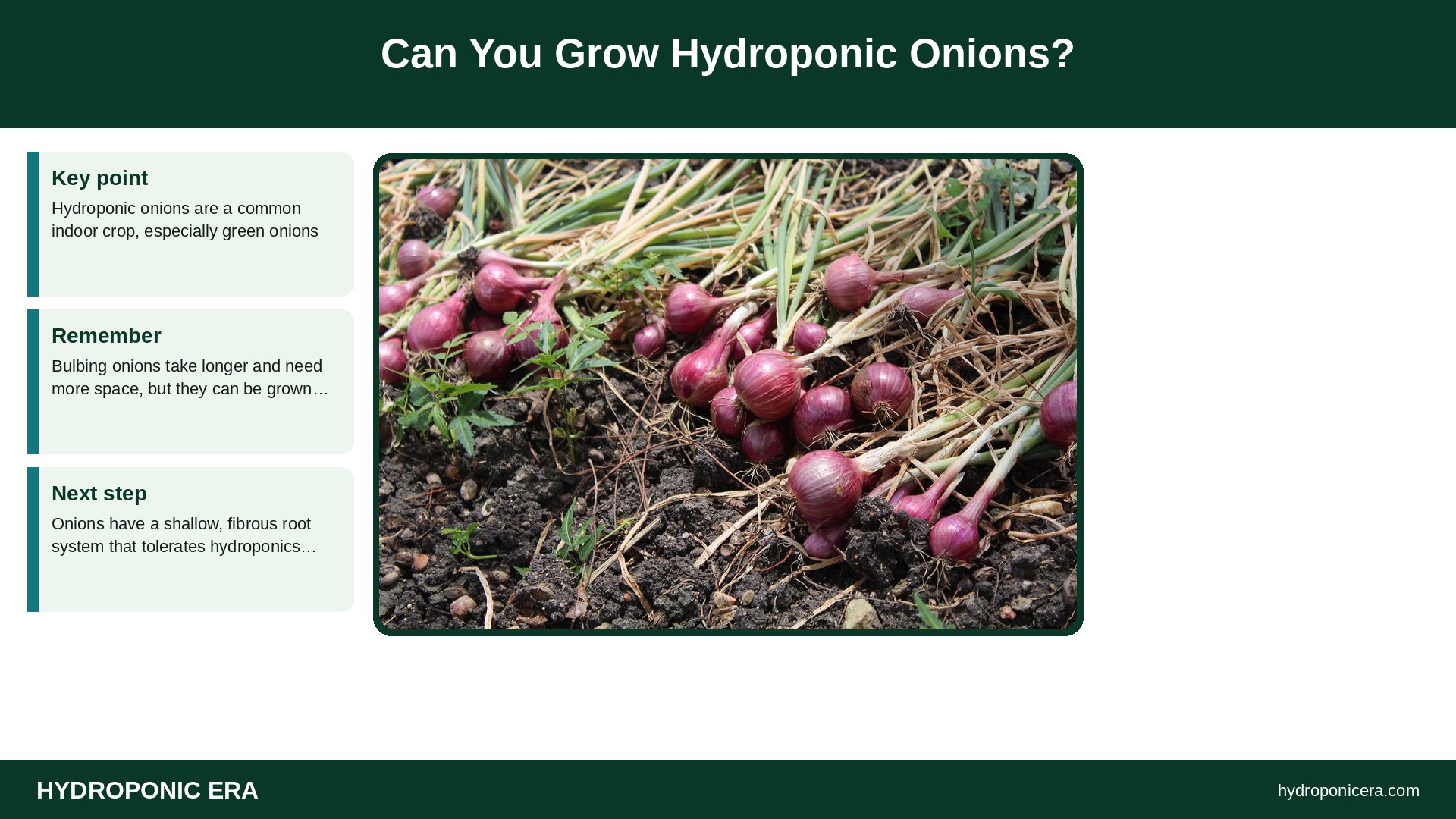
Yes. Hydroponic onions are a common indoor crop, especially green onions. Bulbing onions take longer and need more space, but they can be grown in deep media systems. Onions have a shallow, fibrous root system that tolerates hydroponics well, provided roots get oxygen and the bulb itself stays dry above the water. See DWC vs NFT vs Dutch bucket.
Green Onions vs Bulb Hydroponic Onions
Green onions are harvested young for their leaves and stems. You can start them from seed or regrow the white root ends of store-bought scallions in water for a quick crop. Bulb onions are left to mature and swell, which takes much longer and depends on day length. For most indoor growers, scallions give far more food per square foot and per week.
Day Length for Hydroponic Onions
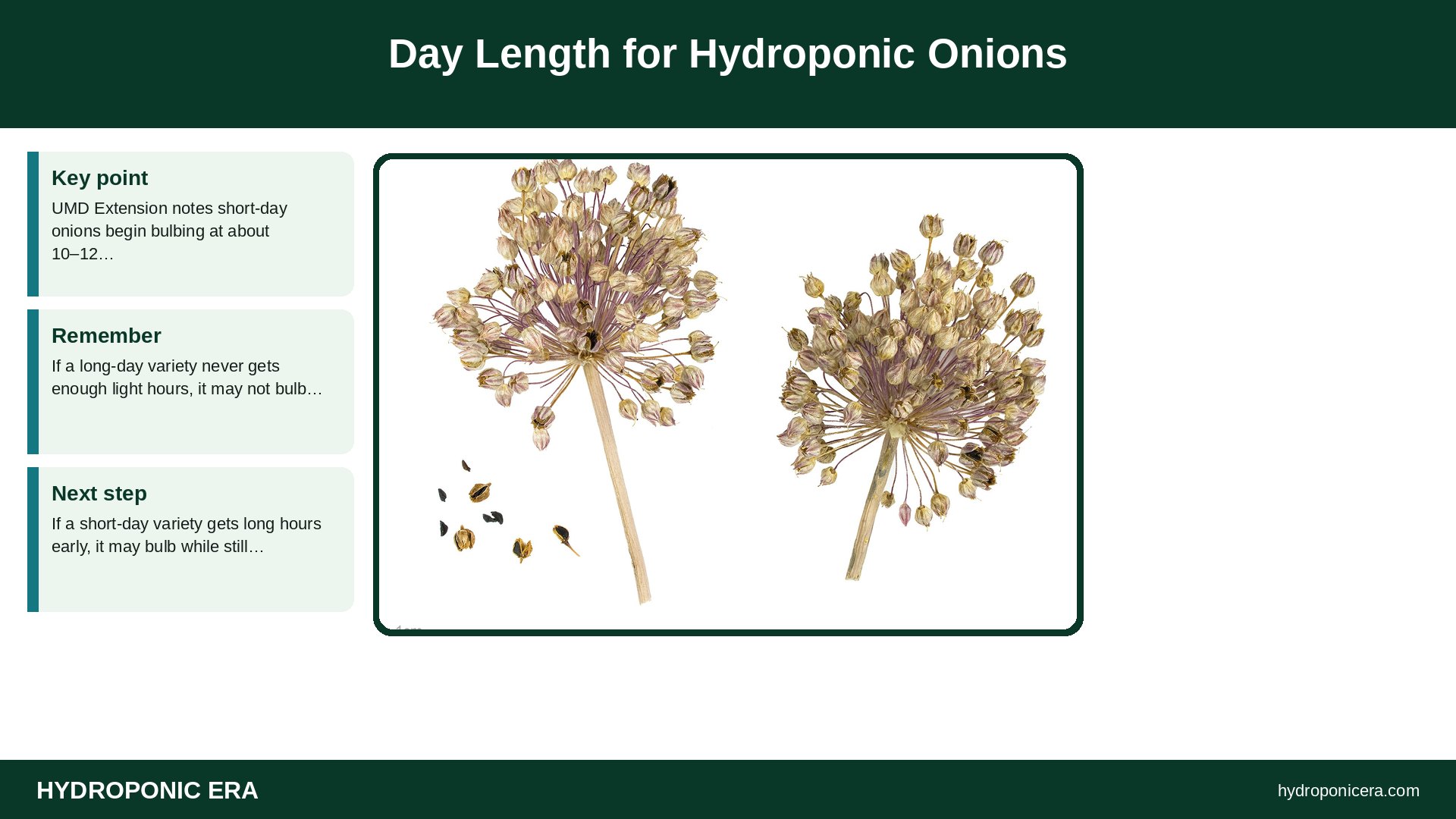
UMD Extension notes short-day onions begin bulbing at about 10–12 hours of daylight and long-day types need 14 hours or more, adding that sources list different ranges, with some saying 16 hours. If a long-day variety never gets enough light hours, it may not bulb at all. If a short-day variety gets long hours early, it may bulb while still small. Indoors, start with a shorter light schedule while leaves grow, then lengthen it for bulbing types if you want bigger bulbs. Green onions aren’t affected, since you harvest them before bulbing.
Best Systems for Hydroponic Onions
- DWC and Kratky: great for green onions.
- NFT: good for scallions in rows.
- Media beds or Dutch buckets: best for bulbs, using perlite, coco, or clay pebbles.
- Towers: fine for scallions; bulbs get crowded.
For bulbs, keep the bulb above the water line so it doesn’t rot. Media that drains well is safer than a constant water level. See growing media for hydroponics.
Starting Hydroponic Onions
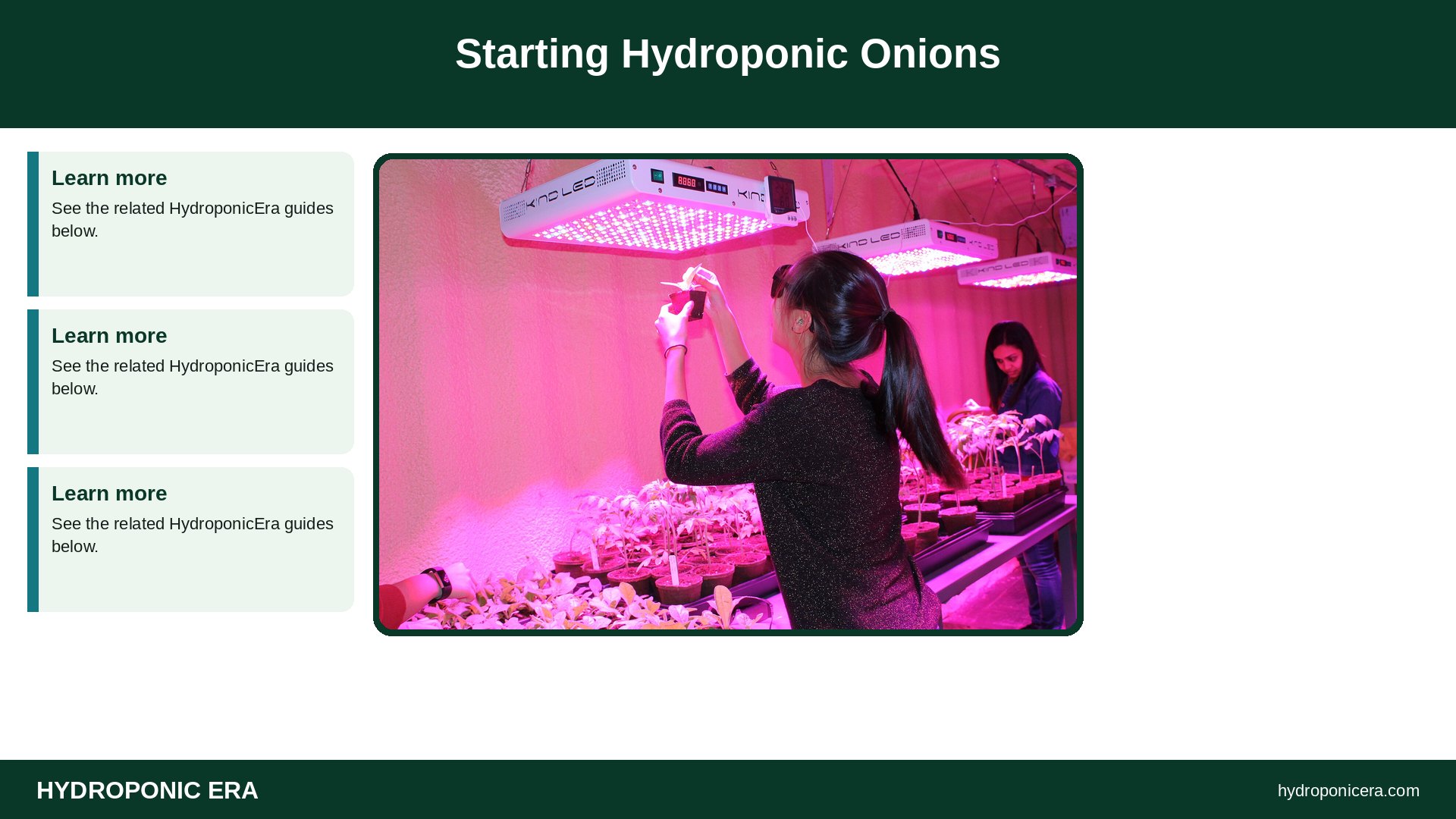
- Sow seeds in starter plugs, or use sets or transplants.
- Keep plugs moist and warm until shoots appear.
- Move seedlings into net pots or media once roots show.
- For regrowing scallions, set the root ends in net cups so roots touch the water.
- Space bulbing onions so each has room to swell.
See starter sponges.
Nutrients and pH for Hydroponic Onions
Use a complete vegetable nutrient and keep pH in the common 5.5–6.5 range. Onions need steady nitrogen for leaves, and plenty of potassium as bulbs form. Avoid very strong nutrient, which can burn tips. Check EC weekly and top off with plain water. See how to lower EC.
Light for Hydroponic Onions
Onions need bright light to grow thick leaves. A strong LED fixture above the system works well indoors. For bulbs, remember that the number of light hours matters as much as intensity.
Harvesting Hydroponic Onions
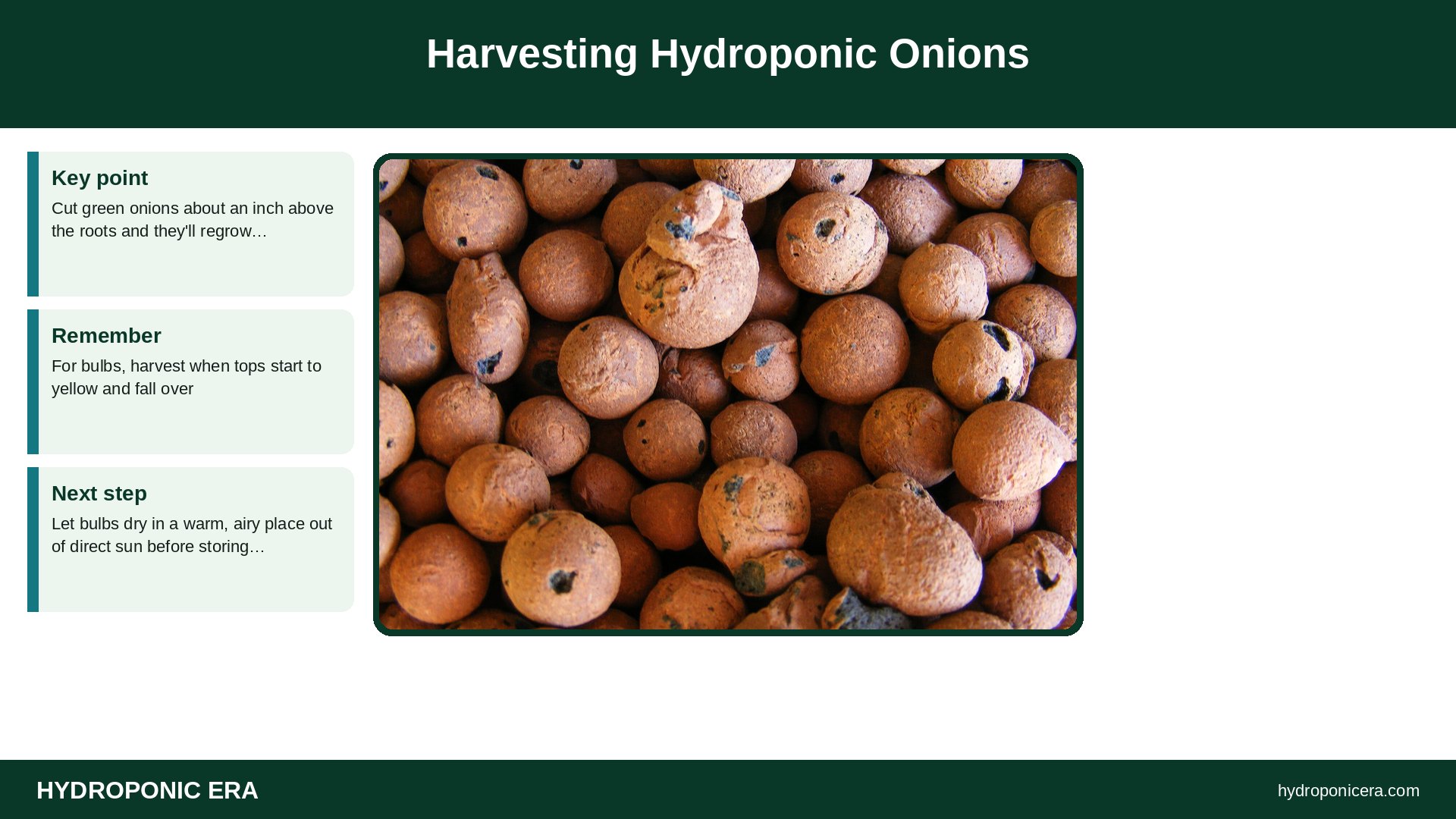
Cut green onions about an inch above the roots and they’ll regrow several times. For bulbs, harvest when tops start to yellow and fall over. Let bulbs dry in a warm, airy place out of direct sun before storing them in a cool, dry spot.
Common Problems With Hydroponic Onions
- No bulbs: wrong variety for your light hours.
- Small bulbs: bulbing started too early, or too crowded.
- Soft, rotting bulbs: bulb sitting in water.
- Thrips: silvery streaks on leaves; check often.
- Brown tips: nutrient too strong.
Weekly Routine for Hydroponic Onions
- Check pH and EC and record them.
- Top off with plain, pH-adjusted water.
- Look for thrips on leaves.
- Make sure bulbs stay above the water line.
- Change nutrient every two to three weeks.
Hydroponic Onions vs Soil Onions
Hydroponic onions avoid soil diseases and weeds, and green onions grow fast and clean. Soil is still the easier option for large bulb harvests, since bulbing onions take months and space. Many growers do both: scallions indoors year-round, bulbs in the garden.
Regrowing Store-Bought Green Onions
Keep the white end with roots, about an inch or two long, and set it in a net cup or jar so only the roots touch the water. New green shoots appear within days. Regrown scallions get thinner over time, so start fresh ones from seed now and then.
Hydroponic Onions Spacing and Containers
Green onions can be packed closely, several seedlings to a net cup. Bulbing onions need more room, so give each its own cup or space them a few inches apart in media. Deeper containers hold more media and keep moisture even around the bulb’s roots, which helps bulbs size up evenly.
Related Allium Crops
Chives, leeks, and garlic greens can grow hydroponically using similar methods. Chives are a perennial herb that suits small systems; leeks need more time and depth.
FAQs: Hydroponic Onions
Can onions grow in water?
Green onions grow well; bulbs need the bulb kept dry above the water.
Which onions are best for hydroponics?
Scallions are easiest; short- or intermediate-day bulbs suit indoor light.
Why aren’t my hydroponic onions bulbing?
The variety may need more light hours than it’s getting.
How many times can I regrow green onions?
Several cuts, though shoots get thinner over time.
What pH do onions need?
Around 5.5–6.5 in hydroponics.
Sources
- University of Maryland Extension — Onions and Day Length
- University of Maryland Extension — Growing Onions in a Home Garden
- Photo credits (Wikimedia Commons, edited with titles): Onion seedlings by Krish Dulal (CC BY-SA 3.0); Onion crop by Kasyap (CC BY-SA 4.0); Allium ampeloprasum MHNT.BOT.2006.46.12 by Roger Culos (CC BY-SA 3.0); Terramera scientists working in a climate-controlled growth chamber located in Vancouver, BC. The space uses LED lighting, which supports plant growth. (50188965171) by Simon Fraser University – Communications & Marketing (CC BY 2.0); Hydroton by Lucis (CC BY-SA 3.0)